Yard and Garden Tools
Ryobi 18V Broadcast Spreader vs Scotts Wizz: Two Easy Ways to Spread Ice Melt This Winter
A compact battery-powered broadcast spreader for tool-battery households, and an AA-powered handheld option for everyone else.
Introduction
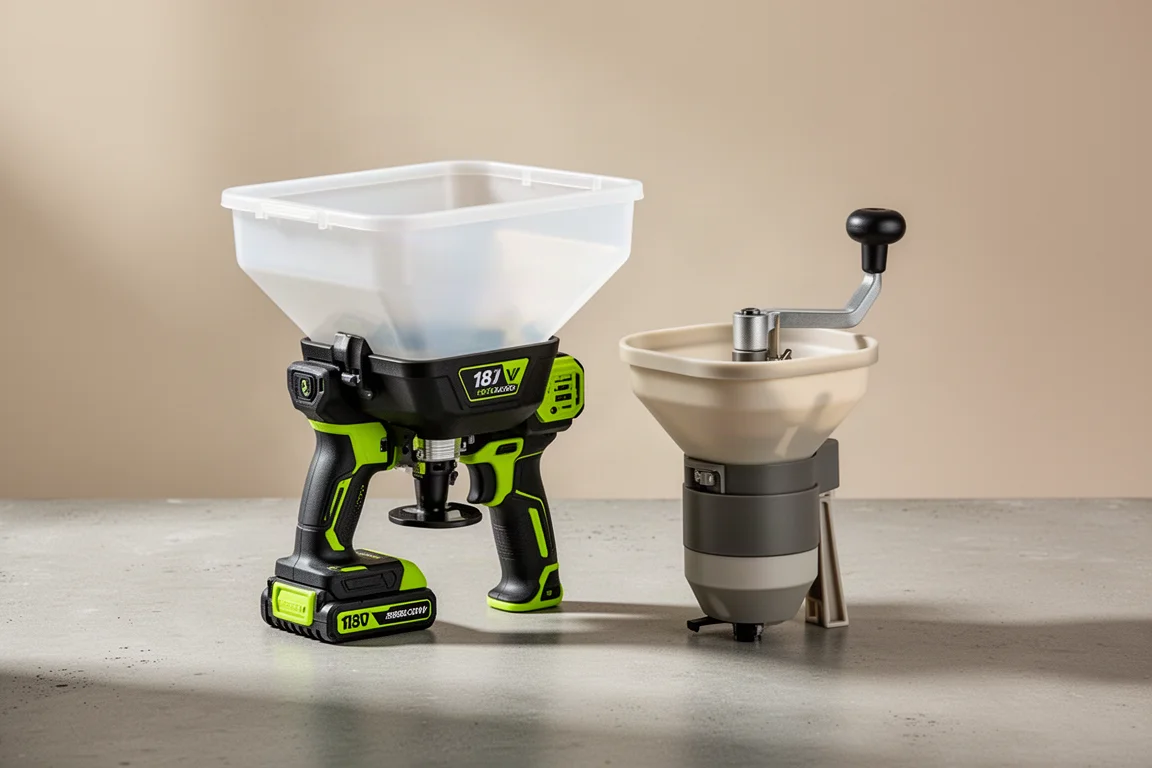
Spreading ice melt by hand out of a five-gallon bucket works, but it is slow, clumpy, and hard on your back. Compact handheld broadcast spreaders have popped up everywhere lately as a small, genuinely useful fix, and two options stand out: the Ryobi 18V broadcast spreader for people already invested in a battery platform, and the Scotts Wizz for anyone who just wants something that runs on ordinary AA batteries.
Both are small enough to store on a shelf, both handle salt and grass seed, and both are far less messy than grabbing handfuls from a bucket.
Why a Battery-Powered Spreader Is Worth a Look
Ice melt only works if it lands where you need it, and hand-scattering tends to leave clumps here and thin patches there. On old, sloped, uneven concrete, that uneven coverage is exactly what turns a walkway into a slip hazard. A broadcast spreader throws material in a wide, consistent pattern, so a few passes cover a driveway or path in seconds.
During a quick dry-run test, even a modest setting produced solid coverage in just a couple of seconds of walking. The takeaway: these little spreaders are not a gimmick. They are a practical winter and spring yard tool that also earns its keep come seeding season.

Ryobi 18V Broadcast Spreader
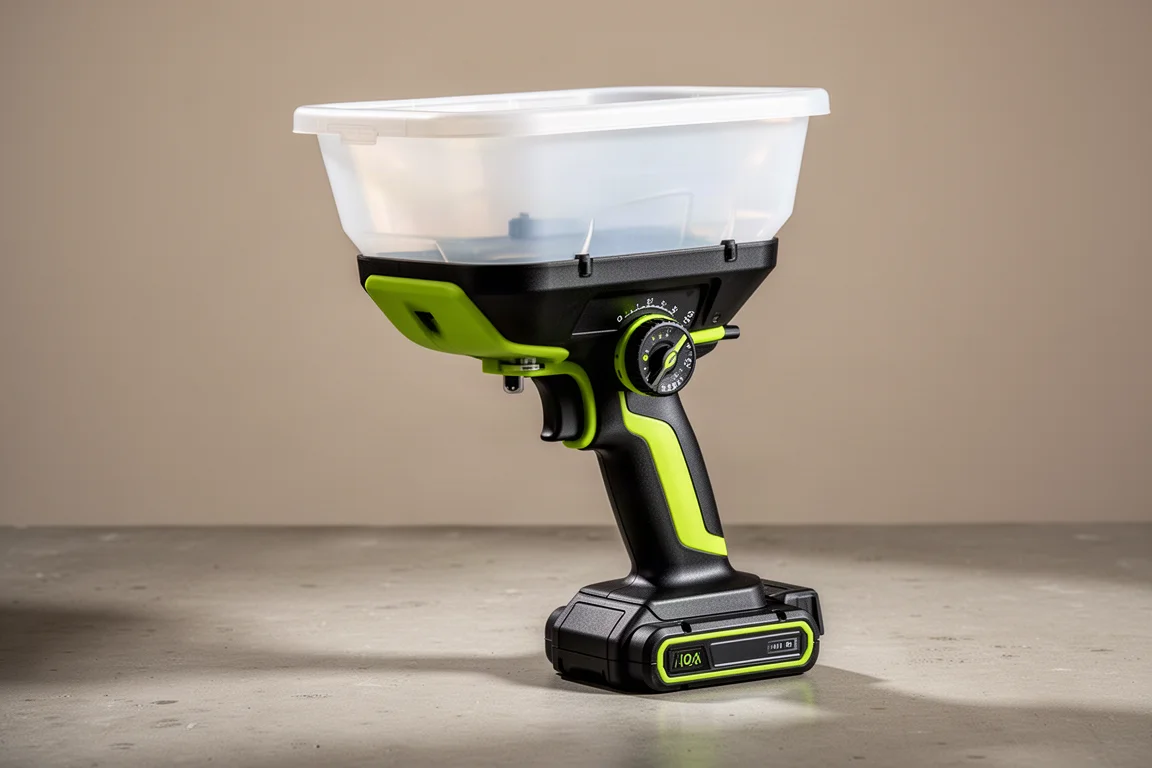
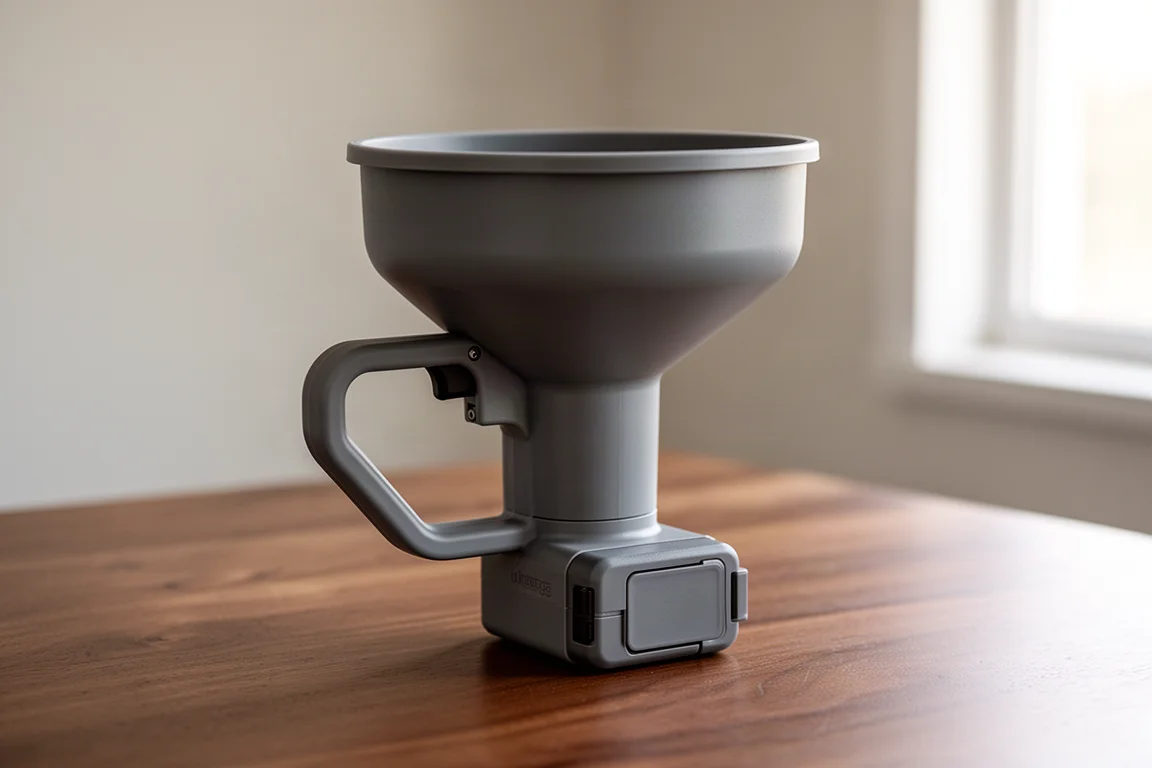
The Ryobi 18V broadcast spreader is a tool-only unit that runs on Ryobi 18V batteries, which makes it a natural pick if you already own Ryobi tools. It is available at Home Depot for around $64.20.
In use, the hopper holds enough material for a driveway or walkway pass without feeling heavy, and the broadcast pattern throws wide enough that you do not have to walk every inch of the surface. Settings matter: a low setting like zero barely releases anything, while dialing up to around three gave strong coverage without dumping the whole hopper in one pass. That adjustability is the whole point, since salt in winter and grass seed in spring need very different application rates.
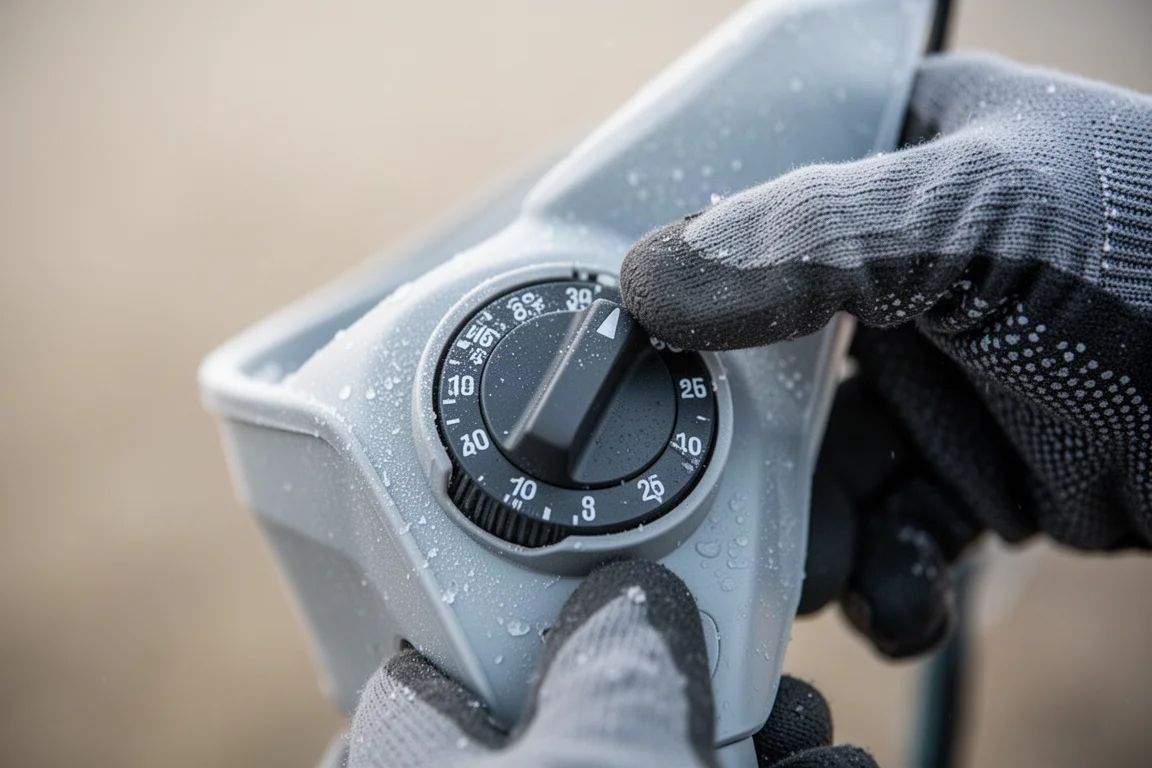
It is not going to replace a walk-behind spreader on a large lawn, but for icy walkways, sloped driveways, and small seeding jobs, it is a handy, quick-deploying option that lives happily next to the rest of a Ryobi collection.
Scotts Wizz Spreader
Not everyone wants to buy into a tool battery platform just to spread salt. The Scotts Wizz solves that by running on four AA batteries, making it the obvious choice for households without Ryobi, DeWalt, Milwaukee, or Makita batteries sitting in the garage.
It is a compact handheld broadcast spreader with the same basic idea: squeeze, walk, and let the spinning head throw material in an even pattern. Because it is small and battery-agnostic, it is easy to stash in a closet or mudroom and grab whenever the steps glaze over. It also works for light seeding and fertilizer jobs in spring, so it is not purely a winter tool.
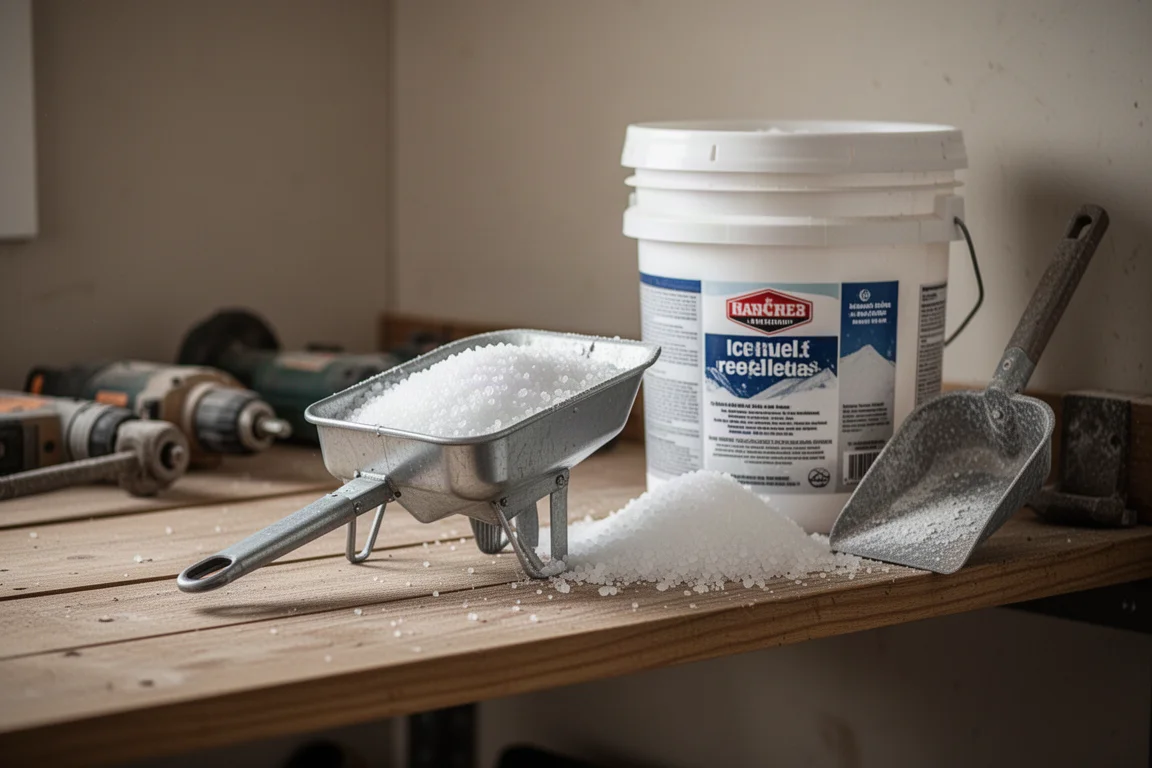
The trade-off is capacity and power. AA batteries will not fling material as aggressively as an 18V tool battery, and the hopper is smaller, so bigger jobs take more refills. For paths, steps, and small driveways, though, that barely matters.
Buying Advice: Which One Fits Your Shed
The decision is really about batteries. If you already own a stack of Ryobi 18V tools, the Ryobi spreader is the more capable pick and shares batteries with the rest of your kit, all for around $64.20 tool-only. If you do not want to commit to a platform, the Scotts Wizz gets you the same core benefit, even coverage with none of the bucket-clump mess, using batteries you already have in a drawer.
Whichever you choose, start on a low setting and work up. It is much easier to add more passes than to sweep up an over-applied pile of salt.

Conclusion
Both spreaders do one simple job well: they turn a clumpy, back-breaking chore into a two-minute pass across the driveway. Pick the Ryobi 18V broadcast spreader if you are already in the Ryobi ecosystem, and the Scotts Wizz if you just want a cheap, battery-agnostic handheld that keeps the walkway safe all winter.
Further reading
Related Reviews

Backpacking Gear
Building a 10 lb Base Weight: An Ultralight Backpacking Gear List
A practical walkthrough of the ultralight pieces behind a 10 lb base weight, from a 765 g pack and a roomy one-person tent to a full camp chair and a dependable water filter.

Road Bikes
10 New Road Bikes Worth Watching: Aero, Titanium, Steel and Endurance Standouts
A practical roundup of 10 new road bikes, from aero flagships chasing single-watt gains to titanium, steel and endurance platforms built for real roads.
Bikepacking Gear
11 Bikepacking Essentials for Long-Distance Cycling
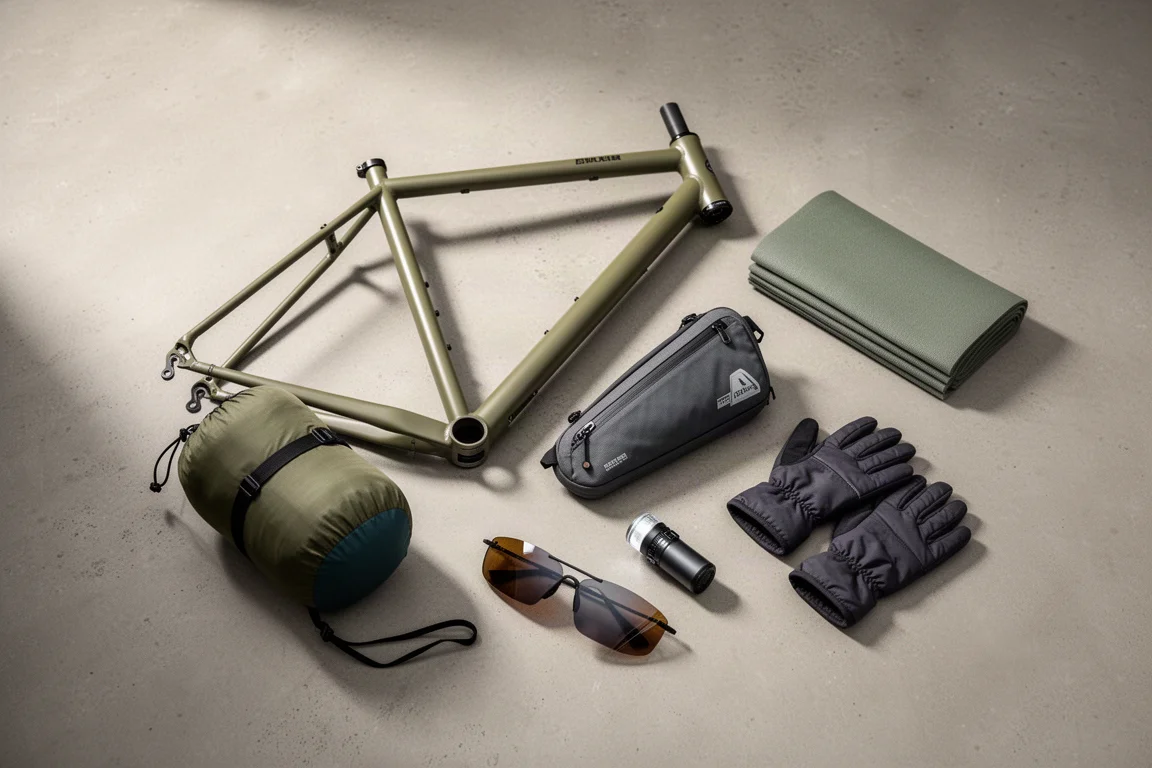
Eleven bikepacking essentials for long-distance cycling, from a steel gravel frame and a two-person tent to helmet lights, packable gloves, and a frame bag that puts weight in the right place.