Home Audio
Ruark R1, R410, and R810: Three Room-Filling Audio Systems Compared
Ruark is back in the US market with three all-in-one music systems. Here is how the compact R1, the mid-size R410, and the flagship R810 differ, and who each one suits.
Introduction
Ruark is an English audio company that has been building speakers since the 1980s and has stayed deliberately small. It began with traditional bookshelf speakers and evolved into a lifestyle audio brand with a clear focus: putting music in every room of the house rather than in one dedicated listening room.
After nine years away from the United States market, Ruark is returning, and the relaunch starts with three models. The compact R1 sits at the entry point, the mid-size R410 covers the middle, and the R810 console tops the range. The rest of the roughly 14-model line is expected to reach the US by the middle of next year.
Why Ruark Is Worth a Closer Look
Ruark occupies the approachable end of the audio market. The company’s emphasis is on performance and features for the money rather than exotic pricing, which makes the range relevant to anyone who wants a well-made system that fits into a normal home.
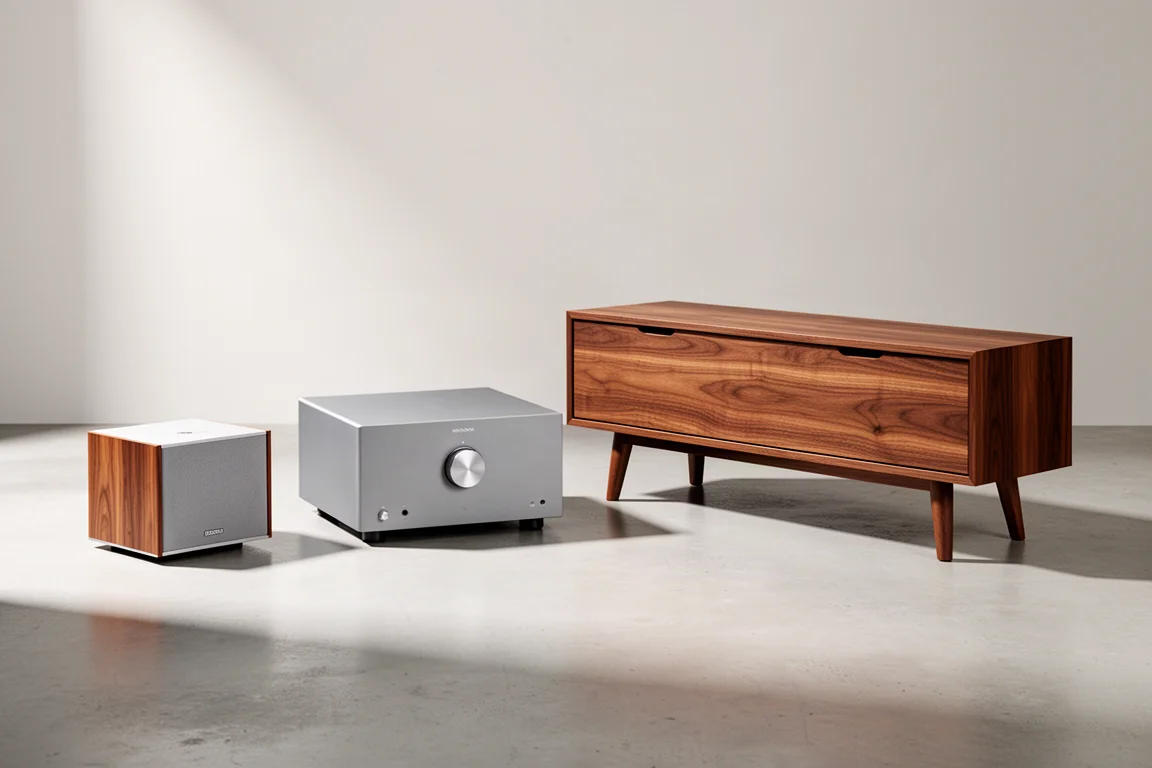
Material quality is central to the pitch. The console model uses 100 percent real wood veneer, and even the smallest model in the range has a real wood veneer front panel. The styling reads mid-century, but the internals are current: streaming and HDMI functionality are built into most of the products.
There is also consistency in how the products are operated. The main control on each system is a round dial, the remote repeats that same layout, and the interface carries across the line. Learn one model and you can operate them all, which matters when you are adding systems to more than one room.
Ruark R1: The Compact Tabletop All-Rounder
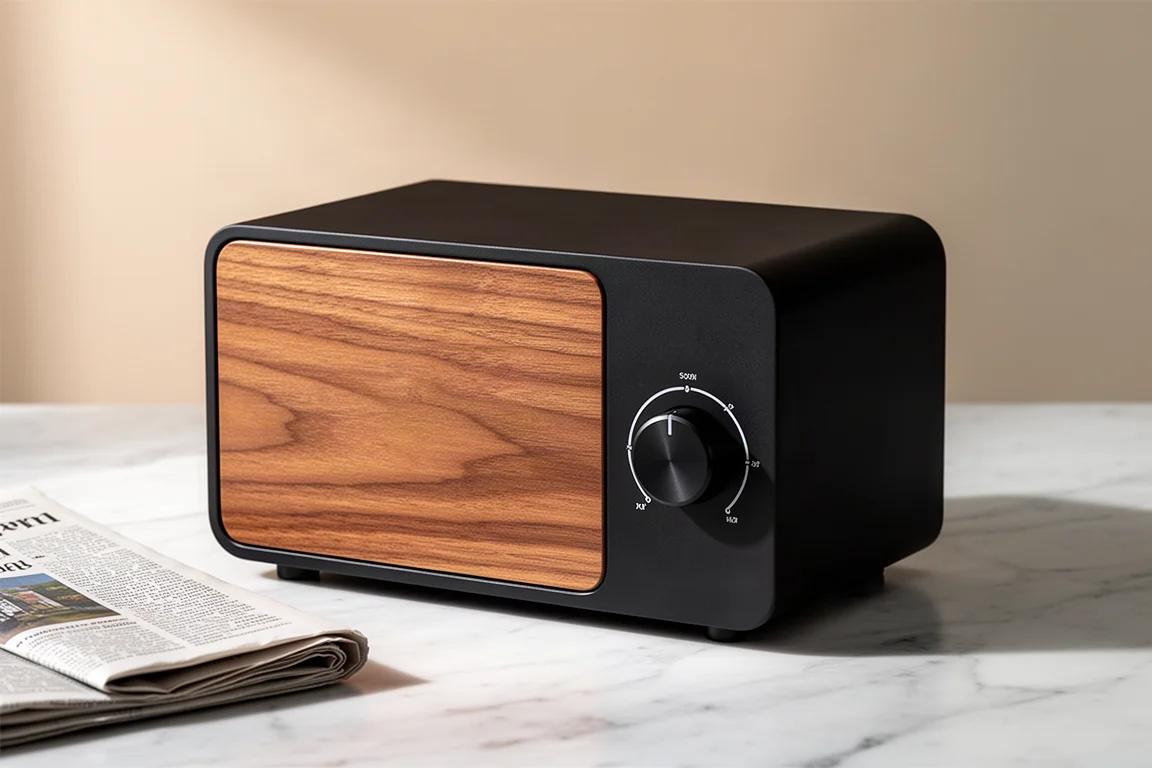
The R1 is the smallest and most affordable model in the first US release at $399. It is a tabletop system, and despite the compact footprint it carries a real wood veneer front panel, so it does not look like a plastic accessory sitting on a kitchen counter.
Its appeal is capability in a small package. It is built for the rooms where a full system would be impractical, and it produces far more sound than its dimensions suggest. Finish options are black or white.
Ruark R410: The Mid-Size Room Filler
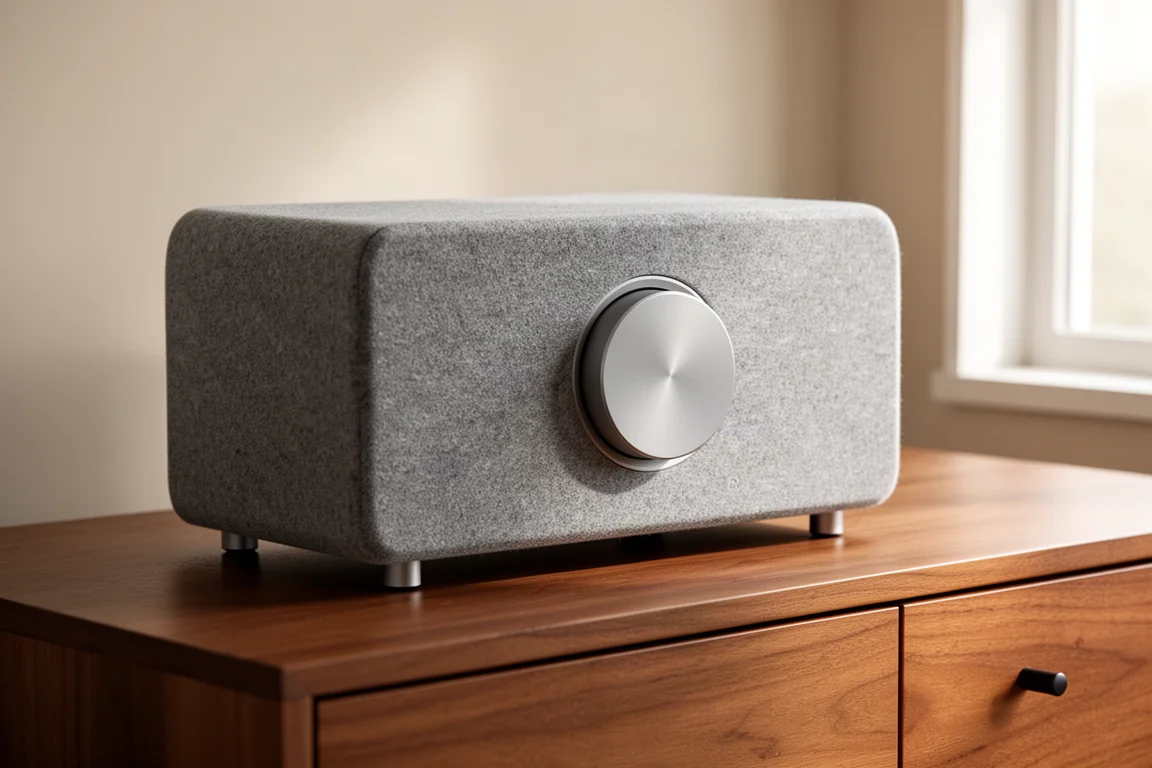
The R410 is roughly the size of a receiver, about 18 inches wide, and it is the model that shows how much Ruark can pack into a modest cabinet. Inside there are multiple drivers working alongside a downward-firing woofer, which is where the low frequencies come from. The result is an expansive, room-filling presentation that does not sound like it is coming from a box this size.
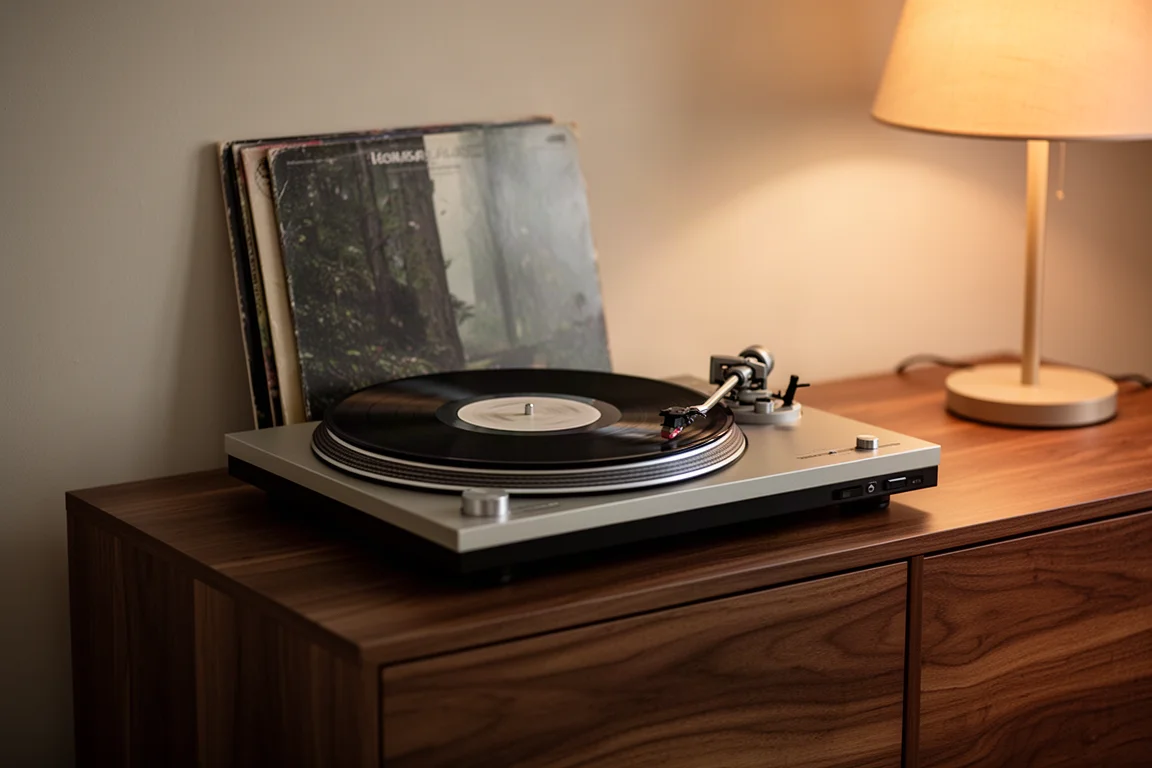
Connectivity is where it earns its place in a living room. HDMI ARC and eARC let it connect directly to a television, a built-in phono preamp handles a turntable, and a USB input covers a computer or another digital source. Streaming runs over Wi-Fi with Spotify Connect and Tidal Connect, and Bluetooth with aptX HD is available for everything else.
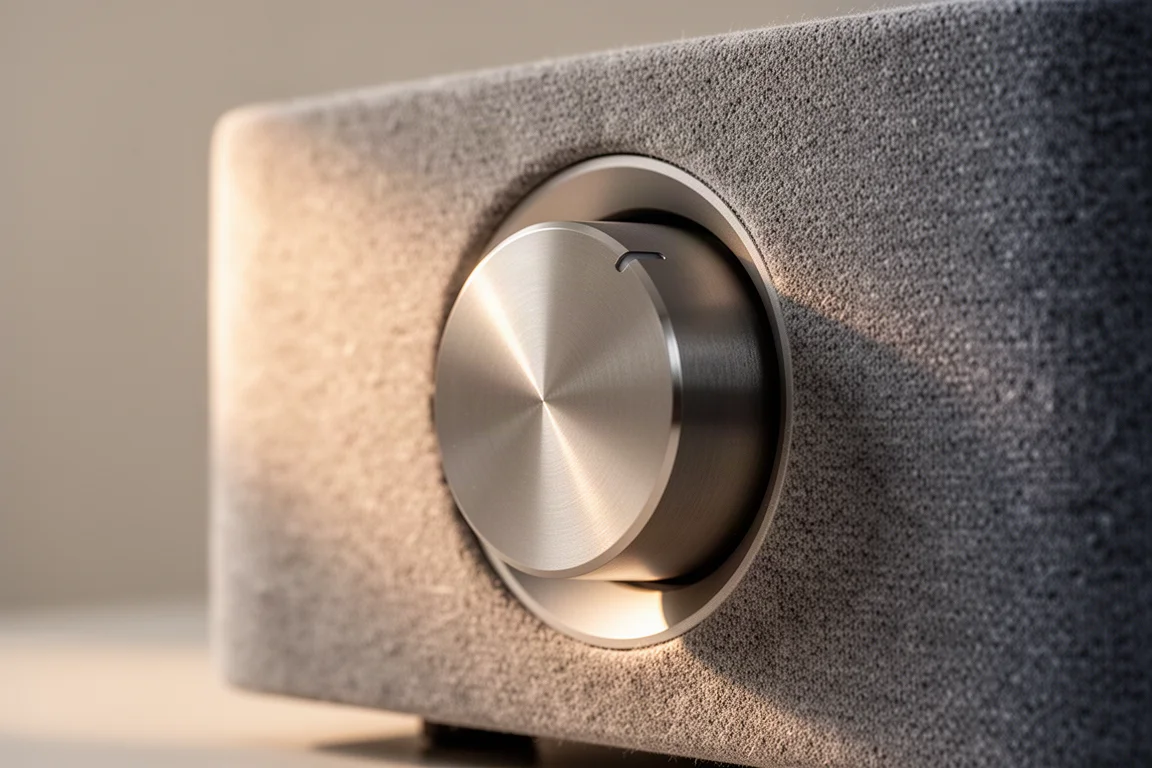
The control philosophy is just as practical. The main interface is a round dial on the unit itself, and the remote repeats exactly the same layout, so you are not learning a second set of controls to use it from the sofa. The R410 is shown in a soft gray finish.
Ruark R810: The Full Console Centerpiece
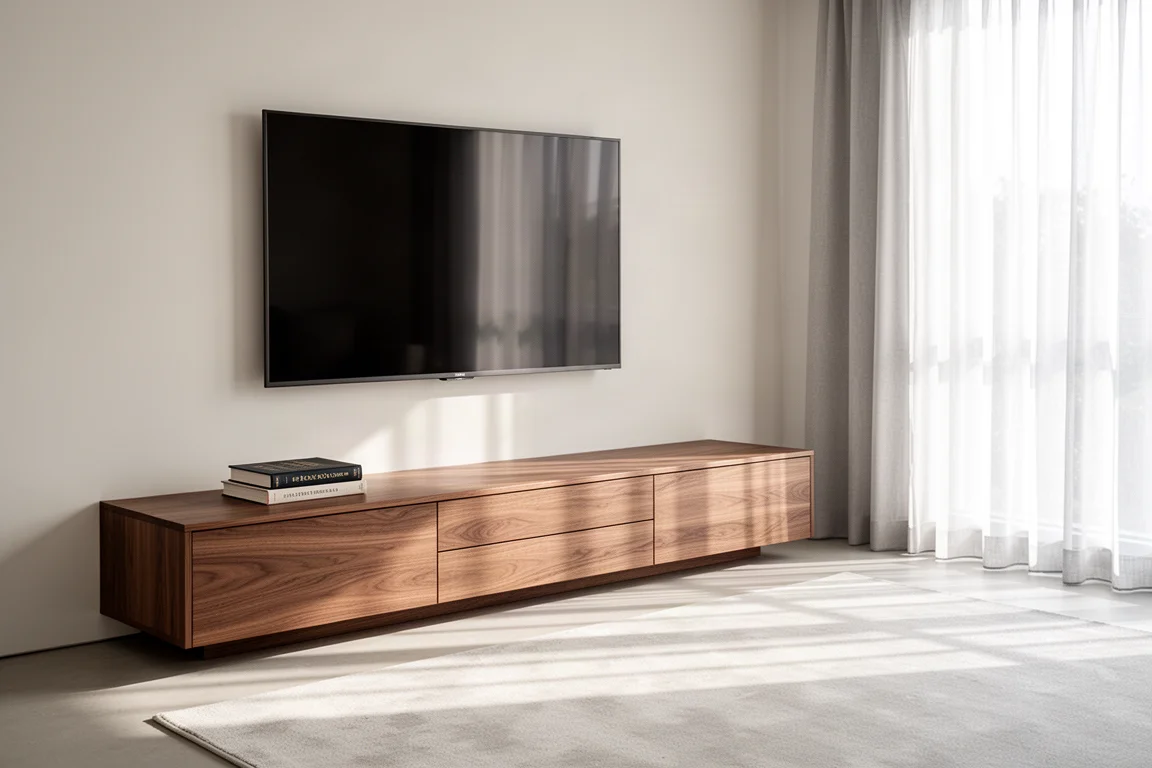
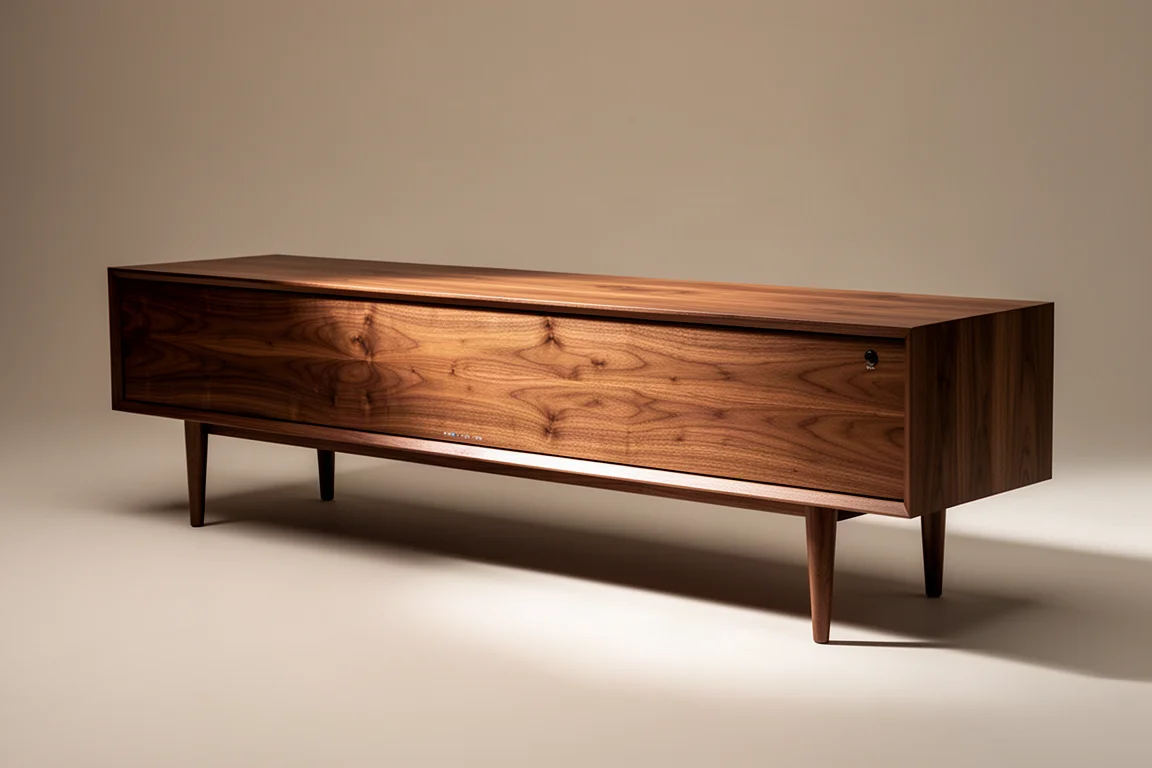
The R810 is the flagship of the three, a full console system in 100 percent real wood veneer with a mid-century silhouette and modern streaming and HDMI functionality underneath. It is the model that makes the strongest first impression, and it is built to be the visual anchor of a room rather than a component tucked into a rack.
Placement is unusually flexible. The console ships with two sets of legs: longer ones for standing on the floor and shorter ones for sitting on a credenza. There is also a VESA mount on the back, and Ruark offers a mount that bolts directly to the cabinet, supports a television up to 65 inches, and pivots and swivels for viewing angle. A tray slides out from underneath for a cable box or a Blu-ray player, which keeps sources out of sight.
The wide top surface invites a turntable, and the cabinet does not transfer an unreasonable amount of vibration into the platter. As with any setup like this, results depend on the turntable itself, and a set of isolation feet is a sensible addition.
Finishes, Mounting, and Room Placement
Finish choice is one of the clearer ways to tell the models apart. The R810 console is offered in walnut and in soft gray, the R410 is shown in soft gray, and the compact R1 is available in black or white. If the system will sit in a room with a lot of wood, the walnut veneer is the natural match, while the soft gray version reads more neutral against pale walls and fabric.
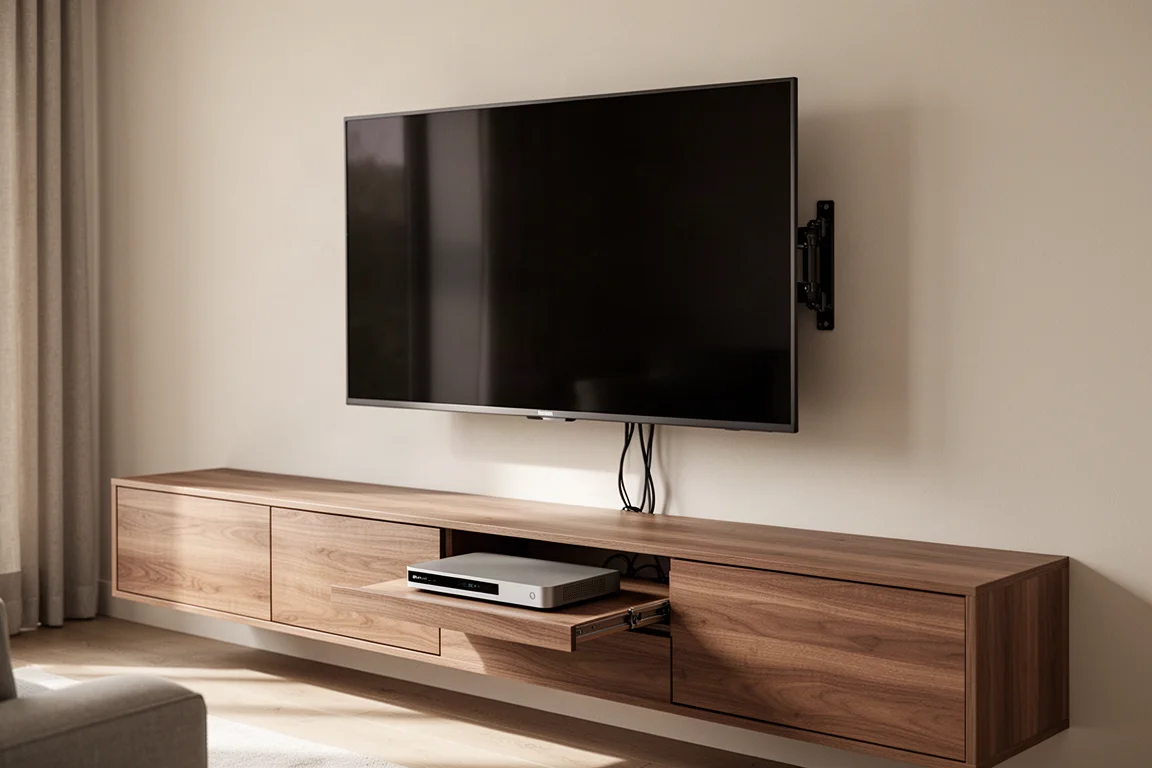
Because the console can stand on its own legs or sit on a credenza, and because the optional mount carries both the system and a television, the R810 does not have to live flat against a wall. It can be angled toward the seating position, which is useful in open-plan rooms where furniture placement is rarely straightforward.
Who Each Model Suits Best
The R1 suits bedrooms, kitchens, studies, and any room where a full system is overkill. At $399 it is the easiest way into the brand, and it is small enough to move around the house as needs change.
The R410 suits a main living space where you want one box to handle television audio, a turntable, and streaming without adding a rack of components. It needs more shelf space than the R1, but far less than a stack of separates.
The R810 suits a living room that needs a centerpiece and a place for the television to live. It is the model to choose if you want the system and the screen to feel like one piece of furniture rather than two separate purchases.
Buying Advice
Work backwards from the room. If the system is going into a bedroom or a kitchen, the compact R1 covers it at the lowest price in the range. If it is going under a television in a main room, the R410’s HDMI connection and phono stage remove the need for extra boxes.
If you want the system to be the focal point, and you would like the option of mounting a television above it, the R810 is the one to plan around. Check the finish against your existing furniture before you commit, and confirm what your local dealer has available, since the US rollout is being staged over the coming months rather than released all at once.
Conclusion
Ruark’s return to the US market brings three genuinely different answers to the same question: how do you get good sound into the rooms where you actually spend time? The R1 does it in the smallest possible footprint, the R410 does it as a complete living-room hub, and the R810 does it as a piece of furniture that can carry a television and a turntable.
All three share the same operating logic and the same attention to materials, so the choice comes down to how much space you have and how many sources you want to connect. Pick the size that fits the room, and the rest of the lineup will make sense when it arrives.
Further reading
Related Reviews
Home Audio
Aperion Novus Tower and Center Review: Punchy Home Theater Sound With Real Refinement
A close look at the Aperion Novus tower and center speakers, from their layered paint finish and punchy bass to the 4-ohm load and what the price actually buys.
Home Audio
Arendal 1610 Tower Review: Flagship Dynamics in a Room-Friendly Tower
A compact floorstanding tower with three 8-inch aluminium woofers, a 5-inch carbon midrange, and the kind of bass heft usually reserved for much larger speakers.
Home Audio
Arendal 1723 S THX Review: A Reference Speaker Built Like a Tank
A practical look at the Arendal 1723 S THX, a sealed, THX-certified speaker with exceptional build quality, a very flat top end, and a midrange that responds beautifully to EQ.