Subwoofers
RSL Speedwoofer 12S Review: Deep, Hard-Hitting Bass for the Money
A 12-inch powered subwoofer with 500 watts RMS, four DSP presets, and in-room extension that reaches far lower than its price suggests.
Introduction
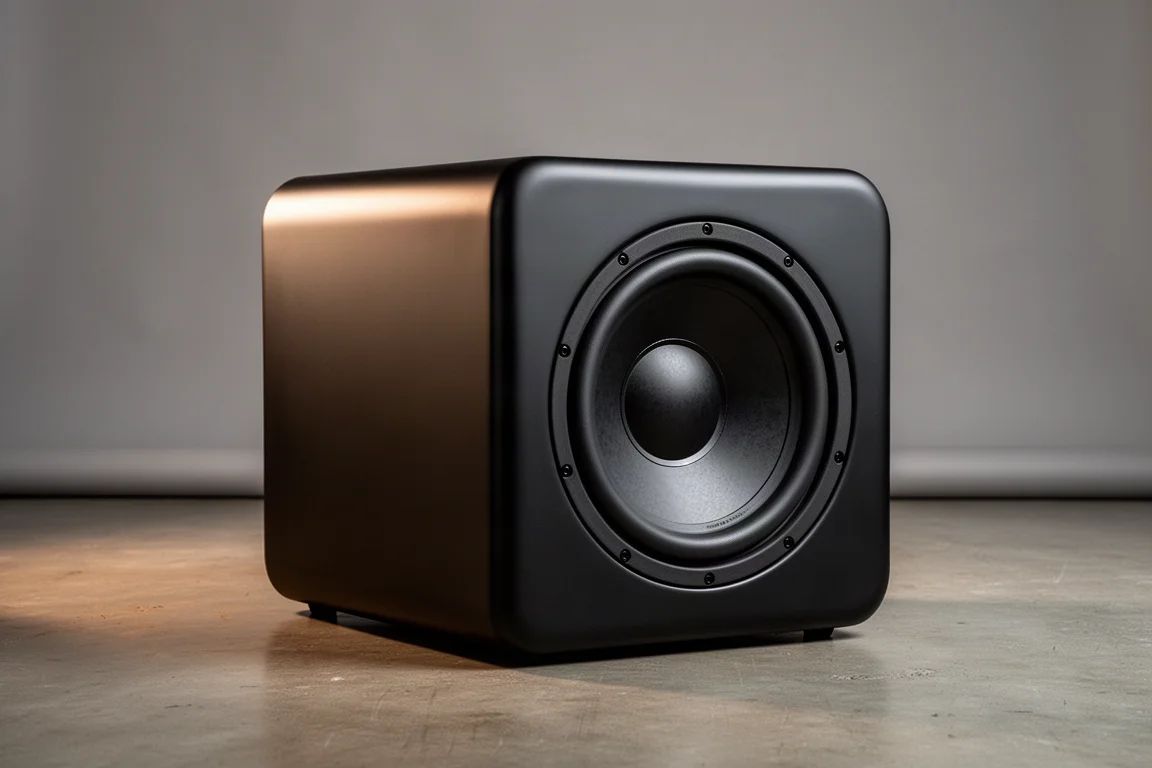
The RSL Speedwoofer 12S is the company’s new 12-inch powered subwoofer, and it arrives noticeably larger than the earlier 10-inch Speedwoofer in the same family. The cabinet stands roughly 22 inches tall, measures about 18.5 inches wide, and runs about 22.25 inches deep with the grille fitted, or closer to 21.5 inches without it. At 86 pounds, this is a component you plan a space around rather than move on a whim. At the time of writing it sells for $799.
That combination of size, weight, and price sets expectations immediately. The 12S is aimed at listeners who want genuine low-frequency output and are willing to give up floor space to get it, rather than at anyone shopping for a discreet, easy-to-hide box.
Who the RSL Speedwoofer 12S Is For
This subwoofer makes the most sense for home theater owners who want deep, physical bass without stepping into the premium price brackets. It is designed to pressurize a room, and its feature set, from the built-in DSP presets to the speaker-level inputs, is arranged around flexible integration into an existing system rather than around audiophile minimalism.
It also suits listeners who are willing to run more than one subwoofer. Two units placed in opposite corners of a room is a practical configuration for this model, and it is the setup that produced the smoothest in-room results during testing.
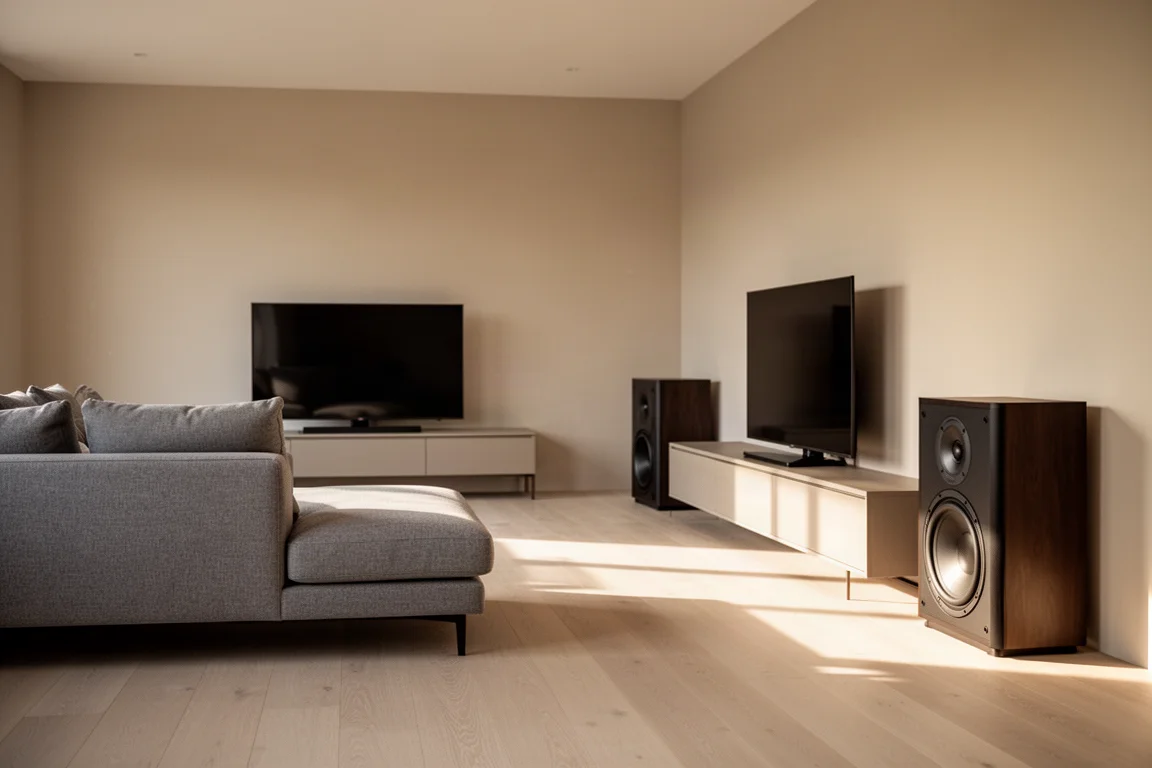
If your priority is a compact subwoofer that disappears into a living room, the 12S will feel oversized. If your priority is output and depth for the money, its proportions are simply the cost of doing business at this level.
Design, Connections, and Controls
The cabinet is a plain square box with sharp corners and hard edges. There is very little styling flourish here, and the matte black vinyl wrap keeps reflections to a minimum, which is helpful if the subwoofer sits near a screen. The finish has a slight sheen in the right light, but it reads as understated rather than glossy.
The driver is a 12-inch reinforced paper cone with carbon fiber, and the grille attaches with push-pin connectors at all four corners, so it lifts off and seats again without tools. A small display on the front shows the volume level, and the readout glows blue and remains visible through the grille cloth.
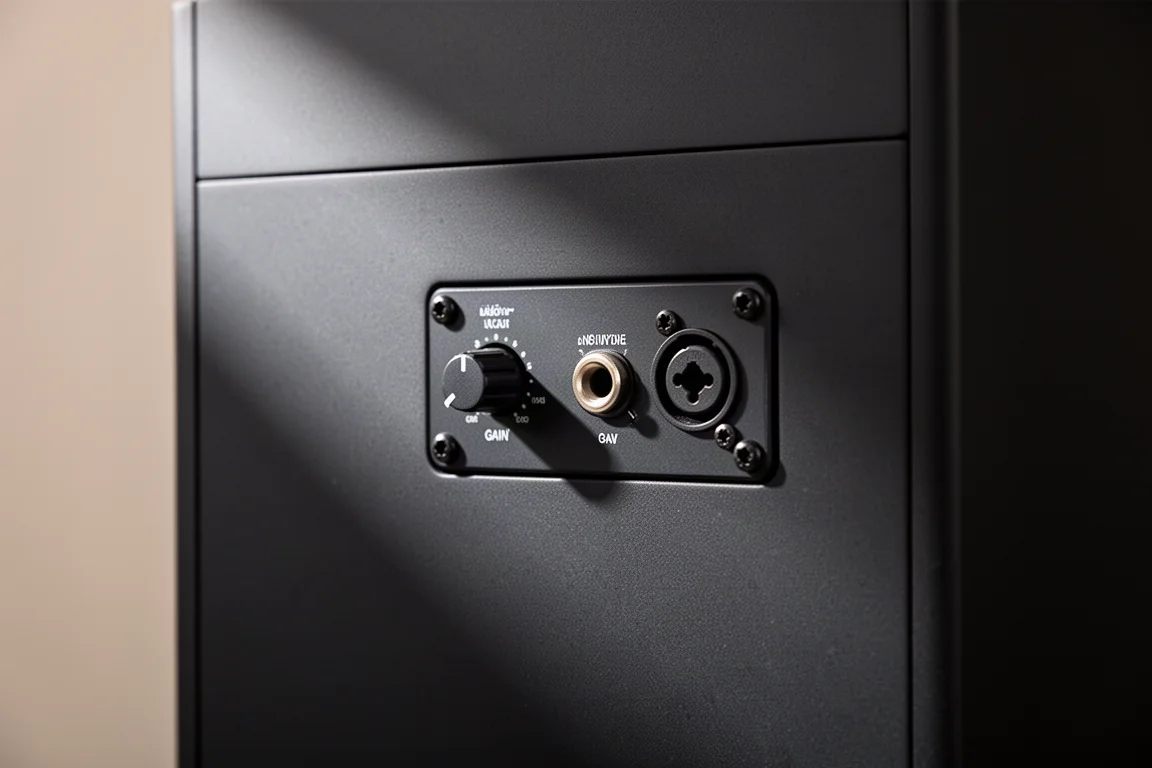
Around the back, the panel is unusually well populated for the price. There is a USB input, an IR input for remote control, a push button for selecting DSP modes, a volume knob, a high pass and a low pass filter each adjustable from 30 Hz to 250 Hz, variable phase from 0 to 180 degrees, an auto on and off power switch, unbalanced RCA inputs and outputs, a dedicated LFE input, speaker-level inputs, a main power switch, and the power inlet.
Notably absent are XLR inputs and outputs, which is the one connectivity gap on an otherwise generous rear panel. The subwoofer is powered by a Class D amplifier rated at 500 watts RMS and up to 1,550 watts peak, and the built-in DSP offers four presets: Reference, Music, Movie, and Boundary. In the box you get the documentation, a power cord, a remote control with batteries, and two carpet sliders, one with a felt base for carpet and one with a plastic base for hard floors.
Movie Performance: Main Strengths
With bass-heavy film scores and effects-driven soundtracks, the 12S behaved like a much larger and more expensive subwoofer. It held long, sustained bass notes with control rather than boom, which matters enormously on dense scores where a bloated subwoofer smears the midrange and buries dialogue. The 12S kept that low-end foundation intact while the rest of the mix stayed intelligible.
On impact, it is genuinely forceful. Gunfire and explosions land as a heavy physical wallop rather than a thin thump, and the cabinet generates the kind of low rumble you feel in the room instead of only hearing. Those lower harmonics give effects a weightier, thicker presence than a smaller subwoofer can produce.
Set against a compact, considerably more expensive competitor, the 12S was punchy in a similar spirit but dug noticeably lower, which is exactly the advantage its size buys. Against a far pricier high-end model, the gap showed up in the finest details: that reference subwoofer separated rapid, successive gunshots with more definition and snap, where the 12S blended them together slightly more. Given the price difference, the 12S holds its own convincingly.
Setup and Room Integration
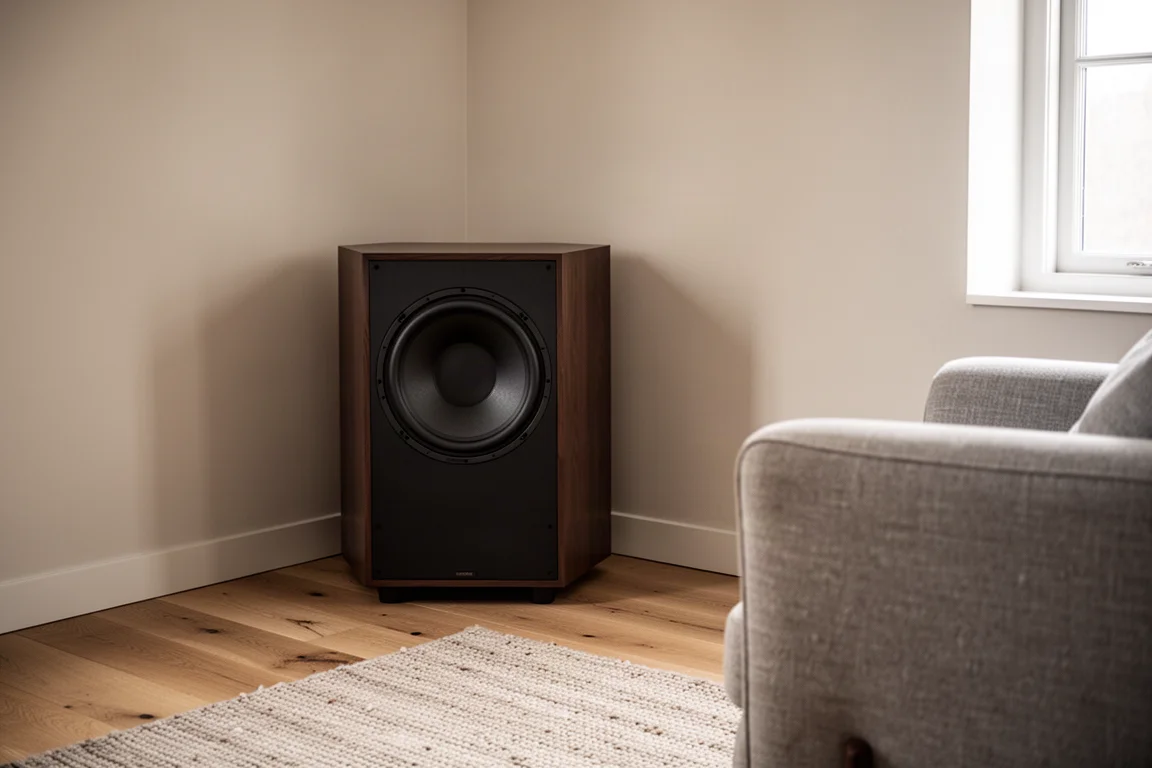
In a two-subwoofer configuration, the 12S units were placed in opposite front and rear corners of the room and fed from an external processor, with the subwoofers set to bypass so the crossover was handled upstream. The Reference preset was selected because it applies the least equalization. Since there are no XLR connections, RCA to XLR adapters were required to make those runs.
Measured at the main listening seat, the front corner subwoofer produced a strong, even response from about 10 Hz to 50 Hz, followed by a pronounced dip around 55 Hz. The second subwoofer in the rear corner filled that dip almost entirely, and the combined result extended down to roughly 10 Hz with the help of room gain. That is remarkable extension for a subwoofer in this class, and it was achieved with the least aggressive preset.
It is worth being clear that these are in-room results from one specific room. Every room loads a subwoofer differently, so a single unit in a different space will show a different curve, which is the strongest argument for considering a second 12S rather than chasing a perfect single-subwoofer placement.
Things to Consider Before Buying
The most obvious consideration is physical. At 86 pounds and roughly 22 inches in every meaningful dimension, the 12S demands real floor space and a second person when it needs to be moved. Plan the placement before it arrives rather than after.
The second is connectivity and tuning. There are no XLR inputs or outputs, so systems that rely on balanced connections will need adapters. The DSP presets are fixed choices rather than a user-adjustable EQ, which means you work with Reference, Music, Movie, or Boundary instead of dialing in your own curve.
The third is headroom at the very bottom of the spectrum. On extreme infrasonic content, the enclosure gives up before the driver does, and pushing the volume further can produce uncomfortable noises that suggest you have reached the limit. The 12S will not deliver the spine-tingling ultra-low sensation of a much larger, much more expensive subwoofer. Knowing where that ceiling sits is the difference between an impressive demo and a damaged driver.
None of these points undermines the core value proposition. They simply describe what this subwoofer is: a high-output design with sensible controls and a clear set of physical limits.
Value and Positioning
At $799, the Speedwoofer 12S sits in a bracket where most options ask you to accept noticeably less output or noticeably less extension. It performs at a level associated with subwoofers costing roughly twice as much, and it even comes out ahead of some considerably larger 21-inch designs. It also carries a large-room certification, which aligns with what the two-unit setup demonstrated in practice.
The compromises are the ones already covered: no balanced connections, fixed presets, and finite headroom on the deepest infrasonic material. None of them are unusual at this price, and none of them change the fact that the 12S delivers output and depth that are difficult to match for the money.
Buying Advice
Buy the RSL Speedwoofer 12S if you want deep, tactile bass for film soundtracks and effects, you have the floor space and the strength to accommodate an 86-pound cabinet, and you would rather put your budget into output than into balanced connectivity or advanced user EQ. Budget for a second unit if your room allows it, because the two-subwoofer configuration produced a visibly smoother response than a single subwoofer in either corner.
Look elsewhere only if your system depends on XLR connections, if you want granular, user-adjustable DSP rather than presets, or if your reference material pushes into infrasonic territory where only a much larger and more expensive subwoofer will satisfy you.
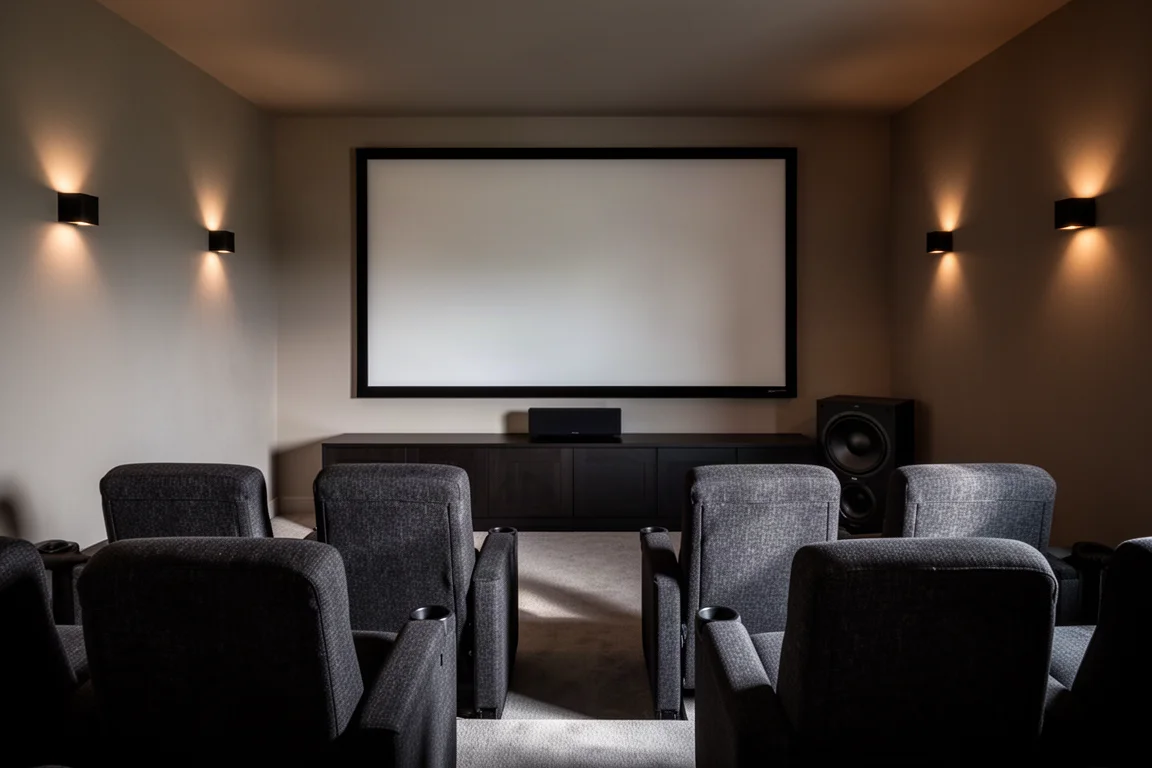
For most buyers weighing output against price, the decision is straightforward. The 12S gives up a few conveniences and keeps everything that matters for movie playback.
Conclusion
The RSL Speedwoofer 12S is a large, heavy, plainly styled subwoofer that delivers hard-hitting, low-reaching bass at a price that is hard to argue with. Its strengths are control on sustained low notes, serious physical impact, and genuinely deep in-room extension, especially when two units are placed in opposite corners. Its limitations are the absence of XLR connections, fixed DSP presets, and a ceiling on extreme infrasonic content. For home theater listeners who want the most bass per dollar and can give it the space it needs, it is an easy recommendation.
Product link
View more details for RSL Speedwoofer 12S
This product is mentioned in the review. Check the specifications, options, and compatibility before buying.
View more details for RSL Speedwoofer 12SFurther reading
Related Reviews
Subwoofers
Arendal 1961 Subwoofer 1S Review: Beautiful Build, Modest Punch at $1,000
A sealed $1,000 subwoofer with a gorgeous cabinet, plus three lower-priced alternatives that deliver more impact for movie nights.
Subwoofers
Arendal Sound 1723 2V Subwoofer Review: Dual 13.8-Inch Drivers Under $3,000
A flagship ported subwoofer with dual opposing 13.8-inch drivers, a 1,200W RMS amplifier, app-based DSP, and a 10-year warranty.
Subwoofers
Ascendo 16 Sub Active Sealed Review: Sealed Bass Built on Real Engineering
A close look at the Ascendo 16 Sub Active Sealed, a 16-inch sealed home theater subwoofer with independently verified measurements, a purpose-built driver, and genuinely controlled output.