Home Audio
RSL CG23M, CG3M, and Speedwoofer 10S MKII: Three Affordable RSL Options Worth a Look
A closer look at two RSL bookshelf speakers and the Speedwoofer 10S MKII, covering the specs, the prices, and the setup details that matter before you buy.
Introduction
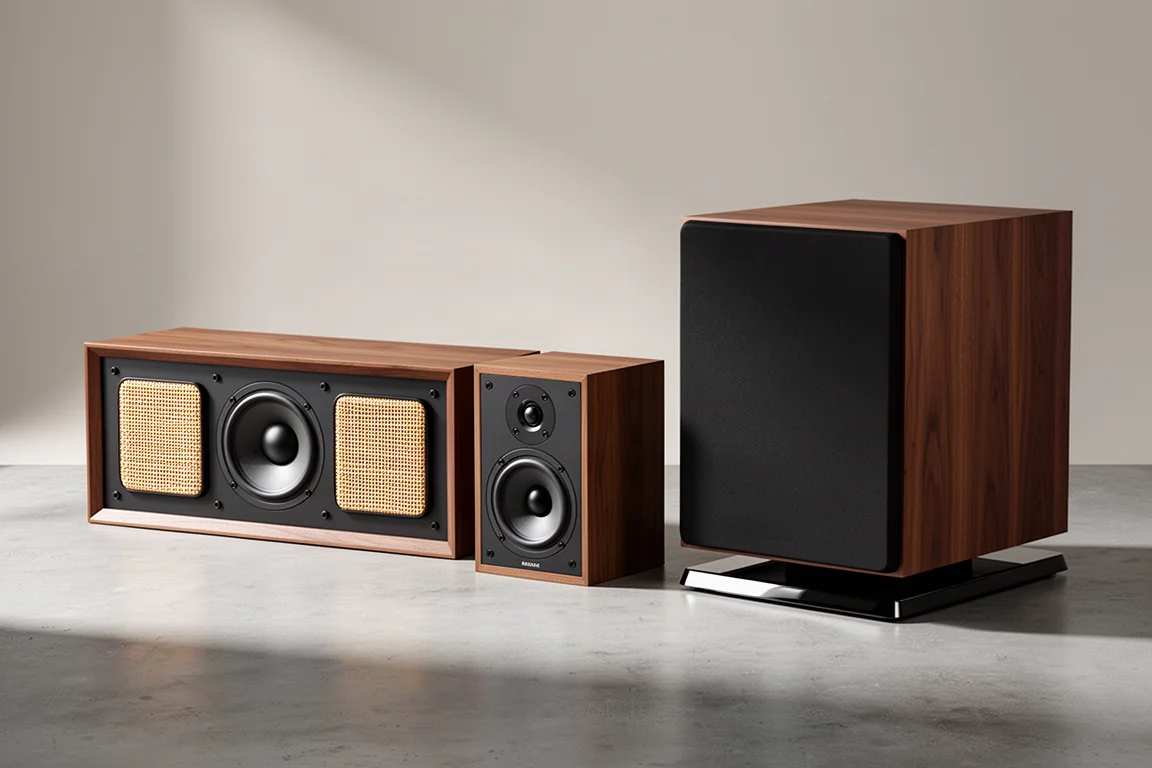
RSL has built its reputation on subwoofers, but the company also makes a full line of affordable speakers, and the pricing is lower than most shoppers expect from a name that gets passed around so often in home audio discussions. This roundup covers three of those products: two bookshelf speakers and one subwoofer.
The RSL CG23M is the larger of the two bookshelf models at $150 each, the RSL CG3M is the compact one at $105 each, and the RSL Speedwoofer 10S MKII is the subwoofer at $450. All three come from RSL, a company based in the United States with manufacturing in China, and all three sit in a price range that makes them realistic options for a first proper system or an upgrade to an existing one.
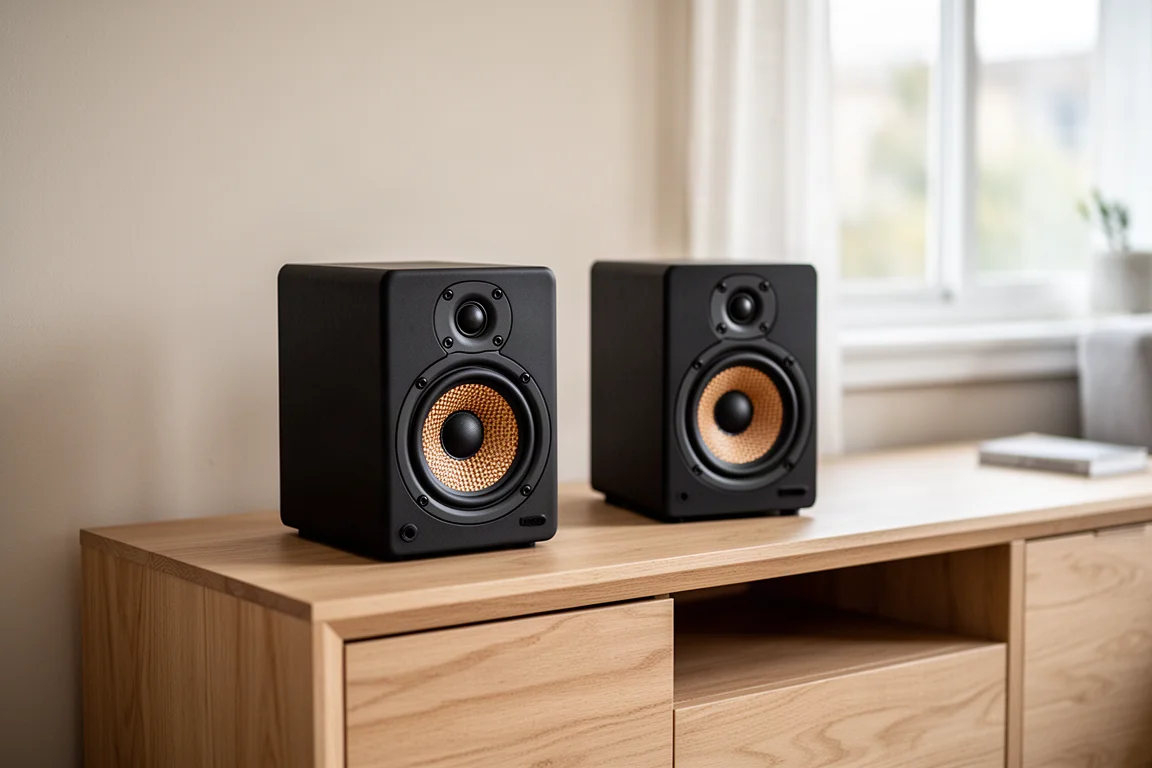
What follows is a breakdown of what each product actually offers, which specs are worth paying attention to, and how to decide whether any of them belong in your setup. The details below come straight from the product specifications, so you can compare them against the room and the electronics you already own.
What These Three RSL Products Have in Common
The two bookshelf speakers share a clear family resemblance. Both use a one-inch silk dome tweeter and woven fibre woofers, and both ship with removable grilles. RSL also uses its compression guide port design across the range, and the Speedwoofer 10S MKII carries a rear-vented version of the same approach.
The pricing structure is consistent too. The CG3M at $105 each and the CG23M at $150 each make it possible to build a pair for around $210 or $300 respectively, while the Speedwoofer at $450 is the largest single investment of the three. Nothing here is priced like a flagship, which is exactly the point of the line.
RSL CG23M: The Larger Bookshelf Speaker
The CG23M is an MTM design, which means a tweeter sits between two midwoofers rather than above or below a single driver. RSL describes it as a reference quality bookshelf speaker, and the driver complement supports that positioning: two four-inch woven fibre woofers, described as Kevlar cone high excursion units, paired with a one-inch silk dome tweeter that uses a rare earth neodymium magnet.
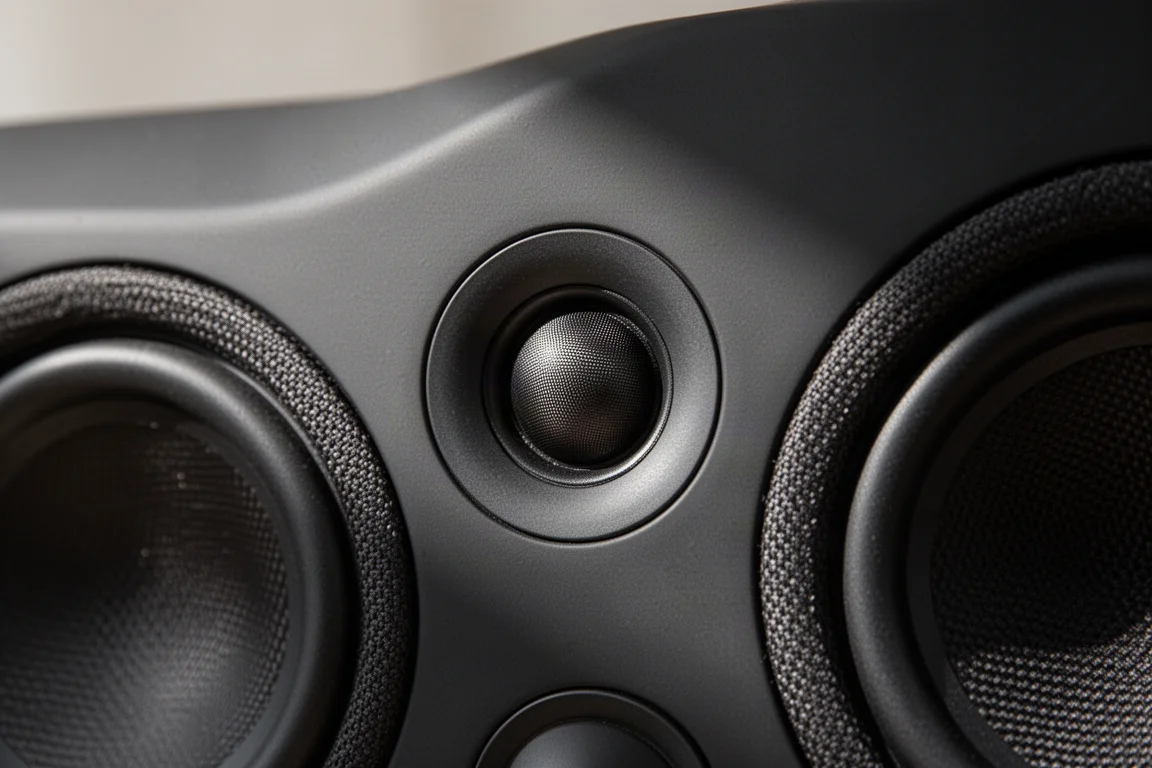
The published specs are 80 Hz to 20,000 Hz frequency response, 89 dB sensitivity, and a 2,800 Hz crossover point. Sensitivity of 89 dB is a reasonably friendly figure, so the CG23M does not demand a huge amount of amplifier power to reach a normal listening level. The cabinet uses two front ports and removable grilles, weighs about 10 pounds, and measures roughly 16 inches tall, 6 inches deep, and about 6.5 inches wide at the baffle.
At $150 each, or about $300 for a pair, the CG23M is aimed primarily at home theater use, where its MTM layout and dual woofers suit front or surround channel duty. It is also the more capable of the two bookshelf options for anyone who wants a fuller sound without adding a subwoofer immediately, though the 80 Hz low end means deep bass still benefits from a dedicated sub.
RSL CG3M: The Compact Bookshelf Speaker
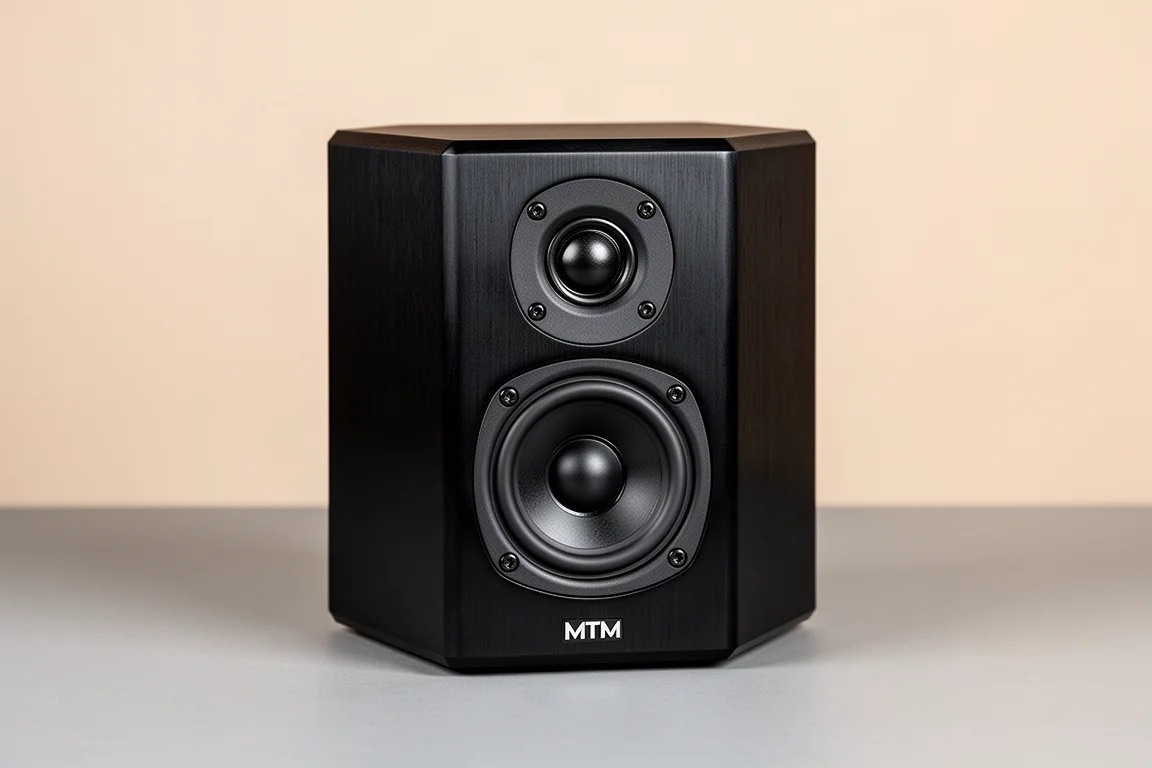
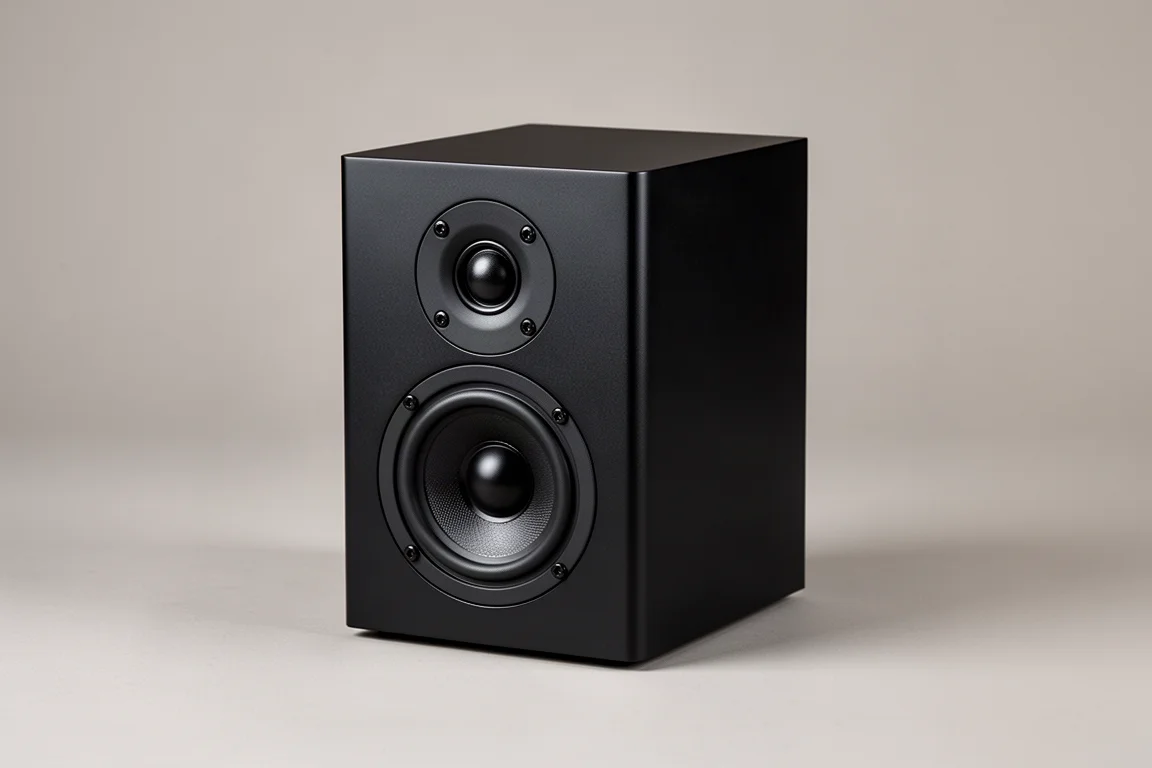
The CG3M is essentially half of the CG23M in driver terms: a single four-inch woven fibre woofer and a one-inch silk dome tweeter. That simpler two-way arrangement keeps the cabinet smaller and the price lower at $105 each, and the front baffle has a slightly rounded profile that gives it a cleaner look than the price suggests.
Published specifications list a 90 Hz to 20,000 Hz frequency response and 86.5 dB sensitivity. That sensitivity figure is lower than the CG23M’s 89 dB, which is worth noting if your amplifier has limited headroom, since the CG3M will ask a little more of it to reach the same output level. The 90 Hz low frequency limit also makes a subwoofer a natural partner for anyone who wants real low end.
One practical detail stands out for flexible rooms: the back panel includes both a keyhole mount and a threaded insert, so the CG3M can be hung on a wall with common mounting hardware rather than sitting on a shelf. Grilles are removable, as with the larger model. For desk setups, small rooms, or surround and secondary positions, the smaller cabinet and the wall mounting options make this the easier of the two to place.
RSL Speedwoofer 10S MKII: The Subwoofer
The Speedwoofer 10S MKII pairs a 10-inch woofer with a 400 W RMS amplifier and extends down to 22 Hz, which is serious low frequency reach for the price. RSL describes a music mode that matches the original 10S with improved dynamics, and the cabinet uses a rear-vented compression guide design. The cabinet itself is heavy, and it ships double boxed.
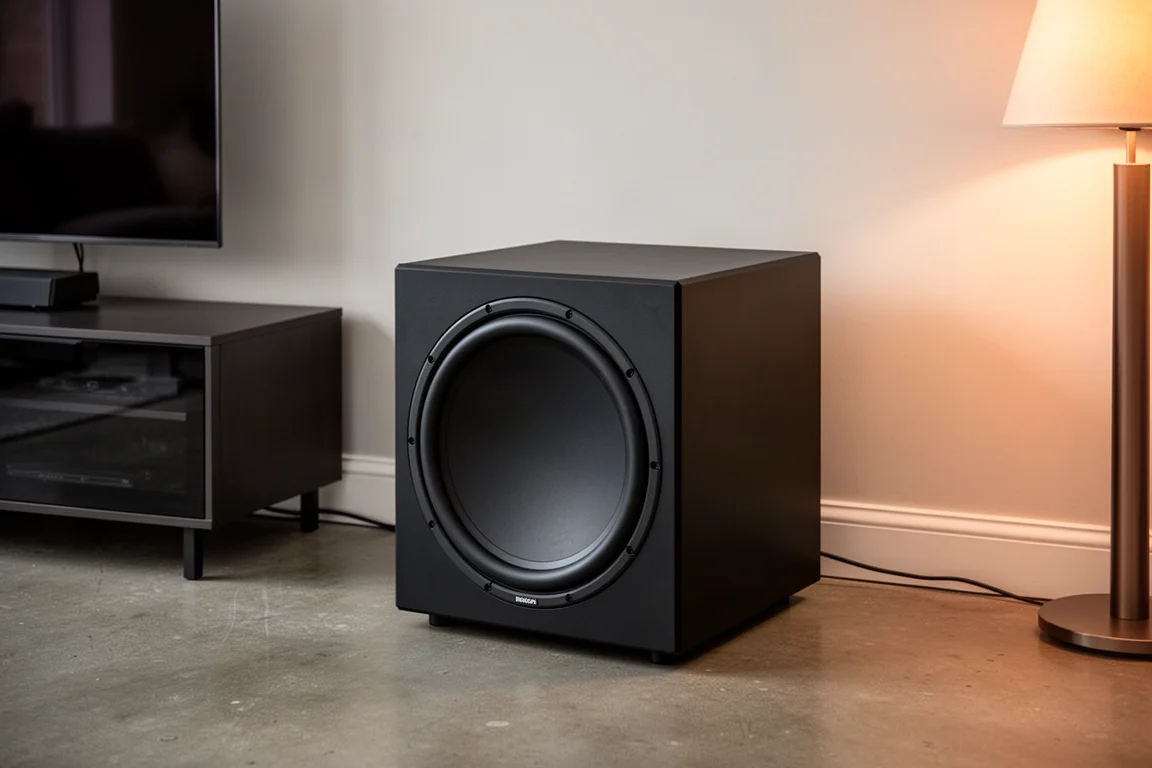
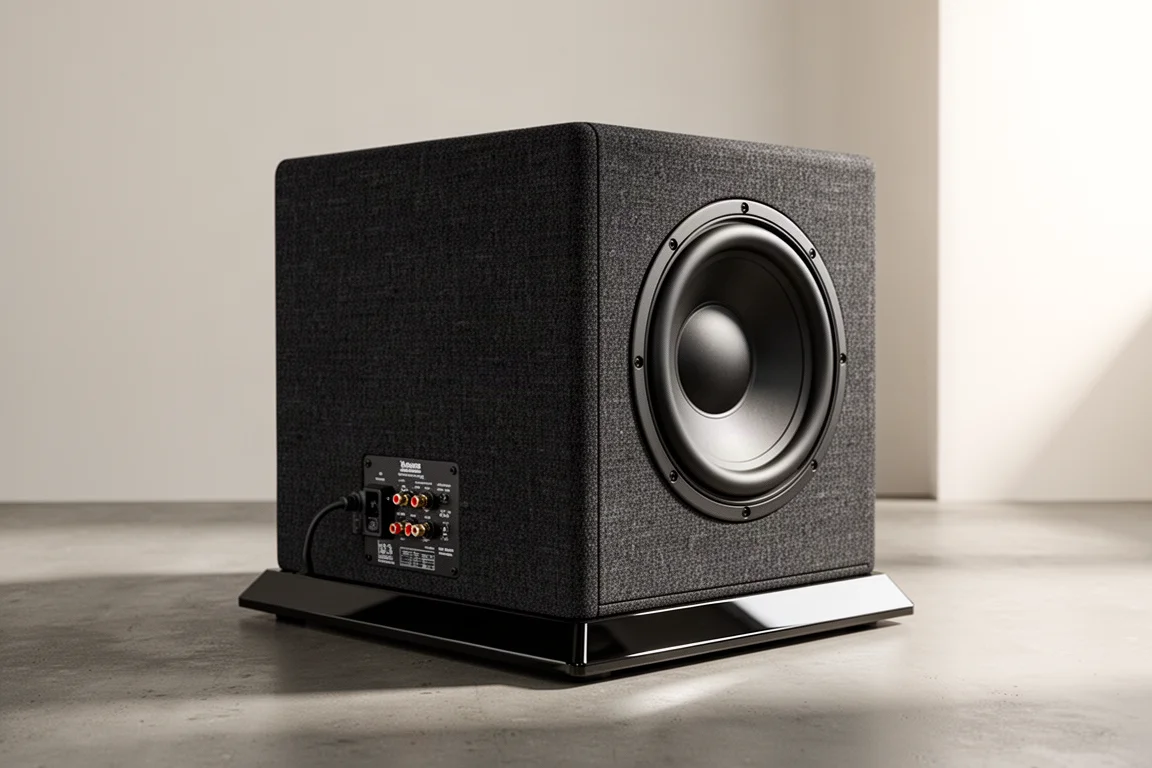
The control set is more complete than many subwoofers at this price. You get volume, a crossover control, variable phase, and auto power on. Variable phase is the notable one: rather than a simple switch that only offers zero or 180 degrees, the knob lets you dial the setting in continuously, which makes blending the sub with the main speakers much easier to fine tune. Connections include line in, line out, LFE, and speaker level inputs and outputs.
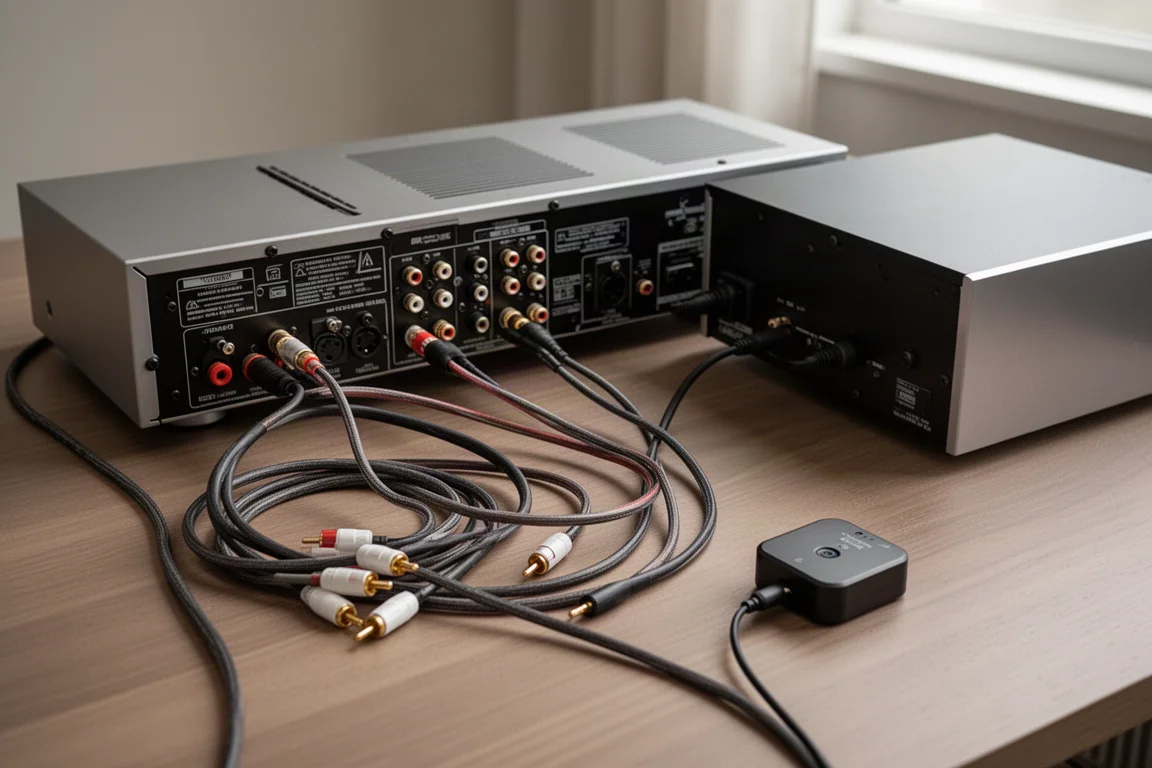
Wireless is handled well too. A wireless audio transmitter is included, and the receiver is pre-installed inside the subwoofer, so there is no extra module to buy or mount. At $450, and with RSL limiting purchases to two units per customer, the Speedwoofer is the biggest commitment of the three, but it is also the component that will change the character of a system the most.
Setup and Placement Considerations
A few details in this lineup make setup easier than the specs alone suggest. The variable phase control on the Speedwoofer 10S MKII is the most useful of them: play something with steady rhythmic bass, then adjust the knob until the bass feels like it is coming from the main speakers rather than from a separate box in the corner. That step is far quicker with a continuous control than with a two-position switch.
The included wireless transmitter changes placement options as well. Because the receiver is already inside the subwoofer cabinet, you can put the sub where it sounds best in the room instead of where the amplifier happens to sit, and the speaker level inputs and outputs give you a wired path if you prefer one.
On the speaker side, the CG3M’s keyhole mount and threaded insert make wall placement straightforward, while the CG23M’s front ports mean the larger cabinet is not automatically fussy about sitting close to a wall. The sensitivity gap between the two, 89 dB against 86.5 dB, is the main thing to weigh against your amplifier: the smaller speaker is easier to fit into a room, the larger one is easier to drive.
Buying Advice
The simplest way to choose among these three is to start with the job you need done. If you are building a home theater setup and want the more capable bookshelf pair, the CG23M at $150 each gives you the MTM layout, the dual woofers, and the higher sensitivity for roughly $300 per pair.
If space is the constraint, the CG3M at $105 each covers desk and small room duty and adds wall mounting hardware, at the cost of a single woofer and a lower sensitivity figure. Both speakers stop short of deep bass, so a subwoofer is the logical next step either way.
For that next step, the Speedwoofer 10S MKII at $450 delivers 400 W RMS, output down to 22 Hz, variable phase control, and a wireless link with the receiver already built in. Buyers who already own a capable pair of speakers and want more low end will get the clearest improvement from the subwoofer, while buyers starting from nothing will likely get the most value by pairing either bookshelf model with the subwoofer over time rather than trying to solve everything with one purchase.
Conclusion
RSL’s affordable line is more complete than its subwoofer reputation suggests. The CG23M offers the fuller driver complement and higher sensitivity for about $300 a pair, the CG3M is the compact, wall-mountable option at $105 each, and the Speedwoofer 10S MKII brings 400 W RMS, 22 Hz extension, and flexible placement options for $450.
Any of the three makes sense when it matches a real need: a larger pair for home theater, a smaller pair for tight spaces, and a subwoofer for anyone who wants genuine low frequency output from a system that currently lacks it.
Further reading
Related Reviews
Home Audio
Aperion Novus Tower and Center Review: Punchy Home Theater Sound With Real Refinement
A close look at the Aperion Novus tower and center speakers, from their layered paint finish and punchy bass to the 4-ohm load and what the price actually buys.
Home Audio
Arendal 1610 Tower Review: Flagship Dynamics in a Room-Friendly Tower
A compact floorstanding tower with three 8-inch aluminium woofers, a 5-inch carbon midrange, and the kind of bass heft usually reserved for much larger speakers.
Home Audio
Arendal 1723 S THX Review: A Reference Speaker Built Like a Tank
A practical look at the Arendal 1723 S THX, a sealed, THX-certified speaker with exceptional build quality, a very flat top end, and a midrange that responds beautifully to EQ.