Cycling Components
Rotor Uno Groupset Review: Ambitious Wireless Shifting With Real Trade-Offs
A wireless gravel groupset with strong hydraulic brakes, flexible speed compatibility, and an integrated power meter option, held back by a fiddly setup process and intermittent shifting.
Introduction
Rotor has built some unconventional components over the years, and the new Uno groupset continues that tradition in a slightly more practical direction. What was once a company known for hydraulic shifting with tiny little hoses has now moved into the wireless electronic space with a gravel-focused 1x groupset. The Uno works with 10, 11, 12, or 13 speed drivetrains, an unusual flexibility claim, and it arrives with hydraulic brakes, an app for customization, and an integrated power meter option on the crankset.
It is also fair to say that Rotor is not exactly the same company it once was. Chinese manufacturer Wheel Top acquired a majority stake in Rotor in 2024, and the brand now sells road, gravel, and mountain bike groupsets direct to consumers. The Uno 1x borrows technology from other Wheel Top groupsets, and the result is an ambitious package that deserves a closer look before you commit.
Who This Groupset Is For
The Uno is aimed at gravel riders who want wireless electronic shifting without locking themselves into the usual SRAM or Shimano ecosystem. For a certain type of owner, the appeal is obvious: hydraulic brake levers with reach adjustment, electronic shift buttons that are easier to press than mechanical levers, and the ability to customize button behavior to match familiar shifting patterns. For riders with limited hand strength, or for loaded gravel bikes that benefit from powerful brakes, this kind of package has genuine value.
It is also a groupset for people who like to tinker. The setup process is not a hands-off experience, and the app is the only way to configure gear counts and button mapping. If you enjoy that level of control and the idea of running a less mainstream brand, the Uno has real appeal.

That said, the same tinkering requirement will frustrate riders who simply want a groupset that works out of the box. The level of patience needed during setup is worth weighing carefully before you buy.
Design and Components
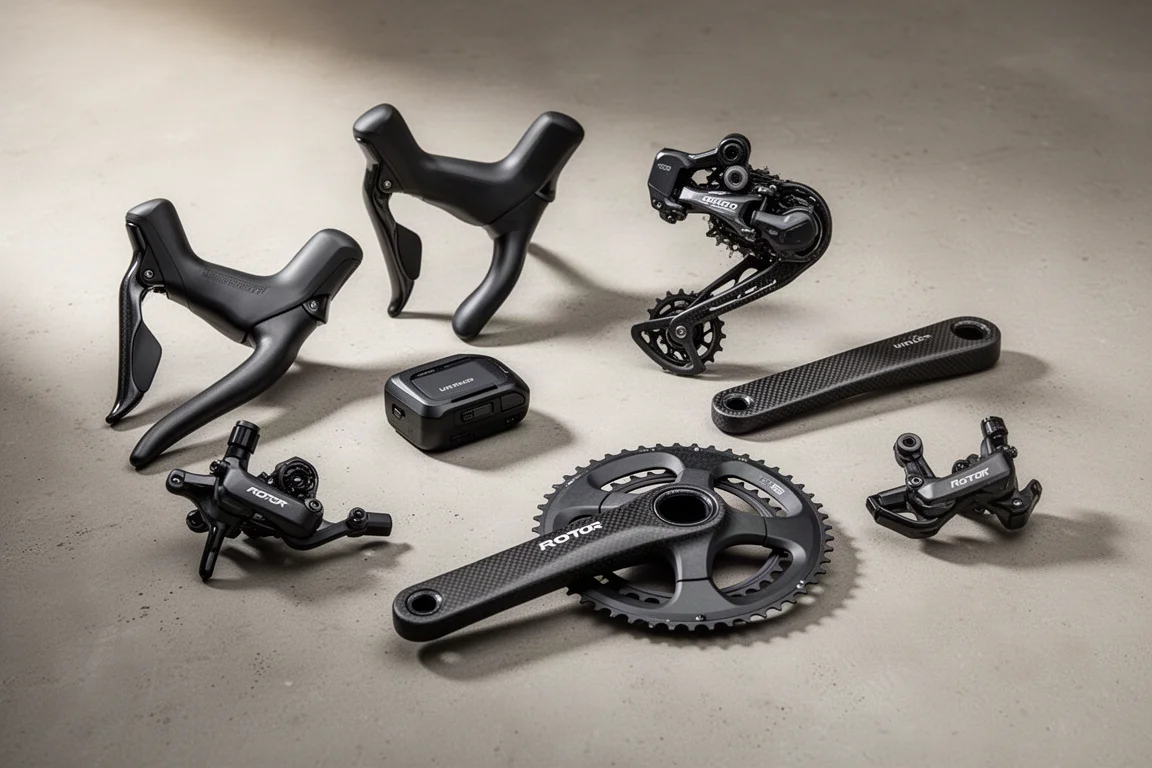
The main components are light enough to be competitive. The shift levers, powered by coin batteries, weigh 486g total. The rear derailleur, which serves as the brains of the system, weighs 403g and charges via a magnetic cable. Rotor claims 15,000 shifts per charge, which is a strong figure for extended gravel rides.
The gravel-specific rear derailleur has a cage long enough to handle a 46-tooth cassette. The test setup paired it with an 11-46 12-speed cassette weighing 544g. The carbon crankset features Rotor’s in-spider power meter and weighs 574g, while the brake calipers with hoses add 272g. The complete package comes in at 2,279g.
The groupset is also designed for broad drivetrain compatibility. Rotor claims full compatibility with 1x gravel groupsets on the market, and it can be configured for different speed counts through the app. That flexibility is impressive on paper, though making it work in practice is where the experience gets complicated.
Setup and Installation
This is where the Uno gets difficult. Online resources are limited, the printed manual is genuinely confusing, and the app provides instructions that do not always work in practice. During testing, chain tension became a major issue when running the 46-tooth cassette. The official guidance suggested adding one or two links, which is ambiguous, and the derailleur cage appeared to be too short for the 46-tooth setup.
Swapping to a 42-tooth cassette with an 11-speed chain resolved the tension issues, and the groupset shifted much better at that point. The clear takeaway is that the derailleur seems happiest with slightly smaller cassettes, even though the cage is marketed for 46-tooth use. Riders planning to run a 42 or 44 tooth cassette will likely have a smoother experience. The groupset also seemed sensitive to chain choice, with a standard chain behaving differently from a flat-top one.
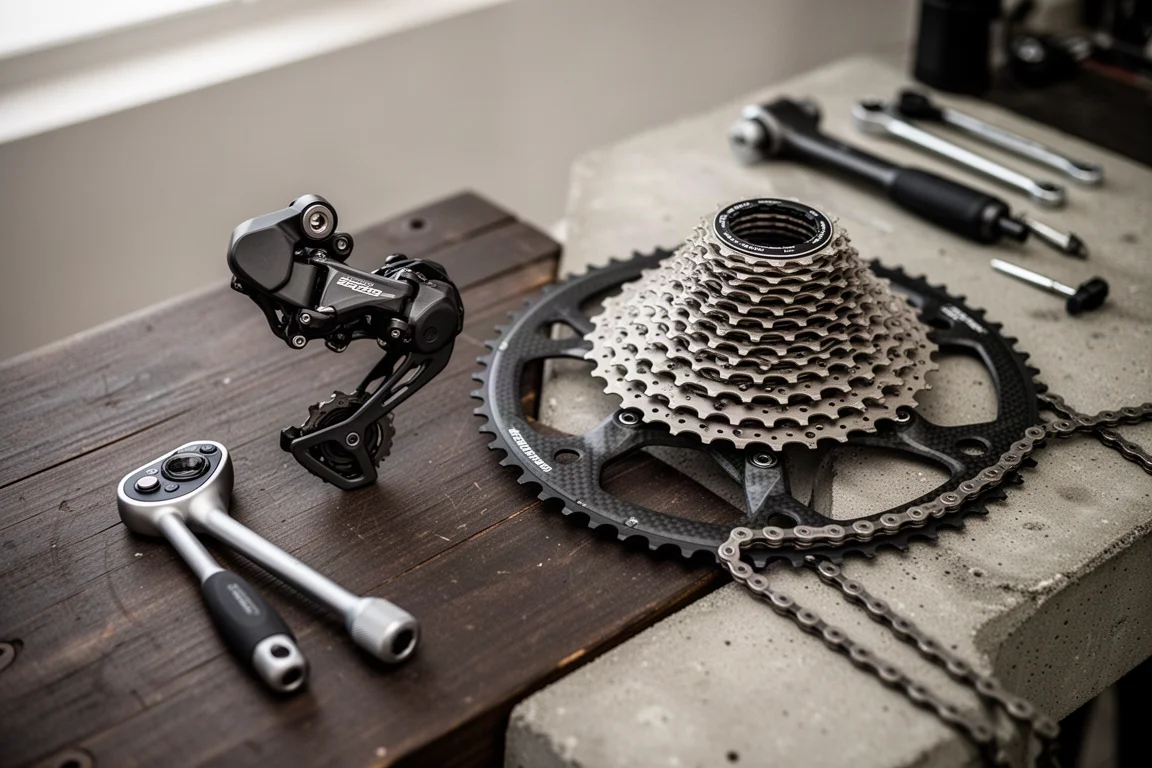
The manual could also be more complete. For a product that relies on precise setup, the lack of clear chain-length guidance is a real drawback. Home mechanics should expect to spend a significant amount of time troubleshooting, and the app ends up being used less like a companion tool and more like a virtual barrel adjuster.
Shifting Performance
Once running, the Uno shifts reasonably well through the cassette, but the behavior can change between rides. The groupset would shift perfectly one moment, then develop a stiff, cable-like hesitation the next, even though there are no gear cables involved. Returning to the bike a few minutes later would often restore clean shifting.
That inconsistency is the kind of thing that is hard to diagnose and harder to live with on a daily basis. It is not the same as a mechanical cable needing adjustment, and the intermittent nature makes it especially frustrating.
There is also an exposed cable area on the rear derailleur that caused no issues during testing but looks vulnerable to accidental clamping. It is worth being careful when handling the bike, particularly during transport or maintenance.
Braking and Lever Feel
The hydraulic brakes are a genuine strength of the Uno. They are powerful, easy to set up, and use Magura’s Royal Blood mineral oil, which will be familiar to riders who have used Magura products. The calipers performed as expected for hydraulic disc brakes, and the lever reach adjustment means riders with smaller or larger hands can dial in a comfortable position.
The long lever shape is clearly inspired by the design direction SRAM recently took with its own levers. SRAM changed its lever geometry to improve braking power by altering the angle of the internal mechanism, and the Rotor levers follow a similar visual language. They do not quite match that benchmark in performance, however. Braking power is not on the same level as the newest SRAM levers, and the claimed one-finger braking feel is not really achievable here. In practice, the brakes are perfectly acceptable and more in line with an earlier generation of SRAM braking.
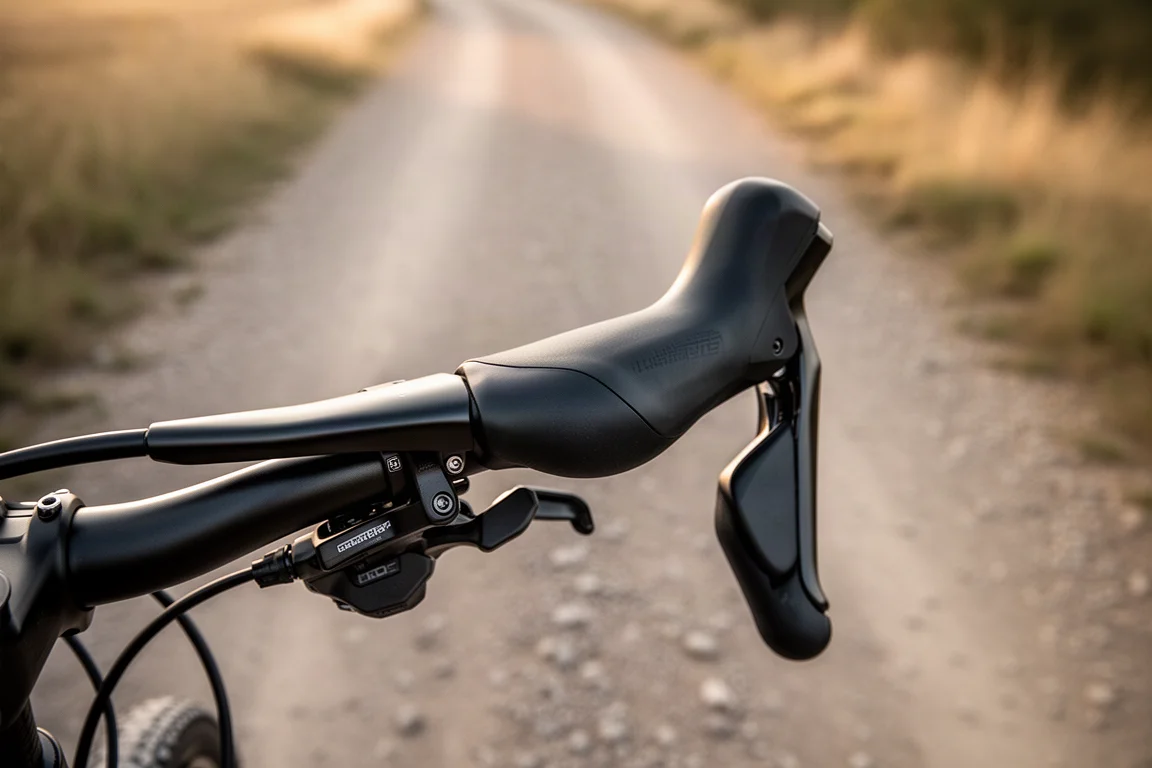
The shift buttons themselves feel good in the hand, and the levers are comfortable over longer rides. The overall ergonomics are solid, even if the lever length takes a moment to get used to.
App and Customization
The app is the centerpiece of the Uno experience. It lets you set the number of speeds, customize what the shift buttons do, and adjust the drivetrain like a virtual barrel adjuster. If you are used to SRAM’s eTap style shifting or Shimano’s Di2, you can program the buttons to match those layouts. That flexibility is genuinely useful for riders switching between brands.
The flip side is that the app is fiddly, and during testing it occasionally gave instructions that did not work. Connecting and reconnecting components can become a routine part of the experience, and the setup flow lacks the polish of more established systems.
During testing, the right shifter stopped shifting entirely despite the app showing a charge and a working status. Re-pairing the components eventually restored function, and a replacement shifter arrived within a week after contacting Rotor’s tech support. It was not a smooth process, but the support team did respond and resolve the hardware issue.
Buying Advice
The pricing situation makes the Uno a harder sell. The main components, meaning shifters, brakes, and derailleur, come in at around £725 or $960. Rotor offers several bundles with alloy or carbon cranks, with or without the power meter, and these bundles are discounted to varying degrees. New customers who sign up for the mailing list get an additional 10% off.
At that price point, the comparison with established groupsets is unavoidable. SRAM Apex is available online at a similar price, and Shimano’s GRX groupset can be found for around £1,099 complete with cranks. The Rotor Road One is listed at £1,071 on the website. The prices are close enough that the Uno needs to win on its own terms, and right now the setup friction and intermittent shifting make that difficult.
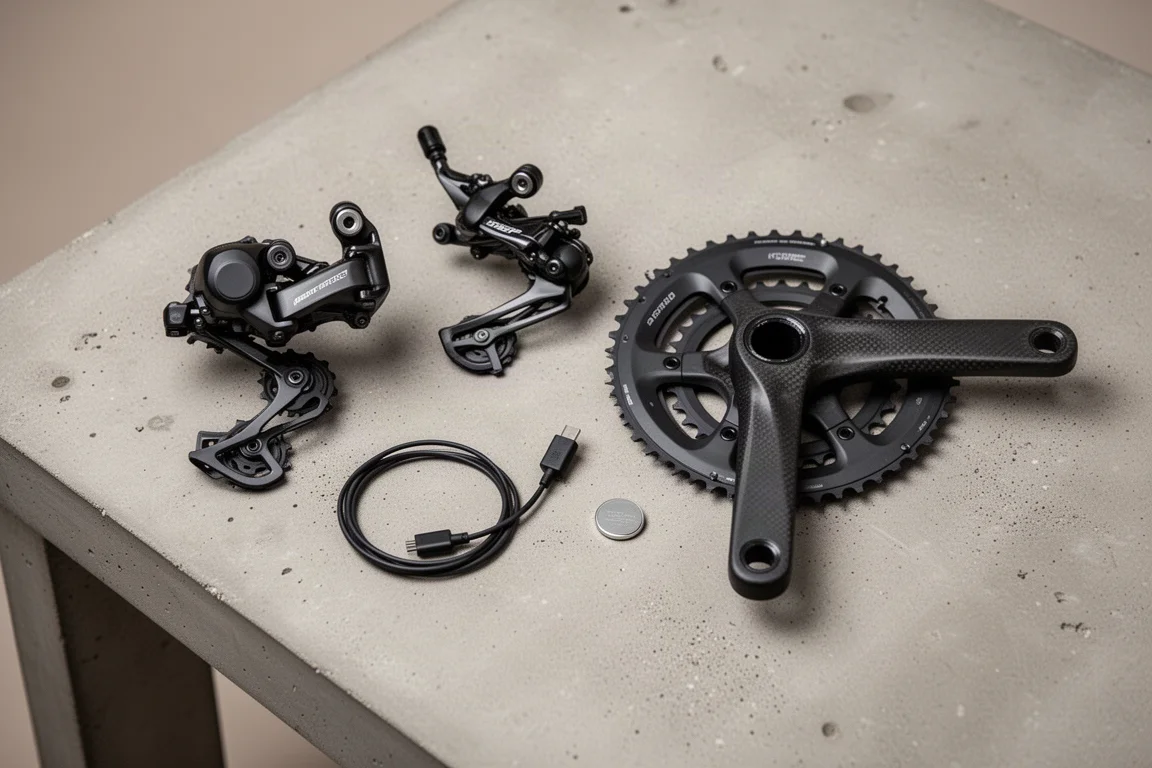
Where the Uno does win is in sheer flexibility and intent. It offers wireless shifting, powerful hydraulic brakes, speed compatibility from 10 to 13, and an integrated power meter option. For the right owner, that is a compelling list. This feels like a product that wants to exist and put pressure on the bigger brands, and that ambition is worth respecting.
Conclusion
The Rotor Uno is an ambitious wireless gravel groupset with a genuinely interesting feature set. The brakes are strong, the shifting is wireless, the app allows deep customization, and the power meter option adds real value.
The catch is the setup process and the reliability questions. The manual needs work, the app needs refinement, and the intermittent shifting behavior needs to be resolved. For riders who enjoy tinkering and want something different from the usual SRAM or Shimano builds, the Uno has real appeal. For everyone else, the more established options are still the safer bet.
This is a groupset with real potential, and firmware updates could improve the experience significantly. As it stands, it is best suited to patient, enthusiastic owners who do not mind spending time at the workbench.
Product link
View more details for Rotor Uno Groupset
This product is mentioned in the review. Check the specifications, options, and compatibility before buying.
View more details for Rotor Uno GroupsetFurther reading
Related Reviews
Cycling Components
A 20,000-Mile Budget Race Bike Build: Five Parts Worth Knowing
A rim brake race bike assembled from low-cost components and ridden for 20,000 miles. Here is what delivered real speed, what caused problems, and what to weigh before copying the formula.
Cycling Components
7 Bike Fit Products Fitters Avoid: What to Check Before You Buy
Seven bike components that regularly cause knee, foot and saddle problems, with the specific concerns behind each one and what to look for instead.
Cycling Components
Four Affordable Bike Upgrades That Improve Ride Feel
Four low-cost cycling products that make a real difference to ride feel, plus the free setup changes worth trying first.