Cycling Components
Rotor Uno 1x Groupset Review: Wireless Gravel Shifting With Caveats
An electronic wireless 1x gravel groupset with strong hydraulic brakes and broad claimed compatibility, weighed against a fiddly setup and inconsistent shifting.
Introduction
Rotor has spent years making groupsets that go their own way. The Spanish brand’s earlier experiments included hydraulically operated shifting routed through tiny hoses. The Rotor Uno 1x is a far more conventional proposition by comparison: an electronic, fully wireless gravel groupset that can be configured to run 10, 11, 12 or 13 speeds.
Rotor is not quite the same company it once was. Chinese manufacturer Wheel Top acquired a majority stake in 2024. Officially named Langji Wheel Top Cycle Industries Limited, the company has reportedly been operating since 1951 and historically built OEM parts for bike manufacturers rather than selling to riders directly. It now sells direct, with its own road, gravel and mountain bike groupsets, and the Uno 1x clearly draws on technology used across that range.
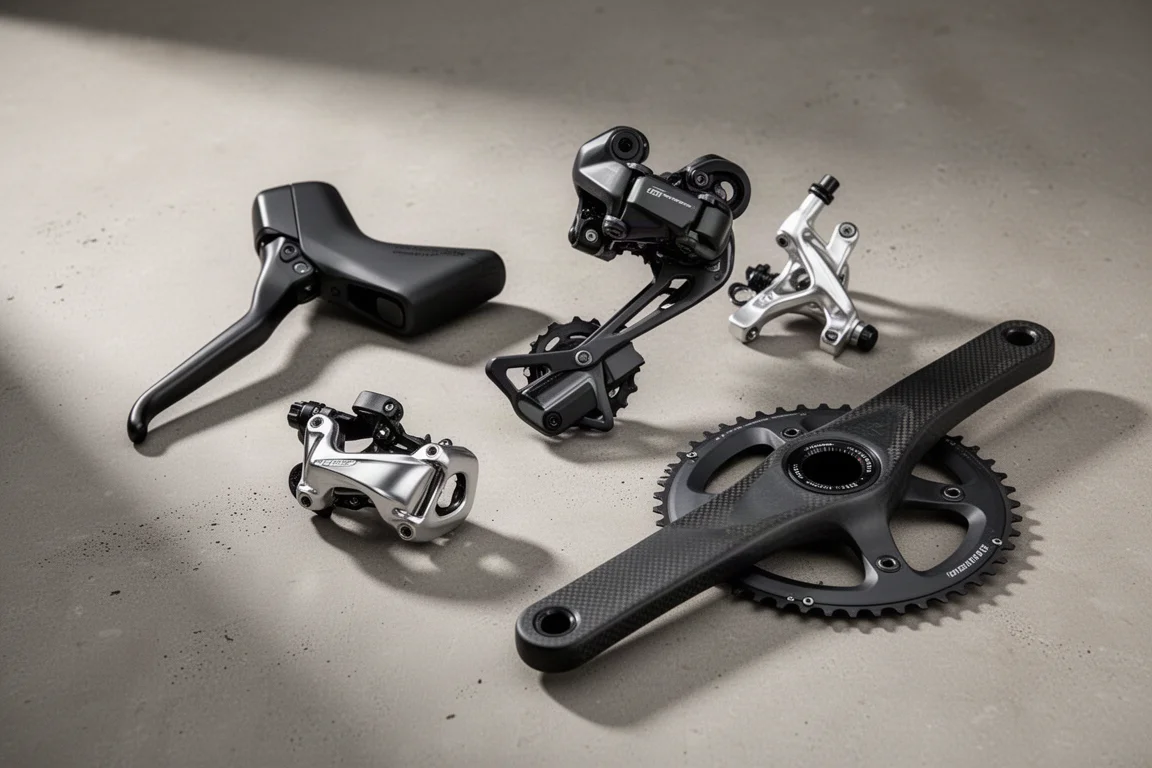
The groupset arrives as a collection of parts. Shift levers powered by coin batteries come in at 486 g, the rear derailleur and control unit at 403 g, brake calipers with hoses at 272 g, an 11-46 12-speed cassette at 544 g, and a carbon crankset with an in-spider power meter at 574 g. That totals 2,279 g, or 2.279 kg.
Who This Groupset Is For
This is a premium groupset built around features that are not strictly necessary on a bicycle but are genuinely nice to have: wireless electronic shifting, hydraulic disc brakes, and an app that connects to the system so you can customise what the buttons do.
It makes most sense for a few specific riders. If you have reduced grip strength, or you ride a loaded bike, hydraulic brakes and light-touch electronic shift buttons can make a real difference. If you already run a Rotor crank, matching the rest of the drivetrain to it is a natural step. And if you simply want something other than SRAM or Shimano underneath you, this is a drivetrain people will ask about.

The claimed compatibility is the headline feature. Rotor says the system works with different numbers of speeds and claims full compatibility with any 1x gravel groupset on the market. Making that work requires a specific configuration step inside the app, and that process is fiddly rather than intuitive. The app also lets you remap the shift buttons, so riders coming from SRAM’s eTap layout or Shimano’s Di2 can set the levers up to match what their hands already expect.
Main Strengths
First impressions on the bike are positive. The system shifts well, the levers feel good in the hand, and the rear derailleur goes about its job without drama. The shifters are noticeably long, which gives them a distinctly modern, SRAM-adjacent feel, and the calipers carry a little silver detailing that lifts the overall look.
The rear derailleur is gravel-specific, with a cage that is long enough on paper to accommodate a 46-tooth cassette. It charges through a magnetic cable, and Rotor claims a single charge is good for 15,000 shifts.
Shifting Feel and Ergonomics
The levers include reach adjustment, so riders with smaller or larger hands can set how far the lever sits from the bar. That is a practical touch at this level and makes the cockpit easier to dial in properly.
Brakes and Lever Design
The brakes are hydraulic disc brakes and they perform as you would expect from that category: powerful, easy to set up, and consistent. Interestingly, the system uses Magura’s Royal Blood mineral oil. Rotor has collaborated with Magura in the past, so this may be another example of that relationship, though it is not confirmed.
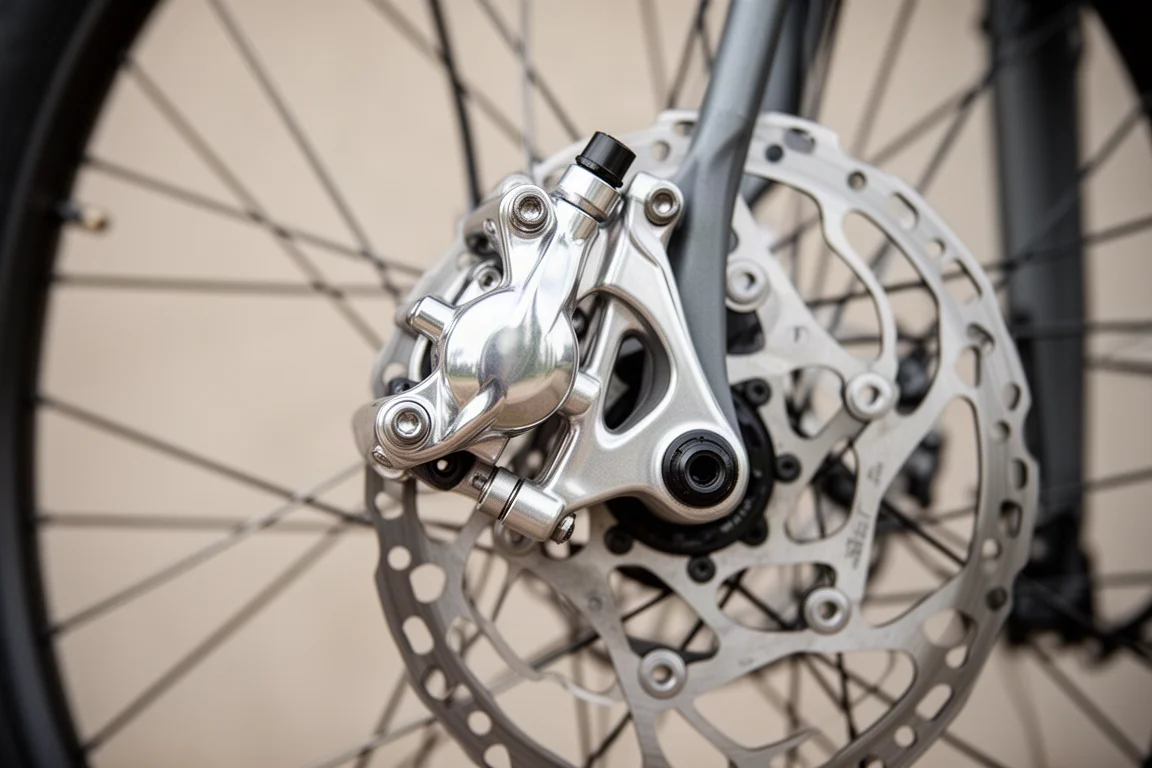
The lever shape has clearly been inspired by SRAM, and the resemblance is not purely cosmetic. SRAM redesigned its levers to change the angle of the internal mechanism, which improved braking power and enabled one-finger braking. The Rotor levers look similar but do not perform the same way. They are not as powerful, and they do not deliver one-finger braking. In practice they are perfectly acceptable and closer to SRAM’s older braking systems, and most riders will not run into problems with them.
Things to Consider Before Buying
Setup is the biggest caveat, and it is worth being straightforward about how much patience it can demand. Online documentation is limited, the manual is confusing, and the app instructions do not always work as written. During installation the app ended up being used almost like a mechanical barrel adjuster, which is probably not the intended approach.
If the groupset comes fitted to a new bike, or you always hand your bike to a professional mechanic, living with it is far simpler. For a home mechanic building it up from scratch, the experience is considerably more involved.
Installation and Setup
Pairing and configuration caused real friction. The instructions were followed closely without success, and the system only began working after a process of unpairing and re-pairing the components, in the way you might troubleshoot a misbehaving Bluetooth device. On one occasion the right shifter stopped shifting entirely even though the app reported that it had charge and was working. Rotor’s technical support helped with troubleshooting and a replacement shifter arrived within a week, but public feedback about Rotor’s support responsiveness has not always been positive.
It is also worth noting that this is a 1x system, so in a typical build the left shifter can be configured to work like a right shifter, with one button shifting up and one shifting down. It works, but it takes some adjustment.

Chain Tension and Reliability
Chain setup is the other area that needs care. The derailleur’s B-tension screw was set within the recommended 10 to 13 mm range, which worked fine until the chain moved onto the 11-tooth cog and went slack. Shortening the chain by a link then left it too short, and resetting the B-tension with the shorter chain did not resolve it. General guidance to size the chain on the big ring and big cog plus one or two links is not useful here, because this is a 1x-only groupset. The likely cause is a cage that is a touch short for a 46-tooth cassette.
Running a 42-tooth cassette with an 11-speed chain produced noticeably better shifting and chain tension, and a 44- or 42-tooth cassette looks like the sweet spot for this derailleur. A flat-top chain may also be a poor match; a standard chain is the better bet.
Shifting consistency is worth flagging as well. The system can run through the cassette perfectly, then mis-shift at a few points minutes later with nothing changed, then return to perfect shifting again. It behaves like a sticky gear cable, which is an odd characteristic for a system with no gear cables at all. After a replacement shifter was fitted, mis-shifts were still occurring, just occasionally, and reliability did not match SRAM or Shimano. A firmware update attempt that reported upgrading from version 2.79 to version 2.79 changed nothing.
There is also an exposed cable on the rear derailleur. It has not caused any problems, but it looks easy to clamp accidentally in a way that could damage it.
Buying Advice
The main groupset components, meaning shifters, brakes and rear derailleur, come in at around £725 or $960. Rotor also sells bundles that add cranks, with alloy and carbon options plus power meter versions of each, discounted by varying amounts. New customers who join the mailing list get a further 10 percent off, which makes the bundle pricing more attractive than the headline figure suggests.
The comparison that matters is what else that money buys. A SRAM Apex groupset can be found online at roughly the same price, and some riders would rather accept a weight penalty than take on the setup and reliability challenges described here. Shimano’s GRX groupset is listed at £1,099 including a crank, against £1,071 for the Rotor Uno on Rotor’s own website. Those numbers are close enough that the value case is not obvious.
The honest summary is that this groupset rewards a particular kind of buyer. If you enjoy tinkering, if you like getting under the hood of a system and making it behave, the Uno 1x is an interesting project with genuinely appealing hardware. If you want a drivetrain that installs predictably and shifts the same way every time, the more established options remain the safer choice. It is encouraging to see Rotor and Wheel Top pushing into this space, and competition benefits everyone, but this experience is uneven.
Conclusion
The Rotor Uno 1x gets a lot right on paper: wireless electronic shifting, powerful hydraulic brakes, reach adjustment, app customisation, and a claimed ability to work with 10, 11, 12 or 13 speeds and with any 1x gravel groupset. The hardware itself feels good, the brakes are strong, and the weights are competitive for what is included.
The problems are in the details. Documentation is thin, setup is fiddly, chain tension with a 46-tooth cassette is difficult to get right, and shifting is not consistently reliable. A firmware update and a rewritten app could change that picture considerably, but that is potential rather than a promise. Until then, the Uno 1x is best suited to patient tinkerers rather than riders who want a quiet, dependable drivetrain straight out of the box.
Product link
View more details for Rotor Uno 1x Groupset
This product is mentioned in the review. Check the specifications, options, and compatibility before buying.
View more details for Rotor Uno 1x GroupsetFurther reading
Related Reviews
Cycling Components
A 20,000-Mile Budget Race Bike Build: Five Parts Worth Knowing
A rim brake race bike assembled from low-cost components and ridden for 20,000 miles. Here is what delivered real speed, what caused problems, and what to weigh before copying the formula.
Cycling Components
7 Bike Fit Products Fitters Avoid: What to Check Before You Buy
Seven bike components that regularly cause knee, foot and saddle problems, with the specific concerns behind each one and what to look for instead.
Cycling Components
Four Affordable Bike Upgrades That Improve Ride Feel
Four low-cost cycling products that make a real difference to ride feel, plus the free setup changes worth trying first.