Integrated Streaming Amplifiers
Rotel S14 Integrated Network Streamer Review: One-Box Streaming and Amplification
A compact integrated network streamer with a 32-bit ESS Saber DAC, a Class AB amplifier rated at 80 watts into 8 ohms, and a genuinely simple setup process.
Introduction
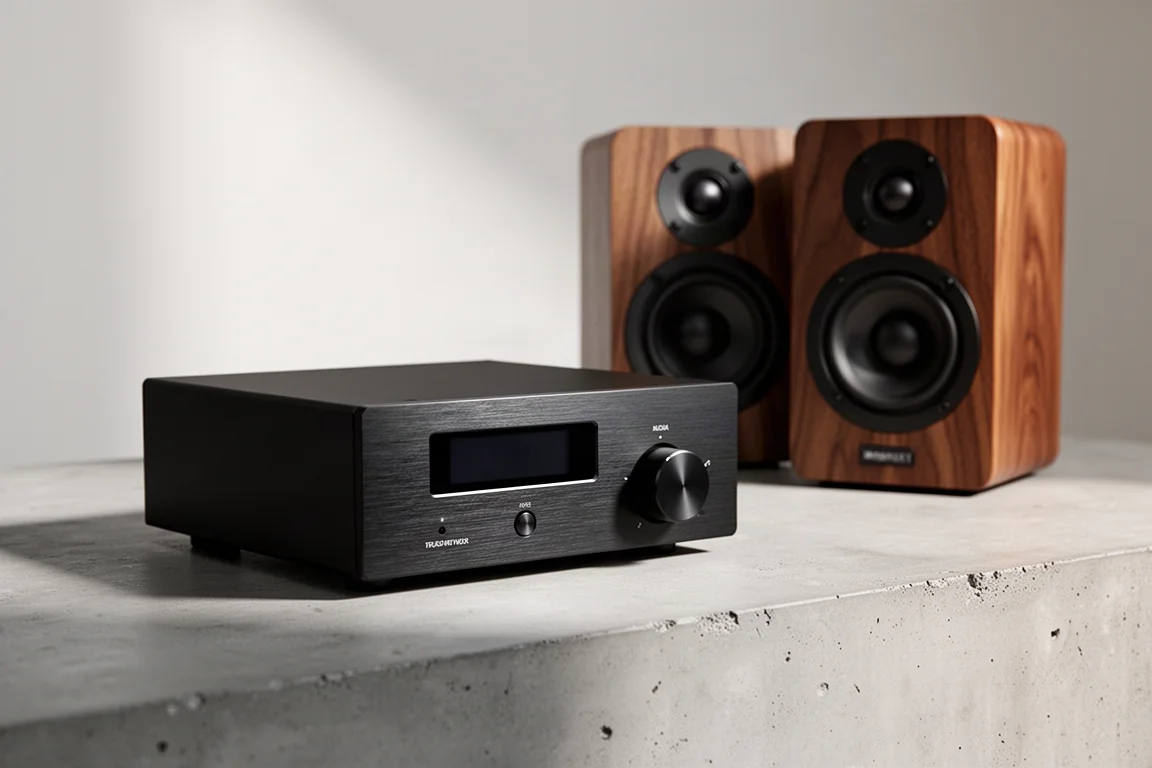
The Rotel S14 is an integrated network streamer: a streaming source and a stereo integrated amplifier built into a single compact chassis. Rotel held back on streaming until the technology had matured into a genuinely reliable music source, then folded it into its own designs so the streaming section would be as dependable and as enjoyable as the rest of the lineup.
The result is a one-box system that asks only for a pair of speakers. Output is rated at 80 watts per channel into 8 ohms and 150 watts per channel into 4 ohms, and the internal digital-to-analog converter is a 32-bit ESS Saber chip. Streaming services, local network playback, Roon, Bluetooth and computer audio all feed the same amplifier section.
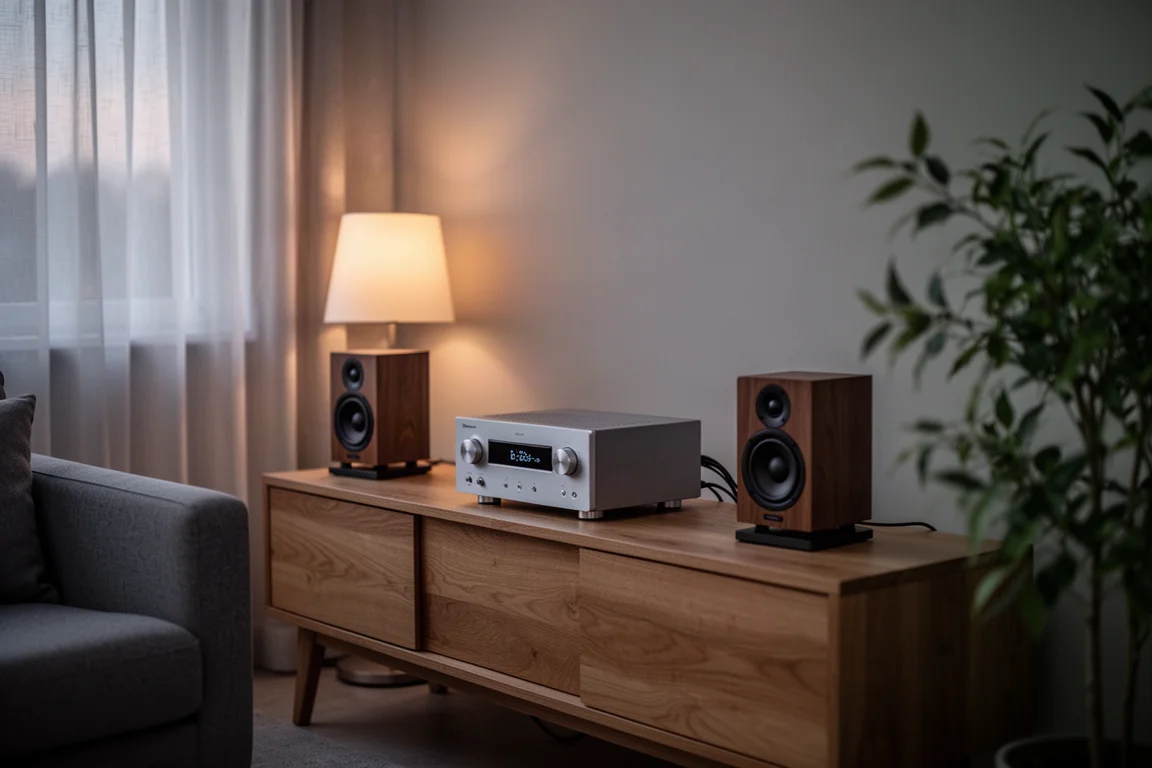
That mix of streaming flexibility and a traditional Class AB power stage is what makes the S14 interesting. It is small enough to disappear into a shelf, yet the specification sheet reads like a serious piece of hi-fi rather than a lifestyle gadget.
Who This Streamer Is For
The S14 suits listeners who want real hi-fi sound without a rack of separate components and the wiring that comes with them. It is a sensible starting point for an audiophile journey, a straightforward option for a second system, and an appealing choice for anyone who would rather not manage a separate streamer, DAC and amplifier.
It also helps that getting started is approachable for people who would rather avoid complex technology. Setup took a power cable and an ethernet connection to the router, followed by roughly a five minute update, after which the unit was paired through the Google Home app on an Android or Apple device. Once connected, selecting the S14 as the playback output in Spotify, Qobuz or another major streaming service sends music straight to it.
Main Strengths
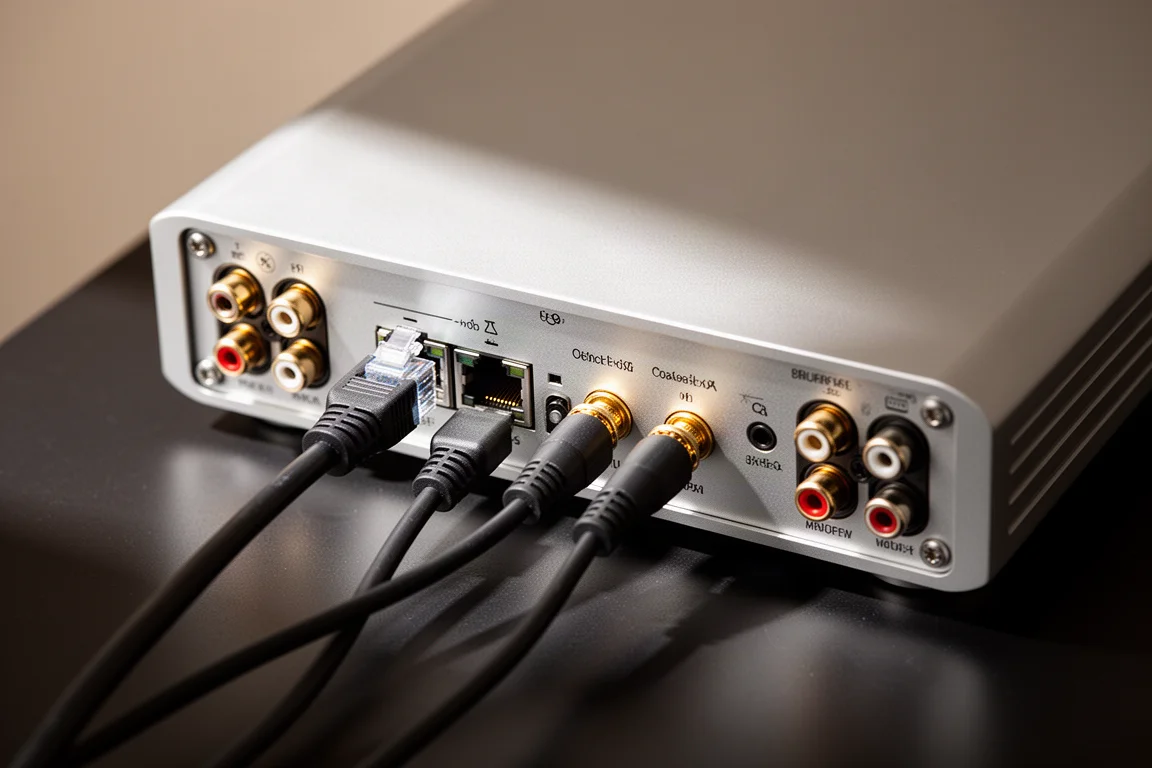
The S14’s strongest argument is how many ways it lets you listen. There is wired network streaming and Wi-Fi, Bluetooth through an aptX HD receiver, a USB type A port for flash drives, coaxial and optical digital inputs, a USB type B computer input, and an analog input for a component such as a phono preamp. Roon users are covered too, because the unit is Roon Ready.
Just as important is what sits behind those inputs. Rotel designed and built the S14 itself, sourcing only the streaming section from outside, and it chose those streaming components carefully for the reliability the brand is known for. The amplifier section is almost identical to the one in Rotel’s A14 MKII integrated amplifier, built around a Rotel-made toroidal transformer and stiffening capacitors.
Small details reinforce the sense of value. The supplied remote uses an aluminum housing with clearly labeled buttons, a clear step above the generic plastic handsets that accompany much of today’s gear. The unit itself feels heavier than its footprint suggests, and the black finish is assembled to a high standard.
Build Quality and Front Panel Layout
In the box you get two different power cables, an ethernet cable, and a flash drive holding the Windows update needed for computer audio over USB. The chassis is compact but substantial, and the front panel is deliberately simple rather than sparse.
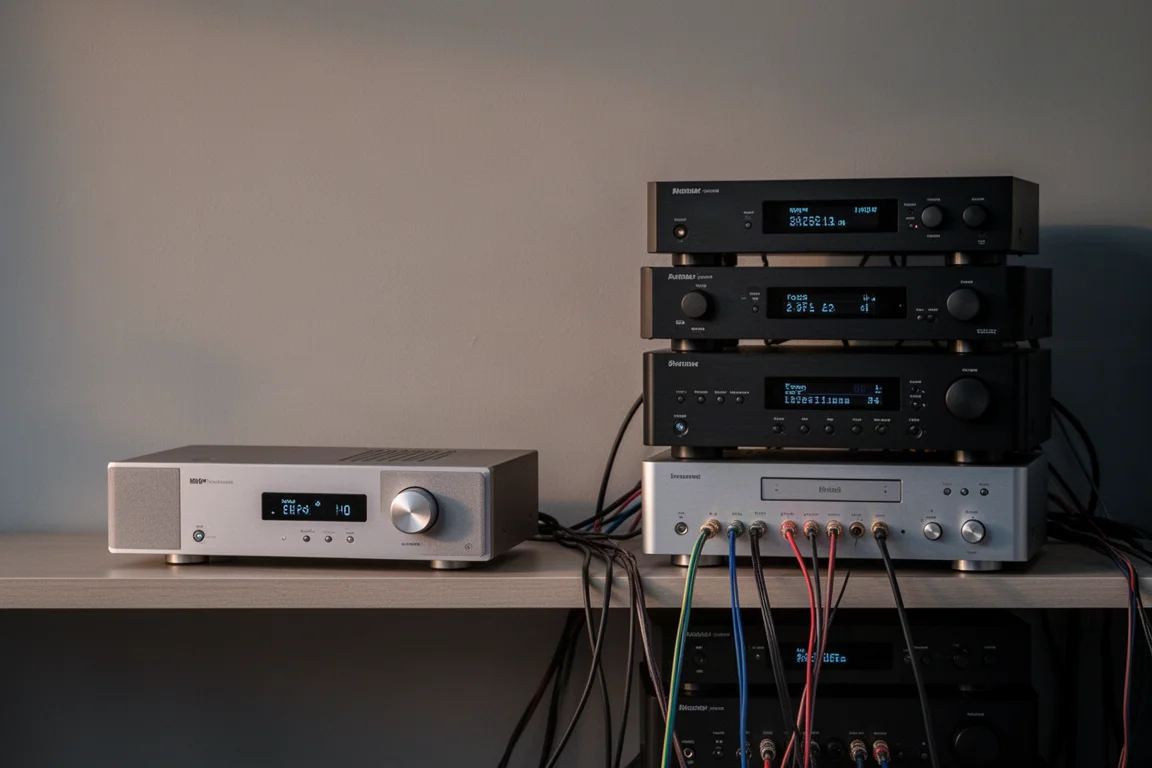
On the left sits the power button, with a 3.5 mm headphone output beside it. Dedicated buttons select each input directly, so there is no need to cycle through menus to find the right source. A small non-touch LCD, roughly two inches by three inches, shows menu options and the music currently streaming, while menu and plus/minus buttons handle settings and a single volume knob does the rest. It is a clean layout that stays effective without burying basic controls in remote menus.
Setup, Connectivity, and Streaming
Wired setup is about as painless as it gets. With the power cable connected and the ethernet cable run to the router, the S14 was up and running shortly after an update. On a wireless network you will need to go through the menu, select your network and enter your credentials. Rotel also offers its own control app for the S14; at the time of testing that app was going through updates, so it could not be verified here.
Computer audio is well covered. Connecting a PC over USB lets the S14’s internal DAC handle playback after installing the Windows update from the included flash drive, and the unit is Roon Ready for listeners already invested in that ecosystem. On format support, the DAC handles 24-bit/192 kHz from a USB type A flash drive and over coaxial and optical connections, while the USB type B computer input accepts up to 32-bit/384 kHz. MQA and MQA Studio files are supported. DSD is not listed in the specifications, and playback attempts confirmed it is not supported. The aptX HD Bluetooth receiver supports 24-bit/48 kHz, and streaming services deliver high-resolution audio through the unit.
Amplifier Performance and Sound
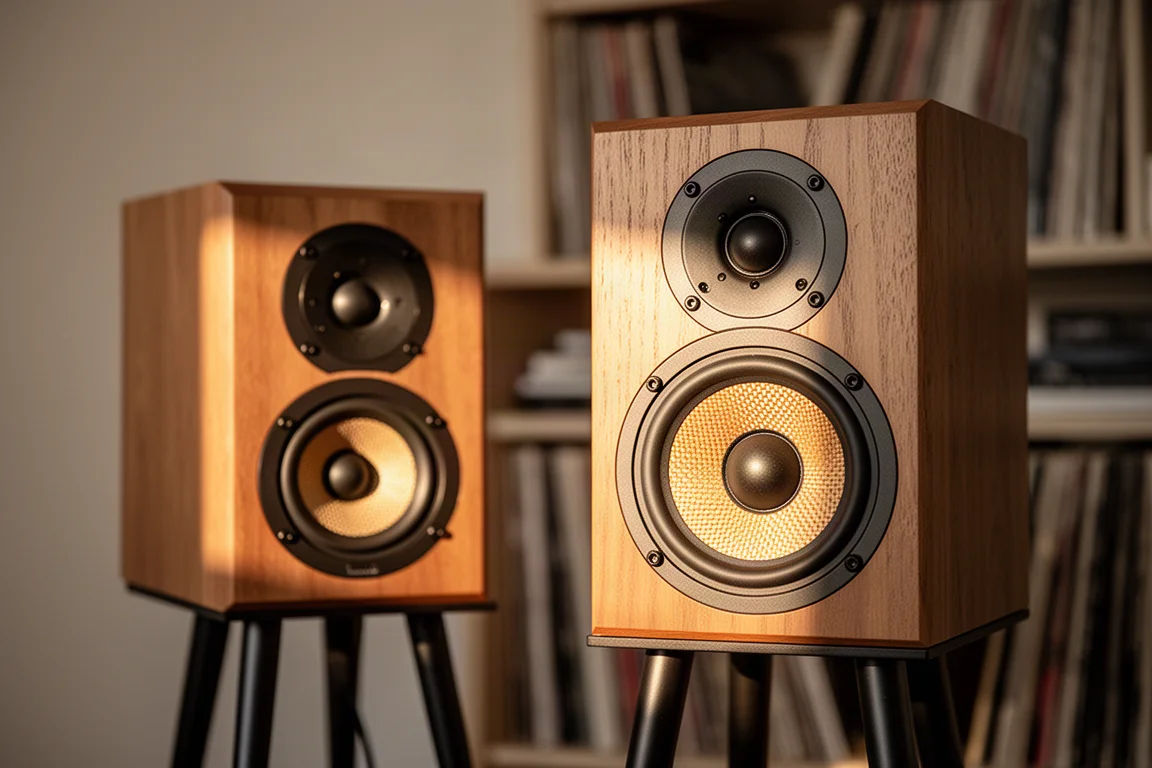
The amplifier uses a Class AB design, and that choice pays off. Paired with stand-mount speakers rated at 81 dB sensitivity and an 8 ohm load, a genuinely difficult combination, the S14 drove them to around 83 dB while keeping its composure. Only when pushed above that level did the highs begin to strain and the soundstage start to collapse slightly. At normal listening levels the soundstage was wide and imaging was pinpoint.
The transformer and stiffening capacitors give the S14 headroom that cheaper integrated amplifiers and AV receivers simply do not have, which is why it handled those low-sensitivity speakers where lesser units would struggle. Streaming over ethernet from an Android device, the most likely way the unit will be used, sounded excellent. Wi-Fi showed little if any decrease in sound quality, and Bluetooth sounded good, though understandably not as good as a hardwired connection, which is fine for casual listening.
Where the S14 sets its own ceiling is in the finer points. Pace and rhythm are not the last word, and image depth does not quite match what good separate components or a higher-end integrated amplifier deliver. The internal DAC is well implemented and serves the music well, but it will not compete with a true high-end standalone converter in micro detail, transparency, image depth or soundstage.
Things to Consider Before Buying
DSD playback is not supported, so listeners with a DSD library will need another path for those files. The Rotel control app could not be verified during testing, so if app-based control matters to you, it is worth confirming the current state of that app before committing.
It is also worth being realistic about what an all-in-one can do. The S14 will not match a carefully chosen separates system, and its soundstage, transparency and image depth sit below a dedicated high-end DAC and amplifier pairing. Wireless setup is slightly more involved than the wired route, since you need to select the network and enter credentials through the menu. And as with any integrated streaming amplifier, you will still need to supply the speakers.
Buying Advice
Buy the S14 if you want the essentials of high-end audio in one affordable, reliable, compact box that is easy to set up and operate. It covers an unusually wide range of sources, from wired network streaming and Wi-Fi to Bluetooth, USB drives, coaxial and optical digital inputs, a computer over USB and an analog component such as a phono preamp, and it drives demanding speakers with headroom to spare.
If you already own a high-quality separate DAC and amplifier and care most about micro detail and image depth, those components will likely remain the better path. If you are building a first serious system, adding a simple second system, or simply want to avoid the fuss of separate boxes and cables, the S14 is an easy recommendation.
Conclusion
The Rotel S14 delivers a taste of high-end audio in a package that is affordable, reliable, compact and genuinely simple to live with. Its connection options are extensive, its Class AB power section has real headroom, and its DAC implementation is handled well. It will not out-resolve a hand-picked separates system, and DSD is off the table, but as a single box that turns a pair of speakers into a complete streaming system, it makes a strong case for itself.
Product link
View more details for Rotel S14 Integrated Network Streamer
This product is mentioned in the review. Check the specifications, options, and compatibility before buying.
View more details for Rotel S14 Integrated Network StreamerFurther reading
Related Reviews
Hi-Fi Audio
Accuphase C-57 vs Allnic H-7000V: Two High-End Phono Stages Compared
A fully balanced solid-state phono stage with a pitch-black noise floor meets a tube design built for well-loved records. Here is how to choose between them.
Hi-Fi Amplifiers
Accuphase E-280 Review: Entry-Level Accuphase With Flagship Attention to Detail
A close look at the Accuphase E-280 integrated amplifier, covering its champagne build, AAVA volume control, sound quality, and the speakers and sources that suit it best.
High-End Audio
Accuphase E-3000 Review: A Class AB Integrated Amplifier Built to Last
The Accuphase E-3000 is the entry point into a legendary Japanese high-end line. Here is how it sounds, how it is built, and who should consider it.