Hi-Fi Audio
Rotel Diamond Series: DT-6000 CD Player/DAC and RA-6000 Integrated Amplifier
A practical look at Rotel's 60th anniversary Diamond series, covering the DT-6000 CD player and DAC and the RA-6000 integrated amplifier, from internal engineering to real listening notes.
Introduction
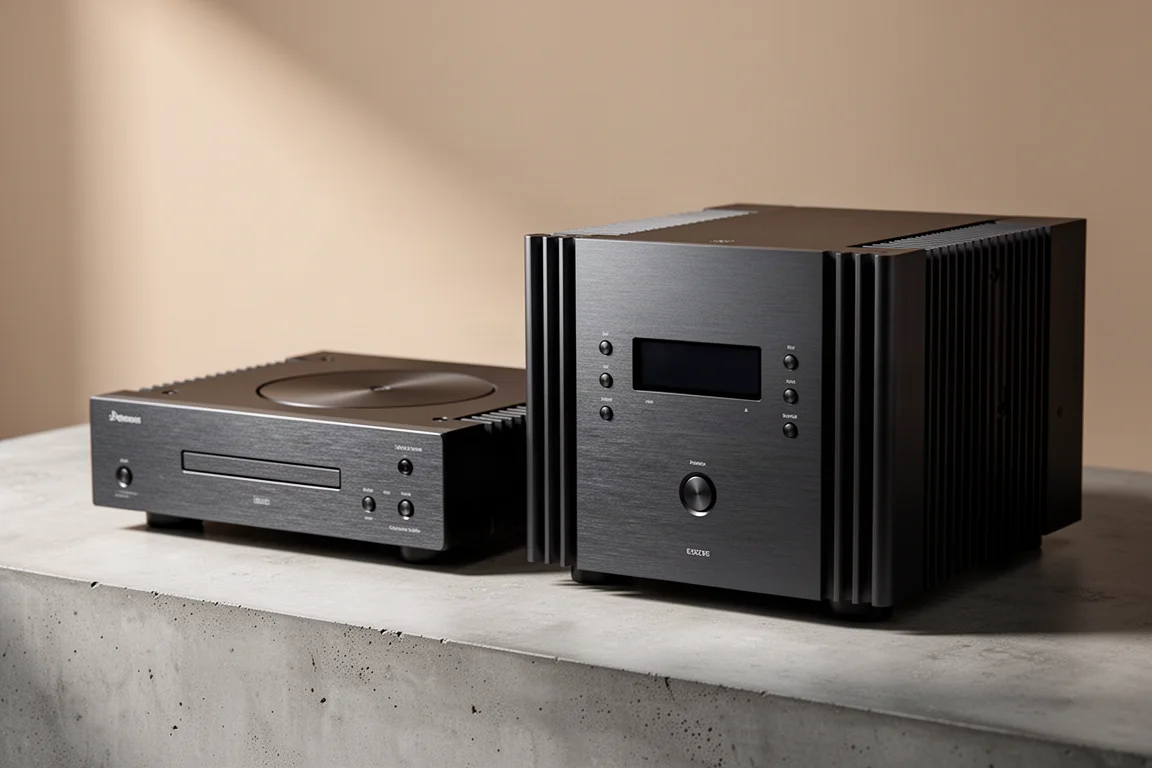
Rotel is marking 60 years in the audio business with a new series called Diamond, and the first two products in the line are the DT-6000 CD player with a built-in DAC and the RA-6000 integrated amplifier. The Diamond series sits between Rotel’s more affordable components and the Michi range, which means it carries a serious amount of engineering inside while keeping the familiar Rotel look and a cost closer to the company’s core products. This article covers what each piece does, how the two work together, and which one makes the most sense for a given system.
What the Rotel Diamond Series Is
Rotel has spent decades building no-frills audio gear that performs well above its price. The Michi series took the company into an entirely new price category with a different design and a much higher price point, and the Mark II versions of Rotel’s main products later borrowed technology from that development work. Diamond lands between the two. Michi engineering goes into the parts you do not see from the outside, while the exterior stays clean and simple to keep the cost closer to typical Rotel gear.
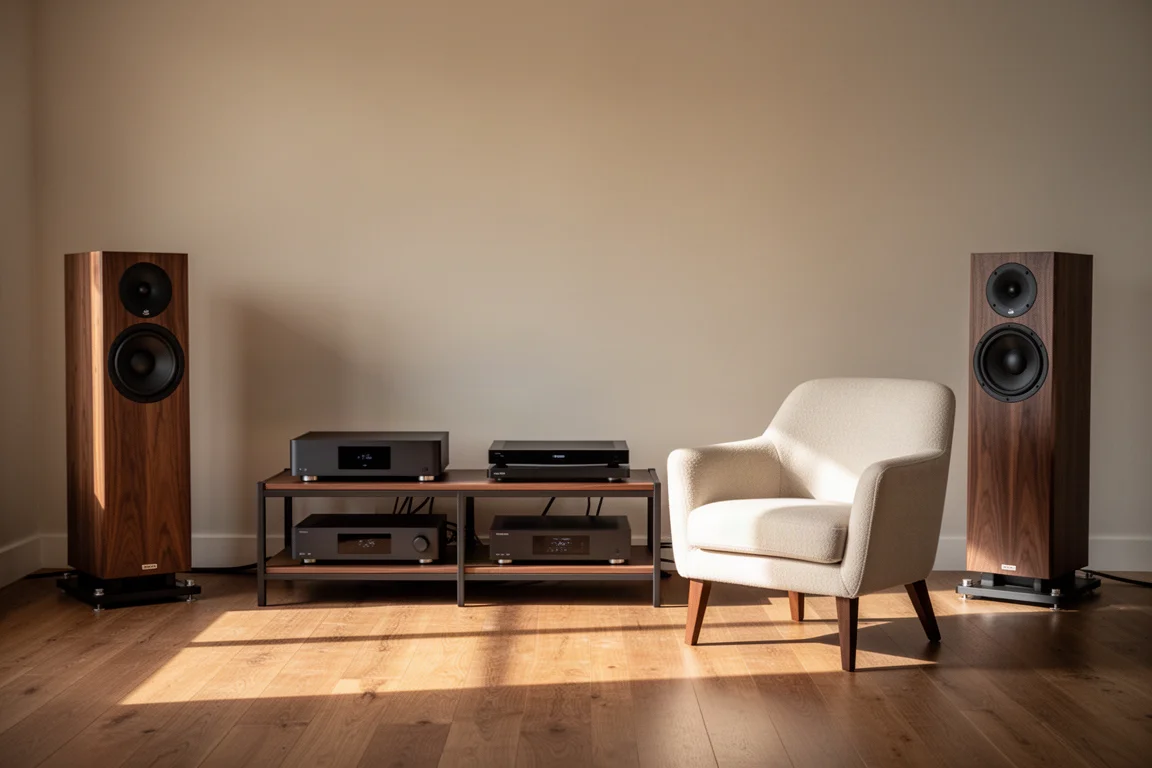
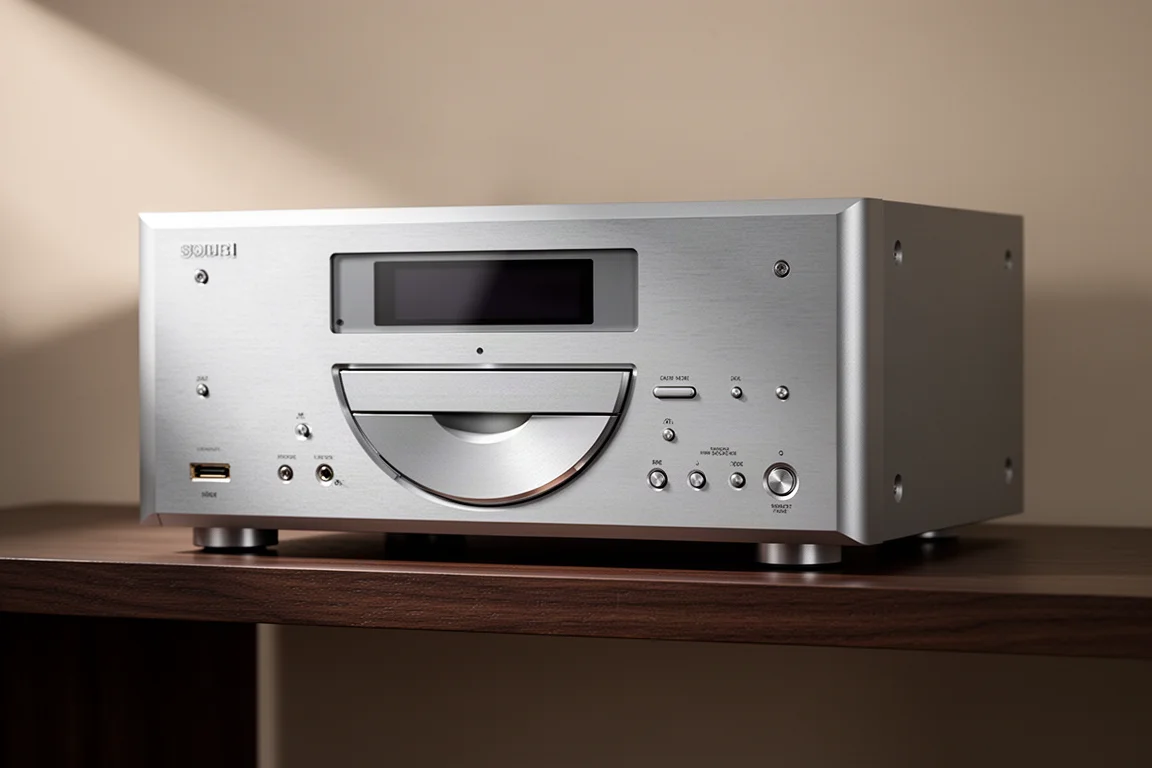
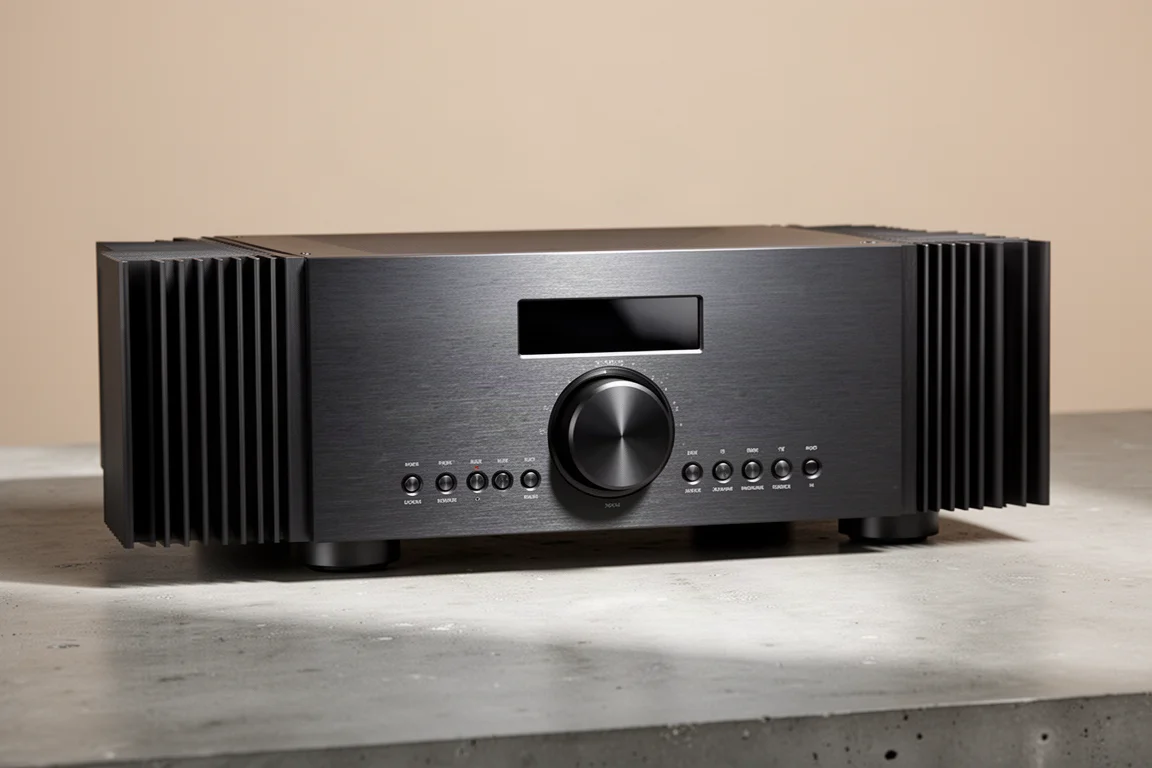
The first two models are the DT-6000 and the RA-6000. Both are available in black or silver, and both share the same control approach, with small round buttons arranged symmetrically across the front panel and a central LCD display.
Design and Build: What the Diamond Series Shares
Both Diamond components follow the Rotel appearance closely, with heat-sink style fins added on either side of the front panel for a beefier look. The small round buttons feel solid, the rear panel connectors are well put together, and the overall fit and finish is nicely done. Build quality feels consistent with other Rotel components, which is a high bar to meet.
The more interesting story is what sits behind that familiar face. Where Michi used a much more expensive outer chassis and front panel, Diamond puts its budget into the internal engineering instead, which is exactly the trade-off most buyers in this price range are looking for.
Rotel DT-6000 CD Player and DAC
The DT-6000 began as an effort to build a far better CD player than Rotel had made before. The digital to analog converter plays one of the most critical roles in that, so the design team tested converters from several specialist suppliers before working with ESS on a high-end multi-channel design that had previously been used mainly in expensive home theater receivers. Configured for stereo use with ESS engineers, it allows four DACs per channel and a fully balanced audio path from beginning to end, which greatly reduces the noise floor.
Power delivery gets the same attention. A custom low-noise toroidal transformer made at Rotel feeds independent analog and digital voltage regulators, and the circuit boards use isolation and decoupling designs carried down from the top Michi products to reduce noise and distortion in both the analog and digital sections. The converter itself is an ESS Saber ES9028 Pro, and the signal path from the DAC to the analog outputs is a fully balanced differential circuit using capacitors originally designed for the Michi series.
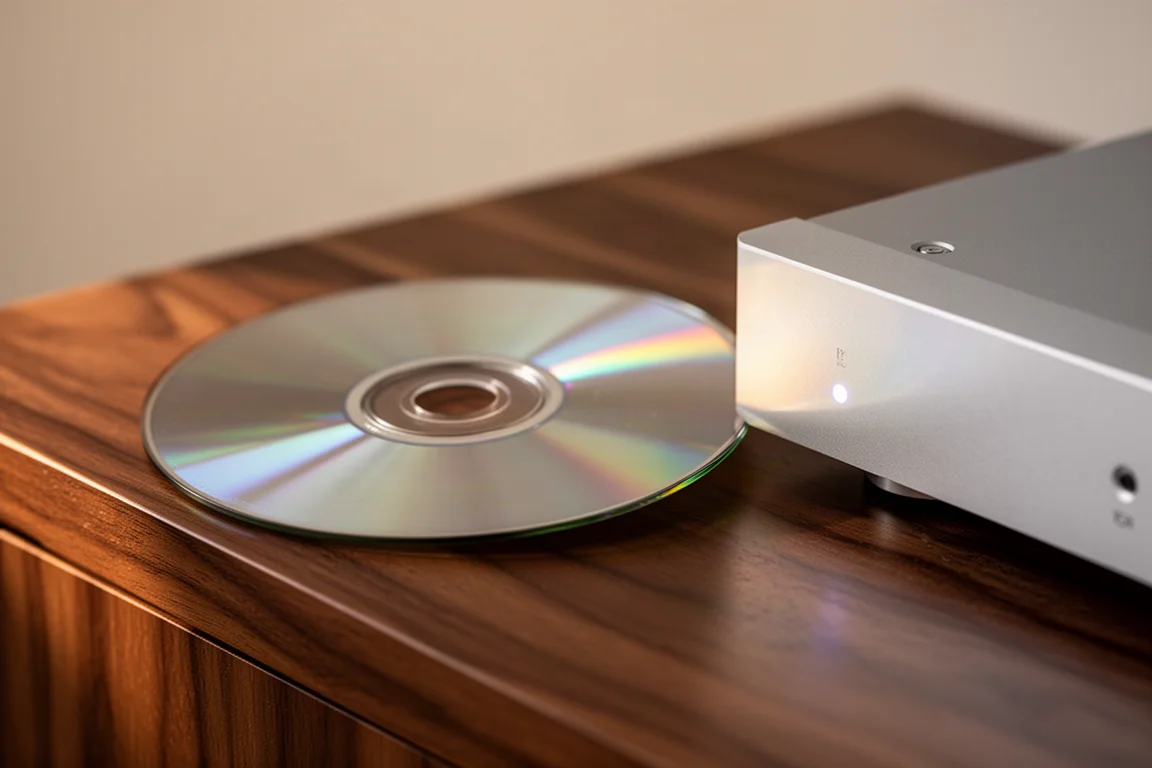
The transport was built with the same intent. The CD mechanism is spring loaded with damping materials to reduce vibration during playback, and a precision motor-driven optical laser system reads the disc. On the rear panel there are IR jacks and an RS-232 connection for control systems, plus balanced audio connectors to match the fully balanced internal path.
The original concept was a CD player only. Once the team heard how good it sounded, they went back to the drawing board to add multiple digital inputs, a decision that delayed the project by almost a year but makes the DT-6000 far more useful in a modern system.
Digital Inputs, MQA, and Roon Support on the DT-6000
The DT-6000 offers Toslink, coaxial, and PC inputs. The PC input handles high-resolution PCM audio up to 32-bit/384kHz, unfolds and renders MQA and MQA Studio, and supports a wide range of DSD files.
There is deliberately no streaming platform onboard. Rotel’s reasoning is that streaming technology changes quickly, and building a streamer into the unit could shorten its useful life by a decade or more. Since almost every streaming device has a digital output, you can send its signal into the DT-6000 and let the player’s converter and analog stage handle the rest. The DT-6000 is Roon tested, so it appears in Roon as an audio source.
Rotel RA-6000 Integrated Amplifier
The RA-6000 is a stout and genuinely powerful integrated amplifier. Its class AB output stage is rated at 200 watts per channel into 8 ohms across the whole audio band at low distortion, and it comes very close to doubling into a 4 ohm load at 350 watts per channel. It weighs a shade over 41 pounds, most of which comes from a Rotel-designed and built toroidal transformer and the same Michi-spec capacitors used in the DT-6000.
Digital duties are handled by a high-end Texas Instruments 32-bit/384kHz converter. Coaxial and Toslink inputs support 24-bit/192kHz PCM, the PC USB input renders up to 32-bit/384kHz files and unfolds and renders MQA and MQA Studio, and the amplifier is Roon tested, with volume controllable from inside Roon. Bluetooth aptX HD is also on board.
Power, Inputs, and System Flexibility on the RA-6000
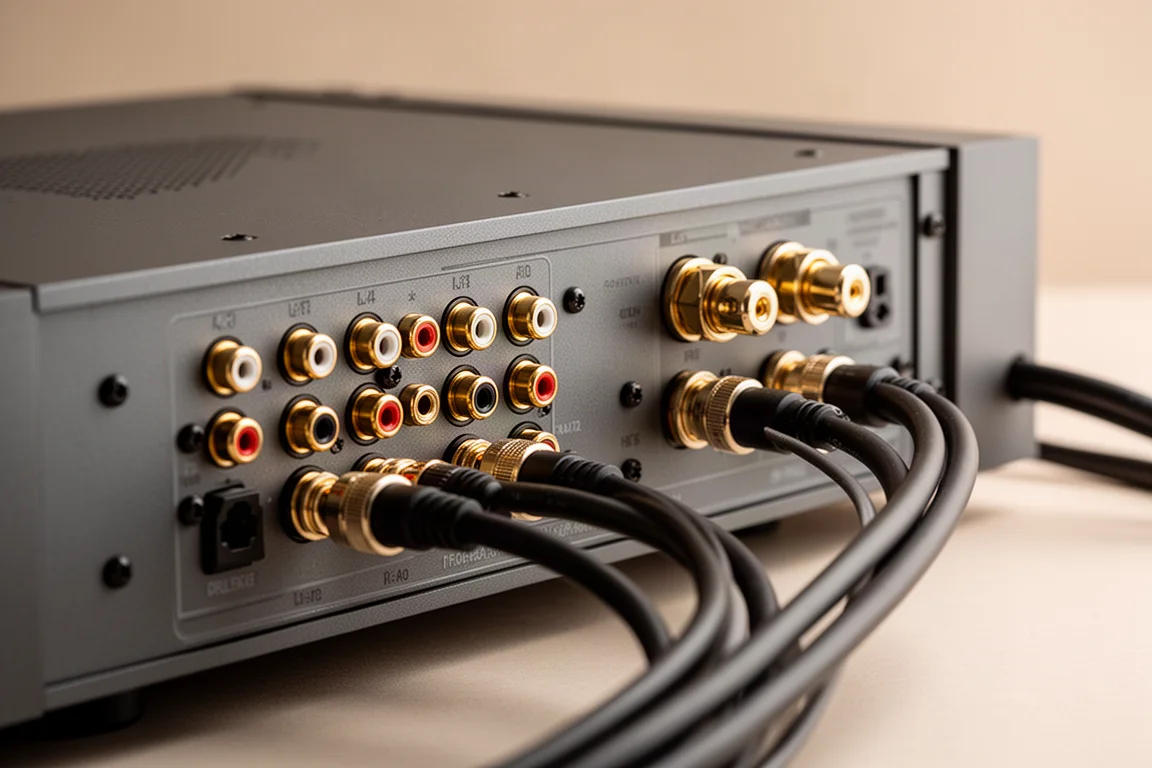
Connectivity covers just about everything a modern system needs: a moving magnet phono input, a balanced analog connection, three more RCA inputs, three Toslink inputs, three coaxial digital inputs, Bluetooth aptX HD, a front USB connection for Apple devices, and a rear USB input for computer audio. There is no HDMI ARC connection, which would have simplified operation with a television, but the Toslink inputs can accept a feed from most TVs.
Setup flexibility is a strong point. Any analog input can be configured for home theater bypass, which makes it easy to slot the RA-6000 into a surround system. Each input can be set to a different turn-on level. Bass and treble controls are available and can be fully bypassed for the purest signal path, which is handy for older recordings where the music is excellent but the recording is not.
There are two sets of speaker connections for A/B speakers or bi-wiring, a preamp output, and a pair of mono subwoofer outputs. Those subwoofer outputs each send a full-range mono signal, so crossover duties stay with the subwoofer rather than the amplifier.
Listening Notes: How the Stack Performs
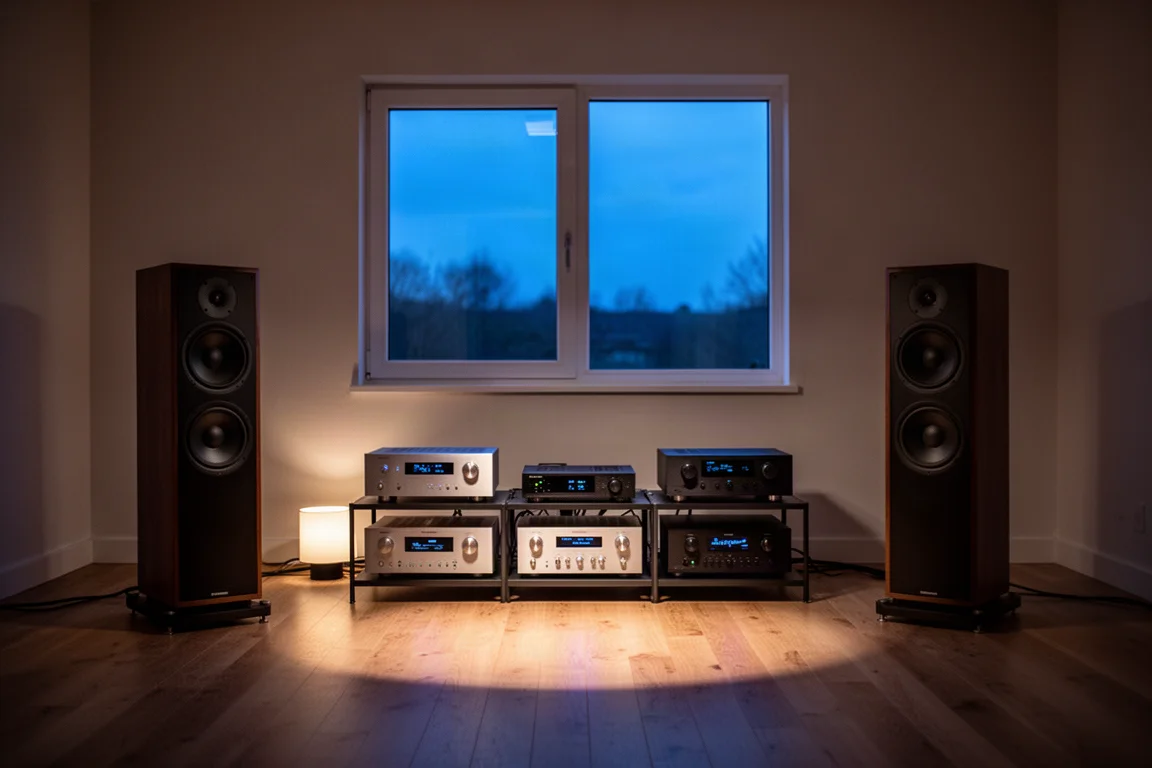
The two Diamond pieces were set up together with a pair of large, highly revealing floorstanding speakers costing close to $40,000, far outside the range most buyers would pair with the RA-6000, specifically to see how good the stack could be. The source was a laptop running Roon into the DT-6000 over USB.
The first thing that stood out was how precise the soundstage was. Instruments were placed with pinpoint accuracy inside a large, three-dimensional field, and tracks known for imaging outside the speakers did exactly that.
On challenging bass material the RA-6000 proved up to the task, with almost as much slam as the McIntosh MC611 mono amplifiers that normally drive the room. It should suit speakers that need plenty of high-quality power to deliver their best bass. On tracks chosen for subtle detail, voices and instruments carried the small emotional cues that matter on reference gear, which says a great deal about the converter inside the DT-6000. Rhythm and pacing were convincing enough to keep a foot tapping.
Compared with the all-tube McIntosh preamplifier and mono power amplifiers used as a reference, the Rotel pair did not sound as harmonically rich. That comparison is not a fair one, since the reference stack costs roughly six times as much. What the Diamond stack delivers is the solid state character Rotel is known for, leaning ever so slightly analytical, with excellent bass control and superb imaging.
Buying Advice: Choosing Between the DT-6000 and RA-6000
The DT-6000 is the easier recommendation of the two. It stands out as a performer irrespective of price, and when you add up CD playback, a custom-configured converter, a fully balanced analog output stage, and three digital inputs, it offers a lot of value to anyone upgrading the digital side of a system. It is also a natural fit for owners of a streamer or transport who want a better converter and analog stage downstream.
The RA-6000 sits at a price where a separate preamplifier and power amplifier become an option. Finding a combination with this many features and this much class AB power for the same money would be difficult, and the amplifier’s output makes it a strong choice for speakers that are hard to drive. The fact that all of it comes in a fairly compact, if very heavy, chassis is a bonus.
If you plan to run both, connect the DT-6000 through its balanced analog outputs rather than a digital connection. Its converter and digital circuitry are superior to those in the RA-6000, so the CD player should handle digital conversion while the amplifier concentrates on power delivery. Buyers who want network streaming should plan on adding a separate streamer with a digital output and letting the DT-6000 do the conversion.
Conclusion
Rotel set out to celebrate 60 years in the audio business with two components that carry Michi engineering into a more accessible package, and both hit that target. The DT-6000 earns its place as a CD player and DAC that will suit a wide range of systems, and the RA-6000 brings serious class AB power and unusually broad connectivity to a single chassis. Buyers who want to upgrade the digital front end should look at the DT-6000 first, while those who need to drive demanding speakers should look at the RA-6000.
Further reading
Related Reviews
Hi-Fi Audio
Accuphase C-57 vs Allnic H-7000V: Two High-End Phono Stages Compared
A fully balanced solid-state phono stage with a pitch-black noise floor meets a tube design built for well-loved records. Here is how to choose between them.
Hi-Fi Audio
Active vs Passive Hi-Fi: Five Components for a Modern System
Five components that define modern active and passive hi-fi systems, with the strengths, trade-offs and setup details worth weighing before you buy.
Hi-Fi Audio
Advance Paris A10 Apex Review: A Hybrid Integrated Amplifier That Covers a Lot of Ground
A French hybrid integrated amplifier with a class A tube preamp stage, analogue power meters, and an internal DAC and phono stage good enough to make extra boxes unnecessary.