Integrated Amplifiers
Rotel A11 Tribute Review: A Neutral $800 Integrated Amplifier
A clean, neutral two-channel integrated amplifier with a quality moving magnet phono stage, tone controls and preamp outputs, but no onboard DAC.
Introduction
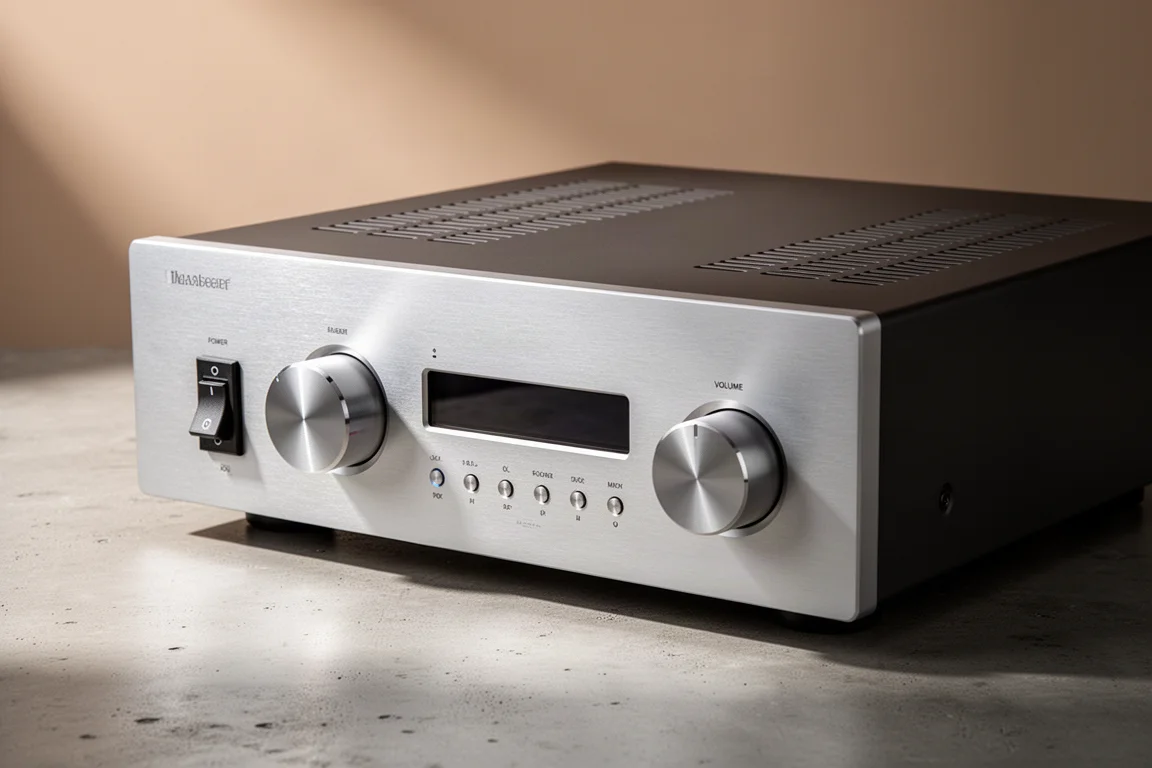
The Rotel A11 Tribute is an $800 two-channel integrated amplifier built around a deliberately short signal path. It delivers 50 watts per channel into 8 ohms, and that figure is rated with all channels driven. The Tribute name is a dedication to Ken Ishiwata, a Japanese engineer with more than 40 years in the audio industry who worked on this design before he passed away. Rotel asked his family whether the amplifier could carry the name, and they agreed. A small badge with Japanese lettering sits on the front panel, a rare bit of personality on a component that would otherwise be a plain box.
Around the back you get a moving magnet phono stage, CD, tuner and two auxiliary inputs, an aptX Bluetooth module, preamp outputs, trigger in and out, an external remote connection, RS232 and binding posts for two pairs of speakers. There is no DAC on board, and that single omission shapes much of the buying decision.
For listeners who already own a DAC or plan to add one, the A11 Tribute puts its budget into amplification and analogue input quality instead. That trade-off is the heart of the amplifier’s appeal, and it is worth understanding before deciding whether it fits your system.
Who This Amplifier Is For
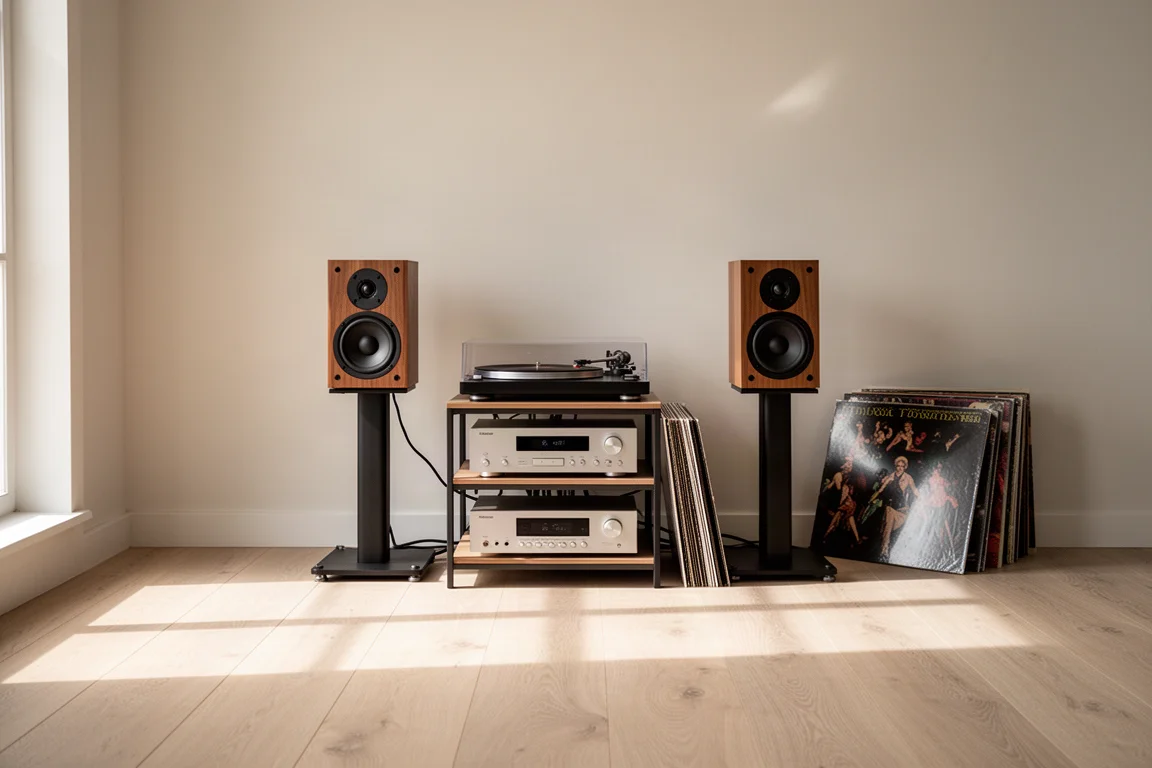
This is a natural fit for anyone building a straightforward two-channel system around a pair of bookshelf or floorstanding speakers. The neutral voicing means the speakers and the source keep their own character rather than being coloured by the amplifier, which suits listeners who want to hear what their other components are doing.
Vinyl listeners get a genuine benefit here. The built-in moving magnet phono stage is clean enough that it competes with standalone units costing a few hundred dollars, so a turntable can be connected directly without an extra box.
It also suits people who like to adjust the sound to taste. Tone controls, a full bypass, two levels of loudness compensation and a headphone output with independent speaker switching give plenty of options without forcing them on anyone who prefers a straight signal.
Finally, the preamp outputs make the A11 Tribute a long-term purchase. They can feed a subwoofer, or a more powerful amplifier later if you move to harder-to-drive speakers.
Main Strengths
The case for the A11 Tribute rests on two things: how it sounds and how it is put together.
Clean, Neutral Sound
The A11 Tribute does not impose much of a signature. Bass is not boosted, the treble is not pushed forward and the overall balance is not scooped or U-shaped. It is not a smooth, syrupy amplifier, and it is not a harsh one either. The most accurate description is simply clean, with detail retrieval that makes the differences between sources and speakers easy to hear.
That character puts it in the company of very neutral amplification rather than the more flavoured options in the same price range. An Emotiva TA1 brings more features, a DAC, a phono input and bass management, and it has a punchy, sparkly presentation that many listeners enjoy, but it does not match this level of clarity. A NAD C338 at a similar price adds streaming and a DAC, yet it has a tendency toward harshness and its bass boost does not sound natural. The A11 Tribute sounds more organic than both.
Where the mid-range is concerned, the amplifier will not add the buttery warmth associated with some vintage designs, and it is noticeably more detailed than the more affordable Denon integrated models. In overall character it sits closest to a very neutral preamp and power amplifier pairing, and the general impression it leaves is of a far more expensive integrated amplifier.
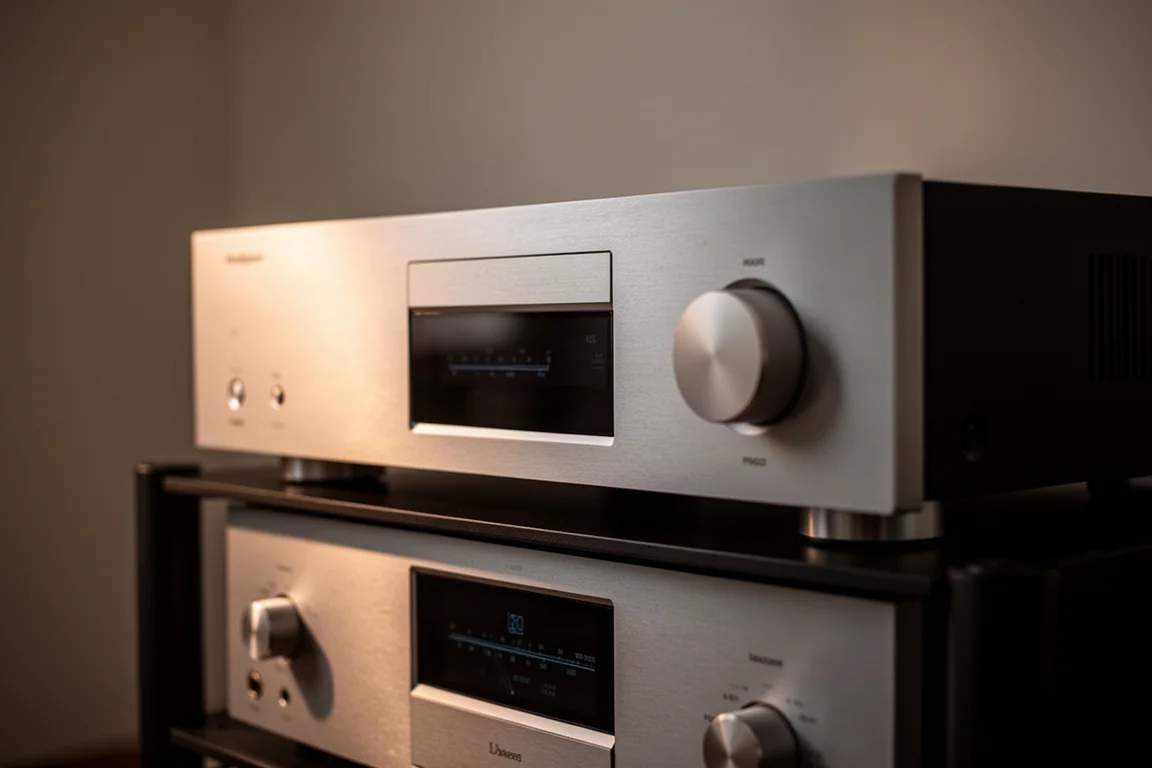
What makes that neutrality practical rather than sterile is the control on offer. Tone controls and the loudness options let you nudge the sound toward something warmer or fuller, and a full bypass is available when you want the signal untouched. Within reason, most listeners can get the balance they want without changing components.
Build Quality and Everyday Controls
The front panel is finished in brushed aluminium, and the power switch has a reassuringly heavy action. Next to the 3.5mm headphone output is a party mode that keeps the speakers playing while headphones are connected, with the option to switch the speakers off instead. Speaker A and Speaker B buttons let you run either pair or both at once, and the switches feel solid.
The display is genuinely usable and can be dimmed if the brightness is distracting. A menu button opens access to the tone controls and the two levels of loudness compensation, and the metal volume knob has a smooth, well-weighted action. Ventilation runs across almost the entire top panel, and the amplifier stays cool even under sustained hard use.
Around the back, the grounding post sits beside the moving magnet phono stage, followed by the CD, tuner and two auxiliary inputs, the aptX Bluetooth module, the preamp outputs, trigger connections and the speaker binding posts. Everything feels properly engineered, to the point where the build quality exceeds some more expensive components. The supplied remote is not machined aluminium, but it is well sized and well balanced.
Phono Stage and System Matching
The onboard phono stage is one of the strongest arguments for this amplifier. It handles moving magnet cartridges only, with no moving coil support and no variable adjustment, but what it does deliver is very clean amplification with a low noise floor and excellent detail retrieval. Paired with a turntable, it produced results in the same territory as a well-regarded standalone phono stage feeding a separate amplifier, a combination that would cost considerably more overall.
It also sounds close in character to a discrete standalone phono box that sells for roughly $350. Valued at around $200, the internal stage effectively brings the amplifier portion of the price down to about $600, which is a strong position for a component of this quality.
Speaker matching is refreshingly undemanding. The A11 Tribute drove near-field reference bookshelf speakers, a pair of larger heritage-style standmounts, a higher-end bookshelf model around the $1,300 mark and a much more affordable budget bookshelf speaker, all with good results. Because the amplifier is so neutral, each speaker kept its own character.

The one genuinely demanding test was a first-generation 4 ohm speaker design known for dipping below its nominal impedance and for low efficiency. The A11 Tribute drove it acceptably at 50 watts, though that particular speaker benefits from considerably more power. For almost any other speaker, the amplifier has ample headroom.
Things to Consider Before Buying
There is no DAC, so digital listening requires an external converter. This is not an expensive problem. A compact entry-level DAC costs around $100, a multi-bit option sits near $250, and a well-regarded desktop DAC with a warmer presentation comes in at around $250, or $300 with a USB input. That warmer DAC was the best match in practice, complementing the amplifier’s neutrality nicely. A complete digital-ready system can be assembled for roughly $1,000.
Bluetooth is limited to aptX rather than a higher-resolution codec. With SBC or AAC the format itself will not carry everything in the recording, though the amplifier’s cleanliness means Bluetooth still sounds better here than the codec alone would suggest.
There is no published power rating for 4 ohm loads. A single pair of 4 ohm speakers is fine, but running four 4 ohm speakers is not advisable, and loads below 4 ohms should be avoided.
Expect to turn the volume up further than you might assume, often into the 60s or 70s on the display, before reaching a loud level. This is a characteristic of the volume potentiometer rather than a limitation of the amplifier. A slow-acting volume control allows finer adjustment, and the amplifier can be run to maximum volume without distortion.
Subwoofer integration runs through the preamp outputs rather than any dedicated bass management. You can split the RCA outputs to feed both a subwoofer and a power amplifier, or use a subwoofer with speaker-level inputs, so there is flexibility, just not a full bass management suite.
Buying Advice
At $800 the A11 Tribute is worth the asking price even without a DAC. The neutral, detailed sound, the quality phono stage, the tone controls, the loudness options, the headphone output and the preamp outputs add up to a component that covers a lot of ground and leaves room to grow.
If your priority is warmth or a buttery mid-range, a vintage design or one of the more affordable Denon integrated amplifiers will take you in that direction, though neither will be as clean. If you want a punchier, U-shaped presentation, the Emotiva TA1 is the more obvious choice, but it will not match the clarity on offer here. Listeners who want maximum features in a single box will find more elsewhere, and listeners who want the cleanest signal for the money will find this hard to beat.
Pair it with an inexpensive DAC and a pair of speakers that suit your room, and you have a system that is about as clean as it gets at this price.
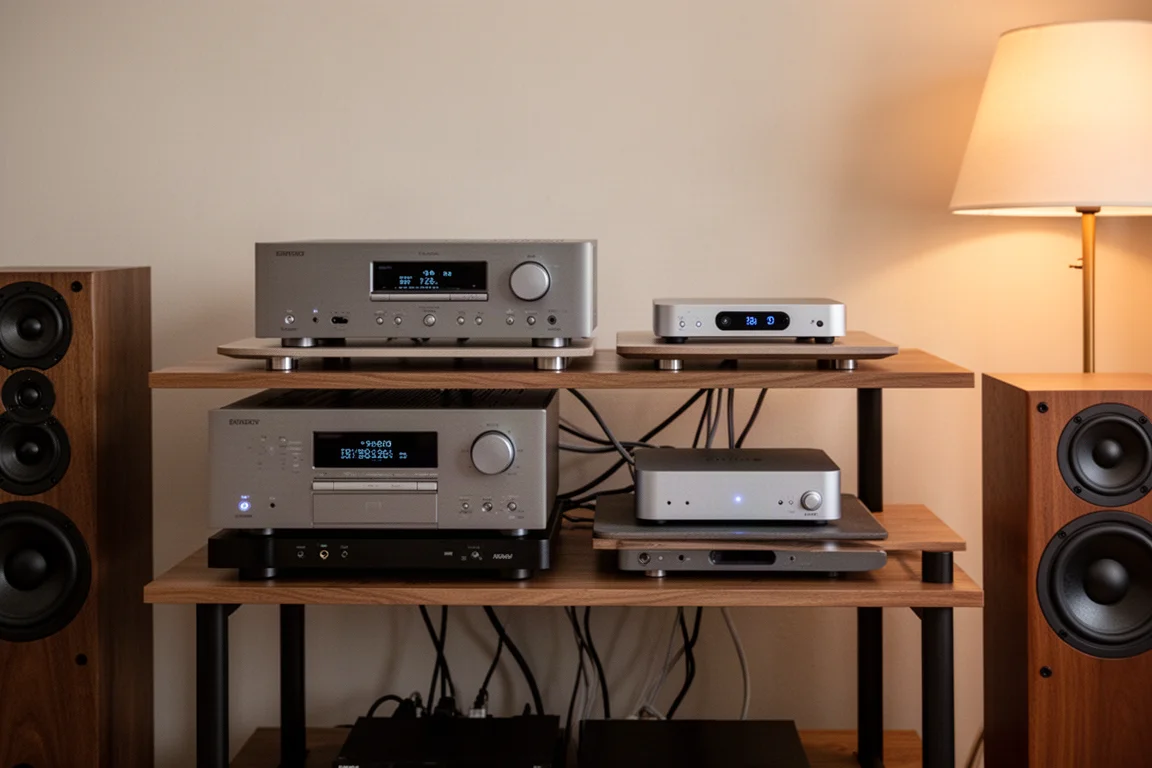
One practical note on value: the phono stage alone performs at a level that would cost a couple of hundred dollars separately, which makes the amplifier section itself unusually affordable. If you play vinyl, that calculation works strongly in the A11 Tribute’s favour.
Conclusion
The Rotel A11 Tribute is a well-built, neutral integrated amplifier that gets out of the way of the music. It will not flatter a poor recording and it will not add warmth that is not there, but it will reveal what your sources and speakers are actually doing, and it gives you the controls to adjust the result to taste when you want to.
The missing DAC is the main compromise, and it is an easy one to solve for around $100 to $250. Add a phono stage that punches well above its weight, solid build quality, two pairs of speaker outputs and preamp outputs for future upgrades, and the A11 Tribute makes a convincing case for anyone building a two-channel system around $800.
Product link
View more details for Rotel A11 Tribute
This product is mentioned in the review. Check the specifications, options, and compatibility before buying.
View more details for Rotel A11 TributeFurther reading
Related Reviews
Integrated Amplifiers
Advance Paris A10 Classic Review: Vintage Looks and a Lively, Punchy Sound
The Advance Paris A10 Classic pairs glowing blue VU meters and a tube stage with one of the widest input sets on any integrated amplifier. Here is what it does well and what to weigh before spending $2,500.
Integrated Amplifiers
Advance Paris A12 Apex Review: A Modern Integrated Amplifier With Vintage Character
A dual mono integrated amplifier with 180 watts per channel, a tube front end, VU meters, and a connectivity list that covers turntables, televisions, computers, and headphones.
Integrated Amplifiers
Advance Paris Nova Range Review: AI130, AI190 and Modular Upgrades
A practical look at the Advance Paris Nova range, including the AI130 and AI190 integrated amplifiers and the modular streaming, Bluetooth and remote accessories that expand them.