Integrated Amplifiers
Roksan Caspian 4G Review: Warm, Powerful and Built to Stay Composed
A close look at the Roksan Caspian 4G flagship integrated amplifier, covering build, connectivity, sound character and which speakers make the most of it.
Introduction
Auditioning hi-fi at home keeps getting harder. Specialist dealers are thinning out, some listeners travel a full day to reach the nearest one, and a noisy show floor tells you very little about how a component will behave in your own room. That is part of the appeal of a well-matched system: fewer variables, fewer decisions, and a good chance the pieces were designed with each other in mind.
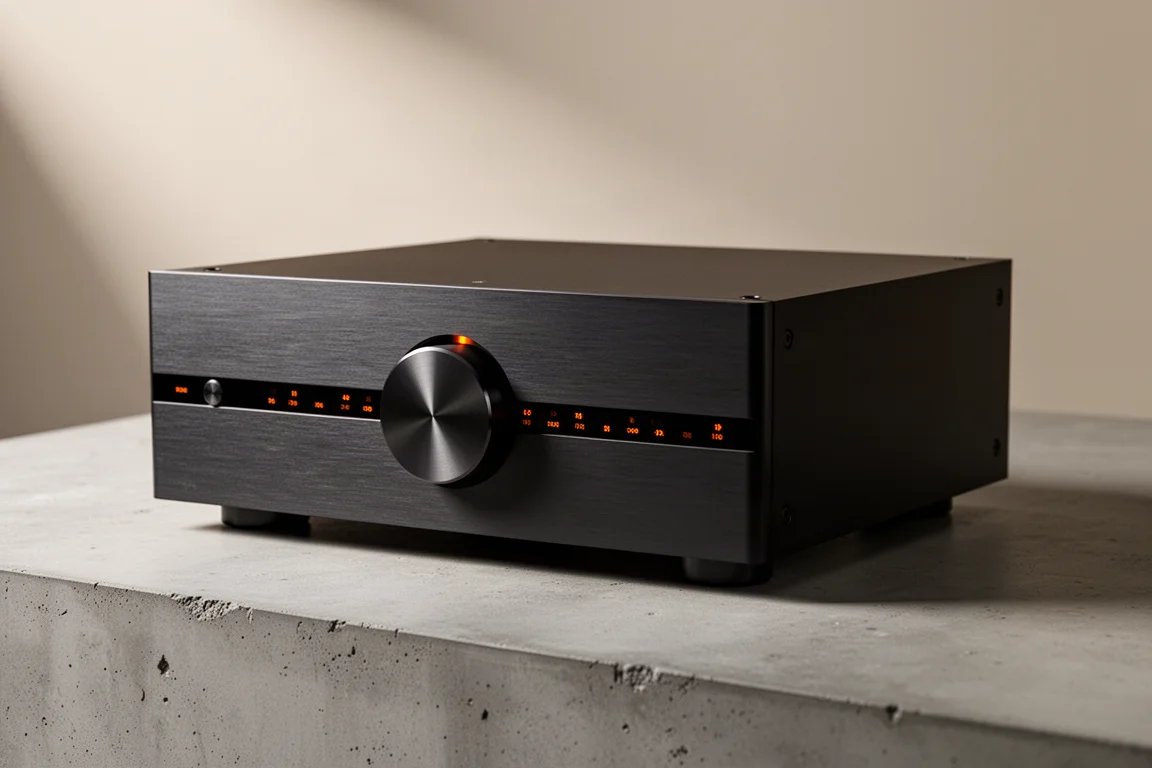
Roksan builds amplifiers under the same group that produces Monitor Audio speakers, and the Caspian 4G is the company’s flagship integrated amplifier. In the UK it retails for £3,000, with a version that adds a BluOS streaming module at £4,000. The unit discussed here is the straight amplifier in black, though a silver finish is also offered that reads closer to titanium than to traditional silver.
Who the Roksan Caspian 4G Is For
This is an amplifier for listeners who want weight and control without hardness, and who value consistency from quiet late-night listening through to high-volume sessions. It suits speakers that sit on the neutral to bright side of the tonal spectrum, where its warmth balances rather than doubles down.
Buyers hunting for a component that adds no colour at all should look elsewhere. Systems already built around warm or plump-sounding speakers are a poor fit, because the Caspian’s own character will stack on top of theirs rather than compensate.
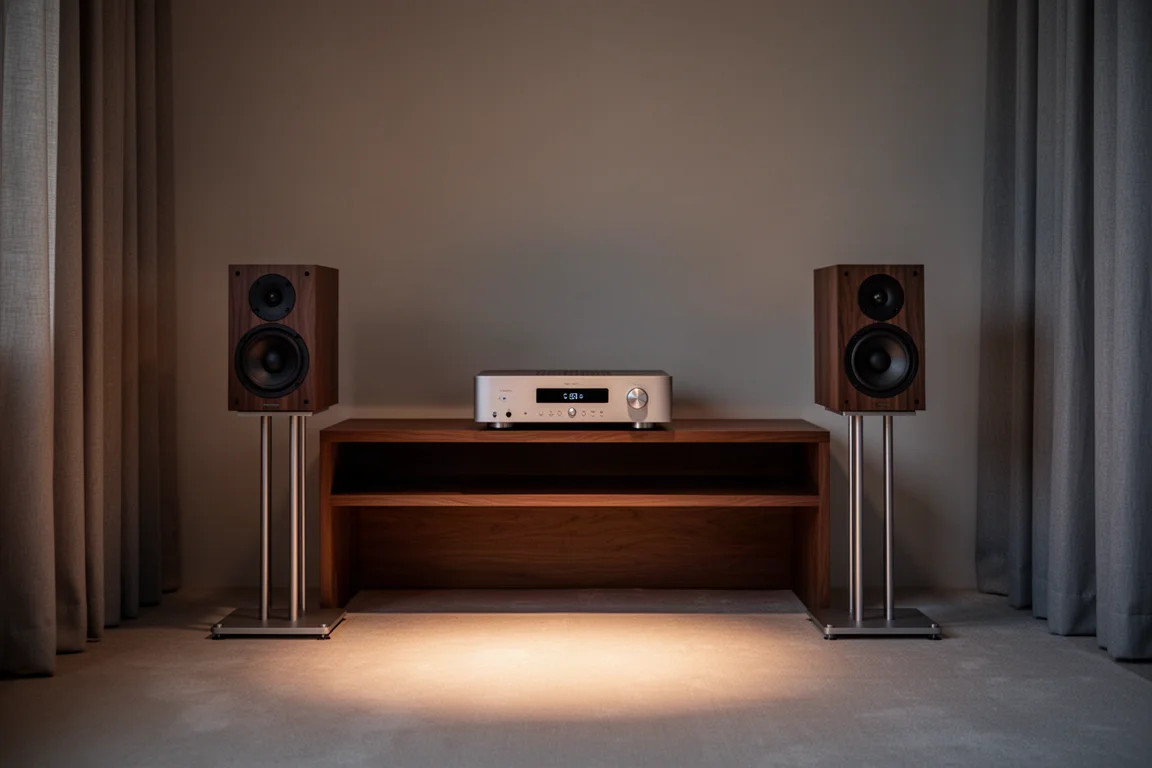
It also makes sense for anyone who wants one box to cover vinyl, digital sources and casual Bluetooth playback, with a phono stage and a built-in DAC already on board. In that sense it is a tidy answer to the question of how many separates a system really needs.
Design, Build, and Connections
The casework is built from thick extruded aluminium with no visible fixings, and both the solitary front control dial and the heat sinks are beautifully machined. The styling carries the charm of a mid-century modernist building: clean, fluid lines, minimal ornamentation, and a sense of a sci-fi future imagined decades ago. Somehow the Caspian manages to feel modern and retro at the same time.
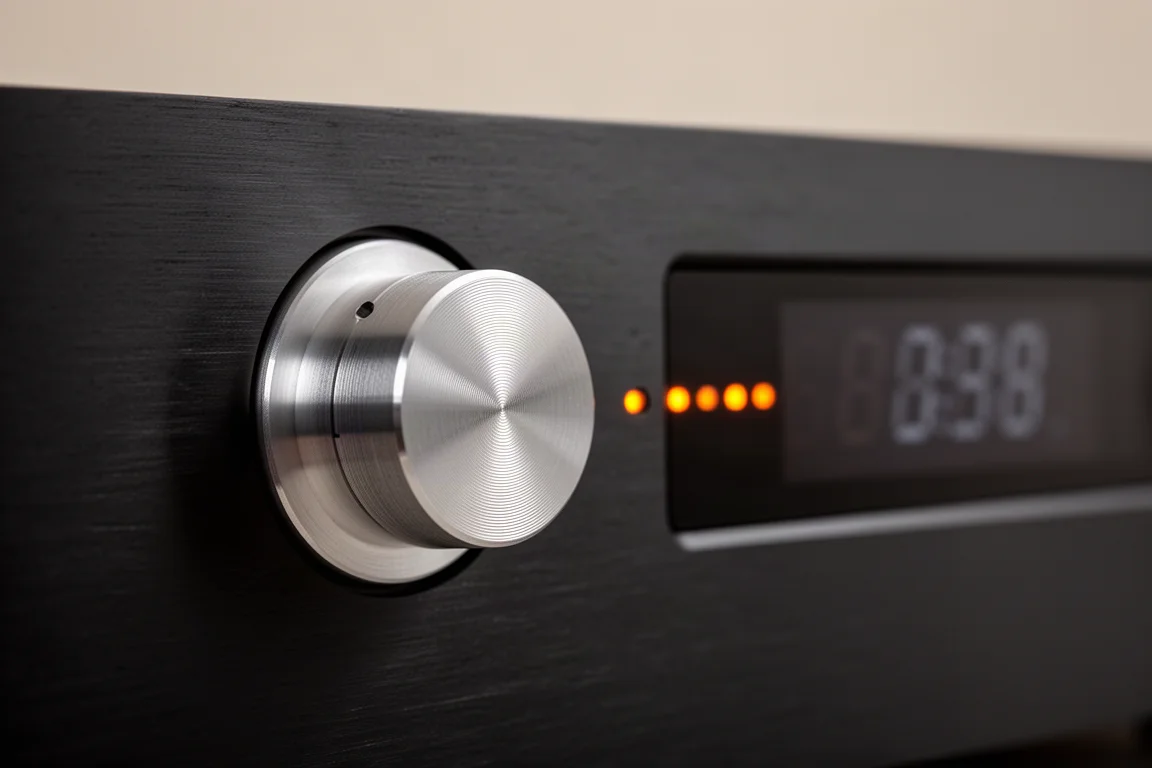
There is just one knob. Press it to bring the unit out of standby, rotate it to adjust volume, and press and hold to step through inputs. The dial action is smooth and nicely resistive, and the level is shown two ways: numerically on the left and through a row of orange LEDs on the right. The supplied remote is designed to work with other Roksan products, but it does not carry over the amplifier’s simple design language.
Around the back, speaker terminals sit at the extremities with the analog connections to the left. A moving magnet phono stage, two single-ended RCA inputs and one balanced XLR input run along the top, with pre-amplifier outputs below, including XLR as well as two RCA pre-outs. Trigger connections for system control sit next to the digital inputs: two coaxial and two optical, with bandwidth limited to 192 kHz and 24 bits. Bluetooth is included. At this price, an asynchronous USB input would have been a welcome addition.
Inside the Chassis
The power supply starts with a large 600VA toroidal transformer sourced from a Norwegian manufacturer, which is a good quality part to find here. There are four main filter capacitors per side: two on the main board and two mounted to the power amplifier modules. The larger ones are 10,000 microfarads and the smaller ones 8,200, giving a total of 36,400 microfarads per side, which is a healthy figure. They come from TDK Electronics.
The power amplifier modules are mounted vertically, and they lean heavily on tiny surface mount components. Six output devices sit per side, Toshiba NPN and PNP bipolar junction transistors in a push-pull arrangement. It is this power supply and those output devices that let the amplifier nearly double its output: 105 W into 8 ohms and 200 W into 4 ohms.
The pre-amplifier is balanced, and so is the DAC architecture Roksan calls Rapture. There are no op-amps in the current to voltage conversion stage, which Roksan believes improves sound quality. It is a dual mono design, running two Texas Instruments Burr Brown PCM1796 chips in a differential current conveyor topology to improve linearity.
How It Sounds
Two words sum up the Caspian 4G: power and warmth. Bass performance stays consistent at low, medium and high listening levels, so the amplifier can be pushed hard without losing composure. It is not the tightest bass in this class, but it is delivered with authority and an appropriate sense of weight. More texture on bowed strings would be welcome, yet there is hardly any bleed from the bass into the mid-range.
That mid-range is where the amplifier’s character is most pronounced. The lower mid-range is very full and has a tendency to sound thick, while the upper mid-range is recessed enough that even edgy recordings come across as laid-back. It is this combination, doing the big moments well and the small ones less well, that defines the Caspian’s personality.
Against an Exposure 2510 integrated amplifier at around £1,950, the Caspian gives less timbral insight, whether that is the breathiness of a singer, the purposeful distortion of an electric guitar or the subtlety of a legato string section. A tube amplifier in the region of £1,500 with upgraded preamp and power tubes delivers more micro detail and a larger sound stage with better localization of performers. Where the Caspian pulls ahead of that tube design is high-volume composure: the bass stays in control and the mid-range refuses to harden.
Compared with a Hegel H190 at £3,250, the Caspian offers no greater authority over speaker drivers despite the Hegel’s higher power rating, and the Hegel is more detailed and more neutral in tone. Listeners who want a little more flavour in the sound, particularly if they are trying to tame bright speakers, will likely prefer the Roksan.
Main Strengths
The headline strength is consistency across the entire volume range. There is no need to hunt for a sweet spot on the dial, because the amplifier behaves the same way whether it is idling in the background or driving a room hard. That is rare at any price.
Build quality backs it up. The thick extruded aluminium casework, the machined heat sinks, the generous power supply and the six output devices per side all point to an amplifier that is tough on the inside as well as handsome on the outside. The balanced pre-amplifier and dual mono DAC architecture are a serious specification for an integrated amplifier, and the built-in DAC is well suited to the task: sound through the digital inputs is very similar to the analog ones. An external DAC at around £2,100 did extract slightly more detail and a better spatial presentation, but there is little reason to add one if this amplifier is already in the rack.
Things to Consider Before Buying
The coloration is the main thing to weigh up. The full lower mid-range and recessed upper mid-range mean this is not an amplifier for anyone chasing a completely transparent presentation. Speaker matching matters more than usual as a result.
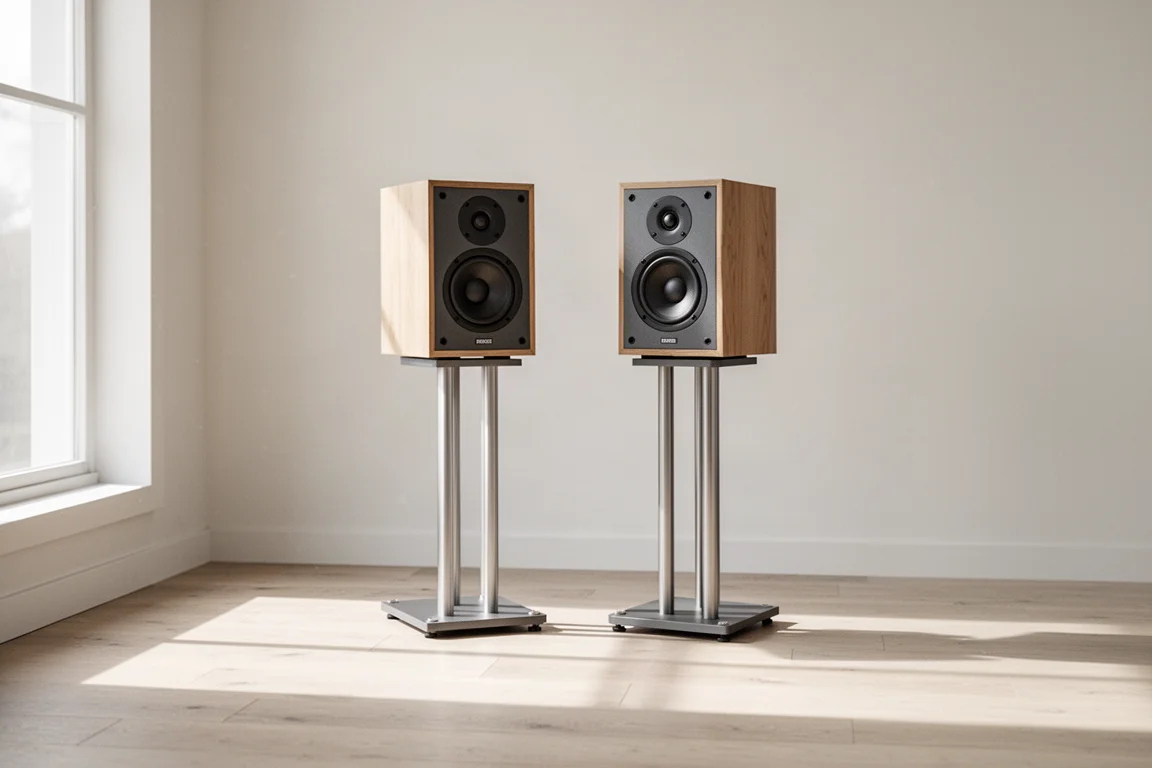
A pair of capable stand-mount speakers with a slightly plump bass and a recessed upper mid-range proved to be one of the weakest matches possible, sounding dull, soft and lifeless through the Caspian. Warm-sounding speakers in general should be approached with caution. The amplifier also holds back the most detailed Monitor Audio model in its price bracket: those speakers are so revealing that they deserve an amplifier with less coloration and more resolution.
Two rivals, the Cambridge Audio EXA 100 and the Audiolab 9000A, offer similar levels of fidelity for £1,000 less, though neither is built as well or has the same driving capability. The absence of an asynchronous USB input is worth noting for anyone with a large local digital library, and the remote control does not match the amplifier’s design language.
It is also worth remembering that a colouration this deliberate is a choice, not a flaw. Buyers who know they want a warm, relaxed sound will read the same characteristics as virtues.
Buying Advice
Match the Caspian with speakers that sit on the neutral to bright side and it rewards the decision. A pair of compact silver-finished Monitor Audio stand-mounts at £799, normally cool in tone, shifted to the warm side when driven by this amplifier, and the synergy between the two was excellent despite the price gap. The company’s £3,000 Gold series model is the more natural partner on paper, but it is so detailed that the amplifier ends up holding it back.
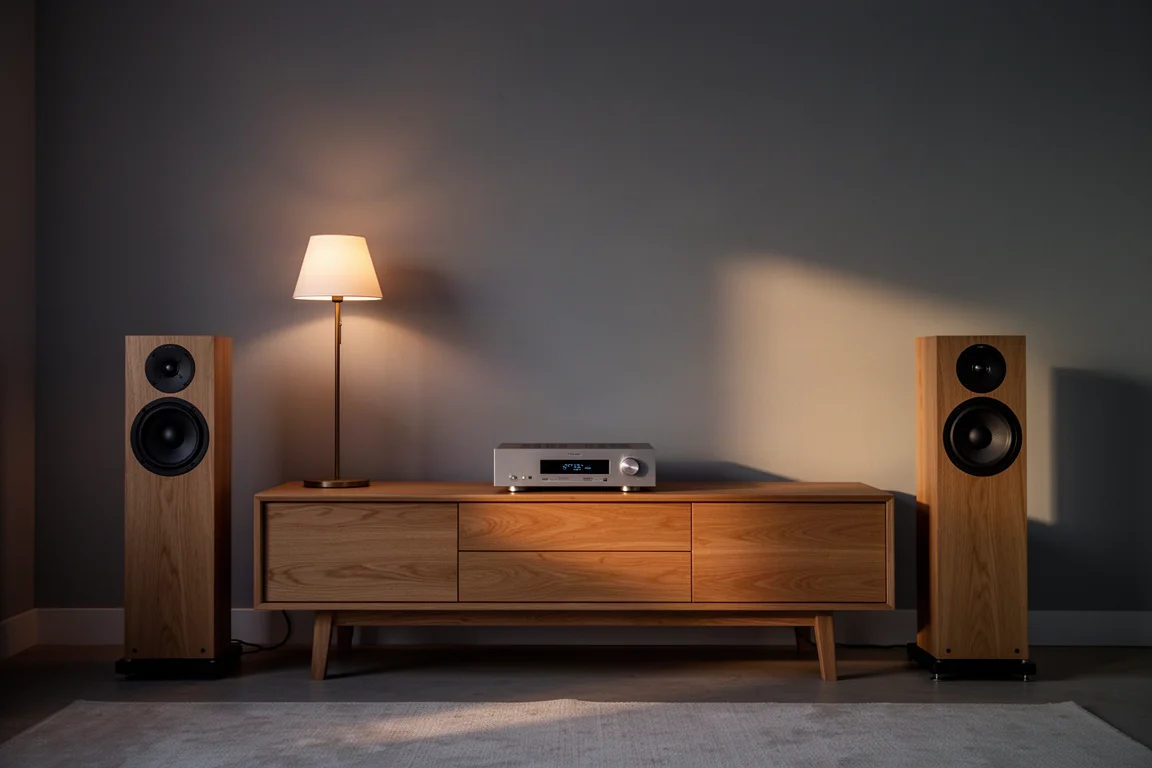
The best match of the ones tried was not a Monitor Audio design at all. A pair of Quad Revela 1 speakers at £1,800 are more resolving than the cheaper Monitor Audio stand-mounts and significantly cheaper than the Gold series model, with a touch of forwardness in the same upper mid-range region where the Caspian holds back. The result is a genuinely compelling pairing.
Anyone who wants streaming built in can step up to the BluOS-equipped version at £4,000. Buyers who already have a streamer or prefer to add one later will find the straight amplifier’s own DAC more than adequate, and the black or titanium-look silver finishes keep the system visually simple either way.
Conclusion
The slim, dainty looks are misleading. The Roksan Caspian 4G is a powerful, brawny amplifier: heavily constructed, elegant on the outside, tough on the inside. It plays loud without losing its footing, stays controlled at low volumes, and pairs beautifully with speakers that need a little warmth and a lot of grip.
It is not the amplifier to choose if you want the sound left entirely untouched. The warm, laid-back presentation and the pronounced mid-range character are the whole point, and they will flatter some systems while working against others. Get the speaker match right, ideally with a home audition, and the £3,000 asking price looks justified against cheaper rivals that cannot match its build or its driving capability.
Product link
View more details for Roksan Caspian 4G
This product is mentioned in the review. Check the specifications, options, and compatibility before buying.
View more details for Roksan Caspian 4GFurther reading
Related Reviews
Integrated Amplifiers
Advance Paris A10 Classic Review: Vintage Looks and a Lively, Punchy Sound
The Advance Paris A10 Classic pairs glowing blue VU meters and a tube stage with one of the widest input sets on any integrated amplifier. Here is what it does well and what to weigh before spending $2,500.
Integrated Amplifiers
Advance Paris A12 Apex Review: A Modern Integrated Amplifier With Vintage Character
A dual mono integrated amplifier with 180 watts per channel, a tube front end, VU meters, and a connectivity list that covers turntables, televisions, computers, and headphones.
Integrated Amplifiers
Advance Paris Nova Range Review: AI130, AI190 and Modular Upgrades
A practical look at the Advance Paris Nova range, including the AI130 and AI190 integrated amplifiers and the modular streaming, Bluetooth and remote accessories that expand them.