Bookshelf Speakers
Rockville Rock Shelf 64 V2 Review: Big Bass at $80, With One Real Catch
The Rockville Rock Shelf 64 V2 delivers sealed-enclosure bass and a smooth top end for around $80, but the adhesive odor and cabinet vibration are genuine deal-breakers indoors.
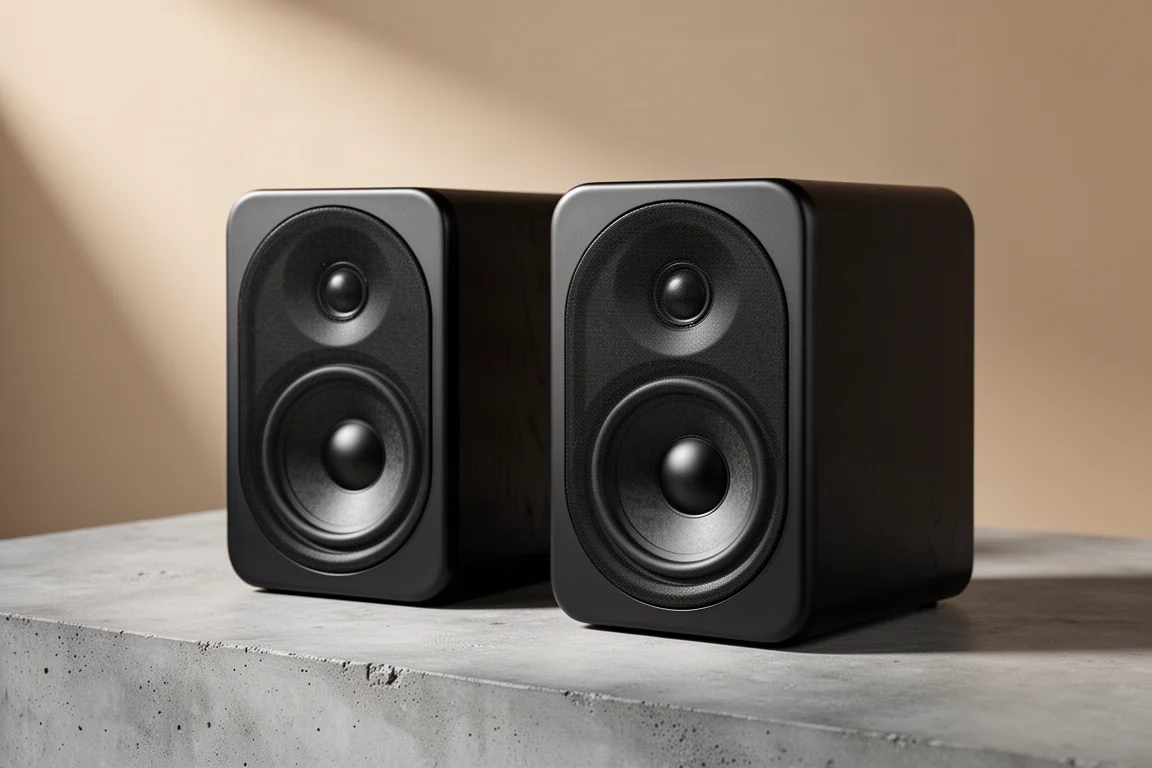
Introduction
Rockville’s Rock Shelf 64 V2 is a compact bookshelf speaker that sells for around $80, roughly $20 below the $100 mark. Inside the sealed cabinet you get a 6.5-inch woofer and a 1-inch soft dome tweeter, with a claimed response of plus or minus 3 dB from 70 Hz all the way up to 20,000 Hz. Rockville sells the model in several configurations, including 4-ohm and 8-ohm versions and a smaller 5.25-inch woofer option, so it is worth matching the speaker to your amplifier before ordering.
Two things stand out once they are playing. The first is how much bass a sealed enclosure at this price can produce. The second is the smell. This is an unusual product in both directions, and both characteristics matter when deciding whether to buy.
Who the Rock Shelf 64 V2 Is For
These are not reference monitors and they are not trying to be. The Rock Shelf 64 V2 makes the most sense in places where you want real low-end output and long listening sessions without ear fatigue, and where absolute detail retrieval is not the priority.
A garage or workshop is the natural home. The cabinet is light enough to hang, and the sealed design means there is no port to fight with when the speaker goes up on a wall. A keyhole mount on the back makes that straightforward. They also work as surround speakers in a home theater setup, where the emphasis sits on impact and coverage rather than pinpoint accuracy.
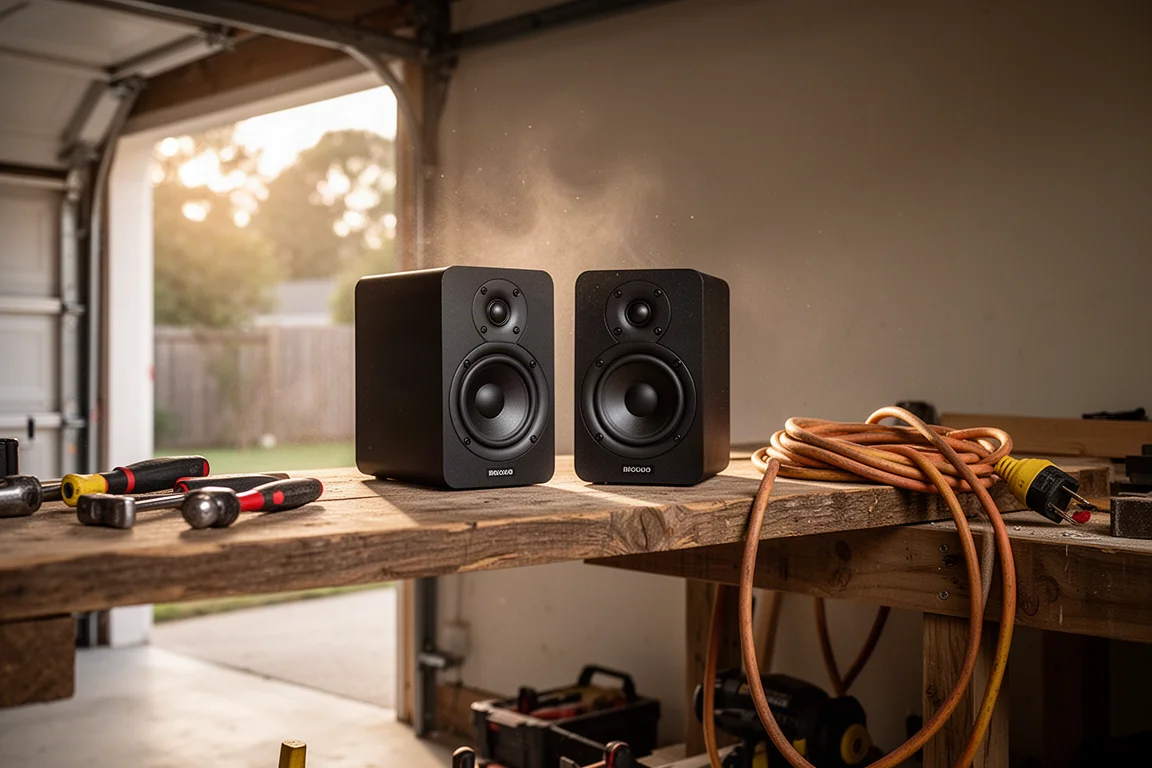
The price helps here too. At around $80, a pair is inexpensive enough to treat as a working speaker rather than a piece of furniture you worry about.
Main Strengths: Sealed-Enclosure Bass
The low end is the standout. A sealed cabinet usually trades bass quantity for control, and that trade-off is part of why the output here is surprising. The bottom end has weight and a bit of fun to it, and it does not sound like a budget ported box straining to keep up.
The cabinet itself is better than the price suggests. Rockville makes a point of using MDF rather than particle board, and the construction holds together well at 85 dB and above. That is a meaningful threshold in this bracket, since plenty of cheap cabinets start rattling or smearing well before that point.
Output is also reasonably efficient in practice. Driven by an integrated amplifier, these reached solid listening levels without obvious strain, and the cabinet stayed composed at volumes that would expose weaker designs.
Mids and Highs: A Non-Fatiguing Character
The upper midrange carries some warmth, which softens the overall presentation. The cost is detail: some midrange information gets rounded off rather than fully resolved. It is a trade-off that suits casual listening more than critical listening.
The top end is the pleasant surprise. The 1-inch soft dome tweeter is not harsh, and the speaker is not fatiguing at all. That matters if you plan to leave music running for hours in a garage or workshop, because a bright, forward tweeter becomes tiring long before the music stops being enjoyable.
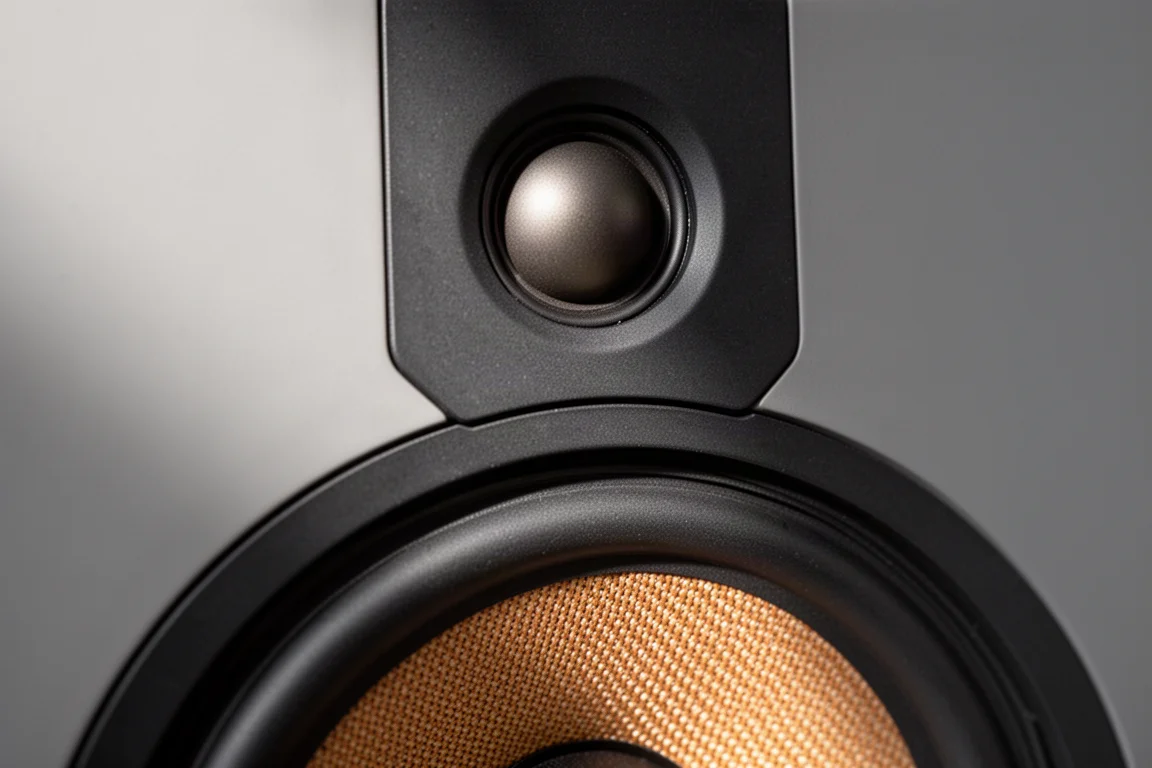
Push the low end hard and the woofers will bottom out. That happened at around 80 dB on some material, so the ceiling for bass-heavy tracks is lower than the ceiling for overall volume.
Build Quality, Finish, and Mounting
The cabinet is MDF with a keyhole mount on the back, and it is light enough that hanging it on a wall is a realistic option rather than a weekend project. Finish quality is decent for the money. There are a couple of small gaps where the panels meet, which is not unusual at this price, and it is far from the worst finishing you will find in budget speakers.
One caution from handling: a component came loose after the speaker was knocked around, and a small bottle of superglue was enough to fix it. Treat them as speakers to place and leave alone rather than to move around frequently.
The internal crossover is a genuine one rather than nothing at all. There is an air-core inductor and a capacitor in there, sending the lows to the woofer and the highs to the tweeter. It is a simple network, but finding an air-core inductor at this price is worth noting.
Things to Consider Before Buying
The dominant issue is odor. The adhesive used in the construction gives off a strong, unpleasant smell that does not fade quickly, and it transfers to your hands. It is severe enough to become the deciding factor for indoor use. Some units may also have sat in inventory for a while, which is worth keeping in mind if you are hoping for a freshly built pair.
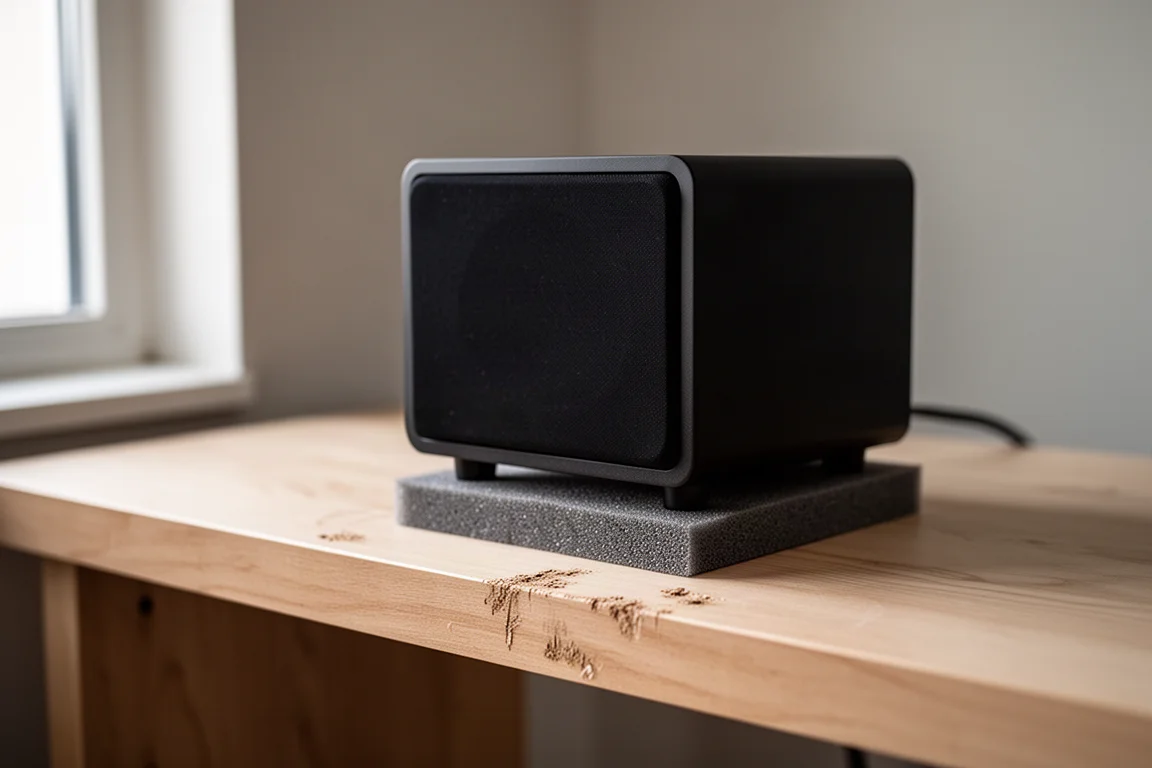
Vibration is the second consideration. The cabinets move. Even with rubber feet underneath, they shifted across the surface during louder passages, and one crept progressively further back than the other. In a garage or mounted on a wall that is manageable. On a polished shelf in a living room it is not.
The bass limit is real as well. If your listening leans on deep, bass-heavy material at high volume, the woofers will run out of excursion before the rest of the speaker does.
Pairing and Placement Notes
These speakers were run with a Cambridge Evo 150, an integrated amplifier costing many times the price of the speakers themselves. The pairing worked well, which is a useful signal: the Rock Shelf 64 V2 does not need an expensive amplifier to sound like itself, and a modest desktop amp is a sensible match.
Placement matters more than amplification. Because the cabinet is sealed and light, wall mounting via the keyhole mount is a clean solution, and it removes the walking problem entirely. If they stay on a shelf, add foam or a grippy pad under each cabinet and give them room so they are not sitting directly on a resonant surface.
Buying Advice
At around $80, the Rock Shelf 64 V2 is a fun speaker with a genuine strength and a genuine flaw. The bass output and the non-fatiguing top end make them easy to listen to for long stretches, and the MDF cabinet and simple crossover suggest Rockville spent where it counts.
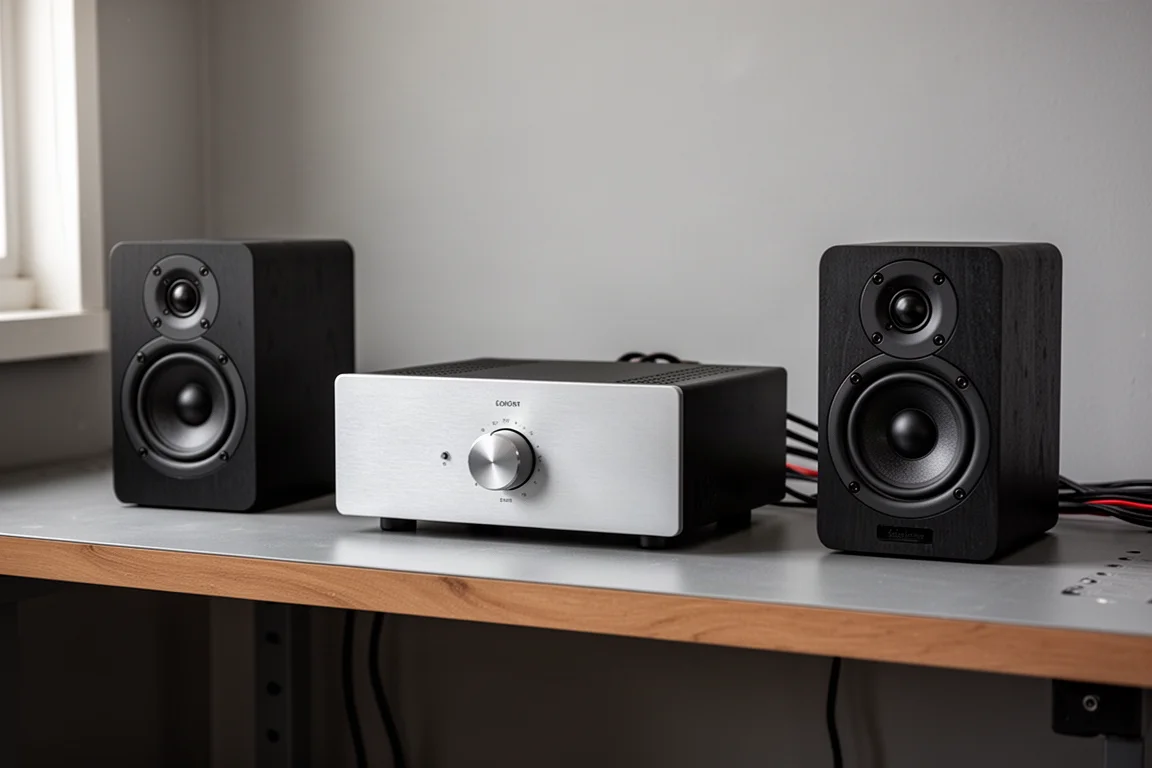
Buy them with the odor and vibration issues in mind and they make sense as garage, workshop, or surround speakers. Buy them expecting a refined indoor bookshelf speaker and you are likely to be disappointed. If you need something for a living room or a desk you sit close to, look elsewhere. If you want inexpensive, punchy sound in a space where you do not mind the trade-offs, these deliver more than the price suggests.
Conclusion
The Rockville Rock Shelf 64 V2 is an $80 sealed bookshelf speaker with real low-end weight, a smooth top end, and a construction standard that holds up at higher volumes. It is also a speaker with a strong adhesive smell and cabinets that like to travel. Match it to the right room and it is a bargain. Put it in the wrong one and the drawbacks will find you quickly.
Product link
View more details for Rockville Rock Shelf 64 V2
This product is mentioned in the review. Check the specifications, options, and compatibility before buying.
View more details for Rockville Rock Shelf 64 V2Further reading
Related Reviews
Bookshelf Speakers
Acoustic Energy A100 Mark II Review: A Compact Standmount With an Expansive Soundstage
The Acoustic Energy A100 Mark II brings clarity, natural tonality and a wide soundstage to an entry-level standmount, with a few setup details worth knowing first.
Bookshelf Speakers
Acoustic Energy AE-100 Mark II Review: Compact Bookshelf Speakers With Standout Imaging
A compact British two-way bookshelf speaker with deep, layered imaging, fast bass, and a slight treble lift to weigh against a crowded $500 field.
Bookshelf Speakers
Acoustic Energy AE100 MK2 Review: Measured Performance and Four Alternatives
A close look at the Acoustic Energy AE100 MK2 bookshelf speaker, what its measured performance reveals, and four alternatives with different trade-offs.