Cycling Components
RockShox Paris Roubaix SL Review: 30 mm of Suspension That Won Three Cobbled Classics
A close look at the RockShox Paris Roubaix SL, the air-sprung road fork that took three straight Paris Roubaix wins and then vanished from the peloton.
Introduction
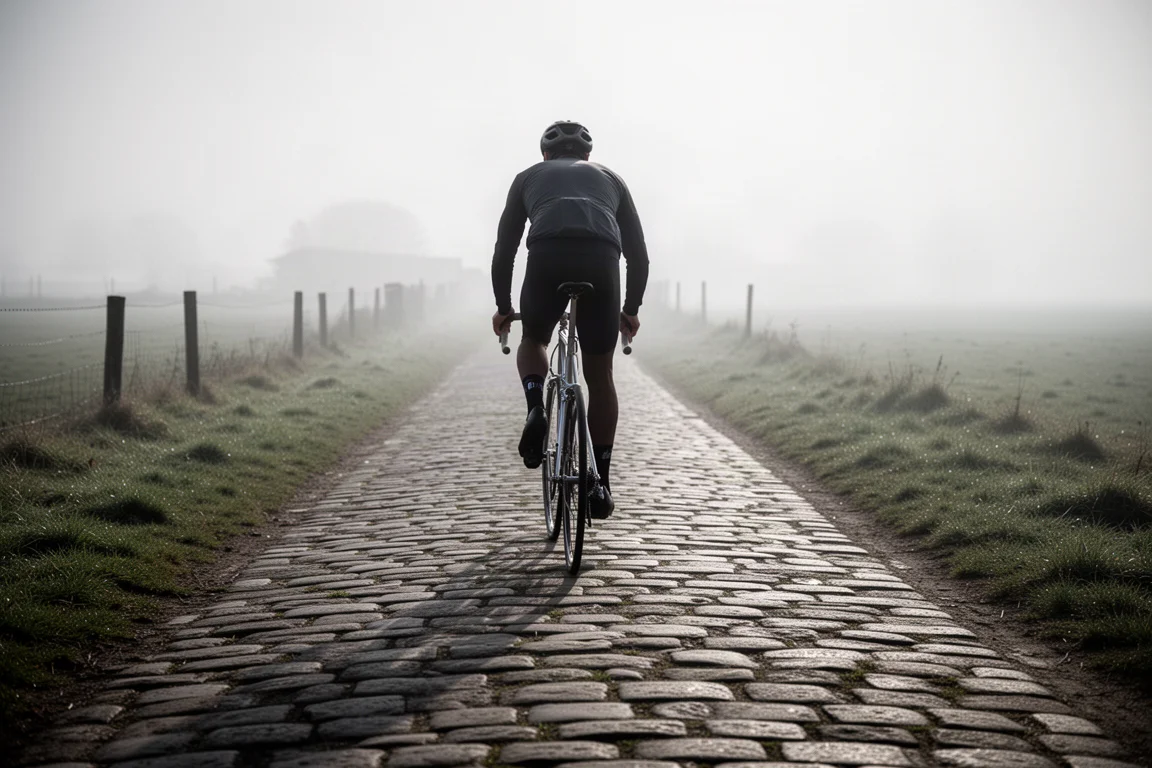
Paris Roubaix is a race like no other, and roughly a fifth of it is not on roads at all. It runs across the roughest cobbles in Europe, a surface that punishes bikes and riders in equal measure. Modern machines cope with the terrain largely because frames now accept much wider tyres, which lets most teams line up on standard aero road bikes. Go back a little further, though, and riders were willing to try almost anything to soften the vibration, including mechanical suspension.
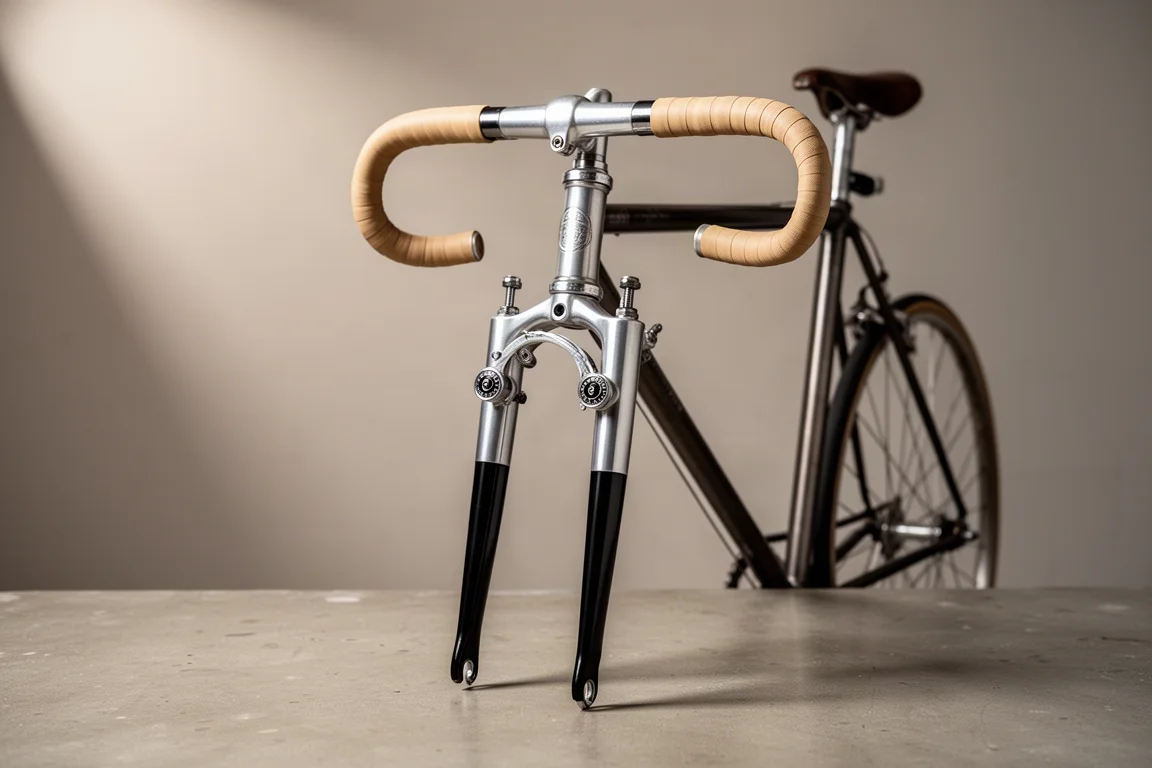
The RockShox Paris Roubaix SL is the clearest expression of that idea. It is a road racing fork with 30 mm of travel, built around an air spring and an oil damper, and it is the component that carried three consecutive Paris Roubaix victories between 1992 and 1994. It is also a piece of equipment that disappeared from the professional peloton almost as quickly as it arrived, which makes it a genuinely interesting thing to examine on its own terms.
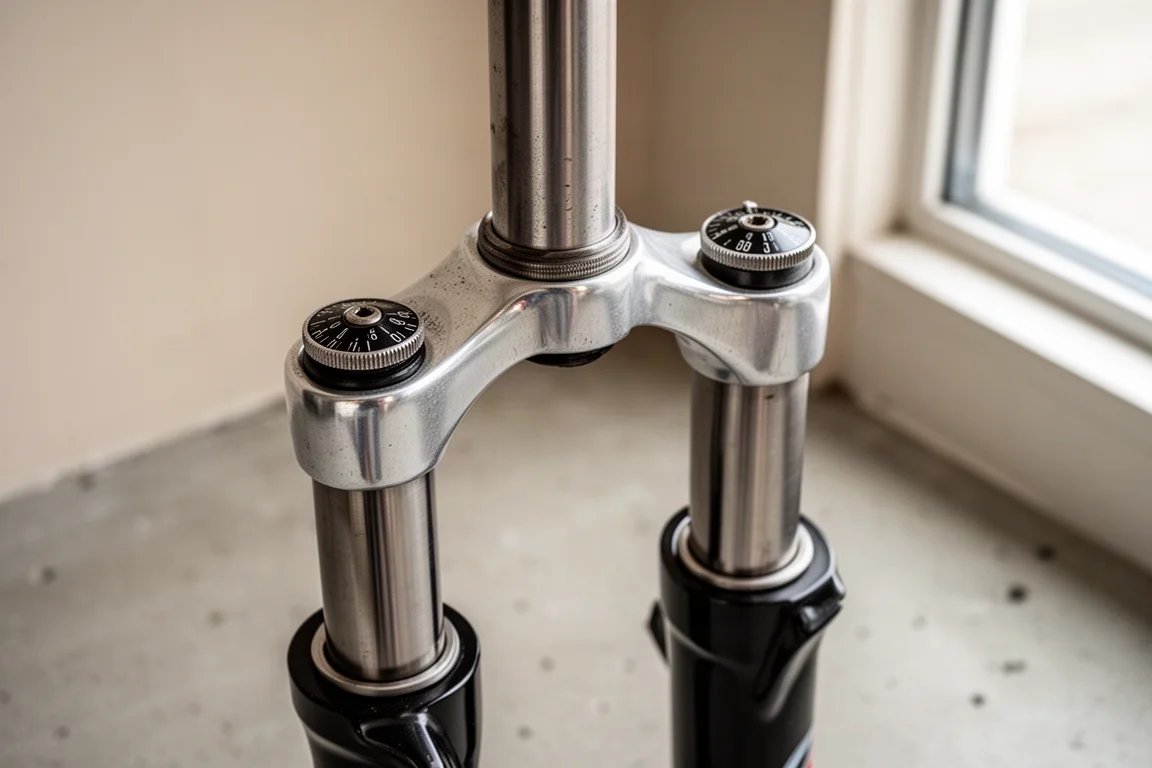
The fork is normally found on custom steel race frames of the period, and it works in much the same way as a modern suspension fork: the air spring carries the load while the oil damper controls the rebound so the fork does not behave like a pogo stick. Two dials at the top of the fork legs allow the damping to be changed while riding, a detail that mattered enormously on a course with around 30 separate cobbled sectors.
What Made the Paris Roubaix SL Different
The story begins in 1991, when the boss of Team Z, Roger Legeay, was approached by a small American startup and gave the company access to his riders to showcase a new product. RockShox had already brought suspension to mountain biking in 1989 with the RS-1, which won races quickly but drew mixed feedback because of its weight and the flex it introduced. Founders Paul Turner and Steve Simons built a handful of road prototypes, shipped them to northern France, and had the team ride them at a kerb at speed to demonstrate that the impact would barely be felt.
The demonstration is said to have convinced the riders. Days before the race, Greg LeMond, at that point the highest-profile rider in the world, agreed to use the fork. He finished 55th on debut, while his teammate Gilbert Duclos-Lassalle came home seventh and was equally persuaded. Duclos-Lassalle went on to win Paris Roubaix in 1992 on his 17th attempt, soloing into the Roubaix velodrome on RockShox forks, and won again in 1993 in a narrow sprint over Franco Ballerini. In 1994 Andre Tchmil completed the run with a third victory on the same suspension design.
Who This Fork Is For
This is a component with two distinct audiences, and they want it for very different reasons. The first is the collector or restorer building a faithful early 1990s steel race bike, where the fork is the single detail that defines the build. The second is the rider who simply wants more comfort on rough surfaces and is willing to accept the compromises that come with an early suspension design.
It is worth understanding why suspension helps some riders more than others before committing to a build like this. The slower you ride and the lower your power output, the worse rough ground feels, because the wheels track every rise and fall of the surface and more of your body weight rests on the saddle. At higher speeds the bike skims across the tops of the stones and less weight sits on the saddle. That is precisely why a fork like this makes intuitive sense for a leisure rider on bad tarmac or gravel, and why its value at professional racing speeds was always more contested.
Main Strengths
The most surprising thing about the Paris Roubaix SL is how well it has aged as a piece of engineering. Even at low speeds it feels genuinely good rather than crude. Because travel is limited to 30 mm, there is almost no bobbing, and the bike still feels nimble underneath you. The fork can feel slightly twangy when you push hard through a cobbled corner, but that is a rare situation even on a course as brutal as Roubaix.
In back-to-back testing on a rough cobbled sector, the difference between suspension and no suspension was measurable. The rigid steel bike was the slowest of the group. The suspension-equipped bike averaged around 1 km/h faster for the same power output. A modern aero carbon bike with 32 mm tyres was a further 2 km/h faster on average, with a peak speed about 3 km/h higher than the suspended bike. Extrapolated across the 50 km of cobbles alone, that gap represents more than five minutes.
The on-the-fly adjustability is the other real strength. The two dials on top of the fork legs let a rider change the damping before and after each sector, and Duclos-Lassalle is said to have done exactly that. With around 30 sectors in a typical edition of the race, that is a considerable amount of adjustment, but it does mean the fork can be tuned to the surface under the wheel rather than a single compromise setting.
Things to Consider Before Buying
The headline caveat is travel. Thirty millimetres is the specification, but in practice only around 20 mm of usable movement is available. On a surface like the Arenberg or Mons-en-Pevele, that is a small cushion rather than a transformation, and it is a large part of why wider tyres ultimately proved the more effective answer.
Weight, cost and maintenance all work against the design as well. A suspension fork is heavier than a rigid one, it is expensive to produce, and it needs far more servicing than a high-volume tyre. For anyone buying a vintage example today, that servicing question is the practical one: seals, damper condition and the availability of replacement parts will determine whether the fork works as intended or becomes a display piece.
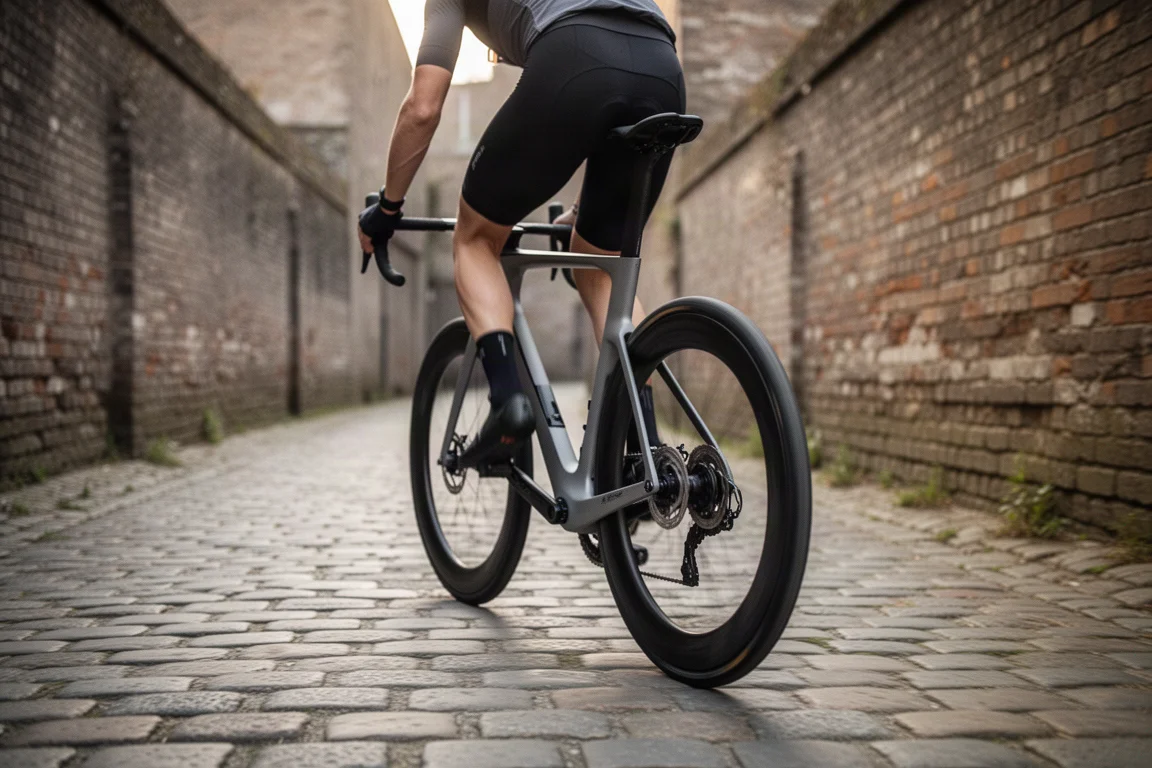
Frame and tyre clearance matter too. The fork is a period item, so it pairs naturally with a lugged steel frame of the era, and the era’s tyres were narrow: 21 mm was typical, with riders stepping up to 23 mm and occasionally 25 mm. Modern bikes run 32 mm and even 35 mm, and that difference in volume accounts for a great deal of the comfort and control that riders now take for granted. If the frame around the fork cannot take wide rubber, the fork is being asked to solve a problem on its own.
Why Suspension Disappeared From Roubaix
The obvious question is why a component with three straight wins at the sport’s hardest race vanished so completely. Part of the answer is that suspension never quite disappeared, it simply retreated. Pinarello later introduced the Dogma FS with 20 mm of front travel and 11 mm at the rear, and Specialized developed the Future Shock with 20 mm up front, though professional teams eventually stopped using it and swapped the suspension cartridge for a solid unit. That suggests the performance benefit at racing speeds was not large enough to justify the downsides.
There is also the equipment politics of the 1990s. Every Paris Roubaix in that decade apart from 1997 was won on a Colnago, and Ernesto Colnago is said to have ruled that none of his teams or riders could use a suspension fork on one of his frames. If the race kept being won without suspension, it would fall out of favour quickly regardless of how well it worked.
The more technical explanation is tyre width. As riders moved up to 28 mm, the cushioning they needed was largely delivered by the tyre itself. Wider tyres roll efficiently on tarmac, which matters enormously given that around 200 km of Paris Roubaix is a fast road race, and they absorb a significant amount of the vibration coming up from the cobbles. That combination of rolling speed and comfort is something every rider benefits from today, and it is the reason the suspension era ended.
Buying Advice
Anyone considering a RockShox Paris Roubaix SL should treat it as a restoration purchase rather than a performance upgrade. Check the air spring holds pressure, confirm the oil damper still controls rebound rather than letting the fork bounce freely, and test both adjuster dials through their full range. Seals and internal parts are the weak points on any fork of this age, and they are the most likely reason a used example underperforms.
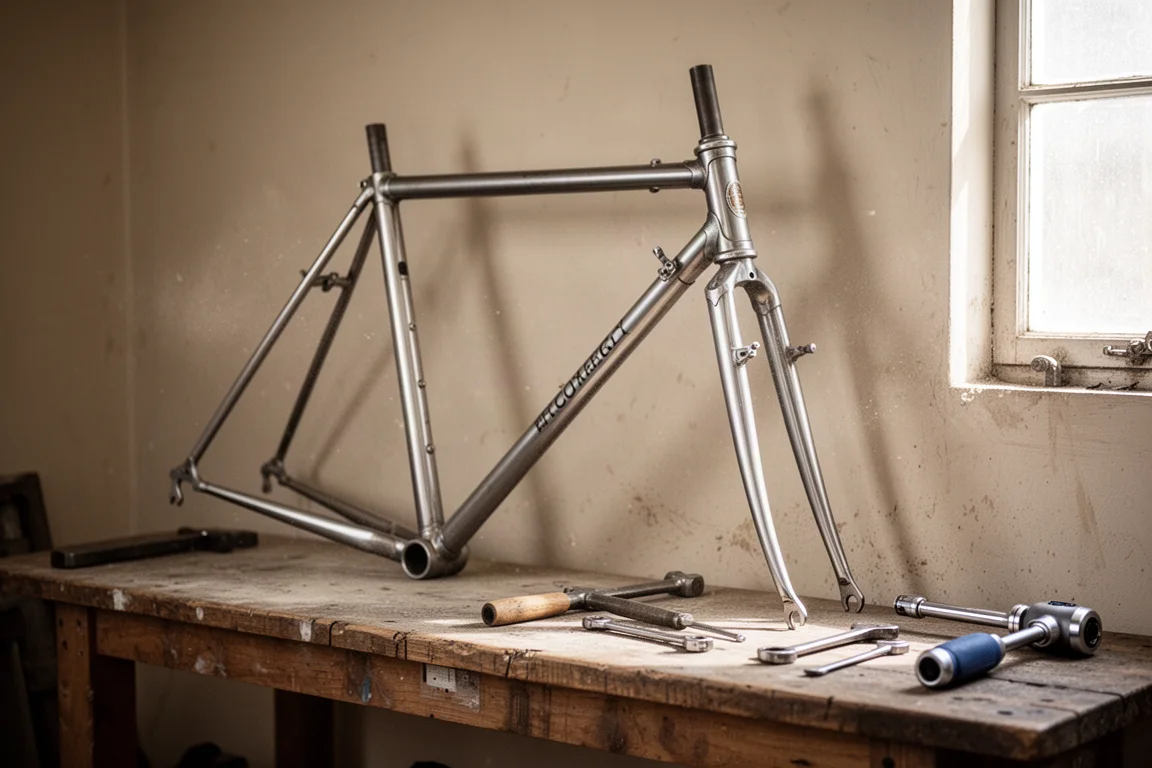
Fit comes next. Measure the steerer length against your frame’s head tube before committing, since a period fork with a cut steerer cannot easily be lengthened. Confirm the fork works with the frame’s geometry and the tyre volume you intend to run, and be honest about what you are asking of 20 mm of usable travel. If the goal is a correct, period-accurate build of a 1991 Team Z style steel race bike, the fork is the defining component and worth the effort. If the goal is comfort on rough ground, a modern frame with wide tyres will deliver more of it for less money and considerably less maintenance.
Conclusion
The RockShox Paris Roubaix SL is a rare case of an idea that worked well enough to win the biggest cobbled race three years running, and was then replaced by something simpler and better. It smooths rough surfaces without making the bike feel vague, its on-the-fly damping adjustment is genuinely clever for its time, and it remains one of the most evocative components in road racing history.
It is also heavy, expensive to maintain, and limited to around 20 mm of useful movement, which is why the modern answer to the cobbles is a wider tyre on a stiff aero frame rather than a spring. For collectors and restorers, that history is exactly the appeal, and a sound example deserves a careful build around it. For everyone else, the Paris Roubaix SL is best understood as the fascinating dead end that led the sport to the solution it still uses today.
Product link
View more details for RockShox Paris Roubaix SL
This product is mentioned in the review. Check the specifications, options, and compatibility before buying.
View more details for RockShox Paris Roubaix SLFurther reading
Related Reviews
Cycling Components
A 20,000-Mile Budget Race Bike Build: Five Parts Worth Knowing
A rim brake race bike assembled from low-cost components and ridden for 20,000 miles. Here is what delivered real speed, what caused problems, and what to weigh before copying the formula.
Cycling Components
7 Bike Fit Products Fitters Avoid: What to Check Before You Buy
Seven bike components that regularly cause knee, foot and saddle problems, with the specific concerns behind each one and what to look for instead.
Cycling Components
Four Affordable Bike Upgrades That Improve Ride Feel
Four low-cost cycling products that make a real difference to ride feel, plus the free setup changes worth trying first.