Triathlon Bikes
Road Bike vs Triathlon Bike: Which to Buy for Your First Triathlon
A practical look at how road bikes and triathlon bikes differ, with three specific options: the Basso Astra, Quintana Roo VPR and Canyon Speedmax.
Introduction
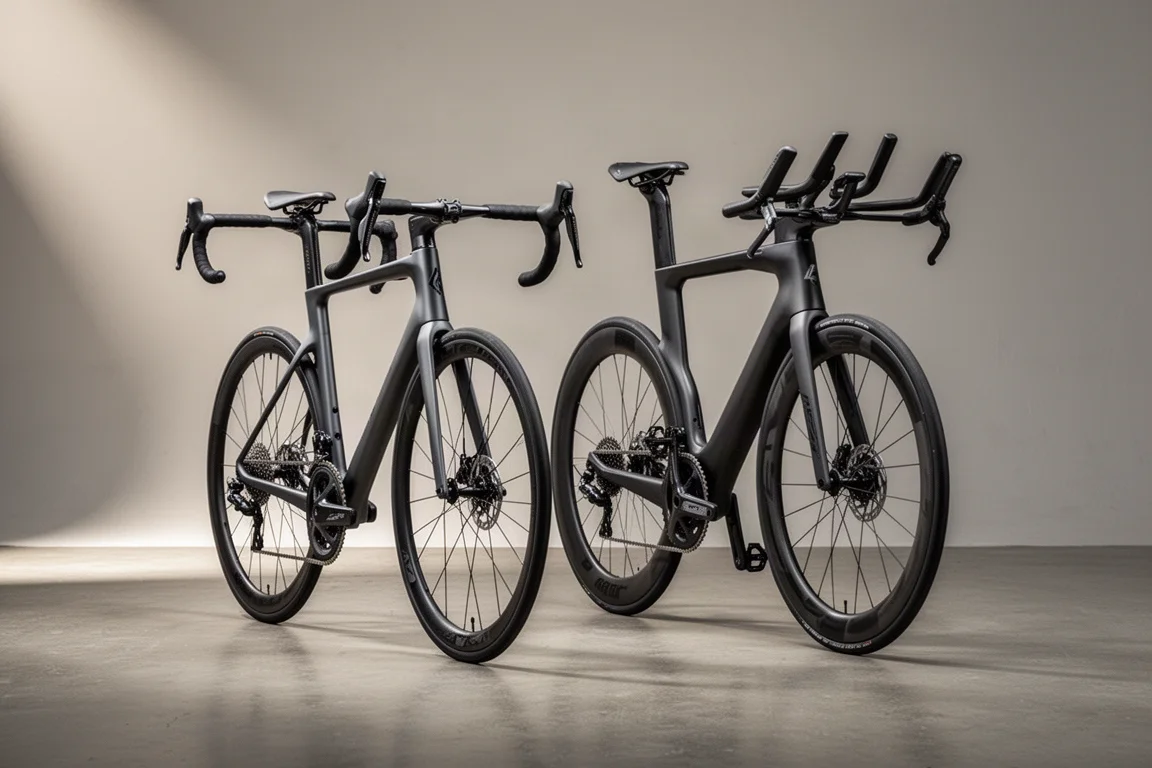
Choosing between a road bike and a triathlon bike is one of the first real decisions a new triathlete faces. Both are carbon, both can run the same groupset, and both will get you around a course. The differences show up in geometry, aerodynamics, storage, and how the bike behaves once the road stops being straight.
This guide covers what actually separates the two categories, then looks at three specific bikes that represent them: the Basso Astra, the Quintana Roo VPR, and the Canyon Speedmax.
What Separates a Road Bike from a Triathlon Bike
Seat tube angle is the defining design difference. On an average-sized road bike it typically sits between 72.5 and 74.5 degrees, placing the saddle nose further behind the bottom bracket. That shifts more of the rider’s weight through the pelvis and less over the front wheel, and it also influences reach to the handlebars. Road racing rules require the saddle to sit at least 5 cm behind the bottom bracket unless a rider has a morphological allowance, so there is a hard limit on how steep a road bike can go.
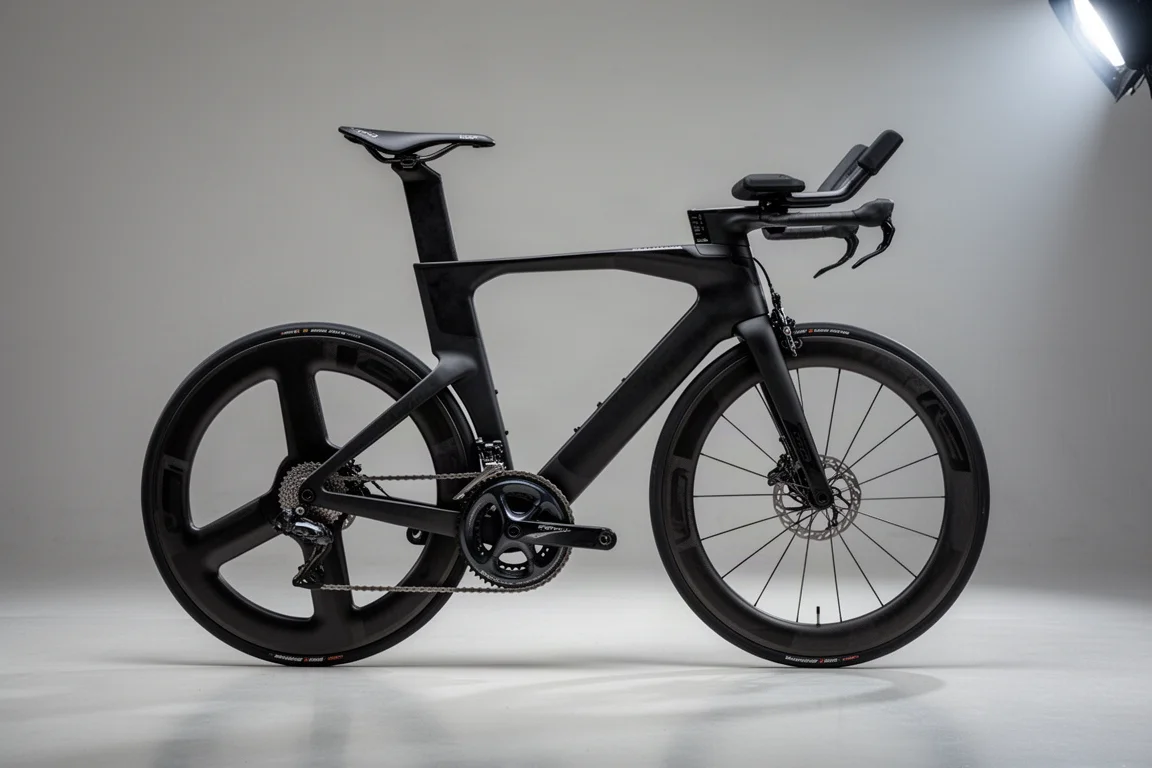
Triathlon bikes run much steeper, from roughly 77 to 83 degrees. Quintana Roo is widely credited with introducing the 80 degree seat tube angle and is regarded as a forefather of modern triathlon bike design. A steeper angle makes it far easier to sit over the bottom bracket, opens up the pelvis, reduces the hip angle at the top of the pedal stroke, and improves pedalling efficiency in an aerodynamic position. The trade-off is weight distribution: more of it moves to the front of the bike, which changes how the bike handles.
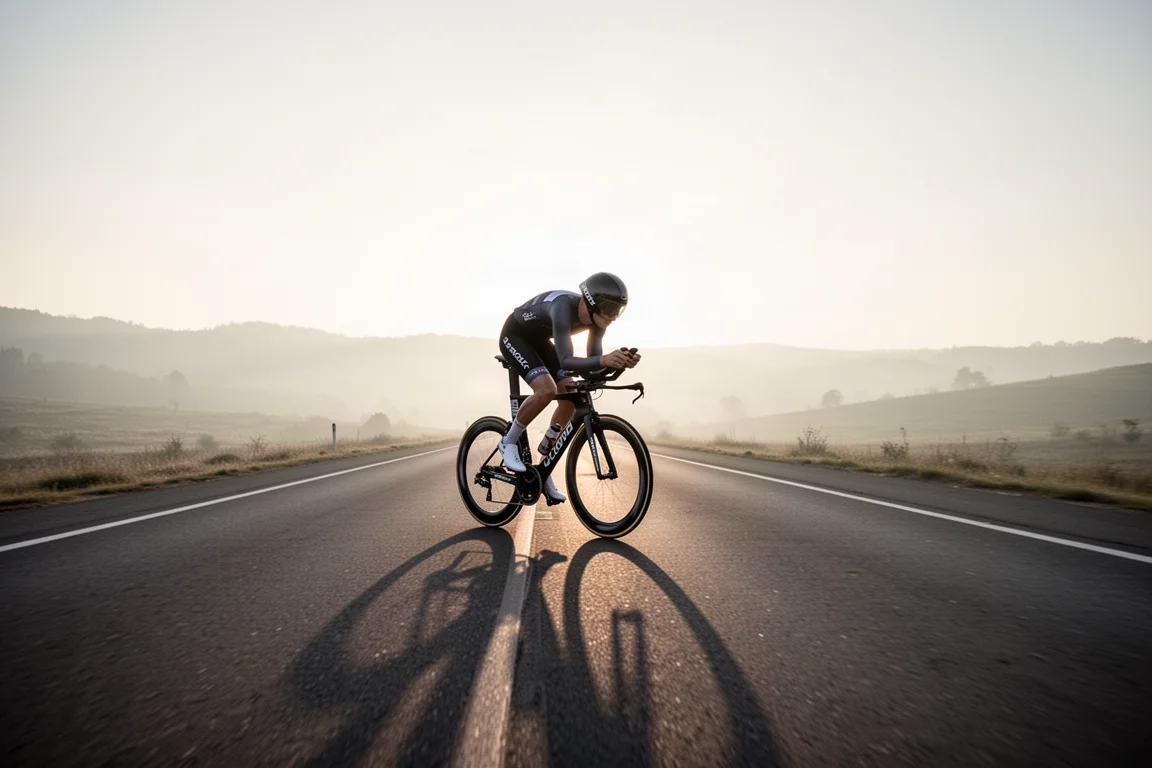
Course topography matters as much as geometry. A road bike won the 2019 70.3 World Championships in Nice, a hilly course, helped by the fact that triathlon has no weight limit, so a road bike can be built very light. Aerodynamics is the other half of the story. Road frames are capped by a 3:1 tube aspect ratio and a ban on fairings, while triathlon has no equivalent rulebook, so triathlon frames can run much deeper tubes and integrate storage that genuinely helps airflow. Around 75 percent of total drag is the rider, and a triathlon position lets you reduce that far more.
Basso Astra: The Versatile Road Option
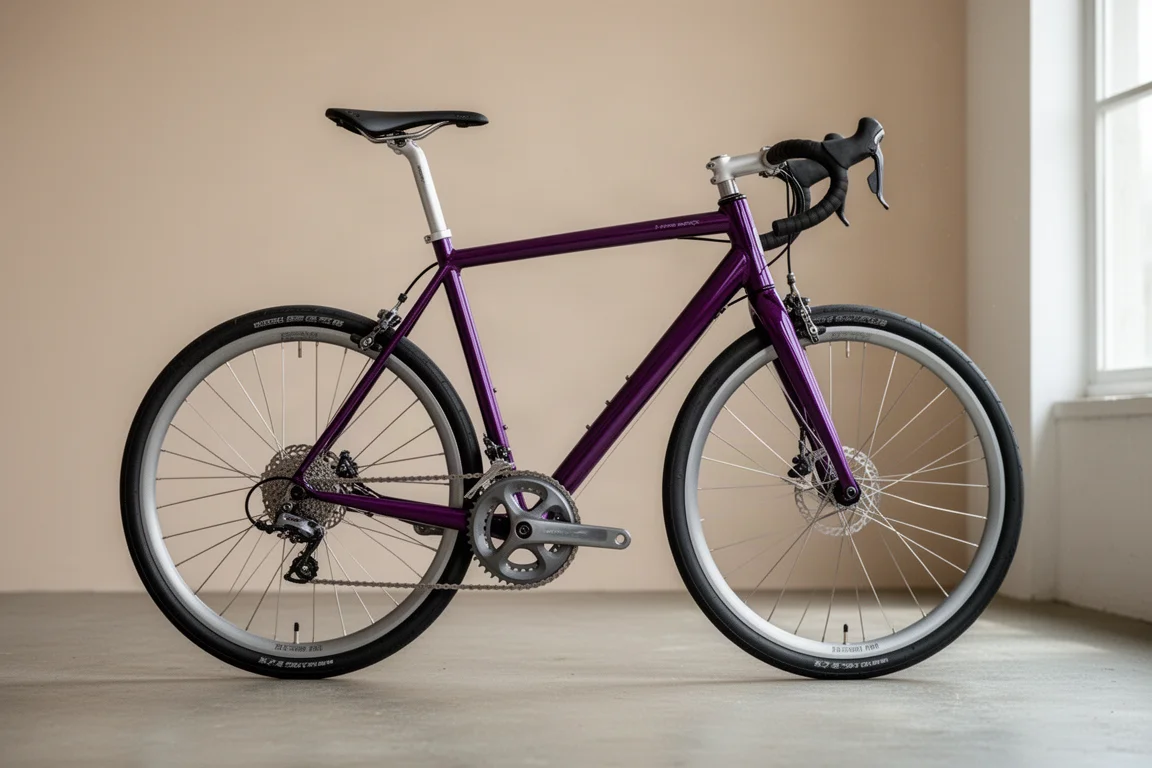
The Basso Astra is a carbon road bike that blurs the line between endurance and race geometry. It carries some aerodynamic thinking in the frame, but nothing close to the extremes of a dedicated triathlon machine. It runs Shimano Ultegra with carbon wheels, and at around £4,500 it costs roughly half of a comparable triathlon build.
Where it wins is handling and usability. Head tube angle, wheelbase and stem length all work in its favour, so it corners far better than a triathlon bike, and the more balanced weight distribution means you can simply throw a leg over it and ride. That makes it a practical choice for training rides, turbo sessions, and, with clip-on bars costing a couple of hundred pounds, a first triathlon.
The trade-offs mirror the triathlon bike’s strengths: less aerodynamic tube shapes, a less extreme position, and fewer integrated storage options. Race nutrition usually ends up in a bento box strapped to the top tube or in jersey pockets.
Quintana Roo VPR: A Dedicated Triathlon Bike
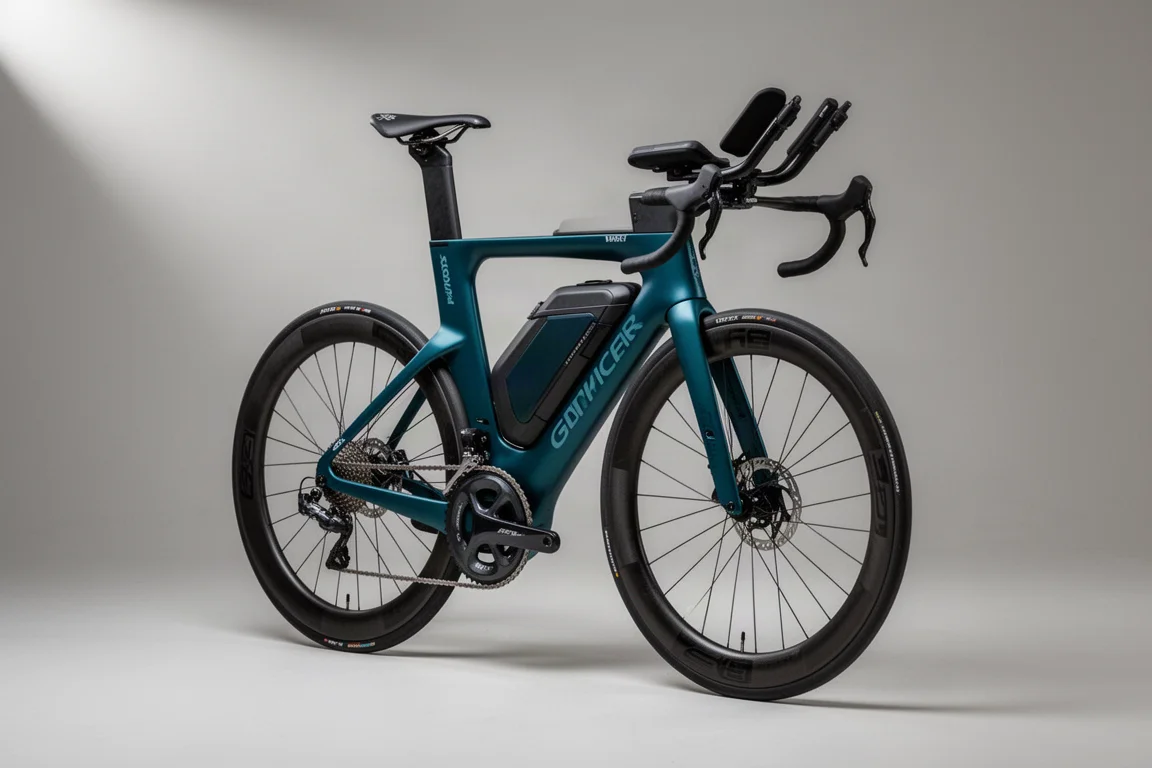
The Quintana Roo VPR is built around steep triathlon geometry, with a wide range of saddle adjustment on the seat tube that pairs well with a rail-adjustable triathlon saddle. There are no hydraulics running through the cockpit area, which makes the front end easier to work on than a fully integrated road bike, and the frame uses deep aero tubes with an integrated storage box that is shaped to help rather than hurt airflow.
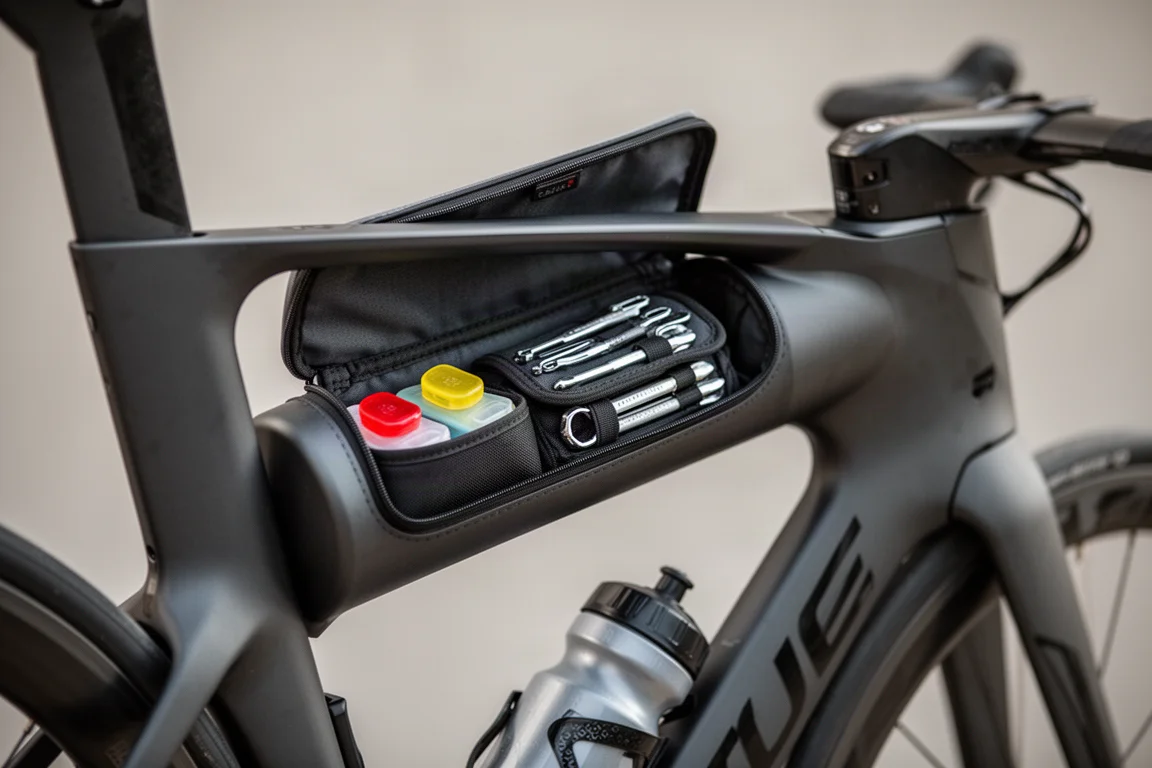
Storage is where the VPR pulls clear of a road bike. Top tube bosses let you carry gels without velcro straps, and the rear box takes spare tubes, which matters because triathlon offers no neutral support and a puncture has to be fixed on course. A typical 70.3 ride of around two hours at 120 to 140 grams of carbohydrate per hour works out at roughly eight gels, so the box carries three or four and the rest goes into fluid, with bottles mounted front and rear.
Handling and setup are the compromises. So much weight sits over the front that the bike does not corner well, although a long wheelbase and a slack head angle take some of the edge off, and it is very good in a straight line. It is twitchy at first, takes time to get used to, and feels harsher than a road bike on rough surfaces. At around £8,500 for a carbon build with carbon wheels and Shimano Ultegra, it costs roughly double the equivalent road bike.
Canyon Speedmax: Integrated Hydration and Storage
The Canyon Speedmax takes integrated race storage further with a built-in hydration reservoir, and its cockpit stands out for how well it adjusts. It is a good example of how far triathlon bike design has come: disc brakes and wireless electronics have removed much of the complexity that once made these bikes difficult to live with.
Front-end adjustability is one area where triathlon bikes generally beat road bikes. Modern road bikes are heavily integrated and internally routed, so most position changes need a qualified mechanic, while a triathlon bike can often be adjusted at home. One useful consideration when choosing a size is that it is easier to bring a front end up than to bring it in, which is why sizing down is often the safer route.
Practical Considerations: Setup, Transport and Maintenance
Setup is more involved on a triathlon bike. Fitting is often done on a jig, and a full bike setup can require substantial disassembly to change the position, which is why the initial build can take considerably longer than a road bike’s. Early generation time trial bikes were worse still: mechanical shifters, mechanical brakes and integrated centre-pull designs could turn a build into a full day’s work.
Base bars are a stubborn limitation. There is effectively no choice narrower than 40 cm, and width is not adjustable. That is less of a problem if you spend the race in the aero position, but it matters on a hilly course where you are on the base bar more often, and it is a genuine fit issue for smaller riders with narrow shoulders.
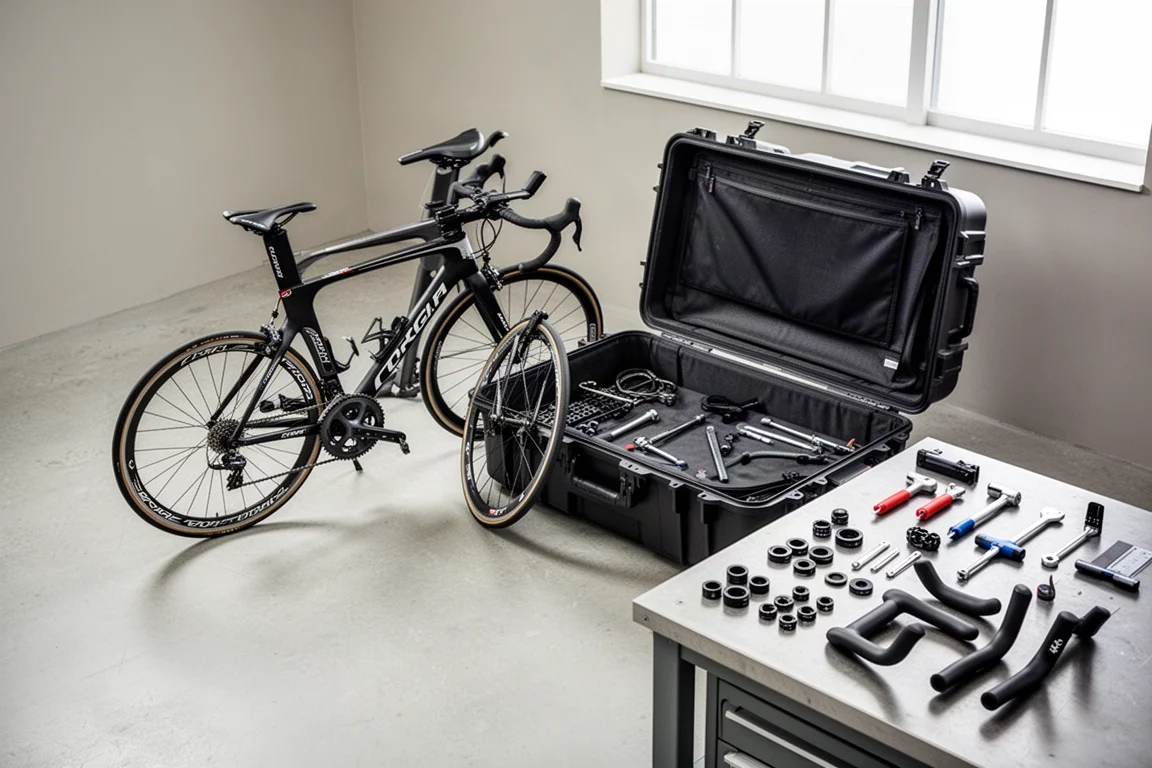
Transport is a draw, in the sense that both categories lose. Modern bike boxes mean neither needs much disassembly, but a triathlon bike set up with a high front end can be a struggle to fit inside one, and recreating the position afterwards is harder than it looks. There are also more small parts to keep track of, and losing a single spacer can effectively end your race day.
Comfort, Tyres and Road Surface
Triathlon bikes feel harsher to ride. The position puts a lot of weight over the front of the bike, and stiff frames transmit road vibration up through the shoulders. Wider tyres and tubeless setups have taken some of that edge off, but not all of it, and you will not find a triathlon bike running 35 mm tyres. On poor road surfaces, a road bike can be the more suitable machine for a long distance event.
Buying Advice: Matching the Bike to Your Racing Plans
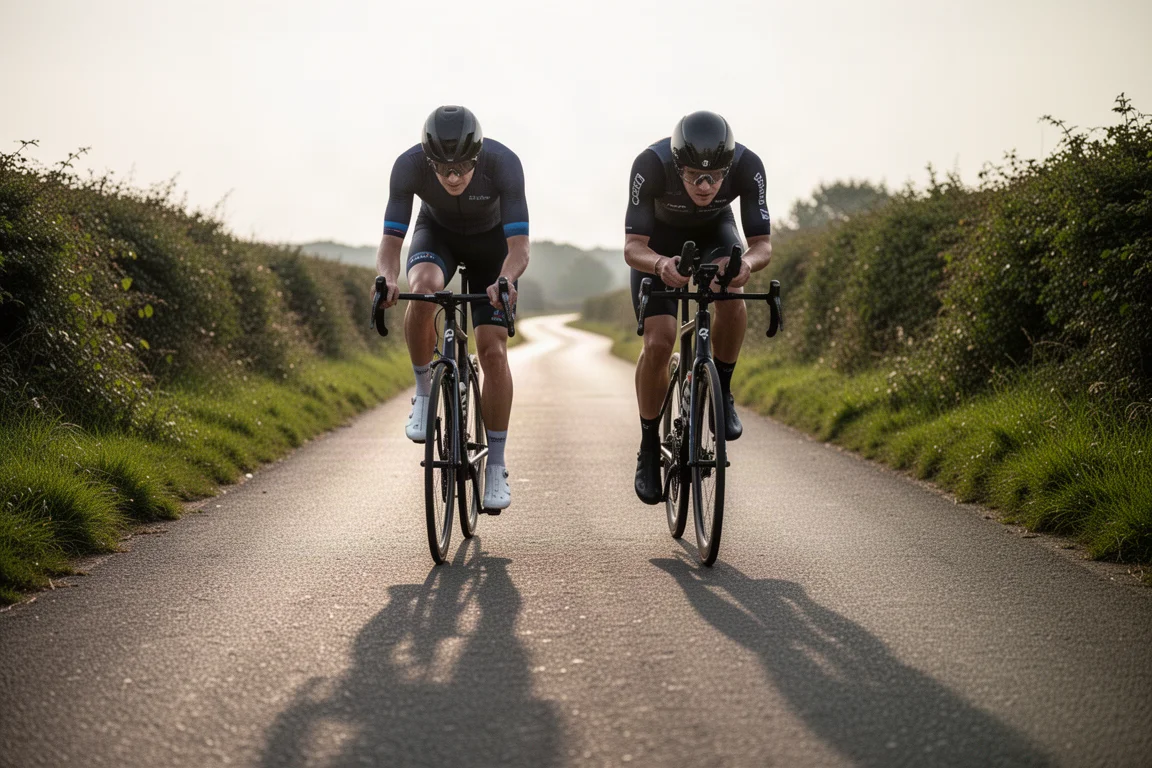
How often you plan to race is usually the deciding factor. If you are doing one or two events a year, a road bike is the more sensible buy. It handles better, it is easier to live with, it doubles as your training bike, it can go on a turbo for indoor sessions, and clip-on bars cost only a couple of hundred pounds. It will also climb, descend, ride on the flat and handle a bit of gravel, which makes it far more versatile overall.
If you are racing a dozen times a year and chasing places in your age group, a dedicated triathlon bike is the faster tool. It is a bike built to go fast, and it is rarely anyone’s first bike, which is worth remembering if you are still building up your collection.
Budget frames the decision neatly. Around £4,500 buys a carbon road bike with carbon wheels and Shimano Ultegra, while around £8,500 buys the equivalent triathlon build, close to double the price for the same groupset. A simple rule of thumb: if you have around five thousand to spend, buy a road bike; if you have around nine, buy a triathlon bike.
Conclusion
Both categories are good bikes; they are simply built for different jobs. A road bike gives you handling, comfort and versatility, and it is the better choice for a first triathlon or a light race calendar. A triathlon bike gives you a steeper position, deeper tubes and integrated storage, and it is the better choice when outright speed and age group placings are the priority.
Match the bike to the courses you actually race, the number of events on your calendar and your budget, and either choice will serve you well.
Further reading
Related Reviews
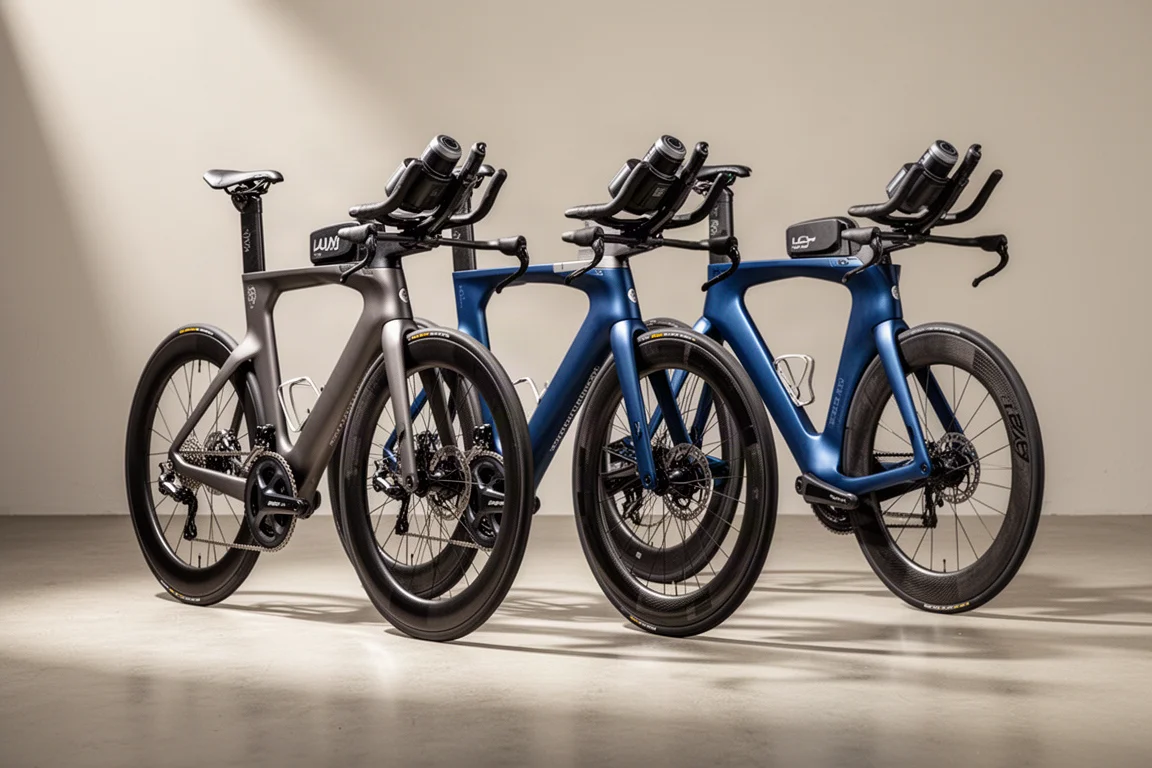
Triathlon Bikes
Best Triathlon Bikes 2026: Seven Race Bikes Compared
Seven triathlon bikes assessed on front-end adjustability, onboard hydration and storage, and value, from the most common bike in transition to lower-cost race options.
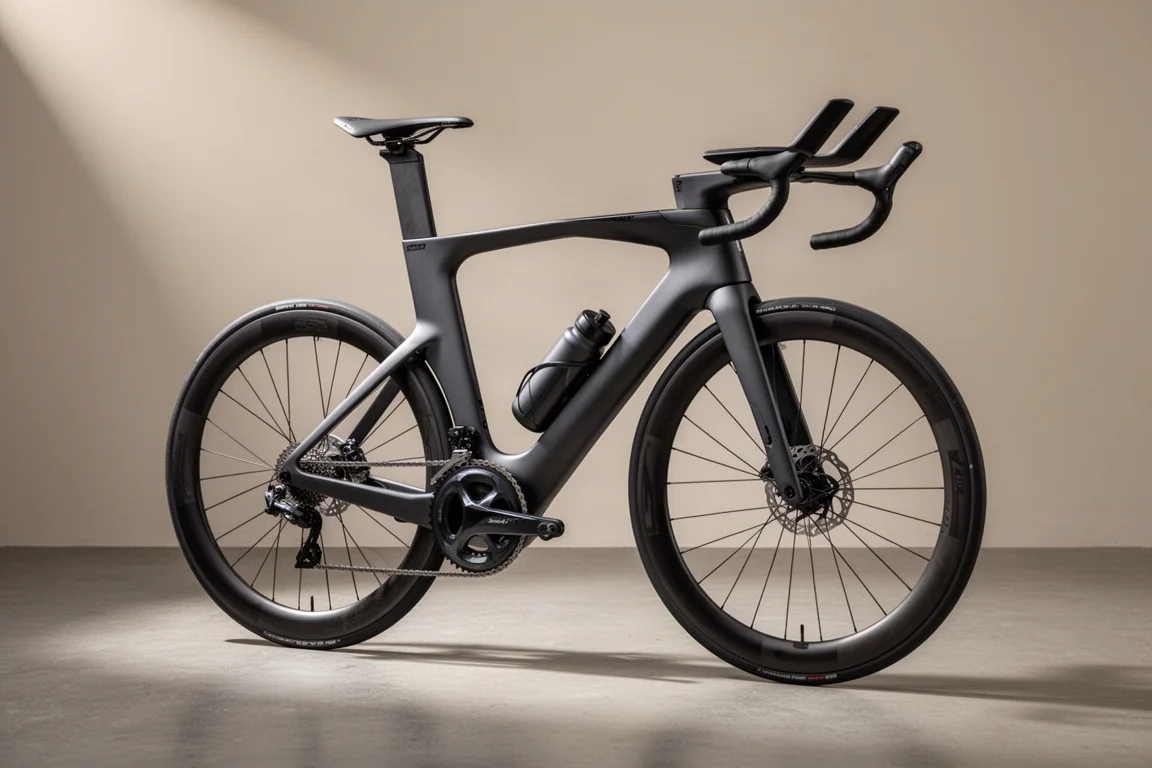
Triathlon Bikes
BMC Speedmachine Review: A Formula One-Informed Triathlon and TT Bike
The BMC Speedmachine pairs Red Bull Advanced Technologies aerodynamics with a redesigned frame, integrated hydration, and a 500 gram weight saving over BMC's previous triathlon platform.
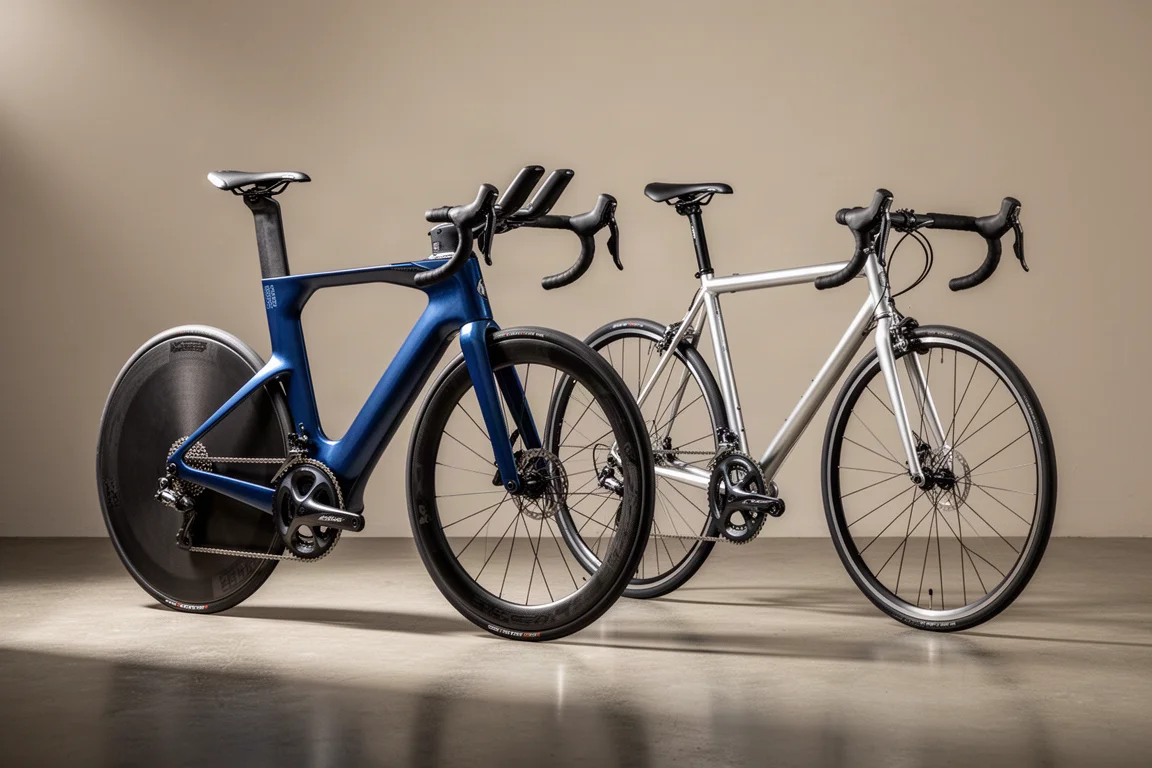
Triathlon Bikes
Buying Speed: Canyon Speedmax CFR vs Triban RC 120 Road Test
A head-to-head 22 km test of a premium triathlon race bike, an affordable disc-brake road bike, and a disc wheel upgrade, with the numbers and the trade-offs that matter.