Triathlon Bikes
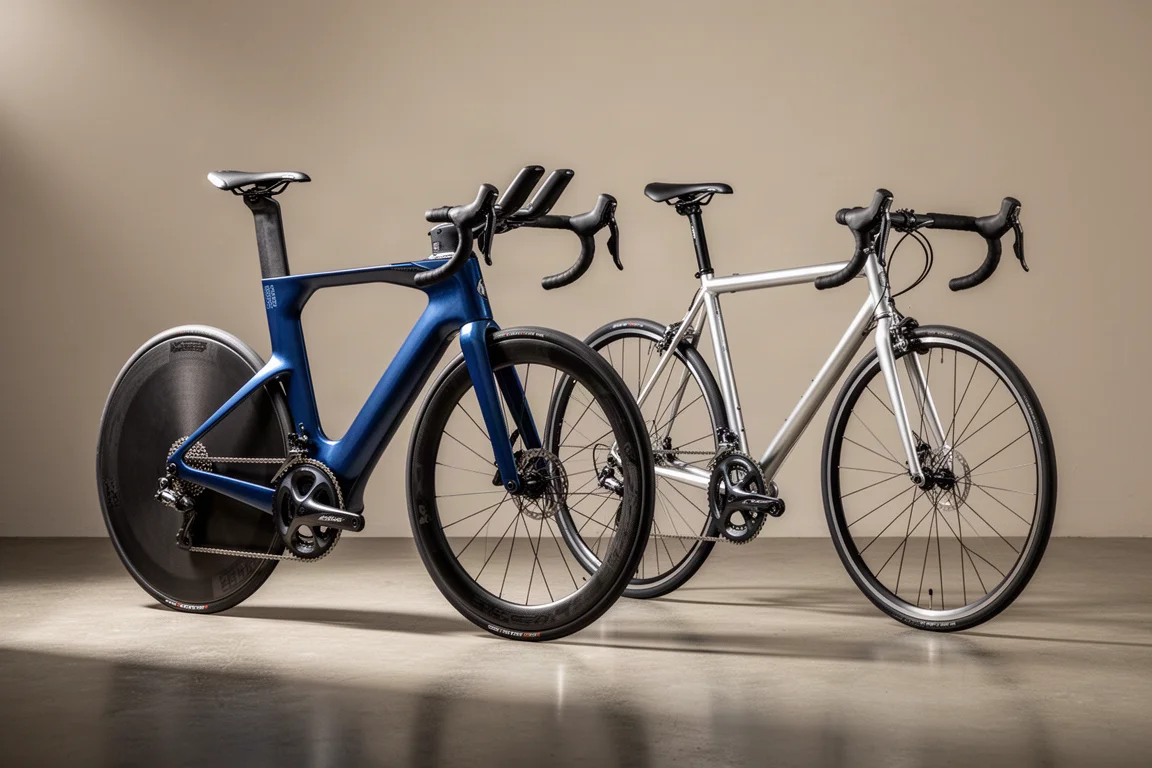
Road Bike vs Triathlon Bike on a Hilly Course: Canyon Speedmax CFR and Canyon Ultimate CFR
A hilly championship course puts the road bike versus triathlon bike question back on the table. We look at measured differences between the Canyon Ultimate CFR and Canyon Speedmax CFR, and what really decides the faster choice.
Introduction
A hilly championship course changes the usual calculation. On a flat route the triathlon bike is almost always the faster answer, and the argument rarely goes further than that. Put the same riders on a course with long climbs, twisting descents and rolling coastal roads, and the gap narrows enough that other factors start to matter more than raw aerodynamic efficiency.
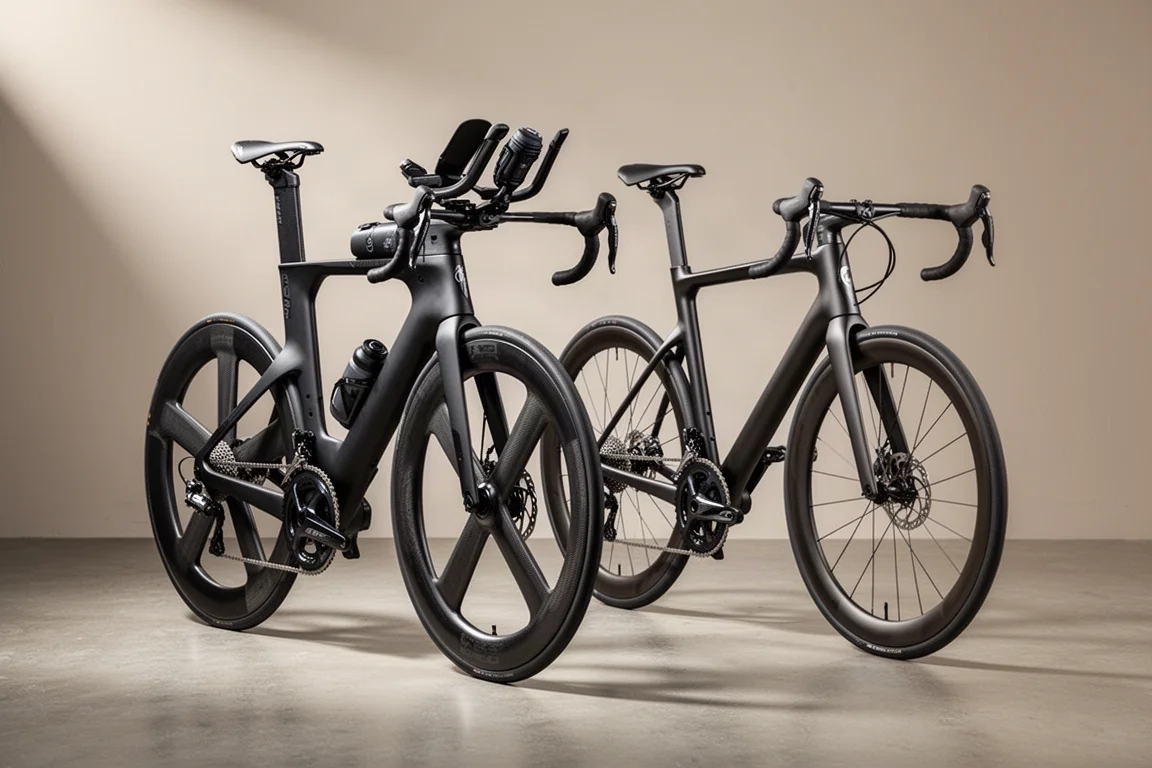
This comparison looks at two bikes built by the same manufacturer on the same components wherever possible: the Canyon Ultimate CFR, a lightweight road bike, and the Canyon Speedmax CFR, a dedicated triathlon bike. Both were set up to match each other as closely as the frames allowed, then ridden over three timed tests on the course: a steep climb, a twisting undulating road, and a flat out and back.
The results are less definitive than you might expect, and that is the point.
What Makes the Nice Course Different
The route is not one long climb and it is not a flat drag. Roughly a quarter of it is flat riding, close to 100 kilometres is twisting and undulating, around 20 kilometres is climbing, and about 26 kilometres is descending. The steepest climb on the course covers roughly three kilometres and gains around 270 metres, an average gradient near nine percent.
That mix is why the road bike question keeps coming up. A triathlon bike is more aerodynamically efficient than a road bike, and above about 15 kilometres an hour aerodynamics dominate. Almost everyone racing a long-distance event averages well above that, so the triathlon bike should win comfortably. On a course that forces riders out of the aero position for corners, and rewards low weight on the climbs, the advantage is much smaller than the theory suggests.

Confidence on the descents is worth real time here too. Long descents punish hesitation, and hesitation is exactly what an unfamiliar position creates.
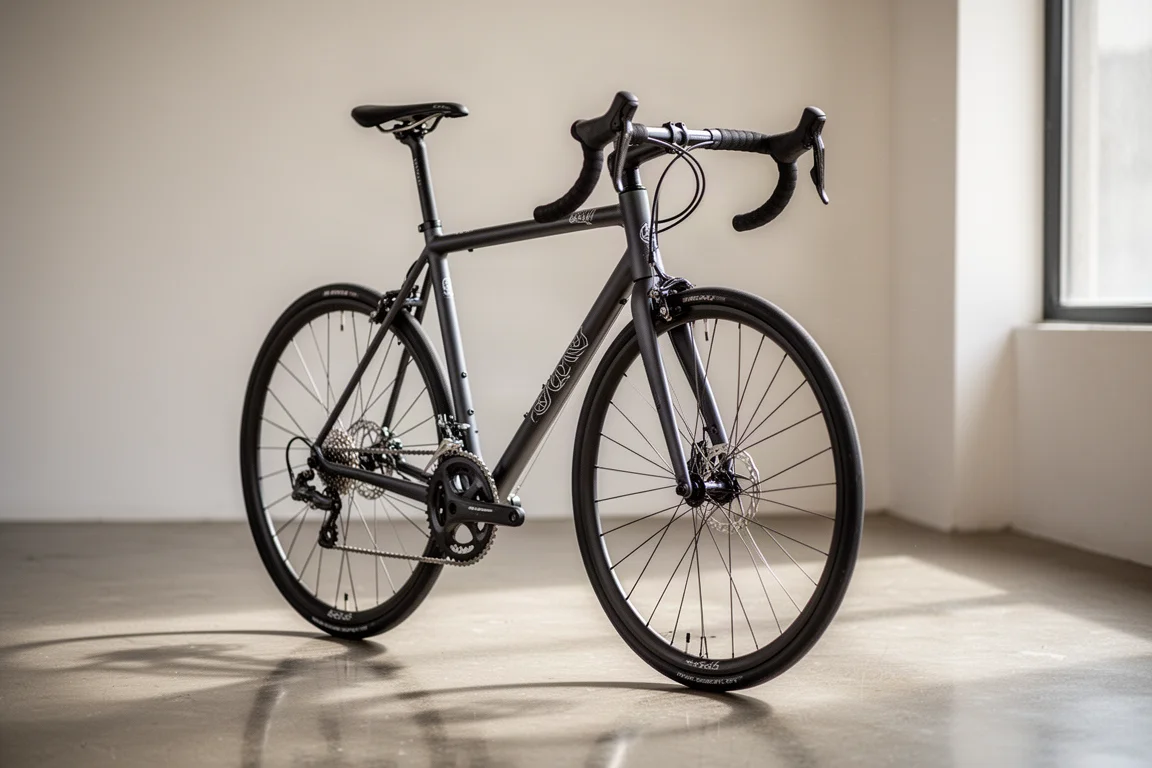
Canyon Ultimate CFR: The Road Bike Option
As tested, the Canyon Ultimate CFR weighed 8.14 kg with the race setup fitted. It used Shimano Ultegra Di2 with a 52/36 chainset and an 11-30 cassette, DT Swiss ARC 1100 wheels at 62 mm front and rear, Schwalbe Pro One tyres in 25 mm at the front and 28 mm at the rear, an aero bottle on the down tube, a bottle behind the saddle, and a Selle Italia saddle.
Because the frame has no internal hydration, a front hydration system was mounted between the aerobars. The X-Lab Hydro Blade holds 828 ml, which is actually slightly more than the 700 ml internal bladder of the triathlon bike, so fluid capacity ends up roughly equivalent. The difference is how the rest of the kit is carried: fuel and spares need a bento box on the frame and a saddle bag behind the saddle, and both of those cost aerodynamic drag. The saddle sat slightly further back and the front end sat slightly higher than on the triathlon bike, a consequence of the frame geometry rather than the setup.
Canyon Speedmax CFR: The Triathlon Bike Option
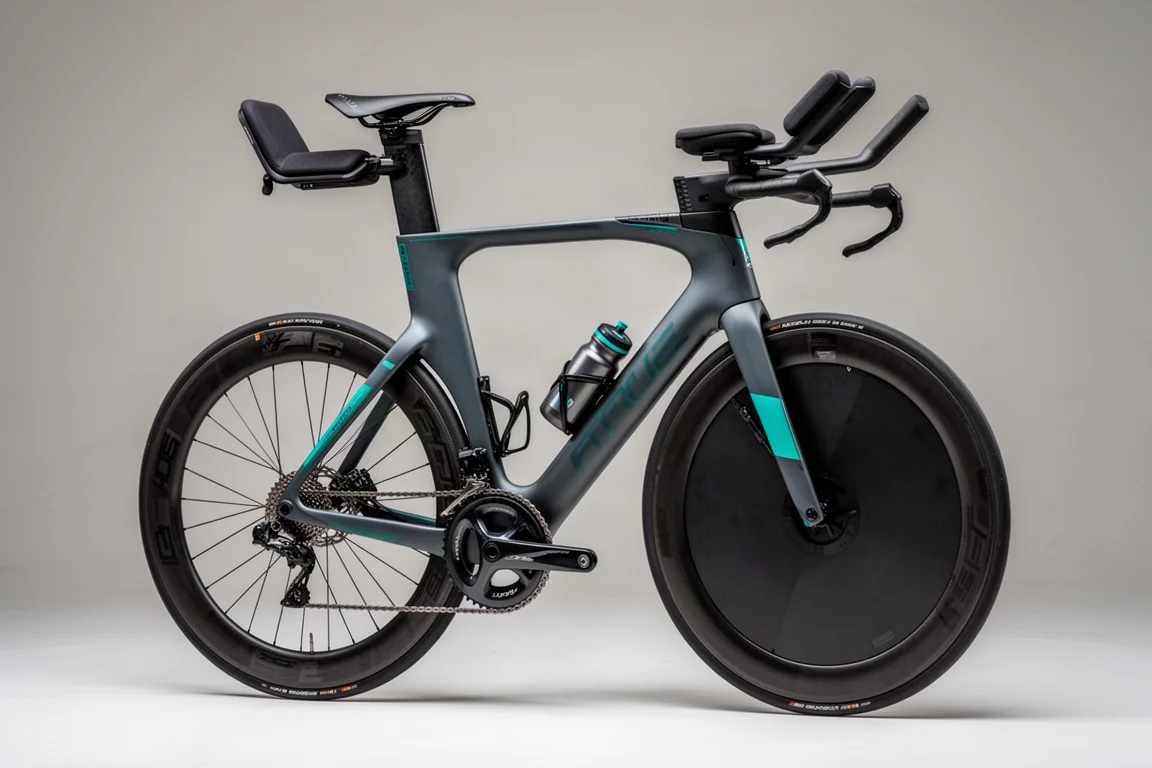
The Canyon Speedmax CFR weighed 9.65 kg as tested, around 1.5 kg more than the road bike. For an 80 kg rider that is roughly a 1.5 percent increase in total system weight, which is not insignificant, though it is small enough that it does not automatically decide the outcome.
It carries the same groupset, chainset, cassette, wheels and tyre sizes as the road bike, with an aero bottle on the down tube, a bottle behind the saddle, and the same saddle model. Front hydration comes from an internal bladder holding 700 ml with a straw routed to the cockpit, so there is nothing bolted to the front end. Fuel goes in a top box and spares go in an integrated storage box built into the frame, which means both are carried at no aerodynamic cost.
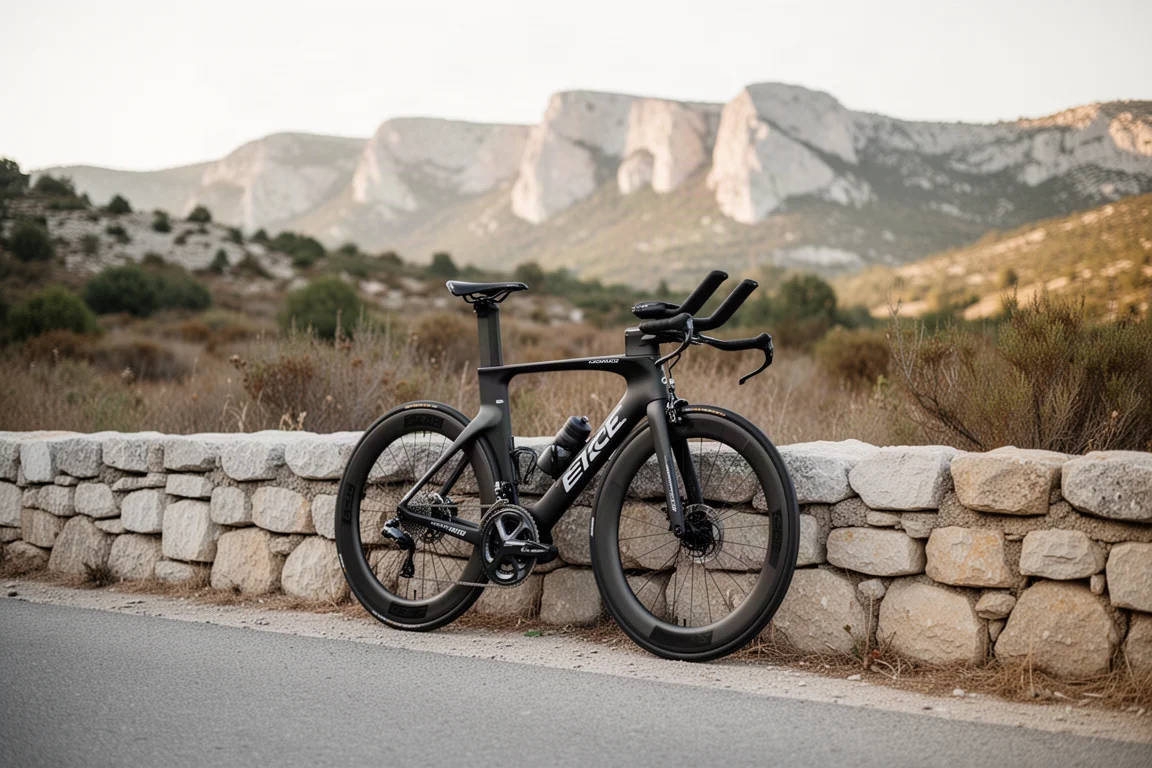
The rider position is the other structural difference. A triathlon bike places the rider further forward with a more open hip angle, which can translate into a better run off the bike, but only for riders who are adapted to that position and have trained specifically for it.
Test Results: Climbing, Twisty Roads, and Flat Sections
All three tests were run without fluid, spares or fuel on board, so the numbers reflect the bikes rather than the loaded race setup.
On the steep climb, roughly three kilometres at about nine percent average gradient, the road bike averaged 325 watts and took 9 minutes 14 seconds. The triathlon bike averaged 327 watts and took 9 minutes 52 seconds. That is a 38 second advantage to the road bike over a very short effort, more than the weight difference alone would predict.
On the twisting, undulating road, a 10 kilometre stretch that is far more representative of the course, the road bike took 14 minutes 36 seconds and the triathlon bike 14 minutes 4 seconds, a 32 second gap across the full distance. Cadence was noticeably lower on the triathlon bike despite identical gearing. On the flat out and back, both bikes held 306 watts: 6 minutes 30 seconds for the triathlon bike and 6 minutes 46 seconds for the road bike, roughly four seconds per kilometre.
Extrapolated across the whole course mix, the triathlon bike comes out ahead by around 109 seconds, under two minutes. That is well inside the margin of error for real world testing, and the descent was deliberately not timed.
Comfort, Confidence, and Descending
Comfort matters more than most riders admit over a long-distance event. The bike leg runs about four and a half hours for the fastest athletes and can stretch to seven hours for riders further back in the field. Dragging a triathlon bike around a course while sitting up out of the aero position, gaining none of its advantages and paying a comfort penalty, is a poor trade.
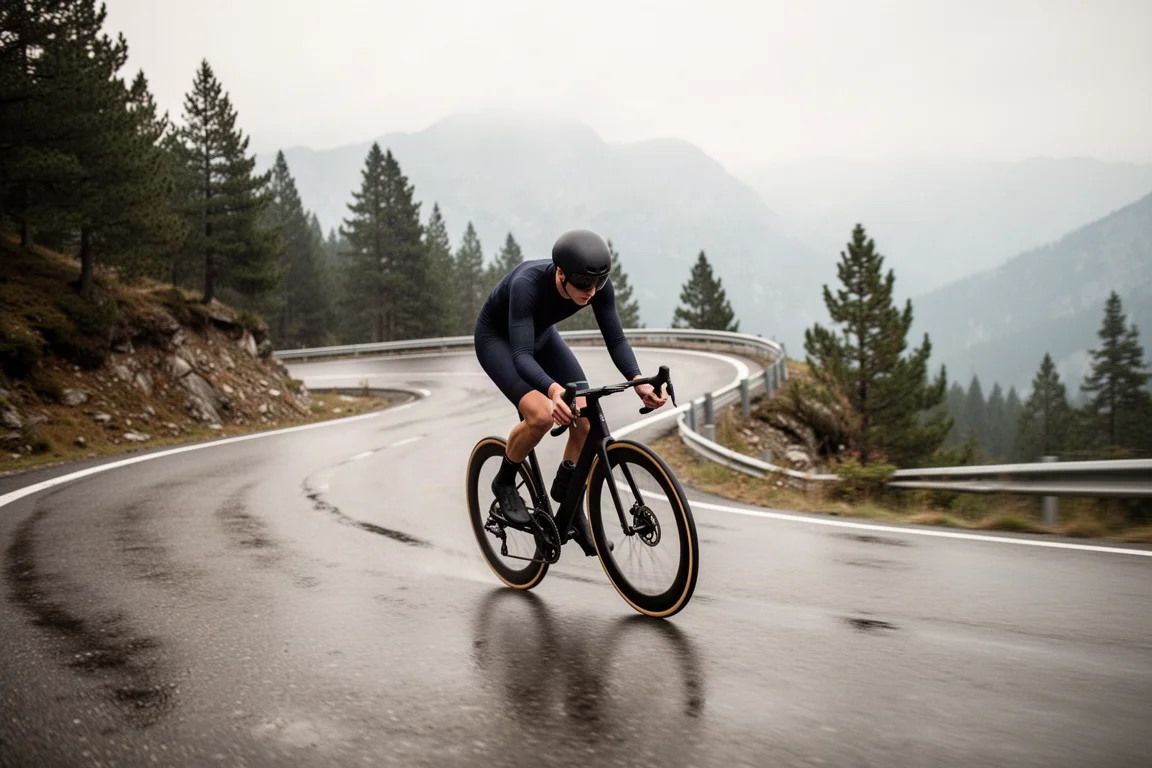
Confidence is the harder variable. On a triathlon bike the rider’s weight sits further forward, so there is more load on the front wheel, less balanced cornering and a tendency to descend more cautiously. Riders who are comfortable and confident in that position can descend just as quickly as on a road bike, possibly faster. Riders who are not will lose significant time, potentially more than they ever lose on the climbs. That was not measured here, and it may be the single largest factor on the day.
Adaptation counts too. Riders who do most of their training on a road bike, including hilly training camps, will simply be more efficient on a road bike at race pace and more effective on the run afterwards. The more open hip angle of a triathlon bike can help the run, but only for riders who are used to it.
Buying Advice: Which Bike Fits Your Race
The clearest precedent comes from this same location. A road bike won the 70.3 World Championship here, ridden by an athlete who had done all of his training on a road bike and did not have time to adapt to a time trial setup. The choice cost him very little and his familiarity with the bike made him faster overall.
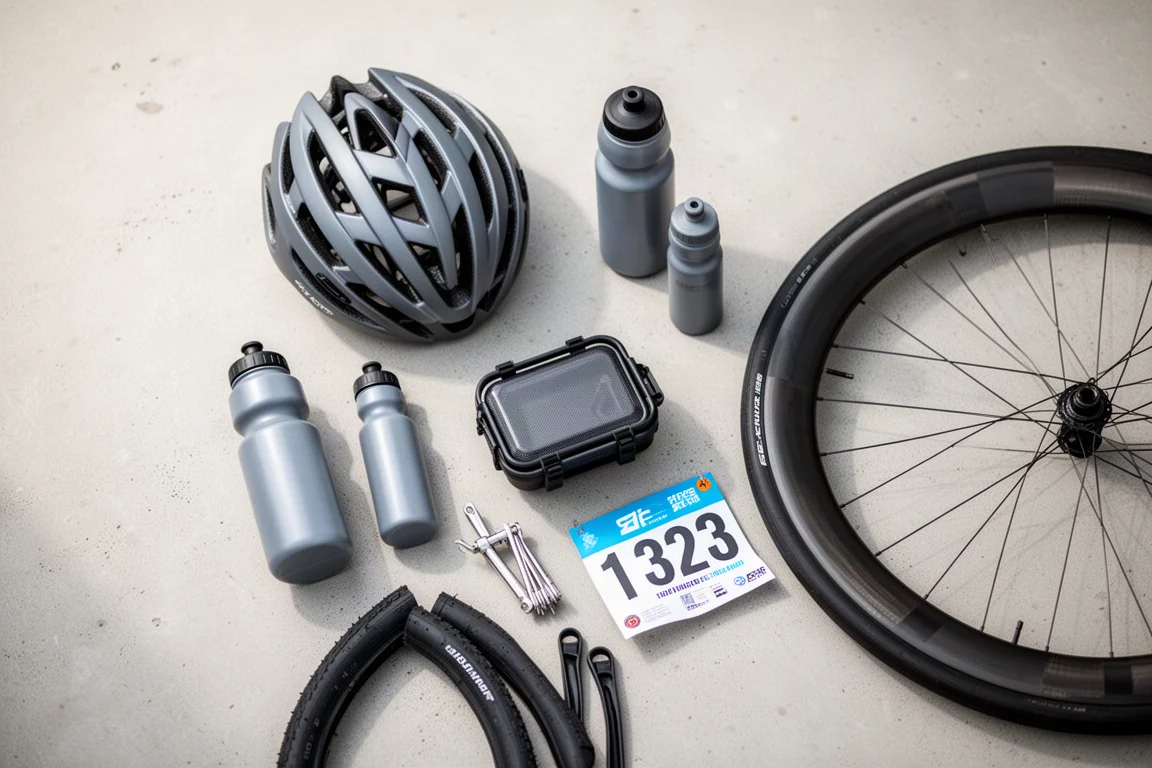
Expect most professional men at a hilly championship to line up on triathlon bikes. They have the time, the fitting support and the training volume to adapt to the position properly, so the small aerodynamic edge is worth taking. Age group fields are likely to show more road bikes than you would see on a flat course, simply because the difference is small and confidence is worth more than marginal drag savings.
If you ride your triathlon bike every week and descend confidently on it, bring it. If most of your training happens on a road bike and you are unsure in the aero position, a road bike with clip-on extensions is a legitimate race choice, not a compromise.
Conclusion
The measured difference between the Canyon Ultimate CFR and the Canyon Speedmax CFR on a hilly course is under two minutes across a full race distance. That is close enough that the faster bike is the one you are comfortable on, confident descending on, and willing to train on consistently. Weight, storage integration and front hydration all shape the decision, but none of them outweigh familiarity.
Further reading
Related Reviews
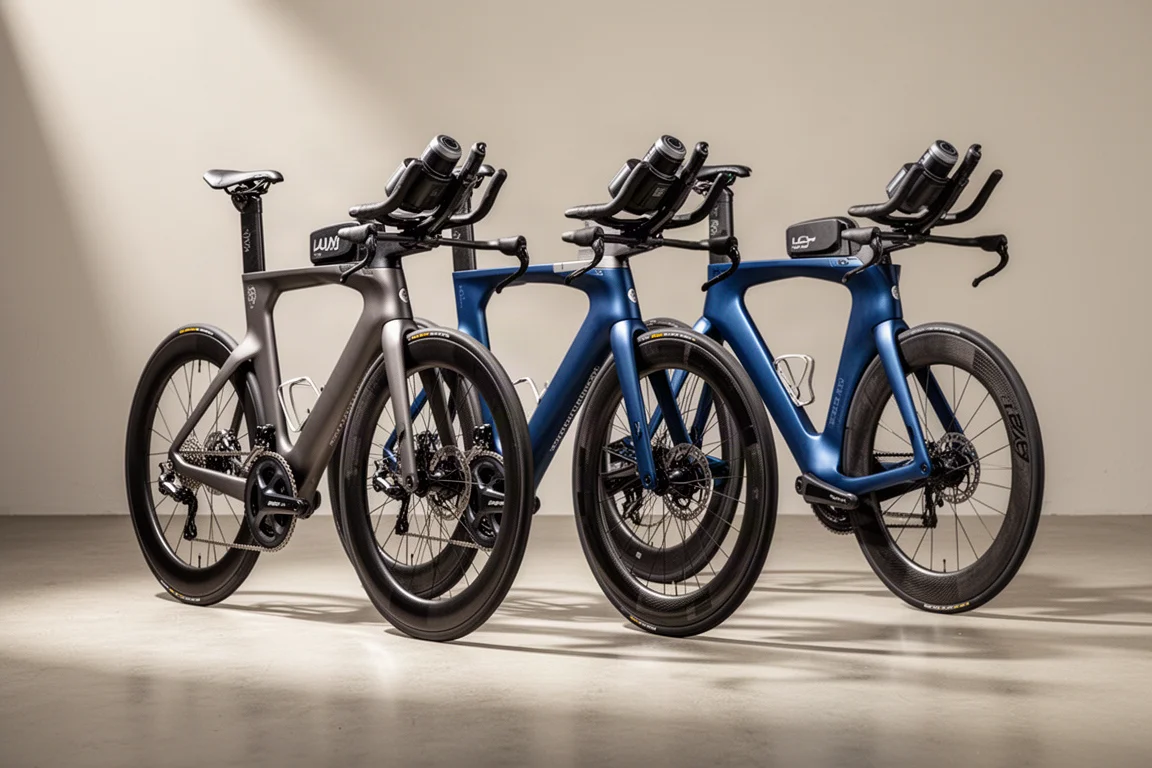
Triathlon Bikes
Best Triathlon Bikes 2026: Seven Race Bikes Compared
Seven triathlon bikes assessed on front-end adjustability, onboard hydration and storage, and value, from the most common bike in transition to lower-cost race options.
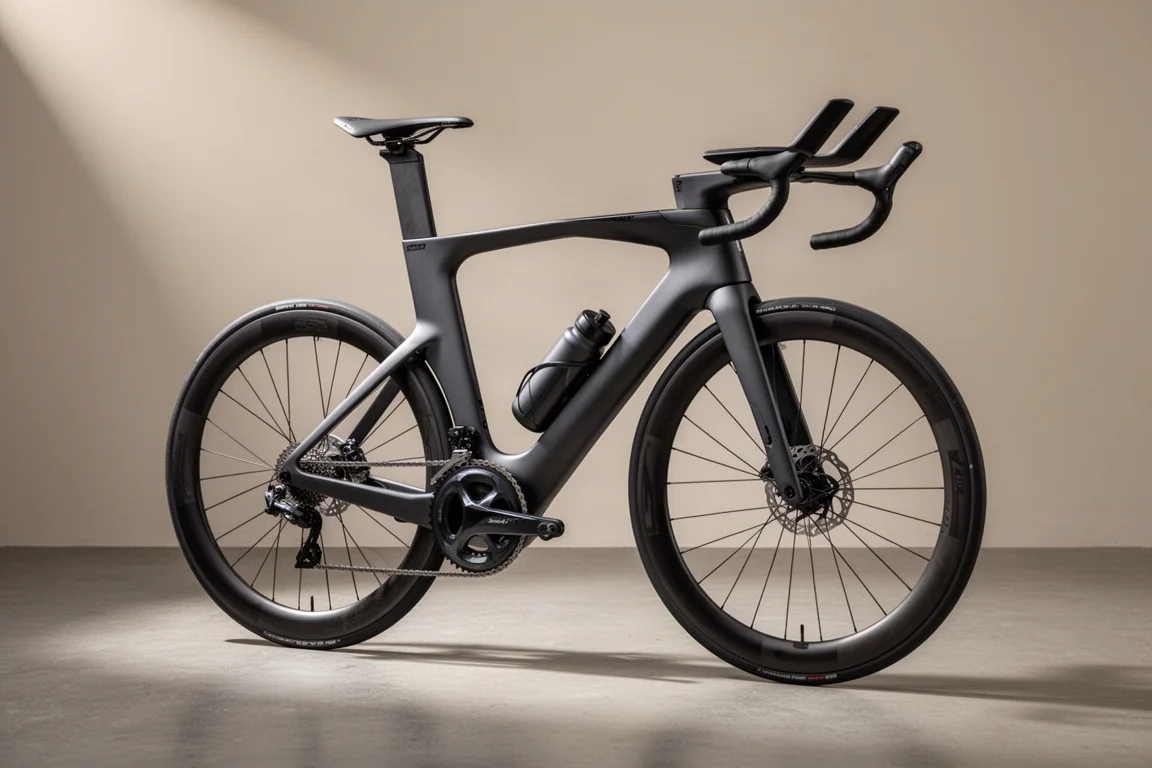
Triathlon Bikes
BMC Speedmachine Review: A Formula One-Informed Triathlon and TT Bike
The BMC Speedmachine pairs Red Bull Advanced Technologies aerodynamics with a redesigned frame, integrated hydration, and a 500 gram weight saving over BMC's previous triathlon platform.
Triathlon Bikes
Buying Speed: Canyon Speedmax CFR vs Triban RC 120 Road Test
A head-to-head 22 km test of a premium triathlon race bike, an affordable disc-brake road bike, and a disc wheel upgrade, with the numbers and the trade-offs that matter.