Cycling Components
Road Bike Saddles Explained: Traditional, Pressure Relief, and Short-Nose Shapes
A practical guide to the three main road saddle shapes, who each one suits, and how to test a saddle without wasting money.
Introduction
Saddle discomfort is one of the most common complaints in road cycling, and it is also one of the most frequently misdiagnosed. The saddle is usually the first component blamed and often the last one that actually needs changing. What follows is a practical breakdown of the three main saddle families on the market, what each one is designed to do, and which riders tend to get on with them.
Why Shape Matters More Than Width
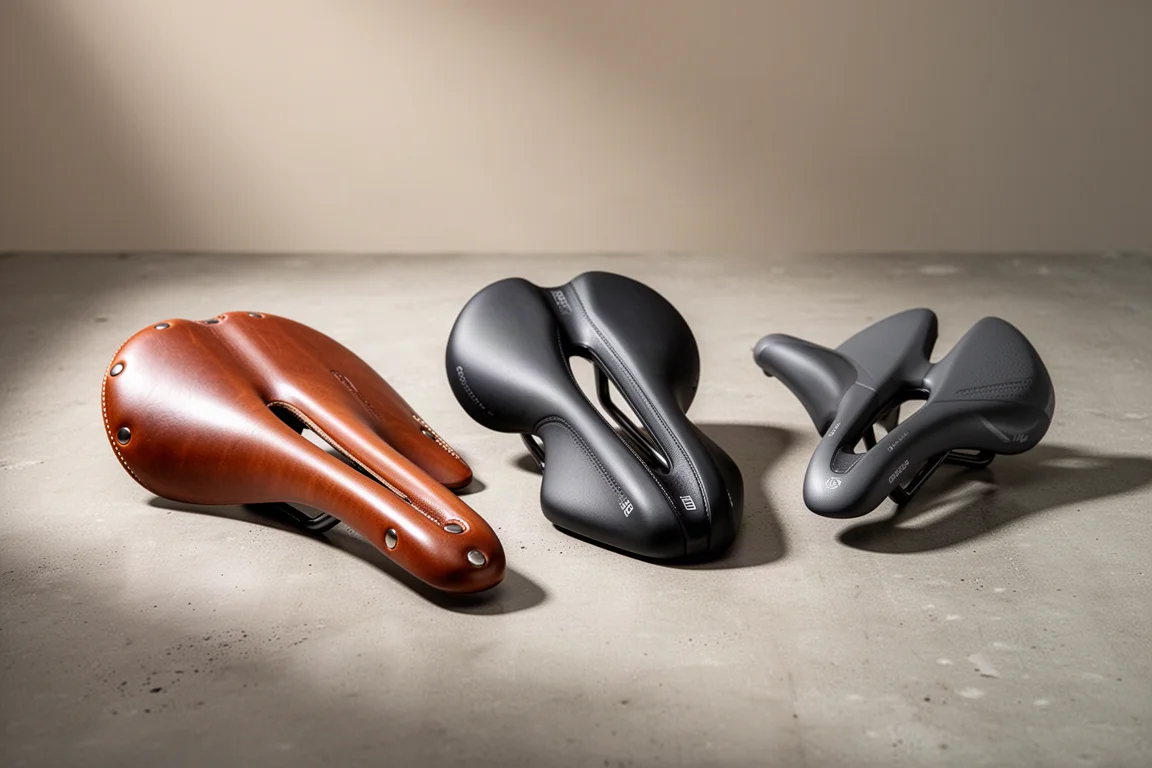
Almost every road saddle falls into one of three groups: traditional shapes with no cutout, conventional-length saddles with a pressure relief channel, and short-nose designs.
Traditional saddles have a reasonable amount of length and no pressure relief channel at all. This is the shape saddles have had since the beginning, and examples include the Selle San Marco Rolls, the Selle Italia Flite Titanium, leather saddles in the Brooks style, and outlines such as the Fizik Aliante, Fizik Arione and Fabric Scoop. Without a channel, many riders end up compensating for soft tissue pressure by rotating the pelvis backwards, which extends the lower spine and often leads to lower back pain, and makes the bike feel longer than it really is. Others sit off to one side or ride rotated.
Pressure relief saddles take a conventional length and add a channel or cutout. The idea is straightforward: relieve pressure on soft tissue and transfer the load to the sit bones, which are far better at carrying it. The first of this type was the Specialized Toupe, and the family now includes the Pro Turnix, Selle Italia SLR Max Gel Flow, Pro Griffon and Bontrager Montrose. Almost every rider benefits from some form of soft tissue relief. It is worth knowing that when you move from a channel-free saddle to one with relief, the pressure does not disappear; it is redistributed to the skeleton, and that can take a short period of acclimatisation.
Short-nose saddles arrived more recently, starting with the Specialized Power. The shorter nose lets the saddle sit further forward while still meeting the rule that the nose stays at least 5 cm behind the bottom bracket. Examples include the Specialized Power, the Pro Stealth, the Selle Italia SLR Boost and the Selle San Marco Shortfit. A shorter nose is less likely to catch the thighs as they pass the front of the saddle.

One widespread habit deserves scrutiny: measuring sit bones in a shop. Those measurements are usually taken with the pelvis in a posterior position, which is not how anyone sits on a bike, and they tend to point riders toward a saddle that is too wide. A saddle that is too wide encourages the rider to slide forward onto the nose, and on a short-nose saddle that means sitting on a section with very little support. In practice, shape has far more influence on whether a saddle works for you than width alone.
There are also designs that sit outside the three main groups, such as gully-style saddles with a very pronounced nose and a seating area set far back. These can work, but they generally need the saddle pushed fully forward on the rails and a position that is close to perfect, which makes them difficult and time-consuming to set up.
Selle Italia SLR Boost S3: The Short-Nose Benchmark
The SLR Boost is one of the most widely recommended short-nose saddles. The name breaks down simply: SLR is the range, Boost refers to the shorter nose, and S3 refers to the width. It is available in a large number of versions, from standard models through to a 3D-printed flagship at the top of the range.
The version that produces the most consistent results is the endurance model, which uses a little more gel and titanium rails. Because it is relatively narrow, it lets the rider sit further back into the saddle and avoids the thigh interference that wider short-nose saddles can cause. That combination explains why it is such a common answer for riders who have struggled with pressure build-up or with their legs catching the saddle through the bottom of the pedal stroke.
Pro Turnix: Pressure Relief With a More Pronounced Nose
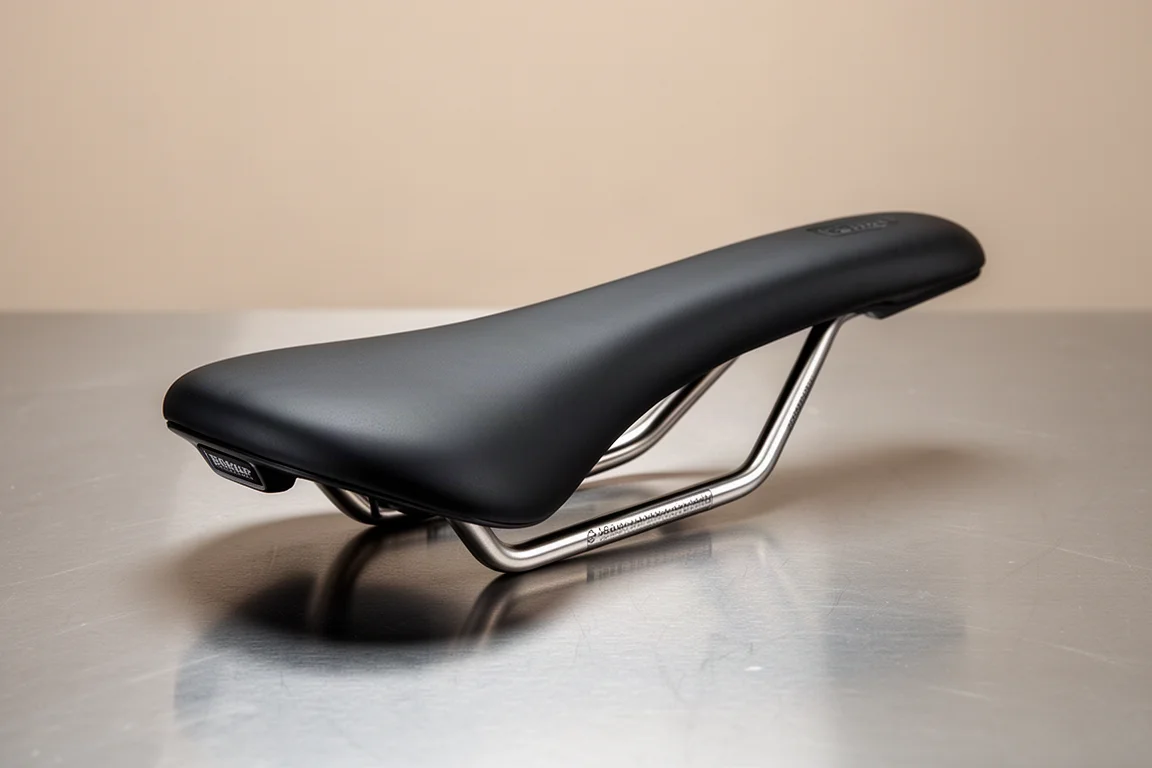
The Pro Turnix is close in concept to the Specialized Romin. It is a conventional-length saddle with a pressure relief channel, but the wings are less flat than on many relief saddles, which makes it a useful option for riders who feel pressure building up on the skeleton rather than on soft tissue.
The slightly more pronounced nose is the other defining feature. With the middle third of the saddle more or less flat, that nose shape helps stop the rider sliding into the front of the saddle or drifting forward onto the tip. It is a particularly sensible choice for anyone moving from a channel-free saddle to a pressure relief design for the first time.
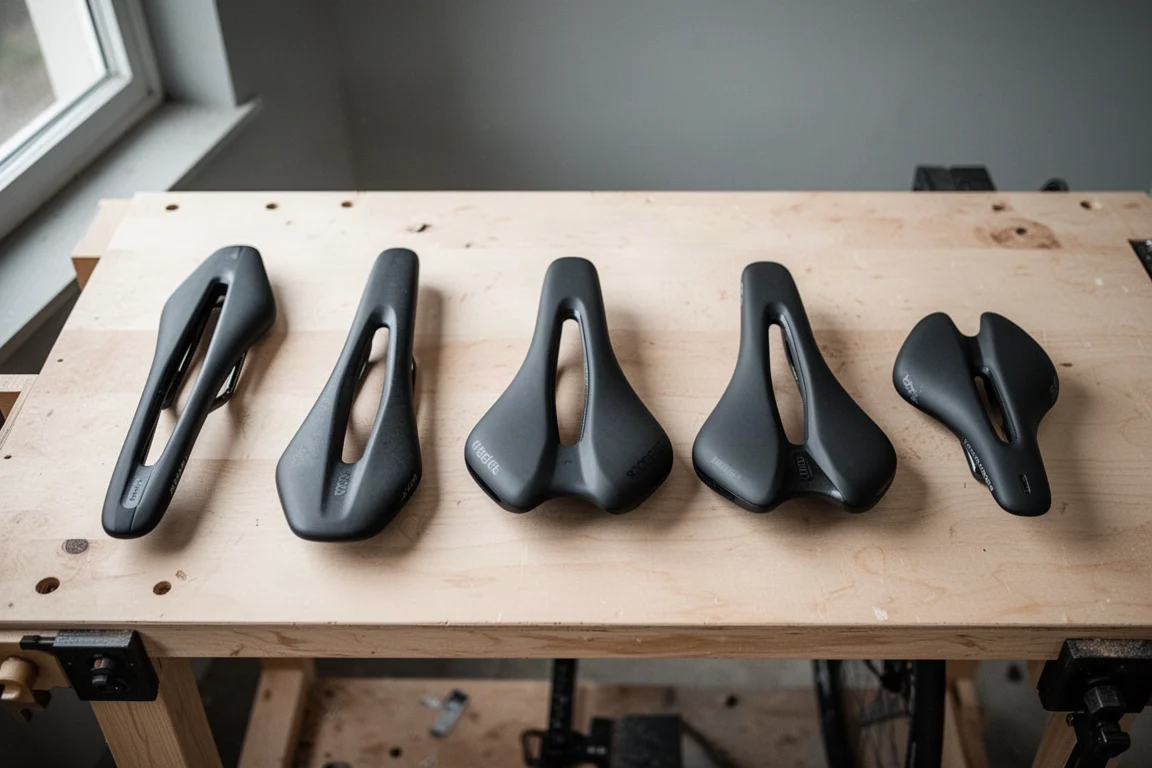
Riders who have spent years on a traditional saddle and want relief without switching to a short-nose platform tend to find this shape the easiest transition.
Specialized Power: The Original Short-Nose Saddle
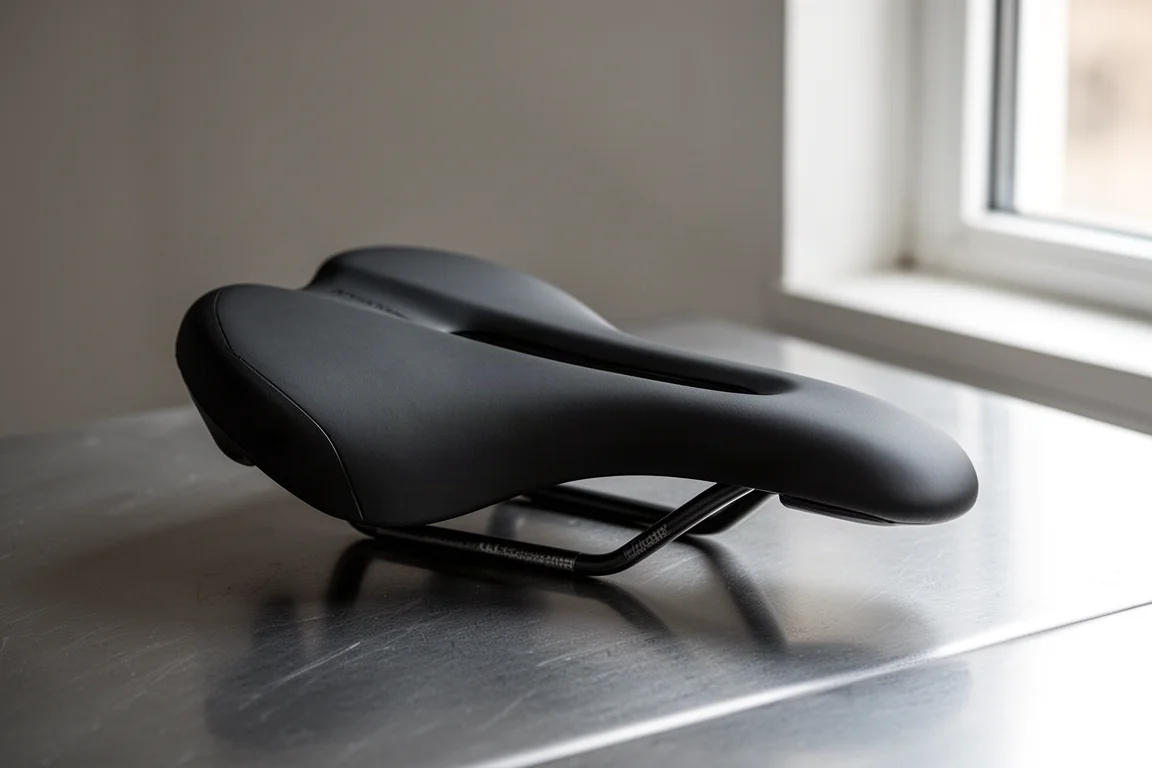
The Specialized Power started the short-nose category, and it remains one of the most recognisable saddles in the range. It is also offered in a Mimic version, which fills in the pressure relief channel and is marketed mainly at women.
Its main limitation is width. In sizes narrower than roughly 143 mm, the body of the saddle can interfere with the legs as they pass through the bottom of the stroke. Riders respond by gravitating toward the nose, and because this is a short saddle, the nose offers very little support. The result is often neck, shoulder and hand discomfort rather than a saddle problem as such. It is a good reminder that short-nose saddles need the right width for the individual rider, not simply the shortest nose available.
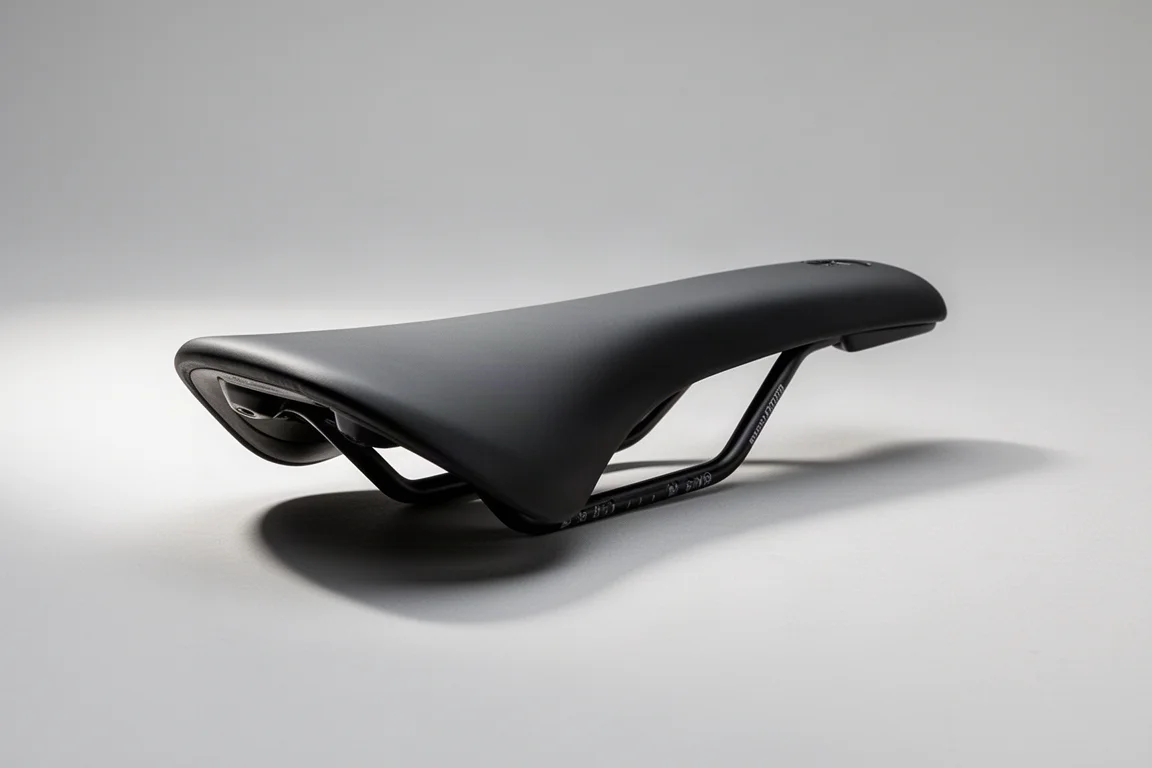
Fizik Aliante: Traditional Shapes, With and Without a Channel
Fizik’s range is a useful illustration of how shape families overlap. The Aliante, Arione and Antares outlines are all available both with and without a pressure relief channel, so riders can keep a familiar profile and still gain soft tissue relief.
The Aliante in particular is a long-standing traditional shape. It suits riders who are naturally symmetrical on the bike and who have no history of soft tissue discomfort. If you sit rotated, or you have an ingrained asymmetry, a channel saddle can be difficult because it asks the rider to interact with it symmetrically. In that specific case, a traditional shape may genuinely be the better answer, which is one of the strongest arguments for having your position assessed properly before buying anything.

For most riders, though, a channel is the more comfortable long-term choice, and the Aliante family is a way to make that change without abandoning a shape you already know.
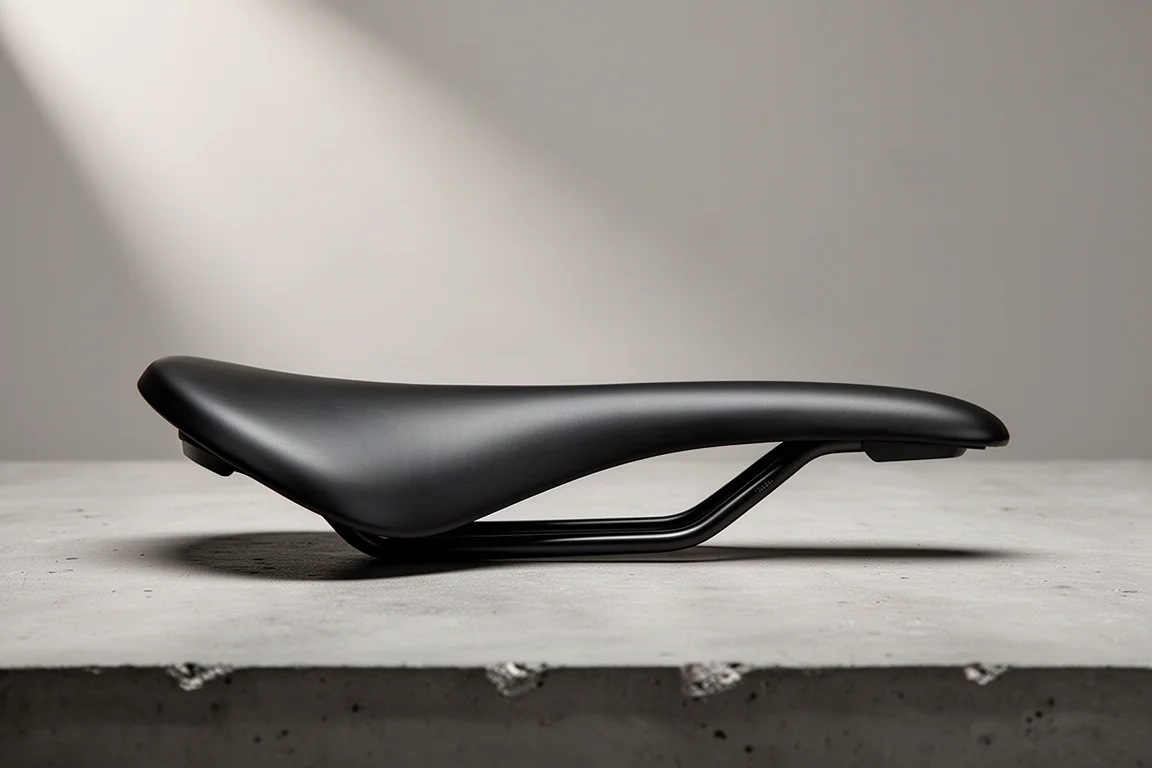
Ergon SR Women: Pressure Mapping for Female Riders
Ergon built its reputation on mountain bike grips before developing a saddle range designed with the same pressure mapping systems used in professional bike fitting. The SR Women model starts around £90 and is available in several versions, up to a carbon-railed, very light top model.
What stands out is the shape: a genuinely flat section and a large pressure relief channel positioned much further forward than is typical. That combination has produced strong results for female riders, particularly those who have found conventional channels either too narrow or set too far back.
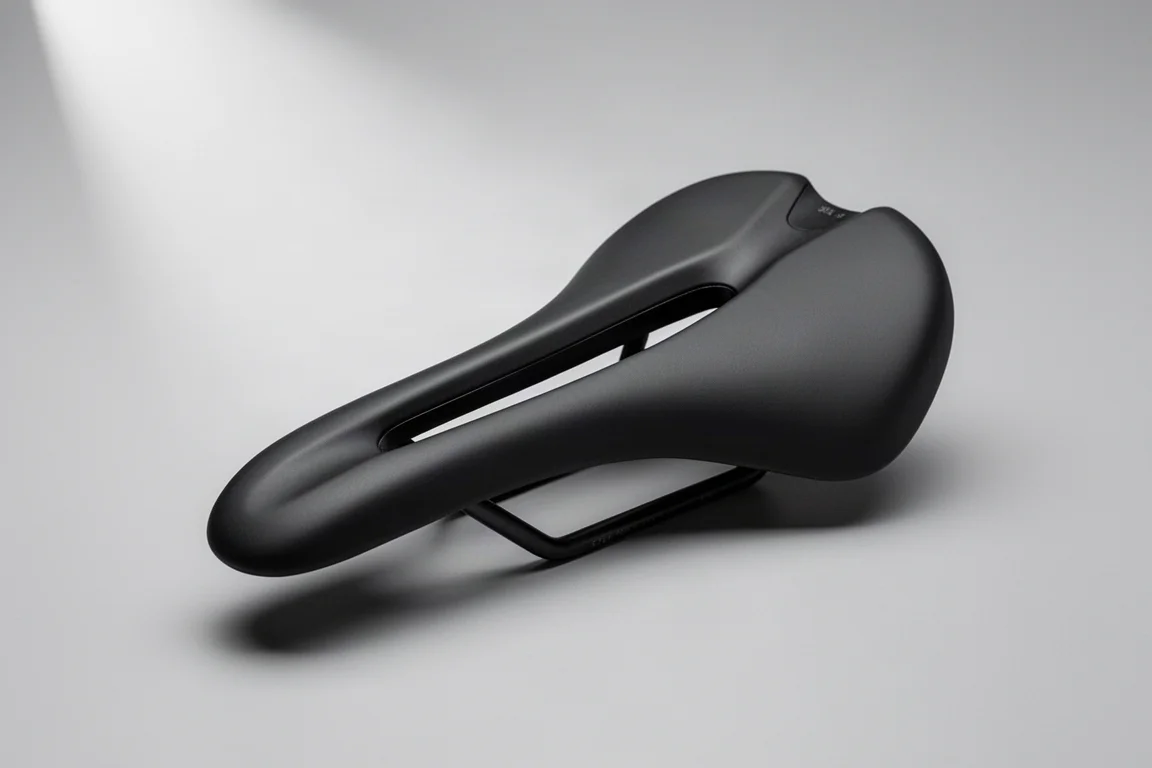
Testing Saddles Without Wasting Money
Before buying a new saddle, look at position. Most saddle discomfort does not come from the saddle itself. A rider can be on an excellent saddle and still suffer if the position is wrong, and sitting on the nose of any saddle will cause problems regardless of its shape.
Simple changes are worth trying first. Lowering the saddle is a reasonable starting point. Arch support in the shoes is another: it can reduce the pressure going through the saddle by up to 50 percent on its own, and saddle height has a similarly large effect.
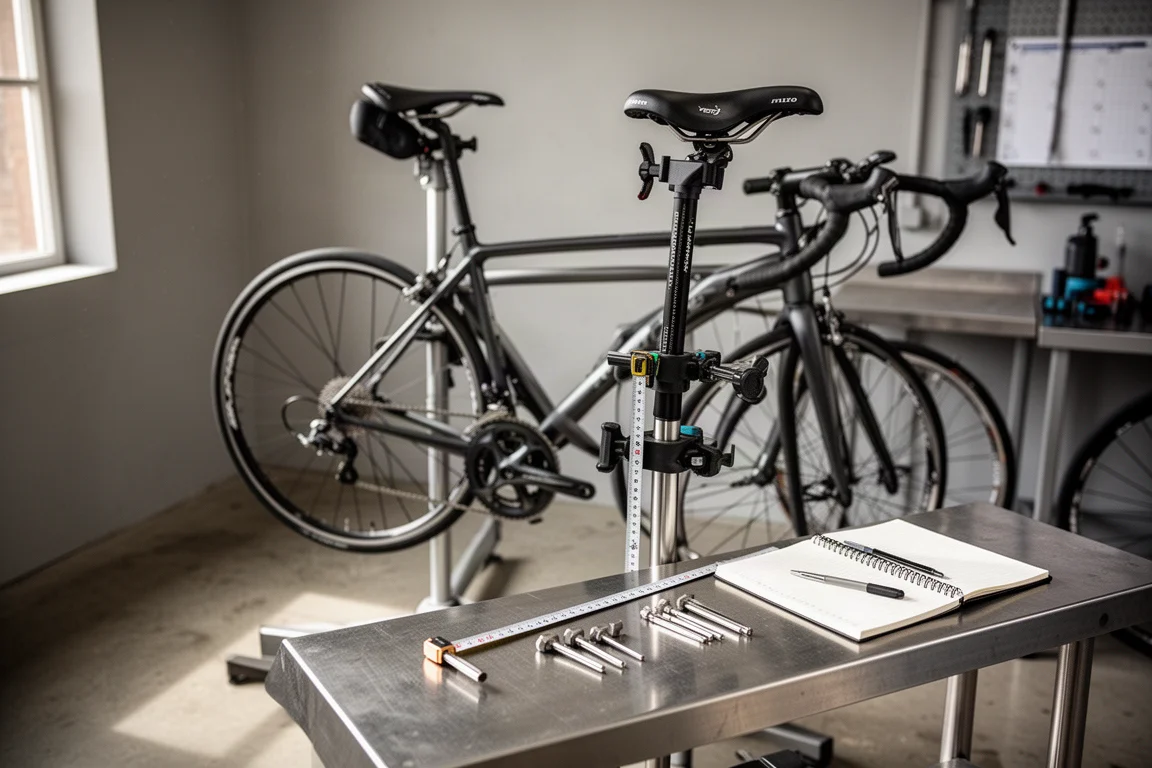
If you do test saddles, do it in an informed way. Saddles differ in depth, so comparisons only mean anything if the height, setback and reach to the handlebars stay consistent across every test. Changing the saddle every few minutes without controlling those variables tells you very little. If problems persist after position changes, a professional bike fit is a more efficient next step than another saddle.
Conclusion
Saddle choice comes down to shape first and width second. A pressure relief channel is the right starting point for most riders, a short-nose design suits those who want to sit further forward without thigh interference, and a traditional shape remains a genuine option for riders who are naturally symmetrical or who sit rotated by habit. Get the position right, test consistently, and the saddle stops being the problem.
Further reading
Related Reviews

Cycling Components
A 20,000-Mile Budget Race Bike Build: Five Parts Worth Knowing
A rim brake race bike assembled from low-cost components and ridden for 20,000 miles. Here is what delivered real speed, what caused problems, and what to weigh before copying the formula.
Cycling Components
7 Bike Fit Products Fitters Avoid: What to Check Before You Buy
Seven bike components that regularly cause knee, foot and saddle problems, with the specific concerns behind each one and what to look for instead.
Cycling Components
Four Affordable Bike Upgrades That Improve Ride Feel
Four low-cost cycling products that make a real difference to ride feel, plus the free setup changes worth trying first.