Floorstanding Loudspeakers
Revival Audio Atalante 5 Review: A Large Three-Way Floorstander With Vintage Character
A close look at the Revival Audio Atalante 5, a big three-way floorstanding loudspeaker with ARID soft dome drivers, a basalt woofer and genuinely deep bass.
Introduction
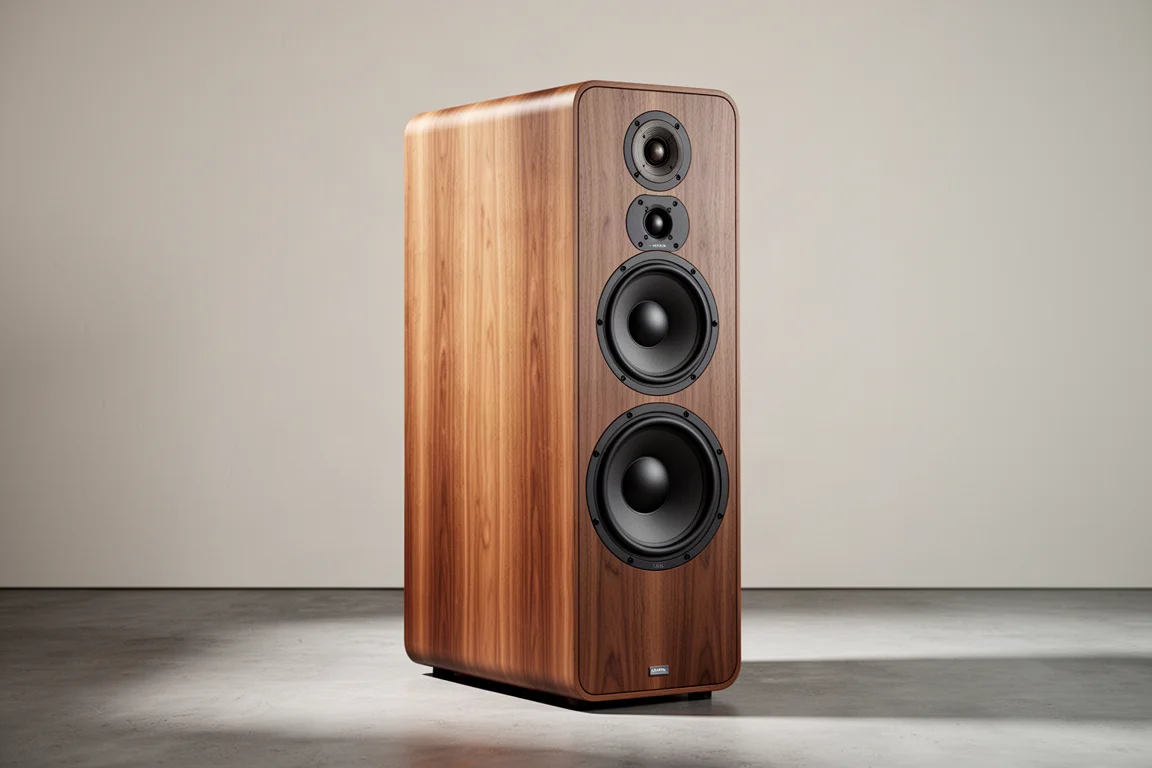
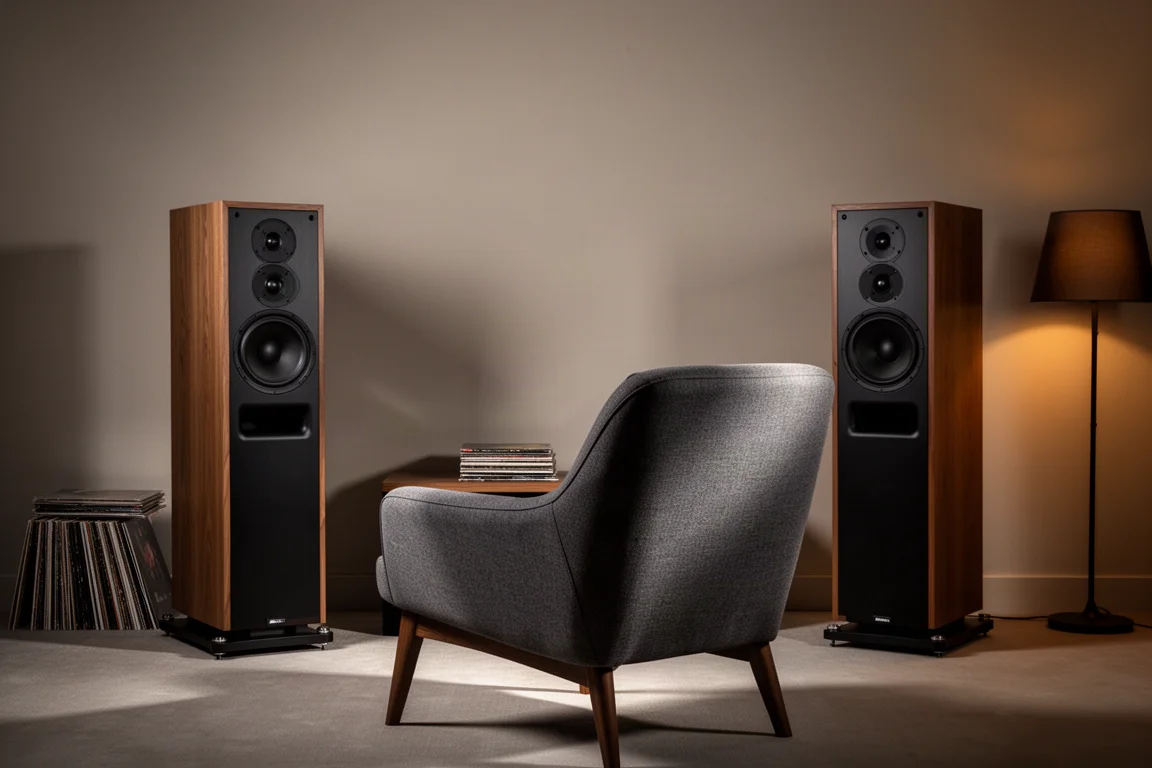
The Revival Audio Atalante 5 is a large three-way floorstanding loudspeaker that borrows the visual language of classic cabinets while using driver technology that did not exist when those classics were built. Revival Audio is a young company, but its CTO has spent roughly four decades designing loudspeakers for established hi-fi brands, and the Atalante 5 reads as a statement of that accumulated experience.
It is not a budget speaker. Pricing sits around $4,500, and the physical scale matches the price: this is a substantial cabinet built around a 12 inch woofer. The appeal is easy to understand for listeners who want a near full-range floorstander with deep bass, a natural midrange, and a look that nods to mid-century craft without behaving like a vintage design.
Who the Revival Audio Atalante 5 Is For
This speaker suits listeners who have room to let a big cabinet breathe and who do most of their listening at medium to loud levels. The Atalante 5 comes alive when it is pushed harder. At low volumes it is less at home than some smaller designs, so anyone whose listening is mostly quiet late-night background music should weigh that carefully.
It also rewards owners who plan to upgrade electronics over time. The speaker is not difficult to drive, but it responds clearly to better sources and amplification, which makes it a sensible anchor for a system that will grow.
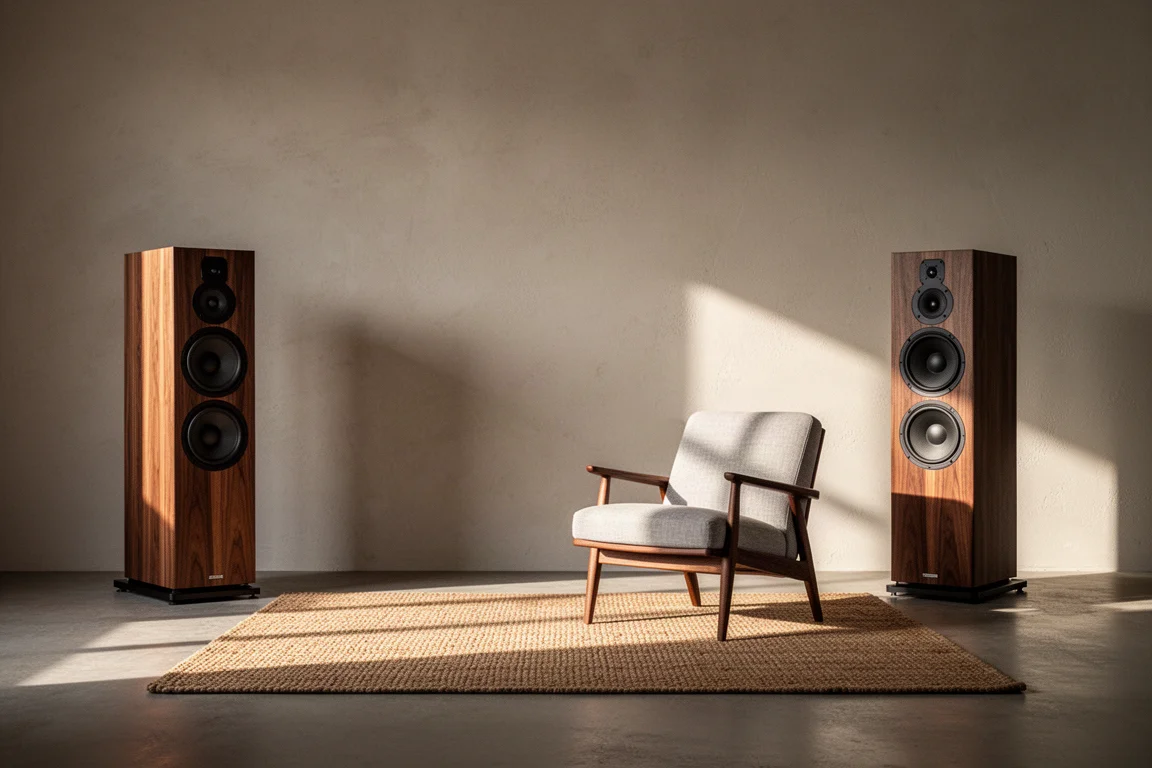
Its bass output is generous, and the two rear ports plus supplied foam plugs give some control when the room is smaller or the wall behind is closer than ideal. Rooms where the cabinets can sit roughly two feet or more from the rear wall tend to work best.
Driver Technology: ARID Tweeter and Basalt Woofer
The driver complement is where the Atalante 5 separates itself from a purely retro exercise.
The tweeter is a 1.1 inch (28 mm) soft dome unit using Revival Audio’s patented ARID technology, short for anti-resonance inner dome. Rather than damping the rear wave with felt or foam, ARID places a small waveguide device inside the motor structure, behind the dome, that directs standing waves into a dedicated rear chamber shaped to absorb them. The claimed benefit is a more extended high frequency response, because heavy damping material can deaden the sound and cause the response to roll off earlier.
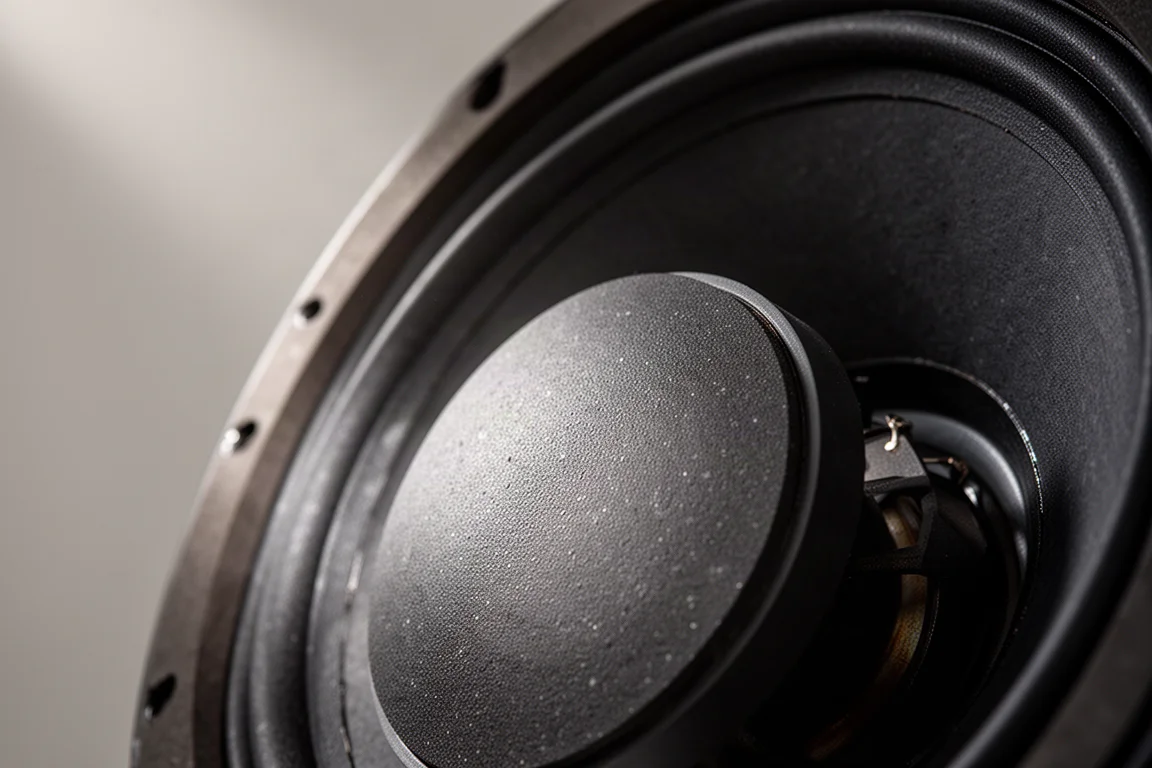
The 75 mm soft dome midrange driver, close to 3 inches, applies the same thinking in an ARID Plus form, aimed at the frequencies where most voices and instruments live. The woofer is a 12 inch unit with a cone made from basalt, a material derived from lava stone. Revival Audio describes this as a first for hi-fi driver design and notes that basalt is both light and rigid, which is exactly the combination a woofer wants, with the added benefit of being an eco-friendly choice.
The magnets are deliberately oversized ferrite types rather than smaller neodymium ones. Ferrite costs less, and the larger mass helps with heat dissipation, which keeps the price down without an obvious performance compromise. The crossover uses boutique parts in its critical positions and sits neatly at the bottom of the cabinet, with Van den Hul cabling used throughout the interior.
Main Strengths: Sound Quality
The overall tonal character is neutral and balanced, and the bass is the first thing most listeners will notice. With a 12 inch woofer and extension down to 28 Hz, the Atalante 5 reaches genuinely low, and it does so with control rather than mere quantity. Texture and nuance in the low end come through clearly, and the large driver moves a noticeable amount of air, so bass is felt in the body as well as heard. Most owners will not feel the need for a subwoofer. Mid-bass punch is present but not the most visceral on the market, so listeners who prioritise a hard-hitting attack may want to hear it first.
The midrange is the strongest argument for the speaker. It is clear, transparent and refined without sounding lean, and it carries real authority. Detail arrives without aggression: breaths, small inflections and instrumental texture are all audible, but the presentation stays easy to live with rather than sharp or forward.
High frequencies are similarly well judged. The soft dome tweeter sounds airy and extended while remaining gentle, and it holds that composure as volume rises. Imaging is a clear strength too. The soundstage has convincing depth, voices sit naturally in the centre with a slightly diffused rather than razor-focused quality, and side imaging is precise enough that individual instruments stay clearly separated and placed. Nothing collapses into a clutter when the music gets busy.
Setup and Placement Notes
Setup deserves more attention than it would with a smaller speaker, though the process is not difficult.
Revival Audio offers an optional stand, sold separately, which raises the cabinet so the tweeter sits closer to ear height for listeners on taller sofas or chairs. An included tilting mechanism is the alternative: it screws on and tilts the speaker back roughly 8 degrees, so a floor-standing position can still aim the drivers upward toward a lower seating position. In practice the tilt option can give a more natural sense of stage height, while the stand pushes the performance upward.
Placement matters as much as angle. Two rear ports make the speaker sensitive to the wall behind it, and foam plugs are supplied for taming bass when the room or position demands it. Pulling the cabinets out into the room, around two to four feet from the rear wall, produced a well-balanced low end with no plugs needed, while pushing them closer eventually introduced boom. Because the design is large, it rewards a little patience with positioning far more than it punishes it.
Revival Audio also recommends placing the tweeter and midrange drivers on the outside edge rather than the inside unless the speakers are more than 3 metres apart, which widens the sweet spot in smaller rooms. A very slight toe-in made a meaningful difference to the balance between soundstage width and image focus.
Amplifier Matching and System Scaling
On paper the Atalante 5 is an easy load. It is a nominal 4 ohm speaker with 89 dB sensitivity and a minimum impedance of only 3.2 ohms, so a modest integrated amplifier can drive it to satisfying levels. What it asks for instead is quality, and plenty of power helps if loud listening is the goal.
The more interesting trait is how far it scales. Swapping in a better streamer or DAC produced obvious gains in soundstaging, imaging and refinement, and each upgrade seemed to reveal more of what the speaker could do. Higher-quality amplification brought extra balance and polish, and a high-power solid state amplifier with around 220 watts into 4 ohms proved an excellent and far more affordable match than exotic alternatives.
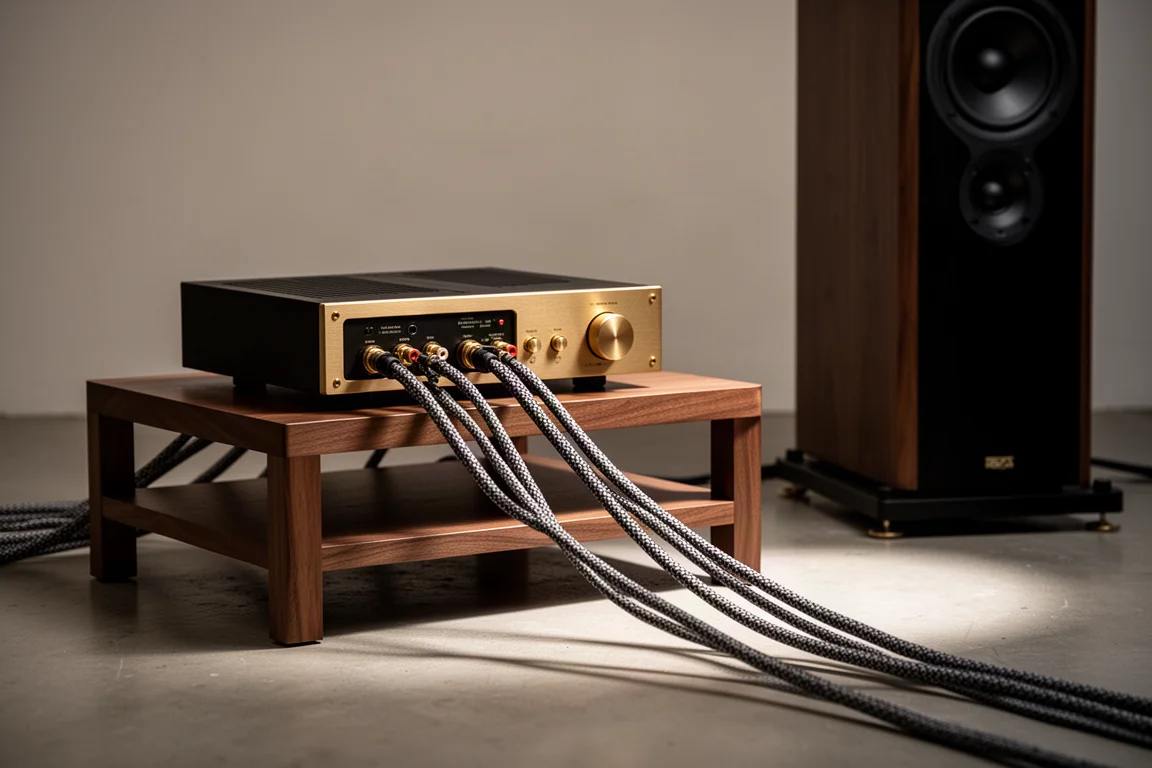
There is a caveat about character matching. An amplifier with a very distinctive tonal signature can impose that signature on the Atalante 5, which dulls the balance that makes the speaker appealing in the first place. Neutral, capable electronics tend to be the safer route.
Things to Consider Before Buying
The cabinet is large, and it needs floor space and breathing room to sound its best. Buyers in small rooms, or anyone who must place speakers tight against a wall, should expect to experiment with the foam plugs or accept some boom in the low end.
Low-volume listening is not this speaker’s strongest suit. It gets better and better as the volume rises, so listeners who mostly play quiet music may find a smaller design more rewarding.
The optional stand is a separate purchase, so it should be budgeted for if a taller listening position is likely. Finally, the centre image is deliberately a little softer and more diffuse than the most clinically focused speakers, which reads as natural rather than inaccurate, but listeners who want maximum pinpoint sharpness should know the difference in advance.
Buying Advice
At around $4,500, the Atalante 5 sits in serious company, and it justifies the outlay for the right listener. The combination of deep, textured bass, a refined and transparent midrange, an airy high frequency presentation and strong imaging is difficult to find at this level, and the build and driver engineering behind it are unusual rather than derivative.
The decision comes down to room and habits rather than the speaker itself. If there is space to place large cabinets properly, if listening happens at medium to loud levels, and if the plan is to build a system gradually with better sources and amplification over time, the Atalante 5 is a compelling long-term choice. If the room is tight or the listening is mostly quiet, it is worth hearing alternatives before committing.
Conclusion
The Revival Audio Atalante 5 looks backwards and sounds thoroughly modern. Its vintage-inspired cabinet, ARID soft dome drivers and basalt woofer add up to a large three-way floorstander that delivers deep, controlled bass, a natural midrange and a treble presentation that stays easy to listen to at volume. It is not the right speaker for every room or every listening habit, but for buyers with the space and the appetite for a system that grows, it is one of the more interesting ways to spend around $4,500 on loudspeakers today.
Product link
View more details for Revival Audio Atalante 5
This product is mentioned in the review. Check the specifications, options, and compatibility before buying.
View more details for Revival Audio Atalante 5Further reading
Related Reviews
Floorstanding Loudspeakers
Acoustic Zen Crescendo Mark II Review: A 125 lb Full-Range Floorstander That Rewards Careful Amplifier Matching
A full-range floorstanding loudspeaker with dual 8-inch bass drivers, a transmission line cabinet and a D'Appolito ribbon tweeter array, plus how amplifier choice reshapes its character.
Floorstanding Loudspeakers
Bowers & Wilkins 801 D4 Signature: A Reference Loudspeaker Built for Scale
A detailed look at the Bowers & Wilkins 801 D4 Signature, covering its Signature upgrades, sound character, placement demands, and the amplification it needs to perform at its best.
Floorstanding Loudspeakers
JBL Summit K2 Review: A $100,000 Flagship Loudspeaker Built Without Compromise
A detailed look at the JBL Summit K2, from its 15-inch woofer and triple compression driver array to how it sounds driven by a reference Mark Levinson system.