Floorstanding Loudspeakers
Bowers & Wilkins 801 D4 Signature: A Reference Loudspeaker Built for Scale
A detailed look at the Bowers & Wilkins 801 D4 Signature, covering its Signature upgrades, sound character, placement demands, and the amplification it needs to perform at its best.
Introduction
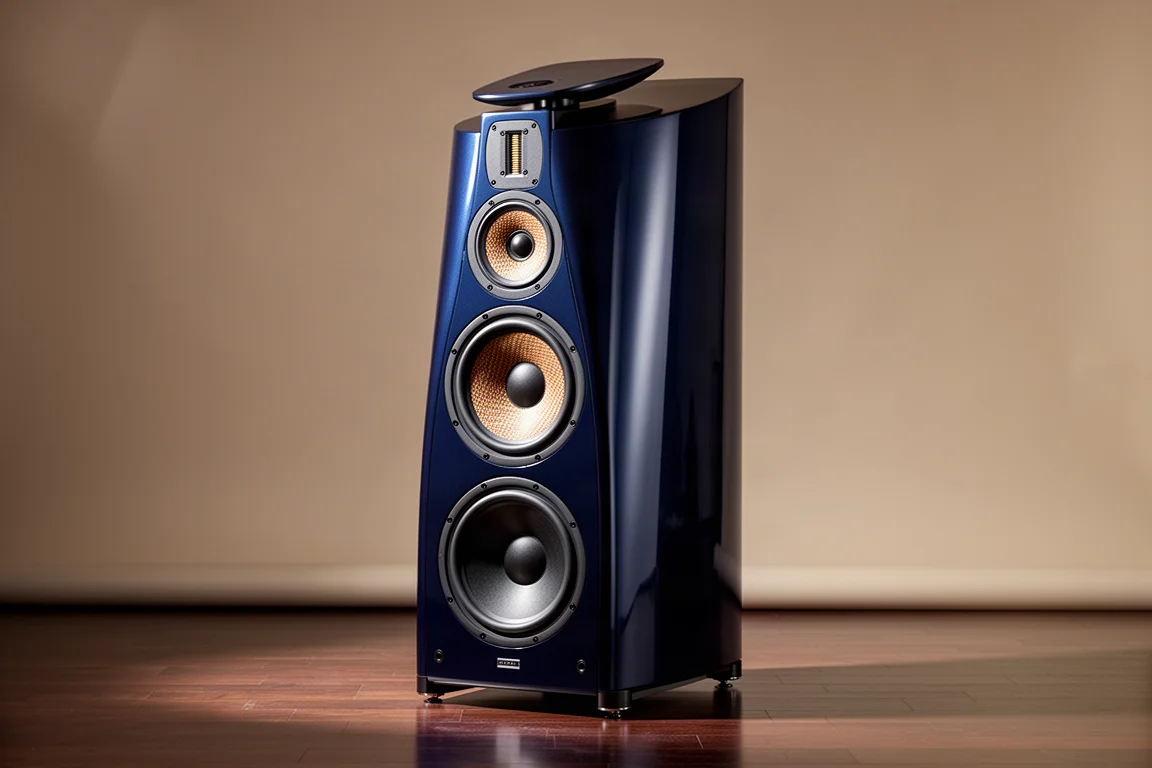
The Bowers & Wilkins 801 D4 Signature belongs to a lineage that stretches back to the Silver Signature of 1991, a loudspeaker created to mark the company’s 25th anniversary and the legacy of its founder, John Bowers. Several Signature editions have followed since, each pairing a distinctive finish with meaningful component changes. The 801 D4 Signature continues that pattern. It is not a standard 801 D4 in a new colour.
At 48 inches tall, 18 inches wide, and 24 inches deep, the Signature makes a substantial statement in a room, yet its proportions are carefully considered rather than simply large. It carries two 10-inch bass drivers, a 6-inch Continuum cone midrange, and a 1-inch diamond dome tweeter, with a quoted frequency response of 15 Hz to 28 kHz. That range makes it a genuinely full-range loudspeaker that does not need a subwoofer to complete the picture.
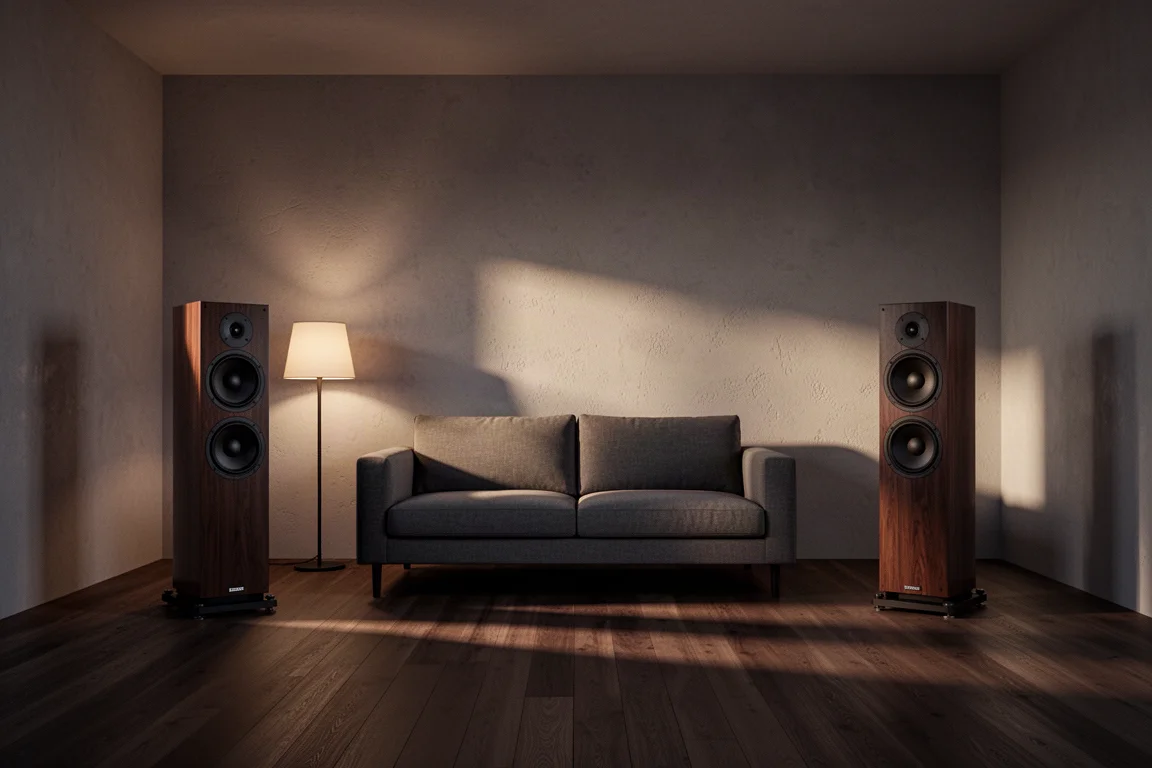
What matters more than the specification sheet is how the speaker behaves once it is in a room. Its tonal balance, its appetite for power, and its sensitivity to placement all shape the ownership experience, and each of those deserves attention before a purchase decision.
Who the Bowers & Wilkins 801 D4 Signature Is For
This is a loudspeaker for listeners who have already decided that a two-channel system sits at the centre of their home audio setup, and who are prepared to treat the room itself as part of the equipment. It rewards patience with positioning and a willingness to invest in amplification that can genuinely control its drivers.
It is also, realistically, a speaker for a small number of buyers. Only a handful of people will ever own a loudspeaker at this level. That does not make it less relevant. Products in this class push design and engineering forward and set a benchmark that other manufacturers aim at, and they often draw new enthusiasts into the hobby in the first place.
If you are shopping for a large, high-end floorstander and you value scale, low-level clarity, and an immersive soundstage above a strictly neutral tonal balance, the Signature belongs on your shortlist.
Signature Upgrades and Cabinet Design
The differences between the Signature and the standard 801 D4 reach well beyond cosmetics. The crossover has been revised, the cabinet modified with a refined downward-firing port, the woofer improved, and a new, stiffer aluminium top plate added for the midrange and tweeter assembly to rest on.
Two finishes are offered: Midnight Blue Metallic and the more traditional California Burl Gloss. Both are complemented by colour-matched full-grain leather from the UK supplier Connolly, a name familiar from high-end automotive interiors. The result is a cabinet that looks and feels as considered as the engineering inside it.

Underneath all of that is a structure designed to stay quiet. The cabinet is described as being nearly void of any colouration of its own, which is what allows the character of the drivers, particularly in the bass, to come through at every volume.
How the Bowers & Wilkins 801 D4 Signature Sounds
Bass Speed and Texture
The two 10-inch woofers do more than reach low notes. There is a quickness to them that brings out detail and texture in bass lines at a level that is rare at any price. The presentation is organic and natural rather than heavy, and it holds from very low listening levels right up to the loudest the system can comfortably deliver.
Low-level listening is one of the Signature’s most distinctive traits. Clarity persists at volumes as low as roughly 40 dB and continues to hold as levels rise past 100 dB. Midrange tone and presence do not shift as volume changes; the presentation simply scales.
Midrange Presence and the Diamond Dome Tweeter
Vocals and instruments take on a physical dimension between the speakers. Familiar albums acquire the feel of a private performance rather than a recording. The midrange keeps its inflection and detail at low volumes, which makes late-evening listening unusually rewarding.
The diamond dome tweeter is the element most likely to divide opinion. Handled well, the top end is wide open, extended, and free of audible distortion. Set up poorly or fed a poor recording, it can come across as bright, and in extreme cases it may be fatiguing. The tweeter holds onto fine nuance, letting the breath of a performer or an instrument hang in the air a moment longer, and instruments such as cymbals sound remarkably lifelike.
Soundstage, Scale, and Dynamics
The Signature’s shape is not arbitrary. Its dispersion is the reason the soundstage extends wall to wall and floor to ceiling, bordering on a surround presentation without ever collapsing into an undifferentiated wall of sound. Each performer and instrument occupies its own space, and the large cabinets disappear within the image they create.
Dynamics are where amplification matters most. Driven by a suitably powerful amplifier, the speaker appears to have no ceiling: apply volume and the scale increases. Even the smallest shifts in intensity remain audible.
Placement, Toe-In, and Amplification
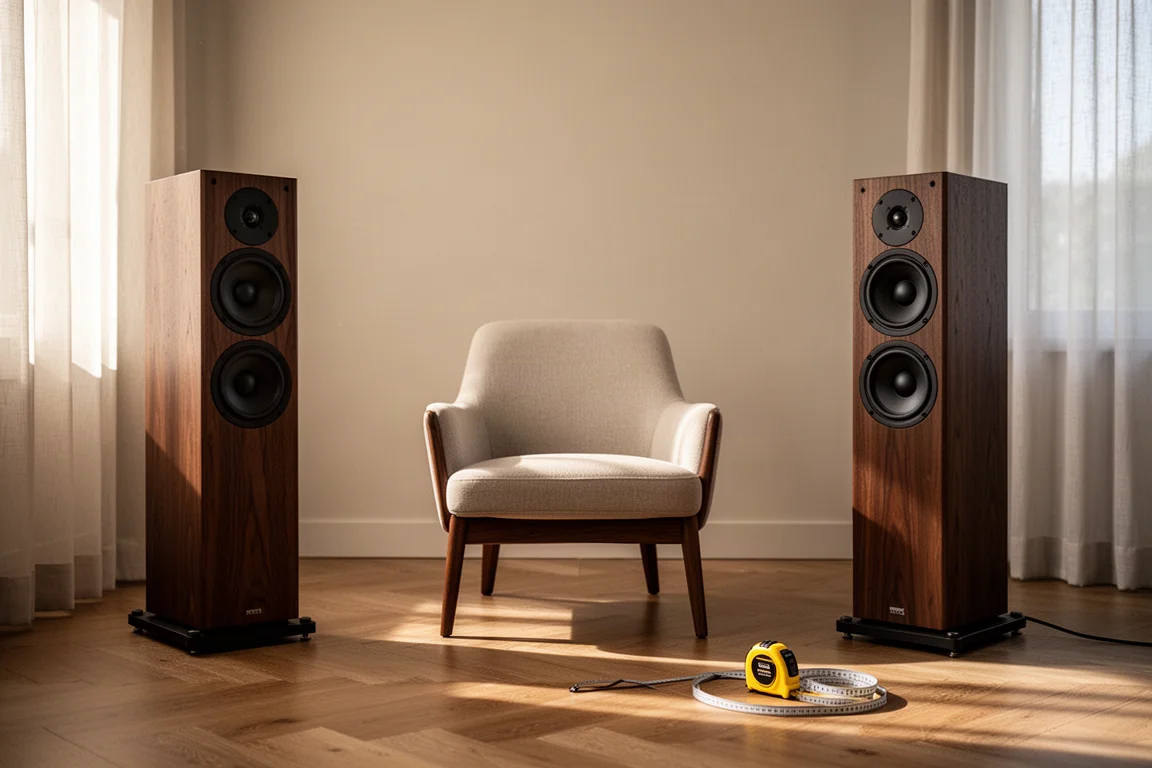
Bowers & Wilkins recommends placing the speakers roughly 5 to 10 feet apart to form an equilateral triangle with the listening position, with a minimum of about 18 inches between each speaker and the walls. In practice, about 10 feet apart, roughly 2 feet from the front wall, and a little over 10 feet from the listening position produced the best balance across the frequency range.
Bass response is placement sensitive. Positioned too close to the front wall, the low end becomes pronounced and can turn boomy, particularly for a speaker sitting nearer a room corner. Moving the speakers out to about 2 feet resolved that.
Toe-in is worth experimenting with. Pointed straight ahead, the Signature sounded most linear, and its dispersion is good enough that angling the cabinets inward did not meaningfully sharpen the soundstage. Toe-in did, however, increase treble presence, which may help listeners who struggle with intelligibility or who have some high-frequency hearing loss. For everyone else, straight ahead and careful attention to the distance between the speakers is the better starting point. For critical listening, Bowers & Wilkins recommends removing the grilles.
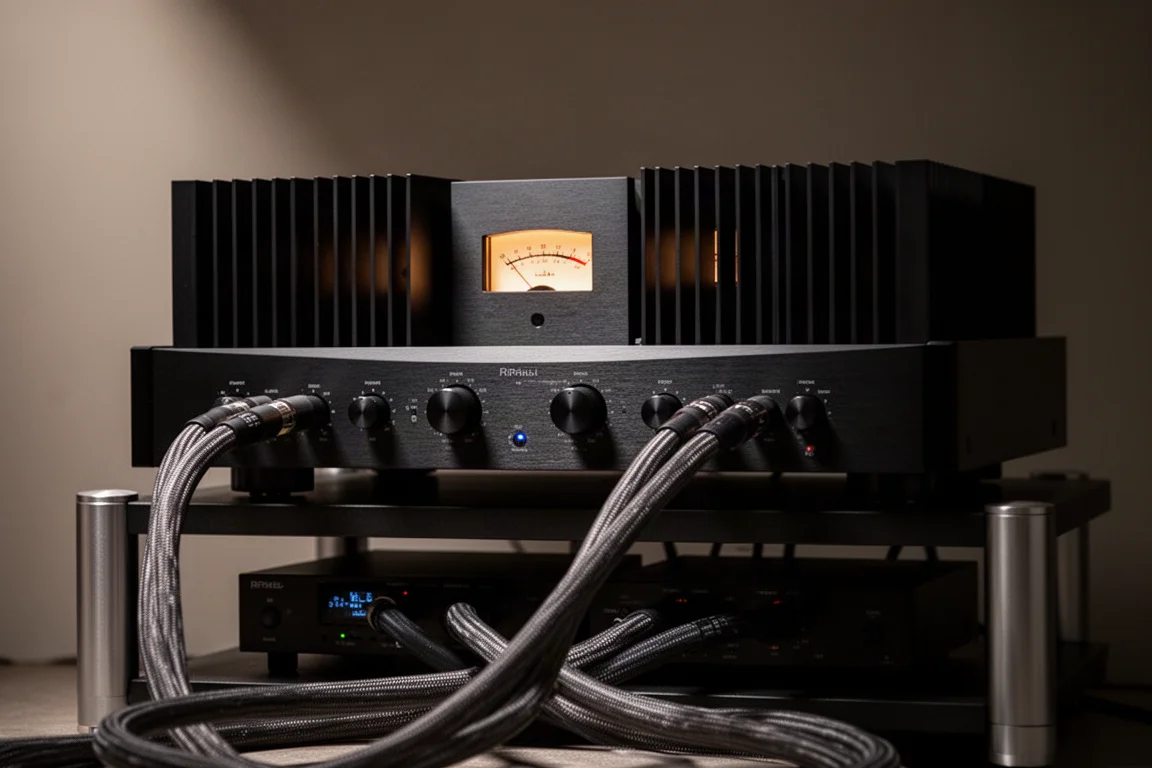
Power is the other non-negotiable. The quoted 90 dB sensitivity and the suggested 50-watt minimum are both a little misleading, because the impedance is nominal 8 ohms yet dips below 3 ohms. Amplifiers such as the Arcam A25 and the Yamaha 2000A will drive the speakers, but they are not pairings to build a long-term system around. Higher-output designs, including class A amplifiers and the McIntosh MC312, pay large dividends in low-level dynamics, bass control, and treble composure. A McIntosh C-55 preamplifier with the MC312 and an Eversolo A8 streamer proved the most satisfying configuration overall, and the same front end feeding a television and streaming source worked remarkably well as a hybrid stereo and home cinema system.
Things to Consider Before Buying
The Signature is not a neutral or linear loudspeaker by design, and it has clearly been voiced beyond what measurements alone would dictate. There is a dip through the lower treble and a rise of up to about 5 dB in the tweeter region around 10 kHz. Off axis, the tweeter stays very linear with a gentle rolloff beginning near 10 kHz.
If a bright top end bothers you, or if you keep a large collection of imperfect recordings, this is a speaker that will not offer a free pass. Some tracks may fall out of rotation.
It is also physically large and demands space. A room that cannot accommodate roughly 2 feet of clearance from the front wall, along with sensible distance between the speakers, will limit what the Signature can do.
Finally, the standard 801 D4 has not been compared directly against the Signature, so the audible size of the step between the two models has not been established. Across past Signature and standard models, the differences have not always been night and day, but they have been present.
Buying Advice
Approach the 801 D4 Signature as a system purchase rather than a speaker purchase. Budget for an amplifier with genuine current delivery, plan the room layout before delivery day, and expect to spend real time on positioning. The reward is a presentation with scale and dynamics that few loudspeakers can match, along with a level of low-volume clarity that makes everyday listening as compelling as a dedicated session.
For listeners who want to get close to this level of performance in a smaller room, more compact and less expensive designs can come within striking distance. That is worth knowing, but it does not change what the Signature is: a reference-class loudspeaker that shows what a two-channel system can sound like when little is left compromised.
Conclusion
The Bowers & Wilkins 801 D4 Signature is less a product to be assessed in the abstract and more one to be experienced. Set up correctly and powered properly, it delivers a holographic, full-range presentation with bass texture, midrange presence, and dynamic scale that stand apart. It asks a great deal in return: space, careful placement, and an amplifier that can keep up. Buyers who can meet those conditions will find a loudspeaker that makes the case for this tier of hi-fi on its own terms.
Product link
View more details for Bowers & Wilkins 801 D4 Signature
This product is mentioned in the review. Check the specifications, options, and compatibility before buying.
View more details for Bowers & Wilkins 801 D4 SignatureFurther reading
Related Reviews
Floorstanding Loudspeakers
Acoustic Zen Crescendo Mark II Review: A 125 lb Full-Range Floorstander That Rewards Careful Amplifier Matching
A full-range floorstanding loudspeaker with dual 8-inch bass drivers, a transmission line cabinet and a D'Appolito ribbon tweeter array, plus how amplifier choice reshapes its character.
Floorstanding Loudspeakers
JBL Summit K2 Review: A $100,000 Flagship Loudspeaker Built Without Compromise
A detailed look at the JBL Summit K2, from its 15-inch woofer and triple compression driver array to how it sounds driven by a reference Mark Levinson system.
Floorstanding Loudspeakers
Revel F328BE vs Perlisten S7T: Two Flagship Towers Compared
A close comparison of two large beryllium-tweeter towers, covering bass extension, off-axis behaviour, build quality, and whether the price gap is worth it.