Floorstanding Loudspeakers
Acoustic Zen Crescendo Mark II Review: A 125 lb Full-Range Floorstander That Rewards Careful Amplifier Matching
A full-range floorstanding loudspeaker with dual 8-inch bass drivers, a transmission line cabinet and a D'Appolito ribbon tweeter array, plus how amplifier choice reshapes its character.
Introduction
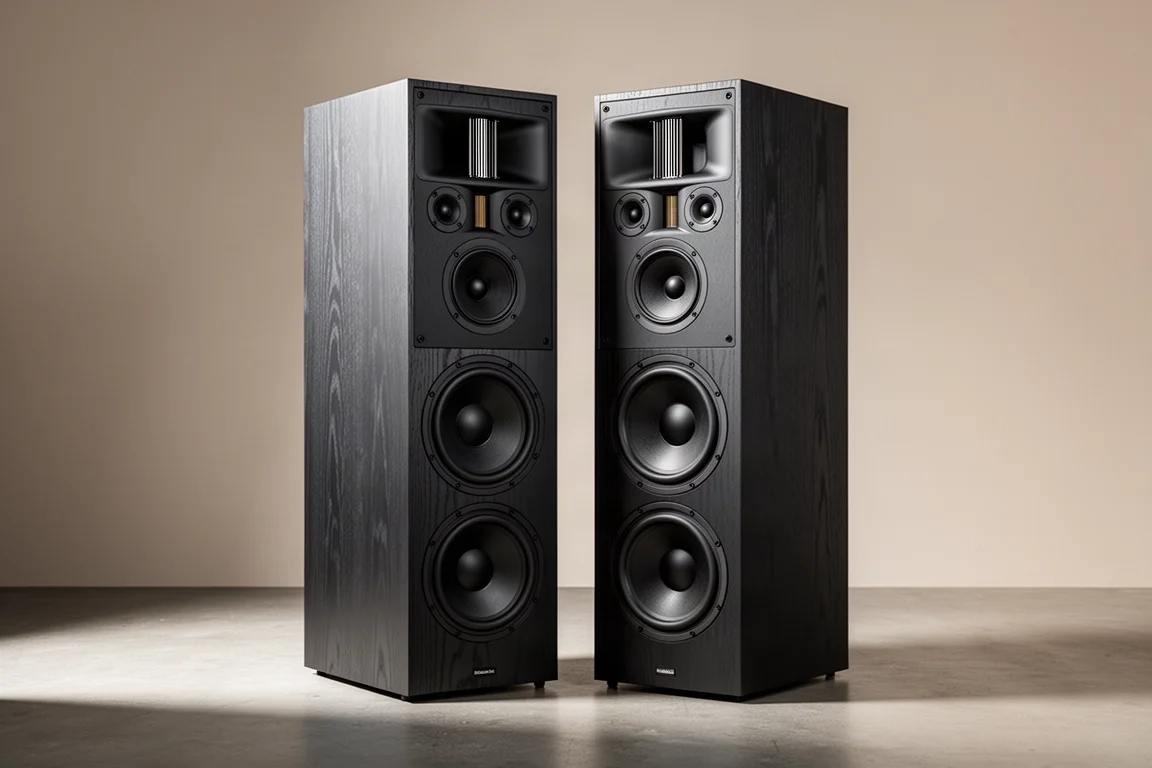
The Acoustic Zen Crescendo Mark II is a full-size floorstanding loudspeaker and it makes no attempt to hide the fact. Each cabinet weighs roughly 125 pounds, and the design is built around a clear promise: a genuine full-range speaker that reaches down to 20 Hz (+/- 3 dB) without asking you to add a subwoofer.
That promise holds up. What is more interesting is how much this speaker changes depending on what drives it. Across tube monoblocks, Class D designs, high-current solid state and all-in-one systems, the Crescendo Mark II swung from merely average to genuinely remarkable. Some pairings leaned bright; others were richly musical. Very few speakers of this size are this transparent to the electronics in front of them, and that single trait shapes almost everything that follows.
Who the Crescendo Mark II Is For
This is a speaker for listeners who want one pair of towers to cover the entire range. It suits people with medium to large rooms who would rather invest in a single full-range design than build a system around a subwoofer and a pair of stand mounts.
It is also a speaker for tinkerers. Because the Crescendo Mark II takes on the character of its amplifier so readily, it rewards owners who enjoy swapping components and listening for differences.
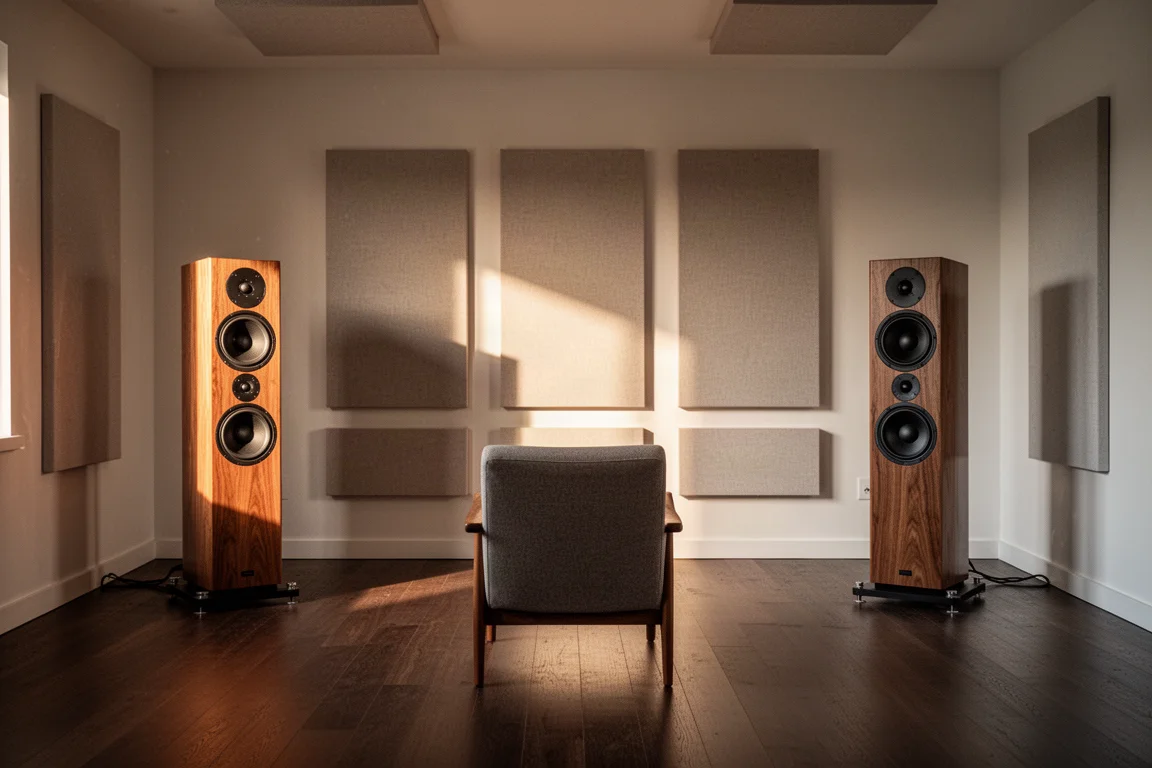
A note on room size is worth making early. It ran successfully in a small to medium treated room without the bass becoming unmanageable, but the design clearly has more to give in a larger space, where its scale and low-frequency output have somewhere to go.
Design and Driver Configuration
The Crescendo Mark II is a three-way tower divided into two visual sections. The lower section handles bass, the upper section handles midrange and treble, and the cabinet as a whole is considerably heavier than its footprint suggests.
Bass Performance and the Transmission Line Cabinet
The bass section uses two 8-inch paper cone drivers with underhung voice coils. Their surrounds are unusually thick for a loudspeaker driver, closer to what you would expect to find on a subwoofer, and they allow a large amount of excursion. Watching them move makes the intent obvious: this is a speaker built to shift air.
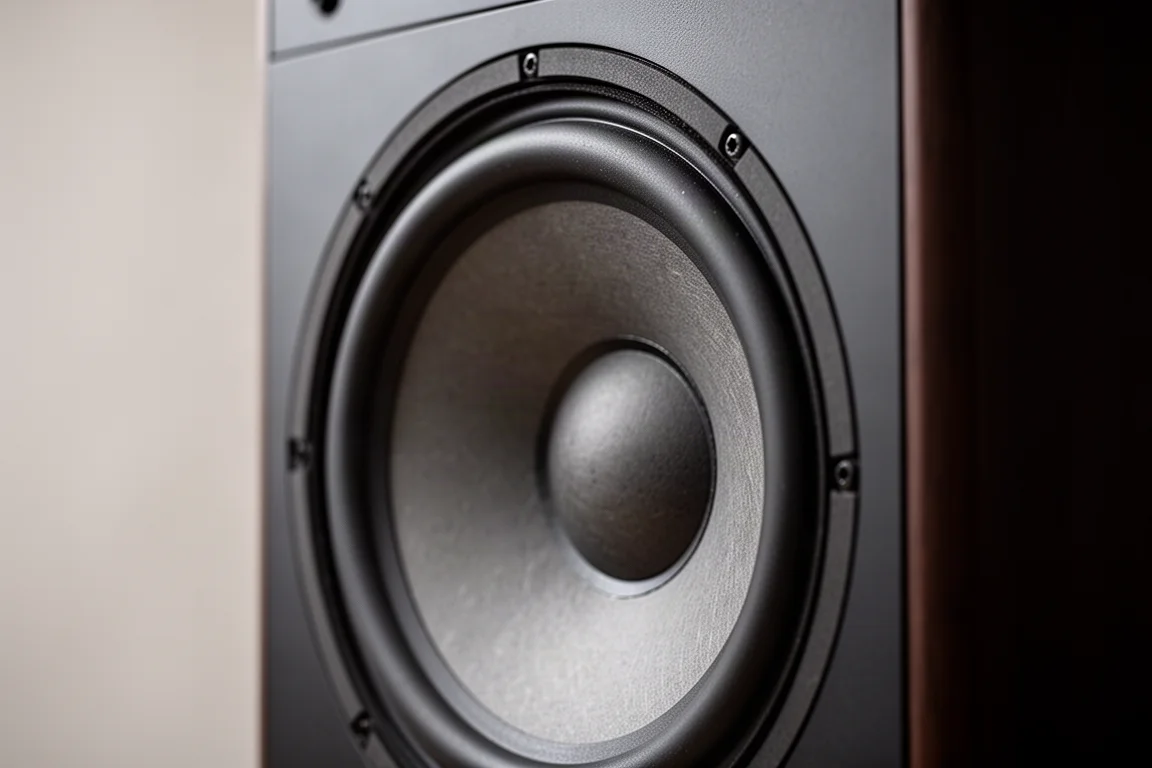
Behind those drivers sits a transmission line cabinet, which means the inside of the enclosure follows a folded, maze-like path rather than a simple sealed or ported volume. That internal structure lets the cabinet stay relatively compact for the bass output it produces.
The result is a 125 pound tower that delivers low-frequency weight and scale normally associated with a considerably larger loudspeaker. It is a full-range design in the literal sense, and it does not need help at the bottom.
Midrange and Treble Dispersion
The upper section uses an MTM, or D’Appolito, layout. Two 5-inch underhung voice coil midwoofers sit above and below a 2-inch horn-loaded ribbon tweeter, with a waveguide shaping the tweeter’s output.
Both elements of that arrangement help dispersion. The waveguide widens the tweeter’s spread, and the D’Appolito geometry naturally improves off-axis behavior as well. In practice this means a larger listening sweet spot and more consistent sound as you move around the room.
Amplifier Matching: What Changes the Sound Most
This is the heart of living with the Crescendo Mark II. The speaker can sound bright or it can sound deeply musical, and the amplifier decides which one you get. The differences between pairings were not subtle, which is why the notes below are grouped by character rather than by price.
Tube Monoblocks: The Most Musical Match
NAT monoblock amplifiers produced the most compelling result. With this pairing the sound stage opened in both width and depth, and the imaging became holographic, with vocals and instruments taking on a lifelike, three-dimensional quality. Refinement held up at low volumes and at very high volumes alike, without turning harsh when pushed.
The result was convincing enough that the owner of the speakers, who had lived with them for some time, wanted to buy the monoblocks after hearing the combination. That is a meaningful endorsement from someone who already knew the speaker well.
Class D Options: Bass Authority With Control
Two Class D designs, the AGD Tempo with its GaNFET output stage and the Gallion TSA 75, tied for second place. Both pushed bass out of the Crescendo Mark II with a level of control and texture that was remarkable, and both preserved bass nuance even at low listening levels, where low notes often fade into the background.
Midrange and treble stayed refined, though not quite to the standard of the tube monoblocks, and they gave up composure sooner as the volume climbed. Sound stage depth was also shallower and less holographic. Even so, these are strong pairings for listeners in larger rooms who want maximum bass output.
High-Current Solid State: Neutral and Punchy
An Adcom high-current design placed third, but it brings something the others do not. It produced the most neutral presentation of the group and the punchiest bass, with a tight, dynamic character that hits hard rather than pressurizing the room.
Because it delivers less low-frequency output than the other pairings, it can actually be the better choice in a smaller space, or for anyone who finds deep, room-filling bass fatiguing over long sessions.
Integrated and All-in-One Amplifiers
Integrated and all-in-one systems are the most convenient route, and they change the character of the speaker again. A tube integrated amplifier produced a fast, exact, spotlit presentation with remarkable attack and decay, and it was mesmerizing with vocals and jazz at moderate levels. With busy, bright recordings at high volume it became too much of a good thing.
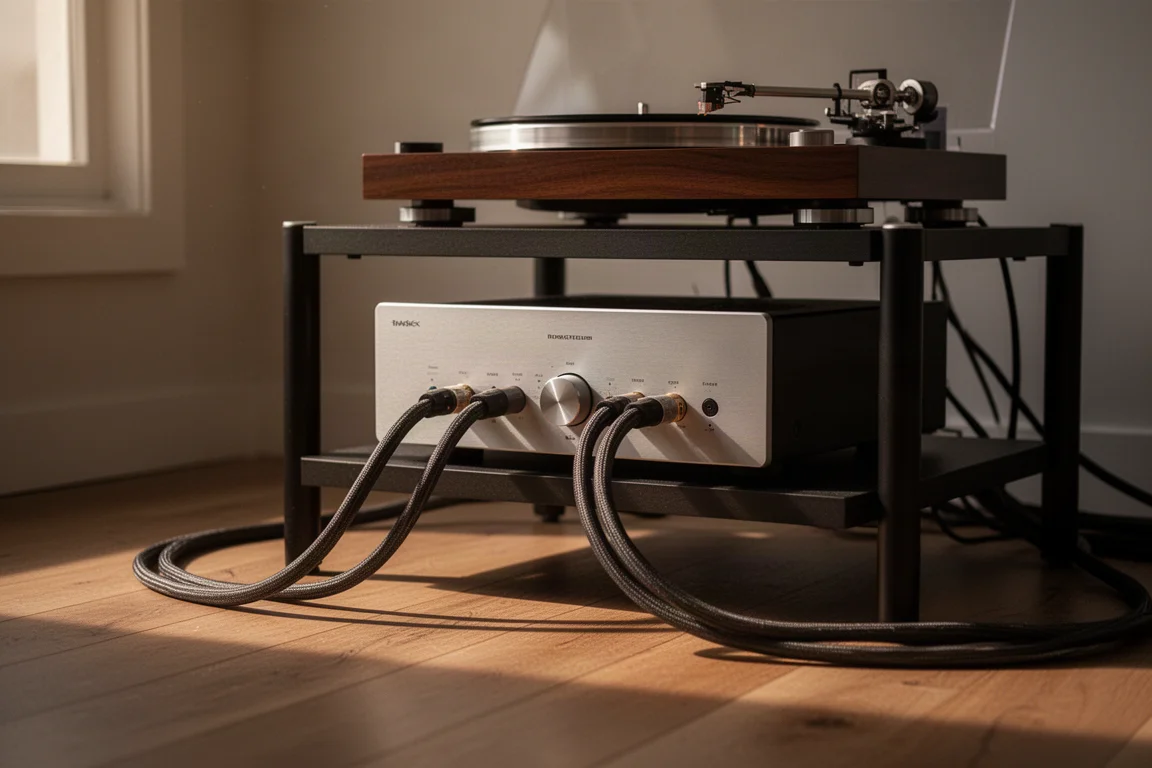
A Cambridge Evo 150 all-in-one delivered a snappy, fast sound with an extremely quiet background and spectacular separation within the sound stage, but it tilted clinical and bright for some tastes, and its sound stage depth was unremarkable. An Axis Forte all-in-one offered outstanding bass control and speed, with a stop-and-start exactness that was genuinely impressive, though its vocal range sounded drier than ideal.
Both are capable all-in-ones that sound wonderful with other speakers. With the Crescendo Mark II they are a matter of preference rather than a perfect match, and they are worth hearing before you commit.
Main Strengths
Genuine full-range output. With rated extension down to 20 Hz (+/- 3 dB), the Crescendo Mark II does not need a subwoofer, even in medium to large rooms.
Subwoofer-grade bass drivers. Two 8-inch paper cone units with underhung voice coils and thick surrounds deliver excursion and weight beyond the typical tower.
A transmission line cabinet. The folded internal path lets the enclosure produce far more bass than its size would suggest.
A well-conceived top end. The D’Appolito MTM layout and the horn-loaded ribbon tweeter with waveguide widen the sweet spot and improve dispersion.
Responsive to system building. The speaker reflects amplifier character so clearly that careful matching can transform the result.
Things to Consider Before Buying
Weight and size. At roughly 125 pounds per cabinet, these are large, heavy speakers that need space and careful placement.
Amplifier dependence. The Crescendo Mark II can sound bright or musical depending on what drives it, so the amplifier is not an afterthought. Plan for it as part of the purchase.
Room demands. It worked in a small to medium treated room, but it is likely to perform better in a larger space, where its bass and scale have room to breathe.
Bass quantity. In some rooms and with some amplifiers the low-frequency output is substantial enough to dominate, and a more restrained pairing may be the better fit.
Buying Advice
The Crescendo Mark II is best treated as half of a system rather than a finished purchase. Decide first what you want from your room: holographic imaging and musical flow, maximum controlled bass, or a neutral and punchy presentation. Then choose amplification with that character in mind rather than by specification alone.
If you have the space and the appetite for matching components, this speaker will reward the effort generously. If you want a set-and-forget tower that behaves identically with any amplifier, listen to it with your own electronics before committing.
Conclusion
The Acoustic Zen Crescendo Mark II is a serious full-range floorstander: roughly 125 pounds per side, dual 8-inch bass drivers in a transmission line cabinet, and a D’Appolito ribbon tweeter array up top. It reaches down to 20 Hz without a subwoofer, and it fills a room with a scale that belies its size.
Its defining trait is responsiveness. Paired with the right amplification it becomes genuinely exceptional, and with the wrong pairing it can lean bright and clinical. Buyers who enjoy that process will find a speaker that can be tuned toward their taste, and in the right room with the right amplifier it will make someone very happy.
Product link
View more details for Acoustic Zen Crescendo Mark II
This product is mentioned in the review. Check the specifications, options, and compatibility before buying.
View more details for Acoustic Zen Crescendo Mark IIFurther reading
Related Reviews
Floorstanding Loudspeakers
Bowers & Wilkins 801 D4 Signature: A Reference Loudspeaker Built for Scale
A detailed look at the Bowers & Wilkins 801 D4 Signature, covering its Signature upgrades, sound character, placement demands, and the amplification it needs to perform at its best.
Floorstanding Loudspeakers
JBL Summit K2 Review: A $100,000 Flagship Loudspeaker Built Without Compromise
A detailed look at the JBL Summit K2, from its 15-inch woofer and triple compression driver array to how it sounds driven by a reference Mark Levinson system.
Floorstanding Loudspeakers
Revel F328BE vs Perlisten S7T: Two Flagship Towers Compared
A close comparison of two large beryllium-tweeter towers, covering bass extension, off-axis behaviour, build quality, and whether the price gap is worth it.