Hi-Fi Speakers
Revival Atalante 5 Review: A Big Stand-Mount Speaker With Genuine Mid-Bass Weight
A three-way stand-mount loudspeaker with a 12 inch woofer, a 3 inch mid-range dome, and a 28 mm tweeter, priced around $5,000. Here is what it does well, where it asks for care, and how to set it up.
Introduction
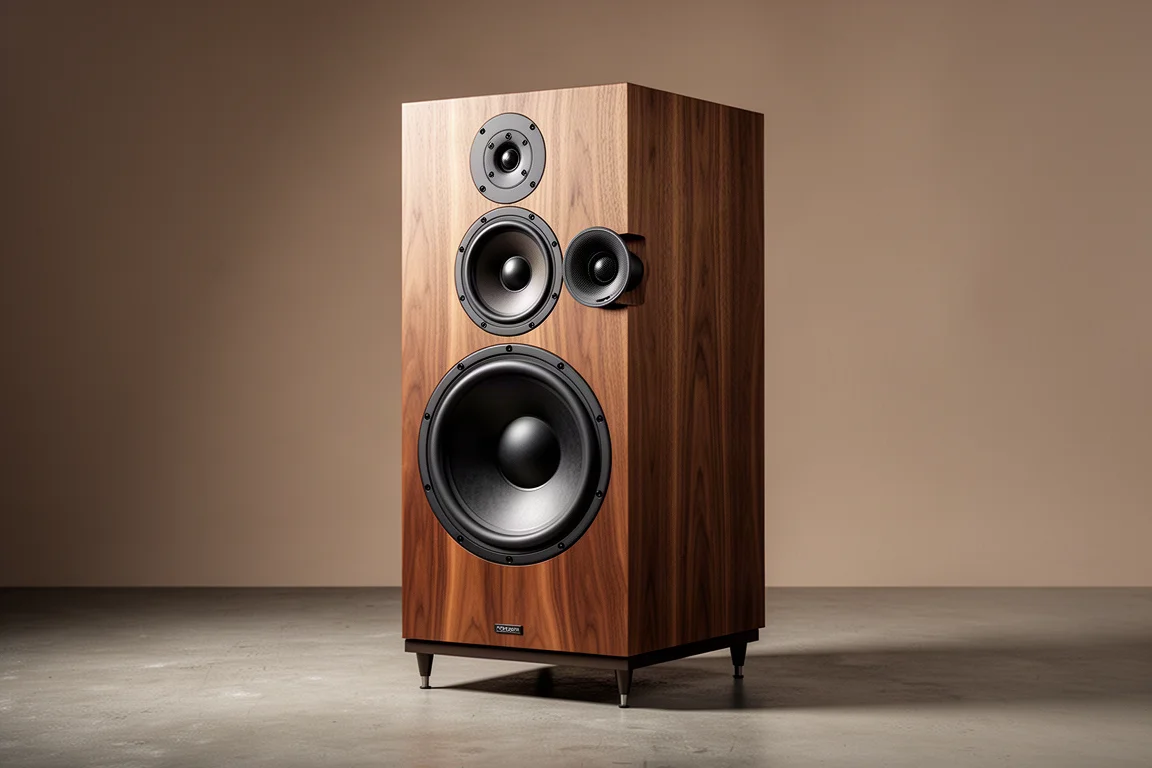
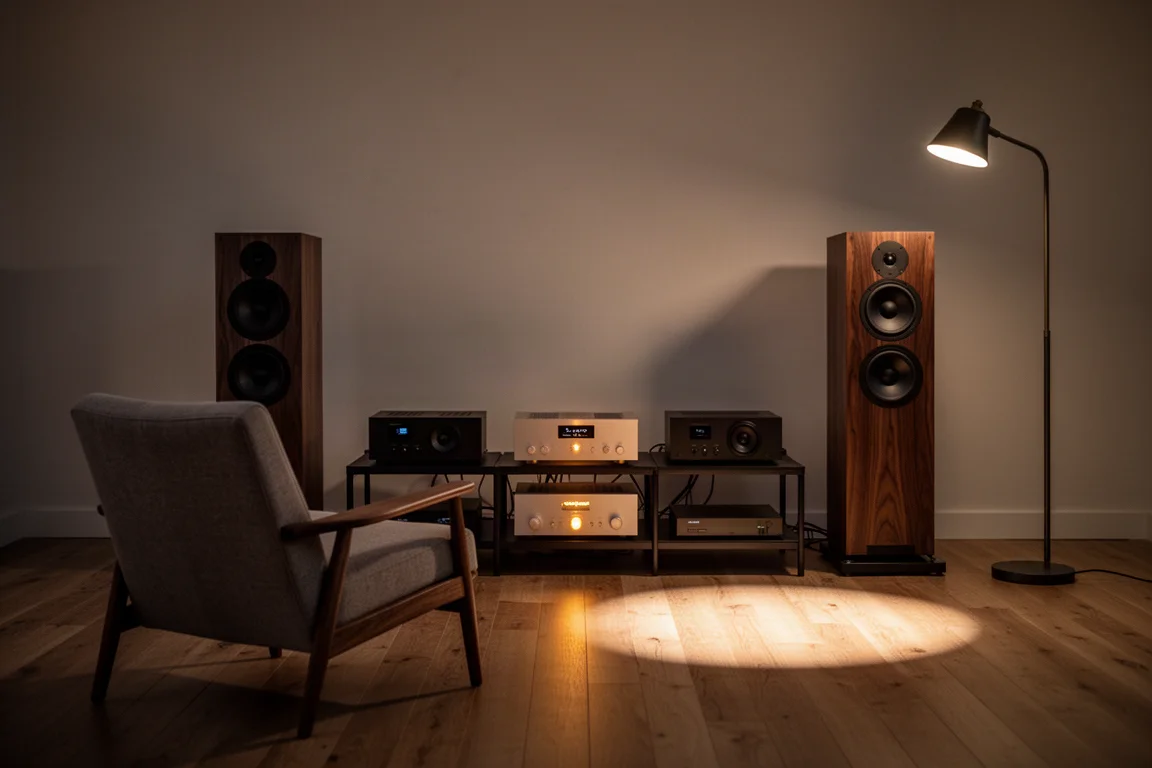
The Revival Atalante 5 is a large stand-mount loudspeaker that can also be run on the floor depending on how it is configured. It is a three-way design built around a 28 mm dome tweeter, a 3 inch mid-range dome driver, and a 12 inch woofer, and it sells for around $5,000 in a walnut finish that gives the cabinet a furniture-grade look.
Size is a big part of the story. The cabinet measures 710 x 420 x 355 mm, which works out to roughly 28 inches tall, 16.5 inches wide, and 14 inches deep, and it weighs 33 kg, or about 73 pounds. This is a stand-mount speaker that behaves like a compact floorstander, and the oversized woofer gives the front baffle a presence that is hard to ignore.
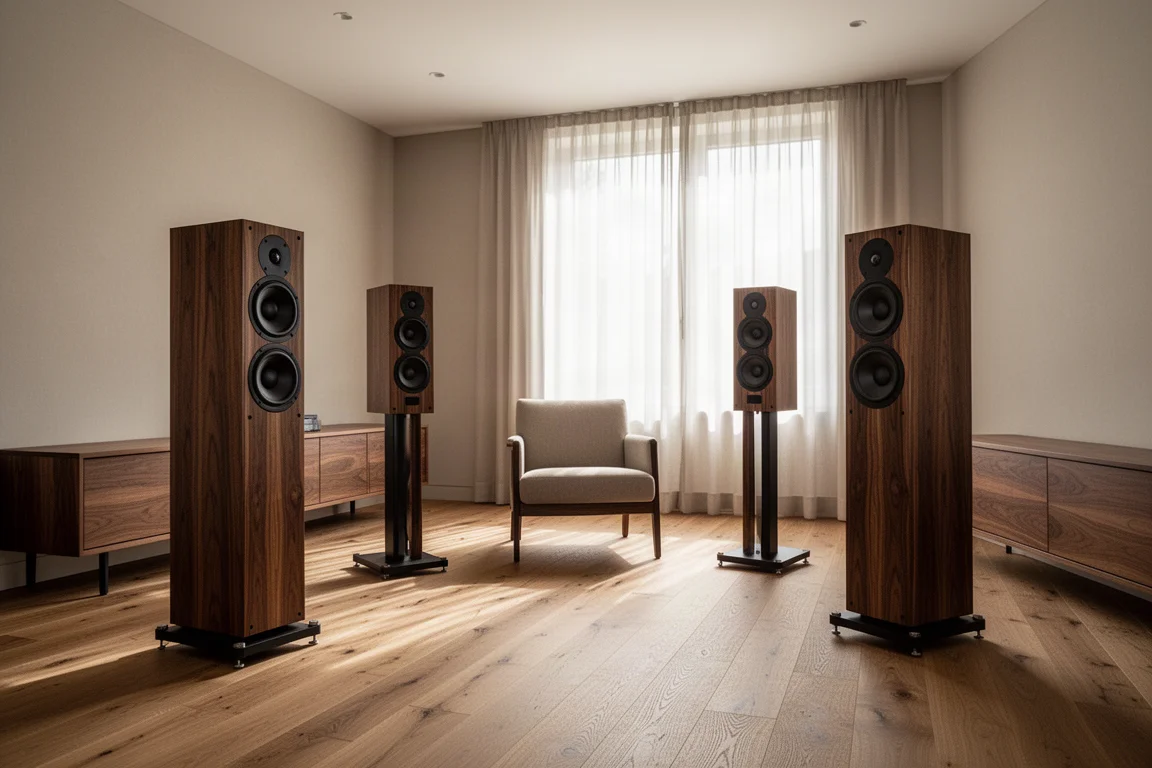
Revival also builds in real setup flexibility. There are two ports on the back of the cabinet, and the speakers ship with bungs that let you seal them and run the speaker in a sealed alignment instead of a ported one. A wooden bar can be screwed into the base so the cabinet tilts upward when it sits on the floor rather than on a stand.
Who This Speaker Is For
The Atalante 5 suits listeners who want genuine bass weight from a two-speaker system and would rather not add a subwoofer. The 12 inch woofer and the cabinet volume behind it are the whole point of the design, and that is where the money goes.
It is also a natural fit for a room that can give the speaker some breathing space. In ported mode it wants distance from the wall behind it, so a room where the speakers can sit a couple of feet or more into the space is a much better match than a tight alcove.
It is less suited to listeners who prioritize pinpoint imaging or a small visual footprint. The cabinet is large for a stand-mount, the tweeter is deliberately offset to one side, and the speakers are labeled left and right, so placement and orientation deserve a bit more thought than usual.
Main Strengths: Mid-Bass Impact and High-Volume Composure
At moderate levels, roughly below 75 to 80 dB at a listening distance of about 10 feet, the Atalante 5 delivers a consistent mid-bass thump that gives kick drums, bass lines, and lower-register instruments real physical weight. That quality is the speaker’s signature and it is present from the first track.
The second strength is composure under load. Push the volume up and the 12 inch woofer stays controlled: there is no port chuffing and no audible excursion distress, two problems smaller cabinets often run into when they are asked to play loudly. The overall tonality in a room is even, with little that stands out beyond the deliberate low-frequency emphasis.
Measured behaviour supports that impression. Harmonic distortion stays below roughly 1 percent across most of the range before rising in the upper treble, and dynamic compression is well controlled apart from the very top of the frequency range, where musical content is limited anyway. Rated sensitivity is 89 dB, which makes the speaker reasonably easy to drive for its size.
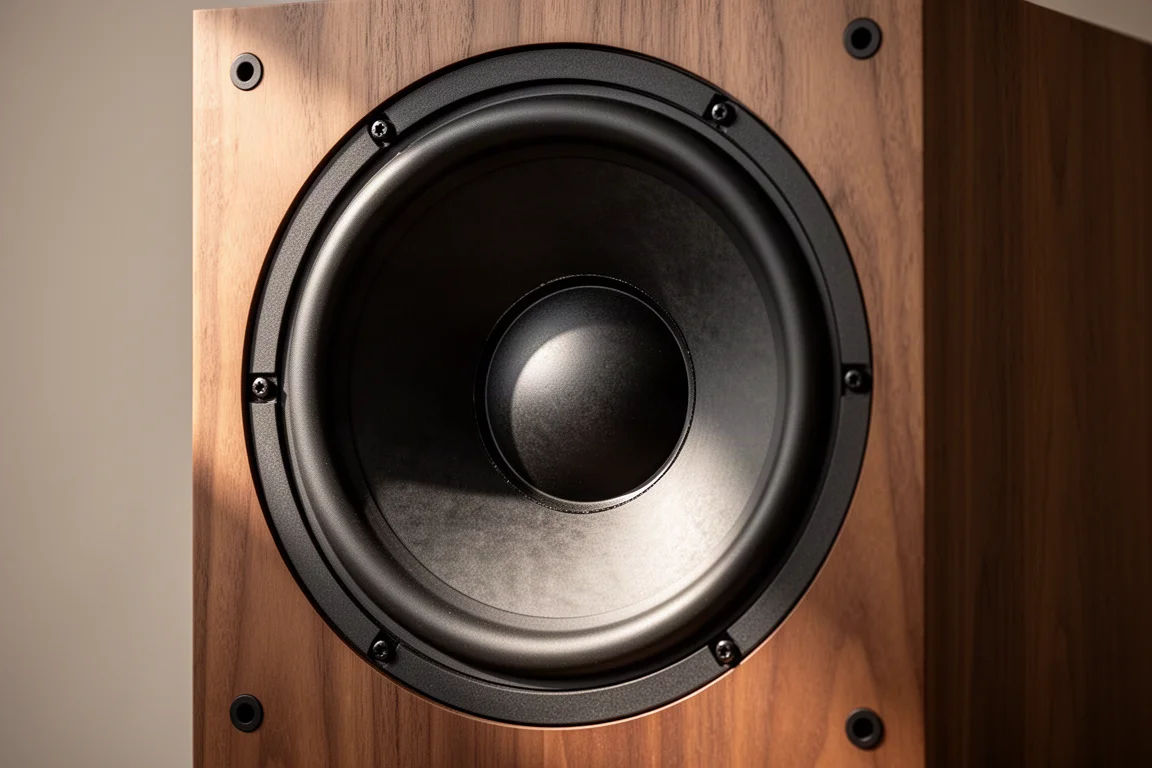
The bass also stays clean in character rather than becoming bloated, provided the cabinet has room behind it. Bass F3 is specified at 42 Hz with an F10 of 30 Hz, and in-room response reaches roughly 40 Hz with a strong lower mid-bass and upper sub-bass presence.
Things to Consider Before Buying
The most noticeable issue is an upper treble emphasis. On axis there is a peak of roughly 2 to 3 dB centred near 4 kHz, and it can make certain sharp, transient sounds, such as a finger snap in a sparse mix, feel exaggerated compared with how the same track sounds on neutral reference headphones. Depending on the song this reads either as extra bite or as a distraction, and it is the single trait most worth hearing for yourself before committing.
The second consideration is mid-range balance. There is a dip through the lower mid-range between roughly 100 and 300 Hz, and at higher volumes the mid-bass bump starts to override detail in that region. At moderate levels the same trait reads as pleasing warmth, so how much it bothers you depends on how loudly you listen.
Imaging is the third trade-off. Instruments are placed correctly but with softer edges than designs that use a waveguide or a coaxial arrangement, so the soundstage is a little fuzzier about exact positions. The offset tweeter, mounted to the side of the mid-range driver to reduce diffraction, is part of the cabinet’s asymmetric layout. The speakers are labeled left and right, and if they end up placed close together the manual suggests trying them swapped, though the difference is subtle in practice.
Finally, the physical demands are real. At 33 kg each with a 420 mm wide cabinet, these are not speakers you will want to move repeatedly, and they need stands if you plan to run them at ear height.
Setup and Placement: Ported, Sealed, and Toe-In
Setup matters more here than with many speakers. In ported mode, plan on at least 2 feet between the back of the cabinet and the wall, and a full meter if the room allows, because the low end is generous and a close-to-wall placement exaggerates it quickly. In sealed mode, with the supplied bungs fitted into the two rear ports, about a foot, or roughly a third of a meter, is usually workable.
Stands gave the best result. On the floor, the screw-in wooden bar tilts the cabinet upward so it aims at the listening position rather than at the listener’s knees, which is a practical solution if stands are not an option.
Aiming matters just as much. Pointed straight at the listener, the upper treble becomes too forward. Toeing the speakers out by about 5 to 10 degrees off axis produced the most neutral balance. Vertically, stay on the tweeter axis, since the vertical window is narrow and there is not much leeway above or below it. Horizontal coverage averages around 60 degrees but narrows near the mid-range to tweeter crossover.
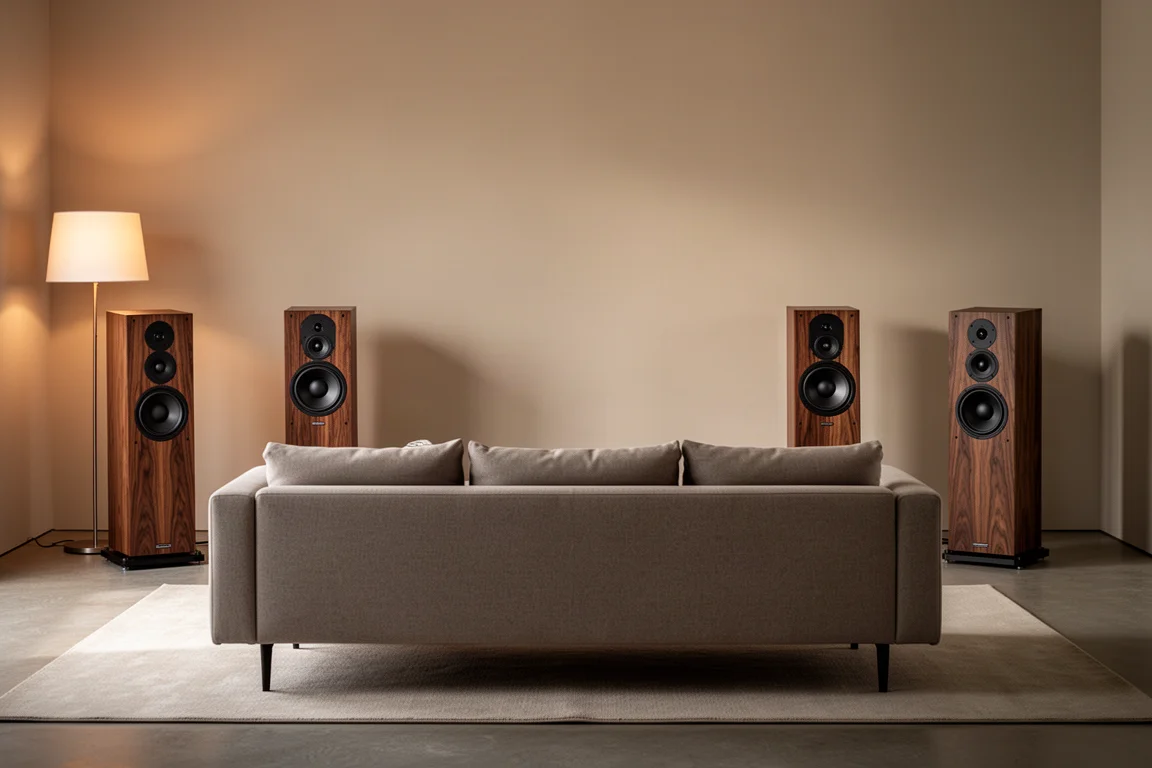
The crossovers themselves sit at 450 Hz between the mid-bass and mid-range, and at 3.5 kHz between the mid-range and tweeter. That 3.5 kHz point is roughly where the horizontal coverage tightens, which is another reason a small amount of toe-out pays off.
How It Behaves in a Real Room
The estimated in-room response is noticeably smoother than the on-axis curve. The 4 kHz peak that stands out in the direct sound largely fills in once room reflections are part of the picture, which is why the speaker tends to sound more even than a single on-axis reading would suggest. The lower mid-range dip remains, and it is the reason the mid-bass region can dominate at higher volumes.
Low-frequency extension is solid rather than extreme. The Atalante 5 will not deliver 20 Hz, and 30 Hz arrives without much authority, but the region above 40 Hz is strong and well filled. For most music a subwoofer is optional rather than required, though adding one remains a reasonable way to take load off the speaker and spread low-frequency room modes.
Distortion and compression behaviour hold up well across the audible band, with the only real rise occurring at the very top of the treble. That is a fair trade for a design that puts so much of its effort into the bass and lower mid-range.
Buying Advice
A nominal impedance of 4 ohms with a minimum around 3.2 ohms means the Atalante 5 wants an amplifier that is comfortable with lower-impedance loads, and stated power handling is 200 watts. Pairing it with an amplifier that has solid current delivery will get more out of the woofer than a modestly powered unit will.
Before buying, be honest about the room. This is a speaker that rewards space behind it and a listening position that lets you sit slightly off axis. If your setup forces the cabinets close to a wall, sealed mode with the port bungs is the safer configuration, and it also makes placement easier to live with day to day.
The case for the Atalante 5 is strongest for listeners who want a large, warm, physically engaging sound with genuine bass output from a two-channel system and who are willing to spend a little time on placement. If your priorities lean instead toward razor-sharp imaging, a compact footprint, or a completely neutral upper treble, other designs will likely suit you better, and it is worth hearing a few options in your own room before deciding.
Budget for stands as part of the purchase, since they made the clearest difference in how the speaker performed. If the floor is the only option, the supplied tilt bar is a workable compromise rather than a compromise you will hear as a flaw.
Conclusion
The Revival Atalante 5 is a characterful speaker rather than a neutral one. Its strengths are easy to appreciate: real mid-bass impact at everyday listening levels, a big and confident low end, clean behaviour when pushed hard, and a walnut cabinet that looks the part in a living space.
Its trade-offs are equally clear. The 4 kHz emphasis asks for a small amount of toe-out, the lower mid-range dip lets the mid-bass dominate when you turn things up, imaging is softer than the best-controlled designs, and ported mode needs real distance from the back wall.
Buy it if you want weight, warmth, and scale from a large stand-mount and you have the room to let it breathe. Skip it if precise imaging and a flat, uncoloured top end matter more to you than bass presence. Set up carefully, aim it slightly off axis, and it delivers exactly the kind of listening experience it was designed for.
Product link
View more details for Revival Atalante 5
This product is mentioned in the review. Check the specifications, options, and compatibility before buying.
View more details for Revival Atalante 5Further reading
Related Reviews
Hi-Fi Speakers
1723 THX Tower vs 1528 Bookshelf: Which Speaker Fits Your Room?
Two speakers at roughly the same price, built very differently. How the 1723 THX tower and the 1528 bookshelf compare on construction, bass, power needs, and sound.
Hi-Fi Speakers
Acoustic Energy AE 300 Review: Deep Bass From a Compact Standmount
A two-way standmount with real wood veneer, surprising low-end weight, and a warm, easygoing character. Here is what to know before buying.
Hi-Fi Speakers
Acoustic Energy AE1 40th Anniversary Review: A Modern Take on a British Classic
A compact standmount that revives a 1980s favorite with all-new parts, a warm mid-centric balance, and a price of £1,499 per pair.