Hi-Fi Speakers
Revel Perform BE Speakers Compared: F226BE, F228BE, F328BE and Two Alternatives
A practical comparison of the Revel F226BE, F228BE, and F328BE floorstanders, plus how the KEF R5 Meta and MoFi 8 compare on tonal balance, bass extension, and placement.
Introduction
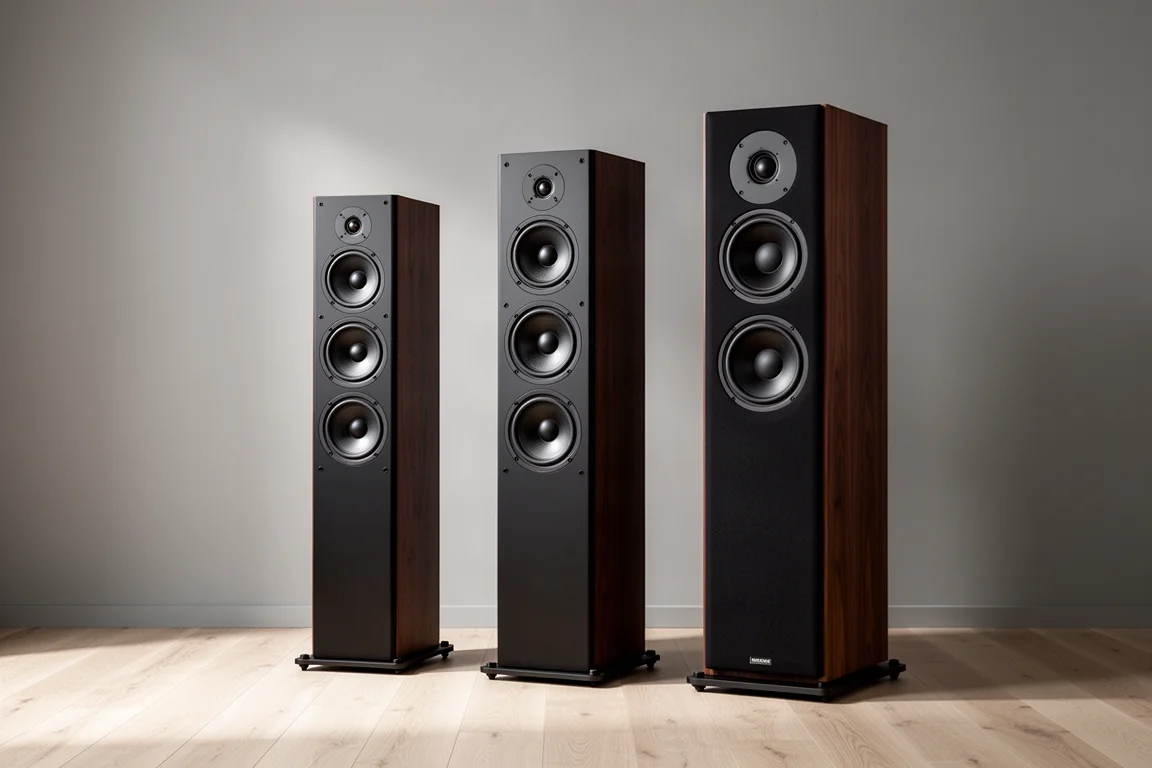
The Revel Perform BE line gives buyers three floorstanding options that share a family sound but differ in size, driver count, and low-frequency behavior. The F226BE, F228BE, and F328BE all follow the same design philosophy, yet the measured differences between them are large enough to change which one suits a given room.
This guide walks through what each model does well, where its tonal balance shifts, and how placement and listening height affect the result. It closes with two alternatives worth knowing about, the KEF R5 Meta and the MoFi 8, for buyers weighing a different balance of price and bass extension.
Shared Strengths Across the Revel Perform BE Line
All three Revel models share two traits that stand out. The first is dynamic range, with snap, kick, punch, and detail across both micro and macro dynamics. The second is soundstage width, because the cabinets radiate widely rather than beaming energy straight ahead. The F226BE, for example, measures about plus or minus 60 degrees of horizontal dispersion.
Tonality is good across the line, but each model differs enough that a side-by-side comparison is audible. Baffle width and height change as the cabinets grow, and those changes show up in early reflections and directivity. One behavior also becomes more important as the models get bigger. The listening window narrows vertically, so aligning your ears with the tweeter matters more on the larger cabinets.
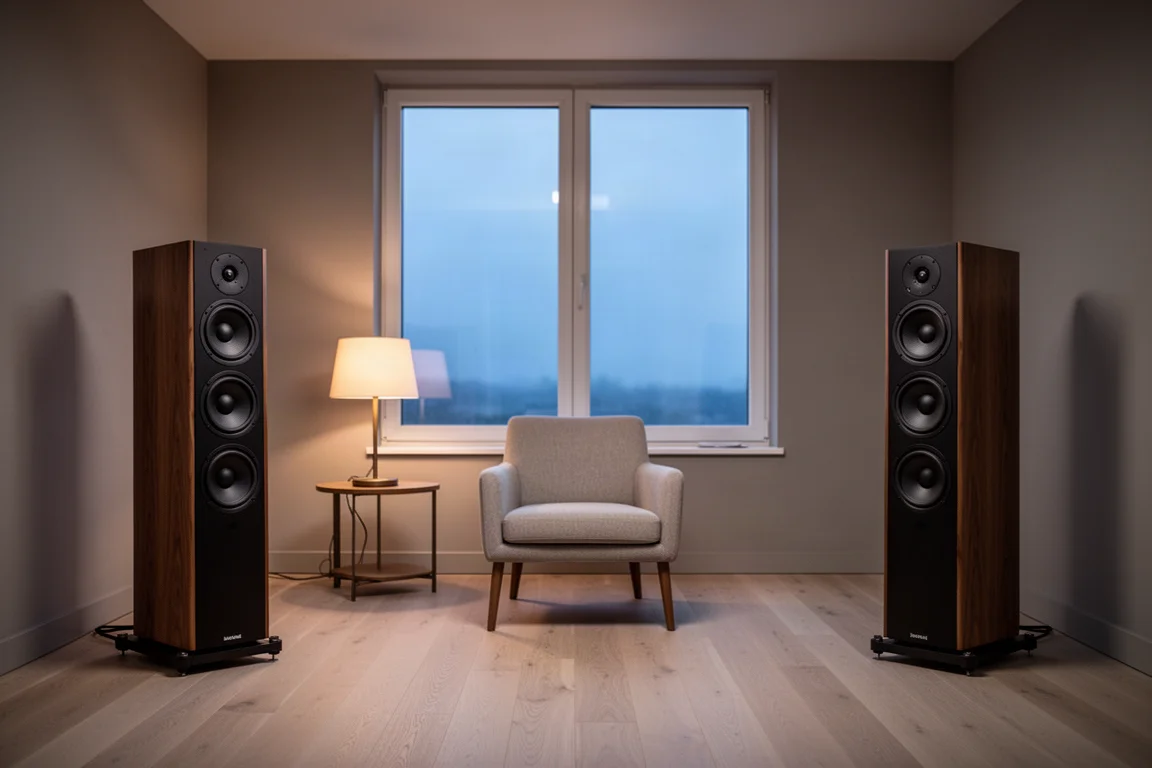
Where the smaller F226BE tolerates a listener who stands up and moves around the room, the F228BE and F328BE reward a fixed seat at tweeter height.
Revel F226BE: The Compact Three-Way
The F226BE pairs two 6-inch midwoofers with a 5.25-inch midrange and a 1-inch beryllium dome tweeter loaded by a waveguide. Average sensitivity is 90 dB, and the on-axis response is fairly linear with a bump between 4 and 6 kHz that can add a touch of sibilance.
Low-frequency output is where the compact cabinet shows its limits. The F3 sits at 60 Hz and the F10 at 35 Hz, so the speaker reaches reasonably low but needs a subwoofer for genuine low bass.
In-room estimates show a scoop in the midbass that trims some of the thump from a kick drum, though the same behavior means the F226BE works well positioned closer to the wall. A scoop in the upper midrange gives it a slightly warmer, less forward character, while the high frequencies stay even up to about 20 kHz.
Vertically, the F226BE is the most forgiving of the three. Its window is roughly plus or minus 20 degrees, which is broad for a three-way with the tweeter stacked on top, making it the best choice if listeners move around the room.
Distortion is exceptionally low, below 1 percent at 90 dB and still modest at 102 dB, where the midrange holds up well and only the tweeter region shows some third-order harmonics. Compression stays near 1.5 dB at 106 dB of output. Retail is about $5,400 a pair, with sale pricing closer to $4,000, and prices shift with the finish you choose.
Revel F228BE: The Value Pick
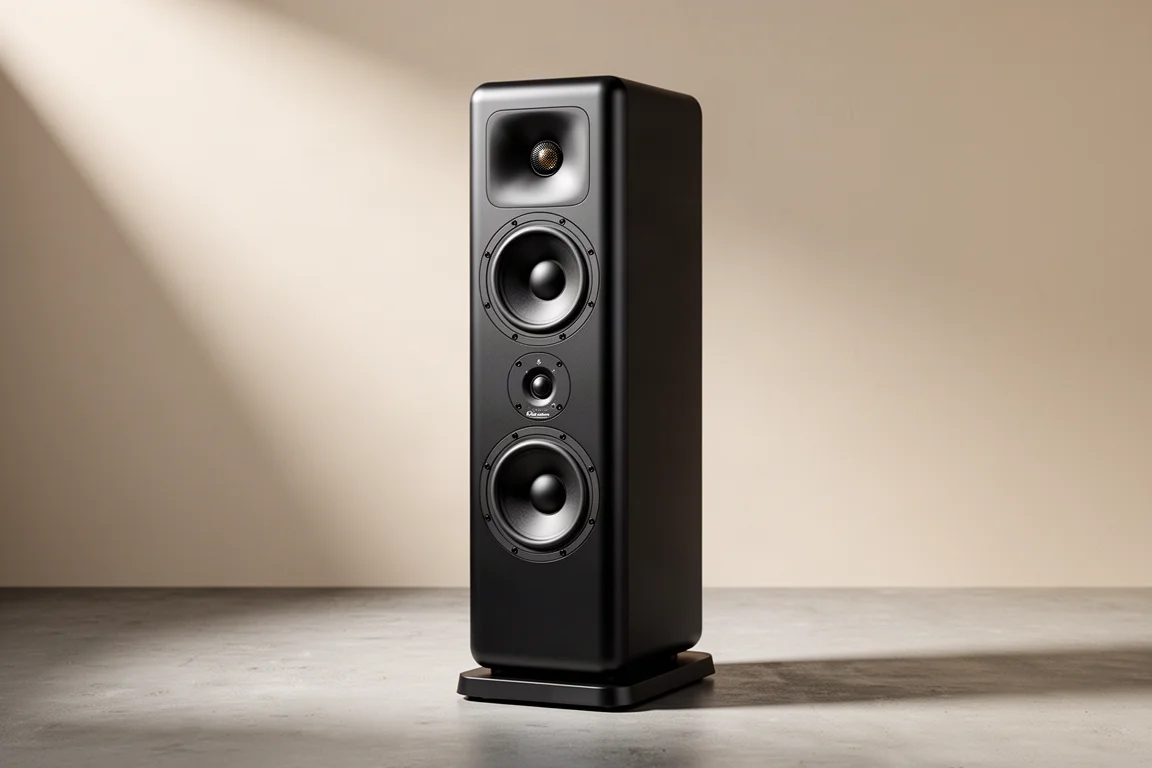
The F228BE steps up to two 8-inch woofers. Average sensitivity is again 90 dB, but the F3 remains at 60 Hz while the F10 drops to 20 Hz, giving it meaningfully deeper extension than the F226BE.
Tonally, the on-axis balance is similar to the F226BE, with better early reflections directivity, which generally means it responds more predictably to equalization. The overall balance reads as a little more neutral, and it reaches lower.
Two traits are worth planning around. The lower midrange has a scoop that can make vocals and snares sound a little hollow, taking some fullness out of them. The midbass, by contrast, has a small boost relative to the F226BE, which adds kick and punch. Because of that boost, the F228BE benefits from sitting a little further out from the front wall.
The high-frequency roll-off is the other consideration. Off axis, the speaker loses some air and sparkle from cymbals and electronic material, so aligning your ears with the tweeter pays off.
At $11,000 a pair at retail and around $6,000 on sale, the F228BE is the strongest value in the range for most buyers.
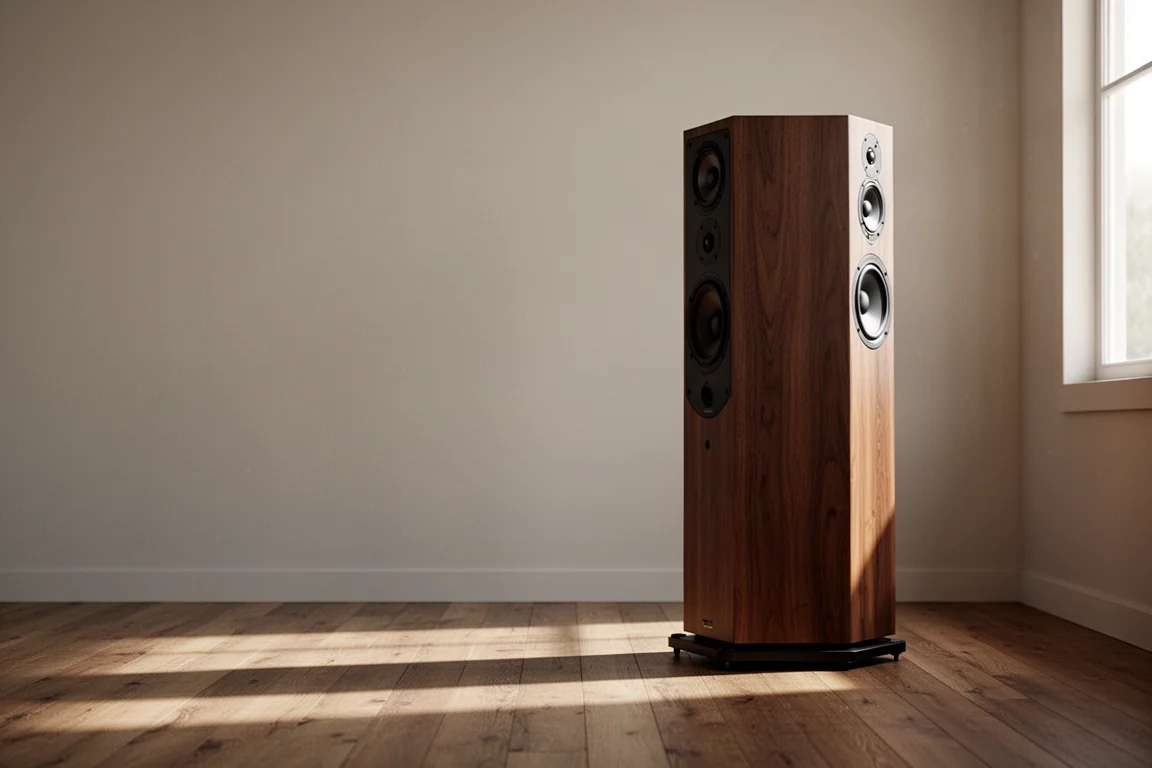
Placing it roughly a meter clear of the wall keeps the midbass boost from turning into boom, and a listening seat at tweeter height keeps the top end intact.
Revel F328BE: The Largest Cabinet
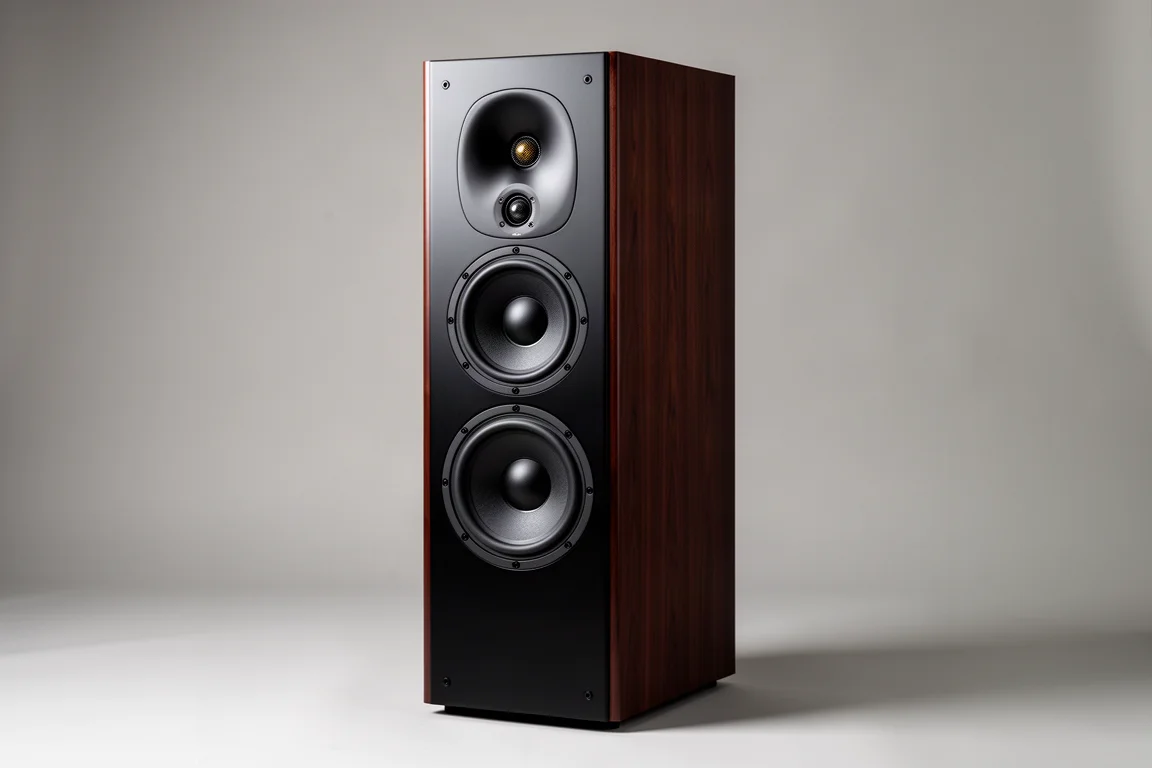
The F328BE uses three 8-inch bass drivers, and the extra driver area shows up as higher sensitivity rather than deeper bass. It does not extend as low as the F228BE. The F3 lands around 60 Hz and the F10 around 31 Hz, with a noticeably different bass rolloff.
The on-axis response is also less linear. There is a dip in the 7 to 8 kHz region and variation between 1 and 3 kHz, though the early reflections directivity looks good, better than the F226BE in that respect.
In-room estimates show a similar flattening to the F226BE, which trims some kick drum thump. The overall balance is solid, with a bump near 3 kHz that could add a little glare and a small dip that can take some weight out of female vocals. The overall slope is steeper, so the F328BE may sound around a decibel darker than its smaller siblings.
Horizontally, it narrows less at high frequencies than the other two, but it shows a suckout between 5 and 6 kHz and a dip from about 800 Hz to 1.5 kHz. Vertically, it is the most demanding of the three, with a cutout in the 200 to 300 Hz region that makes ear-to-tweeter alignment essential. Retail is $17,600 a pair, with sale pricing around $13,000.
How the Three Revel Models Differ in Practice
Lining up the estimated in-room responses at 1 kHz makes the differences easier to read. The F228BE extends about as well as the F328BE while keeping a dip in the midrange region, and the F328BE shows a slightly shallower bass profile despite its extra driver.
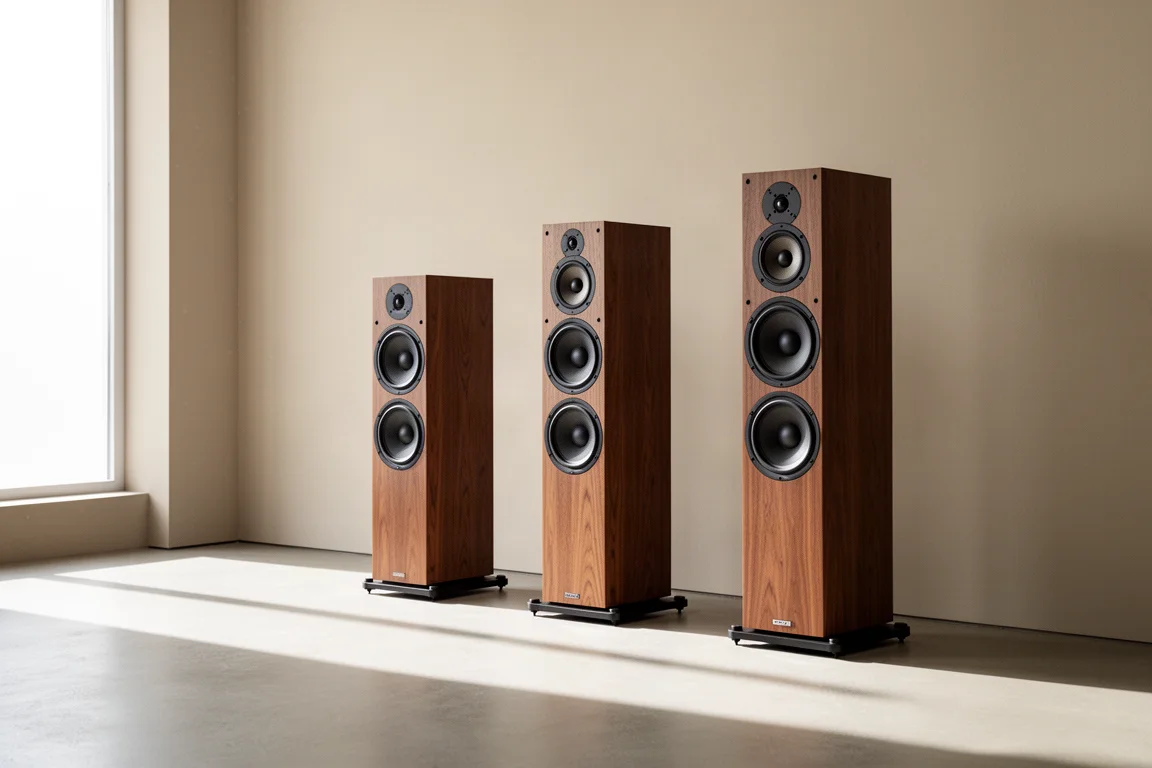
The practical takeaways are placement and listening posture. The F226BE is the most flexible, since it can sit closer to a wall and holds up better when listeners move around. The F228BE wants a bit more breathing room from the wall and rewards a centered seat. The F328BE asks for the most discipline, with the listening position fixed at tweeter height.
KEF R5 Meta: A Darker, Room-Friendly Alternative
The KEF R5 Meta costs about $4,000 a pair and takes a different approach. Its overall slope is steeper, so it tends to sound darker than the Revel and MoFi models, and it produces a little less midbass output.
Two things work in its favor. It is well suited to placement near a wall, and its tonal balance is more linear than the F226BE apart from a small peak around 6 kHz. What it does not do is reach low, so with this speaker a subwoofer is a requirement rather than an option.
MoFi 8: Deeper Bass Without Subwoofers
The MoFi 8 sits at about $5,000 a pair and trades linearity for extension. Its response is less linear than the Revel and KEF models, but it reaches at least 40 Hz in room, and possibly a little lower, which means many listeners will not need subwoofers at all.
For context, the Revel models almost certainly need a subwoofer to cover the bottom octave, with the possible exception of the F228BE and F328BE, which carry a slight shelf in the lower bass that helps them along.
Buying Advice: Matching the Speaker to Your Room
Start with the room and the seat rather than the spec sheet. If your speakers have to sit close to a wall, the F226BE and the KEF R5 Meta are the easier fits. If you can pull the cabinet into the room and sit in a fixed position, the F228BE and F328BE open up.
Plan for bass as well. The F226BE and the KEF R5 Meta both need a subwoofer to reach low frequencies properly, while the MoFi 8 covers much of that ground on its own. The F228BE and F328BE fall in between.
Budget also depends on finish, since pricing varies by color, and dealer pricing can beat what you see listed online. It is worth contacting a local dealer before ordering, especially while sale pricing is available.
Conclusion
Across the line, the F228BE offers the most convincing combination of extension, tonal balance, and price, particularly at sale pricing around $6,000 a pair. The F226BE remains the most placement-friendly and the most forgiving of movement in the room, while the F328BE delivers higher sensitivity for listeners who sit in one spot at tweeter height.
If you prefer a darker balance and a wall-friendly setup, the KEF R5 Meta is worth hearing, and if deep bass without subwoofers is the priority, the MoFi 8 makes that case.
Further reading
Related Reviews
Hi-Fi Speakers
1723 THX Tower vs 1528 Bookshelf: Which Speaker Fits Your Room?
Two speakers at roughly the same price, built very differently. How the 1723 THX tower and the 1528 bookshelf compare on construction, bass, power needs, and sound.
Hi-Fi Speakers
Acoustic Energy AE 300 Review: Deep Bass From a Compact Standmount
A two-way standmount with real wood veneer, surprising low-end weight, and a warm, easygoing character. Here is what to know before buying.
Hi-Fi Speakers
Acoustic Energy AE1 40th Anniversary Review: A Modern Take on a British Classic
A compact standmount that revives a 1980s favorite with all-new parts, a warm mid-centric balance, and a price of £1,499 per pair.