Bookshelf Speakers
Revel M126BE Review: A Neutral Bookshelf Speaker With a Wide Soundstage
The Revel M126BE combines a beryllium dome tweeter with a 6.5-inch midwoofer for a mostly neutral sound and a stereo image that reaches beyond the cabinets, but it still needs a subwoofer.
Introduction
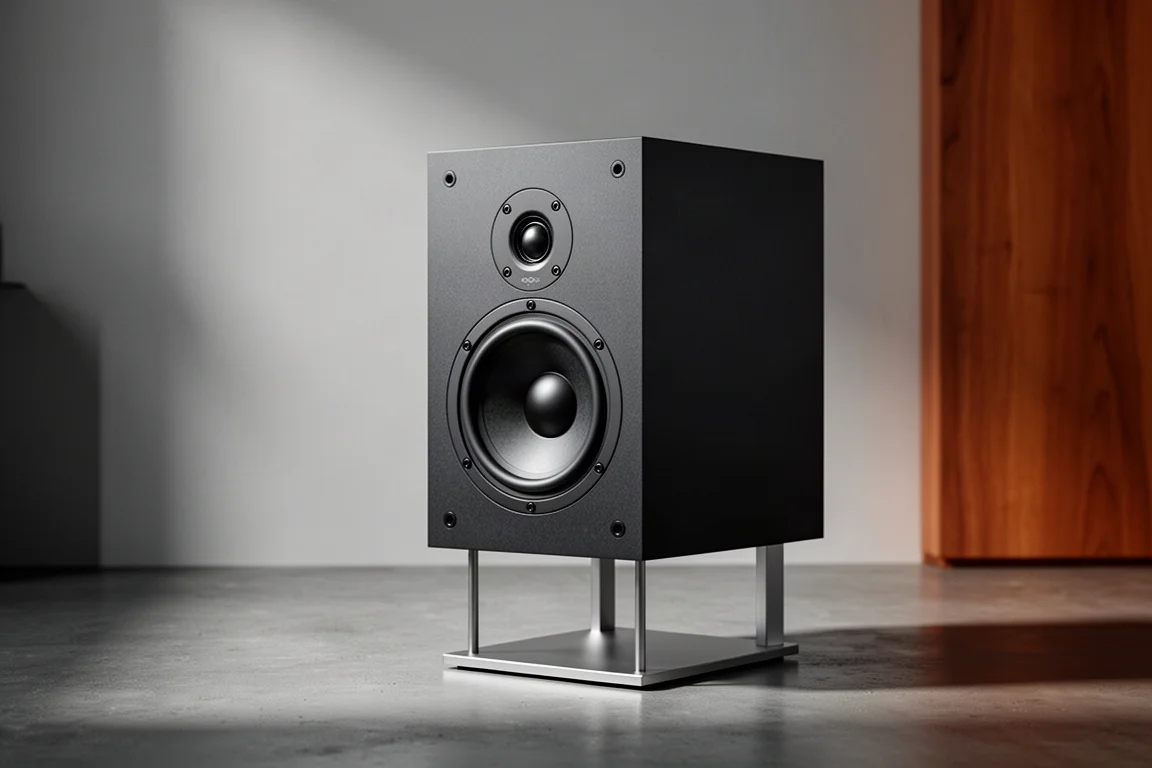
The Revel M126BE is a two-way bookshelf loudspeaker built around a 6.5-inch midwoofer and a 1-inch beryllium dome tweeter, priced at roughly $4,400 per pair. It is a smaller sibling to the Revel F226BE, a floorstanding model that has built a strong reputation among listeners who value neutrality and even dispersion.
That lineage shapes what the M126BE is and what it is not. This is not a compact speaker that chases deep bass or a large cabinet volume. It earns its place through linearity, careful directivity control, and a stereo image that extends well beyond the physical cabinets. Understanding that trade-off is the key to deciding whether it belongs in your room.
Who This Speaker Is For
The M126BE makes the most sense for listeners who care about imaging, immersion, and tonal honesty more than low-frequency weight. It also suits anyone running an amplifier or AVR that can cope with a load dipping to a minimum impedance of about 4.9 ohms, because this is not a speaker that demands exotic amplification to perform properly.
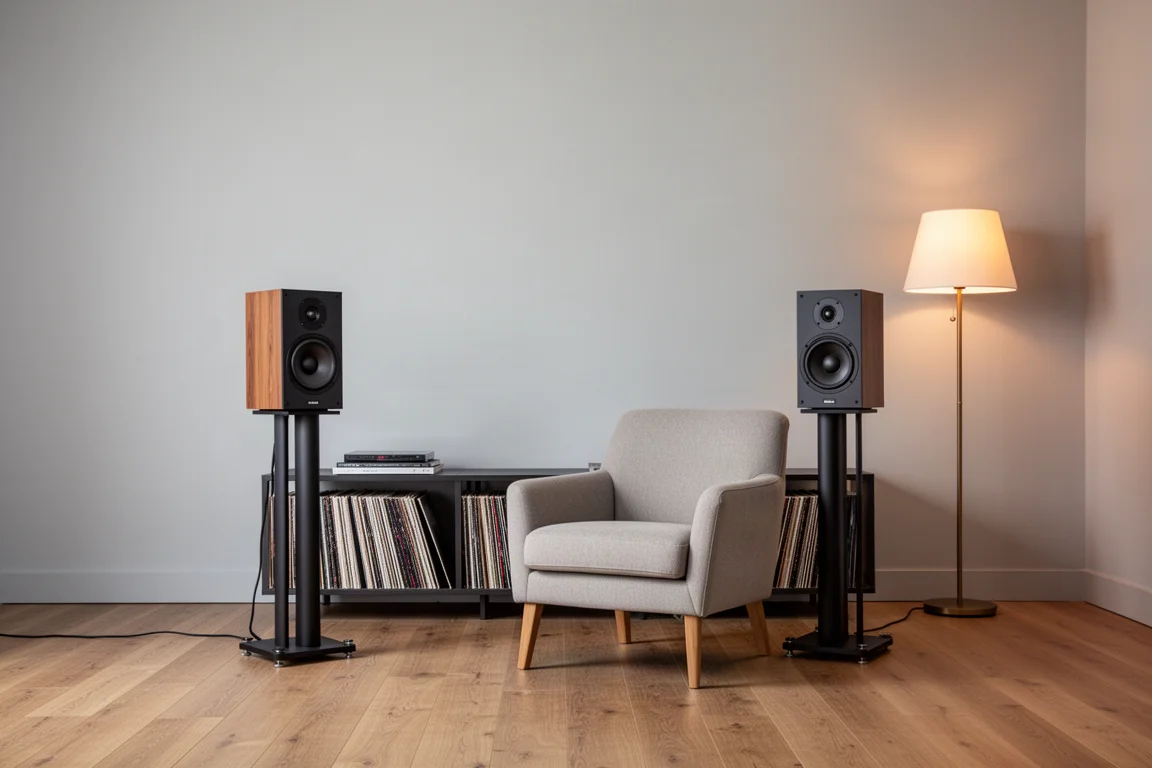
It is a less obvious choice for buyers shopping purely on bass output or on price-to-performance. At around $4,400 per pair, the M126BE asks a substantial premium over Revel’s standard bookshelf models, and anyone expecting that money to translate into deeper bass will come away disappointed. What the premium buys is linearity, a wide and consistent radiation pattern, and design work that shows up in measurements rather than in a headline specification.
Design and Engineering Behind the M126BE
The driver complement is straightforward: a 6.5-inch midwoofer handling the lower range and a 1-inch beryllium dome tweeter covering the top, crossed over in a compact two-way cabinet. The interesting part is the low-frequency alignment. Rather than a conventional ported or sealed roll-off, the M126BE uses an extended bass shelf. Response begins to roll away gently around 150 Hz and then extends gradually instead of dropping away steeply.
The intention behind that alignment is practical. Combined with the gain a typical room adds at low frequencies, an extended bass shelf tends to produce a more linear in-room result and less of the boominess that a sharper tuning can introduce. The result is a speaker that sounds balanced in a real room rather than only on a measurement bench.
Main Strengths: Radiation Width and Neutrality
The most distinctive quality of the M126BE is how wide it throws a stereo image. Horizontal radiation averages roughly 60 to 70 degrees, and the practical effect is striking. Hard-panned elements in a mix, such as a sound pushed fully to one side, do not sit at the cabinet edge. They appear two to three feet outside the speaker, which is what makes the presentation feel immersive rather than boxed in.
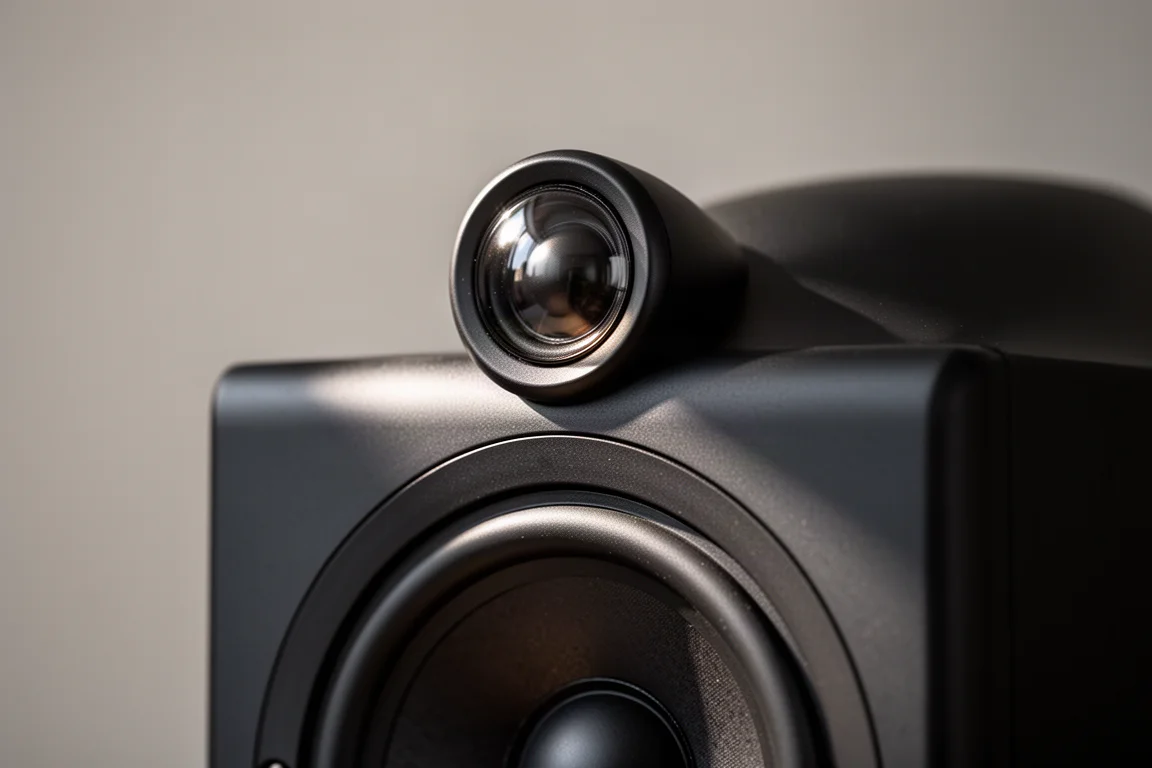
Tonally, the speaker is mostly neutral. On-axis response and the listening window both show good linearity, with some evidence of diffraction around 3 kHz and a smaller amount around 7 kHz. Those dips fill in as you move off axis and largely smooth out in the estimated in-room response, so they are not a lasting tonal problem in a normal room. Distortion behaviour is also solid: at 86 dB and 96 dB at one meter, the speaker stays within about 3 percent down to roughly 100 Hz, and multi-tone testing that emulates music keeps it below that 3 percent mark.
That combination of a wide pattern and a neutral balance is the reason this speaker stands out. A wide radiation pattern on its own can smear imaging precision, while a very narrow pattern can sound focused but small. The M126BE lands between the two, offering a soundstage that reaches outward while individual instruments remain easy to place.
Bass Response and Room Integration
Bass is neutral in character but limited in reach. In a typical room, low-frequency extension lands at around 50 Hz, which means a subwoofer is still required, exactly as with most bookshelf speakers. The difference here is the expectation that comes with the price: spending $4,400 per pair does not remove the need for a subwoofer, and it does not deliver the deep output of a floorstanding design.
Compression testing shows the expected limits at the low end for a compact cabinet with a 6.5-inch midwoofer. At very high output levels the speaker runs out of headroom, and there is some evidence that dynamic material with a wide range could place strain on the midrange and upper midrange. At moderate listening levels in a normal room, none of this is likely to be a concern, but listeners who sit three to four meters away and push high volumes should be aware of the ceiling.
Things to Consider Before Buying
A few characteristics are worth knowing before committing to this speaker.
- A slight emphasis around 2 to 3 kHz was audible on some material. A modest reduction of about 1 dB at 3 kHz resolved it, so it is a minor issue rather than a deal breaker.
- At stress-test levels, roughly 92 to 93 dB average at two meters, the upper midrange took on a glare. Compression data showed an unexpected rise in distortion around the 1.7 kHz crossover point, which may or may not be related.
- Setup matters. The speaker is designed to be listened to on axis, with the tweeter aimed at ear height, and it should sit within a few degrees of that axis vertically. The vertical response has a hole around 1.7 kHz, so sitting above the tweeter line costs you quality.
- A subwoofer is part of the plan, not an optional extra.
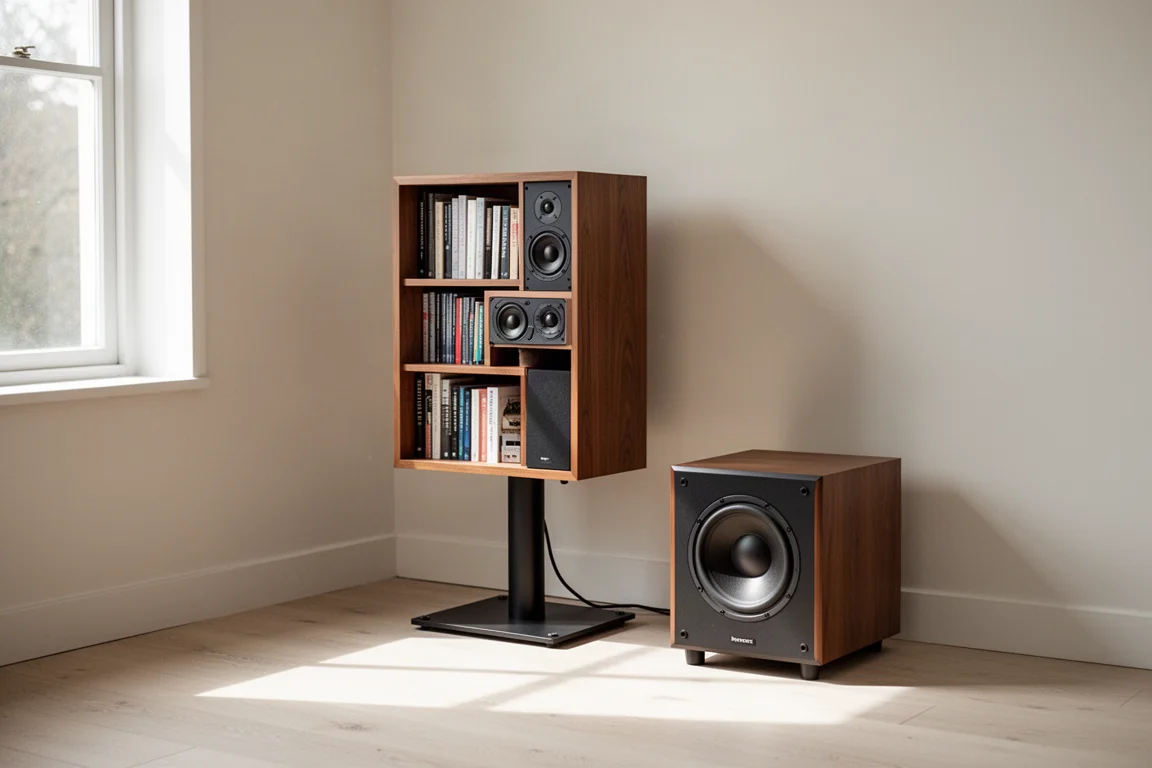
None of these points undermine the design. They simply define the conditions under which the M126BE performs at its best, and those conditions are easy to meet in a normal listening room.
Placement and Amplification Notes
Placement has a measurable effect on this speaker. Aimed directly at the listening position, the M126BE delivers its best balance. Angling it no more than about 10 degrees off axis keeps that balance largely intact. A 30-degree off-axis setup, where the speakers face straight into the room, produces a high-frequency roll-off and roughly a 1 dB discontinuity through the midrange, which is why on-axis placement is the recommended approach.
Vertically, stay within a few degrees of the tweeter axis. The crossover region around 1.7 kHz is where the response changes most as you move above or below that line. On the amplification side, the minimum impedance of about 4.9 ohms means an AVR can drive these speakers, so there is no need to assume that a premium speaker requires premium separates.
Buying Advice
If the budget is available and the priorities are imaging, neutrality, and a wide soundstage, the M126BE is a genuinely satisfying speaker and an easy one to live with once it is set up correctly. It is also worth being clear-eyed about value. This is not a value proposition in the usual sense. The step up from the Revel M106 costs roughly $2,000 more, and the improvement, while real, does not scale with that difference.
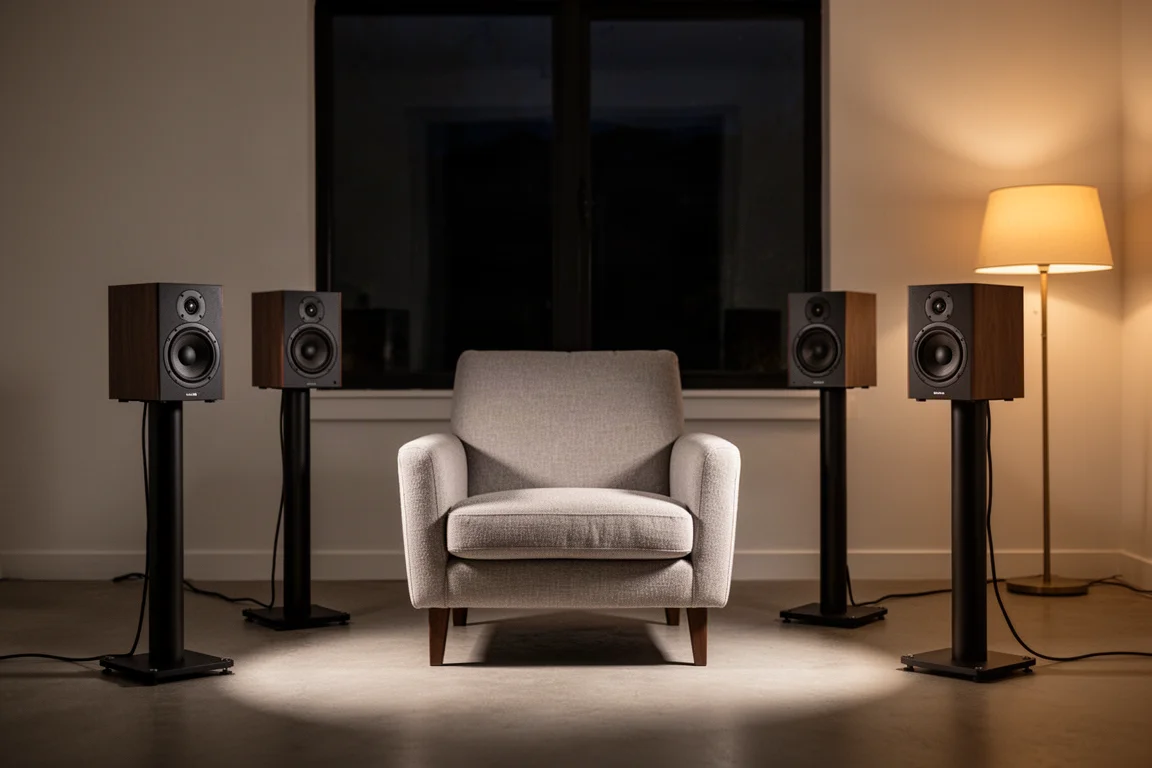
A sensible approach is to budget for the subwoofer and the room treatment or placement effort at the same time as the speakers themselves, because the M126BE only delivers its best when those pieces are in place. Buyers who already own a capable subwoofer and can position the speakers on axis will get the most from the investment. Buyers who want one pair of speakers to cover the full range without support should look elsewhere.
Conclusion
The Revel M126BE is a very good speaker with a specific personality. Its wide radiation pattern and mostly neutral balance produce a soundstage that extends far beyond the cabinets, and its diffraction behaviour smooths out in a real room. Bass reaches about 50 Hz, so a subwoofer remains necessary, and the speaker rewards careful on-axis placement.
At around $4,400 per pair, it is a premium purchase that delivers refinement and engineering rather than extra low-frequency weight. For listeners who value immersion, imaging, and tonal honesty, and who are prepared to set the speaker up properly, it is a compelling choice. For anyone chasing maximum bass per dollar, the same money is better spent elsewhere.
Product link
View more details for Revel M126BE
This product is mentioned in the review. Check the specifications, options, and compatibility before buying.
View more details for Revel M126BEFurther reading
Related Reviews
Bookshelf Speakers
Acoustic Energy A100 Mark II Review: A Compact Standmount With an Expansive Soundstage
The Acoustic Energy A100 Mark II brings clarity, natural tonality and a wide soundstage to an entry-level standmount, with a few setup details worth knowing first.
Bookshelf Speakers
Acoustic Energy AE-100 Mark II Review: Compact Bookshelf Speakers With Standout Imaging
A compact British two-way bookshelf speaker with deep, layered imaging, fast bass, and a slight treble lift to weigh against a crowded $500 field.
Bookshelf Speakers
Acoustic Energy AE100 MK2 Review: Measured Performance and Four Alternatives
A close look at the Acoustic Energy AE100 MK2 bookshelf speaker, what its measured performance reveals, and four alternatives with different trade-offs.