Floorstanding Loudspeakers
Revel F328BE vs Perlisten S7T: Two Flagship Towers Compared
A close comparison of two large beryllium-tweeter towers, covering bass extension, off-axis behaviour, build quality, and whether the price gap is worth it.
Introduction
The Revel F328BE and the Perlisten S7T are both large floorstanding towers built around beryllium tweeters and serious dynamic capability, but they sit in different price classes and follow different design philosophies. The Revel Performer BE flagship lists at $17,600 a pair and is frequently discounted to around $12,000. The Perlisten S7T lists at $22,000 a pair.
Both have been used as long-term references for years, and they were recently brought into the same room for a direct switch comparison. The room is a well-designed family room rather than a treated studio, with an RT60 decay time of roughly 750 to 780 ms and a diffusion wall that helps control the reverberant character. The towers were driven by the same integrated amplifier, rated at 90 watts per channel into 8 ohms and close to 300 watts per channel into 2 ohms, and switched through a selector that does not level match.
That detail matters, because sensitivity between the two is very close. Rated figures are 91 dB for the Revel and 92.2 dB for the Perlisten, and sweep tones showed the two within about half a dB of each other in practice, with the Revel measuring slightly higher than its own rating. The differences described below come from the speakers themselves, not from a volume advantage.
How These Two Towers Compare
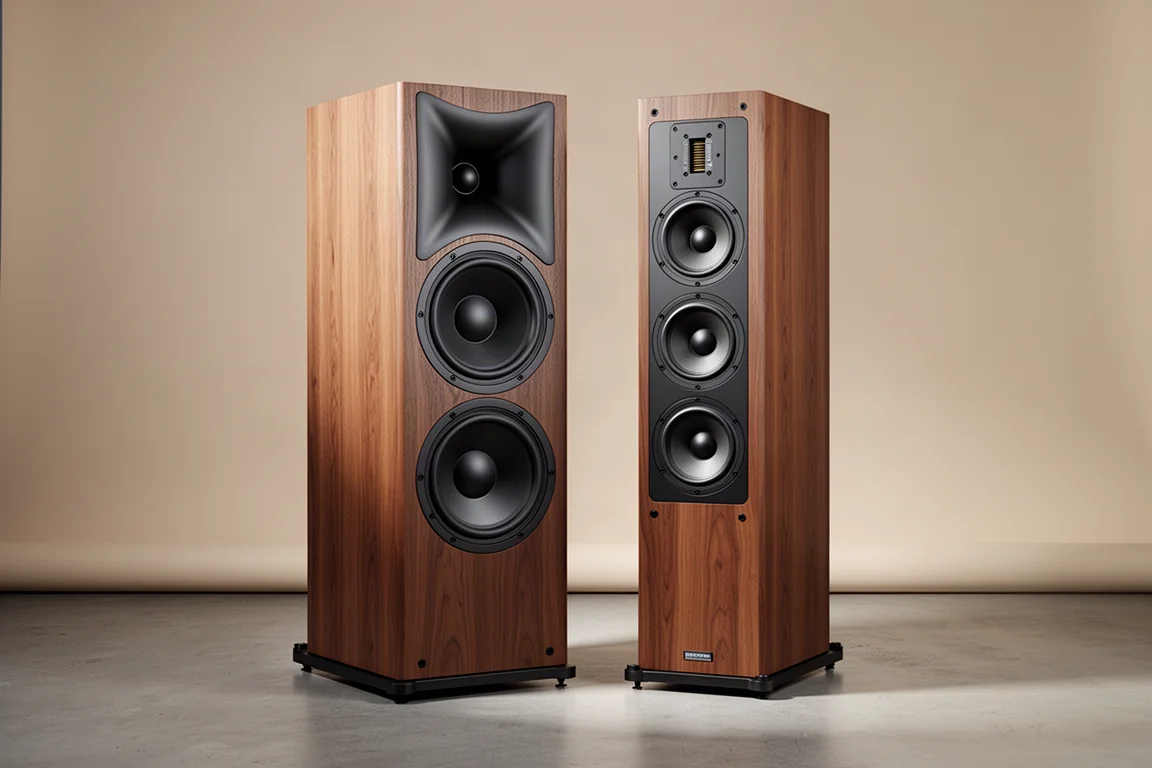
The Revel F328BE is the flagship of the Performer BE range and now occupies the spot once held by the Salon 2 in the lineup. It is a three-way design with crossover points at 240 Hz and 2.1 kHz, using three 8-inch aluminum ceramic composite woofers, a 5.25-inch midrange in the same ceramic composite aluminum material, and a 1-inch beryllium tweeter with an 85 mm magnet mounted in a sixth-generation aluminum composite waveguide. The cabinet is bi-ampable, uses dual rear ports, stands 51 inches tall, and weighs 112 lbs. Rated sensitivity is 91 dB at 2.83 V per meter, and rated frequency response runs from 26 Hz to 40 kHz. The rated impedance is listed as 8 ohms, though it measures closer to 4 ohms in practice.
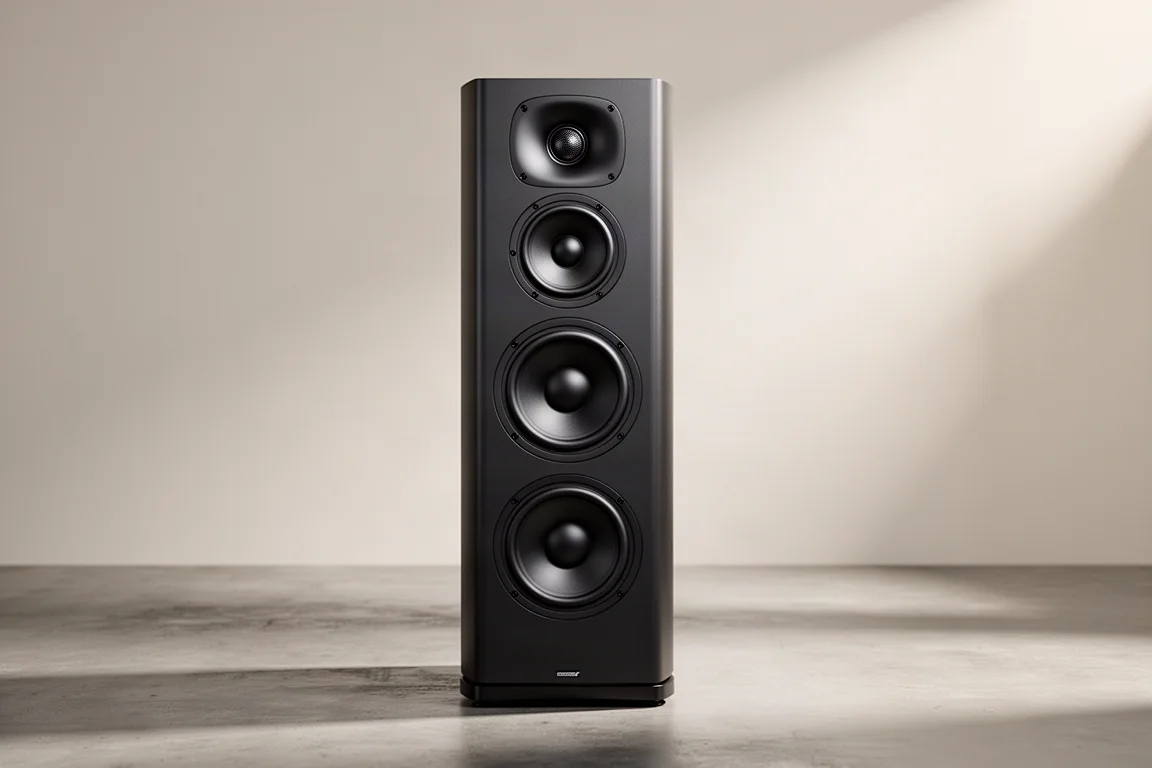
The Perlisten S7T is a four-way tower that can run either ported or sealed, using port plugs to change modes. It lists at $22,000 a pair and uses four 7-inch TeXtreme woofers, dual 2.1-inch TeXtreme midranges, and a 1.1-inch beryllium tweeter housed in its own waveguide as part of the DPC directivity pattern control array. That array works with the woofers as part of a beam-forming approach that narrows vertical dispersion, projecting more direct sound toward the listening area and reducing the influence of the room. Sensitivity is rated at 92.2 dB into a 4 ohm load, frequency response is rated at 22 Hz to 37 kHz at the minus 10 dB points, or 32 Hz to 37 kHz in sealed mode, and maximum output is specified at 117 dB peak with second and third order harmonic distortion below 2 percent. It carries THX Dominus certification, which is rare among tower speakers. Crossover points sit at 500 Hz, 1.1 kHz, and 4.4 kHz.
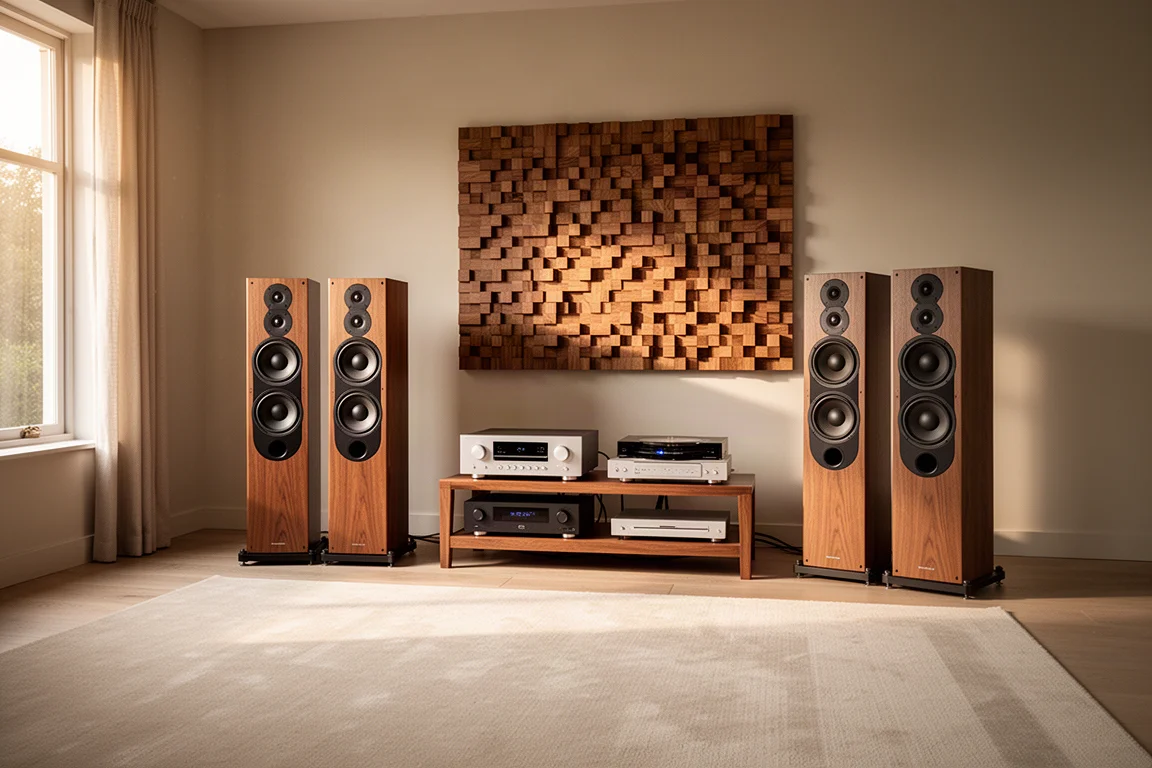
Physically, the two are close in height at 51 inches, but the proportions differ. The Revel is wider at 13.5 inches against 9 inches for the Perlisten, and deeper at 17.6 inches against 15.7 inches. Despite the smaller cabinet, the Perlisten is the heavier speaker at 122 lbs versus 112 lbs, which reflects the rigidity of its baffle and cabinet construction. Both need real space around them and an amplifier that stays comfortable into low impedances.
Revel F328BE: Performer Series Flagship
The Revel’s design is built around the idea that off-axis performance should closely track on-axis performance. The sixth-generation waveguide is there to give a smooth transition between the midrange and the tweeter, and the goal is consistent directivity so that early reflections in a room stay tonally similar to the direct sound. The three 8-inch woofers and the two large rear flared ports handle the low end, and the cabinet is braced well enough to keep the drivers working cleanly.
In listening, this produces a broad and relaxed presentation. Vocals come through clear and effortless, with a neutral tonal balance that does not tip into brightness or thickness. Bass is present and well behaved, and the overall character is easy to live with across a wide range of material. Detail retrieval from the beryllium tweeter is strong, and background information in well-recorded vocal tracks comes through without any hardness.
The trade-offs are specific rather than general. Maximum output is not specified by the manufacturer and the speaker is not THX certified, and the low end drops off steeply below 25 Hz. For anyone who wants genuine sub-bass weight, the Revel really wants subwoofers in the system rather than relying on the towers alone. Its rated 8 ohm impedance also understates the real load, so amplifier quality matters more than the spec sheet suggests.
Perlisten S7T: Directivity Control and High Output
The Perlisten S7T takes a different route. The DPC array and beam-forming approach give it a level of vertical dispersion control that normally requires a large compression horn driver, but without the forward or shouty character that horns can show in smaller rooms. The result is a speaker that combines high sensitivity, controlled directivity, and very high clean output in one package.
That output capability is the headline. A 117 dB peak rating with distortion held below 2 percent at second and third order harmonics, along with THX Dominus certification, puts the S7T among a small group of towers that can genuinely hold their composure at high listening levels. The four-way topology and the flexibility to run ported or sealed add further control over how the speaker behaves in a given room, with sealed mode trading some low-frequency extension for a gentler roll-off.
Build and parts quality are a clear step up as well. The crossover uses metallized high-power resistors mounted on standoffs rather than sandcast types, with tight 1 to 2 percent tolerance components throughout. For a passive design, the execution is about as refined as it gets. There is also an LE version at roughly $50,000 a pair, which adds an all-aluminum front baffle that acts as a heat sink, a retuned crossover, a slightly wider cabinet with more internal volume, and drivers with higher Xmax and more motor force.
Listening Notes: Vocals, Tonality, and Detail
Vocal and acoustic material made it clear that both speakers are genuinely excellent. On a detailed reference vocal recording, both towers resolved the small background noises and studio ambience in the track, and both conveyed the singer’s tonality accurately without sounding forward or bloated. The beryllium tweeters in both designs are revealing and precise, and neither speaker made well-recorded voices sound harsh.
The differences were about focus rather than balance. The Revel presented the performance in a broad, open way, with a clear and effortless voice and good bass presence underneath. Switching to the Perlisten brought a more intimate, locked-in quality to the same material, with acoustic guitars more crisply delineated and transients a little better defined. On an acoustic reference track, the Revel sounded full and tonally correct, while the Perlisten added deeper and cleaner bass extension and sharper separation between the instruments.
It is worth being honest about how large these gaps are. Listening to the Revel alone, the presentation is completely satisfying and nothing feels missing. The extra focus and definition from the Perlisten only became obvious when switching directly between the two in the same room, on the same material, at the same level.
Listening Notes: Dynamics, Bass, and High Volume
Dynamic electronic material exposed the biggest gap. On a dense, bass-heavy track with heavy stereo effects, the Revel sounded loud, dynamic, and enjoyable, with all the panning effects and deep hits intact. The Perlisten took the same track further: bass was deeper, tighter, and more physical, and as the volume rose it kept its composure instead of beginning to smear fine detail. The Revel never distorted or sounded bad, but the Perlisten stayed more focused and delineated as the level climbed.
Measurements support what was audible. At the main listening position the two speakers track fairly closely, but the Perlisten holds roughly 8 to 10 dB more output between 24 Hz and 17 Hz. That advantage is felt as much as heard on demanding material.
The differences also change with volume and with where you sit. At low listening levels the gap between the two narrows considerably, and it is at high levels that the Perlisten pulls clearly ahead. Off axis, the Perlisten’s high frequencies keep more composure and roll off less sharply as you move the microphone or your head, which is exactly what the beam-forming design is intended to do. Stand up well above the tweeter height and the Perlisten’s top end drops off by design, whereas the Revel’s tweeters sit closer to standing ear level and hold their treble in that position. For casual listening while moving around the room, the Revel’s behaviour can actually be preferable. For a fixed seat in the sweet spot, the Perlisten is the more precise instrument.
One practical note on setup: in that room the Perlisten’s tweeter height sat slightly low for the listening position at roughly 12 to 13 feet away, and raising the front of the cabinet with isolating feet, combined with its existing tilt, aligned the array with ear height and produced excellent imaging.
Build Quality, Grilles, and Setup
Build quality is where the two diverge most sharply. The Revel is well made, with a nicely finished top plate, but it is not class leading at its price. It has no outriggers, just a plinth base with basic spikes that looks generic for a speaker of this caliber, and the cabinet and internal parts do not reach the standard set by some newer competitors.
The Perlisten is a different story. The baffle is thick and extremely rigid, the driver complement is beautifully executed, and the overall assembly feels like a genuine flagship product. The crossover work in particular is exceptional for a passive design, using high-power metallized resistors on standoffs and tight tolerance parts rather than the sandcast resistors found in the Revel.
Grilles are a weak point on both, though in different ways. The Revel ships with a flimsy plastic grille that looks and feels like something from a two or three thousand dollar pair of speakers, which is disappointing at this price. The Perlisten grilles are a paid upgrade option, and while they are metal rather than plastic, they cover the four drivers but not the tweeter array, which some buyers will find visually awkward. Neither grille is essential, and both speakers look better without them.
Setup is simpler on the Revel. The Perlisten’s ports sit on the bottom of the cabinet, so switching between ported and sealed modes means flipping the cabinet over and unscrewing the bottom plate to fit the port plugs. It is a sensible design decision given how long the port tubes are and how low the speaker is tuned, but it is a job to do before the speakers go into their final position, not after.
Room Behaviour and Subwoofer Support
Both speakers were evaluated in a lively room with an RT60 around 750 to 780 ms, and the Perlisten’s directivity control gave it a real advantage there. By projecting more direct energy at the listening area and reducing the relative contribution of the room, it delivered more consistent results from seat to seat. The Revel still sounded good from every seat, but it was less locked in, and it depended more on the room behaving itself.
Subwoofers are worth considering with either speaker. The Revel rolls off sharply below 25 Hz, so a bass-focused listener will want to supplement it. The Perlisten digs deeper, but it still benefits from additional low-frequency sources, and there is a second reason to add them: in this system, placing subwoofers behind the wall eliminated a boundary interference dip in the 30 to 40 Hz range that came from the distance between the speakers and the wall. Running the towers full range alongside two subwoofers produced four bass sources, deeper extension, more slam, and consistent low-frequency response at every seat.
If you go this route, match the subwoofers to the class of the speakers. Both Revel and Perlisten build high-performance subwoofers, and there are other capable options at this level, but a budget subwoofer will hold back either tower.
Buying Advice
The core question is simple. If the Revel F328BE can be found at around $12,000 a pair and the Perlisten S7T lists at $22,000, is the more expensive tower worth roughly $10,000 more?
Start with how loudly you listen and what your room is like. If you mostly listen at moderate levels, sit in a fixed seat, and are willing to add good subwoofers, the Revel delivers a neutral, broad, and genuinely satisfying presentation for considerably less money. Its forgiving character and wide listening window also suit rooms where people move around.
If you want maximum clean output, deeper and tighter bass, and directivity control that keeps performance consistent in a room that is not fully treated, the Perlisten’s advantages are real and audible, not marketing claims. Its build quality and crossover execution are also a clear step above, and the availability of the S7T LE at around $50,000 a pair shows how far the platform can be pushed. Across two different price classes, the honest summary is that you get what you pay for.
A practical middle path exists too. Buy the Revel and invest the difference in two high-quality subwoofers plus room treatment, and you address its two weakest areas directly. Buy the Perlisten and you get more of the solution built into the speaker itself, with subwoofers still recommended but no longer carrying as much of the load.
Conclusion
Both of these towers are excellent, and owners of either should feel good about what they have. The Revel F328BE is a neutral, easygoing flagship that rewards a good amplifier and a well-chosen pair of subwoofers, and it remains one of the more attainable ways into genuine high-end tower performance. The Perlisten S7T is the more ambitious design, with deeper bass, higher clean output, better off-axis consistency, and build quality that justifies its position near the top of the market.
The decision comes down to priorities rather than absolutes. If you want the most performance per dollar and you are prepared to integrate subwoofers, the Revel makes a strong case. If you want the highest output, the most control, and the finest construction, the Perlisten earns its premium.
Further reading
Related Reviews
Floorstanding Loudspeakers
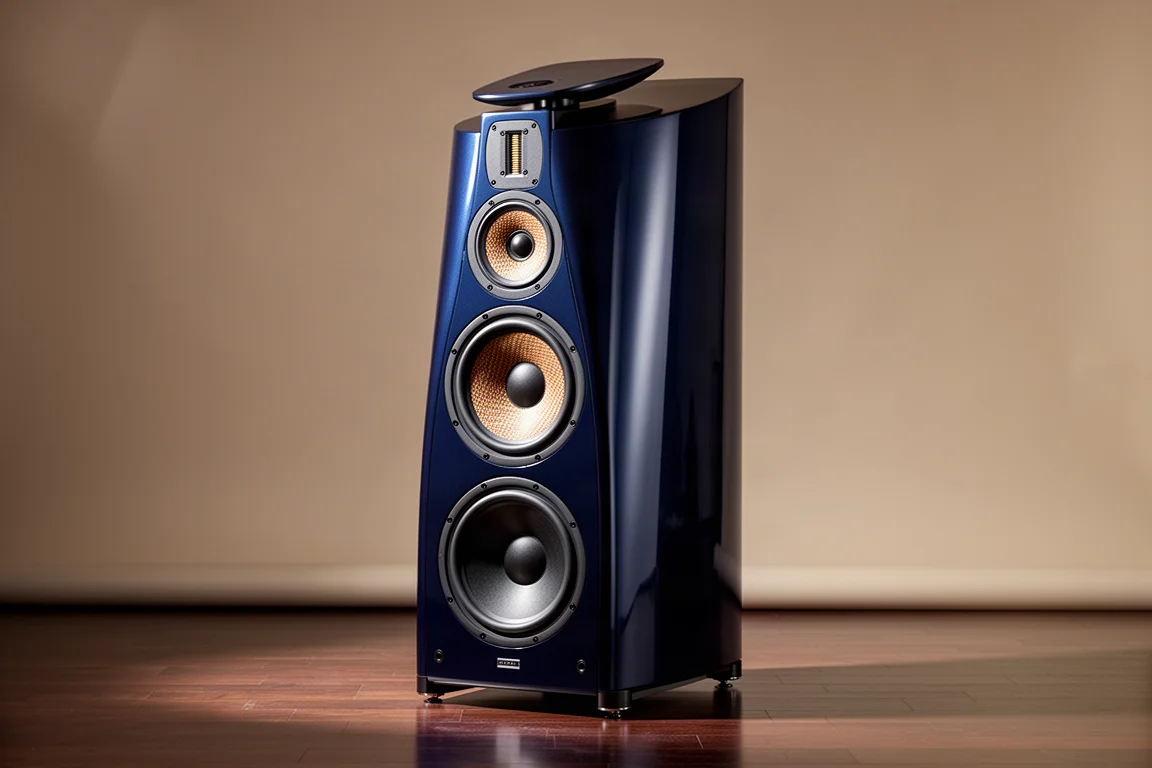
Acoustic Zen Crescendo Mark II Review: A 125 lb Full-Range Floorstander That Rewards Careful Amplifier Matching
A full-range floorstanding loudspeaker with dual 8-inch bass drivers, a transmission line cabinet and a D'Appolito ribbon tweeter array, plus how amplifier choice reshapes its character.
Floorstanding Loudspeakers
Bowers & Wilkins 801 D4 Signature: A Reference Loudspeaker Built for Scale
A detailed look at the Bowers & Wilkins 801 D4 Signature, covering its Signature upgrades, sound character, placement demands, and the amplification it needs to perform at its best.
Floorstanding Loudspeakers
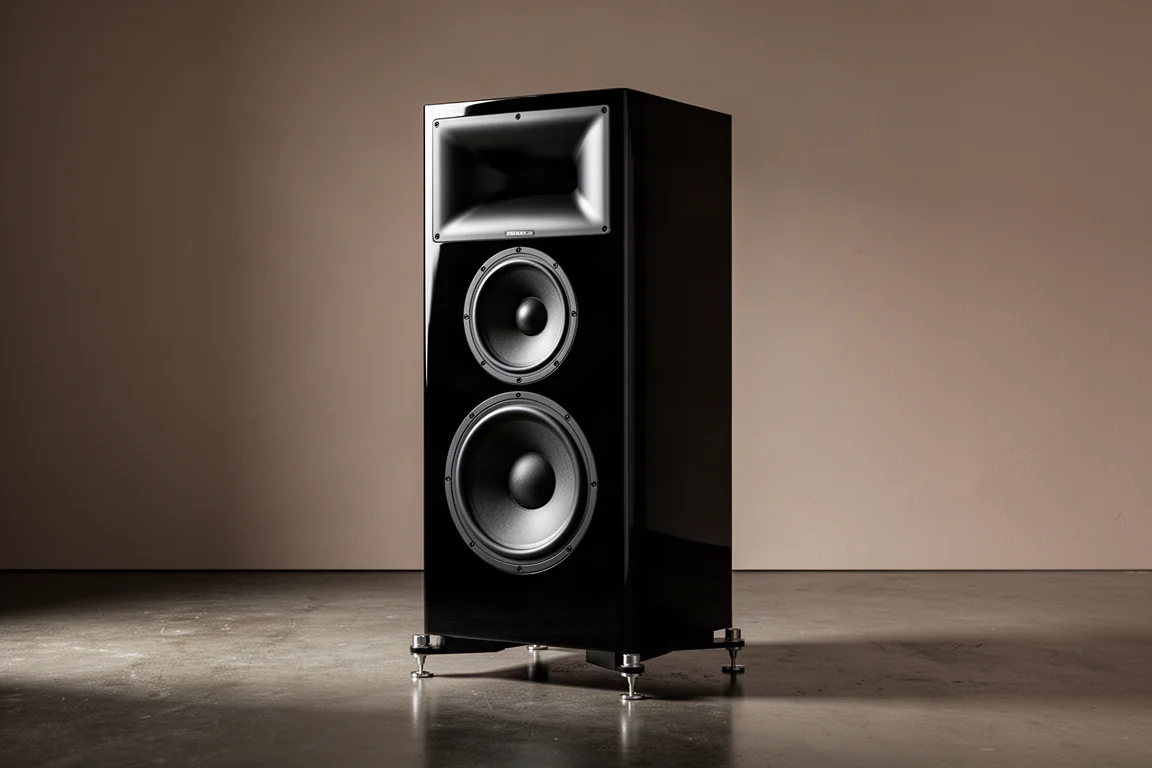
JBL Summit K2 Review: A $100,000 Flagship Loudspeaker Built Without Compromise
A detailed look at the JBL Summit K2, from its 15-inch woofer and triple compression driver array to how it sounds driven by a reference Mark Levinson system.