Bookshelf Speakers
Revel Concerta2 M16 Review: A Closeout Bookshelf Speaker Worth Buying
A closeout price near $693 a pair makes Revel's Concerta2 M16 one of the most interesting two-way bookshelf speakers under $1,000.
Introduction
The Revel Concerta2 M16 is not new, and it is not vintage either. It is a two-way rear-ported bookshelf speaker that has been on sale for roughly four or five years, and for most of that time it has occupied a slightly awkward position: good enough to be taken seriously, expensive enough to be overlooked. What changes the calculation is availability. Originally priced just under $1,000 per pair, the M16 is now on closeout at around $693 per pair, roughly 30 percent below its original list price.
That is a meaningful drop. At that price you are spending less than you would on a new pair from Klipsch, Polk, or ELAC, while buying into Revel, one of Harman’s more premium loudspeaker lines. The question worth answering is whether the M16 still earns a place in a modern system, or whether the discount is simply a clearance sale on an aging design. Having spent time with a pair in a real room, the answer leans firmly toward bargain, with a few honest caveats worth understanding first.
Who the Revel Concerta2 M16 Is For
The M16 suits listeners who value neutrality over excitement. Its midrange is uncolored and about as close to neutral as a speaker at this price gets, and its tweeter is deliberately restrained rather than bright. If your priority is long listening sessions without fatigue, across a wide spread of genres, this is the tonal profile you want.
It also suits buyers who want one speaker to handle two jobs. With a nominal impedance of 6 ohms and sensitivity rated at 86 dB, the M16 is not overly taxing on an amplifier or AV receiver, and it has performed well on both two-channel electronics and a home theater receiver. In a small to medium room, used for music and for movies, it makes a strong case for itself.
The less obvious fit is anyone chasing deep, physical bass or a dramatic, holographic soundstage. Those listeners should read the next two sections carefully before committing.
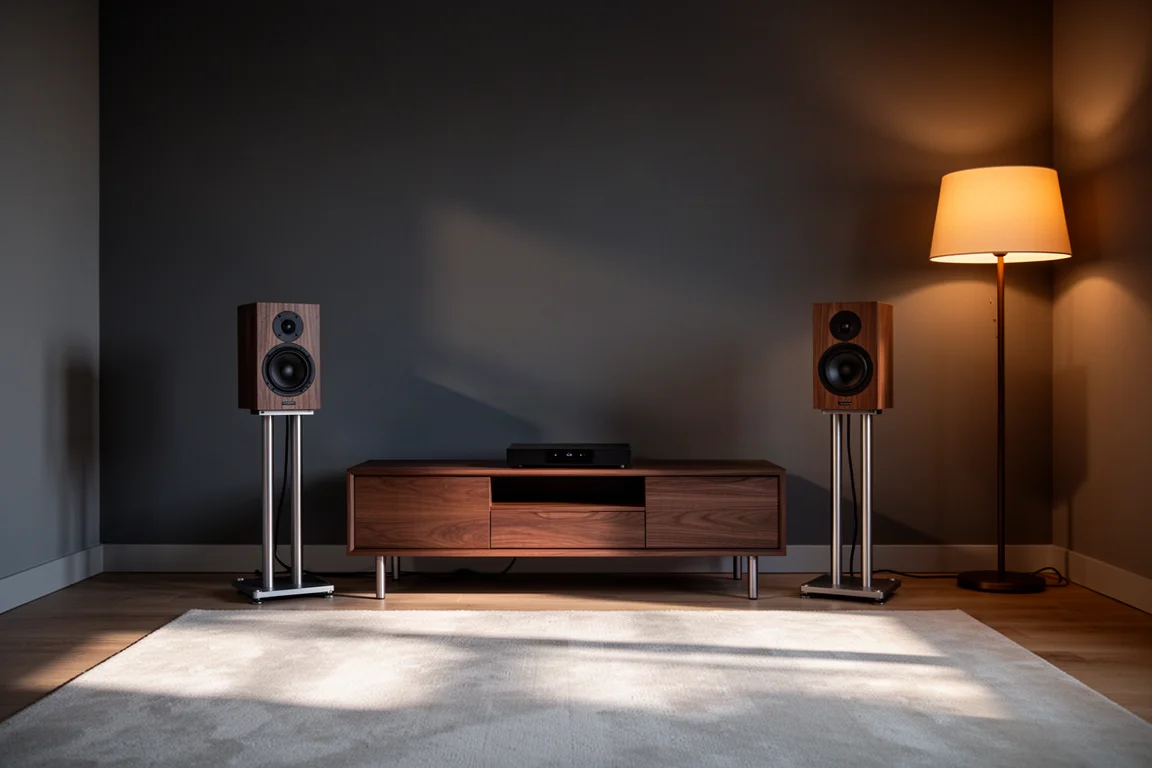
Room size matters more than usual here. Because the M16 is rear-ported, the closer you place it to the wall behind it, the more low-frequency reinforcement you will perceive. If the speaker initially comes across as a little light, moving it back toward the front wall is the simplest way to recover some warmth. If you want genuinely deep output, pairing it with a subwoofer is the more effective route.
Main Strengths: Neutral Mids and a Fatigue-Free Tweeter
The midrange is the strongest argument for this speaker. Vocals and instruments that live in that region sound correct, with no injected flavor and no obvious coloration. The presentation is neither forward and shouty nor laid back and recessed. It sits in near-perfect alignment with the front baffle, and it does not change character depending on the amplifier pairing or the volume you choose.
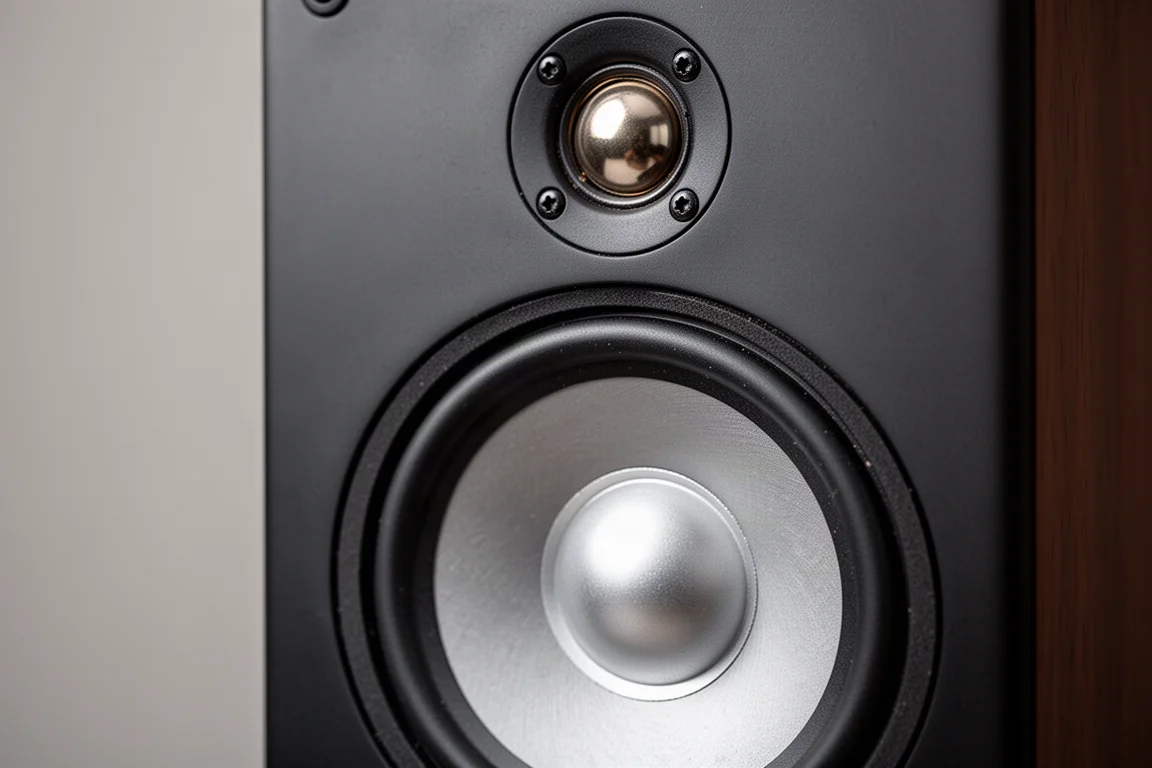
The one-inch aluminum dome tweeter is the other standout. Where some metal dome designs trade excessive energy above 20 kHz for brightness, the M16 rolls off gently from around 5 kHz instead. The result is high frequency output that stays airy without ever becoming tiring. It is one of the more listenable metal dome tweeters in this class, and it is a big part of why the speaker stays enjoyable hour after hour.
Bass quality is more interesting than bass quantity. The M16 does not try to sound fuller or richer than it actually is, a trait that often produces sloppy low end in budget bookshelf designs. Here the bass is lighter than some rivals but notably detailed and well articulated, and it never over-accentuates the low end to create a false sense of weight.
Sensitivity is worth a note. At 86 dB, the M16 is not difficult to drive, but if you are coming from a more efficient speaker rated at 89 dB or higher, expect to nudge the volume up to match your previous listening levels. Nothing about that should worry you, it is simply part of how this speaker behaves.
Where the M16 Holds Back
This is not a full-range speaker, and it should not be treated as one. Revel does not publish a conventional frequency response figure, and instead states that low frequency extension reaches as low as 45 Hz at minus 10 dB. In practice, output below roughly 50 Hz is limited. If you want deep, thunderous bass that reaches into the low 40s or lower, plan on budgeting for a subwoofer. For most genres at reasonable volumes, or in smaller rooms, most listeners will be satisfied without one.
Push hard on bass-heavy material and a small amount of cabinet resonance around the port becomes audible, giving the low end a slightly hollow rather than weighty character. It is a minor observation rather than a flaw, but it is there.
Soundstaging is the other area where the M16 stops short of elite status. Its strongest performance is between the speakers, where detail, delineation, and separation are at their best, and center imaging approaches reference level. Dispersion is not quite as good as some similarly priced speakers, and while sound does extend beyond the speaker boundaries, the presentation reads as studio monitor accurate rather than fully holographic.
Dynamically, the speaker is a touch reserved. It never lacks sonic contrast, but when a drummer is really laying into a kit, the last ounce of attack and snap is softened. Think of it as roughly 90 percent of the visceral impact some listeners crave, in exchange for the composure that makes the M16 so easy to live with across so many kinds of music.
Design, Placement, and System Matching
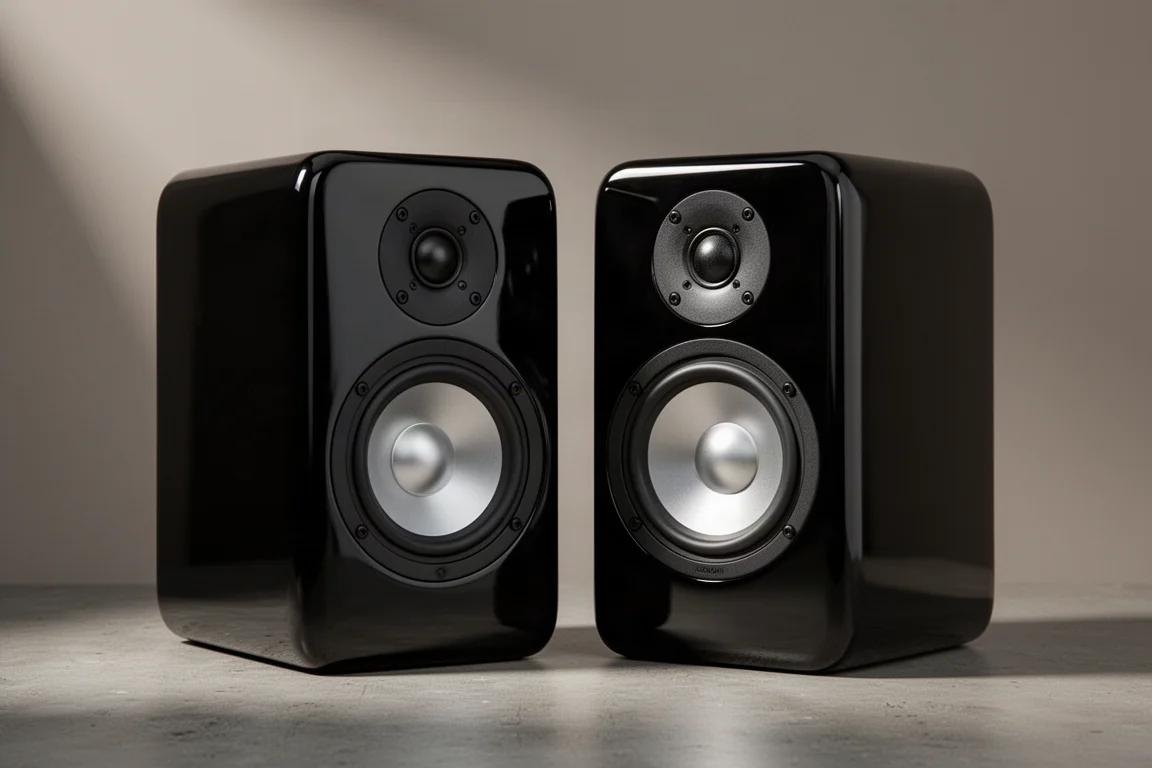
The M16 comes in two finishes, piano gloss black and piano gloss white. Gloss paint is not exotic, but the proportions are classic and the look has aged well. Four or five years after launch, nothing about the design reads as dated. It is the kind of speaker that disappears into a room rather than demanding attention.
It is also fairly clear where costs were managed. The binding posts could be higher quality, and the port feels a little plasticky. Neither affects performance, so they are easy to accept at this price.
Setup is simple. The M16 is not especially finicky about placement, though the rear port means wall distance is your main bass tuning tool. It was run on top of solid steel stands and partnered with a subwoofer crossed over at around 60 Hz for the deepest material. On the electronics side, it sounded good on a Marantz Model 40n and a Rotel 1592 MkII, and the biggest surprise was how well it performed on a Marantz 8015 AV receiver. That combination suggests the M16 can serve as both a home theater speaker and a two-channel speaker without giving up much either way.
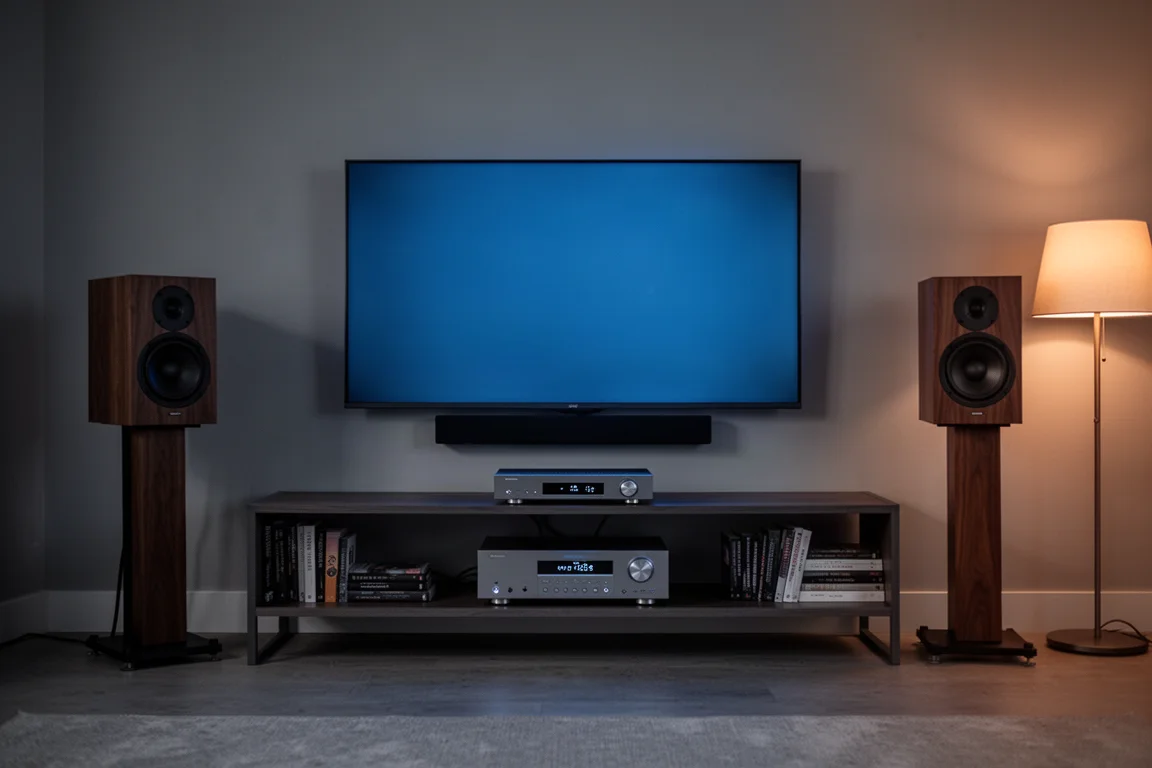
That flexibility is worth underlining for anyone building a single system around one pair of speakers. A speaker this neutral and this easy to drive makes the receiver or integrated amplifier choice far less stressful, because it is not imposing a strong character of its own on the rest of the chain.
How the M16 Compares With Other Bookshelf Speakers
The sub-$1,000 two-way category is crowded, so context matters. Against the Bowers & Wilkins 606 S2, the M16 is simply the better speaker. The B&W uses a metal dome tweeter as well, but the two could not sound more different, with the Revel coming across as far tamer and less energetic up top.
Against the Polk R200, it is genuinely close. On paper the two could be twins, and you would not go wrong with either. The M16 works as a worthy alternative if you want something a little different, or if you want to save some money, since it is currently the cheaper of the two. The R200 counters with more finish options.
Against the ELAC Debut Reference, the preference here is for the Revel’s sound, though the ELAC again offers more finish choices. Against the Wharfedale Evo 4.1, the comparison is tougher: the Evo is an excellent speaker in its own right, uses nicer materials, and looks better. The M16 takes the edge on versatility, since not every track gelled with the Evo’s tweeter. Against the original Klipsch RP-600M, which is also being cleared out, the Revel is the pick.
One comparison deserves a caveat. The Monitor Audio Bronze 100 has long been a favorite at its much lower price point, and it remains excellent value. Comparing it directly to the M16 is not quite fair, since until recently the two sat in very different price brackets. With the M16 on closeout, that gap has narrowed considerably, and the Revel is the one to choose if the budget allows.
Things to Consider Before Buying
The M16 is a passive speaker, so there is no firmware or software support to worry about, and nothing about the design depends on ongoing updates. Age simply matters less here than it would for almost any other piece of electronics.
What does matter is stock. This is a closeout, and closeout inventory does not last. If the price is the reason you are interested, that reason may expire. It is also worth noting that Revel has not signalled what comes next for the line, so there is no confirmed successor to wait for.
Two more practical points. First, budget for a subwoofer if deep bass or home theater rumble matters to you. Second, accept the finish limitations. Two gloss options is a reasonable range, but it is not the widest selection in this category.
Buying Advice
At its original asking price just under $1,000, the M16 was already a strong speaker and worth the money. At closeout pricing around $693 per pair, it becomes an outright steal, and one of the easier recommendations in the two-way bookshelf market right now.
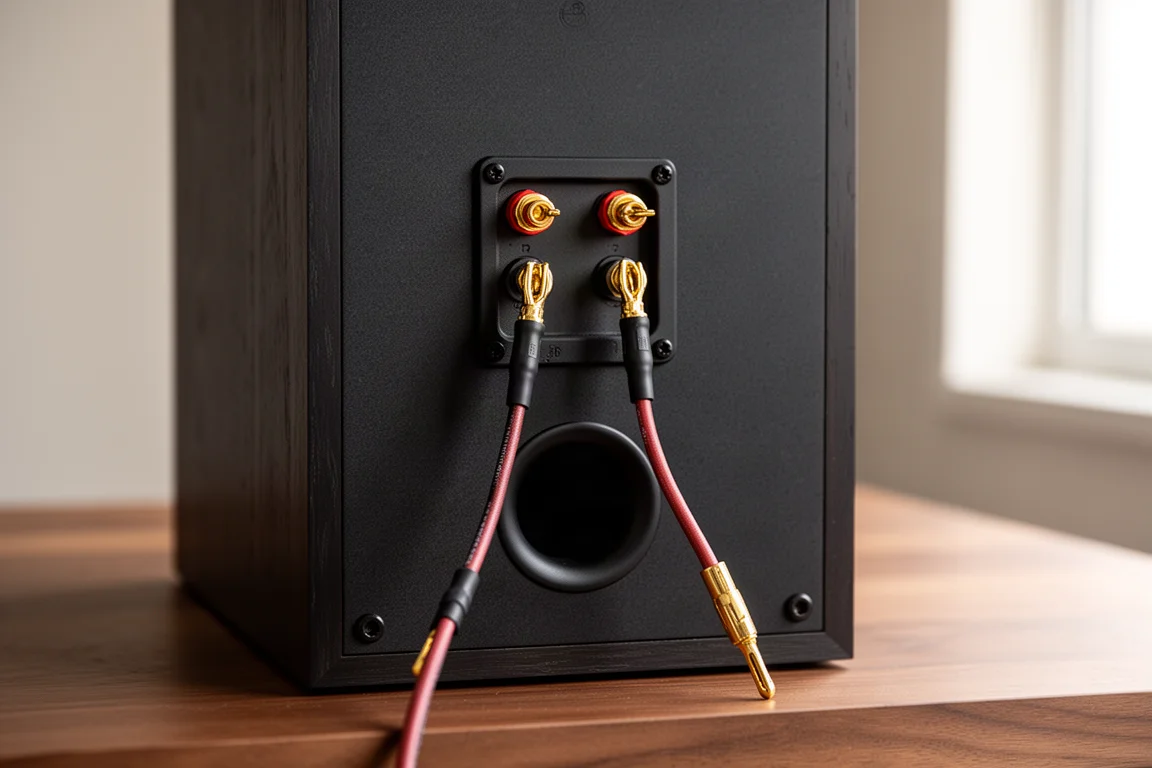
Pair it with a competent integrated amplifier or AV receiver, give it a solid pair of stands, and experiment with distance from the front wall to tune the low end to your room. Add a subwoofer crossed over in the 60 Hz region if you want the deepest material and movie soundtracks to land with real weight.
If you are shopping for a quality two-way bookshelf speaker under $1,000, it is hard to do better than the Revel Concerta2 M16. It is not the newest design on the shelf, but the fact that a four or five year old speaker still holds its own against newer arrivals, and in some cases beats them, tells you most of what you need to know.
Conclusion
The Revel Concerta2 M16 is a neutral, fatigue-free, genuinely versatile bookshelf speaker that was worth its original price and is exceptional at its current closeout price. Its limits are real and predictable: no deep bass without a subwoofer, a soundstage that favours accuracy over holography, and dynamics that stop just short of the very best. Everything it does well, it does with a composure that few speakers near this price can match.
If you want a speaker that flatters everything you play and stays comfortable for hours, and you can find a pair while the closeout lasts, this is an easy decision.
Product link
View more details for Revel Concerta2 M16
This product is mentioned in the review. Check the specifications, options, and compatibility before buying.
View more details for Revel Concerta2 M16Further reading
Related Reviews
Bookshelf Speakers
Acoustic Energy A100 Mark II Review: A Compact Standmount With an Expansive Soundstage
The Acoustic Energy A100 Mark II brings clarity, natural tonality and a wide soundstage to an entry-level standmount, with a few setup details worth knowing first.
Bookshelf Speakers
Acoustic Energy AE-100 Mark II Review: Compact Bookshelf Speakers With Standout Imaging
A compact British two-way bookshelf speaker with deep, layered imaging, fast bass, and a slight treble lift to weigh against a crowded $500 field.
Bookshelf Speakers
Acoustic Energy AE100 MK2 Review: Measured Performance and Four Alternatives
A close look at the Acoustic Energy AE100 MK2 bookshelf speaker, what its measured performance reveals, and four alternatives with different trade-offs.