Hi-Fi Speakers
Three Retro Speakers Compared: Wharfedale Linton vs Klipsch Forte IV vs Emotiva LB12
A practical comparison of three heritage-inspired speakers, covering sound character, room placement, amplifier matching, and where each one makes the most sense.
Introduction
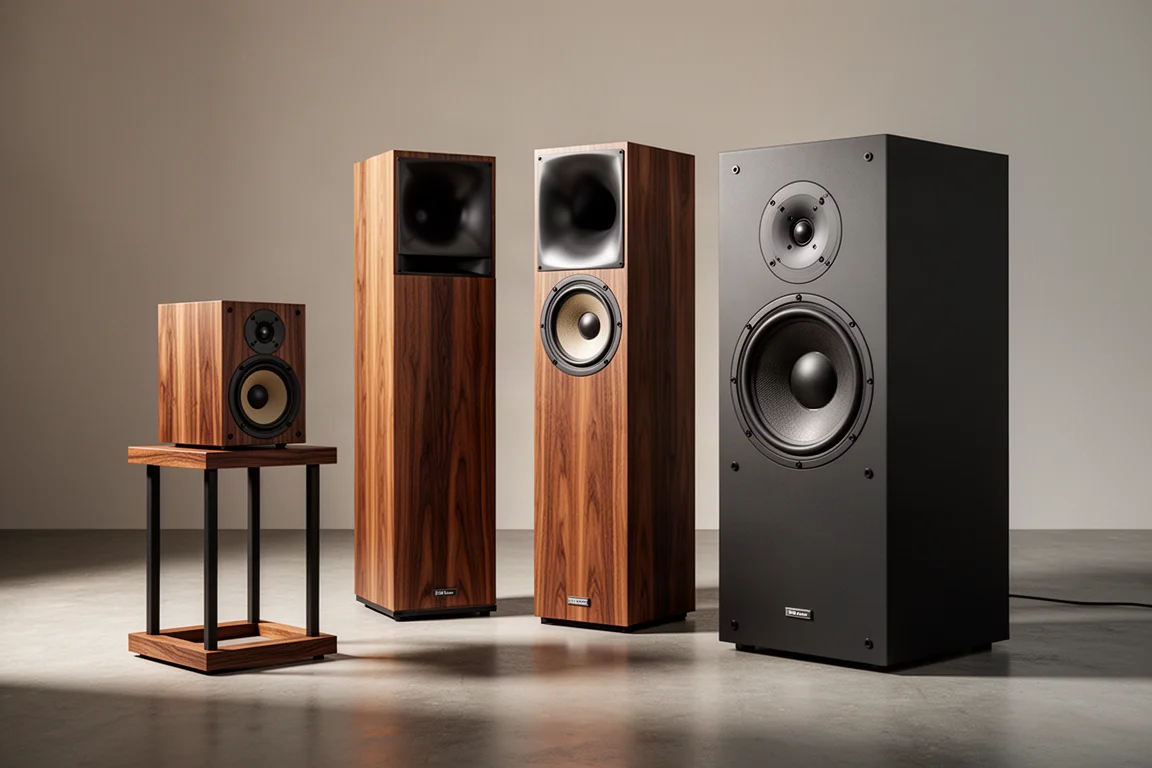
Heritage-inspired speakers have quietly become one of the more interesting corners of the hi-fi market. The Wharfedale Linton, the Klipsch Forte IV, and the Emotiva LB12 all borrow from older cabinet shapes and older design philosophies, and all three chase a similar retro aesthetic. Where they part company is in how they sound.
That difference is larger than the shared styling suggests. These three speakers do not behave like variations on a single theme, which means the useful question is not which one wins outright, but which one suits a specific room, amplifier, and set of recordings. This comparison covers the background behind each brand, the hardware each speaker brings, and the listening notes that matter most before buying.
How These Three Retro Speakers Were Evaluated
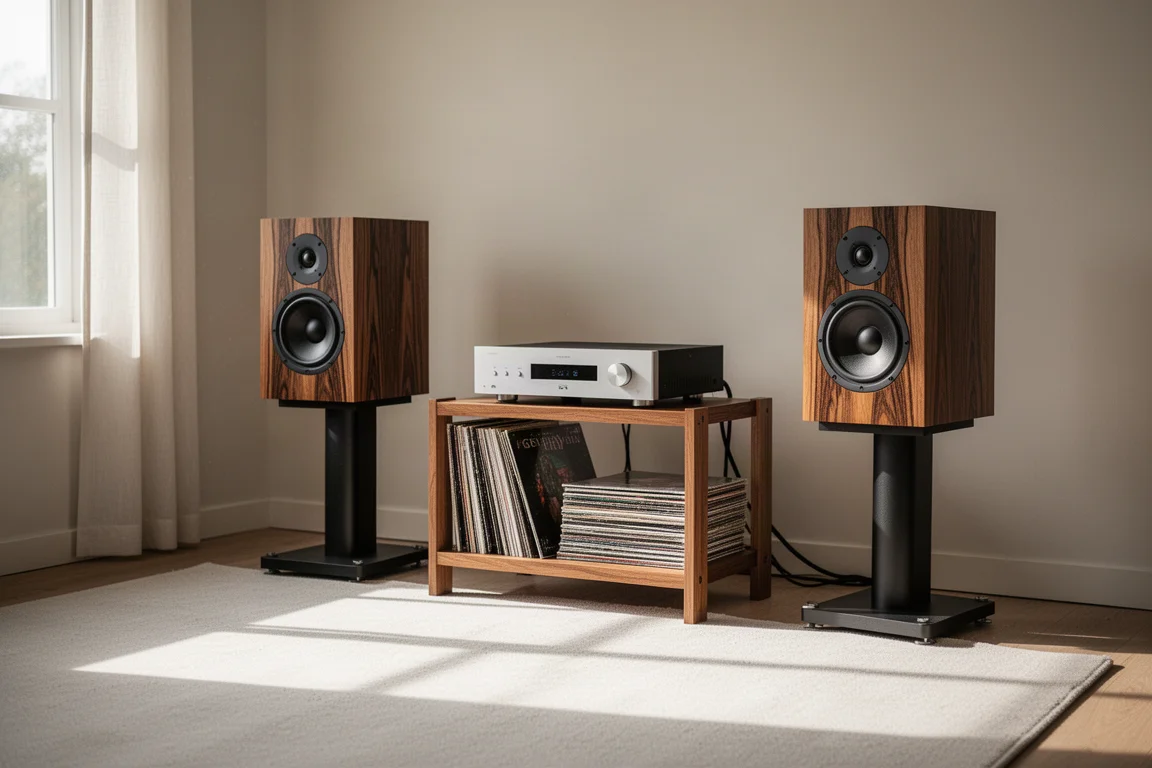
All three speakers were run through the same reference chain: an Advance Paris A12 Apex integrated amplifier fed by a Cambridge Audio CXN100 SE streamer over balanced connections. Listening levels stayed between roughly 75 and 85 dB, with loudness compensation switched off. Two tracks carried most of the evaluation. “Hello” by Adele was used for midrange body and upper-end air, because the vibrato in that recording is revealing above roughly 8 kHz. “Wherever I May Roam” by Metallica was used for dynamics and treble tonality, since that recording is deliberately hot on cymbals.
That narrow track selection was a practical choice rather than a limitation of the speakers. Two well-chosen recordings expose the areas where heritage designs diverge most: midrange weight, treble behaviour, and how much low-frequency authority the cabinet can actually deliver.
One specification worth noting up front is sensitivity. All three speakers are rated above 90 dB, which means a lower-powered amplifier, including a modest Class A or tube design, can drive them to healthy volume. That does not mean every amplifier will sound identical through them, only that raw power is less of a barrier here than it is with many modern low-sensitivity designs.
Wharfedale Linton: Heritage Warmth at the Lowest Price
Wharfedale’s history starts in 1932, when Gilbert Briggs and his wife Doris built speakers in the cellar of their home, with Doris hand-winding coils beside him. The company took its name from the valley the house sat in. Awards followed in 1933, real demand arrived around 1936, and the Second World War temporarily redirected the factory toward radio parts. In the mid-1940s the company tackled a persistent problem: a single driver trying to reproduce everything from bass drums to cymbals sounded muddy, so Wharfedale split the work and helped establish the two-way speaker. Later decades brought ceramic magnets, rolled surrounds, and cone mapping technology, then the Diamond series in 1981, which became a best-selling budget speaker. IAG acquired the brand in 1997 and moved manufacturing to China while keeping research and development in the UK, and by 2026 some flagship production had returned to the UK.
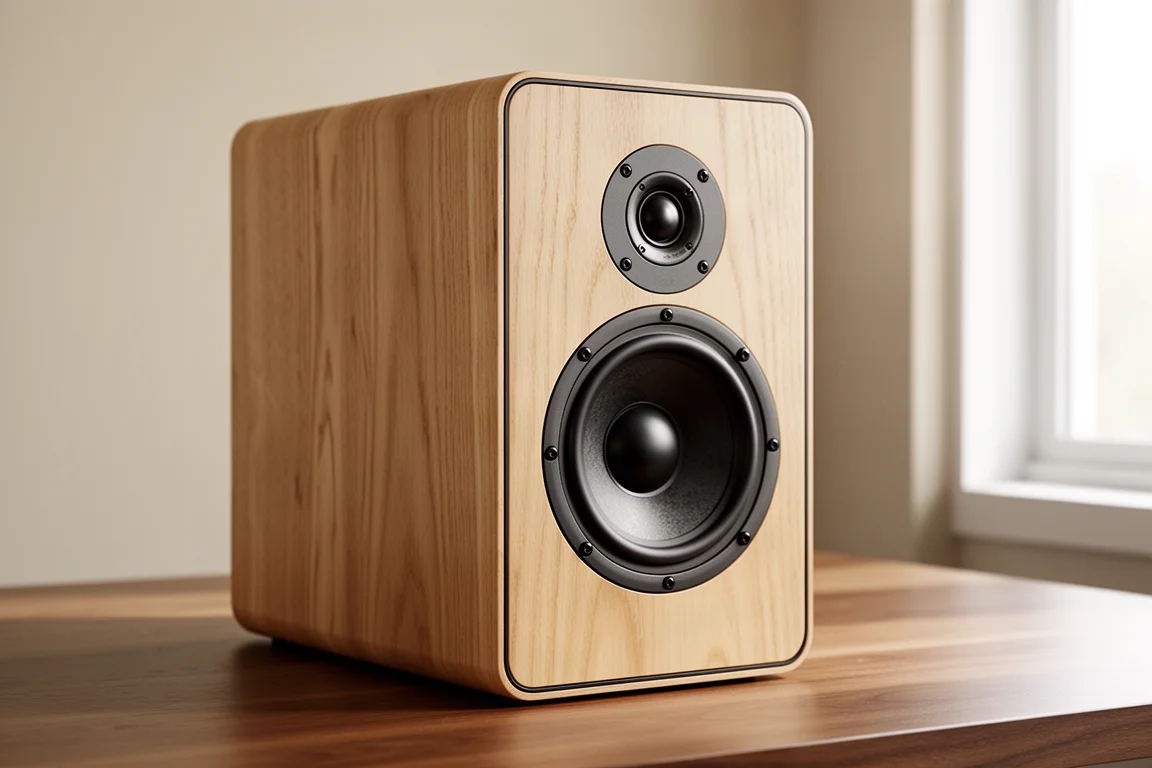
The Linton itself arrived in 2019 with a retro cabinet, real wood veneer, and modern Kevlar drivers. At $1,999 per pair it is the most affordable speaker in this comparison, and matching stands are included in the price. The driver complement is an 8-inch Kevlar woofer, a 5-inch Kevlar midrange, and a soft-dome tweeter, with sensitivity rated at 90 dB into a 6-ohm nominal load.
Sonically, the Linton is the warmest of the three. Its midrange and top end are noticeably rolled off, which costs some definition and clarity but makes poorer recordings far easier to live with. Imaging and soundstaging are genuinely strong, though the reduced top-end and midrange clarity makes the presentation feel slightly less locked in than the other two. Bass output is the most modest here, which follows from the smaller woofer and the absence of a passive radiator. The Linton also responds well to tone controls if a listener wants a little extra lift at the extremes.
Klipsch Forte IV: Horn-Loaded Character With Real Presence
Klipsch’s story begins with Paul Klipsch, a ballistics expert who also used sound waves to locate oil, and who served as a US Army major stationed in Hope, Arkansas. Working in the 1940s, he concluded that amplifiers of the era were simply too low-powered, so instead of chasing more power at the amplifier end he addressed the speaker instead. The result was a large horn loaded into a large wooden cabinet and pushed into the corners of a room. After the war he bought the buildings and grounds in Hope and began producing those horns in earnest. The company has been building variations on that horn design for roughly 80 years, and Klipsch was eventually inducted into engineering halls of fame alongside names such as Thomas Edison and the Wright brothers. The Forte arrived in 1985 as a more domestically practical take on the same thinking.
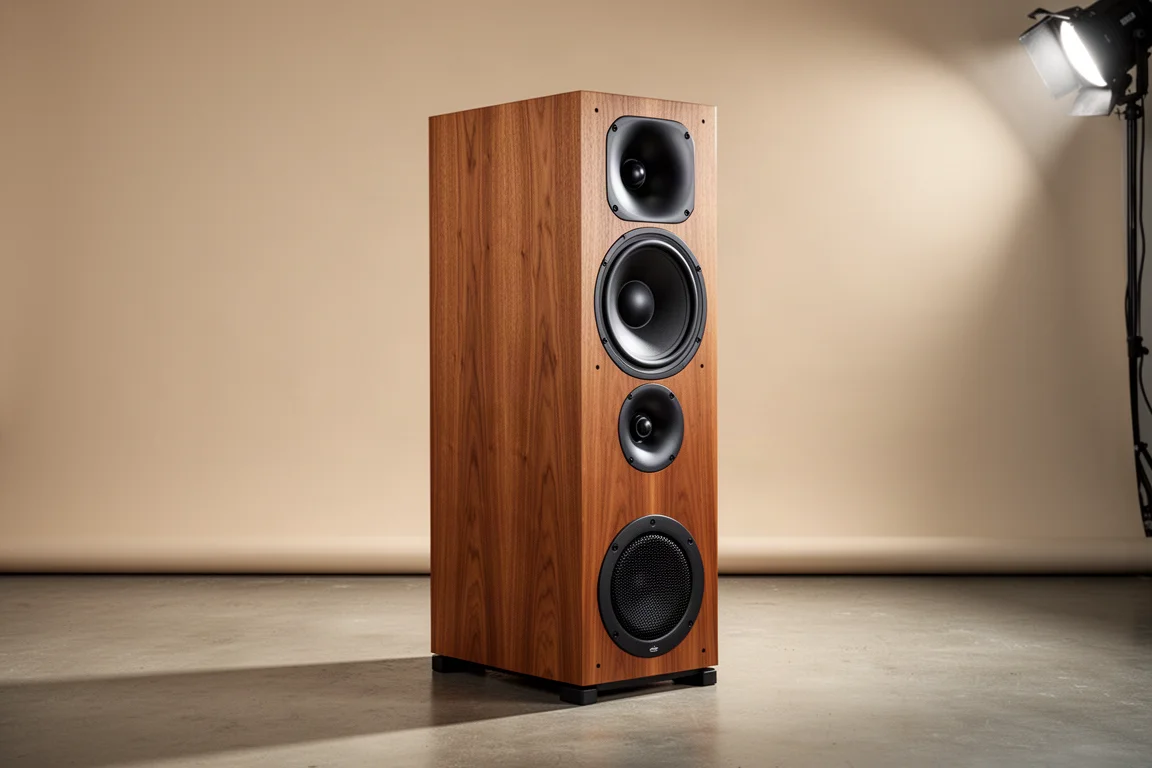
At $5,499 per pair plus tax, the Forte IV is the most expensive option here, and its design is the most unusual. It pairs a horn-loaded tweeter and a horn-loaded midrange with a 12-inch woofer, and adds a 15-inch passive radiator on the back of the cabinet.
Placement is where the Forte IV separates itself most clearly. The cabinet is deliberately narrow and designed to sit close to a wall, where it gains room reinforcement. That makes it unusually forgiving of smaller spaces, and it also hands the owner a simple tuning tool, because moving the speaker closer to or further from the wall changes how much low-end weight it produces.
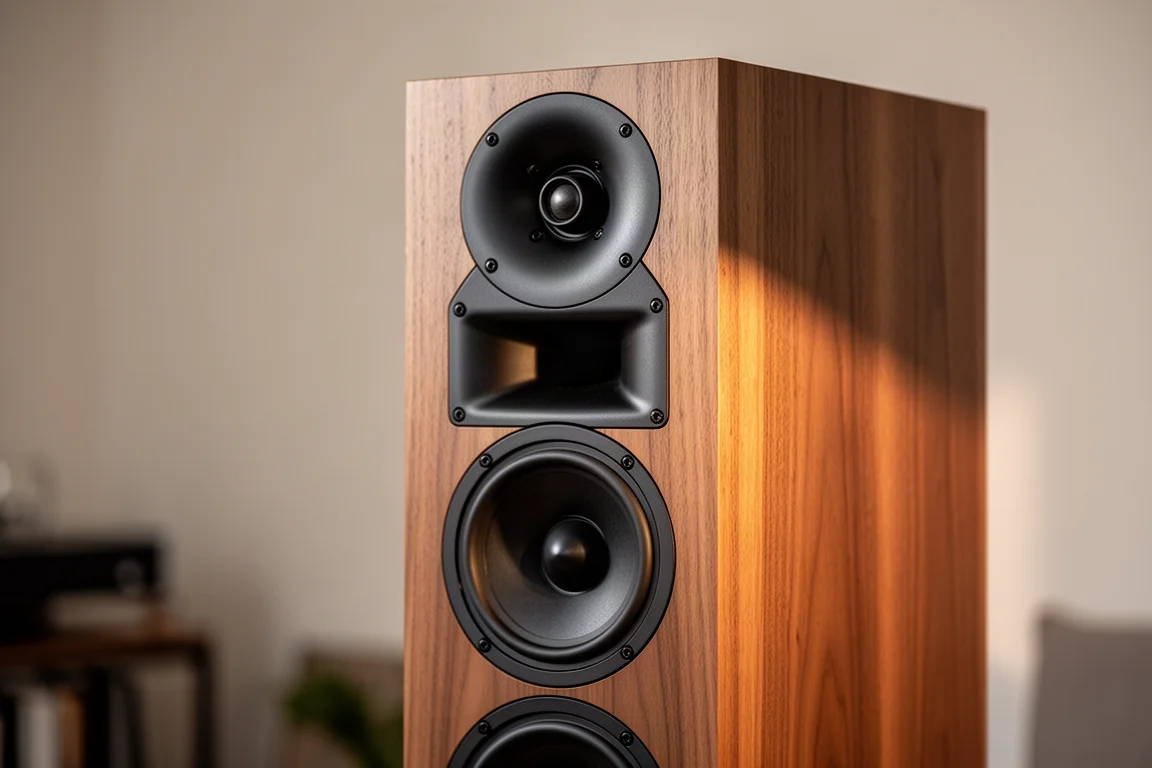
In listening, the Forte IV was the most captivating of the three through the midrange. Adele’s vocal sat further forward of the band, with vibrato and impact that felt like a step up from the other two. The lower mids carry more weight than many other Klipsch designs, and the result is the least aggressive Klipsch flavour in recent memory. Male vocals between roughly 1,000 Hz and 1,500 Hz come through more prominently than on the Emotiva. The trade-offs are a treble that can turn spicy on cymbal-heavy material, and a bass response that is less emphasised around 100 Hz than the Emotiva’s, with a little cabinet resonance to accept. What the Forte IV does better than anything else here is horizontal soundstage, because the presentation simply sounds bigger. It delivers what Klipsch intends rather than a neutral reproduction of the recording, and for many listeners that flavour is the entire appeal.
Emotiva LB12: Flexibility and Control in a Big Cabinet
Emotiva’s founder, Dan Laufman, spent the early part of his career doing original equipment manufacturing work, building products that other companies sold under their own names. That arrangement, with retailers in the middle, meant hardware that cost around $500 to build could carry a $5,000 price tag. In the early 2000s he began selling directly to listeners online as something of an experiment, at a time when the industry assumption was that audiophiles would never buy that way. Emotiva launched in 2004 in Franklin, Tennessee, with a straightforward goal: strong performance at a price that undercut comparable gear. The LPA-1 amplifier was an early success, and the XPA series that followed in 2011 offered 300 watts per channel in a 70-pound chassis for roughly a third of what competitors charged. Higher-end assembly moved to the United States, and the company remains family-owned.
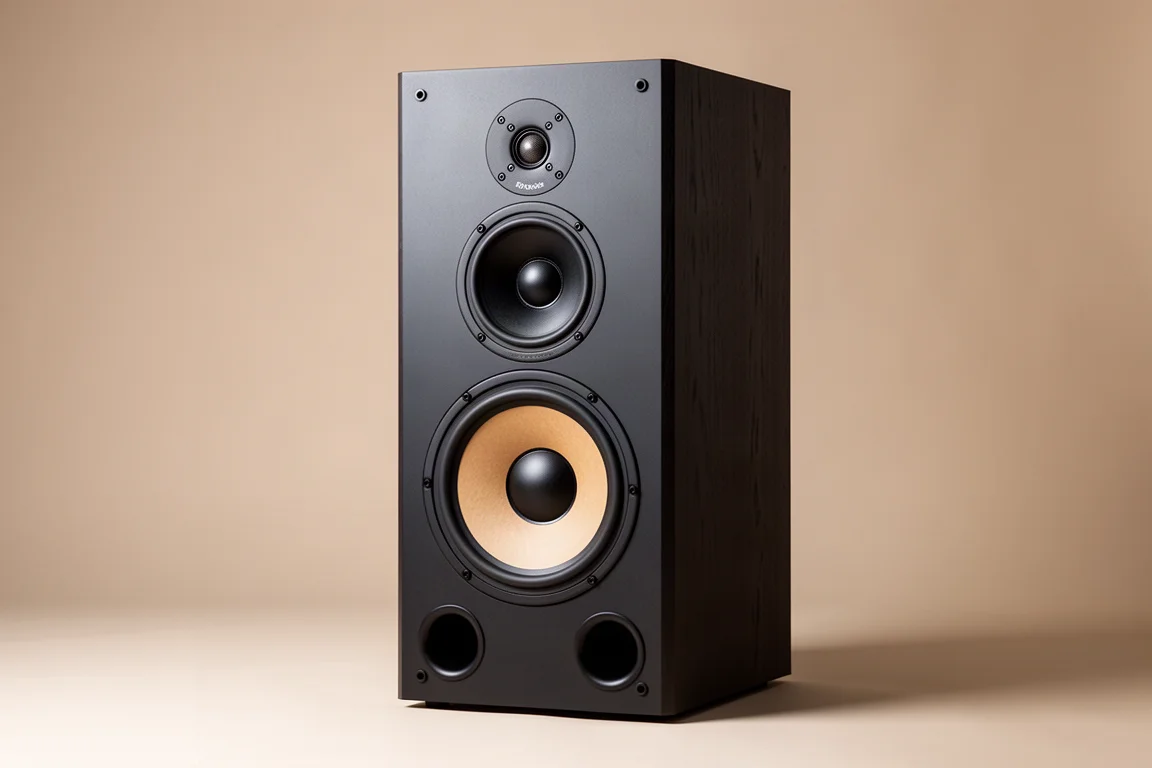
The LB12 is the brand’s heritage-inspired speaker, priced at $2,999. It uses a 12-inch paper-cone woofer, a 5.25-inch dome midrange, and a soft-dome tweeter, with sensitivity rated at 91 dB. At 71 pounds it is a genuinely heavy speaker to move, and it is dual front-ported.
Bass is where the LB12 makes its strongest impression, with noticeably more weight and oomph around 100 Hz than the other two. The Forte IV tracks the rest of the music more evenly down low, while the Emotiva puts its own stamp on the low end. In the midrange it trades blows with the Klipsch depending on the recording and the listener’s preference, and its treble can also turn hot on sizzly material.
The LB12’s real advantage is adjustability. It offers treble and midrange controls with three positions each, so a listener can cut or boost either band rather than accept a fixed voicing, something neither the Linton nor the Forte IV allows. The tweeter position can also be swapped to widen the soundstage, which is how the Emotiva gets close to the Forte IV’s sense of scale. For most listeners shopping for a vintage-inspired speaker, that combination of balance and control is likely to be the most broadly appealing package in this group.
Room Placement and Amplifier Matching
The Forte IV is the easiest of the three to place, because it is designed to sit close to a wall and can be tuned simply by adjusting that distance. The Linton and the LB12 both want more breathing room behind them to avoid excessive reinforcement, and both benefit from a little care with toe-in and listening distance.
Amplifier matching deserves a note of its own. All three speakers are rated above 90 dB, so a low-powered amplifier will get them loud, which makes them attractive to owners of small Class A or tube designs. Sensitivity is not the whole story, though, because a low-powered amplifier and a high-powered one will not necessarily sound the same through the same speaker even when both reach the same volume. Room size, listening distance, and how loudly someone tends to listen all feed into how much power is actually needed.
Volume habits matter too. At moderate levels in the 75 to 85 dB range, loudness compensation can be switched off entirely, because human hearing response flattens out around that point. Listeners who routinely play much quieter may prefer a little low-frequency compensation, which is easier to add with the Emotiva’s tone controls than with the other two.
Which Retro Speaker Fits Your Room and Your Taste
For the warmest, most forgiving presentation at the lowest cost, the Wharfedale Linton is the obvious starting point. It handles imperfect recordings gracefully, arrives with matching stands, and takes well to tone adjustments. Buyers who prioritise air and top-end sparkle should look elsewhere, because the Linton is deliberately soft at the extremes and gives up some clarity to get there.
For anyone who already enjoys the Klipsch sound, the Forte IV is the most balanced Klipsch in recent memory, with forward mids, nuanced highs, and the largest soundstage of the three. It is also the only speaker here that can be pushed against a wall without losing composure, which makes it unusually practical for smaller rooms. The asking price is the highest of the group.
For the broadest appeal, the Emotiva LB12 is the most balanced and the most controllable. Its treble and midrange toggles let an owner shape the voicing to the room and to taste, and its bass output is the most generous of the three. It is also the heaviest and the hardest to move, so a little planning before it arrives helps.
Conclusion
These three speakers share a look, not a sound. The Linton offers warmth and value, the Forte IV offers character and scale, and the LB12 offers flexibility and low-end weight. Matching one of them to the room, the amplifier, and the records someone actually plays matters far more than any ranking.
Further reading
Related Reviews
Hi-Fi Speakers
1723 THX Tower vs 1528 Bookshelf: Which Speaker Fits Your Room?
Two speakers at roughly the same price, built very differently. How the 1723 THX tower and the 1528 bookshelf compare on construction, bass, power needs, and sound.
Hi-Fi Speakers
Acoustic Energy AE 300 Review: Deep Bass From a Compact Standmount
A two-way standmount with real wood veneer, surprising low-end weight, and a warm, easygoing character. Here is what to know before buying.
Hi-Fi Speakers
Acoustic Energy AE1 40th Anniversary Review: A Modern Take on a British Classic
A compact standmount that revives a 1980s favorite with all-new parts, a warm mid-centric balance, and a price of £1,499 per pair.