Subwoofers
REL T7x Review: Compact Subwoofer Speed for Two-Channel Systems
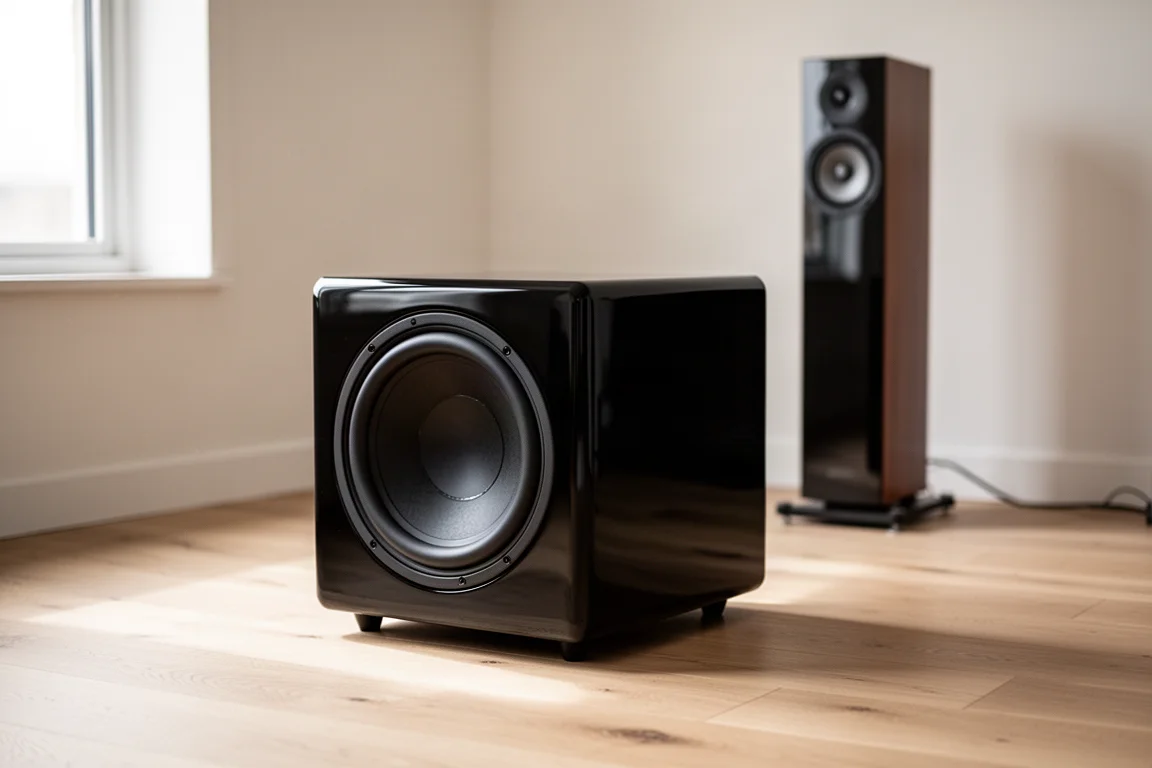
A compact cube subwoofer that pairs an 8 inch long throw driver with a 10 inch passive radiator, built for speed, articulation and seamless two-channel integration.
Introduction
Subwoofers spent decades on the wrong side of the two-channel divide. While home cinema was at its peak, most subwoofers were bought to add weight to surround sound systems, and traditional audiophiles would not allow one anywhere near a prized stereo setup. That perception changed slowly, largely because REL launched a range of subwoofers aimed squarely at the audiophile listener, prized for their timing and their ability to integrate seamlessly into a two-channel system. Getting that integration right took time, effort and patience, but once it was dialled in, the benefits were hard to give up.
The REL T7x is the modern expression of that thinking. It sells in the UK for £999, and although it is considerably smaller than the older REL Strata 3 that once retailed at around £800 in its premium finish, it can reasonably be treated as a direct replacement, both on price and on measured performance.
Who This Subwoofer Is For
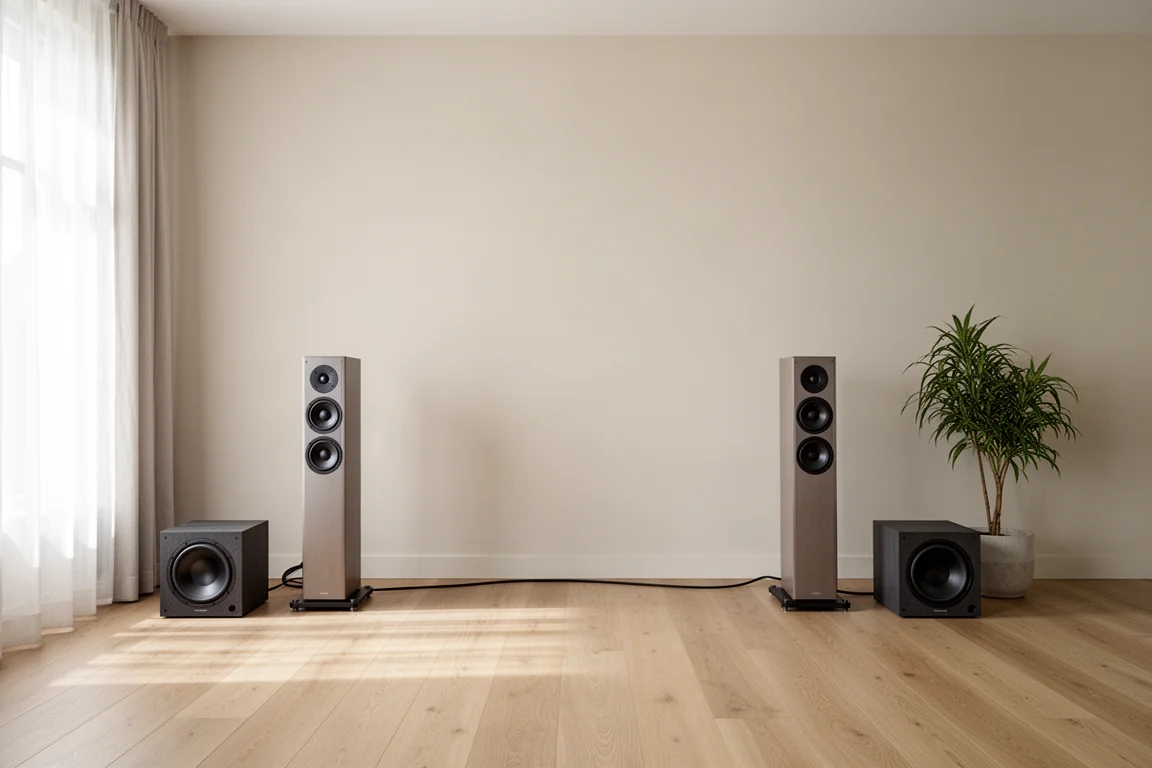
The T7x makes most sense for listeners whose main speakers roll off naturally just below 50 Hz. Adding the subwoofer to that system extends usable in-room response to around 30 Hz, which is very close to what the older Strata 3 delivers. The point is not more bass extension than a large older design, but the same extension from a cabinet almost half the size.
It also suits film viewers. The LFE input carries its own gain control, so a system can hold one setting for music and a completely separate one for the crash and bang of movies.
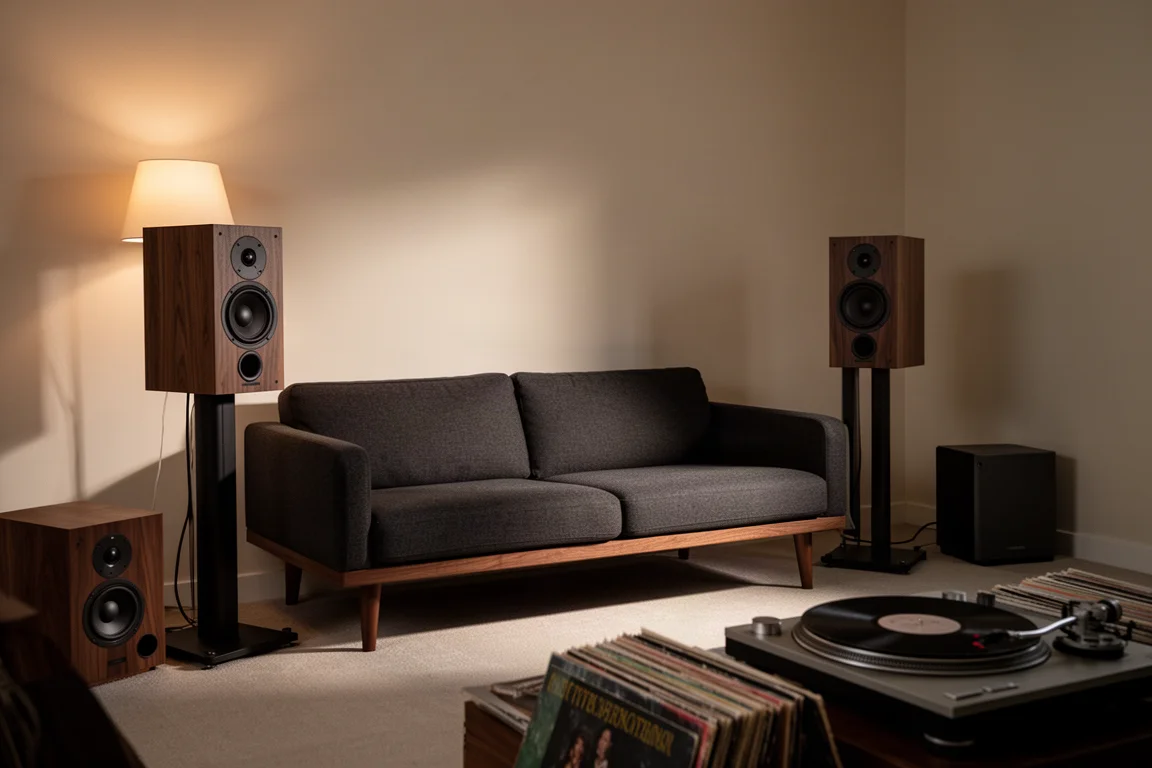
Physically, the T7x is close to a 14 inch (350 mm) cube, and its height is a little lower at 12.6 inches (320 mm). That footprint makes it easy to place in rooms where a large ported subwoofer would be awkward.
Main Strengths: Articulation, Speed, and Control
The standout quality is articulation. Bass definition is strong enough that subtle textures and small reverberations inside bass notes stay audible, where many subwoofers would homogenise them into a single low rumble. That is exactly what a very good small subwoofer should do: stop and start quickly.
Timing supports the impression. Global feedback delay is around 16 milliseconds on the older Strata 3 and roughly half that on the T7x. Human hearing can detect impulses as little as four milliseconds apart, so that reduction matters for grip and control.
Maximum SPL is broadly similar between the two subwoofers at around 100 dB, and overall bass weight is close as well. The difference is in impact. Because transients arrive faster, the T7x simply feels more forceful, without the tonal balance being pushed thick and bass heavy by extra gain.
There is one more benefit that is harder to quantify: a sense of space. The soundstage opens up in width as well as depth. It may be very low level ambient information in the recordings filtering through, or it may be a psychoacoustic effect linked to low frequencies and large spaces. Either way, it is audible.
Design, Drivers, and Connections
The cabinet is available in gloss white and gloss black. There are no wood finishes, which the brand attributes to the difficulty of matching a subwoofer veneer with main speakers, and that will be a genuine limitation for some rooms.
Branding is impossible to miss, appearing on the feet, the back, the top, and on the driver itself once the front grille is removed. The top inlaid aluminium badge is not purely decorative: its dimensions and mass are unique to each subwoofer in the range, and it is there to damp a cabinet resonance peak.
The active driver is an 8 inch (200 mm) long throw unit, with a 10 inch (250 mm) passive radiator underneath. Both use the brand’s proprietary fibre alloy construction, essentially an air dried paper cone stiffened by a substantial inverted aluminium dust cap, balancing lightness, stiffness and damping. A 200 watt class A/B MOSFET plate amplifier dominates the rear panel, with adjustments for gain and for the crossover point between 30 and 120 Hz.
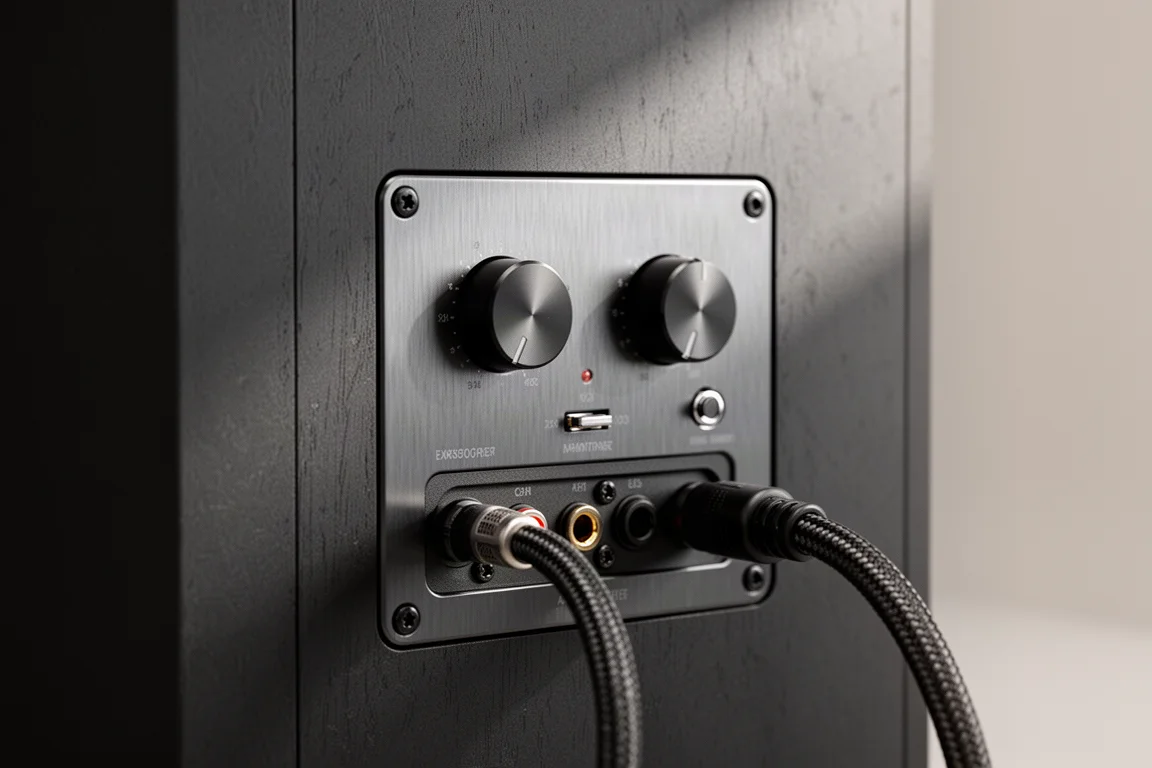
Three connection routes are provided. The high level input is the one the brand encourages, and the supplied cable uses a Neutrik Speakon connector at the subwoofer end with bare wires for an amplifier speaker terminal. Alternatively, the red and yellow wires can be crimped together and connected to the back of one of the speakers, since low bass is effectively mono. That route should be avoided with a balanced amplifier.
The high level input brings two advantages. It lets the subwoofer take on some of the timing and sonic characteristics of the power amplifier, which supports better integration with the main speakers, and it engages the brand’s high level input filter, a circuit protected inside epoxy resin precisely so that it cannot easily be copied. Concern about drawing power from the amplifier is unfounded, because the signal taken is at a very low level.
A conventional low level RCA input is also present for a subwoofer or pre-out, and there is an LFE input with its own gain control for an AVR.
Setup and Integration
Placement does more for the result than any other decision. The common subwoofer crawl, where the subwoofer is placed in the listening position and the listener moves along the floor to find the best spot, is a reasonable starting point but a crude method overall. Most rooms only allow two or three viable positions, and it is worth trying all of them.
The general recommendation is a corner, where boundary reinforcement makes the subwoofer play louder and a little lower, with a long throw diagonally across the room. That works well for home cinema. For two-channel listening it can sound a little boomy, and a position somewhere along the sidewall often integrates better with the main speakers, though the exact spot depends on the room and the system.
Phase is refreshingly simple: two settings, in phase at 0 degrees and out of phase at 180 degrees. The correct choice is whichever setting sounds louder. A variable phase control would only invite listeners to chase their own tail.
Gain and crossover take more care. A practical method is to run the subwoofer deliberately hot, setting both dials higher than their likely final position, then to fine tune by ear once the location is settled. In one room that starting point was around 15 clicks on each of the two dials, out of 40 clicks across the full rotation.
Listening Notes and Reference Tracks
Fine tuning is done with familiar music. A useful starting point is the double bass on Jennifer Warnes’ “Ballad of the Runaway Horse”, where the things to listen for are the weight of the note, its definition and the variation in tone. Another strong option is the acoustic version of Adam Ben Ezra’s “Can’t Stop Running”, a double bass solo that reveals the same qualities.
For reverberation, track four of James Horner’s Sneakers soundtrack, “Cosmo My Friend”, is used by the brand’s design team when setting up subwoofer systems. Turn it up slightly and listen to the soft mallet striking the large symphonic drum: the resulting reverberation should be distinct but sit in the background. Duke Ellington’s “Afro-Bossa” is a good test of balance, starting with drums before the full orchestra arrives, and it lets you judge the percussion against the woodwind, strings and brass.

For extension and sheer power, Pan Sonic’s “Current One” should sound strong, deep and expansive, perhaps even dominant, but never so much that it obscures other detail. Finally, Bizet’s “Agnus Dei” performed by José Carreras is a striking demonstration of spatial cues: the choir behind the voice comes through with a clarity that makes the difference between listening with and without the subwoofer anything but subtle.
Things to Consider Before Buying
There are no wood finishes, so matching a timber veneer main speaker is not an option.
Setup demands patience. Gain, crossover and placement all interact, and a corner position that flatters film sound can sound boomy for music.
If the goal is maximum output and the deepest possible extension, a larger subwoofer will play louder and dig deeper. For music, that is not always the objective, and two smaller subwoofers are often a better answer than one large one. The T7x also makes its strongest case where main speakers roll off just below 50 Hz; speakers that already reach lower will benefit less.
Buying Advice
At £999 in the UK, the T7x sits in a competitive part of the market. On the evidence here it comfortably outperforms the older reference design: cleaner, a touch more dynamic, and with similar bass extension from a cabinet almost half the size. That progress comes from innovations in design, driver technology and the greater power available at this price point.
Whether it is the benchmark in its segment is harder to call without hearing more subwoofers, but the instinct is that it very likely is, and it deserves recognition if that holds up. What can be said comfortably is that this is an extremely good subwoofer and it comes highly recommended.
For anyone whose speakers stop just below 50 Hz and who wants 30 Hz extension with speed rather than brute force, the T7x is a straightforward shortlist entry. Budget a little time for placement and for the two dials; the reward is bass that supports the music instead of sitting underneath it.
Conclusion
The REL T7x answers a simple question: how far has subwoofer design moved in two decades? The answer is further than size alone suggests. A cabinet close to a 14 inch cube delivers roughly the same in-room extension as a much larger older design, with better articulation, faster transients and a wider sense of space, plus a high level input that makes two-channel integration practical and an independent LFE gain for film use.
The trade-offs are honest ones: no wood finishes, a setup process that rewards patience, and a price that places it firmly in the upper part of the market. For listeners who value bass definition over sheer output, it is a compelling choice.
Product link
View more details for REL T7x
This product is mentioned in the review. Check the specifications, options, and compatibility before buying.
View more details for REL T7xFurther reading
Related Reviews
Subwoofers
Arendal 1961 Subwoofer 1S Review: Beautiful Build, Modest Punch at $1,000
A sealed $1,000 subwoofer with a gorgeous cabinet, plus three lower-priced alternatives that deliver more impact for movie nights.
Subwoofers
Arendal Sound 1723 2V Subwoofer Review: Dual 13.8-Inch Drivers Under $3,000
A flagship ported subwoofer with dual opposing 13.8-inch drivers, a 1,200W RMS amplifier, app-based DSP, and a 10-year warranty.
Subwoofers
Ascendo 16 Sub Active Sealed Review: Sealed Bass Built on Real Engineering
A close look at the Ascendo 16 Sub Active Sealed, a 16-inch sealed home theater subwoofer with independently verified measurements, a purpose-built driver, and genuinely controlled output.