Subwoofers
REL Classic 98 and T7x Compared: Two Subwoofers Built for Two-Channel Systems
A close look at two REL subwoofers for music systems: the retro sealed Classic 98 and the compact T7x, plus how to integrate either one with your speakers.
Introduction
REL builds subwoofers around a simple idea: bass should be fast and accurate enough to sit underneath a two-channel music system rather than overwhelm it. That approach has not changed since the company was sold to an American firm in 2006, and it is the reason REL’s sealed-box designs have a following among listeners who care more about timing and tone than about sheer output.
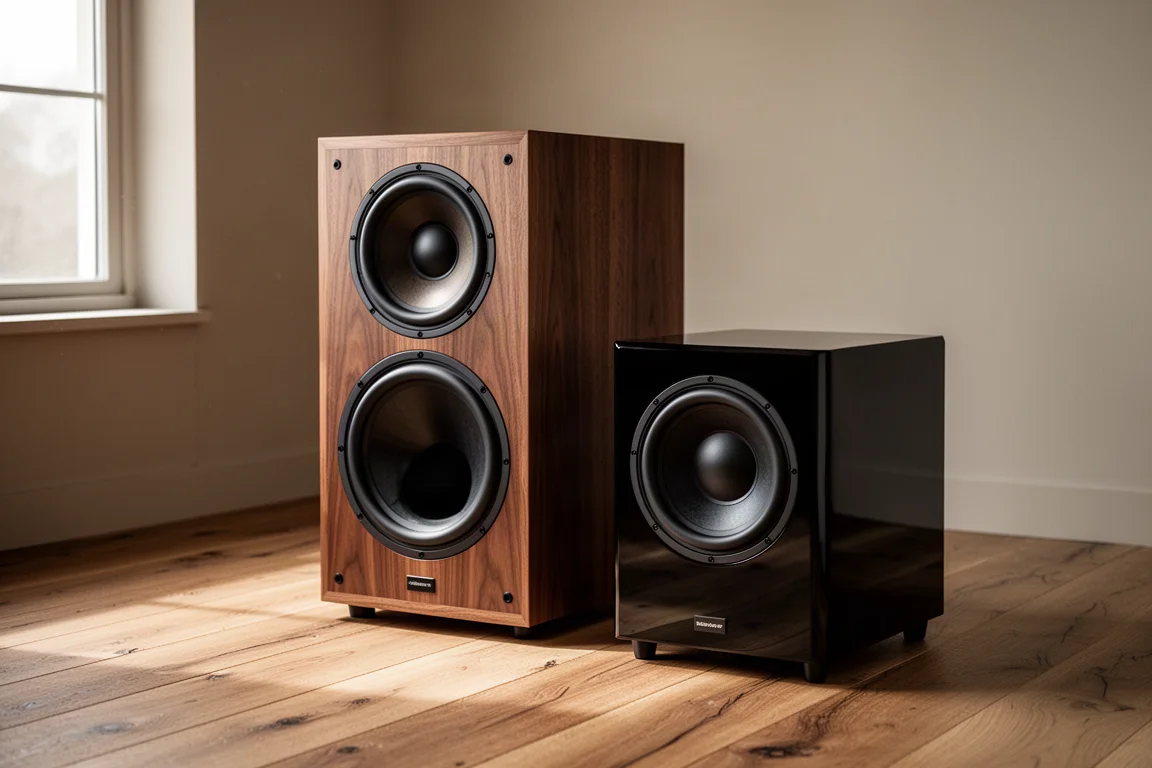
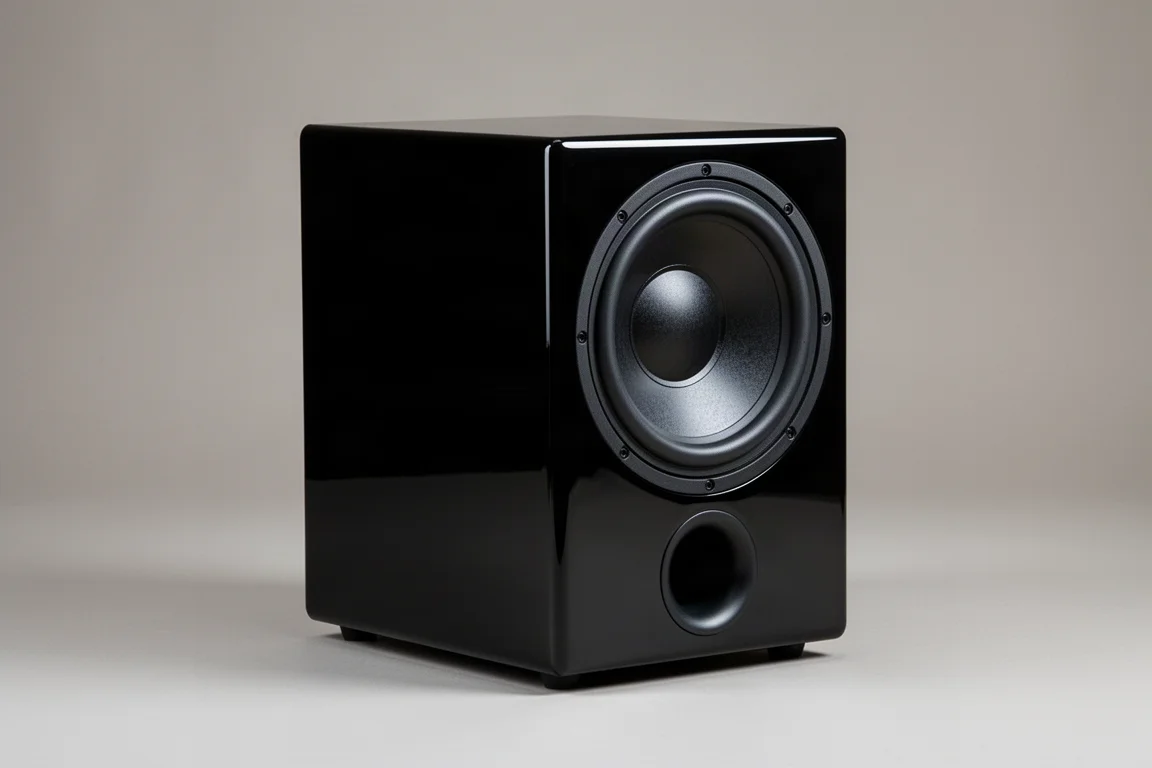
Two current models sit close to each other in price but pull in different directions. The REL Classic 98 revives the look of the Strata 3, a sealed subwoofer REL built in the late 1990s when Richard Lord was at the helm and production was based in Bridgend, Wales. The REL T7x is a far smaller, gloss black design with a forward-firing driver and a downward-firing passive radiator.
This guide covers what both subwoofers do well, where they differ, and how to get either one to blend with a pair of main speakers.
What to Look For in a Two-Channel Subwoofer
Most subwoofers are designed with home cinema in mind. In a decent two-channel system, that can mean bass that muddies the low end and pollutes the mid-range, which is why sealed designs remain popular with music listeners.
Cabinet type matters more than the spec sheet suggests. Sealed enclosures roll off at roughly 12 dB per octave, ported designs at a steeper 24 dB per octave, and passive radiators are effectively a form of sealed enclosure. Because the air trapped inside a sealed box acts as a spring, that type of design is generally credited with a quicker transient response.
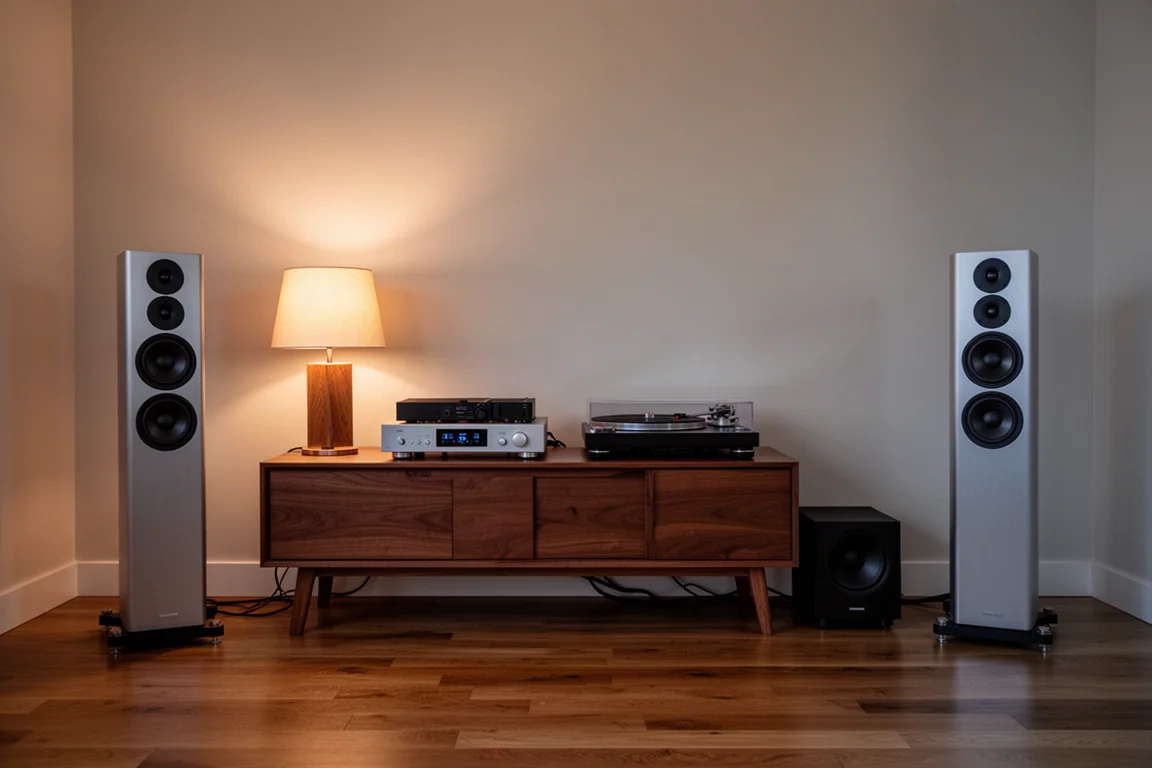
Inputs and controls matter too. A high-level input with its own gain control lets you feed the subwoofer from an integrated amplifier for music, while a separate low-frequency input with an independent gain control lets the same subwoofer serve an AV receiver for films. Crossover and phase settings are what allow the subwoofer to be properly integrated with the main speakers.
Amplifier class is worth understanding as well. Class D amplification is efficient, which means plenty of power for relatively low cost, and it offers a high damping factor that helps control the back EMF generated by large voice coils in substantial magnet structures.
Get the bottom octaves right without polluting the mid-range and the payoff is bigger than bass alone. Timing information is preserved, and low-frequency ambience in a recording can open up the soundstage in width, depth and even height.
REL Classic 98: Retro Styling and a Sealed Cabinet
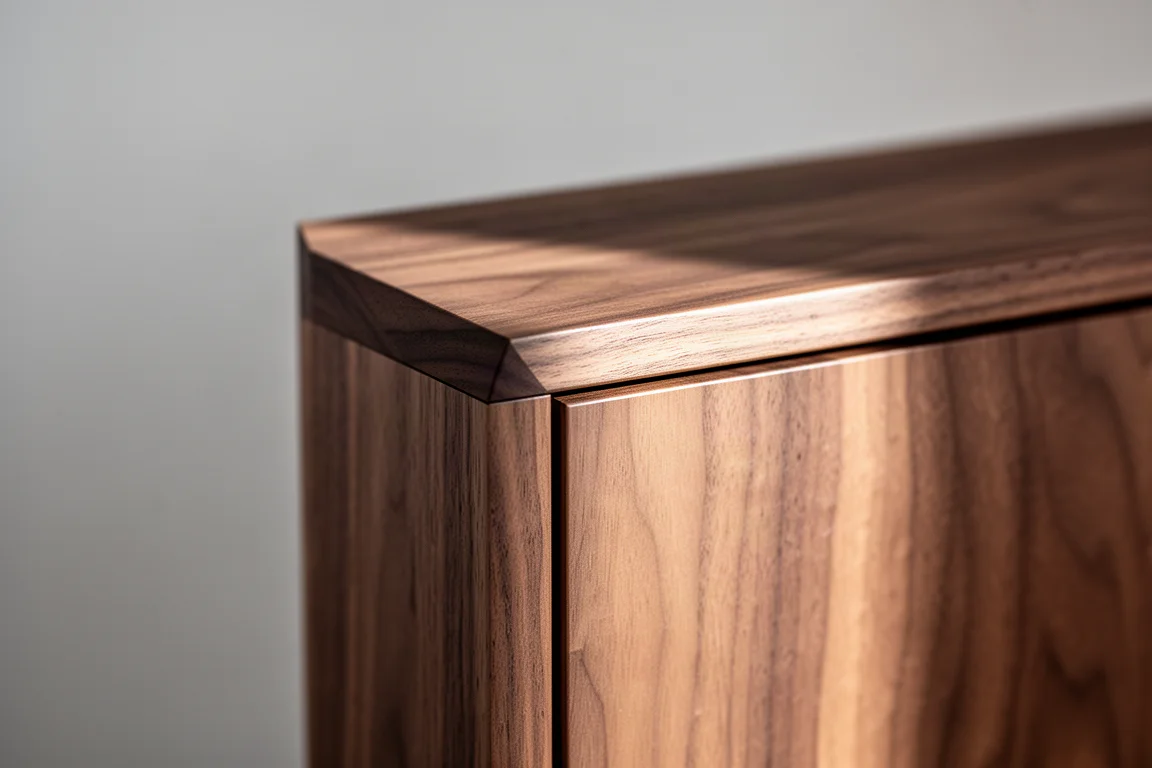
The Classic 98 is a deliberate nod to REL’s past. Its styling closely mirrors the Strata 3, and its dimensions are based on that same era, though the cabinet is smaller than the original because driver technology has moved on. At launch, walnut veneer is the only finish available.
It retails at £1,299 and measures 350 x 470 x 299 mm (13 3/4 x 18 1/2 x 11 3/4 in), weighing 18 kg (40 lb). Like the REL designs of the Richard Lord era, it is a sealed box with a downward-firing driver. The driver itself is a newly developed 250 mm (10 in) paper cone, the same nominal size as the Strata 3’s, powered by a 300 W Class D amplifier. The cone uses a lightweight hot-press primary cone with a hand-press central cap for stiffening, and the tuning is deliberately a little softer than the T-Series approach.
Connectivity follows REL’s usual pattern: a high-level input with gain control for music, plus a low-frequency input with a second, independent gain control for an AV receiver. REL quotes a minus 6 dB point of 27 Hz.
In listening terms, the Classic 98 lands between REL’s older and newer designs. It is cleaner than the Strata 3 but not as clean as the T7x, and warmer than the T7x but not as warm as the Strata 3. In a very revealing system it gives up some soundstage size to the T7x, bass notes land a little softer, and decay structures are less textured. It still comfortably outperforms the older Strata 3, and it plays loud, deep and clean.
The trade-off is character rather than competence. Buyers who want the last word in definition for the money are pointed towards REL’s T-Series, but the Classic 98 remains a well-rounded subwoofer that happens to look like a piece of furniture.
REL T7x: Compact, Clean and Heavily Branded
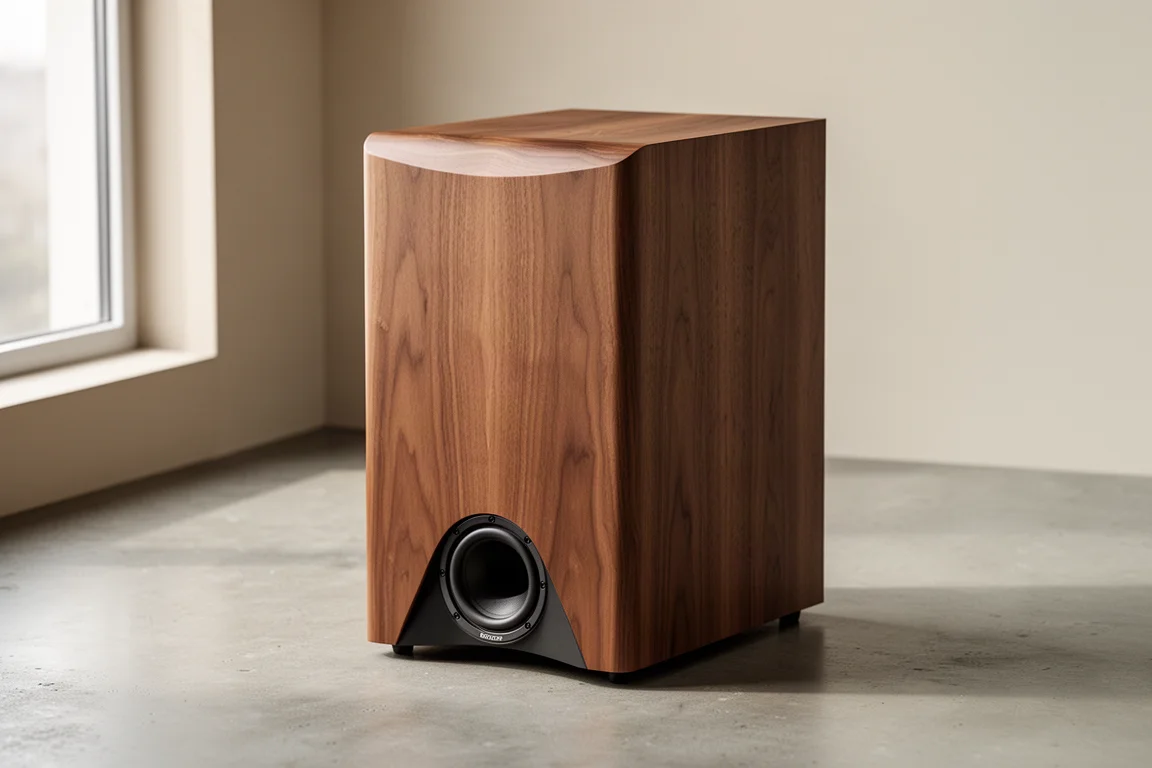
The T7x costs £999 and is roughly half the size of the Strata 3. It uses a forward-firing driver with a downward-firing passive radiator, a combination that keeps the cabinet small while preserving bass extension. The driver pairs a paper primary cone with an aluminium centre cap.
Extension is quoted at a minus 6 dB point of 30 Hz, and in practice the T7x reaches about the same depth as the old Strata 3 and can hit similar peak levels, around 100 dB. What separates it from the older design is quality rather than quantity: definition, attack, tightness and decay structures are all markedly better.
The cabinet is where opinions divide. Gloss black is a matter of taste, and branding is applied liberally across surfaces that do not strictly need it. Listeners who prefer their equipment to disappear into a room may find the finish and the repeated logos harder to live with than the sound, which is otherwise hard to fault at this price.
That performance also scales. The T7x keeps rewarding improvements elsewhere in a system, which is why it is an easy recommendation for anyone building a two-channel setup around the £1,000 mark.
How the Classic 98 and T7x Compare
Put side by side, the two subwoofers occupy different points on the same line. The Classic 98 is cleaner than the Strata 3 and warmer than the T7x. The T7x is the more defined of the two, with tighter attack and more texture in the decay of bass notes.
Extension is closer than the numbers imply. REL quotes 27 Hz for the Classic 98 and 30 Hz for the T7x, a difference of only 3 Hz, but the sealed Classic 98 rolls off more slowly, so the real-world gap is larger than the specifications suggest. For music, that is rarely an issue. For anyone doubling up the subwoofer for film duties, it is worth noting.
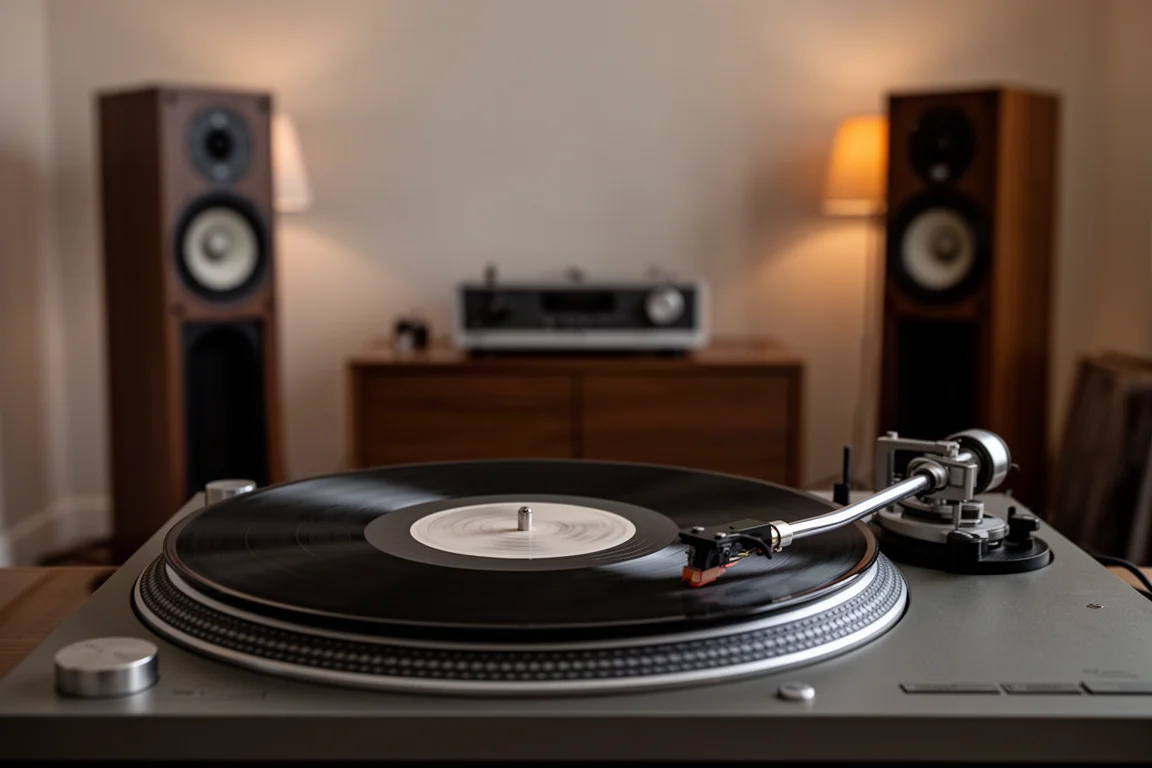
The practical differences come down to priorities: a smaller cabinet and maximum definition on one side, a larger walnut cabinet and a warmer, fuller tone on the other. The Classic 98 also outperforms the retired Strata 3 comfortably, which is worth remembering for anyone upgrading from an older sealed REL.
Getting a Subwoofer to Blend With Your Speakers
Whichever model you choose, integration decides how good the result sounds. Use the high-level input for music and the low-frequency input for an AV receiver, then adjust crossover and phase until the subwoofer and main speakers work as one. Gain sets how loud the subwoofer plays, and crossover sets how high up the frequency range it plays.
For an objective starting point, Room EQ Wizard is free, open-source measurement software with tutorials available to learn from, and a calibrated microphone such as the UMIK-1 from miniDSP costs around £100 when it goes on sale. Measurements are a good foundation, but fine-tuning by ear is still worth the time.
Placement is the other half of the job. REL’s guidance is to put the subwoofer in a corner for maximum boundary reinforcement and the longest diagonal throw across the room, though many listeners find that a position between the speakers or along a sidewall integrates better with the main speakers, even at the cost of some ultimate depth.
If you can place the subwoofer wherever you like, a subwoofer crawl is a useful way to narrow the options. Set gain and crossover to roughly sensible values, running slightly hot rather than low, play a well-recorded track with a consistent bassline, then put the subwoofer in the listening position and move along the floor listening for the spot where bass sounds even, neither booming nor sucked out.
For judging the result, a solo double bass recording is hard to beat. With only one instrument playing, differences in definition, tone, weight and extension are easy to hear. Take your time with positioning, gain and crossover, because small adjustments make a large difference.
Buying Advice
Choose the REL T7x if definition and a small footprint come first. It is the cleaner, more incisive subwoofer of the two, it takes up far less space, and it continues to improve as the rest of a system does. For a setup built around music, it is a straightforward recommendation.
Choose the REL Classic 98 if tone and appearance matter as much as outright precision. It is warmer, it plays deep and clean, and its walnut cabinet can pass as furniture rather than announcing itself. It is not the last word in performance for the money by REL’s own standards, and buyers chasing maximum performance per pound within the range are directed to the appropriate T-Series model for their room size.
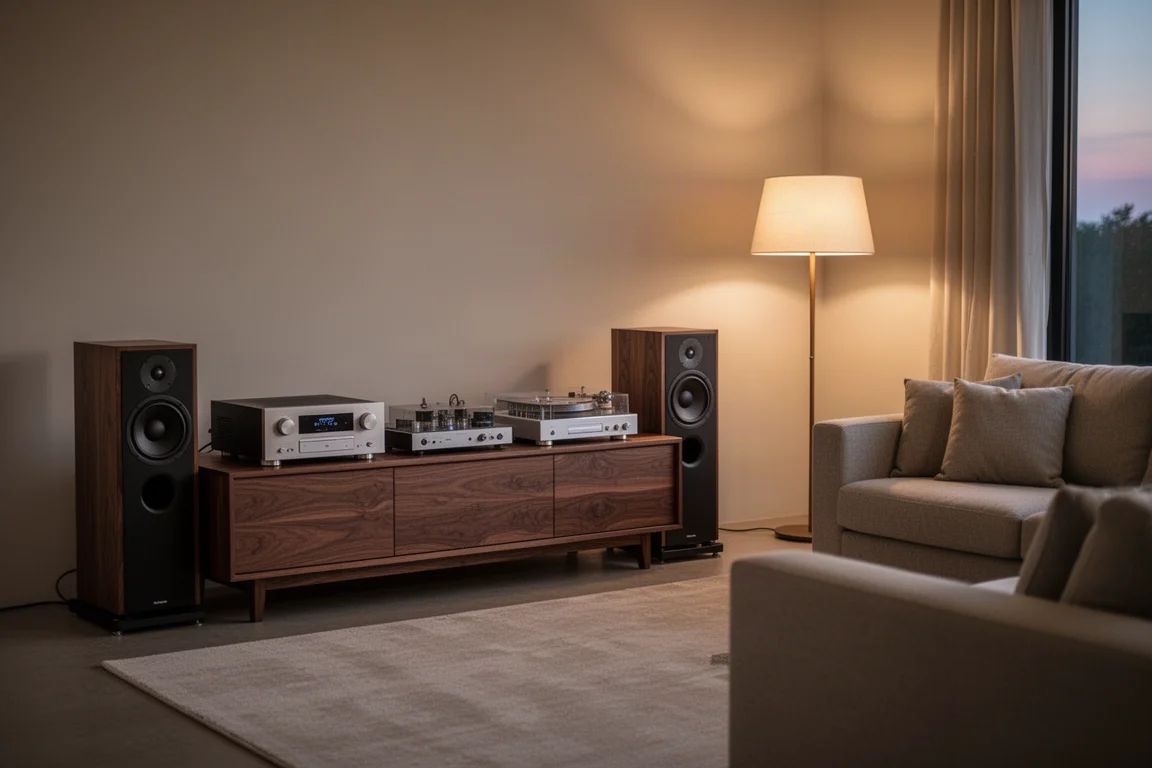
Neither subwoofer is aimed at a home cinema system first. Both are designed for two-channel listening, and both sit at a level where the quality of the rest of the system will be audible. If you are upgrading from an older sealed subwoofer, either model is a significant step forward.
Conclusion
The REL Classic 98 and the REL T7x share a family sound and a clear purpose: fast, accurate bass that supports music instead of smothering it. The T7x wins on definition and size, while the Classic 98 wins on warmth and looks, and neither one pollutes the mid-range in the way a home cinema subwoofer often does in a two-channel system.
If your priority is the cleanest possible bass in the smallest cabinet, the T7x is the sensible pick. If you want a subwoofer that sounds fuller, warmer and blends into the room as furniture, the Classic 98 earns its place. Either way, take the time to set it up properly, and the improvement will be obvious.
Further reading
Related Reviews
Subwoofers
Arendal 1961 Subwoofer 1S Review: Beautiful Build, Modest Punch at $1,000
A sealed $1,000 subwoofer with a gorgeous cabinet, plus three lower-priced alternatives that deliver more impact for movie nights.
Subwoofers
Arendal Sound 1723 2V Subwoofer Review: Dual 13.8-Inch Drivers Under $3,000
A flagship ported subwoofer with dual opposing 13.8-inch drivers, a 1,200W RMS amplifier, app-based DSP, and a 10-year warranty.
Subwoofers
Ascendo 16 Sub Active Sealed Review: Sealed Bass Built on Real Engineering
A close look at the Ascendo 16 Sub Active Sealed, a 16-inch sealed home theater subwoofer with independently verified measurements, a purpose-built driver, and genuinely controlled output.