Camping Tents
REI Wonderland 6 vs REI Base Camp 6: Which 6-Person Tent Fits Your Camping Style?
A detailed comparison of two REI six-person tents: cabin-style headroom and livability against dome-style rain protection, storage, and wind stability.
Introduction
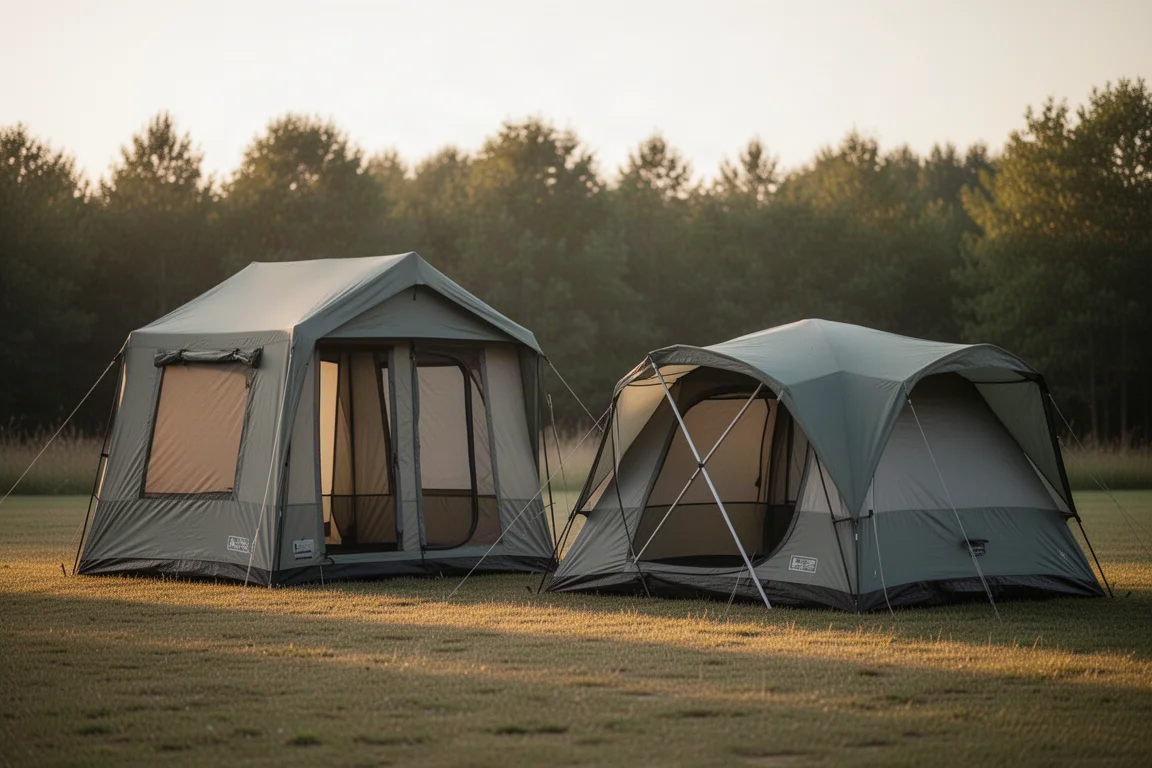
The REI Wonderland 6 and the REI Base Camp 6 are both six-person family tents, and they cover exactly the same floor area: 82.5 square feet. Beyond that shared number, they behave like two completely different tents. The Wonderland is a cabin-style design built around headroom and interior volume. The Base Camp is a dome-style design built around weather protection and storage. Which one makes sense depends far more on where and when you camp than on any single specification.
How These Two REI Tents Compare
Both tents share the same 82.5 square feet of floor area, but the shapes differ. The Base Camp measures about 9 feet 1 inch by 9 feet 1 inch, a square footprint. The Wonderland measures 120 inches long by 99 inches wide, a rectangular footprint.
That shape difference explains most of the practical gaps that follow: sleeping capacity, headroom across the floor, rain behaviour, and how each tent handles wind. This comparison walks through interior space and sleeping capacity, door design, storage and ventilation, rain and wind performance, and finally weight, packed size, and setup time.
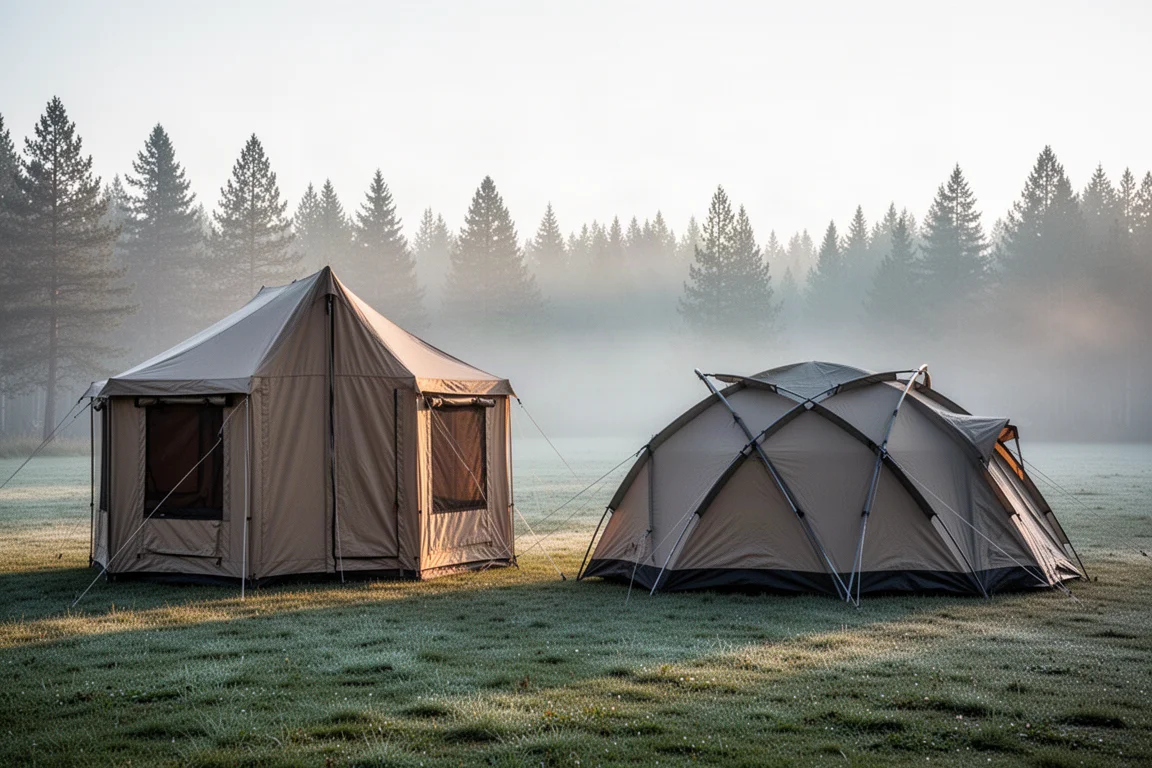
Because both tents sit in the same size class, the decision rarely comes down to which one is bigger. It comes down to climate, sleeping arrangements, and how much interior height you actually need when you are standing inside and getting dressed on a cold morning.
REI Wonderland 6: Spacious Cabin Living
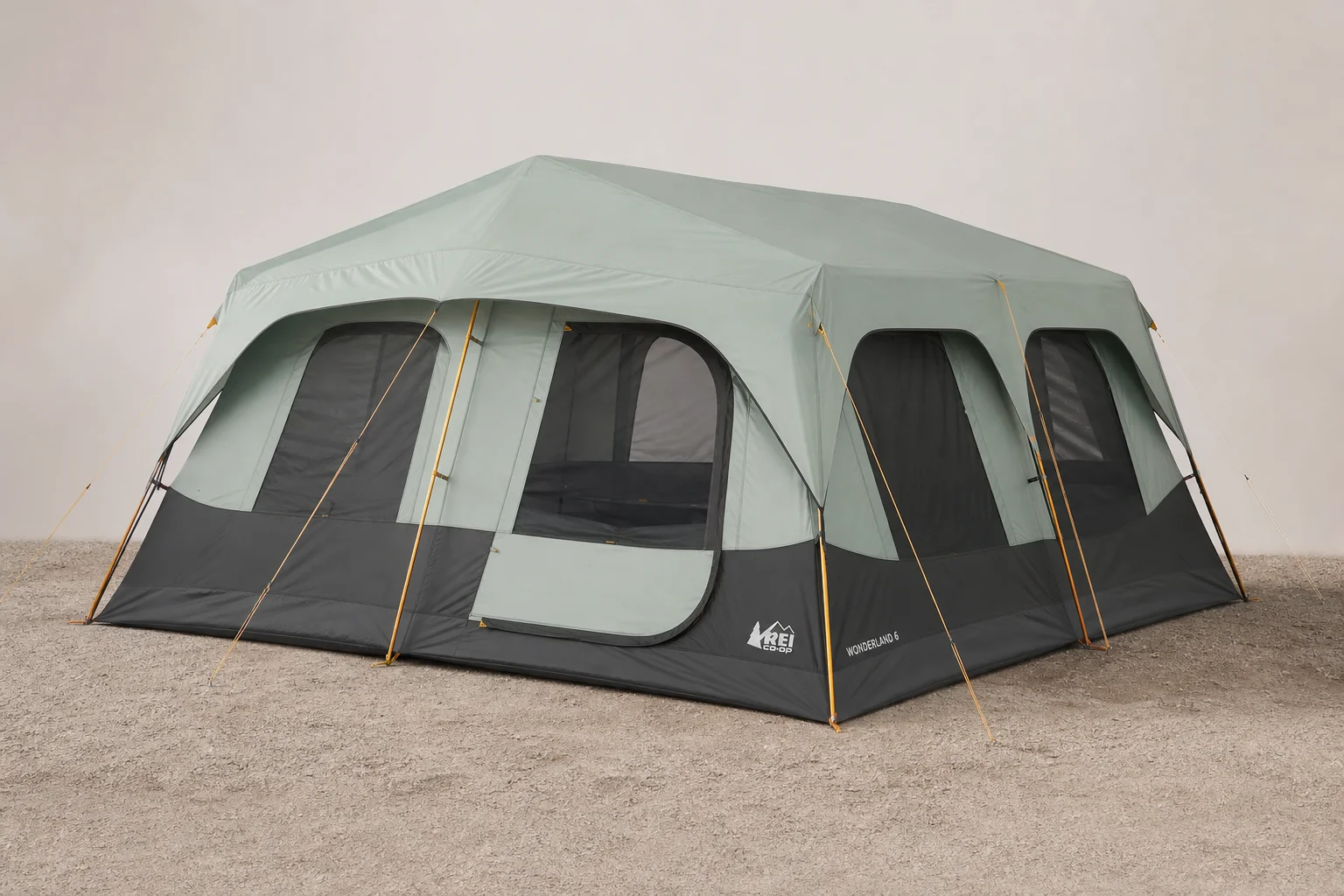
The Wonderland 6 is where the cabin shape pays off. Its peak height reaches about 81 inches, close to 7 feet, which measured roughly 3 inches taller than the marketed figure. That height is not confined to a single point in the middle. Measured across the tent, interior height came in at 77 inches at the far left and 76 inches at the far right, so the tall space runs along the full length of the floor.
The U-shaped pole structure also produces unusually vertical side walls. You can press your body against a side wall and stand completely upright, which is rare in a family tent. The trade-off is a tall, broad profile with no intersecting poles, and half of the aluminium poles bent after a few weeks of light to moderate wind exposure.
Sleeping capacity is generous on paper: two queen beds fit inside. Just keep in mind that once both beds are in, the floor feels tight and there is not much room left to move around.
The tent ships with one room divider that zips down the middle, so you can move between the two rooms without taking the whole panel down. The divider fabric is not overly see-through, and the gaps around it stay modest.
Ventilation leans heavily on mesh. With the rainfly removed, mesh covers the roof and continues down the sides, easily covering more than half the tent. That is a real advantage on hot days, but it works against you once temperatures drop.
Storage inside is modest: eight pockets and seven loops, and that count includes the divider loops. Without them, the Wonderland has only two hanging loops, one above each door. There are no vestibules, though a separate mud room is available at extra cost. Two above-door vents are present, but they are very small and did not appear to make much difference in rain or heat.
REI Base Camp 6: Built for Wet Weather
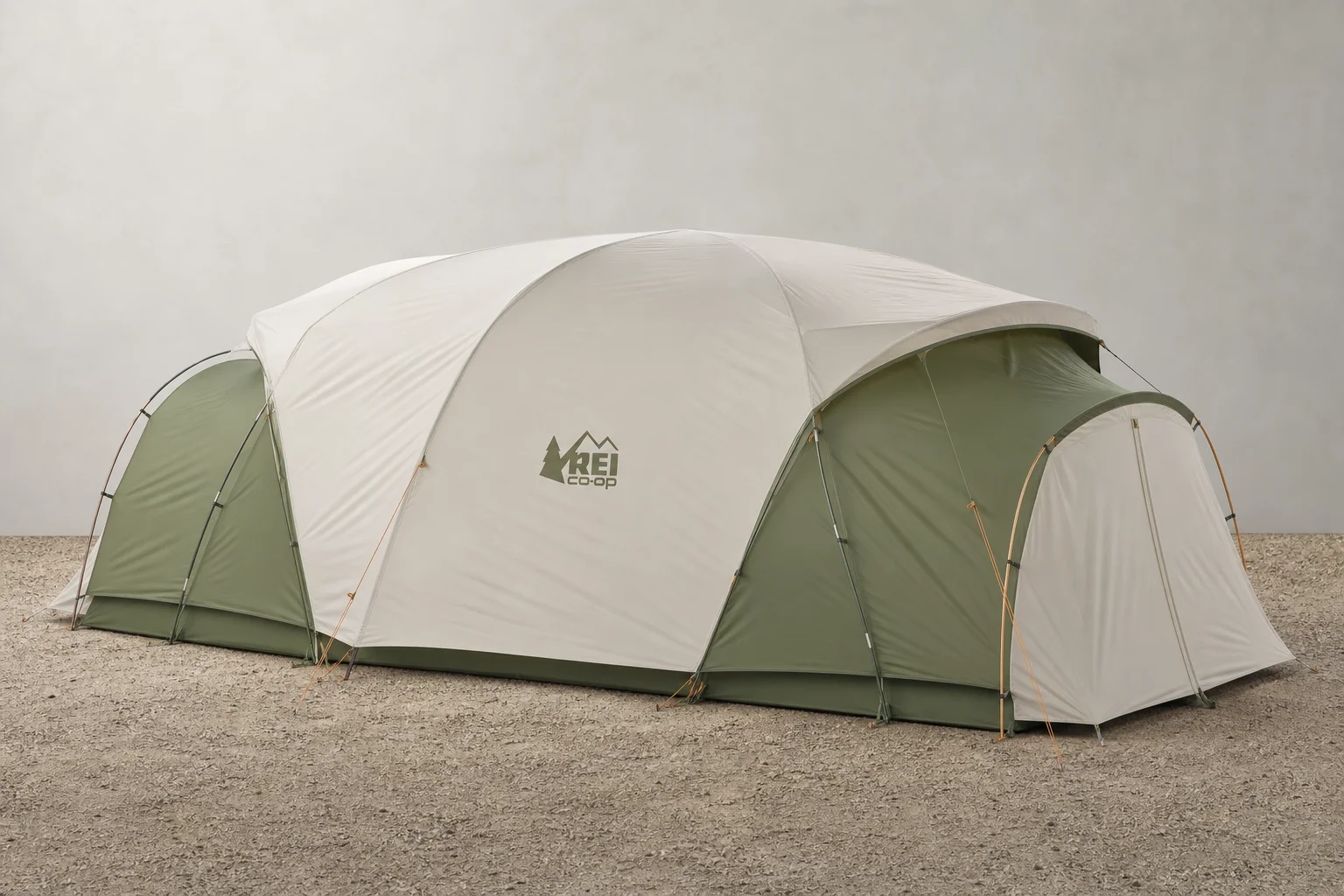
The Base Camp 6 takes the opposite approach. It is a dome-style tent with four poles that intersect each other, and that structure held up well in light wind, performing better than a typical budget dome tent with only two intersecting poles. Peak height is 73 inches, 8 inches lower than the Wonderland, and because the shape is a dome, that height exists only at the centre. Three small steps away from the centre, the ceiling meets head height at roughly 60 to 61 inches.
Its defining feature is a full rainfly. Through an hour of heavy rain, the interior stayed completely dry with no water inside. The rainfly covers almost the whole tent and sheds water straight to the ground rather than onto the inner body.
Seam treatment is more selective than on the Wonderland. The flooring seams that run the length of the tent are taped, as are the corner seams of the floor, but the remaining seams are inverted rather than taped. The full rainfly protects those seams in normal weather, though in extreme rain or flooding you would need to seal them yourself.
The Base Camp also carries two vestibules, roughly 31 square feet at the front and 21.5 square feet at the back, adding up to about 52.4 square feet of covered exterior space. That is where wet gear can live instead of on your sleeping area.
Interior Space and Sleeping Capacity
Both tents offer 82.5 square feet, yet the Base Camp fits one queen bed while the Wonderland fits two. The difference comes down to geometry. The Base Camp’s square 9 foot 1 inch footprint is wide but short in the direction that matters for side-by-side mattresses, while the Wonderland’s 120 inch length gives two queen beds room to sit end to end. It is worth knowing that once both beds are inside the Wonderland, the floor feels tight and little walking space remains.
Headroom across the floor is the other half of the story. The Wonderland keeps close to peak height along nearly its entire length, so you can stretch your arms overhead almost anywhere inside. In the Base Camp, usable height drops quickly away from the centre, and the sides sit around 60 to 61 inches.
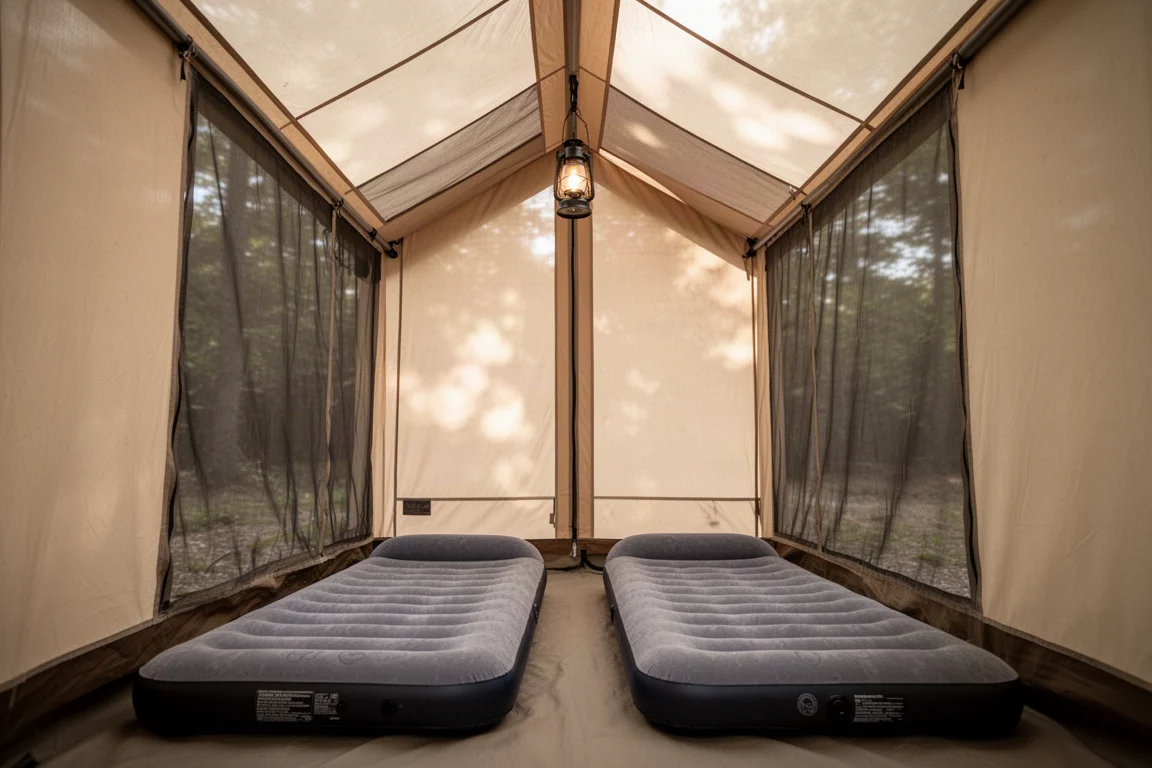
If you sleep on cots or taller air mattresses, that headroom difference matters more than raw floor area, because it decides where you can stand up and where you cannot. For two adults and their gear, the Base Camp’s single-queen layout leaves more open floor. For a family that wants two beds with a divider between them, the Wonderland’s rectangle is the layout that works.
Doors, Storage, and Ventilation
Door design favours the Wonderland. Both of its doors are identical, measuring 66 inches long by 64 inches wide, and each one takes up almost an entire wall. The opening measures about 72 and a half inches from the ground to the top of the door, so a shorter adult can walk through without ducking. Both doors unzip in around three seconds, entirely one-handed and without snagging, and the fabric tucks into a pocket beside the door in another four seconds.
The Base Camp’s two doors measure about 74 inches long by 59 inches wide, with a 62.5 inch opening height, roughly 10 inches shorter than the Wonderland. Getting in and out means tilting your head slightly. Unzipping is snag-free and takes three to four seconds, and there are pockets above each door for stowing the fabric, but pulling the zipper past the bend sometimes needs two hands. Because there are no extra stake loops under the door at the bottom of the tent, the lower section does not stay as taut as the Wonderland’s.
Storage is where the Base Camp pulls far ahead: 14 pockets around the tent, most of them large, plus 20 loops for hanging gear. The Wonderland counters with eight pockets and seven loops. Ventilation follows the same pattern. The Base Camp has four vents, two in the roof and two at floor level, and all of them can be opened and closed from inside the tent, which is genuinely useful when rain is driving in sideways. The Wonderland’s two above-door vents are extremely small and did not seem to move much air on hot or wet days.
Rain Protection and Wind Performance
Rain is the clearest dividing line between these two tents. The Base Camp’s full rainfly kept the interior dry through an hour of heavy rain, with water running off the fly and directly to the ground. The Wonderland went through an hour of heavy rain followed by a few hours of lighter rain, and the divider loops at the bottom of the tent began leaking water inside. Those loops sit in a spot the rainfly does not cover, which makes them the most exposed seam on the tent, and that particular seam was not taped.
Seam taping on the Wonderland is otherwise thorough. The flooring seams and the corner seams are all taped, and the general pattern is that seams sitting directly under the rainfly are left untaped while exposed seams are taped. The leaking divider loop was the exception to that rule.
Wind tells a similar story. The Base Camp’s dome shape and four intersecting poles create a stiffer structure, and it handled light wind well. The Wonderland has no intersecting poles and a tall cabin profile with vertical walls, and half of its aluminium poles bent after a few weeks in light to moderate wind. Curiously, the Wonderland ships with 14 guylines against just 6 for the Base Camp, and more guylines on the Base Camp would have been welcome.
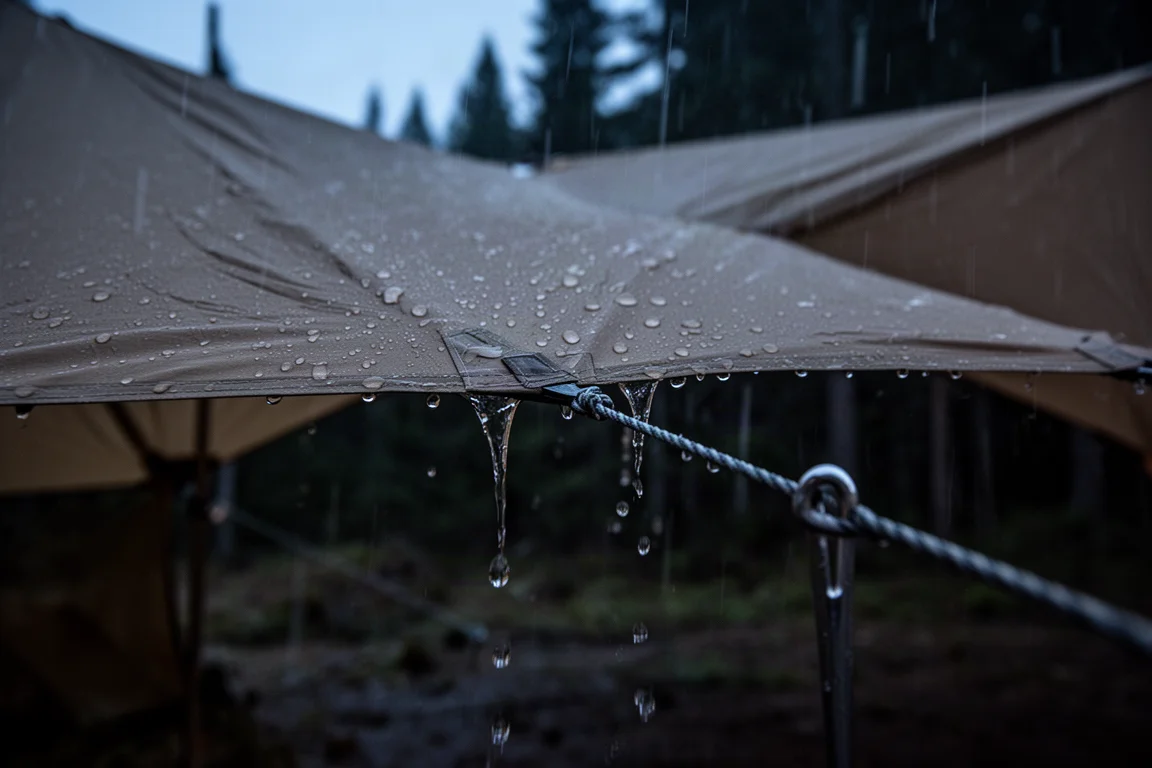
If your trips regularly run into sustained wind or heavy rain, the Base Camp is the tent designed with those conditions in mind. The Wonderland handles light rain without trouble, but it is not a tent built around severe weather.
Packed Size, Weight, and Setup
The Base Camp is the easier tent to carry and store. It weighs about 20.5 pounds against roughly 23.5 pounds for the Wonderland, and its packed size is about 30 percent smaller. The Wonderland uses more material and comes with a larger stuff sack, which makes packing it away more forgiving. The Base Camp’s smaller stuff sack makes it noticeably harder to get everything back in.
Setup time is close. The Base Camp goes up in about 17 and a half minutes, while the Wonderland takes around 19 and a half minutes, a difference of roughly two minutes. The gap comes down to tent type: a simple dome pitches faster than a cabin tent with a more involved pole structure.
Which Tent Fits Your Camping Style?
Choose the Wonderland 6 if livable interior space is the priority. It suits campers who want to stand up anywhere inside, who prefer the cabin tent layout, who want two queen beds and a divider between them, and who mostly camp in fair or warm weather. The mesh-heavy design is a genuine advantage on hot days. It is not the tent to pick if heavy rain or sustained wind is likely.
Choose the Base Camp 6 if weather protection matters more than interior volume. The full rainfly, the two vestibules for wet gear, and the four vents that close from inside make it the stronger choice for rainy trips and shoulder season camping, where fuller fabric coverage helps hold warmth in. It also offers far more pockets and hanging loops, and it packs smaller and lighter.
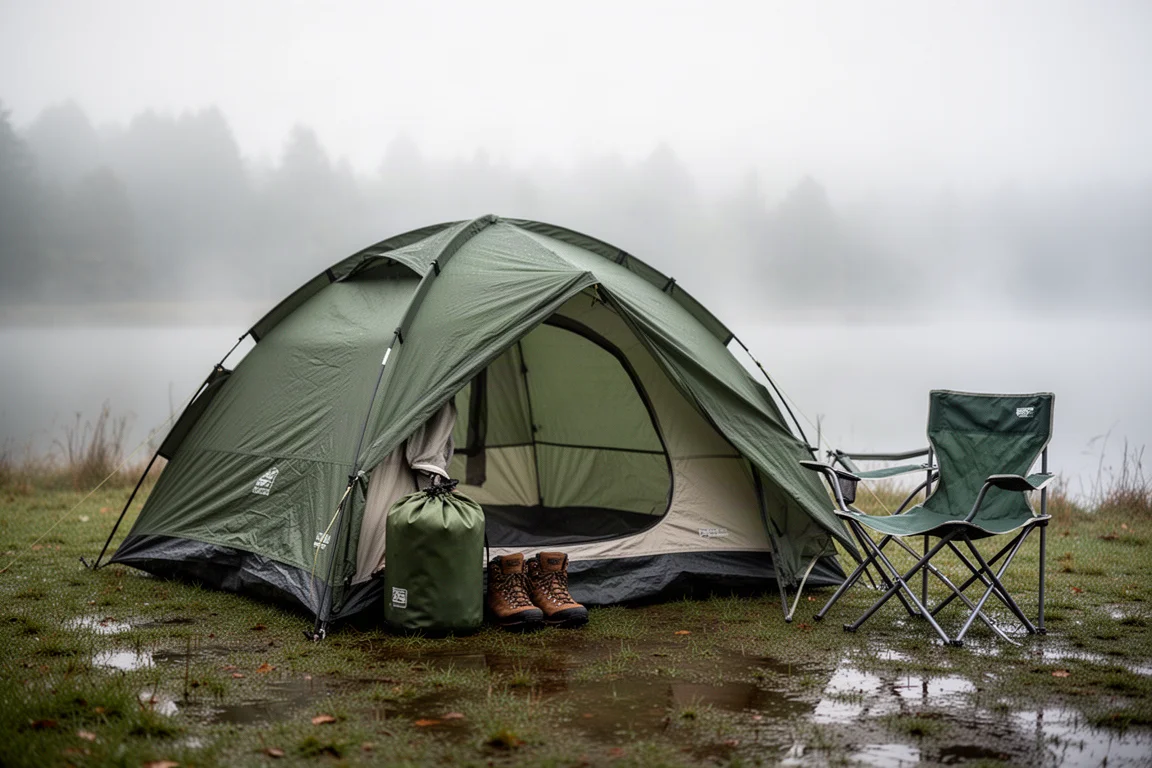
Neither tent is a compromise pick. They simply solve different problems, and matching the tent to the conditions you actually camp in will do more for your comfort than any single specification on a spec sheet.
Conclusion
The REI Wonderland 6 wins on height, interior volume, door size, and hot weather ventilation. The REI Base Camp 6 wins on rain protection, wind stability, storage, ventilation control, vestibule space, weight, and packed size. If your camping calendar is mostly warm and dry, the Wonderland’s cabin layout is hard to beat. If rain and shoulder season trips are on the schedule, the Base Camp’s full rainfly and dome structure are the safer investment.
Further reading
Related Reviews
Camping Tents
3F UL Gear Taiji Two-Person Tent Review: Field Waterproofing Results and Buying Advice
The Taiji pairs an attached fly with a removable inner, but sustained rain exposed untaped vent seams that need sealing before this shelter can be trusted.
Camping Tents
3FUL Gear Lanshan 2 Pro 4-Season Review: A Sub-$200 Single-Wall Trekking Pole Tent
An early look at the 3FUL Gear Lanshan 2 Pro 4-Season, covering its straightforward pitch, generous interior space, and the condensation and seam-sealing questions that come with any single-wall shelter.
Camping Tents
Alps Mountaineering Lynx 1-Person Tent Review: Big Value in a Small Budget Tent
A close look at the Alps Mountaineering Lynx 1-Person Tent, covering real interior dimensions, materials, setup time, ventilation limits, and who should buy it.