Camping Tents
REI Wonderland 6 Review: Roomy Six-Person Comfort With a Pole Durability Trade-Off
A six-person tent with standing height across its full length, near-vertical walls and abundant mesh, weighed against pole durability and a rainfly that stops short of the ground.
Introduction
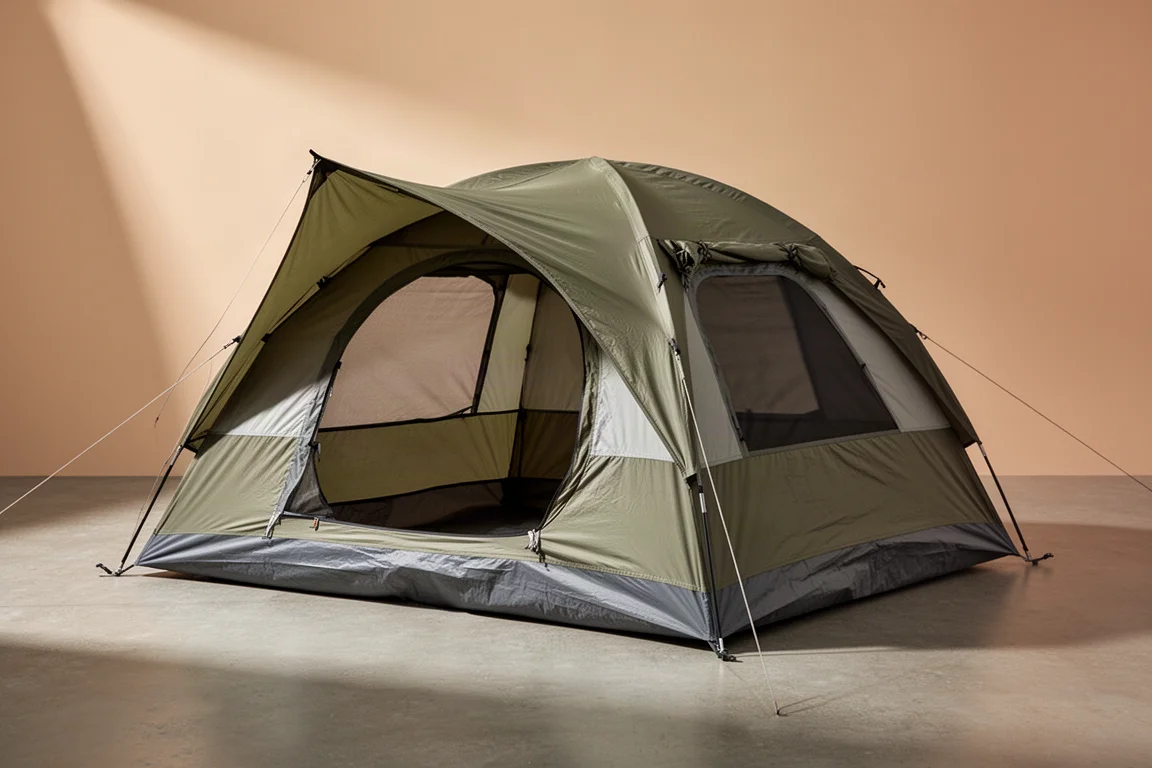
The REI Wonderland 6 is a six-person camping tent built around a very specific goal: making the inside feel less like a tent and more like a small room. It is sold only through REI, and it arrives with a room divider, a green rainfly, five aluminium poles, 18 stakes and 8 red guylines. One person can pitch it alone in under 20 minutes, including staking and guying out, which is a strong starting point for a tent this size.
That said, the Wonderland 6 is not a straightforward recommendation. Its shape delivers remarkable headroom and near-vertical walls, but the same arched pole structure puts real stress on the poles. Here is what the tent does well, where it struggles, and who should consider it.
Who the REI Wonderland 6 Is For
This tent suits campers who have always liked the idea of a cabin tent but wanted better interior proportions. If you drive to your campsite, want to stand up while changing clothes, and plan to sleep on queen mattresses or a set of sleeping pads, the Wonderland 6 is aimed squarely at you.
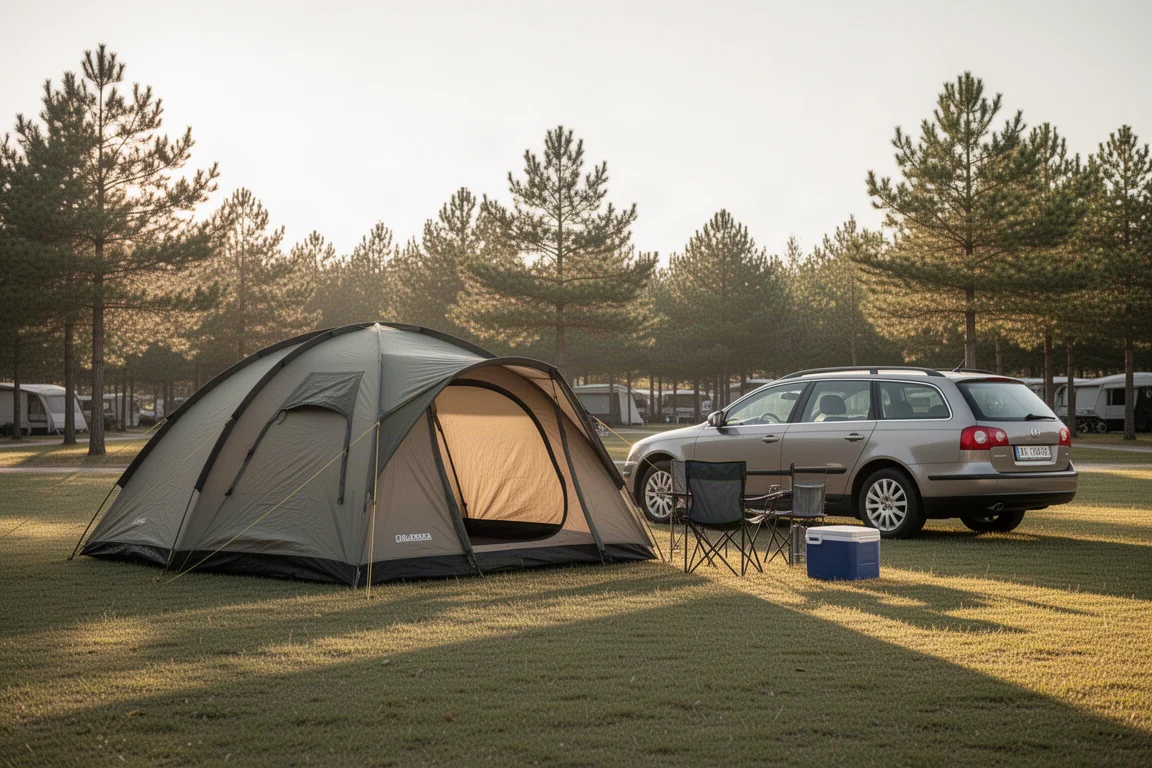
It is also a good match for couples and small families who value ventilation on warm days, since more than half the tent is covered in mesh once the rainfly comes off. It is a less natural fit for anyone who camps in exposed, windy terrain or expects to sit through many hours of sustained heavy rain.
Main Strengths
The Wonderland 6 earns its place through interior comfort rather than through weatherproofing. Three details stand out: the height across the whole floor plan, the door and window design, and the amount of mesh.
Livable Space and Peak Height
Peak height at the centre measures about 81 inches, and the impressive part is how little it drops toward the ends. The height at the far left measured about 77 inches and at the far right about 76 inches, so you effectively get standing height along the entire length of the tent rather than just under one apex. The base measures roughly 120 inches by 99 inches, close to the marketed 120 by 100 inches, for a total floor area of about 82.5 square feet.
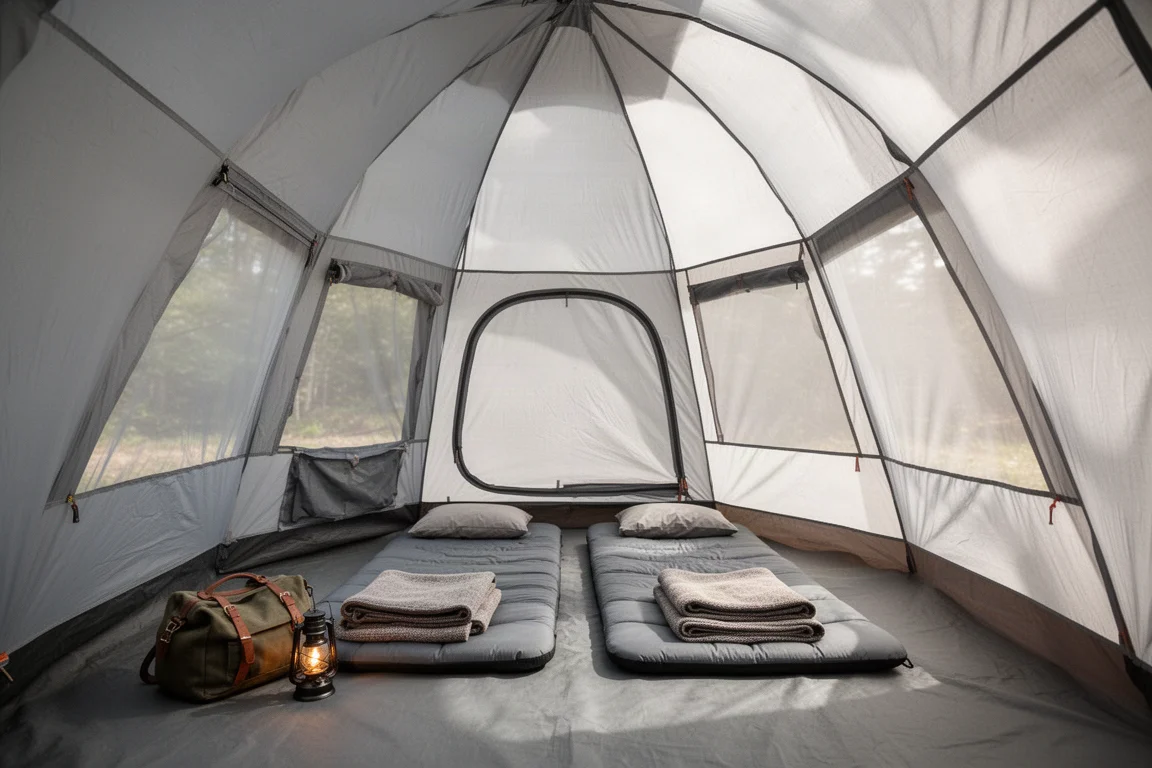
Six regular sleeping pads of around 20 inches wide will fit, but the layout is tight. Wider pads of 25 to 30 inches make six unrealistic, and a maximum of four people is the more comfortable plan. Two queen beds fit neatly, with leftover space at the foot of each mattress for gear.
The included room divider splits the tent into two rooms using seven toggles that clip to seven loops, one at the top and three on each side. Each room can hold three pads at a squeeze, two pads with generous gear space, or one queen bed quite snugly. A zip in the middle of the divider lets you pass between rooms without taking it down, and the sides can be tied back to the same toggles to open the space up. The divider does not reach all the way to the floor, and the gaps around it stay fairly small.
Doors, Windows, and Ventilation
Each door measures about 66 inches by 64 inches and stands roughly 72.5 inches tall from the ground, tall enough that most adults will not need to duck. The door zippers run snag-free, and an extra stake loop at the bottom of each door makes one-handed zipping quick and easy. A storm flap takes a little care from the inside: push the fabric outward slightly so it does not catch. The door can be unzipped almost completely, and the loose fabric tucks into a pocket beside the door.
There are four windows in total. Two sit in the doors at about 54 inches by 26 inches, and two are triangular mesh panels low on each long wall, measuring up to about 32 inches by 28 inches. Window zippers also ran snag-free, though they carry no brand stamp. The low panels have a toggle to roll the fabric up, while the door windows do not, so their fabric has to be rolled and stowed by hand. Two awnings, one on each short wall, stake out about 15 inches to shade the doors and keep roof runoff from dripping straight inside. They can also be tied back with a single toggle per side while still providing some shade overhead.
With the rainfly removed, mesh covers the roof and continues down the sides, easily more than half the tent. The fine mesh kept every bug out during testing, and the combination of two doors and multiple openings gives strong cross ventilation on hot days.
Setup, Storage, and Packed Size
Setup is genuinely solo-friendly. The full process, including staking and guying out, took just under 20 minutes, and the instructions are sewn onto the carry bag so they cannot be misplaced. Poles, grommets, webbing and pole clips are colour-coded, but the pole sleeves are not, which slows things down slightly. The tent ships with fewer stakes and guylines than the guy-out points call for, roughly 10 stakes and 6 guylines short, so plan to add your own.
Inside, there are eight pockets of about 9 by 12 inches around the tent. Two get used up holding door fabric, leaving six for gear. The divider loops double as hanging points even with the divider in place, and there is an extra loop above each door for a lantern.
Packed, the tent measures about 30 by 15 by 10 inches and weighs around 23.6 pounds for everything, with a shoulder strap for carrying. Repacking is the slow part: takedown takes about 7 minutes, but fitting everything back into the side-loading bag took closer to 10, for a total of about 16.5 minutes. The side opening is small, and a wider top-loading design would be easier to live with.
Things to Consider Before Buying
The Wonderland 6 is a well-made tent in most respects, with double-stitched seams, reinforced webbing, taped flooring and corner seams, and no loose threads. The rainfly seams are taped as well, and the general pattern is that seams sitting directly under the rainfly are left untaped while exposed seams are taped. Two areas deserve a closer look before you commit.
Pole Durability
All five poles are standard aluminium rather than a higher-grade tubing. After a few campouts, two of the five poles bent noticeably: one orange side pole and the Y-shaped pole, both at the ends. This happened without camping in strong wind or extreme weather. The arched pole structure that creates the tent’s height and vertical walls places a lot of continuous stress on those poles, which is the main trade-off behind the comfortable interior.
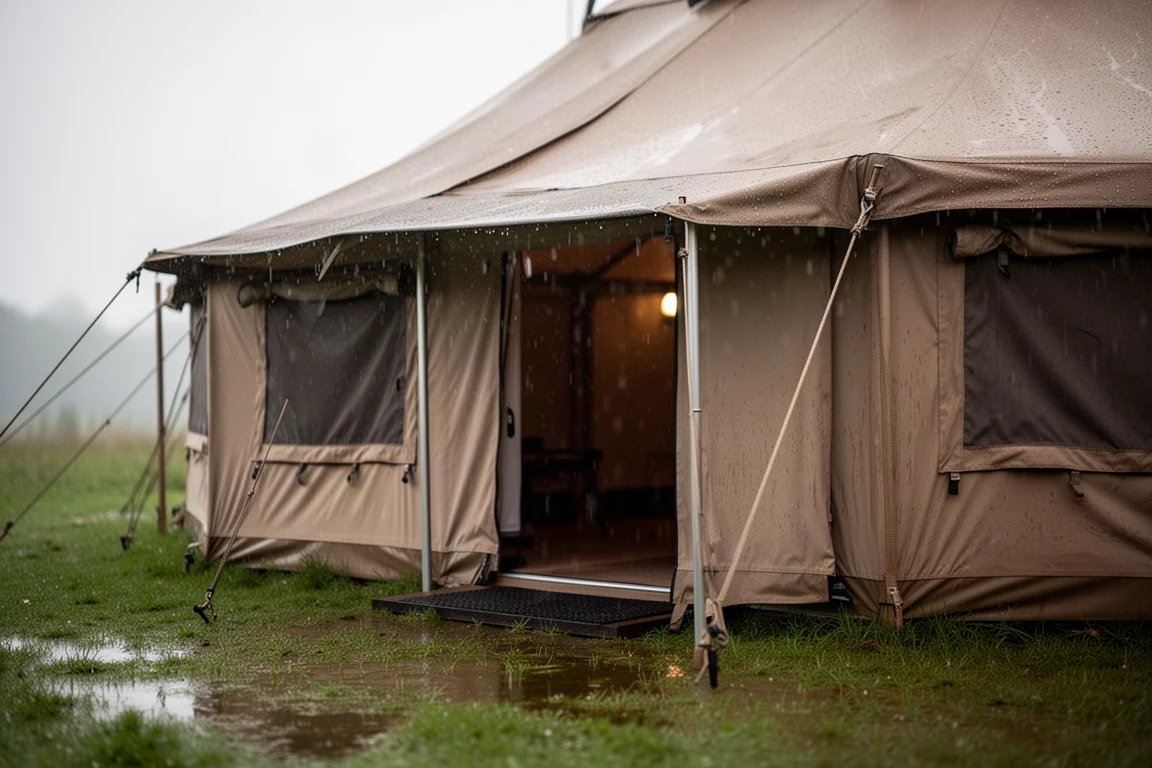
The rainfly also stops short of the ground. That is fine in light rain and held up through about an hour of heavy rain, but it is not a design for many hours of sustained downpour.
Rain, Wind, and Ventilation Limits
During a rain test of roughly one hour of heavy rain followed by several hours of light rain, the divider loops at the bottom of the tent leaked. Those loops sit below the coverage of the rainfly, and the attachment point on the inside is not taped or sealed, so water worked through a small gap and into the fabric. Every other seam, plus the floor, walls and rainfly, held up well.
Window behaviour in rain follows the same pattern. The awnings kept the door windows dry even in fairly heavy rain, while the low triangular panels soaked through because the rainfly does not cover them. Guying the rainfly slightly above those panels did not help.
Guying out the full rainfly matters for airflow. With all guy-out points tensioned, there is a useful gap between the fly and the tent body for air movement. Left slack, the fly sags and cuts that ventilation down. The two vents above the doors are very small and did not move hot air out effectively, so heat collects near the ceiling. Wind is the other limit: the tall profile and near-vertical walls catch wind, and this is a tent to keep out of strong conditions. Light wind is fine, and the more angular walls along the two long sides should shed wind a little better than a standard cabin tent. There are 14 guy-out points in total, 10 on the rainfly and 4 on the body.
Buying Advice
If you have always preferred cabin tents for their livability, the Wonderland 6 improves on the formula in several meaningful ways: some of the most vertical side walls you are likely to find, a taller and longer rainfly than most cabin tents, intuitive setup, extensive mesh, and cross ventilation from two doors that makes summer camping comfortable. It works in light rain and handles roughly an hour of heavy rain.
The decision comes down to how you weigh interior comfort against long-term durability. Buyers who camp in fair weather, pitch on protected sites and prioritise space will get a lot out of this tent. Buyers who camp in wind, sit through multi-hour storms, or want poles that shrug off repeated stress should look at alternatives with more conventional pole geometry and a full-length rainfly. Adding extra stakes and guylines is a sensible first purchase either way.
Conclusion
The REI Wonderland 6 delivers some of the most usable interior space of any six-person tent, with standing height along the full length, vertical walls, a well-designed door system, and ventilation that shines on hot days. The compromises are real: two poles bent after only a few trips, the rainfly leaves the lowest panels and divider loops exposed, and the carry bag is harder to pack than it should be. Campers who value roominess above all else and stay out of harsh weather will find plenty to like here.
Product link
View more details for REI Wonderland 6
This product is mentioned in the review. Check the specifications, options, and compatibility before buying.
View more details for REI Wonderland 6Further reading
Related Reviews
Camping Tents
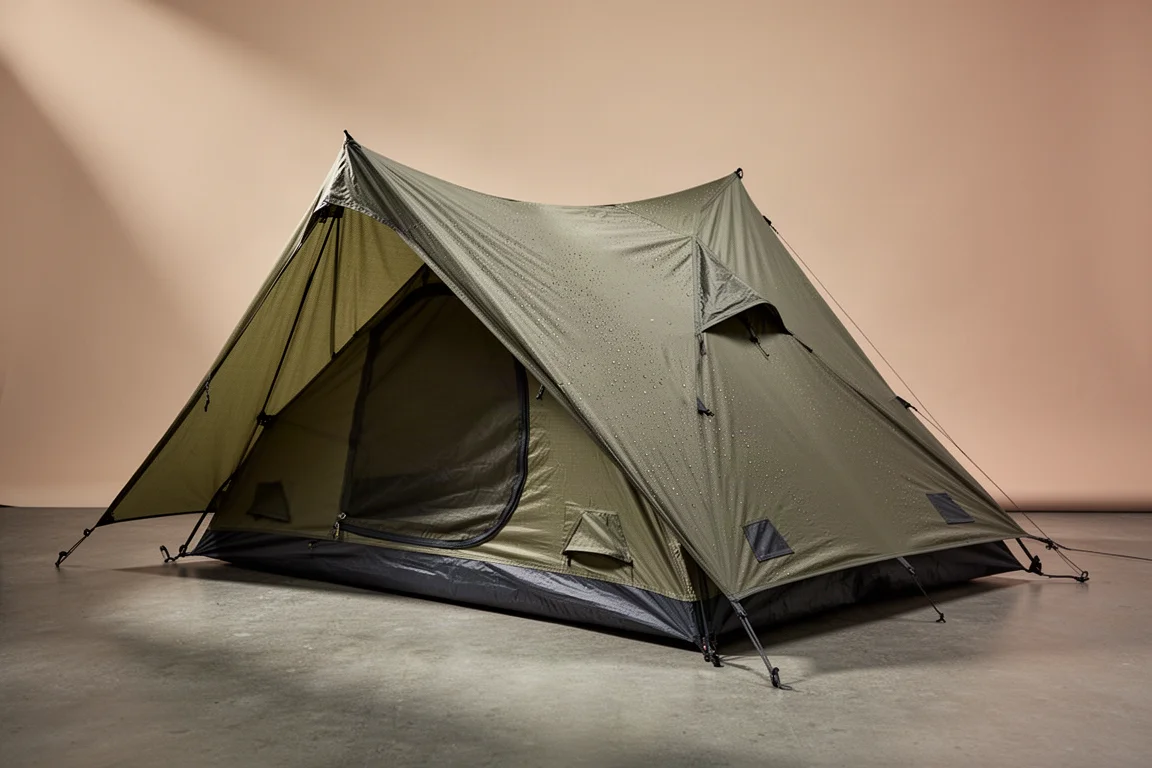
3F UL Gear Taiji Two-Person Tent Review: Field Waterproofing Results and Buying Advice
The Taiji pairs an attached fly with a removable inner, but sustained rain exposed untaped vent seams that need sealing before this shelter can be trusted.
Camping Tents
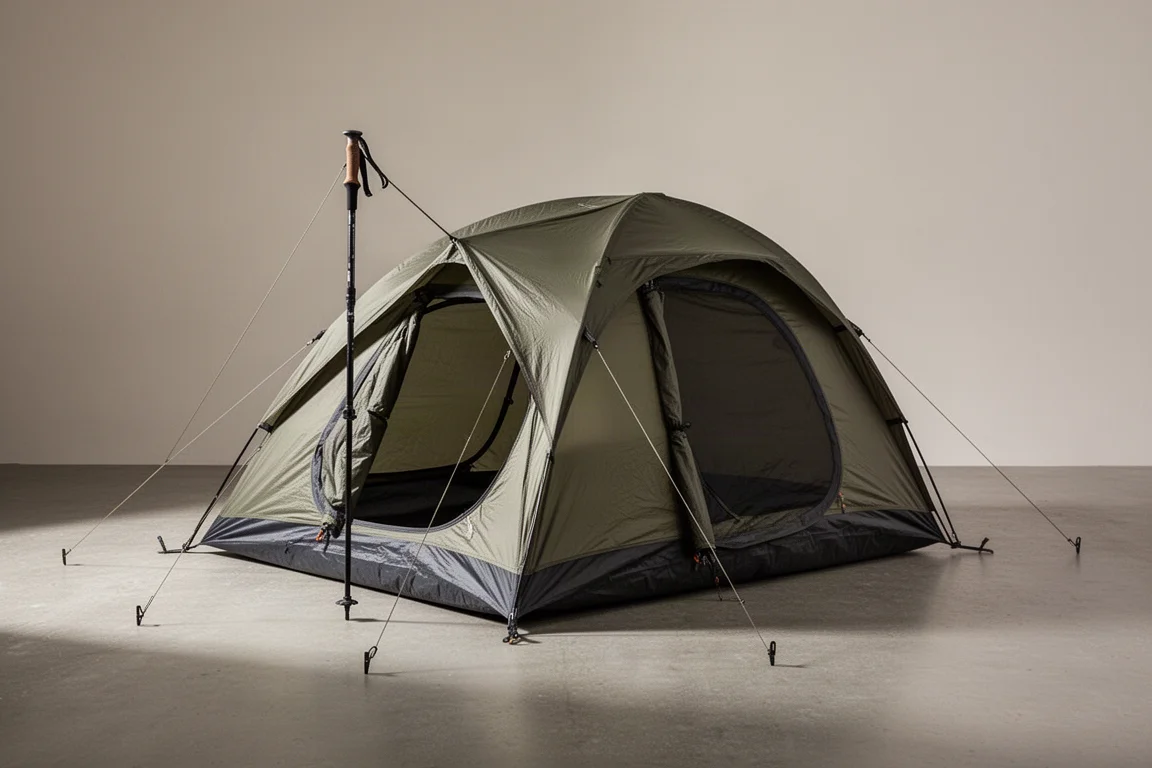
3FUL Gear Lanshan 2 Pro 4-Season Review: A Sub-$200 Single-Wall Trekking Pole Tent
An early look at the 3FUL Gear Lanshan 2 Pro 4-Season, covering its straightforward pitch, generous interior space, and the condensation and seam-sealing questions that come with any single-wall shelter.
Camping Tents
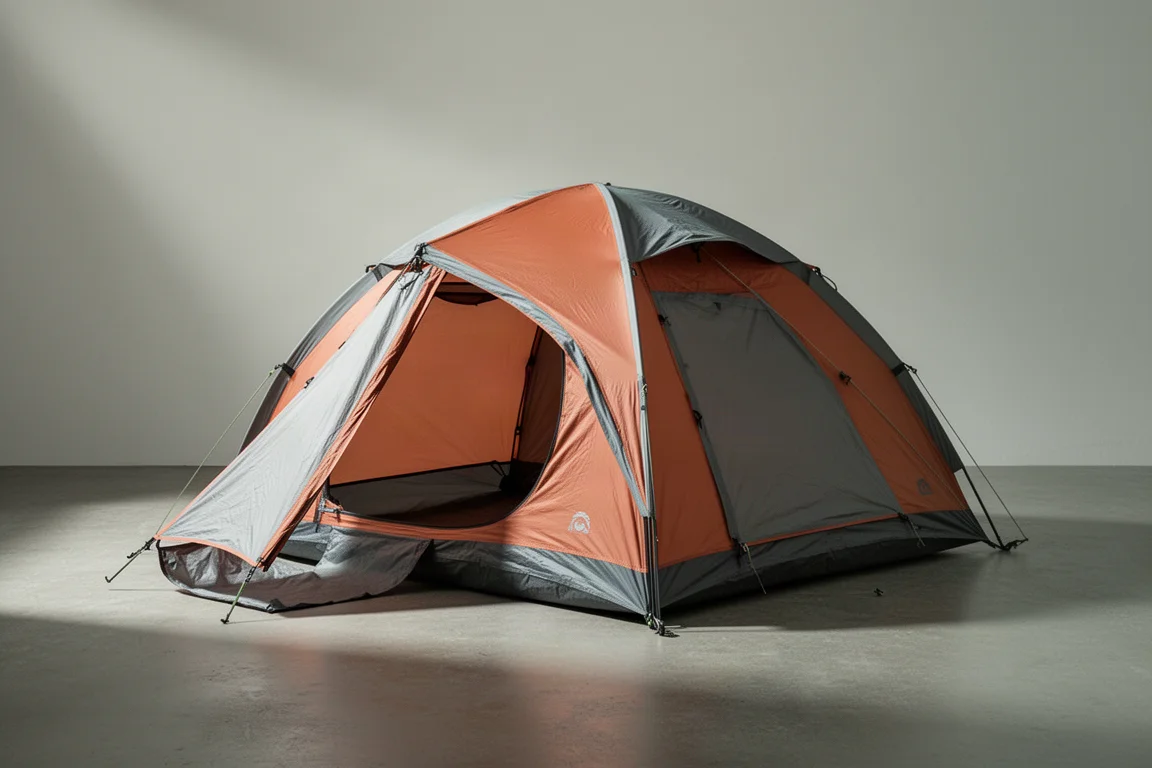
Alps Mountaineering Lynx 1-Person Tent Review: Big Value in a Small Budget Tent
A close look at the Alps Mountaineering Lynx 1-Person Tent, covering real interior dimensions, materials, setup time, ventilation limits, and who should buy it.