Camping Tents
REI Skyward Tent Review: Rain Performance and Wind Limits
A practical look at the REI Skyward cabin tent, covering its taped seams, small rainfly, door awning, and how it behaves in heavy rain with and without wind.
Introduction
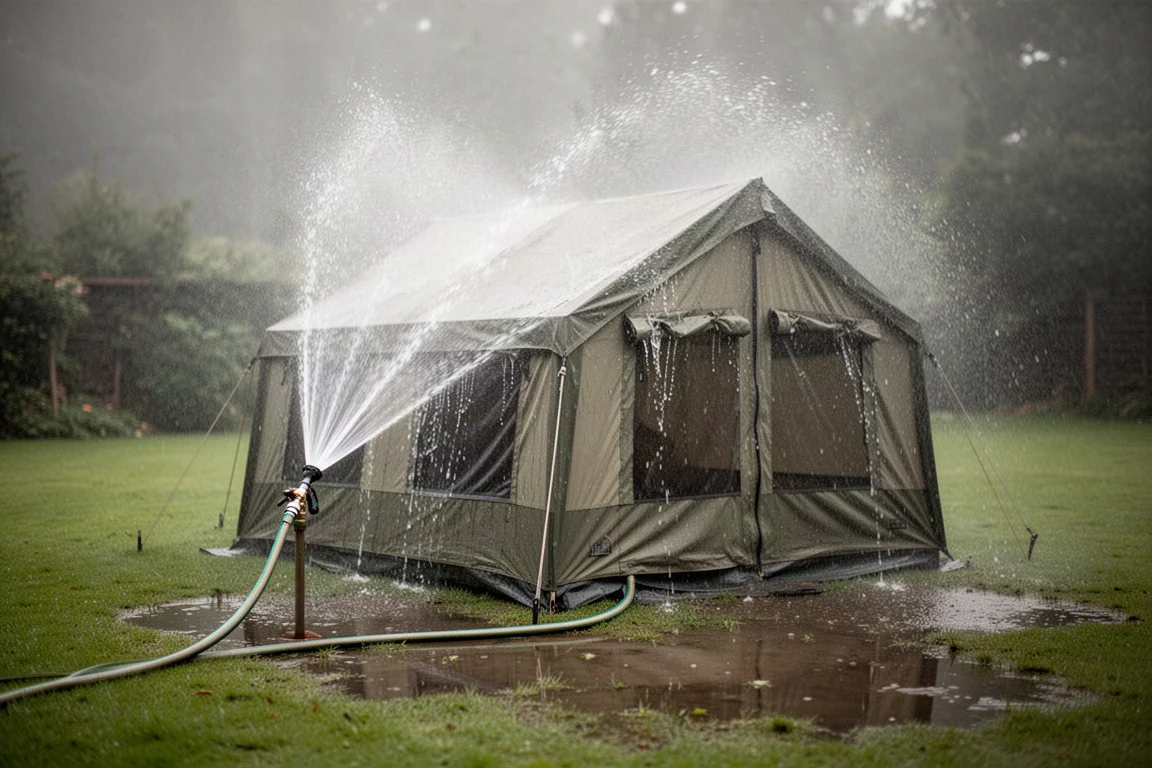
The REI Skyward is a cabin-style tent that relies on thorough seam taping and a generous door awning rather than a large rainfly. To see how that combination holds up, the tent was pitched and sprayed with a hose for a full hour to simulate heavy rain, first with the water falling almost vertically and then with the spray angled slightly to imitate a light breeze.
The results split cleanly into two scenarios, and both matter before you commit to this tent for wet-weather camping.
What follows covers the waterproofing details found across the tent, the features that stand out, and the conditions where the design starts to struggle.
Who this product is for
The Skyward makes the most sense for campers who mostly encounter rain falling straight down and who want a roomy cabin layout with a dry place to stash wet gear. The taped seams and the vestibule work in your favor here, and the interior stayed completely dry through an hour of direct, near-vertical spray.
It is a less comfortable match for exposed sites where wind drives rain sideways. If your trips regularly involve open ground, coastal weather, or storms that arrive with a breeze, the small rainfly leaves the mesh ceiling vulnerable.
Main strengths
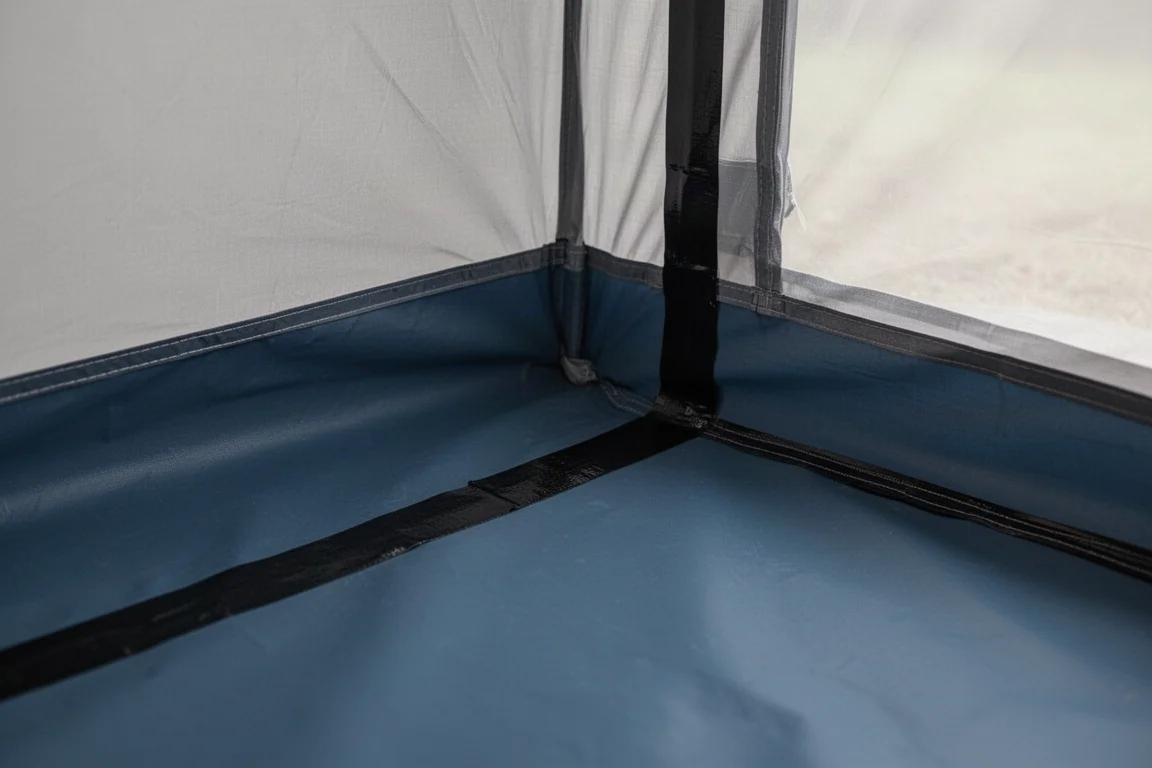
Seam taping is the Skyward’s strongest card. Every seam that stays exposed to the weather is taped: the floor seam running across the inside of the tent, the corner seams on the flooring, the blue seams along the bottom of the walls, the white-to-blue fabric seam, the middle wall seam, the seam above it, the vertical seams at all four corners, and the window seams. Seams that sit underneath the rainfly or the vestibule are left untaped, since those panels already cover them.
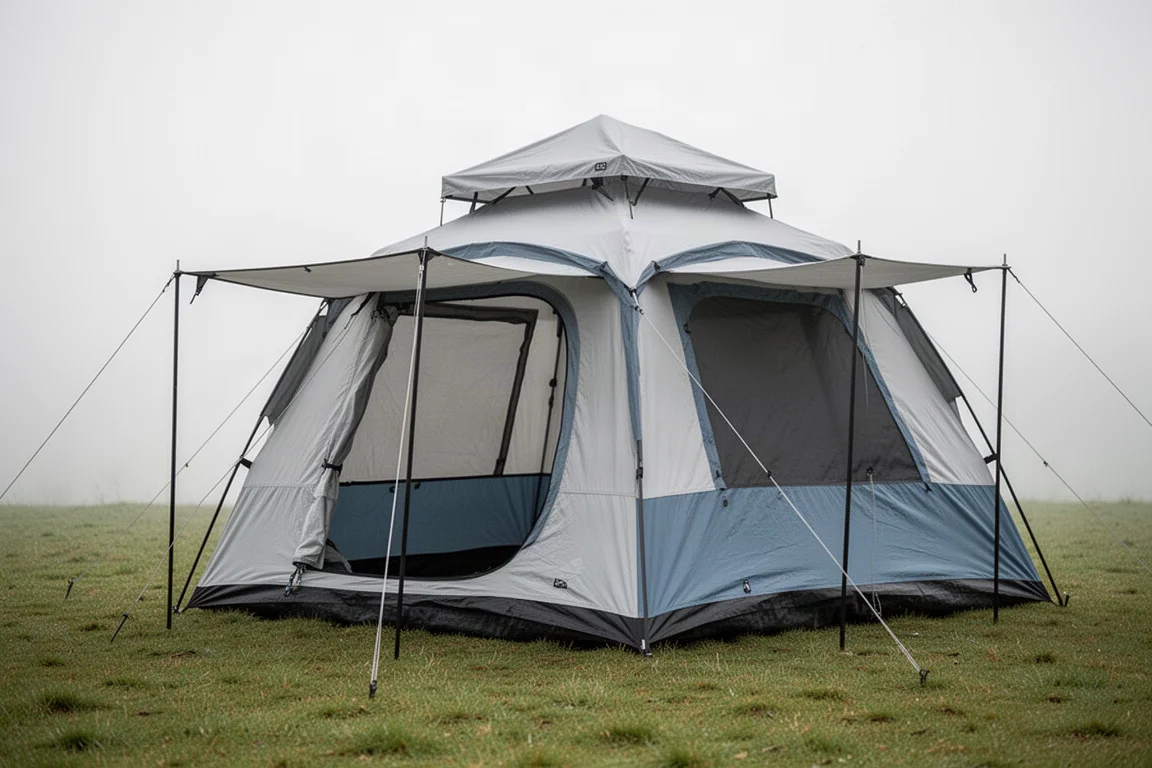
The awning over the door is the second standout feature. An extra pole props it up and creates an overhang that extends almost 15 inches past the doorway, which stops water from running off the roof and dripping directly into the tent. Zipped closed, the awning becomes a vestibule for wet gear, and that is something most cabin tents do not offer at all.
Rainfly coverage in wet weather
The rainfly is the clear weak point. It is unusually small and covers only the very top of the roof, with almost no extension down the sides and a noticeably large gap between the fly and the tent body. Many cabin tents run their rainflies five to ten inches down the wall, which gives the mesh ceiling a buffer when rain arrives at an angle.
That buffer is missing here. Through a full hour of heavy, near-vertical rain with no wind, the interior stayed completely dry, including the mesh, the seams, and the corners that took the most water. Once the spray was tilted even slightly to simulate a light breeze, water reached the mesh ceiling within five to ten minutes, soaked it, and dripped into the tent. Lifting the rainfly afterward showed both the fabric beneath it and the mesh above it thoroughly wet.
Ventilation and comfort
Ventilation is limited once the weather turns. During the rain test the window was completely drenched, which closes off the airflow that window would normally provide, so expect a stuffier interior on wet days than the mesh-heavy design might suggest.
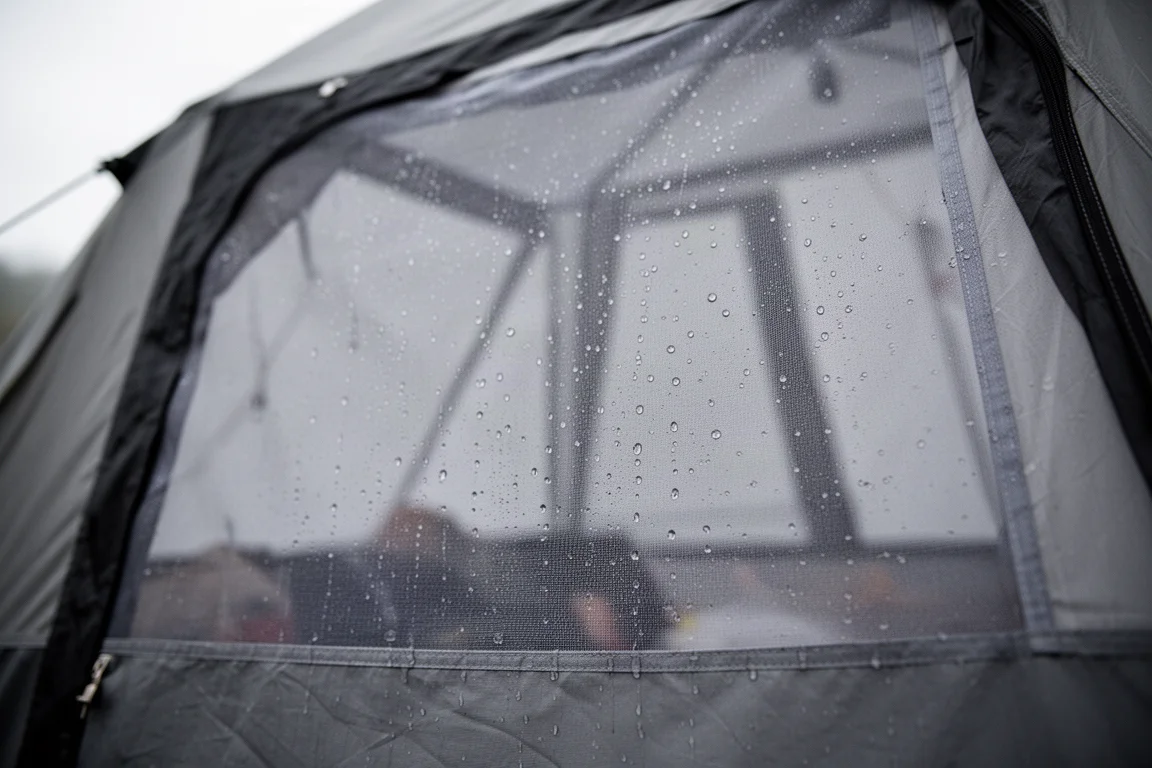
In dry, calm conditions the picture is much better. The tent absorbed an hour of direct spray without a single drop inside, and water droplets stopped short of the mesh ceiling during that test, so the fabric, the taping, and the corner construction do their job when rain falls straight down.
Things to consider before buying
The floor is worth a close look. There is no tub floor here, and the blue flooring at the base is assembled from a large number of seams. Those seams are taped, and the corners stayed dry under heavy spray, but a floor built from many panels is a different proposition from a single molded basin.
The rainfly gap is the other consideration. It leaves the mesh ceiling exposed to anything more than vertical rain, and the fix suggested by the test results is simple: plan on a tarp over the tent if you expect wind and rain together. That combination would add a meaningful layer of protection without changing anything about the tent itself.
Buying advice
Buy the REI Skyward if you want a cabin tent with genuinely thorough seam sealing, a door overhang that keeps drips outside, and a vestibule for wet gear. In calm, straight-down rain it performed exactly as a well-sealed tent should, staying bone dry from the floor corners to the mesh.
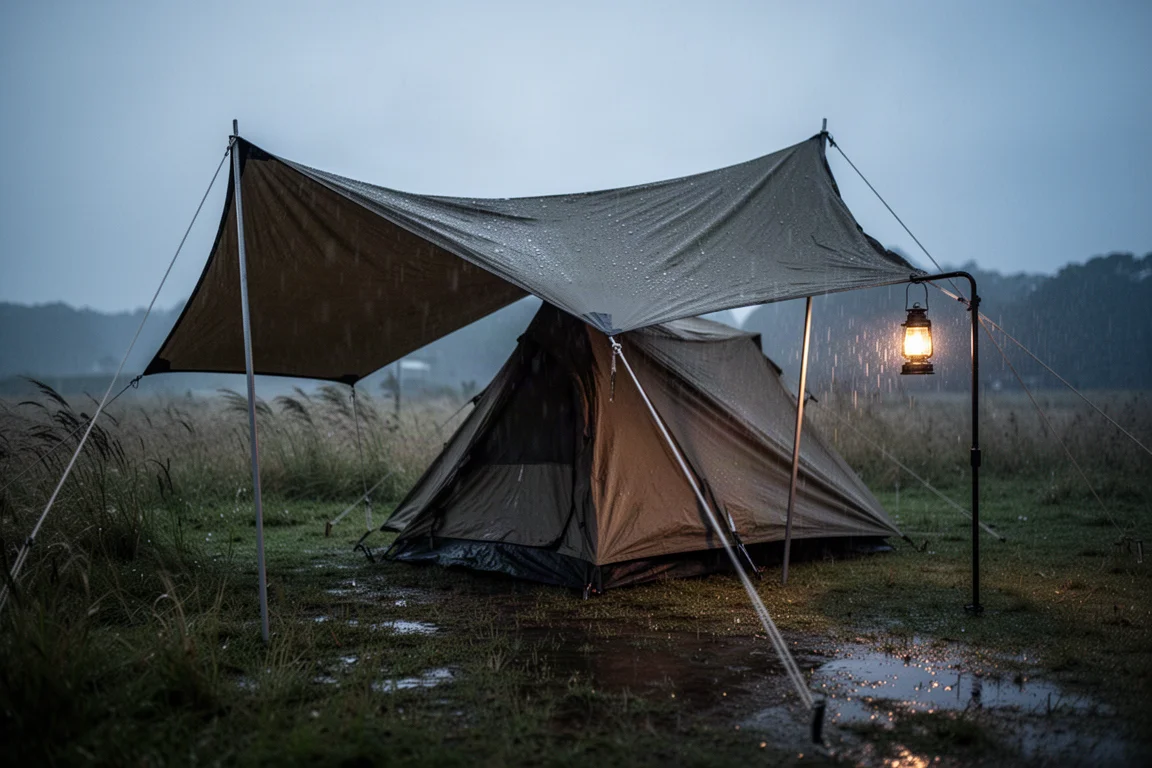
If your camping plans involve exposed pitches or forecast wind, budget for a tarp alongside the tent and treat the rainfly as a light-weather cover rather than full storm protection. Matching the tent to the conditions you actually camp in is what makes this a satisfying purchase rather than a frustrating one.
Read the weather forecast before you commit to a site, and the Skyward will reward you with a dry, well-organized shelter in the conditions it was built for.
Conclusion
The REI Skyward gets the fundamentals right where it counts most: comprehensive seam taping, a door awning with real overhang, and a vestibule that most cabin tents lack. It stayed completely dry through an hour of heavy rain falling vertically. The trade-off is a rainfly so small that even a slight breeze can push water onto the mesh ceiling and into the tent, which is why a tarp is a sensible companion for windy, wet trips.
Product link
View more details for REI Skyward Tent
This product is mentioned in the review. Check the specifications, options, and compatibility before buying.
View more details for REI Skyward TentFurther reading
Related Reviews
Camping Tents
3F UL Gear Taiji Two-Person Tent Review: Field Waterproofing Results and Buying Advice
The Taiji pairs an attached fly with a removable inner, but sustained rain exposed untaped vent seams that need sealing before this shelter can be trusted.
Camping Tents
3FUL Gear Lanshan 2 Pro 4-Season Review: A Sub-$200 Single-Wall Trekking Pole Tent
An early look at the 3FUL Gear Lanshan 2 Pro 4-Season, covering its straightforward pitch, generous interior space, and the condensation and seam-sealing questions that come with any single-wall shelter.
Camping Tents
Alps Mountaineering Lynx 1-Person Tent Review: Big Value in a Small Budget Tent
A close look at the Alps Mountaineering Lynx 1-Person Tent, covering real interior dimensions, materials, setup time, ventilation limits, and who should buy it.