Sleeping Pads
REI Helix vs Zenbivy Sleeping Pad: Two Comfort-First Backpacking Pads Compared
A close look at two three-inch quilted sleeping pads with suspended reflective insulation, covering warmth, valve design, and which one delivers more pressure relief.
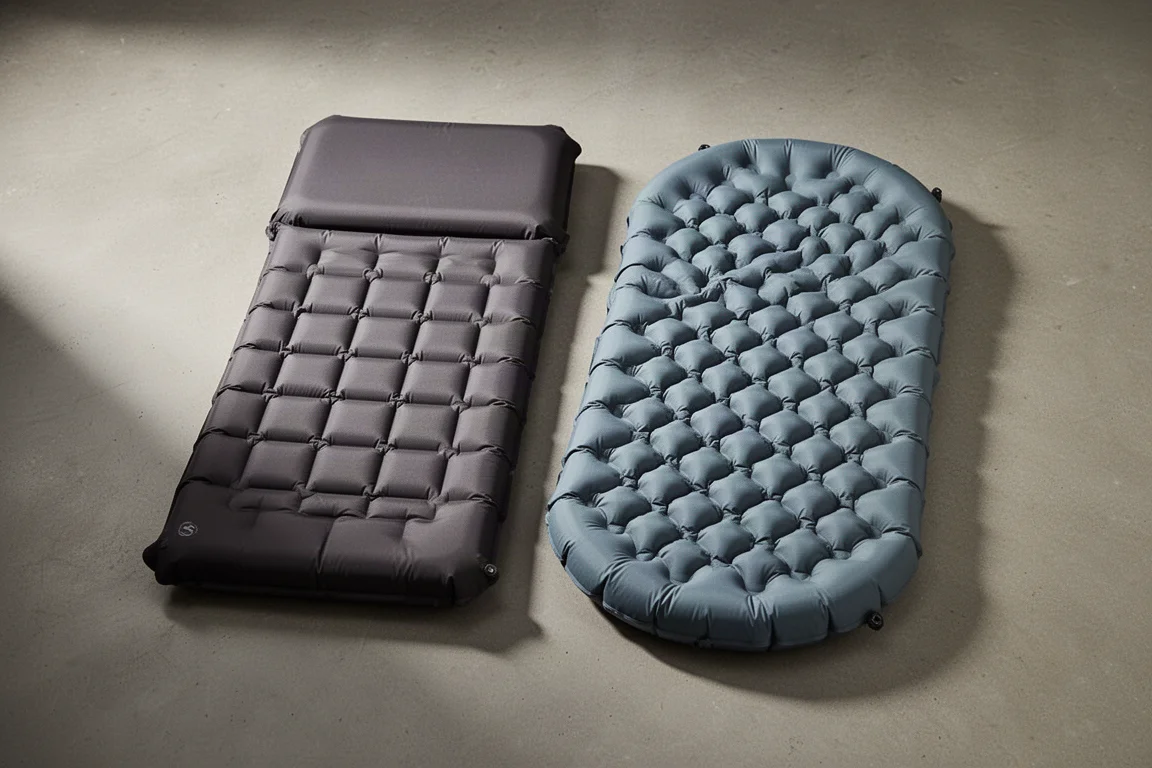
Introduction
The REI Helix has been the sleeping pad to beat for backpackers who put comfort first. Zenbivy’s newer pad arrives with a very similar brief: the same three-inch quilted construction, the same suspended reflective insulation, and a lighter carry weight. On paper the two are close enough that the real differences only appear when you sleep a full night on one, then the other, and then swap them mid-night to compare directly.
That is the approach here, judged across the three categories that decide how well you actually sleep outdoors: warmth, design, and comfort. The Zenbivy lists at around $200 and the REI Helix at around $170, so the decision is not only about the sleep itself.
How These Pads Compare: What Actually Matters
Warmth sets the floor for everything else. A pad that loses heat through cold ground will wake you up regardless of how plush it feels. Design covers the practical details that shape nightly use: where the valves sit, how the pad inflates, and how the top edge interacts with a pillow.
Comfort is the category that gets the most attention, and it breaks down into four parts. Top feel is how the fabric feels against a sleeping bag. Thickness determines whether a shoulder or hip bottoms out. Supportiveness is what keeps you stable when you roll toward the edge. Pressure relief is what stops an arm from going numb or a hip from aching during a long night on your side.
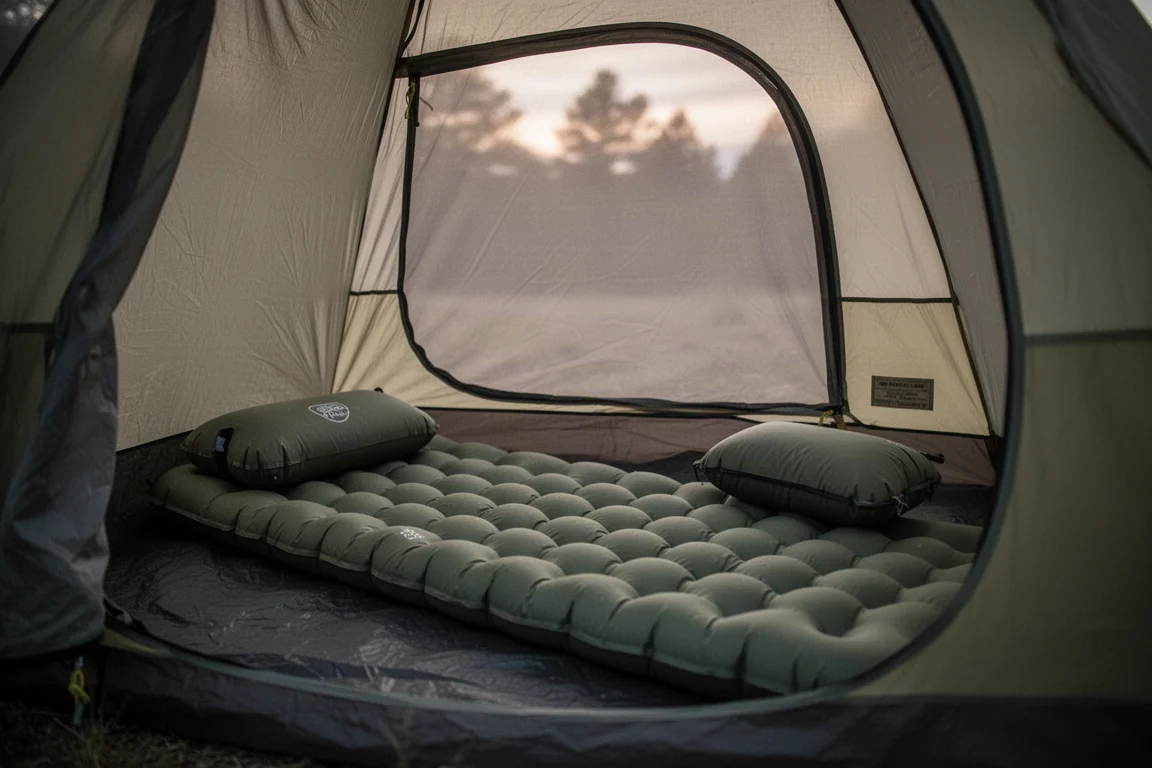
Those four factors are the reason two pads with nearly identical specs can feel meaningfully different by morning.
REI Helix: The Long-Standing Comfort Benchmark
The REI Helix carries an R-value of 4.9 and uses two layers of reflective film suspended inside the pad. Because of how the interior is built, that film stays suspended rather than settling at the bottom, which is where it would stop doing useful work. The pad is three inches thick and covered in 30 denier polyester, and it weighs around 700 g.
Its quilted baffling runs in a box grid pattern of horizontal lines. The top edge is squared off, which matters more than it sounds: a pillow with a pad strap grips that flat edge and stays put, so the pillow can sit right at the end of the pad without sliding off during the night.
The trade-off is access. Both the inflation valve and the deflation valve sit on the underside of the pad, which makes mid-night adjustments awkward. Flipping the pad to sleep on it upside down is possible, but it appears to sleep colder that way, likely because the suspended reflective film shifts inside the shell. Right side up is the better choice.
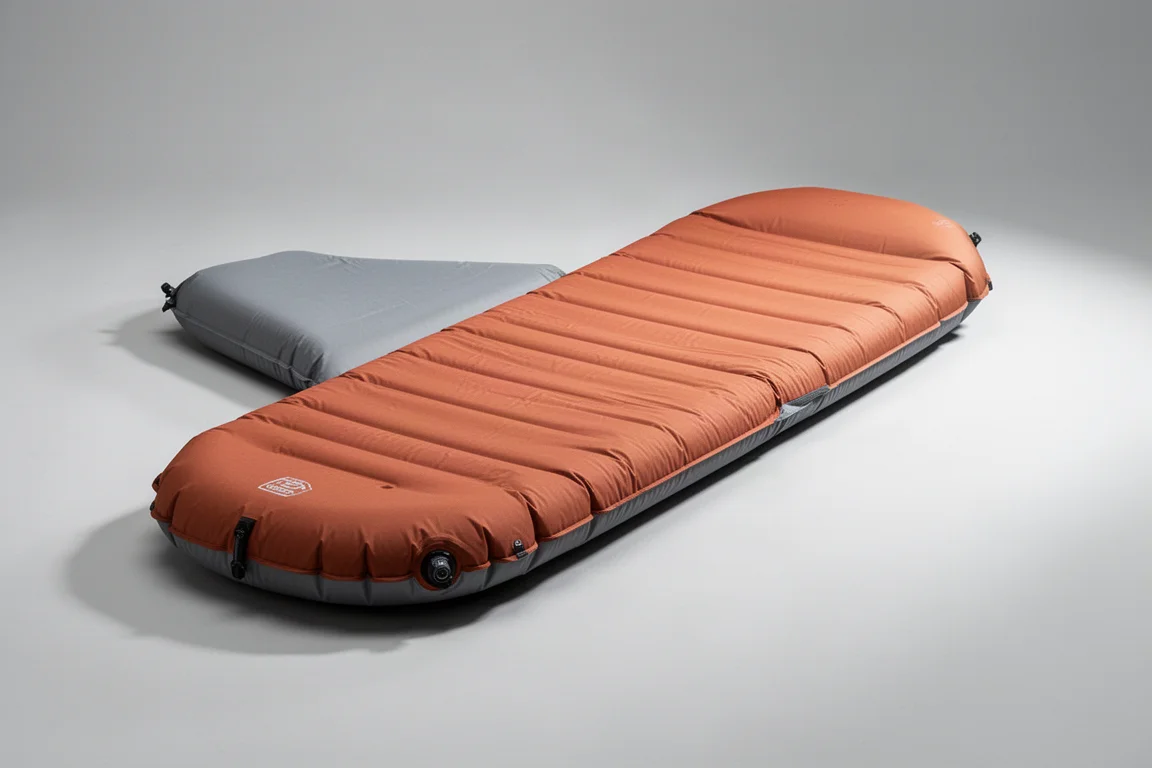
Zenbivy Sleeping Pad: The Lighter Contender
The Zenbivy pad is rated at 4.8 and uses the same approach to insulation: two layers of reflective film suspended inside the pad, held in place by the internal structure. It is also three inches thick, but the shell is a thinner 20 denier polyester, and the pad is noticeably lighter than the REI Helix.
The design choices lean toward simplicity. There is a single valve mounted on top of the pad, combining inflation and deflation in one unit, which means fewer points of failure and easier access while you are lying on it. If the pad softens as the air cools overnight, you can top it up without getting up. If it feels too firm, opening the first flap of the valve and pressing down releases a little air.
The stuff sack doubles as the pump sack by pulling out an extension collar, which saves carrying a separate item, though the air volume is small and inflation takes quite a few repetitions. The quilted baffling runs in a diagonal pattern, which Zenbivy says is intended to keep the pad from twisting after inflation. The top edge curves rather than squaring off, so a pillow strap can creep upward unless it is positioned on the flatter section.
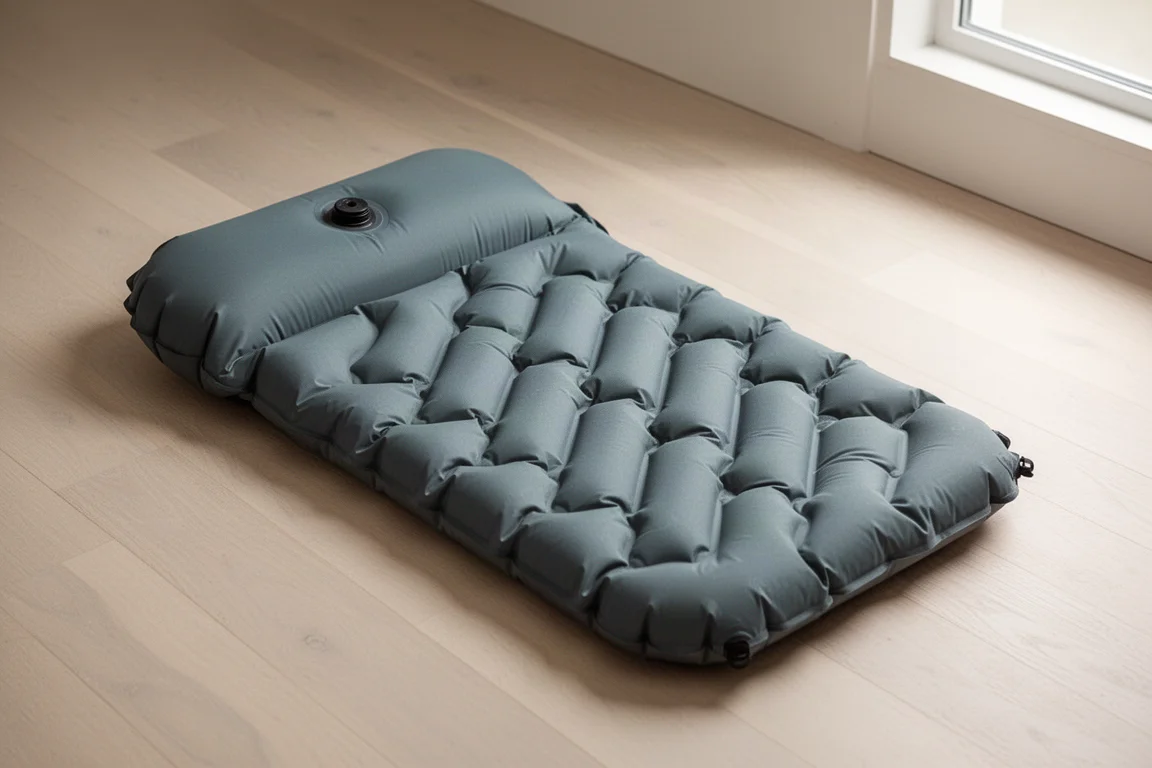
Warmth: Two Reflective Systems, One Very Close Call
On paper these two pads are nearly inseparable, at R-values of 4.9 and 4.8. Both rely on two layers of reflective film suspended inside the pad, and both keep that film in place instead of letting it drop to the floor of the shell, which is the failure mode that makes some reflective pads feel cold in the field.
Real-world results match the numbers. Both pads have been slept on over cold ground in sub-freezing conditions and stayed warm throughout, with no cold spots developing overnight. That is not something every pad rated in the four range can claim once conditions get demanding.
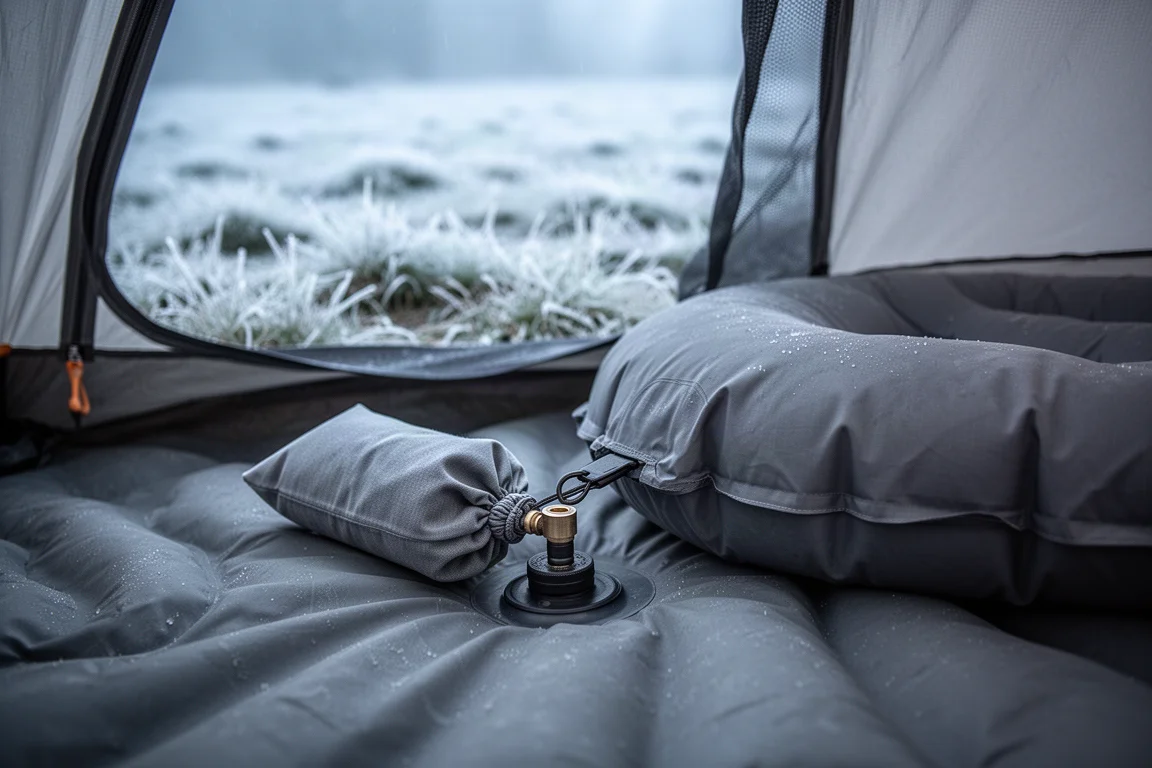
The honest conclusion on warmth is that there is no clear winner. Across individual nights and mid-night swaps, the two are too close to separate. Whichever pad you choose, the insulation is doing its job.
Design Details: Valves, Inflation, and Pad Shape
The valve placement is the most consequential design difference for nightly use. The Zenbivy valve sits on top of the pad, so adjusting firmness takes seconds while you are still lying down. The REI Helix puts both valves underneath, which means rolling over, reaching under the pad, or getting out of the sleeping bag to make the same change.
Inflation follows a similar split. Both pads ship with a pump sack, but the Zenbivy’s is integrated into the stuff sack, and its smaller volume means many more repetitions to reach full pressure. The REI Helix uses a larger standalone pump sack that stows in the bottom of the stuff sack, so it fills the pad in noticeably fewer cycles.
Shape is the third difference. The squared-off top of the REI Helix holds a pillow strap firmly in place, while the curved top of the Zenbivy lets straps slide toward the center, which occasionally sends a pillow off the end. Both pads taper slightly toward the foot, but not enough to feel cramped. If comfort is the priority, a 25-inch wide pad is worth the extra grams in either case.
Comfort: Top Feel, Support, and Pressure Relief
Top feel is a wash. Both pads use polyester and both feel similar under a sleeping bag: not especially plush, but not rubbery either.
Thickness is identical at three inches, which is about the practical minimum for genuine comfort. Heavier sleepers, particularly side sleepers over roughly 220 pounds who move around during the night, may bottom out a shoulder or hip on either pad.
Supportiveness is a strength of both. The quilted baffling keeps the edges firm, so leaning toward the side of the pad does not produce that collapsing, about-to-roll-off feeling common on simpler designs.
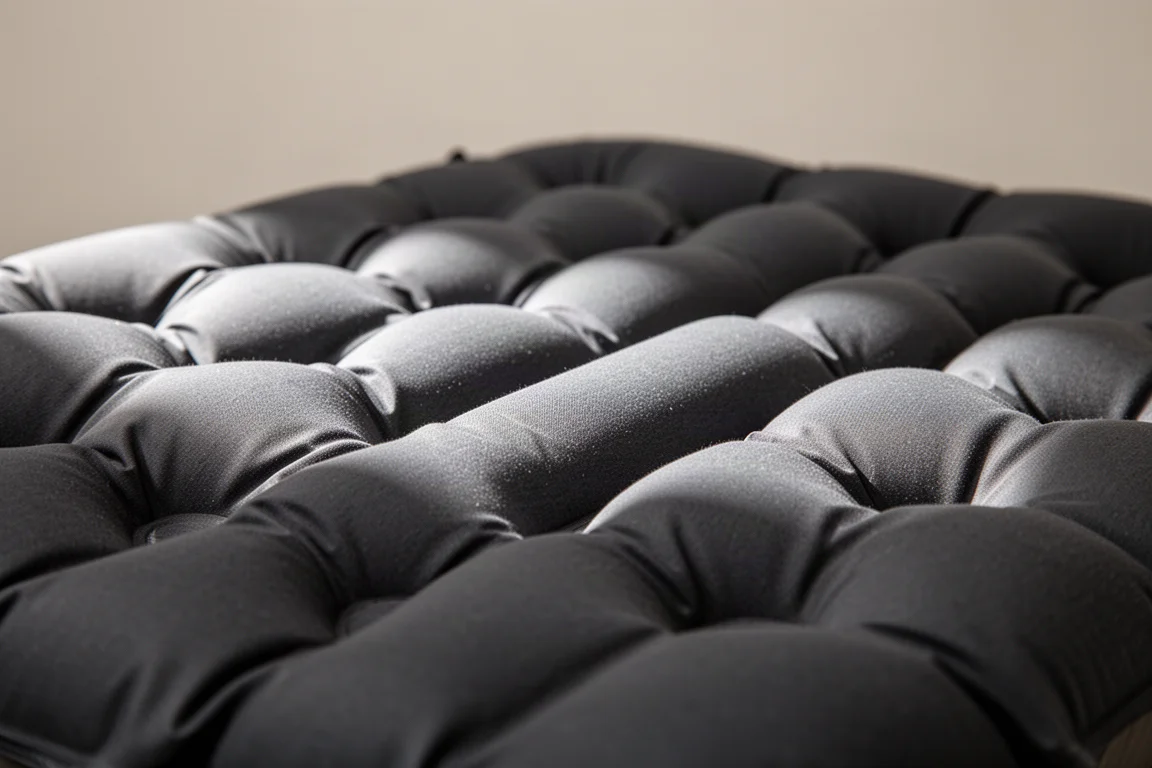
Pressure relief is where the quilted pattern earns its reputation. The lowered dimples and raised chambers act like small air springs, giving slightly wherever weight lands. Compared with horizontal baffles, and even with vertical baffles, which are the next best option, the difference in pressure relief is substantial on both pads. The REI Helix arranges that quilting in a box grid, while the Zenbivy uses a diagonal layout that is said to reduce twisting after inflation. In practice, neither pad twisted noticeably.
The subtle difference emerged only through mid-night swaps. The REI Helix came out slightly ahead, on the order of ten percent more comfort, and almost all of it came down to pressure relief, especially when lying on one side. The raised areas on the Helix appear to give a little more and may be slightly larger. The Zenbivy feels a touch firmer, closer to a firm mattress than a soft one, which will suit back sleepers and anyone who prefers that feeling.
Materials and Long-Term Durability
The REI Helix uses 30 denier polyester and the Zenbivy uses 20 denier polyester. Neither pad has shown durability problems in use, but that is a single data point against the thousands of pads in circulation, so it is worth checking failure reports across retailers before committing.
There is one structural difference in track record. The Zenbivy pad is much newer, so its long-term reliability is less established. The REI Helix line had quality control complaints in earlier generations, and the current model appears to have resolved them. Buyers who want a longer field history have more of it on the REI side.
Buying Advice: Which Pad Suits Which Sleeper
Choose the REI Helix if pressure relief is the priority, if you sleep on your side, or if you use a pillow with a pad strap and want it to stay at the very end of the pad. It is the slightly more comfortable pad in direct comparison, and it costs less at around $170. The compromise is the underside valve placement and the roughly 700 g weight.
Choose the Zenbivy sleeping pad if weight matters, if you prefer a firmer surface, or if you want to adjust firmness without leaving your sleeping bag. The top-mounted single valve is the standout design feature, and the pad is lighter despite costing more at around $200. Expect a slightly firmer night and a pillow that needs careful strap placement.
Either pad handles sub-freezing nights on cold ground, so warmth is not the deciding factor. The choice comes down to whether you value a small edge in pressure relief and a lower price, or lower weight and easier valve access.
Conclusion
Both of these pads are genuinely comfortable, and the gap between them is small enough that either one will improve sleep on the trail compared with a basic inflatable. The REI Helix keeps a narrow lead on comfort, mainly through pressure relief and its pillow-friendly shape. The Zenbivy counters with less weight, a simpler valve system, and a firmer feel that some sleepers prefer. Match the pad to how you sleep, and the difference in price becomes the least important part of the decision.
Further reading
Related Reviews
Sleeping Pads
Best Backpacking Sleeping Pads 2026: Nine Pads Rated on Price, Comfort, Warmth, and Weight
Nine backpacking sleeping pads compared on price, comfort, warmth, and weight, from a $65 summer pad to a year-round option rated at R-7.3.
Sleeping Pads
Best Backpacking Sleeping Pads: Comfort, Warmth, and Weight Compared
A practical comparison of the Nemo Quasar 3D, Therm-a-Rest NeoAir XTherm Max, and Big Agnes Rapide SL for backpackers choosing between comfort, warmth, and packed weight.
Sleeping Pads
Best Backpacking Sleeping Pads: Ultralight, Winter, Comfort and Budget Picks
A practical roundup of the sleeping pads that stand out for ultralight weight, winter warmth, pressure relief and value, plus three popular pads that fell short.