Hi-Fi Audio
Building a Reference Hi-Fi System: Five High-End Components Worth Knowing
Five reference-grade components, from a product of the year bookshelf loudspeaker to a high-current amplifier, a single-box streamer and DAC, a tube and R2R CD player, and a tube preamplifier.
Introduction
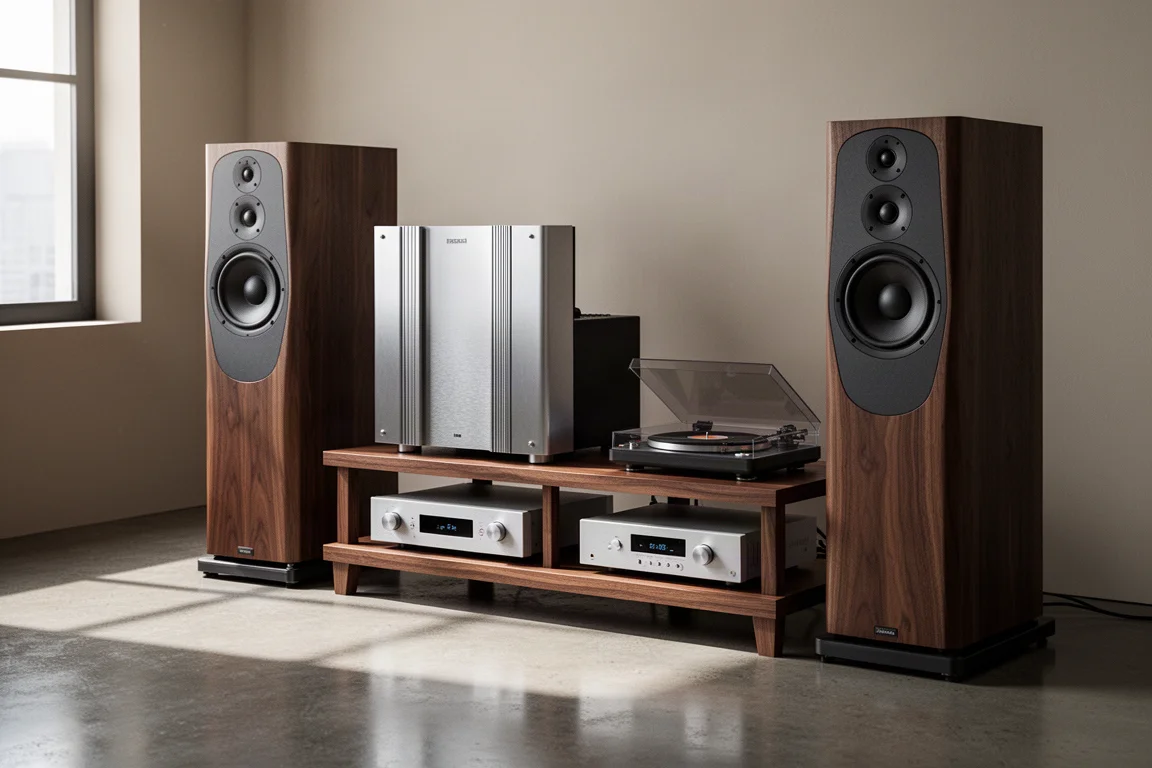
A reference system does a specific job. It sets the bar that every other component gets measured against, and it has to stay in place long enough to become genuinely familiar. This roundup covers five components that now form a fixed high-end baseline: a pair of large bookshelf loudspeakers that reach well into the low bass, a high-current power amplifier, a single-box streamer and DAC, a tube and R2R CD player, and a tube preamplifier for analog sources.
Each one earns its place for a different reason. Together they cover streaming, disc playback, and analog front ends without asking a single piece of gear to do everything.
How This Reference System Was Chosen
The selection criteria here are deliberately narrow. A reference component has to be neutral enough that it does not flatter or disguise the character of whatever is connected to it, and it has to offer enough dynamic range and bandwidth that small differences between products become easy to hear.
Practical coverage matters just as much. If the only source available is a streamer, then any comparison involving a turntable, a CD transport, or a separate converter is guesswork. Keeping dedicated reference points for each playback format means each medium can be judged on its own terms.
There is also a practical argument for owning at least one component that sits near the top of the market. Judging whether an affordable amplifier or speaker punches above its price requires something genuinely expensive and capable sitting next to it.
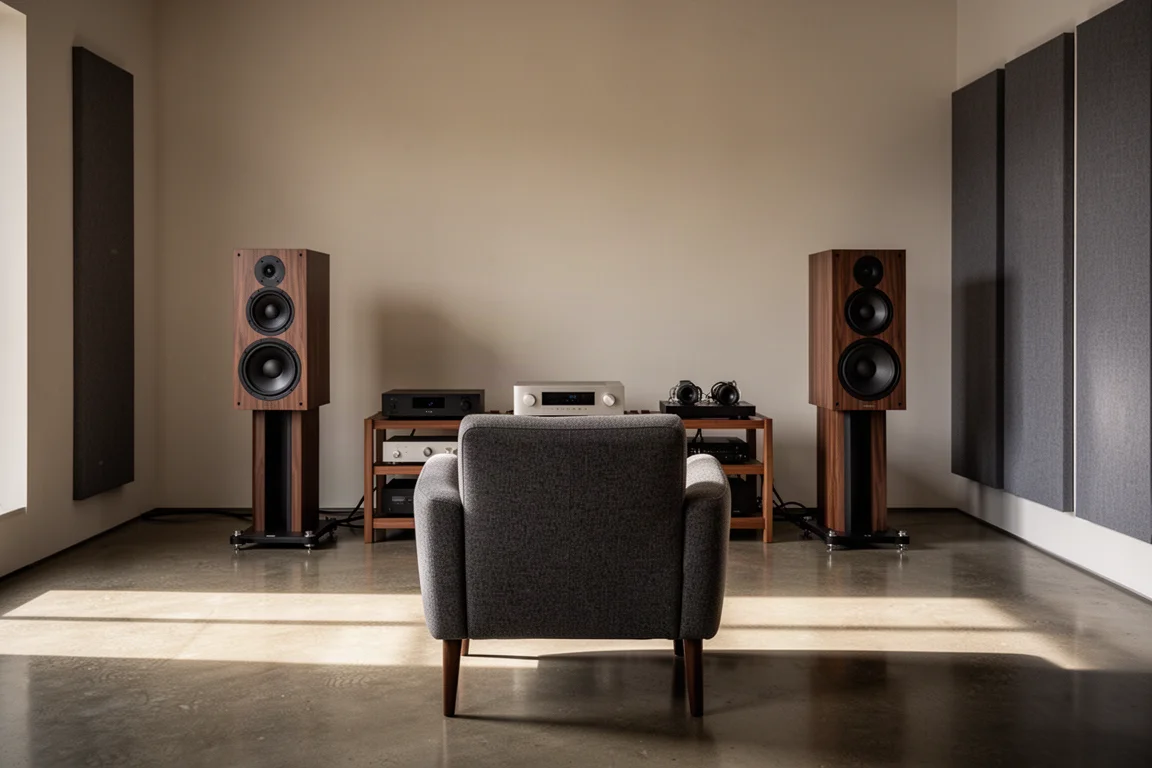
Durability and predictability round out the list. A reference piece should be built to survive years of use, with circuits and construction unlikely to drift or fail, so the baseline stays constant while everything else changes.
Product of the Year: Arendal 1528 Bookshelf Loudspeakers
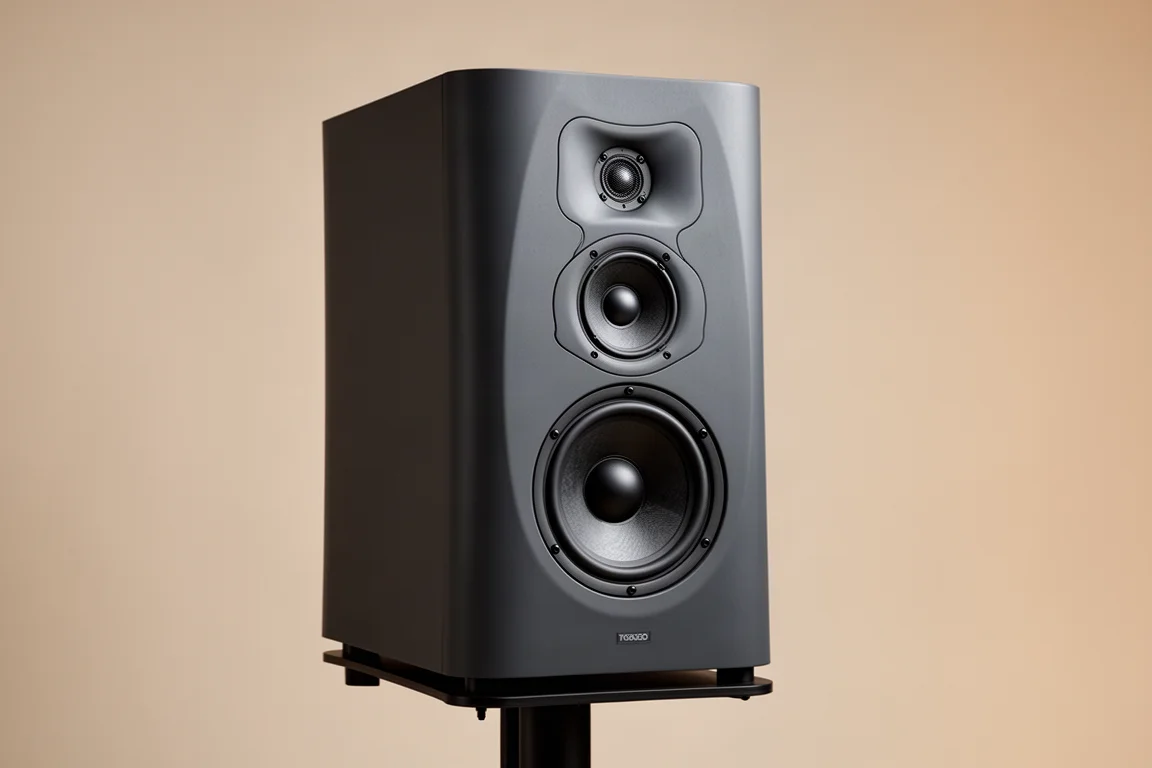
The Arendal 1528 bookshelf loudspeaker was named product of the year, and the case for it rests on how much genuine high-end engineering sits inside a relatively compact, stand-mounted box. At $5,200 it is not an inexpensive speaker, but it is priced well below the ultra high-end bracket, where comparable performance often sits in the $15,000 to $20,000 range.
The cabinet is the first thing that stands out, simply because of its size. Large internal volume brings scale, deep bass extension, and dynamic headroom, but only if the enclosure is rigid enough to stay quiet. The 1528 uses high density fibreboard rather than standard MDF, along with proper internal bracing, which keeps the cabinet inert despite its bulk.
The front baffle is the more interesting piece of engineering. It is curved so that the drivers are precisely time aligned, and it is built by sandwiching and bending thin layers of wood, a process that takes roughly a week to cure. That phase coherency is what produces the speaker’s sense of imaging, instrument separation, and natural, unforced musicality.
Driver selection follows the same logic. A lithium magnesium tweeter sits in a dedicated waveguide and delivers a sweet, refined top end with strong definition, transparency, and natural attack and decay, without turning lean or analytical. A carbon midrange driver, the type usually found in far more expensive compact speakers, stays neutral, detailed, and textured, and crosses over cleanly to the tweeter. An 8-inch high-excursion woofer fills in the bottom end, reaching down into the 20 Hz region in room.
The finish details are equally considered: rhodium plated binding posts and jumper settings that let the treble be trimmed or lifted slightly to suit the room. There is one real caveat. At 84 dB sensitivity, the 1528 is inefficient and needs serious amplifier power to perform at its best.
Reference Amplifier: EMM Labs MTRS
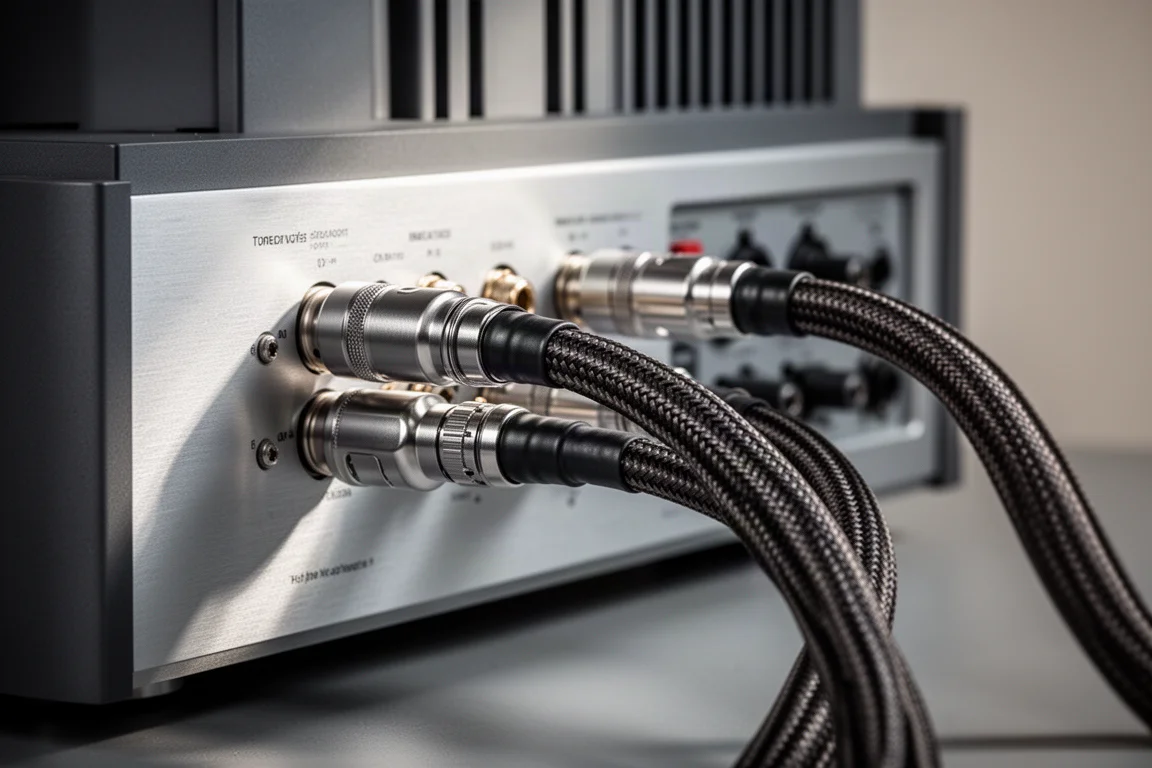
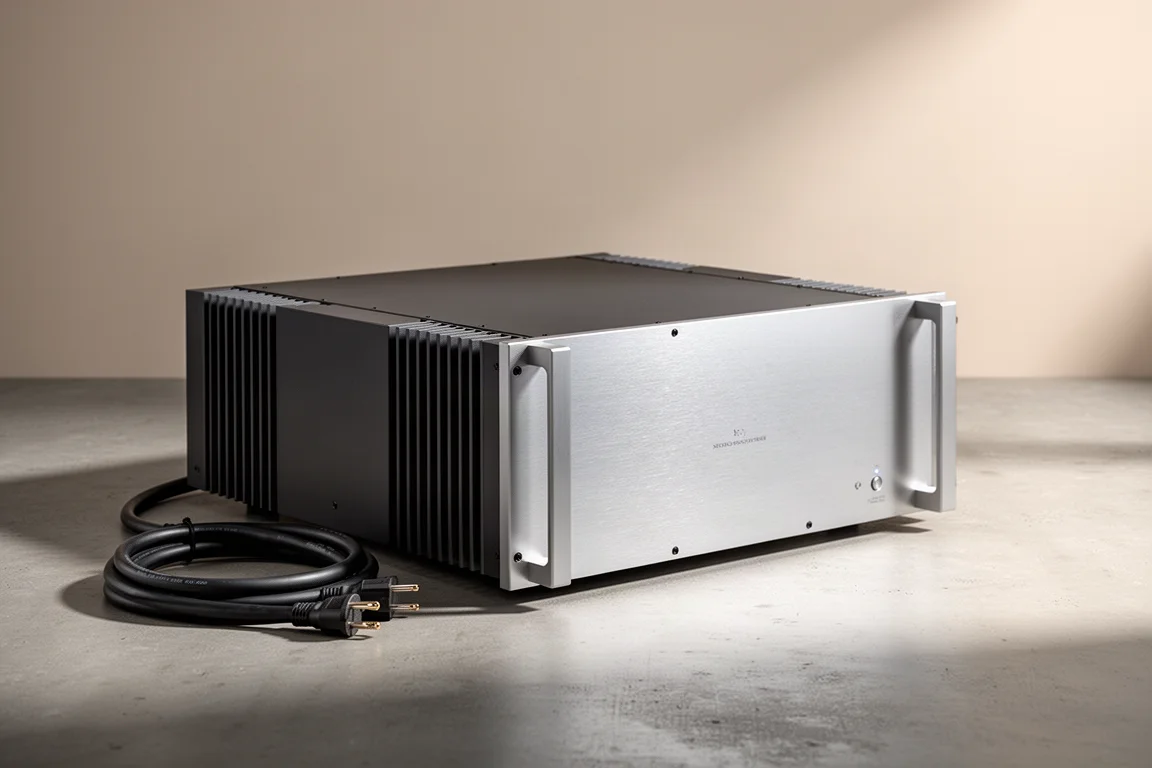
The MTRS is a 400 watt stereo class AB amplifier designed by Ed Meitner and manufactured in Canada. It sits in the upper tier of high-end amplification, with a large power supply, substantial power banks, robust construction, and a 30 amp power cord feeding a genuinely high-current output stage.
Two qualities make it valuable as a fixed reference. The first is raw capability: it is stable into loads down to 1 ohm, so demanding, low-impedance speakers can be driven without hesitation. The second is consistency. Its analog circuitry uses a custom ceramic board, which supports long-term reliability in a component that will be used constantly.
Sound quality follows the same pattern. The MTRS combines strong dynamics with a transparent, linear midrange and high frequencies, and it delivers all of that with an effortless quality that does not draw attention to itself. Compared with more affordable amplifiers, the difference is not subtle, particularly with power-hungry speakers like the 1528, which can sound thin and unexpressive on modest amplification.
That gap is exactly why the amplifier earns a permanent place. When a lower-cost component gets close to this level of performance, the comparison is meaningful rather than theoretical. When it does not, the shortfall is easy to describe and easy to trust.
Reference Streamer and DAC: EMM Labs MA3i
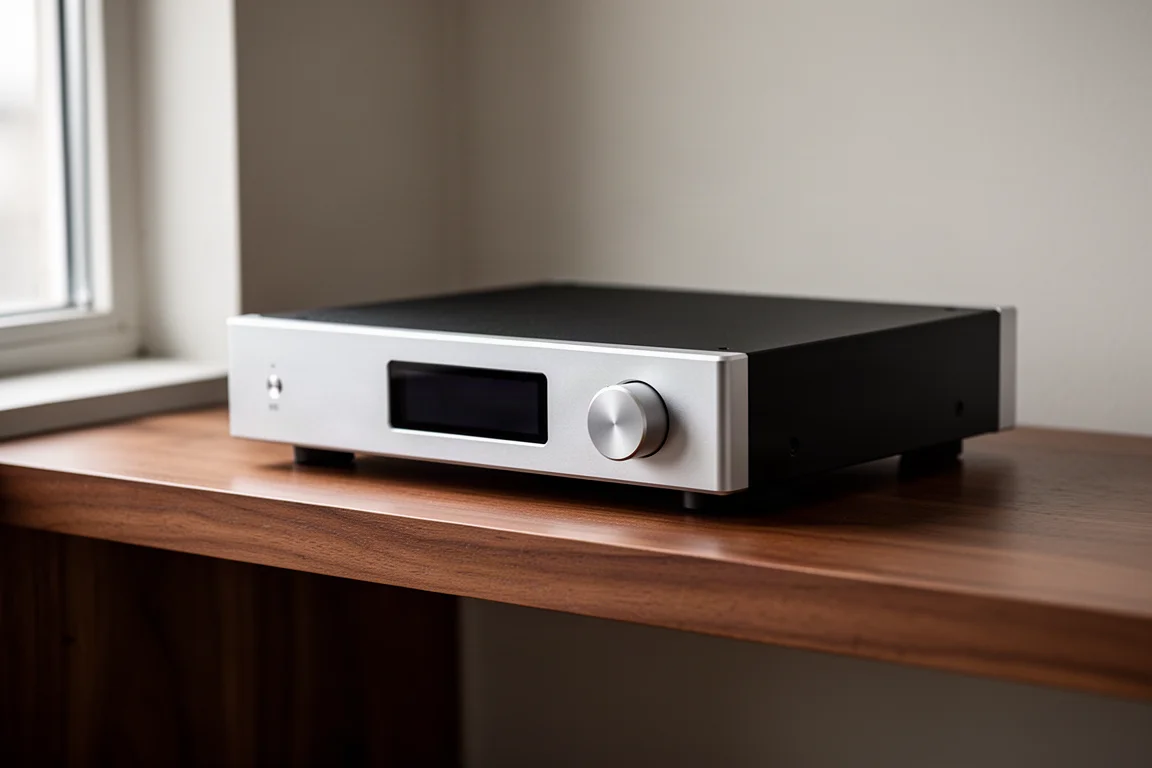
The MA3i condenses a streamer, a DAC, and a volume control into a single chassis, which creates a very short signal path when it feeds the MTRS directly. That simplicity is a large part of its appeal as a reference: fewer boxes, fewer variables.
Its converter is designed and manufactured in-house rather than bought in, and the result is a notably smooth presentation. The MA3i is neutral and transparent without being hard or analytical, and it avoids the digital edge and listening fatigue that some converter designs introduce. Nothing about it shouts for attention on a first listen. What it offers instead is balance, and that balance becomes more impressive the longer it stays in a system.
For evaluation purposes, that neutrality is the point. A source that adds its own character makes it harder to hear what a speaker or amplifier is actually doing, and the MA3i stays out of the way.
Reference CD Player: Shanling SCD3.3
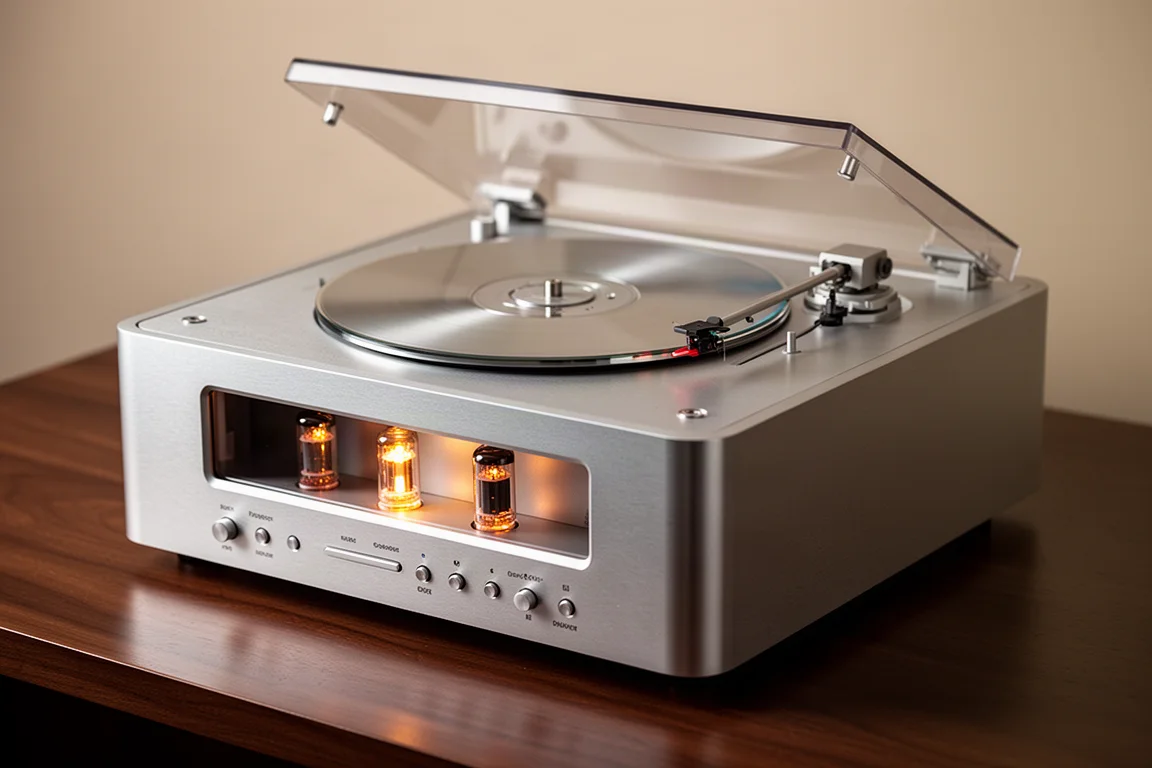
The SCD3.3 is a top-loading CD player that pairs 12AT7 tubes with an R2R ladder DAC. It plays SACDs, includes I2S alongside the inputs and outputs needed for a full system, and can be used purely as a transport through its I2S output.
That last point matters for comparison work. Because the internal R2R DAC becomes familiar over time, the SCD3.3 can feed other R2R converters and reveal how they differ from a known baseline. It is also a deliberately different reference from the MA3i: warmer, more colored, and built around tube and ladder converter character rather than strict neutrality.
The payoff is a rich, expressive midrange and a level of musicality that makes a large CD collection worth working through again.
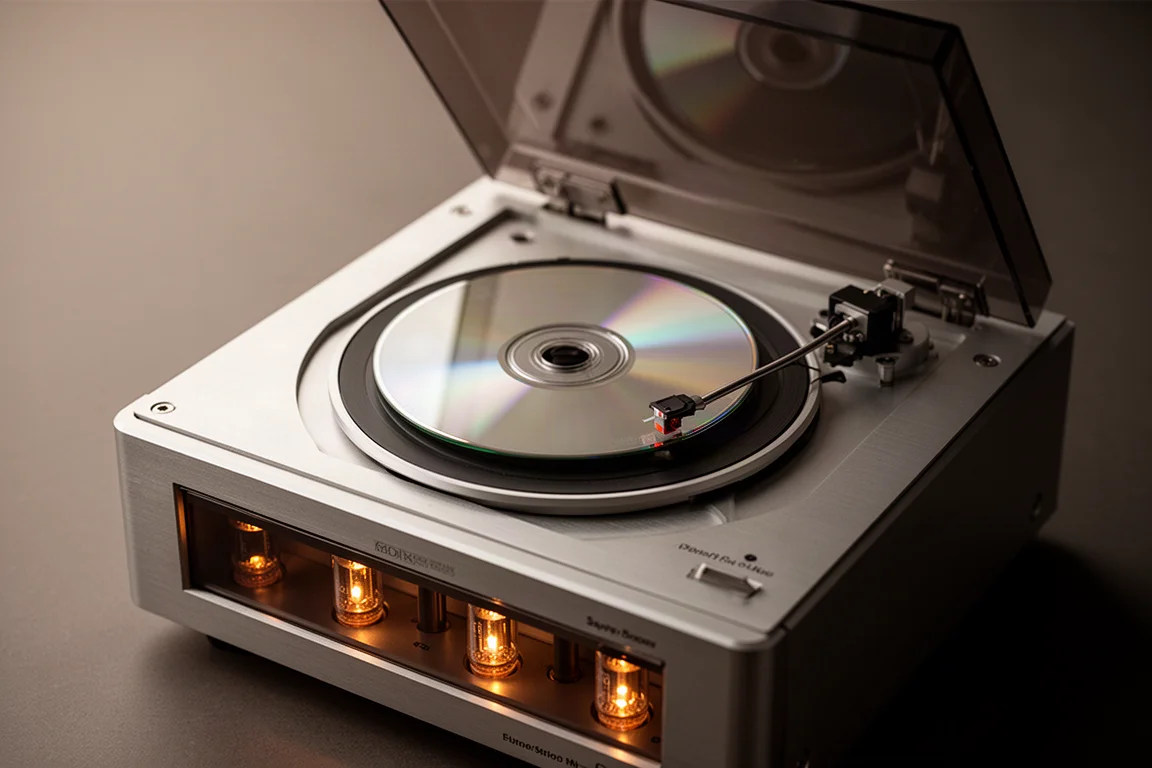
It is not a neutral source in the way the streamer is, and it is not meant to be. It gives disc playback its own distinct reference point, which is useful when the question is whether a recording or a component leans warm or lean.
Reference Tube Preamplifier: Galion Audio Navy
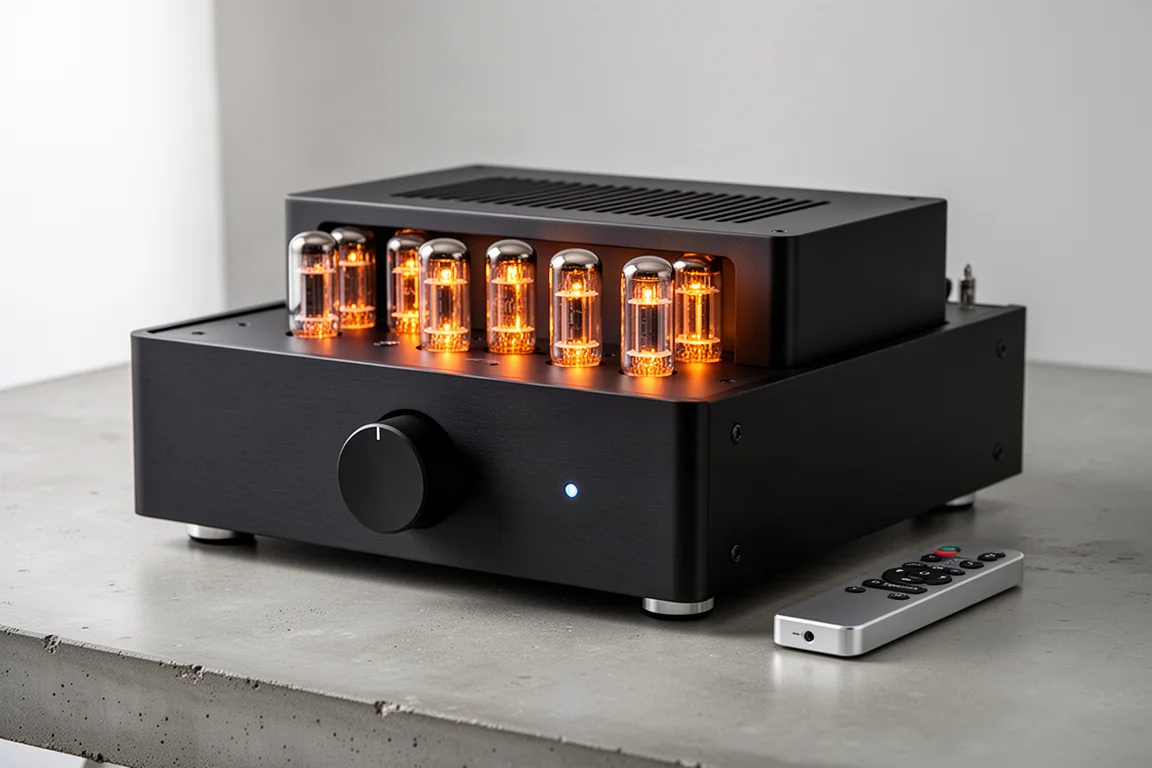
A separate preamplifier becomes necessary once turntable, reel-to-reel, and CD sources enter the picture, since those sources cannot run through the MA3i. The Galion Audio Navy fills that role with a tube design that emphasizes airy, meaty textures and nuanced, delicate detail over the smoother, more vividly imaged presentation of the tube preamplifier it replaced.
That is a matter of taste rather than a clear hierarchy, but the Navy’s warmth, richness, and expressive tube character suit a system that already has a clean, neutral digital front end. The internal components are top of the class and laid out visibly inside the chassis. Availability is the practical catch: at the time of writing the Navy is sold out, with the next production run expected around March.
Buying Advice: Matching Components to a Room and Budget
Nobody needs to assemble this exact system. The useful lesson is about matching, and the first thing to get right is the relationship between speakers and amplification. The 1528 is a low-sensitivity design at 84 dB, and it will only show what it can do with a high-current amplifier behind it. Choose the speaker first and the amplifier second, and expect the amplifier to matter more than the price difference between the two suggests.
The digital side is easier to simplify. A single-box streamer, DAC, and volume control removes an entire component and a set of cables from the chain, and it keeps the signal path short. If a disc collection is large enough to matter, a dedicated player with its own converter adds a second reference point rather than duplicating the first.
Analog sources deserve their own decision. A tube preamplifier is the most cost-effective way to add warmth and texture to a system that already has a clean digital front end, but it is a coloration, not a correction. If the goal is strict neutrality, a solid-state preamplifier will land closer to the mark.
Finally, budget for one anchor component. A single piece of gear near the top of its category is what makes every other comparison meaningful, and it does not have to be the amplifier or the speakers. It can be whichever part of the chain is hardest to judge without a fixed point of reference.
Conclusion
The Arendal 1528 bookshelf loudspeaker earns product of the year because it delivers genuinely high-end engineering, cabinet construction, and driver design at a price that undercuts the ultra high-end bracket by a wide margin, provided it is paired with enough amplifier power. The EMM Labs MTRS and MA3i supply the neutral, high-current, high-resolution backbone that makes every other comparison credible, while the Shanling SCD3.3 and the Galion Audio Navy add tube and R2R character for disc and analog playback.
Taken together, these five components form a system built around a clear idea: one fixed, trustworthy baseline for each playback format, so that any component that comes through can be judged honestly on its own merits.
Further reading
Related Reviews
Hi-Fi Audio
Accuphase C-57 vs Allnic H-7000V: Two High-End Phono Stages Compared
A fully balanced solid-state phono stage with a pitch-black noise floor meets a tube design built for well-loved records. Here is how to choose between them.
Hi-Fi Audio
Active vs Passive Hi-Fi: Five Components for a Modern System
Five components that define modern active and passive hi-fi systems, with the strengths, trade-offs and setup details worth weighing before you buy.
Hi-Fi Audio
Advance Paris A10 Apex Review: A Hybrid Integrated Amplifier That Covers a Lot of Ground
A French hybrid integrated amplifier with a class A tube preamp stage, analogue power meters, and an internal DAC and phono stage good enough to make extra boxes unnecessary.