Reef Aquarium
Reef Tank Power Outage Solutions: Three Devices Worth Owning Before the Lights Go Out
A practical look at three reef-keeping devices that protect a tank during a power outage, plus how to match your backup spend to what you have in the tank.
Introduction
Power loss is not a hypothetical for a reef tank. It is a question of when, and the answer covers everything from a fallen tree on the neighbourhood lines to a tripped GFCI outlet, a failed power strip or a plug that simply worked loose behind the cabinet. Because most outages happen while you are at work, asleep or away, the tank usually has to survive the first few hours on its own.
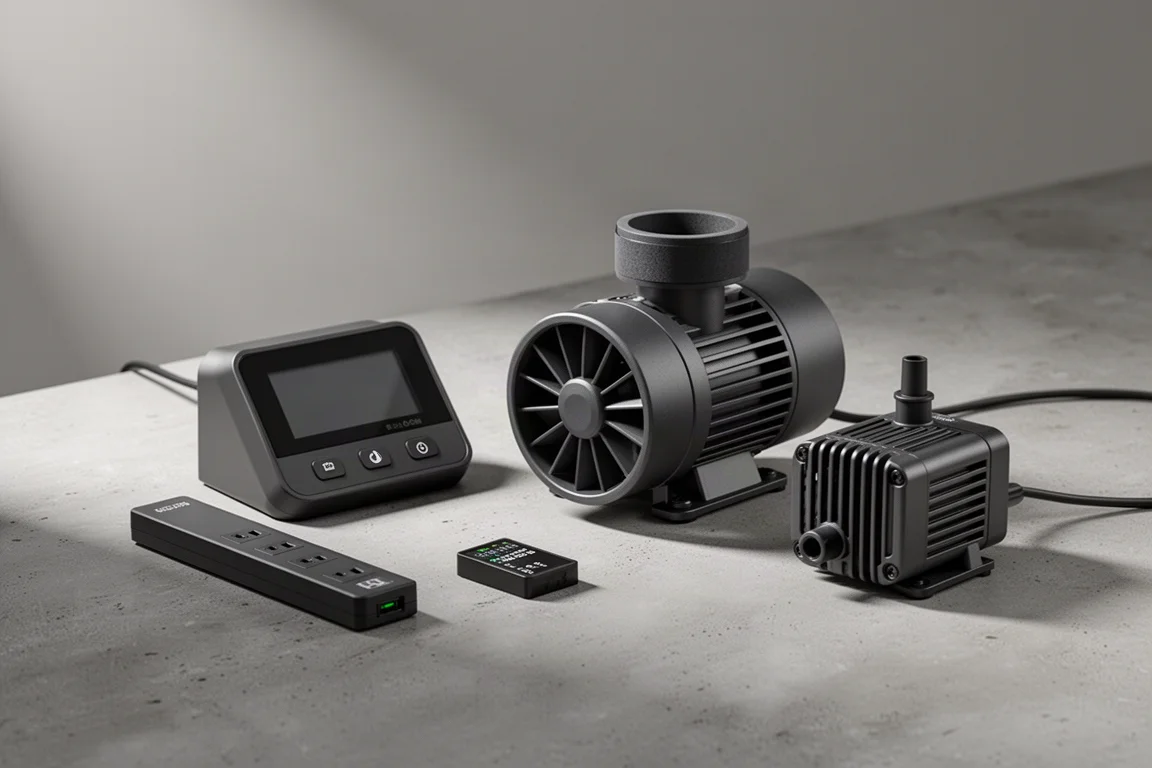
That changes what is worth buying. Three devices cover the most important parts of the problem: a controller that tells you something has failed, a power head that restarts circulation automatically, and a return pump that can keep water moving through filtration. The rest of the strategy, inverters, battery air pumps and generators, fills in the gaps around them.
What Actually Matters When the Power Drops
The priority order is not obvious, and it is worth getting right before spending anything. Gas exchange sits far ahead of everything else, by a wide margin. Once circulation stops, oxygen stops going in and carbon dioxide stops coming out, and the decline is not gradual. The tank does not have a long grace period once that process halts.
Temperature is the second concern, and it is the more forgiving one on the cold side. A tank can drift down through the lower seventies and often hold there for days, in some cases weeks, without losses. Heat is the harder problem, because cooling a tank on battery power is impractical and a prolonged outage in a hot climate usually takes the home’s air conditioning down with it. That scenario generally points to a generator.
Filtration and lighting come third and fourth. Running the return pump keeps water passing through a filter sock or refugium, but if you want the skimmer and refugium light running too, the power draw climbs quickly. Lighting barely matters by comparison, since natural reefs spend long stretches under heavy cloud and low light without harm. A very long outage is the only time it becomes worth solving.
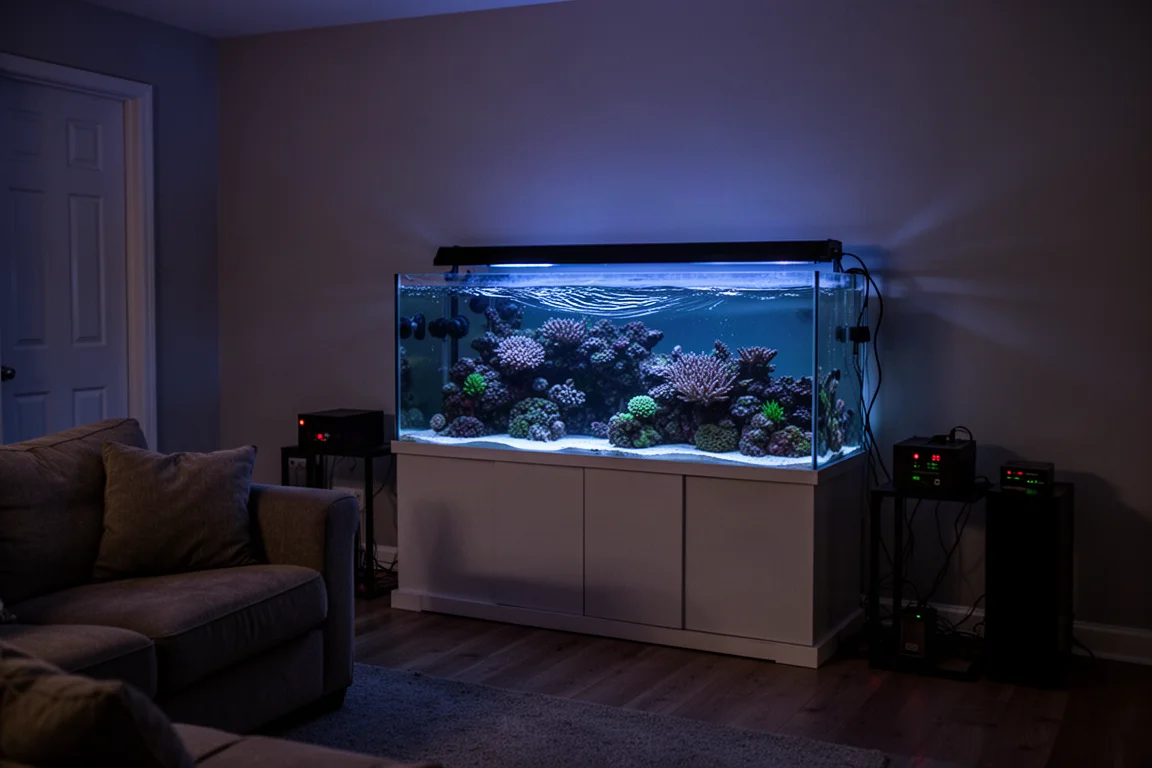
A battery heater is rarely the right answer for the temperature problem. A heater draws hundreds of watts, while a power head draws a small fraction of that. Spending backup capacity on heat is usually a poor trade, and it is one reason a well-chosen power head comes first.
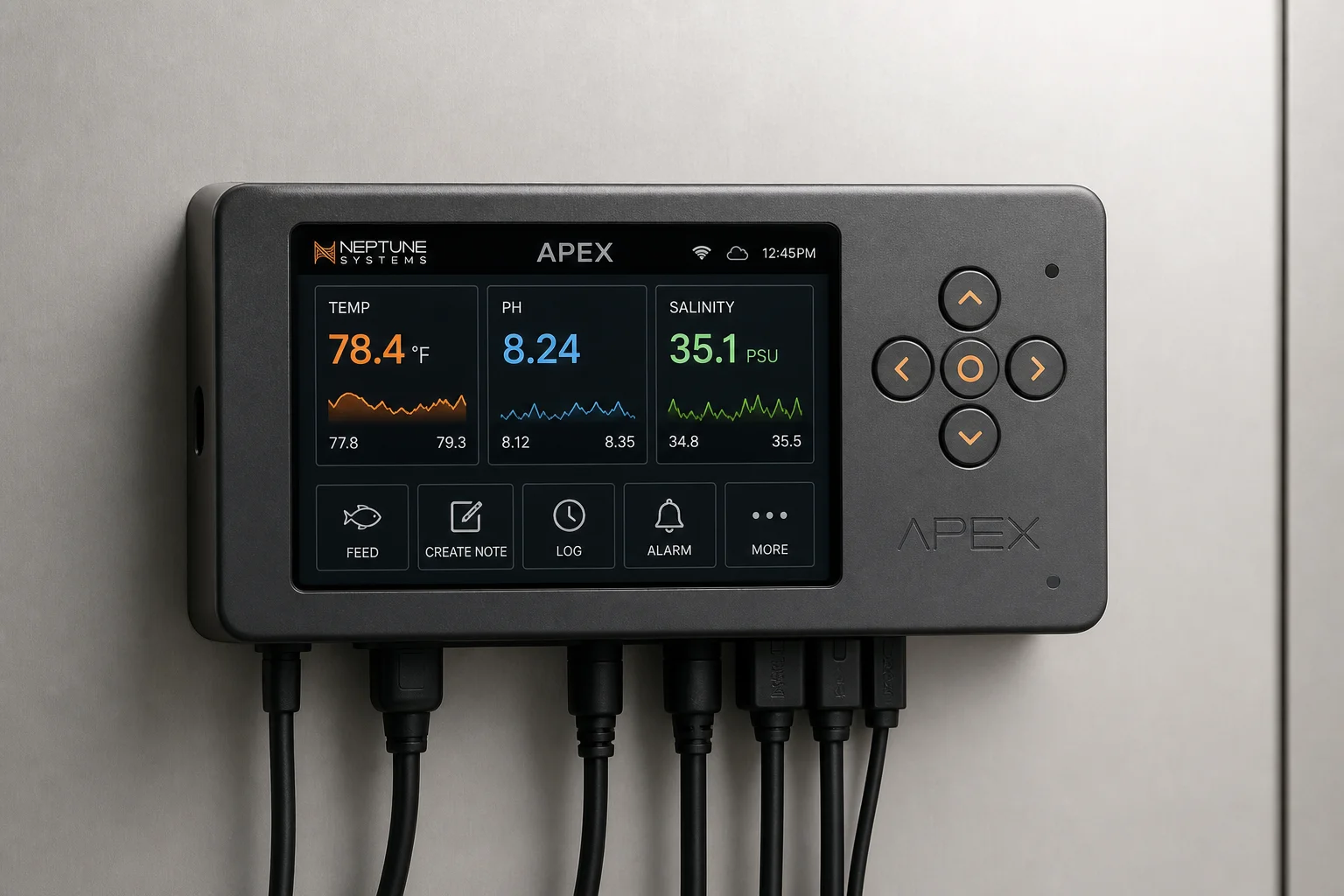
Best for Monitoring: Neptune Apex
Knowing that something has failed is the difference between a small intervention and a total loss. An advanced controller sends out a regular heartbeat, and when it can no longer connect, it pushes alarms to your phone so you can act.
The useful part is how far down the chain that monitoring reaches. If a GFCI outlet trips and takes an energy bar offline while the rest of the home still has power, the controller keeps running and reports the loss. Set up power usage alarms on individual pieces of equipment and you will also learn when a single outlet stops drawing current, or when a plug has worked loose and a device that should be consuming power is not. A modern pump connected over Wi-Fi can deliver the same early warning when it drops off the network, which usually means the router is down along with everything else.
This matters because the odds of being present when the power fails are close to zero. Most of the day is spent at work, commuting or asleep.
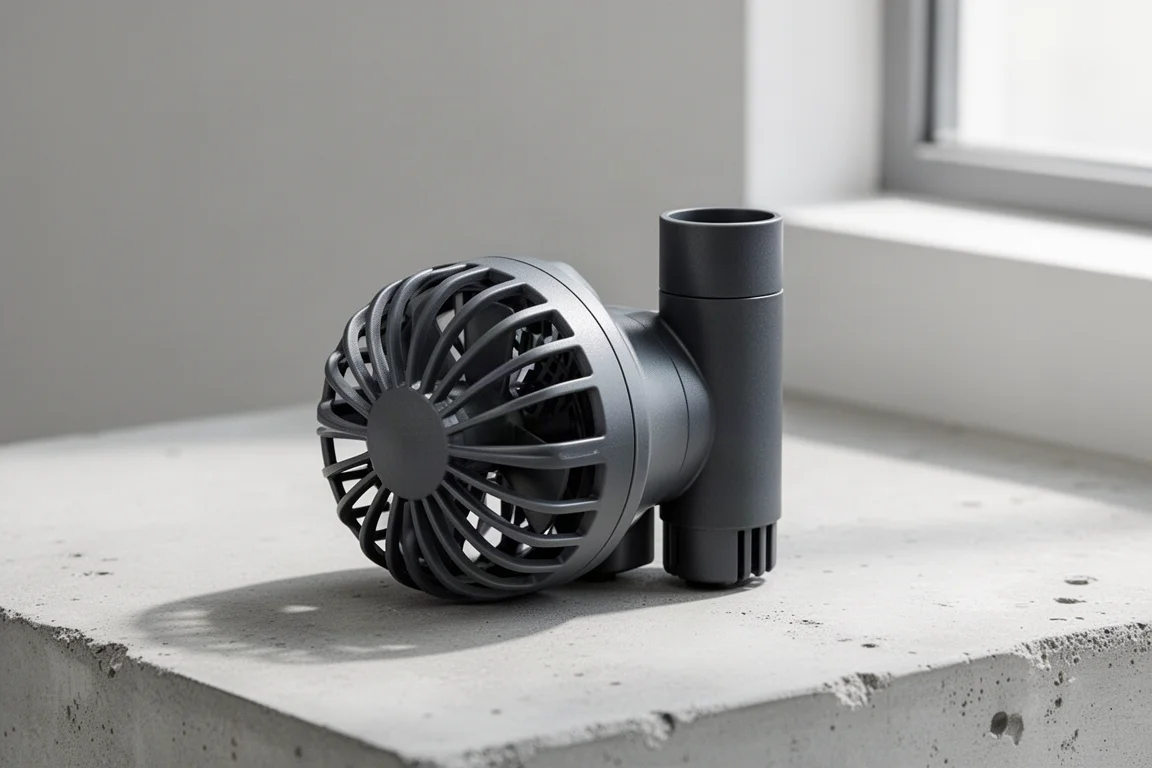
Best for Water Movement: EcoTech Marine VorTech MP10
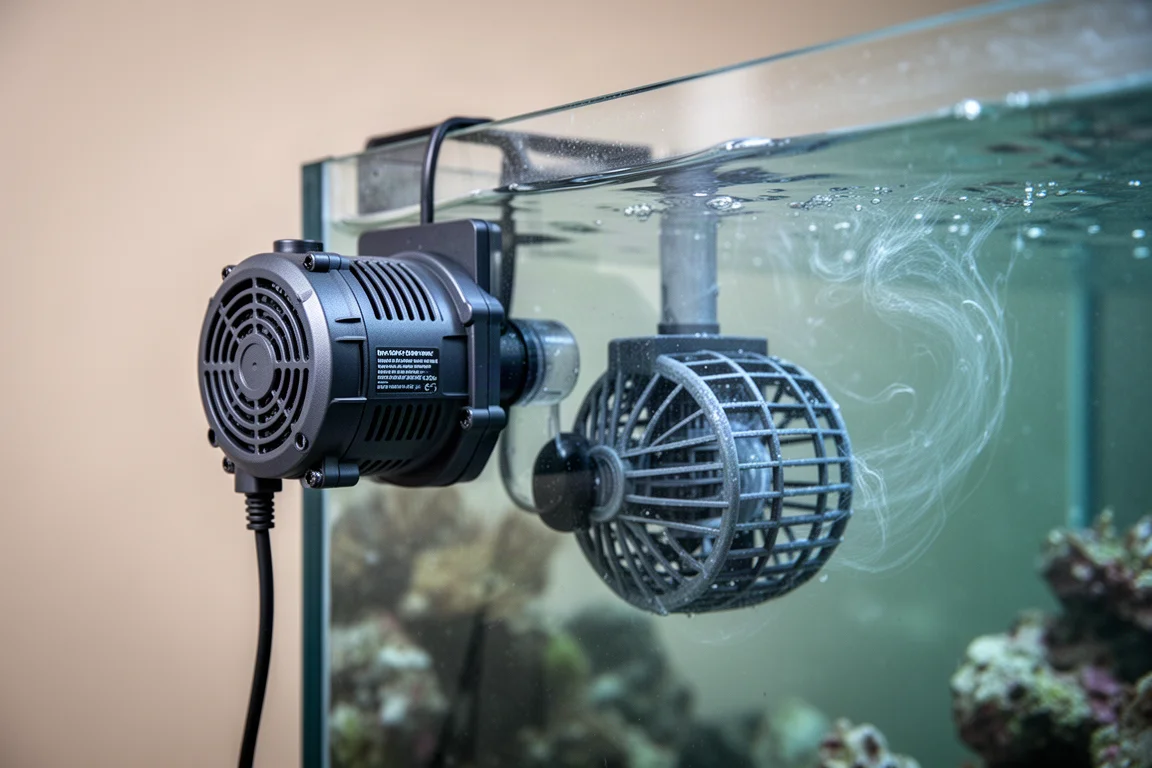
If one purchase covers the largest share of real outages, it is a power head with battery backup. These run on a DC-to-DC battery rather than converting AC to DC and back again, which makes them dramatically more efficient. One DC power head of this type has been measured running for up to 80 hours on battery backup.
Just as importantly, it switches on by itself. You do not need to be home, awake or anywhere near the tank. The backup engages the moment the power drops, which removes the scramble to get home and the uncertainty about what happens when the supply returns.
The alternative for AC equipment is a computer-style battery backup. Expect a few hundred dollars for one that lasts as long as ten hours, while the more common units in the 100 to 150 range typically manage only four to six hours when new, and roughly half that after a couple of years. A DC power head sidesteps that entire trade-off, and it still has useful runtime years later.
Because gas exchange is the single most important function to preserve, this is the piece most tanks should own first. Most outages are short, and circulation alone carries the tank through them.
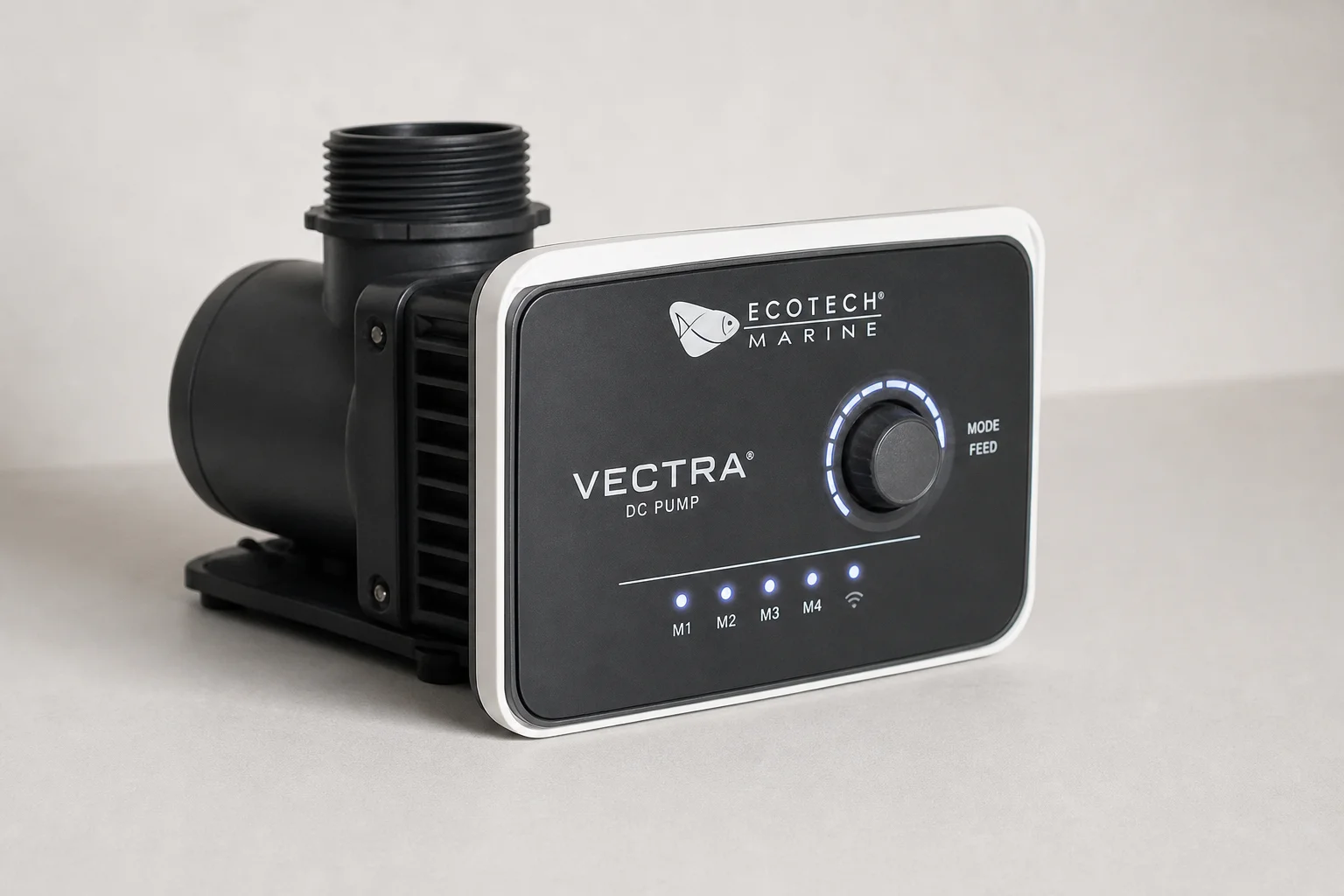
Best for Filtration: EcoTech Marine Vectra
Mechanical filtration is a lower priority than gas exchange and temperature, but it is still worth solving if the budget allows. A DC return pump is the cleaner route, since it can plug into the same battery backup system and be configured to run at a lower wattage, often around half its normal intensity, to stretch the available runtime.
The trade-off is that filtration alone does not do much for the tank during an outage. Pushing water through a filter sock is a modest benefit if circulation has already stopped, and powering a skimmer or refugium light on top of that increases the load quickly. A generator remains the answer when you want the entire system running as normal.
What the Cheaper Stopgaps Can and Cannot Do
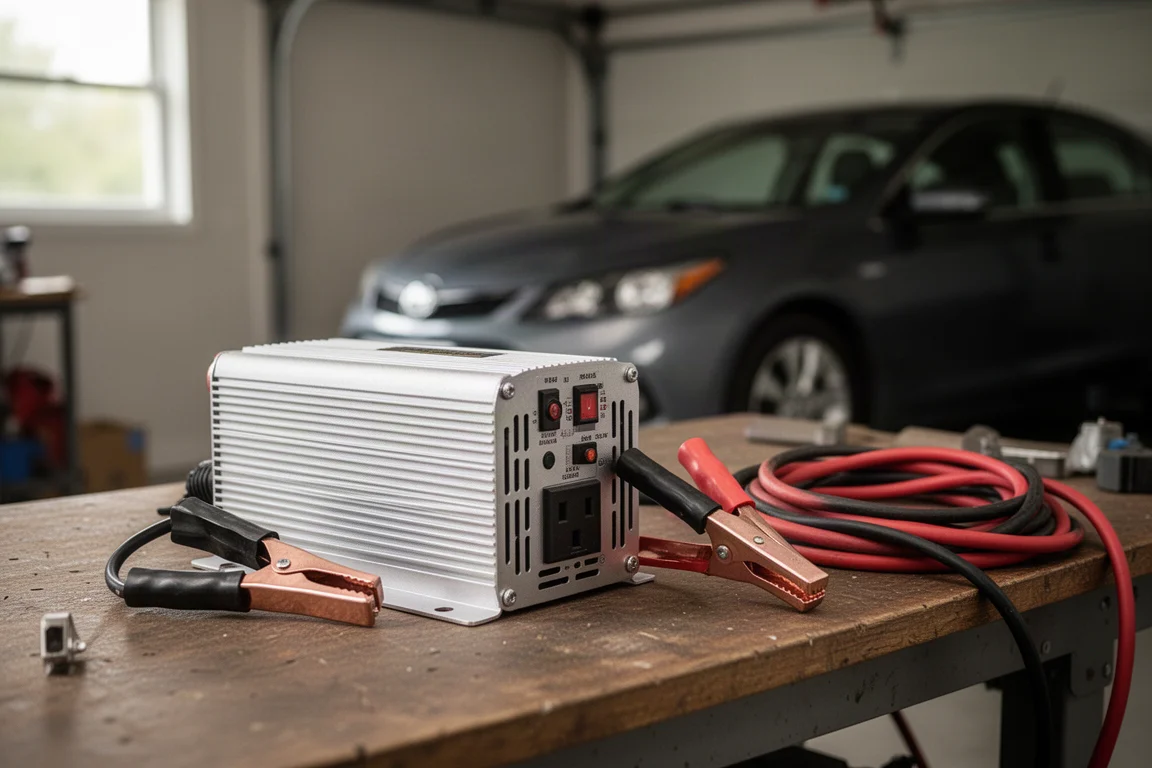
An inverter is the easiest item to buy and the one most likely to be forgotten until it is needed. These clamp onto a car battery, output roughly 300 watts in many cases, and can run a couple of pieces of equipment while the car idles. They are inexpensive and widely available. Their limitation is fundamental: someone has to be there to connect it and keep the engine running. If an inverter switched itself on, it would be the first recommendation rather than the second.
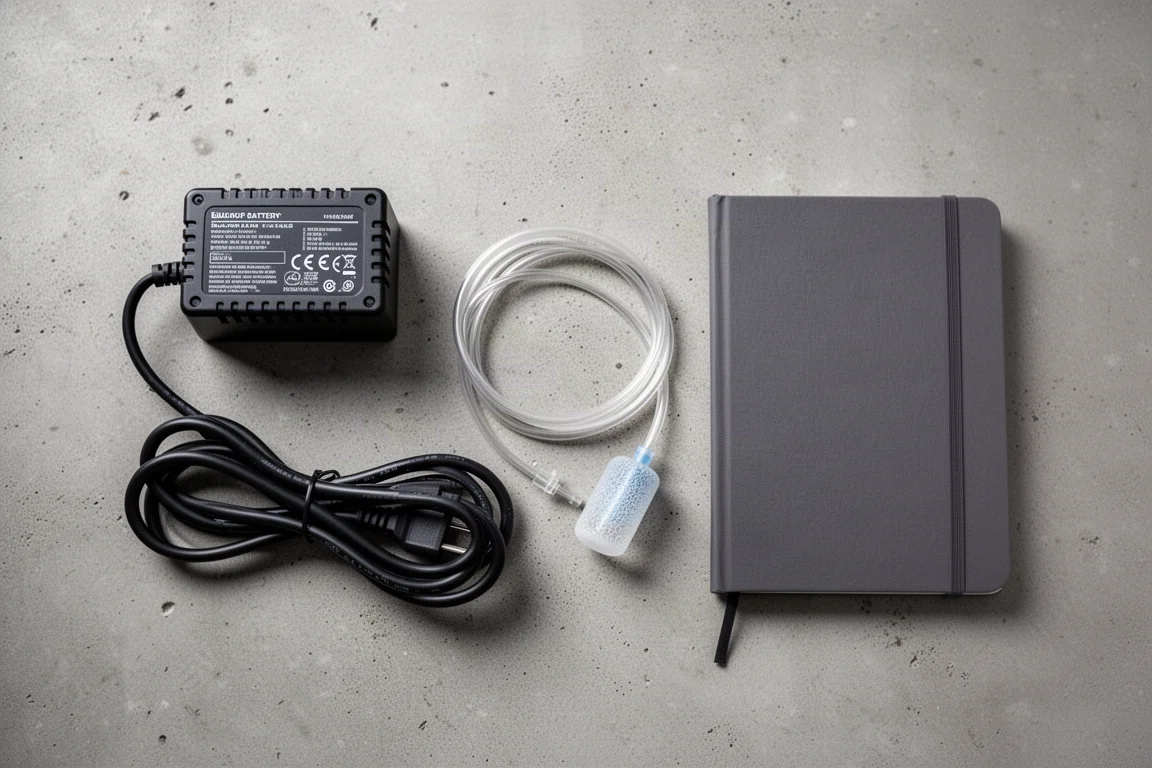
Battery-powered air pumps sit lower still. Bubbles look like oxygenation, but the effect is local to the bubble stream rather than a proper turnover of the water body. Automatic versions, which sense the outage and start on their own, have two further drawbacks: the hose and air stone have to stay dangling in the tank, and the stone needs maintenance. Leave it for a year between outages and biofilm can clog it enough that it fails exactly when you need it.
Generators: The Largest Insurance Policy
A generator is the closest thing to a full insurance policy, and the only practical way to keep heating, cooling and lighting running through a long outage. A unit capable of running an entire tank can cost as little as 500 to 600 dollars, with a very small one around 300 dollars. Whole-home automatic generators that run on natural gas start themselves the moment the grid drops, and they cost considerably more, often between 5,000 and 10,000 dollars installed.
The catch is maintenance. A generator has to work on the day you need it, which means starting it once or twice a year, changing the oil, and never leaving old fuel sitting in it long enough to gum up the carburetor. Since it will rarely be used, that routine is easy to skip. There is also an availability problem: once a major storm is forecast, the units are gone, and buyers end up driving across state lines to find one.
Matching the Backup to the Investment
The right solution depends on two things: how much the tank represents to you, and what outages look like where you live. A metropolitan area that loses power for a handful of hours a few times a year calls for a very different plan than a region with repeated brownouts that can stretch to three days and happen three times a year.
Weather matters as much as duration. A winter outage may need heating, while a summer outage in a hot climate can push a tank toward dangerous temperatures and take the home’s cooling with it. Those cases point toward a generator, because no battery bank will run an air conditioner.
Whatever you choose, buy it before you need it. Backup equipment is never available at the moment of failure, and both inverters and generators disappear from shelves the week a storm is announced. The same applies to the monitoring side: a controller that can tell you about a tripped outlet or a loose plug is only useful if it is already installed and sending alerts.
Conclusion
For most reef tanks, the sensible order is a power head with battery backup first, a controller for early warning second, and a DC return pump third if filtration is worth protecting. Inverters and battery air pumps cover the gaps inexpensively, and a generator handles the long, severe outages that no battery will outlast. Pick the level that matches your tank and your local grid, and put it in place now rather than the night the lights go out.
Further reading
Related Reviews

Reef Aquarium
Best Aquascaping Rock for Reef Tanks: Real Reef and Marco Rock Foundation Rock
A practical look at two reef aquascaping rocks: purple-toned Real Reef for a day-one established look, and Marco Rock Foundation Rock for a stable, flat base.

Backpacking Gear
Building a 10 lb Base Weight: An Ultralight Backpacking Gear List
A practical walkthrough of the ultralight pieces behind a 10 lb base weight, from a 765 g pack and a roomy one-person tent to a full camp chair and a dependable water filter.

Road Bikes
10 New Road Bikes Worth Watching: Aero, Titanium, Steel and Endurance Standouts
A practical roundup of 10 new road bikes, from aero flagships chasing single-watt gains to titanium, steel and endurance platforms built for real roads.