Reef Aquarium
Best Aquascaping Rock for Reef Tanks: Real Reef and Marco Rock Foundation Rock
A practical look at two reef aquascaping rocks: purple-toned Real Reef for a day-one established look, and Marco Rock Foundation Rock for a stable, flat base.
Introduction
Aquascaping a reef tank is one of the few parts of the hobby you can get right before anything living is in the water. It is also the part you will look at more than any other, because for the first couple of years the aquascape itself is what fills the display. Corals take time to grow in; the rock is what you and your visitors actually see.
That makes the choice of rock worth some thought. Two options come up constantly: purple-toned rock that reads as mature from the day it goes in, and flat-cut foundation rock that gives a build its footing. Each does something the other does not, and a lot of successful tanks use both.
What We Looked For in Aquascaping Rock
Three things matter most in practice: how the rock looks before coral covers it, how stable it is once stacked, and how well it takes adhesives.
Colour is not purely cosmetic. On bone-white rock, the first green films and red films of algae are impossible to miss. Darker, purple-toned rock hides those early marks and looks like it has been in the tank for years, which matters most to anyone who wants a finished look without waiting.
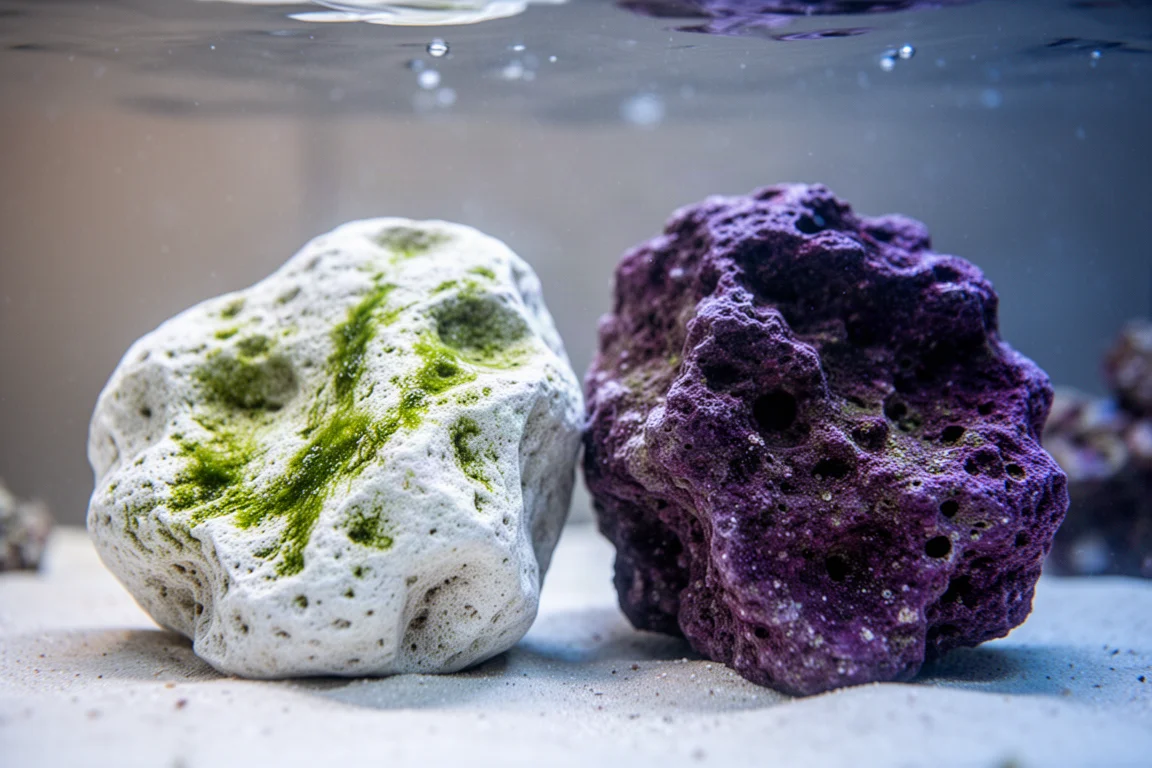
Stability comes down to shape. Rock with rounded edges has to be propped and wedged, and it never feels entirely settled. Flat-cut pieces sit squarely on the aquarium floor and let you build upward from a known starting point, which removes most of the guesswork.
Adhesive compatibility is the third factor. Epoxy molds around dry rock and holds structure well. Super glue gel is the choice for wet rock. Mortar costs less and can be used to smooth rough surfaces, though it is messier and harder to work into vertical faces and overhangs. Whichever you choose, the aim is the same: a structure made of a few solid pieces rather than a pile that shifts.
Real Reef: Purple Rock That Looks Established on Day One
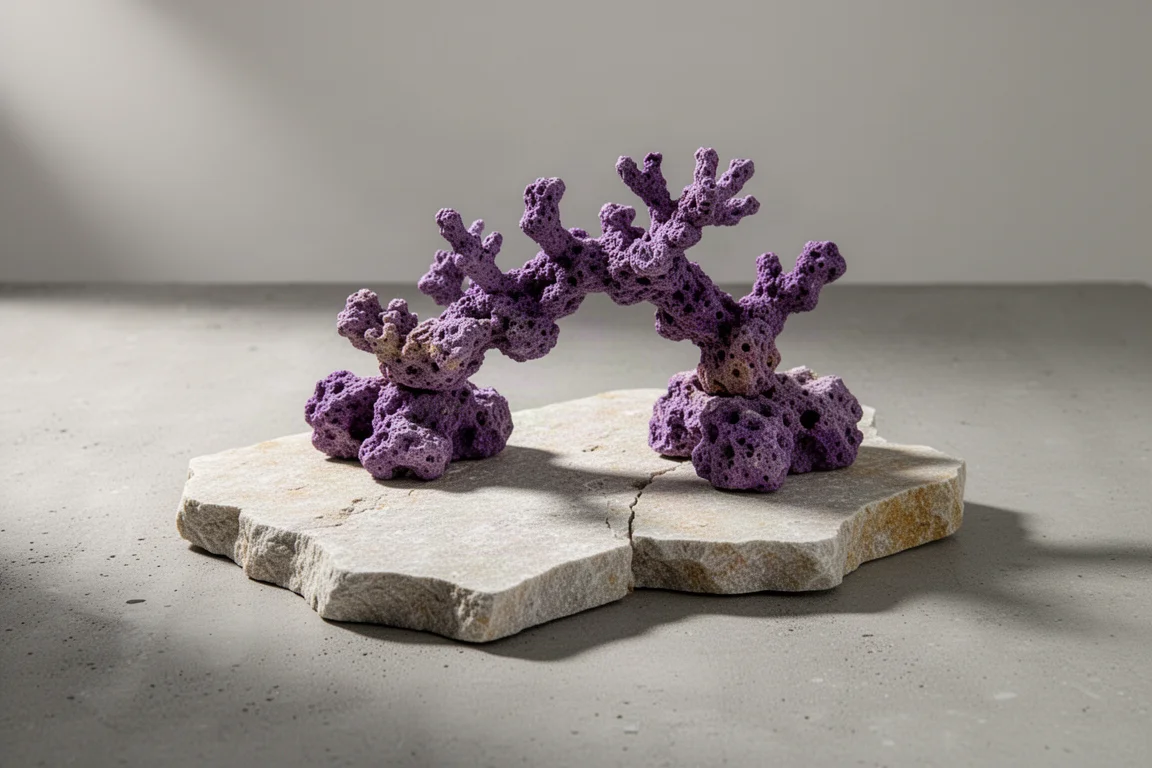
Real Reef rock has a purple, used look that matches rock already sitting in an established tank, which makes it a natural fit for adding to an existing aquascape. Branches are easy to cantilever between two larger rocks, and a little glue is usually enough to secure them. The result is instant real estate for SPS corals and encrusting species, without rebuilding anything.
It is also forgiving for anyone new to aquascaping. The darker tone looks natural on day one and hides the small algae films that announce themselves on white rock. The pieces stack well and can be broken up or combined into more advanced shapes once you gain confidence.
Marco Rock Foundation Rock: A Flat Base for a Stable Build
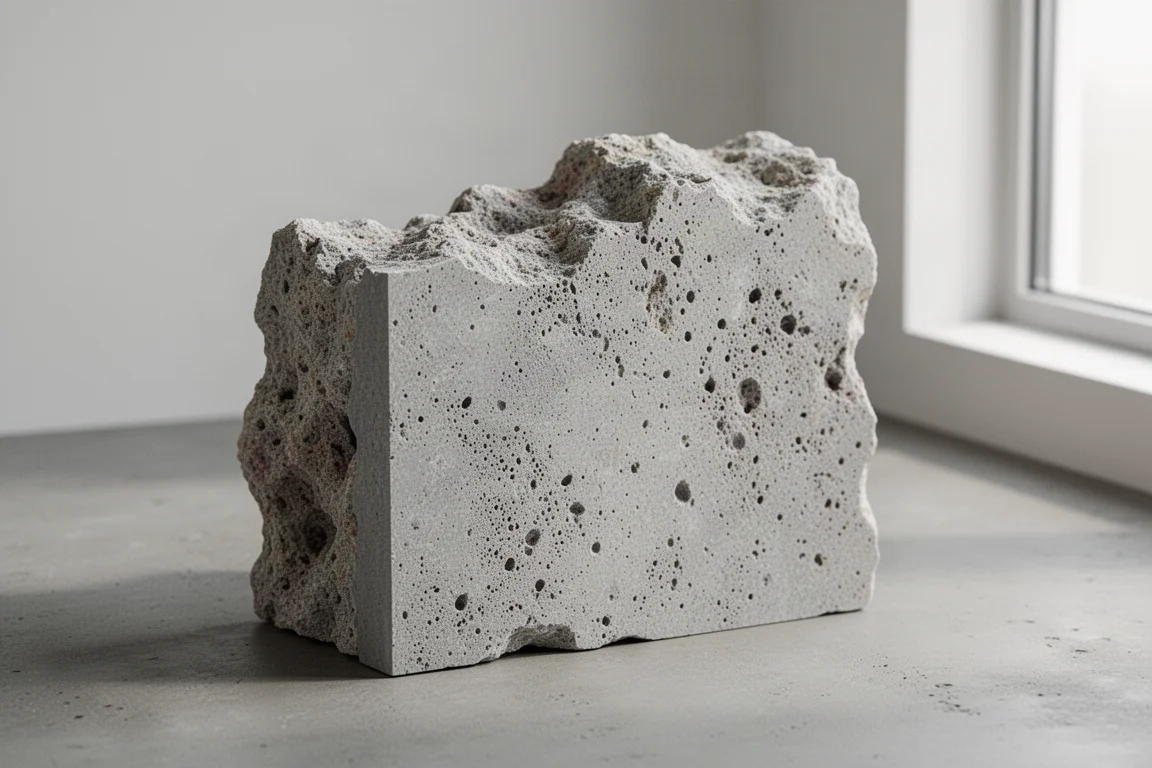
Marco Rock Foundation Rock is cut with a flat edge so it lays flush against the bottom of the aquarium. From there you build upward off the top face. Because the pieces are machined flat rather than rounded, the wobble that comes with boulder-style stacking is largely designed out.
Long pieces work as a foot. They let you cantilever weight outward, and as long as the joints are solid with epoxy or mortar, the structure stays where you put it. Visually, the effect is a rock formation erupting from the sand rather than a boulder dropped into it. Some rough surfaces can be smoothed with mortar where you want a cleaner line.
Even in builds that use purple rock throughout, a few small foundation pieces underneath give the most stability.
Pairing Foundation Rock With Purple Rock
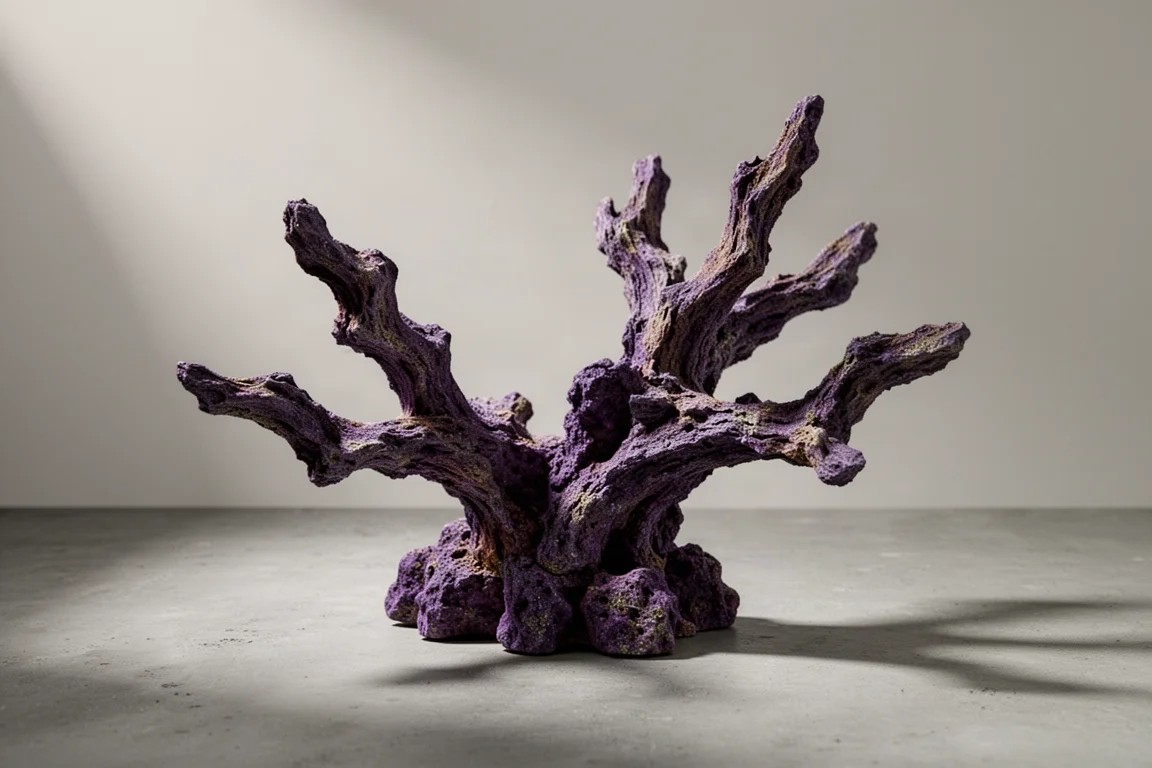
The two materials are not competitors. A common approach is foundation pieces at the base for stability, with purple rock stacked above for colour and shape. Islands built out in the sand can be formed from glued rubble to create porous habitat, and bridges or arches between two rock structures add surface area for new corals. Branch pieces let you push growth outward in a new direction when the main structure is already full.
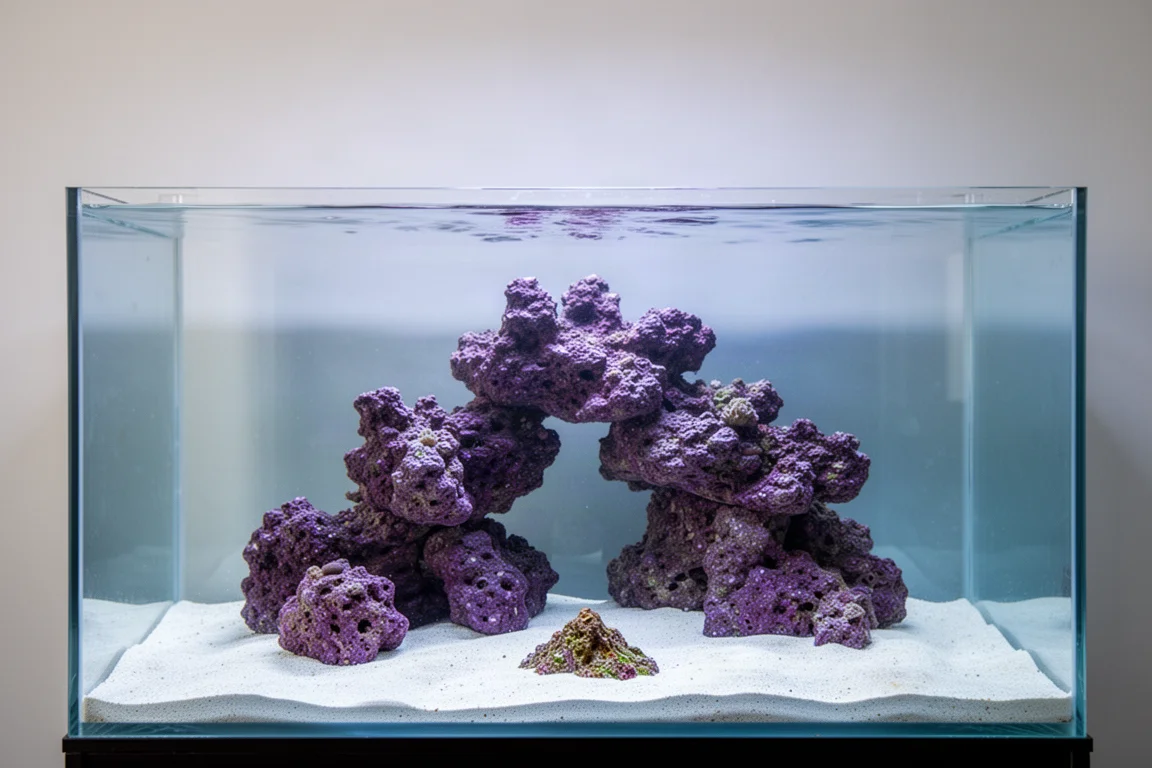
For an established tank, the same logic applies in reverse: add branch or island structures that match the purple tone already in the display, rather than introducing a contrasting white that takes months to blend in.
Adhesives and Curing: What Holds an Aquascape Together
Adhesive is not optional. The goal is to form one solid piece in a smaller tank, or two or three solid pieces in a larger one, each of which can be lifted out and returned to the same position. That pays off the first time you need to catch a fish that has outgrown the tank or started bothering a tankmate, and again if you move house. Pull the aquascape, move it in a bin of water, put it back, and the layout is unchanged.
Match the adhesive to the rock. Epoxy is the choice on dry rock: it molds quickly, holds structurally, and is fairly inexpensive. On wet rock, epoxy deteriorates and does not hold, so super glue gel is the better option. Mortar is the budget route and works well, but it is sloppier and harder to apply on vertical surfaces.
One practical detail on super glue: small tubes are the sensible choice for underwater work. A large tube can draw water back in as soon as you release pressure, ruining the rest of the contents. Small tubes let you form a ball, press it into the joint, and keep using the same tube.
Curing works better on the aquascape than on the rock. Build the structure first, then cure the whole piece in the tank rather than soaking loose rock in a bin. The tank itself, even while it is still sitting on the floor during setup, is the right container.
Balancing Colour, Habitat, and Flow
A good aquascape is roughly a third for the aquarist, a third for the fish and coral that live in it, and a third for flow.
The first third is simple: you want something you enjoy looking at. Effort spent on a considered layout shows up for as long as the tank exists, and it is what guests notice.
The second third is habitat. Fish need swim-throughs, overhangs, and places to escape aggression, and different species use different features. Small holes for chromis to dart in and out of, open areas for larger swimmers, and porous rubble all contribute.
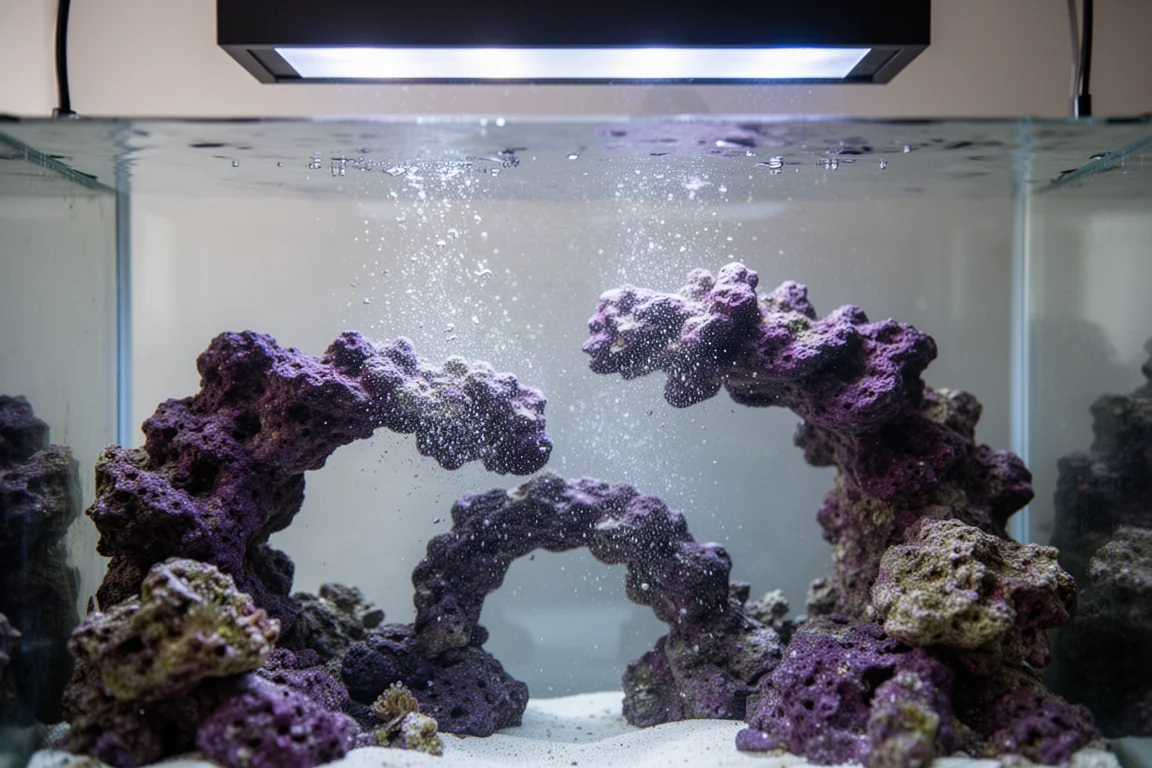
The third is flow, and it is the one most often missed. Rock stacked against the back wall becomes a detritus trap, collecting uneaten food and waste that feeds nitrate and phosphate. Bringing the aquascape forward, leaving space behind it, and directing flow through that gap keeps debris suspended so mechanical filtration can remove it. It also opens the tank up visually, since fish can swim both in front of and behind the structure.
Choosing Rock for Your Experience Level
For a first aquascape, purple rock is the pragmatic choice. It looks established immediately, it hides early algae films, and it does not punish small mistakes. Patience is usually in short supply at the start, and the day-one look matters more than the underlying base colour.
For experienced reefers, the calculation shifts. Where the tank is going matters more than where it started, and white rock offers a blank canvas for coral growth. Shapes that can be broken up and reassembled are valuable, and pre-formed arch and tree pieces let you create interesting geometry without advanced stacking skills. Custom aquascapes built to order are also available, though they are expensive.
Buying Advice: Which Rock Should You Start With?
If you want the tank to look mature in its first weeks, purple rock such as Real Reef does the most work for you, especially since the darker tone hides the algae films that appear on white rock. If you want a base that will not shift under a shrimp pair or a burrowing goby, foundation rock is the piece to buy before anything else, and it can sit under purple rock without compromising the look.
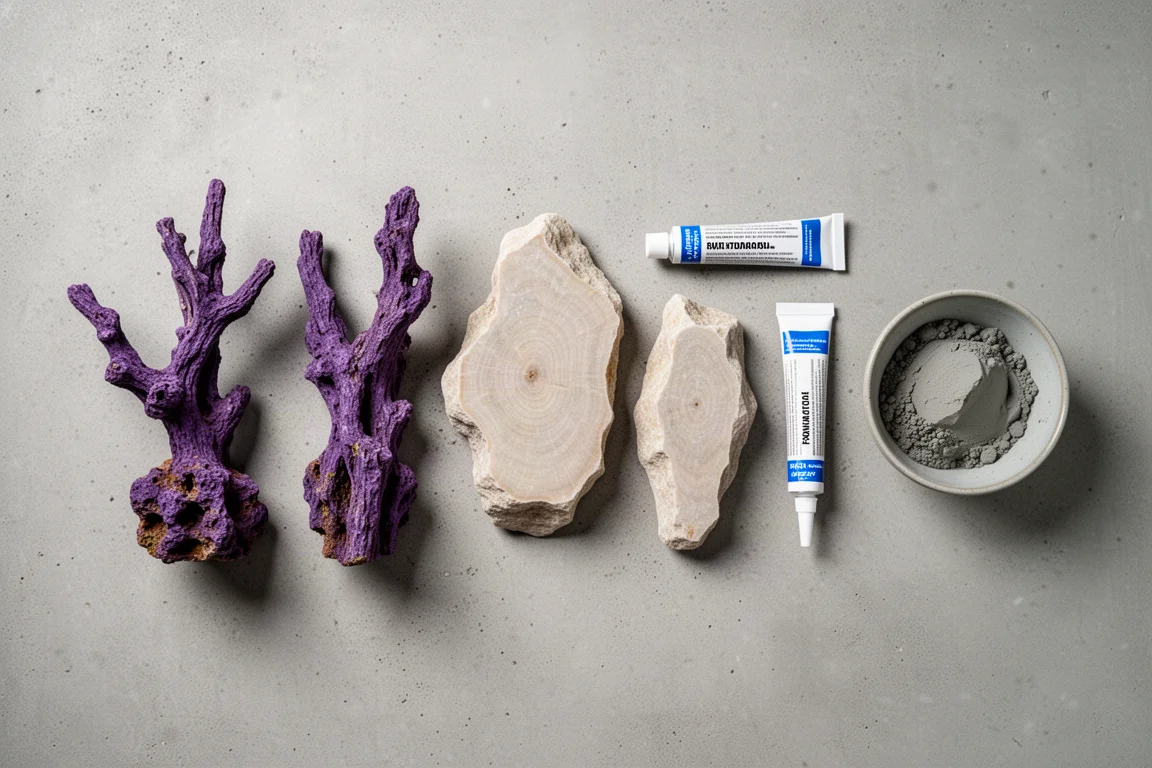
Whichever direction you choose, plan to glue the structure into a few solid pieces, keep it clear of the back wall, and cure it in the tank. Those three habits do more for how a reef tank looks and behaves than the rock itself.
Conclusion
Purple rock solves the appearance problem, and foundation rock solves the stability problem. Most builds benefit from both: a stable base underneath, and a mature-looking structure on top that gives corals somewhere to grow from the very beginning. Decide which of those two problems you want solved first, and the choice becomes straightforward.
Further reading
Related Reviews

Reef Aquarium
Reef Tank Power Outage Solutions: Three Devices Worth Owning Before the Lights Go Out
A practical look at three reef-keeping devices that protect a tank during a power outage, plus how to match your backup spend to what you have in the tank.

Backpacking Gear
Building a 10 lb Base Weight: An Ultralight Backpacking Gear List
A practical walkthrough of the ultralight pieces behind a 10 lb base weight, from a 765 g pack and a roomy one-person tent to a full camp chair and a dependable water filter.

Road Bikes
10 New Road Bikes Worth Watching: Aero, Titanium, Steel and Endurance Standouts
A practical roundup of 10 new road bikes, from aero flagships chasing single-watt gains to titanium, steel and endurance platforms built for real roads.