Reef Aquarium Filtration
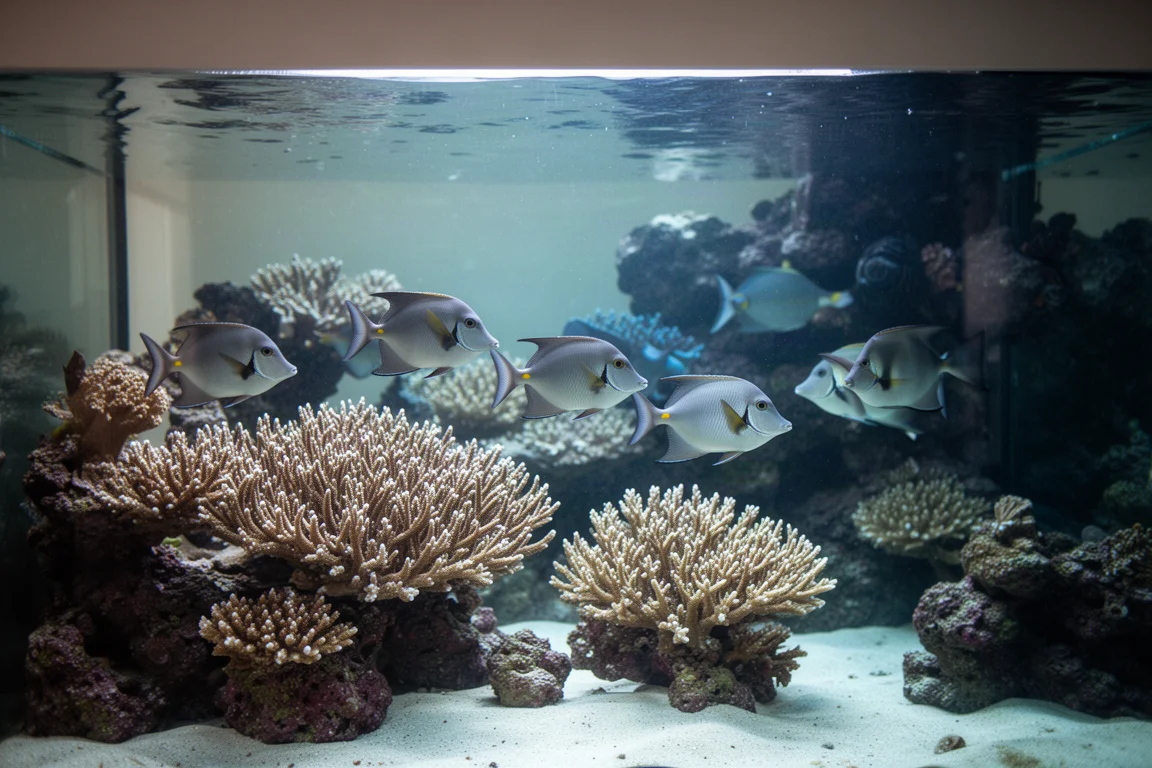
Reef Tank Filtration Gear: Inside a Thriving SPS System
A practical walkthrough of the filtration equipment behind a large SPS reef, from a huge fleece roller sump to automated testing and dosing.
Introduction
A large SPS reef is not held together by any single piece of equipment. It is a stack of systems, each handling one job: mechanical filtration, biological processing, gas exchange, water clarity, testing, and dosing. This particular display started five years ago and came into its own more recently, when a set of mature coral colonies was moved in from another tank. Those colonies went through a rough patch after a pest problem and are filling in again.
What follows is a walk through the gear that keeps this reef stable, from the sump itself to the small automated devices that quietly do the daily work.
How This Reef Filtration Stack Fits Together
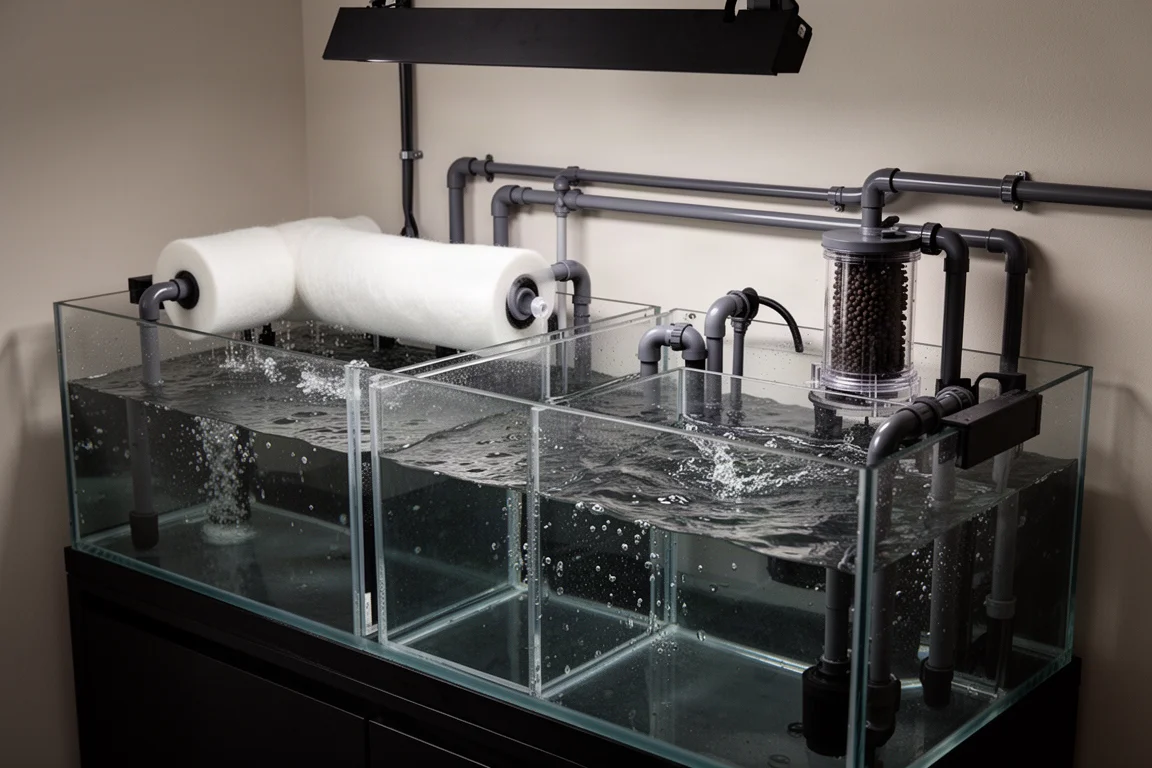
Water leaves the display through one and a quarter inch pipes plumbed through the wall and enters the far end of the sump. Valves on those lines let the internal overflow run silently, which matters when the sump sits in a busy space. From there the water passes through mechanical filtration, a multi-use chamber, a refugium, reactors, a skimmer, and then back to the display through pumps and a sterilizer.
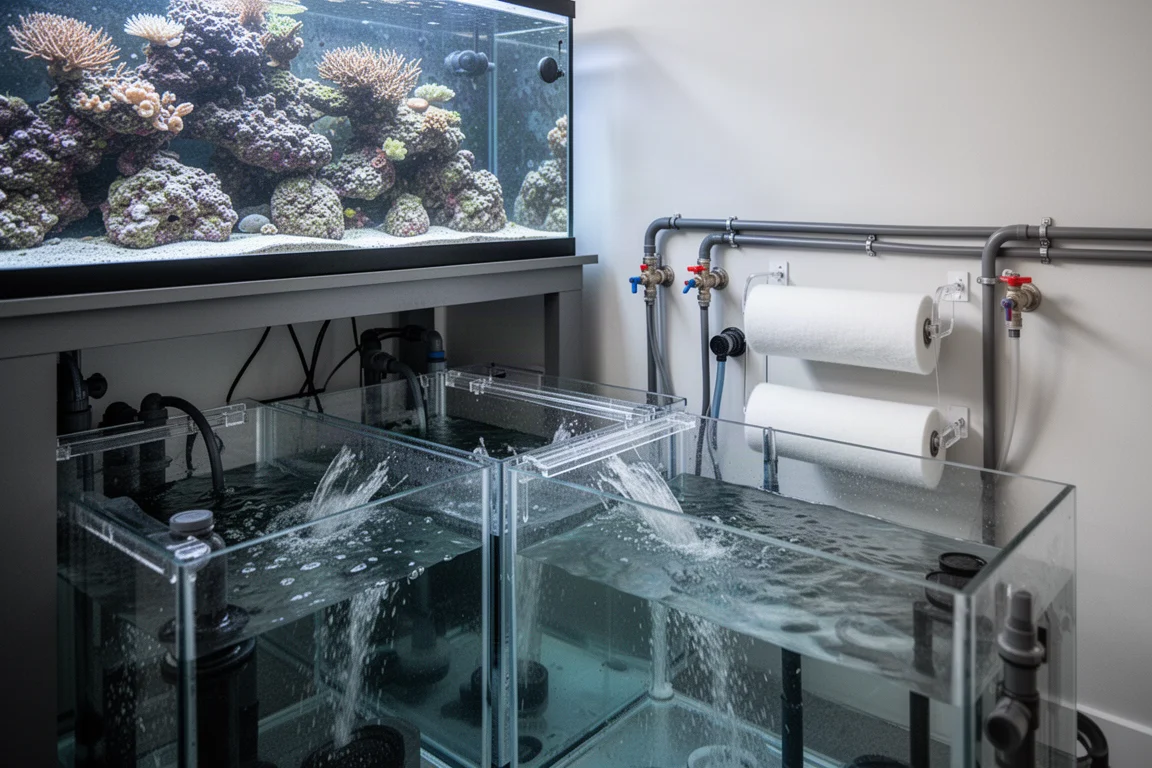
A few parts of the system sit out of sight: automatic water changes stored elsewhere in the building and pumped through the ceiling, plus an auto top-off unit and its reservoir. A controller ties all of it together, including monitoring and leak detection. The sections below cover each piece in turn, along with what it does well and where it asks something of its owner.
DreamBox Sump: The Roller Mat Centerpiece
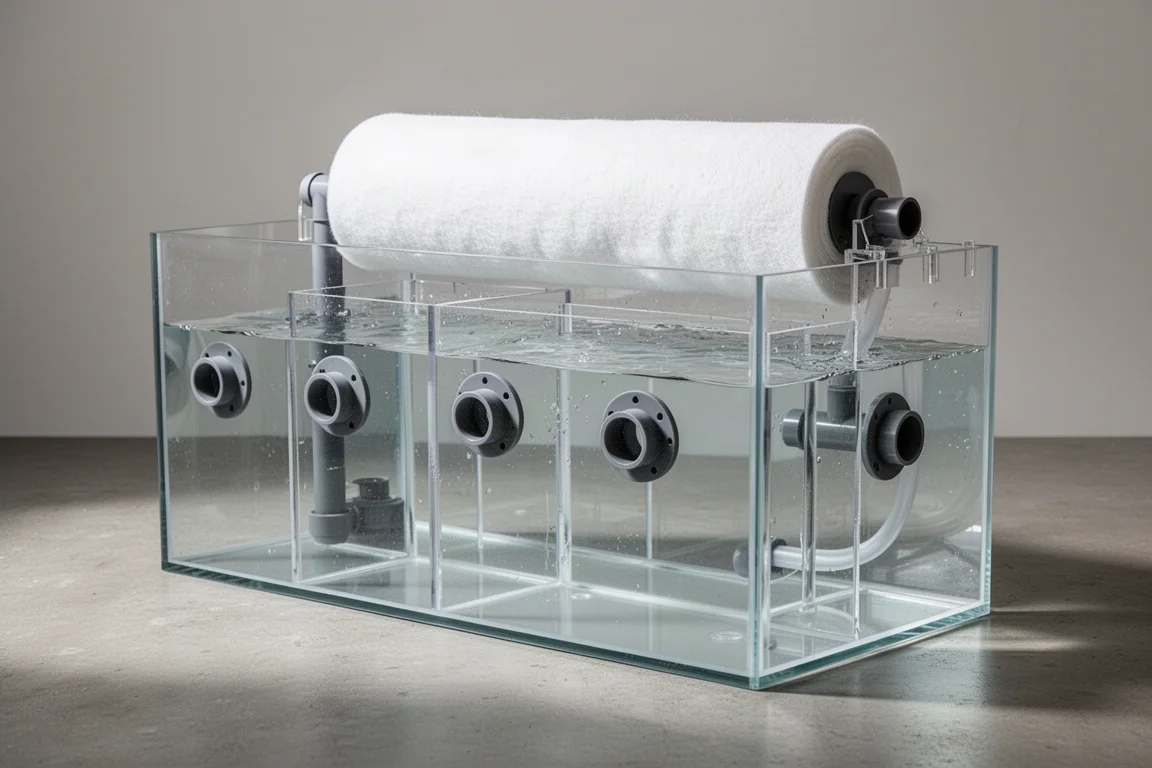
The sump is built around one of the largest fleece roller mats you are likely to see in a home-style system. The roller uses a capacitive, non-contact proximity switch, so the sensor that triggers the mat to advance never touches water. In a tank full of electronics, that is a welcome design choice.
The used roll sits in an isolated, enclosed compartment, which keeps the smell of spent fleece contained. That detail matters here because the sump sits right at the entrance to an office. The large roll needs replacing roughly once every three months. Beyond that, the work is limited to wiping the surfaces the fleece passes over and cleaning the viewing panels so the rolling action stays visible.
Maxspect Nano-Tech Anaerobic Blocks: Space-Saving Denitrification
One chamber in the sump is treated as a testing ground for new products, and it currently holds a Maxspect Nano-Tech anaerobic block. The idea behind these blocks is to host anaerobic heterotrophic bacteria that support denitrification, similar in principle to the bacteria living in a sandbed, but in a compact form that takes up very little sump space.
One block has been running for about six months. The tank has been stable over that period, though that stability also reflects added filtration and consistent automatic water changes, so the block cannot take sole credit. The plan is to add a second block to reach the recommended amount for this system size and keep observing.

Kessil A360X: Lighting the Refugium
The refugium holds chaeto, which at one point melted away after nutrients in the system were accidentally stripped out. New chaeto has since gone in, and a gyre mounted at the back centre provides flow that keeps the mass tumbling into a rounded ball rather than clumping.
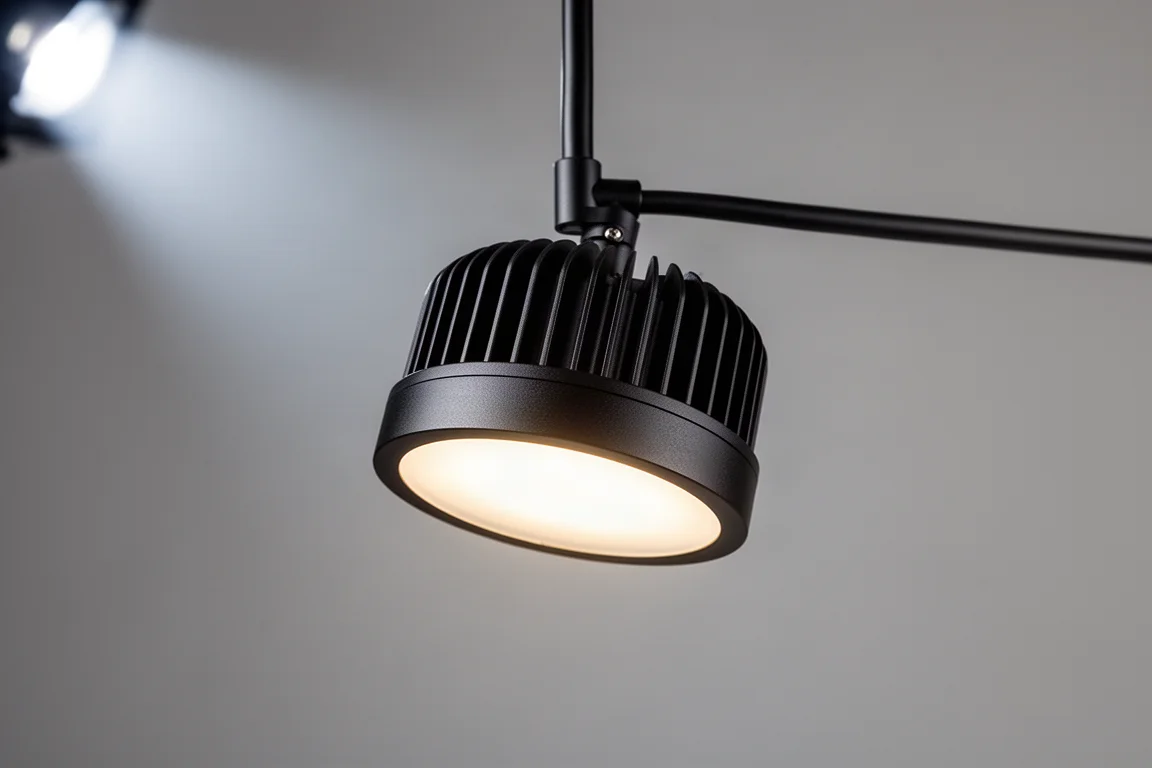
Above it sits a Kessil A360X, the freshwater version, run by the controller on a schedule opposite the display lighting. Running a refugium light at night helps stabilise pH, and pH is a real concern in an office, where elevated carbon dioxide levels in the air push aquarium pH down. For systems in shared or enclosed spaces, that reverse schedule is a practical tool.
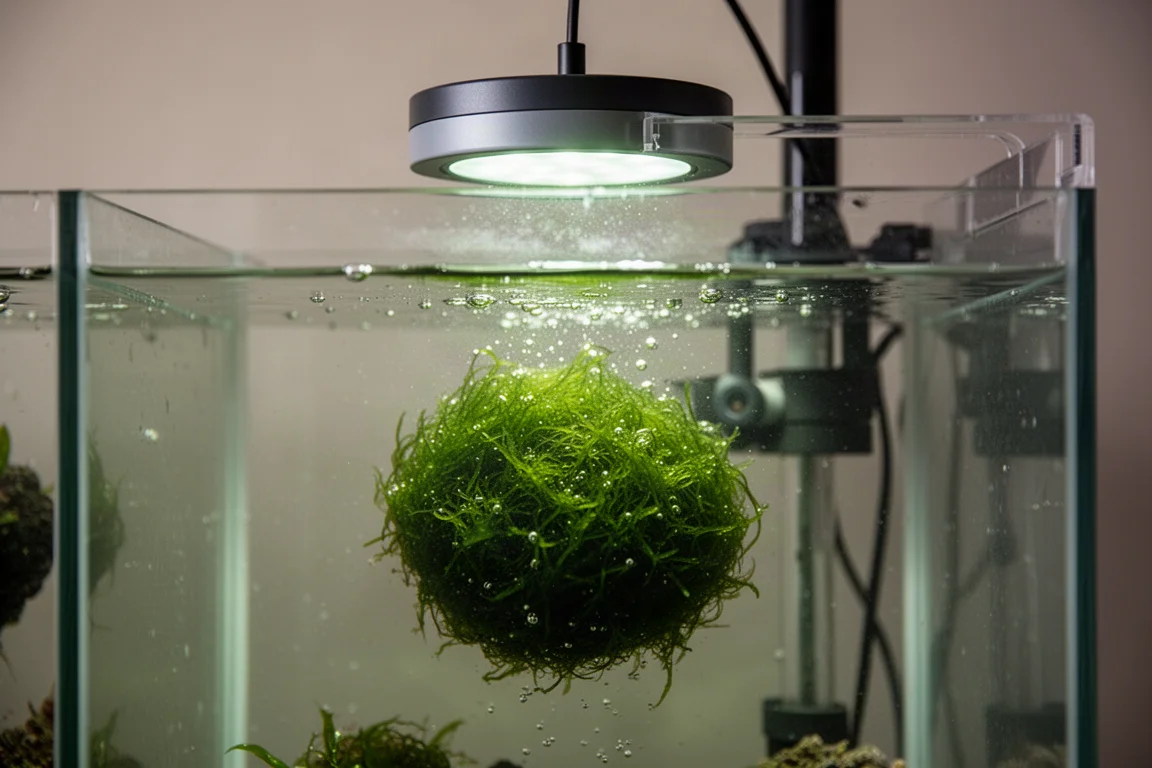
The same light also supports nutrient export, since macroalgae growth depends on steady light and flow. Between the two jobs, it earns its place above the sump.
Neptune Systems Apex: The Control Layer
Under the tank sits a Neptune Systems Apex. Most of its probes are installed, but the leak detectors are the most valuable part of the setup. A system this size runs powerful pumps and moves a lot of water. A loose fitting, a cracked piece of PVC, or any small failure can escalate quickly, and the sump sits in a public hallway with constant traffic.
Leak detectors placed around the installation, paired with push notifications, turn a potential disaster into a message on a phone. The controller also handles dosing through its controlled dosing feature and runs the refugium light, making it the hub the rest of the equipment depends on.

Phosphree: Slower, Steadier Phosphate Control
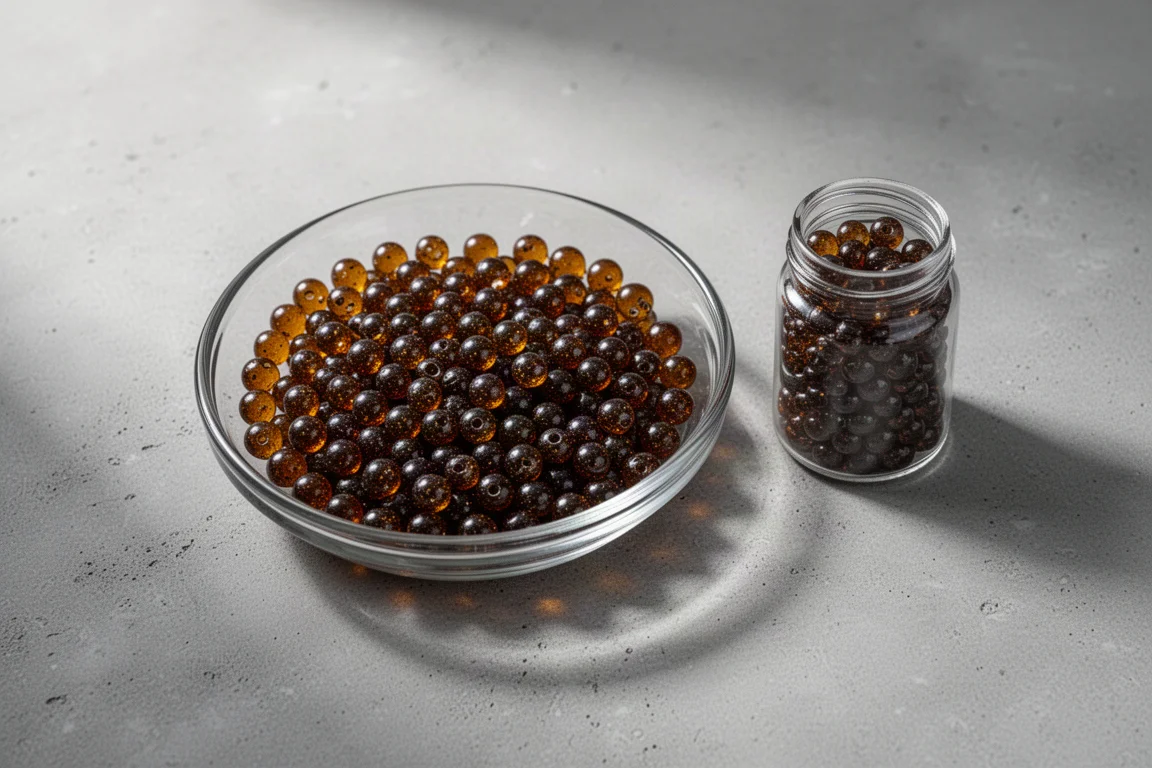
This is a high-bioload system, and keeping phosphate low enough for acropora is a genuine challenge. Phosphree is a resin-based phosphate remover, and its advantage over granular ferric oxide is the pace of its work: it absorbs phosphate more slowly and lasts longer in the reactor.
Slower removal supports stability, which is the goal in an SPS tank. Media like this is close to mandatory in a system carrying this much livestock and feeding.
ROX Carbon: Quick-Acting Water Clarity
ROX carbon runs in the same reactor and works in combination with ozone to clean up any discolouration in the water. It acts quickly, which makes it useful for pulling colour out of the water without a long wait.
The pairing matters: ozone oxidises the molecules that cloud the water, and the carbon polishes the result. Together they keep the display crystal clear.

Royal Exclusiv Media Reactor: Big Capacity, Awkward Service
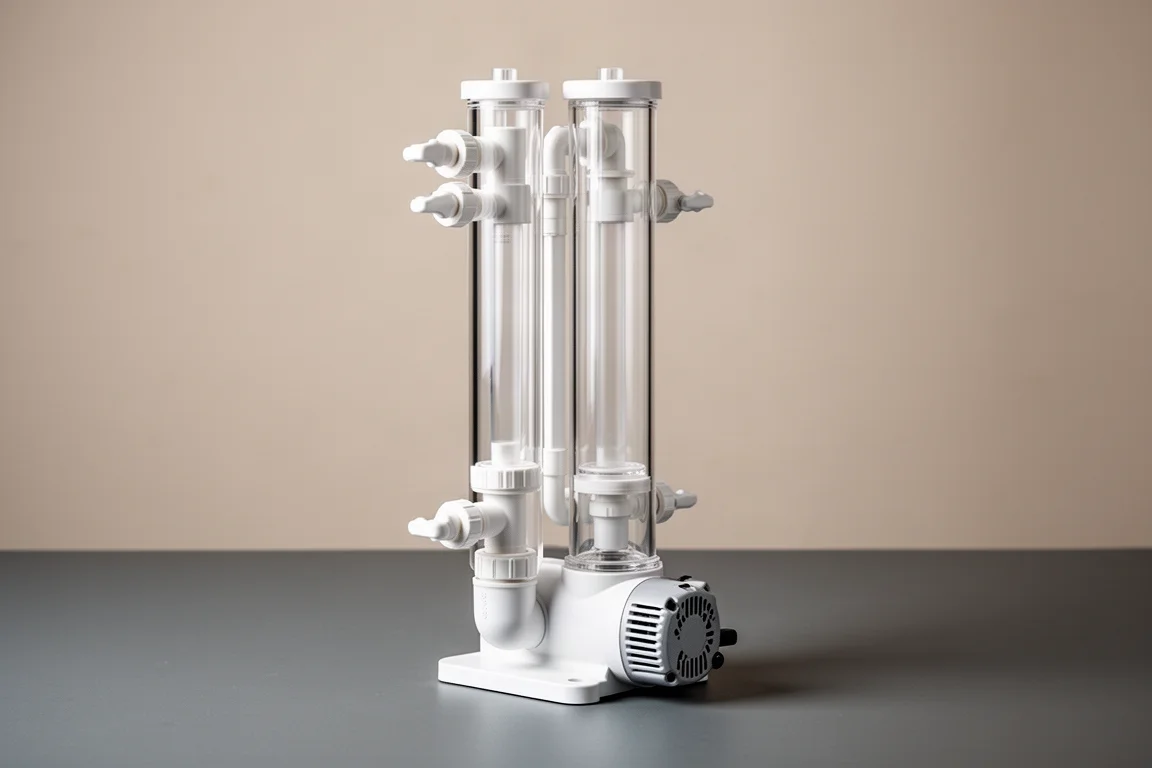
Phosphree and carbon both run in a dual Royal Exclusiv reactor, a newer addition to the system and, in its owner’s view, the catalyst that stabilised it. Capacity is the headline: the unit holds a large volume of media, so changes come less often than with small reactors.
The trade-off is handling. These reactors are bulky and can be difficult to open when it is time to swap media. Having a wash basin or utility sink nearby makes the job far more manageable, and that is worth planning for before installation.
Red Dragon Return Pumps: Moving Serious Volume
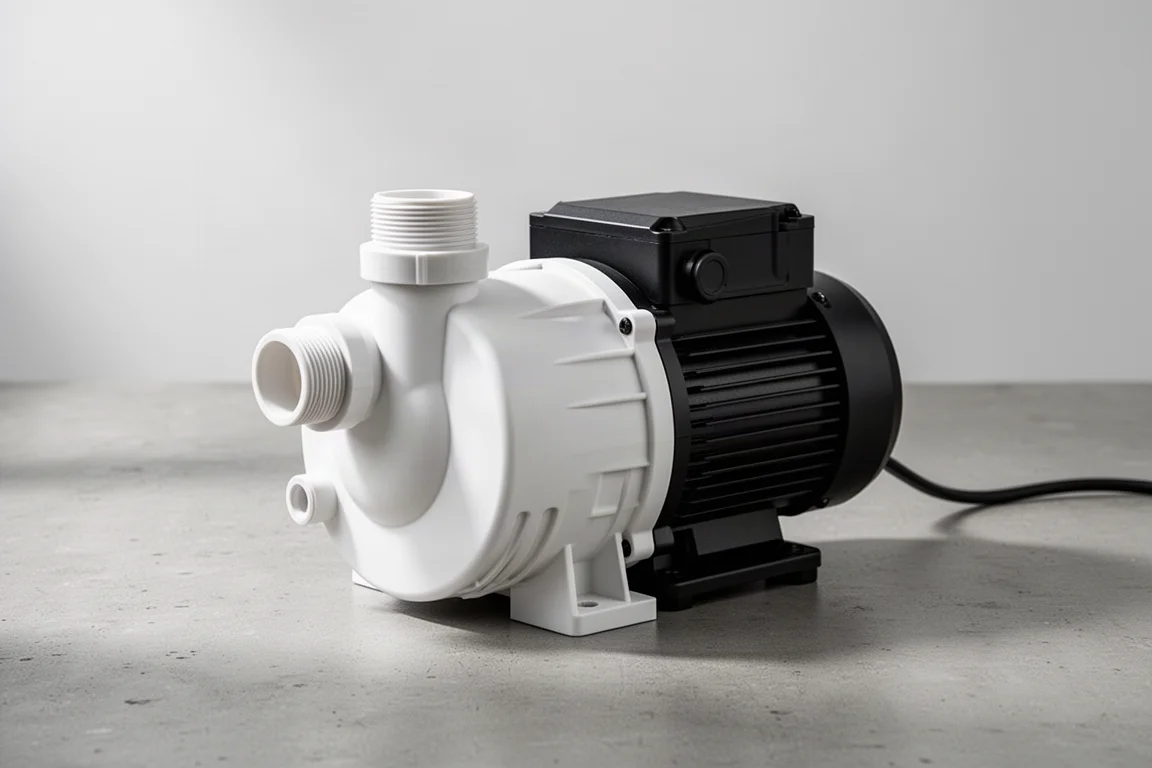
Two large Red Dragon return pumps pull skimmed water from the sump and send it back to the display. In a system of this size, return flow is not a minor detail, and running a pair gives the volume needed to keep water moving through filtration and back into the tank.
For anyone building something similar, the practical point is that return pumps of this class are sized to the job rather than to a spec sheet alone. Match them to total system volume and the turnover the display actually needs.
Pentair UV Sterilizer: Insurance for Tangs
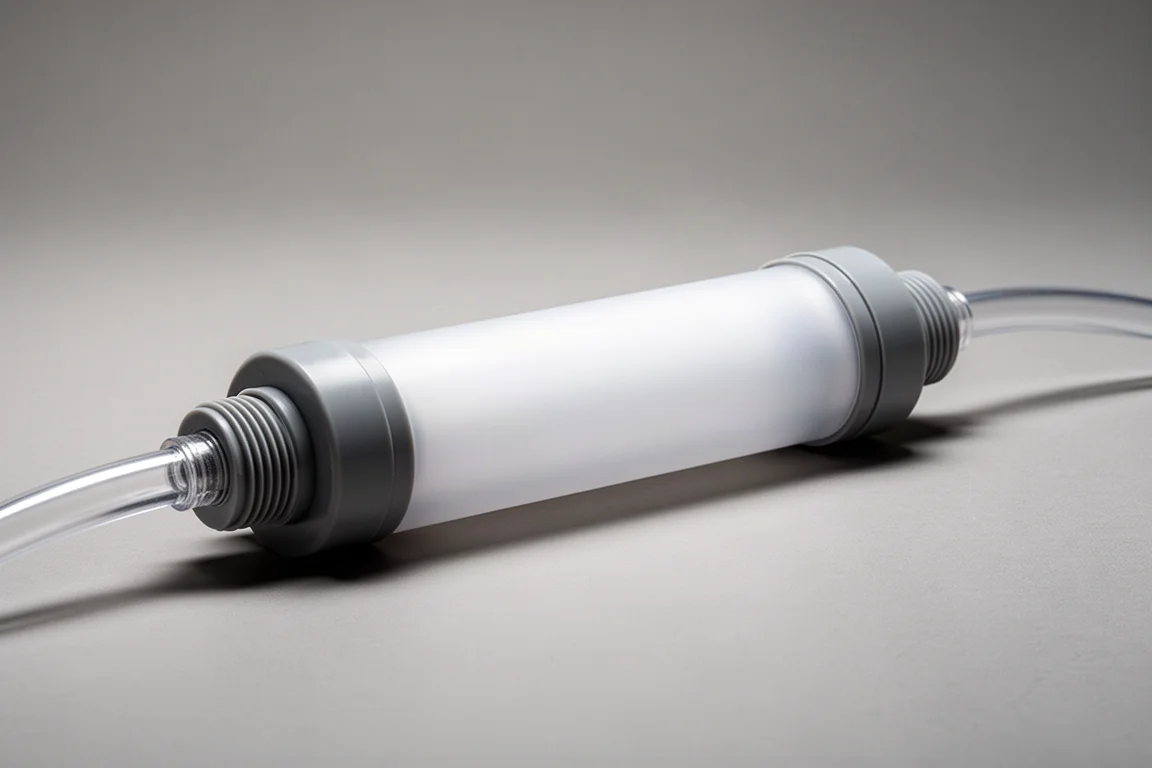
Before water returns to the display it passes through an 80W Pentair UV sterilizer. With a tank holding a number of tangs, a sterilizer is close to essential for keeping those fish healthy.
Maintenance is about as simple as it gets: replace the bulb roughly once a year and leave the unit in line. For an installation that already runs ozone and carbon, the sterilizer is one more layer of water quality management working quietly in the background.
It is also a good example of equipment that does its job without demanding attention. Install it correctly on the return path and it stays out of the way.
Neptune Systems Trident: Automated Alkalinity, Calcium, and Magnesium
Mounted on the wall above the sterilizer is a Neptune Systems Trident, which continually tests alkalinity, calcium, and magnesium. Those results feed the controller’s controlled dosing feature, which drives the four-part additive schedule.
Installation here came with a lesson. The shelf for the unit was mounted too high without accounting for the Trident’s intake requirements. The fix is straightforward: a cabinet will house both Trident units and be mounted lower so sampling works as intended. If you are planning one, work out the intake path before drilling anything.
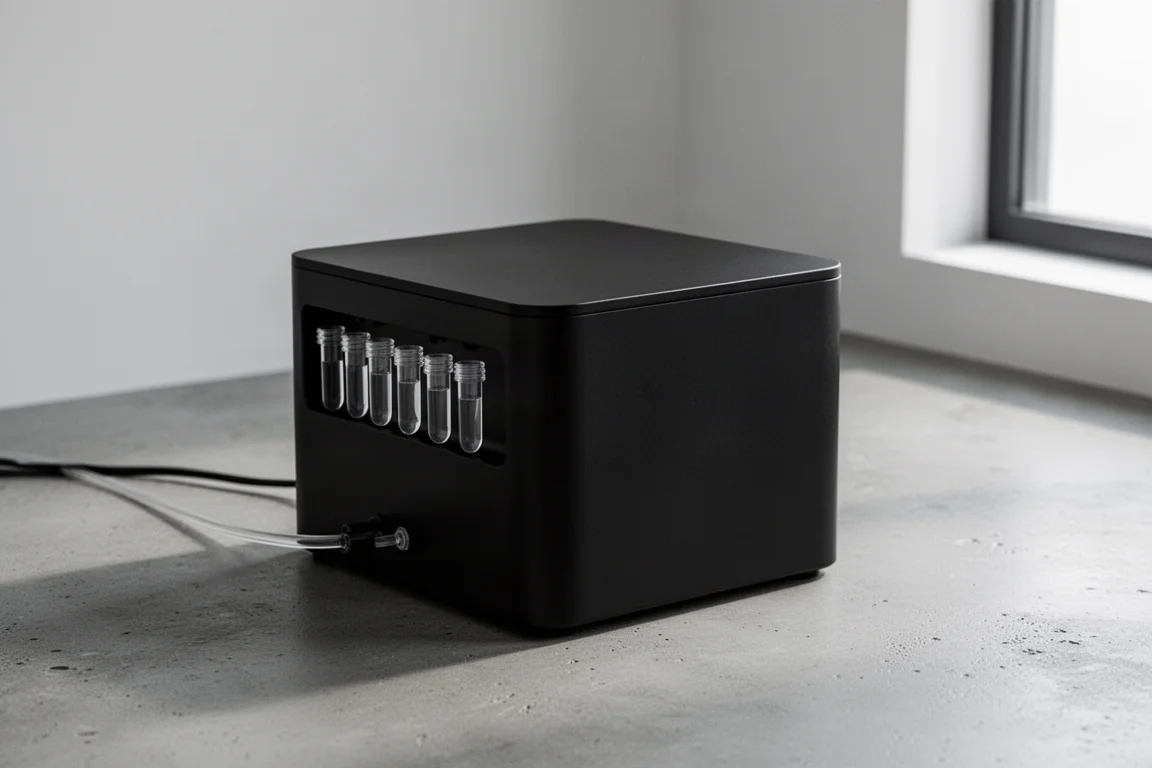
Neptune Systems Trident NP: Expanding the Testing Bench
The NP version of the Trident is the newer arrival, and the same mounting rule applies: it needs to sit where its intake can reach sample water. Both units will share a cabinet once it is installed at the correct height.
Adding a second automated tester widens the picture the controller has of the tank, which in turn supports better decisions about dosing and nutrient control.
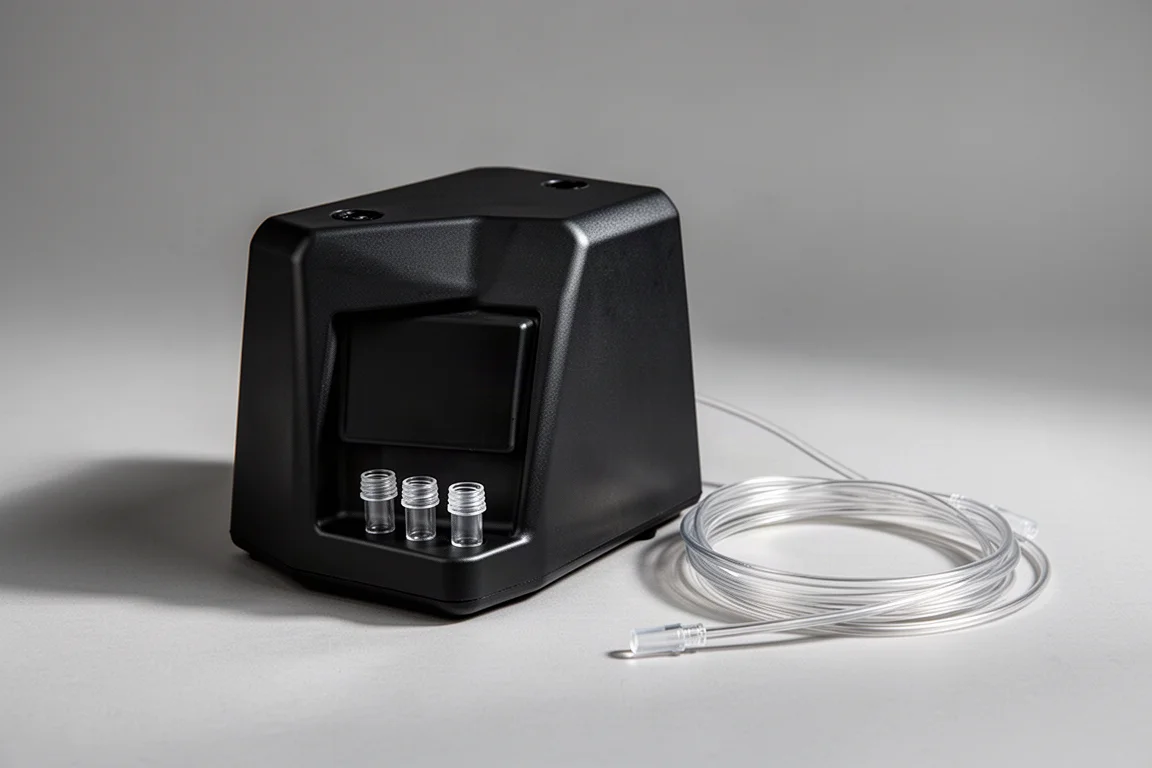
Triton Four-Part Additive: Dosing on Autopilot
Daily demand in this tank averages around 65 ml per day of each of the four Triton additives, delivered by the controller’s controlled dosing feature. That number has been creeping upward, which is a normal sign of growing coral colonies consuming more.
When demand climbs far enough, liquid additives alone can become a stretch, and other dosing methods may be worth considering. Watching the trend over time is more useful than reacting to a single reading.

Buying Advice: Building a Filtration Stack of Your Own
Not every reef needs a sump of this scale, but the logic behind this one transfers to smaller systems. Start with mechanical filtration you can live with. A roller mat with a contact-free sensor and an enclosed used-roll compartment reduces both maintenance and smell, and that combination is what makes it easy to keep up with.
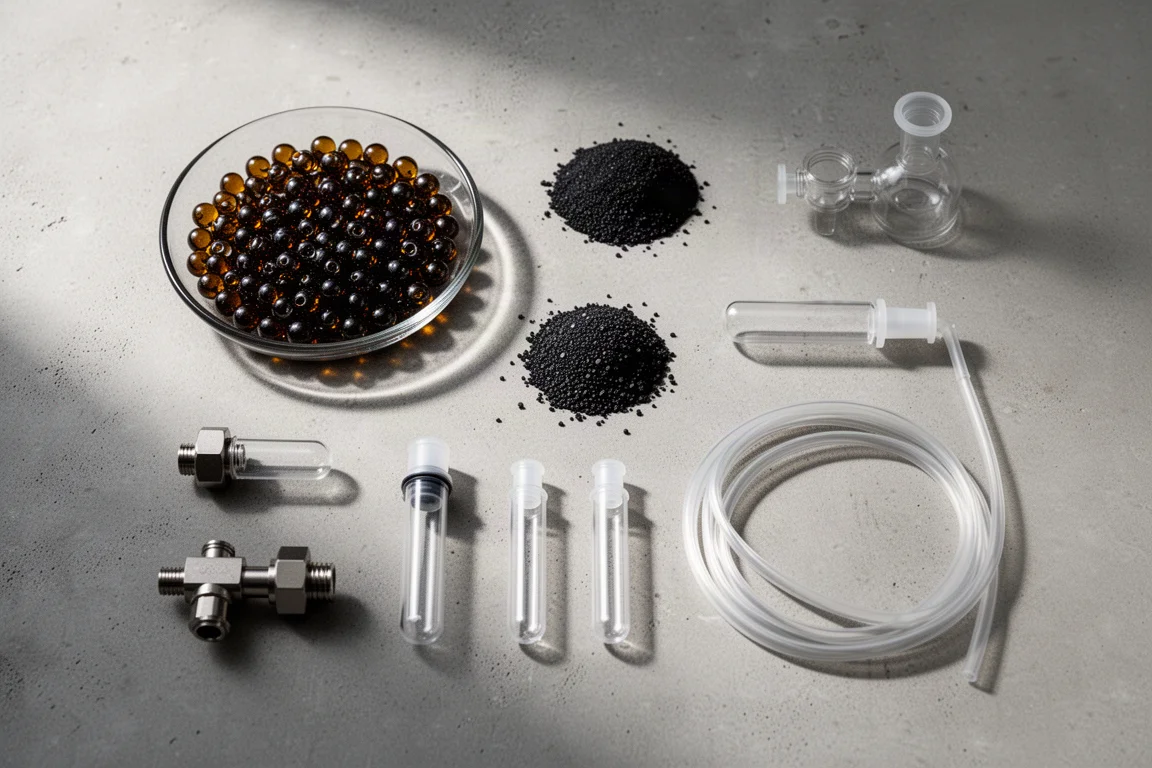
From there, build outward in the order that solves your actual problems. Biological media and a refugium handle nutrients. A reactor gives you control over phosphate and water clarity, with resin-based phosphate removers favouring stability over speed. A sterilizer makes sense when the fish load demands it, particularly with tangs. Testing and dosing automation comes last, because it pays off only once the rest of the system is consistent enough to justify the investment.
A controller with leak detection is worth considering early rather than late, especially if the sump lives anywhere near people or property. Recirculating skimmer designs and short, well-timed ozone runs are other options worth researching if water clarity is a priority.
Conclusion
Nothing in this system is exotic on its own: a roller mat sump, a refugium light on a reverse schedule, a reactor running phosphate media and carbon, a sterilizer, two automated testers, and a controller tying it together. What makes it work is that each piece has a clear job, and the automation covers the daily chores that are easy to skip.
If you are building or upgrading your own filtration, borrow the priorities rather than the exact list. Solve mechanical filtration and stability first, automate testing when dosing becomes critical, and add protection like leak detection before you need it.
Further reading
Related Reviews

Reef Aquarium Filtration
Calcium Reactor Media and Phosphate: Four Popular Options Compared
A straight look at four widely used calcium reactor media, what each is made of, and how much phosphate each one added to the effluent in direct testing.

Backpacking Gear
Building a 10 lb Base Weight: An Ultralight Backpacking Gear List
A practical walkthrough of the ultralight pieces behind a 10 lb base weight, from a 765 g pack and a roomy one-person tent to a full camp chair and a dependable water filter.

Road Bikes
10 New Road Bikes Worth Watching: Aero, Titanium, Steel and Endurance Standouts
A practical roundup of 10 new road bikes, from aero flagships chasing single-watt gains to titanium, steel and endurance platforms built for real roads.