Cycling Components
Redshift Suspension Stem and Seat Post Review: Do They Help on Rough Roads?
A practical look at a suspension stem and suspension seat post with 20mm of tunable travel, and what a timed cobbled-sector test revealed about comfort and speed.
Introduction
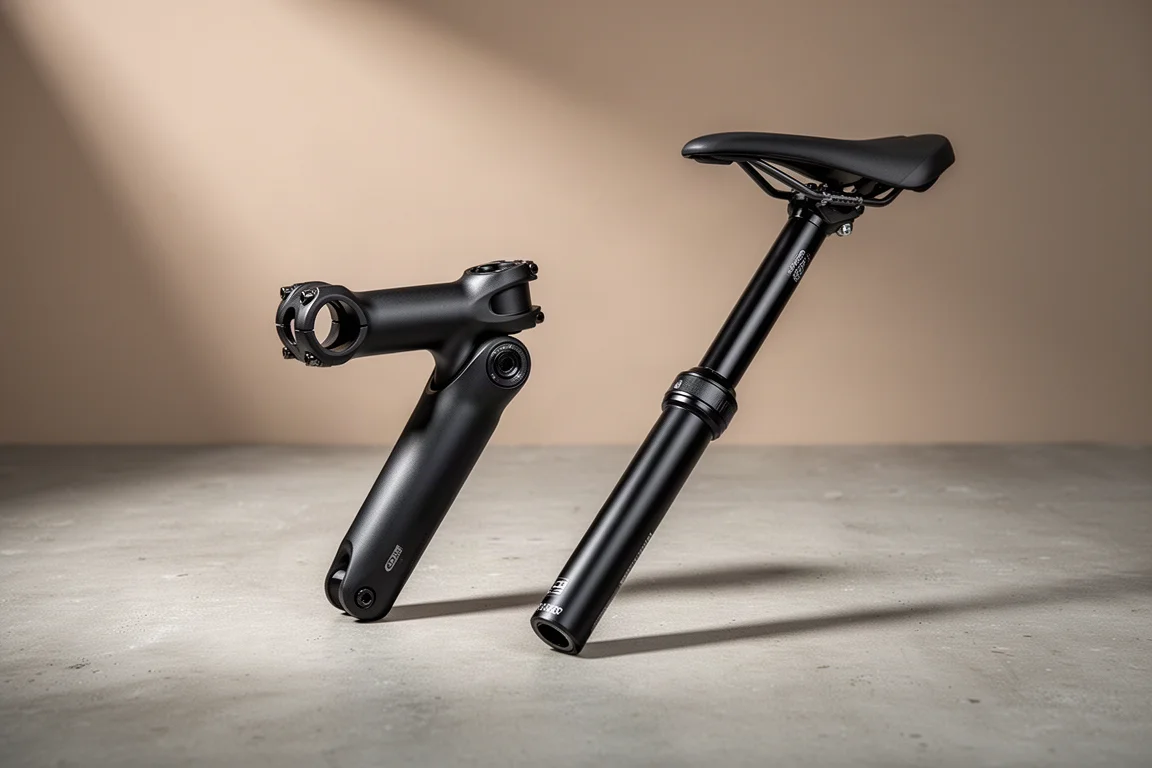
Suspension on a road bike still divides opinion, but on genuinely rough surfaces the argument becomes practical rather than philosophical. The setup examined here pairs a suspension stem with a suspension seat post, both offering 20mm of active travel and both tunable to suit rider preference.
The interesting part is not the theory. It is what happens to comfort and to the clock. On a five-star cobbled sector rated as hard as the terrain gets, the same rider rode the same stretch with and without suspension, and the difference was large enough to be worth writing down.
Why Suspension Matters on Rough Roads
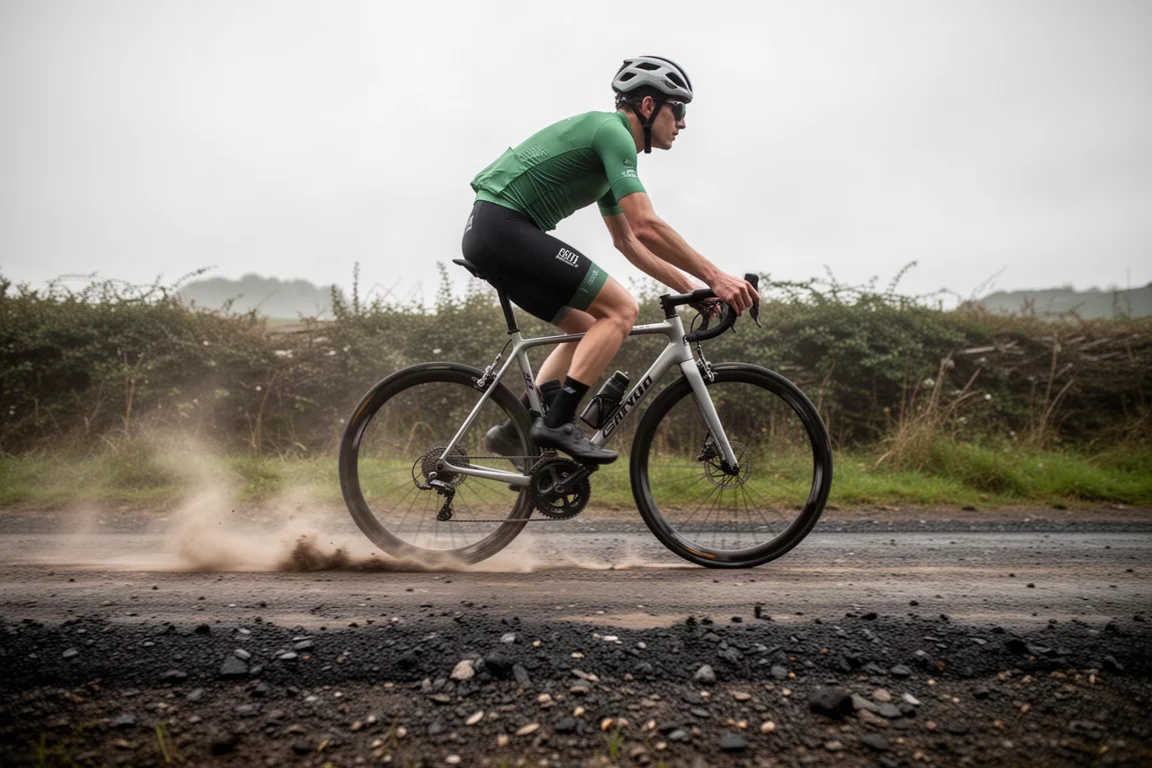
The case for suspension is straightforward. On very rough ground, a stem and seat post take the sharpest edges out of the surface, and the benefit does not stop at cobbles. On imperfect road surfaces where constant road buzz travels up through the bars and saddle, the same components reduce fatigue. A less battered rider stays comfortable for longer, enjoys the ride more, and can often push harder for longer as a result.
The effect is easiest to appreciate on the surfaces most riders avoid. Rough chip-and-tar lanes, broken farm roads and long gravel stretches all feed vibration into the hands, wrists and lower back. Those are exactly the conditions where a small amount of travel does meaningful work rather than being a novelty.
It is also worth separating the two components mentally. A stem acts on the upper body, the hands and the arms. A seat post acts on the contact point that carries most of the rider’s weight and most of the pedalling load. They solve related but distinct problems, and they are not necessarily worth buying together.
A Short History of Suspension in Cobbled Racing
Suspension at the cobbled classics is not a new idea. In the early 1990s, riders won the biggest cobbled race of the season on suspension forks with roughly 30mm of travel. By 1993, five teams were running the same setup, and a soft-tail frame design with around 13mm of travel built into the rear took a second place at the race.
That history matters because it settles the credibility question. Suspension has already been used at the sharp end of cobbled racing, not just by riders looking for comfort. Modern endurance platforms from the major brands also build extra compliance into the frame and fork to cope with rough surfaces, which shows how seriously the category is taken.
The appeal of a stem and seat post combination is that it is a quick, reversible change. Rather than buying a dedicated rough-surface bike, a rider can fit the components to the bike already being raced and make life noticeably more comfortable. That makes it an easy experiment to justify.
Redshift Suspension Stem
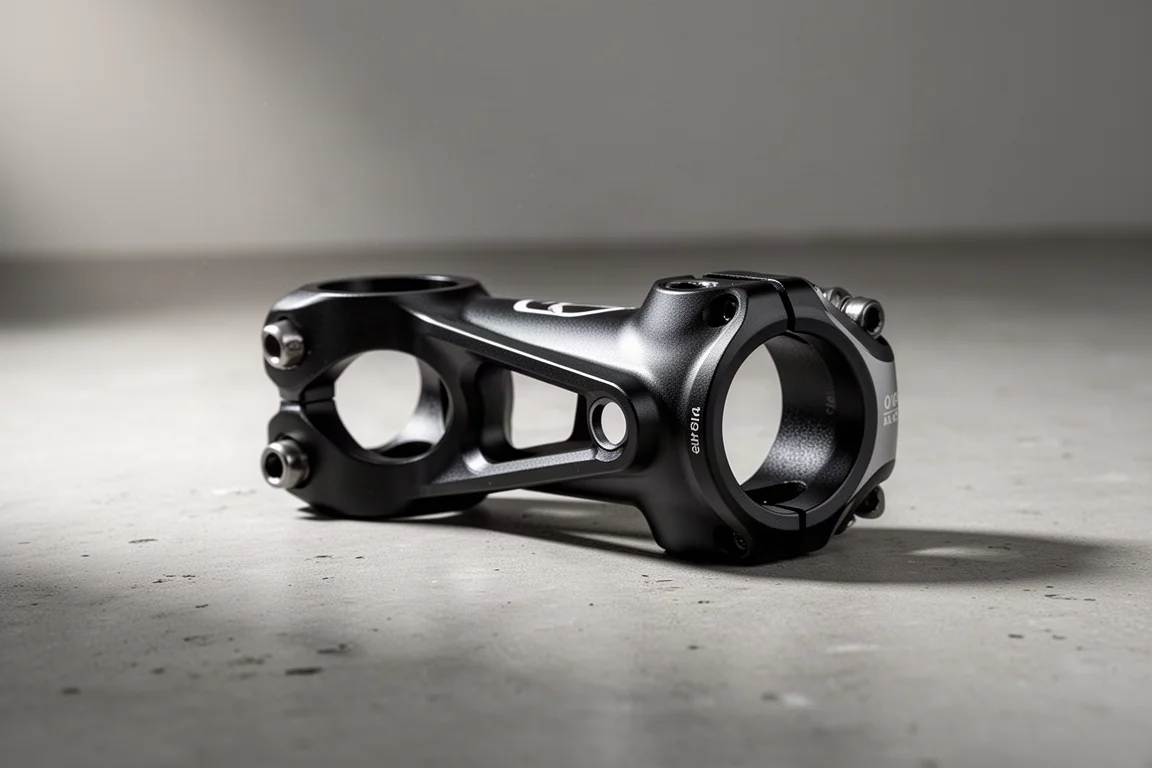
The stem provides 20mm of active travel and is tunable depending on riding preference. On rough ground it absorbs the large, jarring impacts that would otherwise travel straight up through the bars and into the hands.
The effects show up most clearly when the stem is removed. Riding the same hard cobbled sector without it, the punishment lands in the arms, the biceps and the knuckles, and it accumulates quickly even across a single sector. With the stem fitted, that same stretch of road becomes far less draining on the upper body, which leaves more attention for line choice and power delivery.
It has also proved useful away from cobbles. On rough chip-and-tar training roads and on gravel, the stem noticeably improves comfort over longer rides, which is where a component like this earns its place for riders who spend most of their time on imperfect surfaces.

For riders who feel vibration mostly in the hands and wrists, the stem is the more obvious starting point. It changes the character of the front end without altering the fit or geometry of the bike in any significant way, and it can be moved between bikes if needed.
Redshift Suspension Seat Post
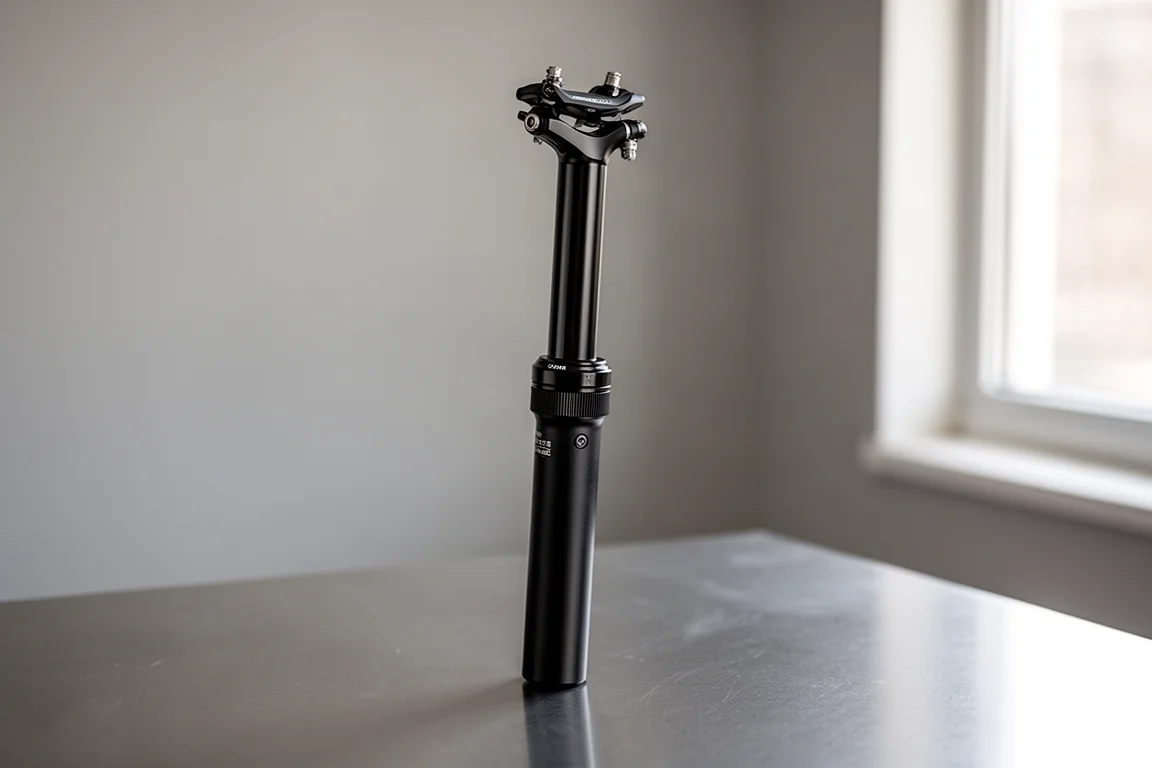
The seat post also offers 20mm of active travel, with the same tunable approach. On cobbles it is arguably the more consequential of the two components.
The reason is momentum. Without suspension, the rider gets bounced around on the saddle, struggles to stay seated and loses the ability to apply power smoothly. With the post fitted, the rider stays much more planted on the bike and can concentrate on pedalling style and keeping the power going. On surfaces where losing speed is punished immediately, staying planted is worth more than it sounds. Once a rider loses momentum on rough stones, it is very hard to get it back.
For riders whose priority is holding speed and position over rough ground rather than simply reducing hand fatigue, the seat post is the upgrade to consider first. It addresses the contact point that determines whether power actually reaches the pedals when the surface is fighting back.
Real-World Results on Cobbles
The timed comparison took place on one of the hardest rated sectors of a major cobbled race, a stretch described as five-star difficulty and one of only three such sectors in the route. The same rider rode it back to back, first on a standard stem and seat post, then with the suspension components fitted.
The difference was roughly 20 seconds: about 4 minutes 40 seconds with suspension against around 5 minutes without. On paper, 20 seconds looks modest. Multiply it across a full race with many sectors and a much longer total effort, and the accumulated gap becomes substantial.
Just as revealing was the physical toll. Without suspension the body felt jangling and battered afterwards, and the finishing effort was a fight to stay smooth. With suspension, the rider was still able to put power down and keep momentum through the corners, which is exactly where rough-surface performance is decided.
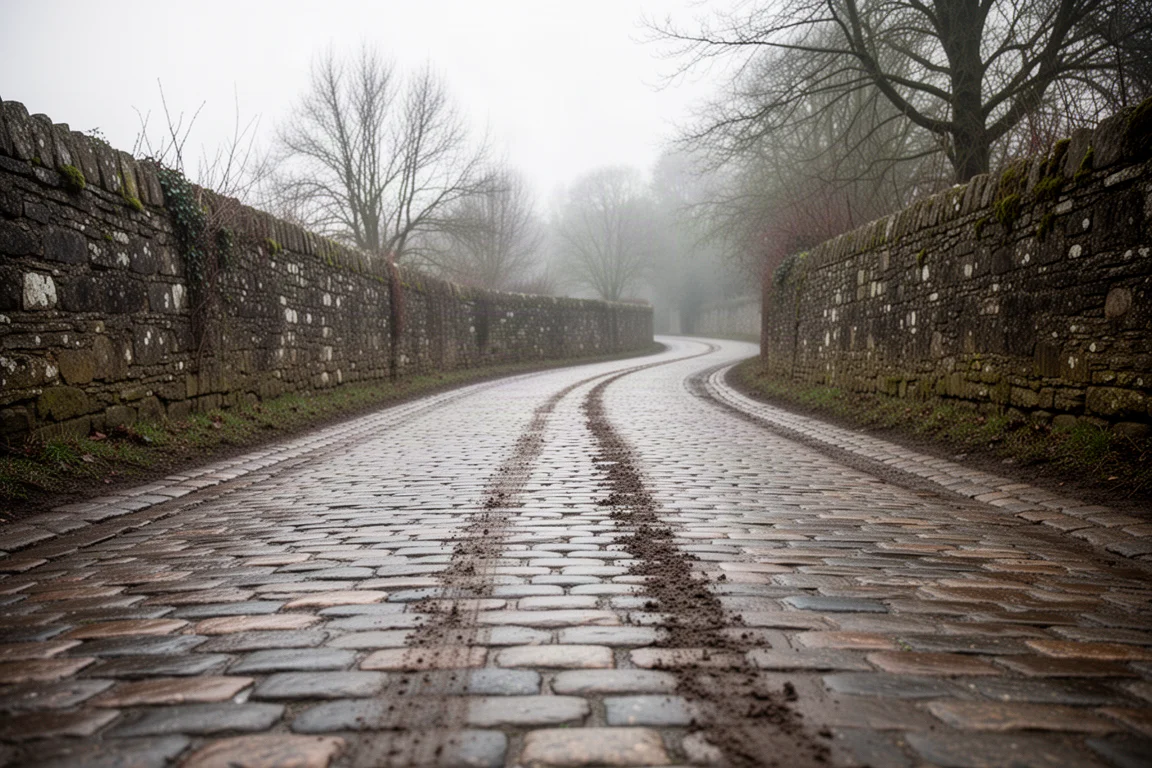
It is worth being precise about what this does and does not prove. It is a single rider’s comparison on a single sector, not a controlled laboratory study. But it does confirm something useful for anyone weighing the purchase: the components deliver a real, measurable change on genuinely rough surfaces, not just a psychological one.
Who Should Consider a Suspension Setup
The strongest case is for riders who race or regularly ride cobbled terrain and want to attack it rather than survive it. The seat post is the first upgrade for that group, because staying planted on the saddle translates directly into sustained power.
The second clear group is riders on chronically rough surfaces. Rough chip-and-tar roads, broken tarmac and long gravel sections all produce the constant vibration these components are designed to absorb, and the comfort gain over a long ride is what most riders notice first. Riders who already own a bike they like and do not want to replace it also benefit from the ease of the swap, since the components can be fitted to an existing frame without a change of platform.
The same qualities define the limitations. Riders who stick to smooth asphalt will find little to gain, because there is not much vibration for the components to manage. The travel is also meant to be tuned, so anyone unwilling to adjust the setup to their weight and preferences will not get the most from it.
Buying Advice
If rough ground is a regular part of your riding, the sensible order is seat post first, then stem. The seat post is the component that keeps the rider planted and preserves momentum, which is the effect most riders feel immediately. The stem is the better starting point for anyone whose hands, wrists and forearms take the beating.
Do not expect either component to transform a smooth-road ride. This is targeted equipment for targeted terrain. The value shows up on cobbles, broken tarmac and gravel, where the reduction in fatigue and the ability to keep pedalling smoothly translate into real time over a long effort.
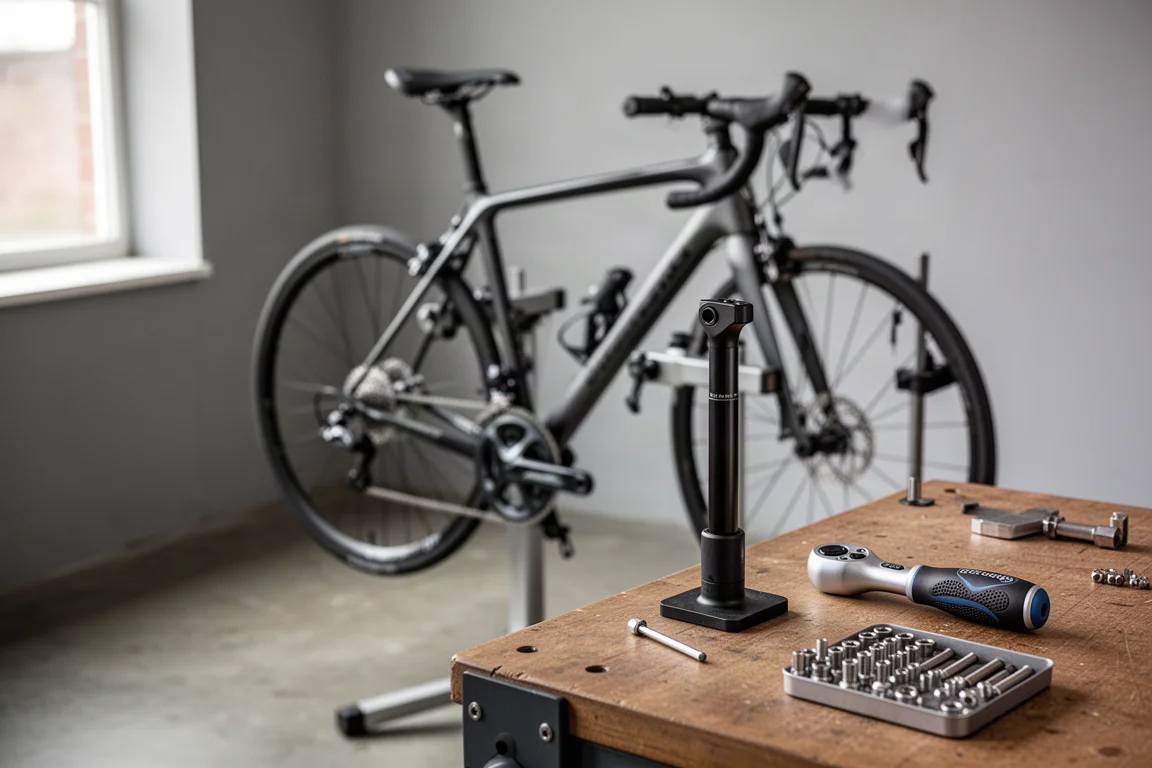
For riders converting an existing bike, the practical appeal is obvious: the components fit the bike already in use and can be removed just as easily. That makes it a low-commitment way to test whether suspension suits your riding before committing to a dedicated rough-surface setup.
Conclusion
A suspension stem and seat post with 20mm of tunable travel are a genuine performance aid on rough surfaces. A timed comparison on one of the hardest cobbled sectors of a major race showed around 20 seconds gained, and a clear reduction in the physical punishment that rough ground delivers to the hands, arms and body.
The seat post is the more impactful of the two on cobbles, keeping the rider planted and preserving momentum. The stem is the better choice for riders whose fatigue shows up in the hands and wrists, and both are worthwhile for anyone riding rough gravel or broken roads on a regular basis. Choose according to where your fatigue lands, and tune both to suit your own riding.
Further reading
Related Reviews

Cycling Components
A 20,000-Mile Budget Race Bike Build: Five Parts Worth Knowing
A rim brake race bike assembled from low-cost components and ridden for 20,000 miles. Here is what delivered real speed, what caused problems, and what to weigh before copying the formula.
Cycling Components
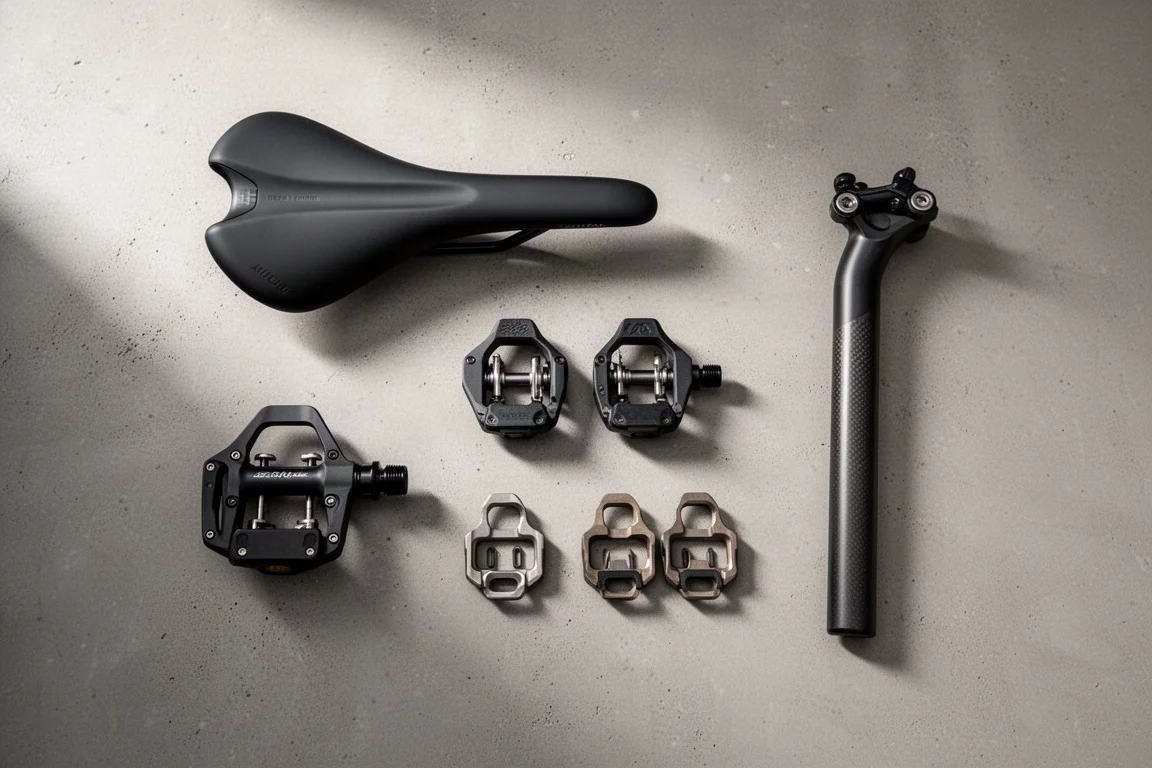
7 Bike Fit Products Fitters Avoid: What to Check Before You Buy
Seven bike components that regularly cause knee, foot and saddle problems, with the specific concerns behind each one and what to look for instead.
Cycling Components
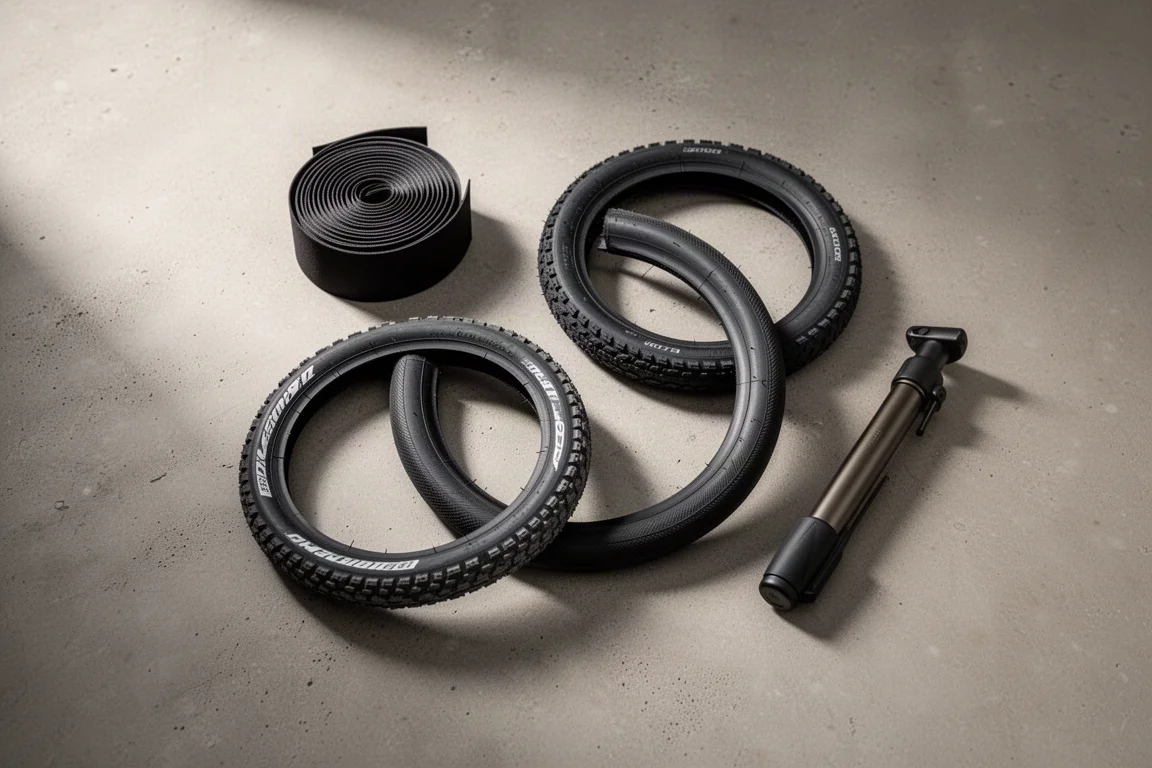
Four Affordable Bike Upgrades That Improve Ride Feel
Four low-cost cycling products that make a real difference to ride feel, plus the free setup changes worth trying first.