Cycling Wheels
Rear Disc Wheel vs Front Disc Cover: Two Aero Options Compared
A carbon rear disc wheel and a low-cost front wheel cover promise the fastest wheel shape available, but crosswind handling and rule limits change the equation.
Introduction
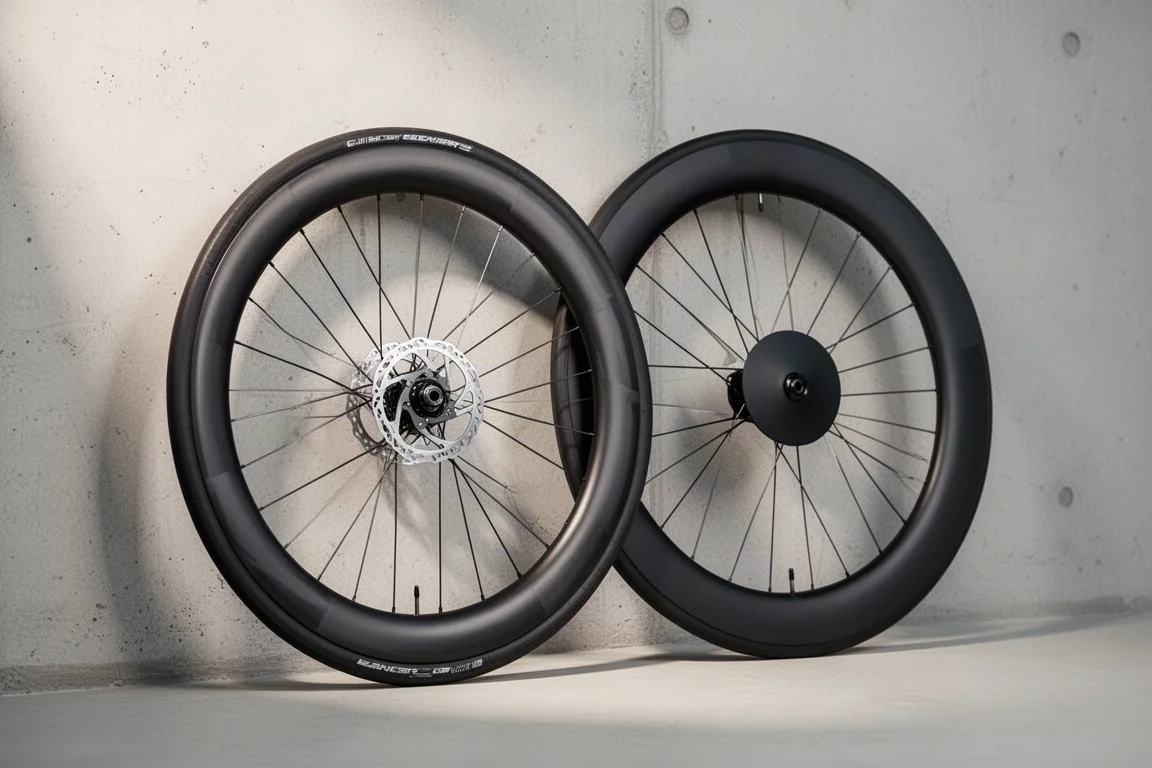
A disc wheel, completely filled in rather than built from spokes, has long been regarded as the fastest shape you can put inside a bike frame. Front versions were used in time trials years ago, and riders like Greg LeMond made their most famous efforts on a fully covered front wheel. They are no longer permitted in racing, largely for safety reasons, but for riders who are not competing under a rulebook the appeal remains obvious: a rear disc and a covered front can turn an ordinary road bike into something that looks and behaves like a dedicated time trial machine.
This guide looks at two very different routes to that setup. One is a purpose-built carbon rear disc wheel. The other is a low-cost cover that converts a standard rim brake front wheel into a disc for a fraction of the price, with a few practical catches worth understanding first.
Why Disc Wheels Are Fast in the Right Conditions
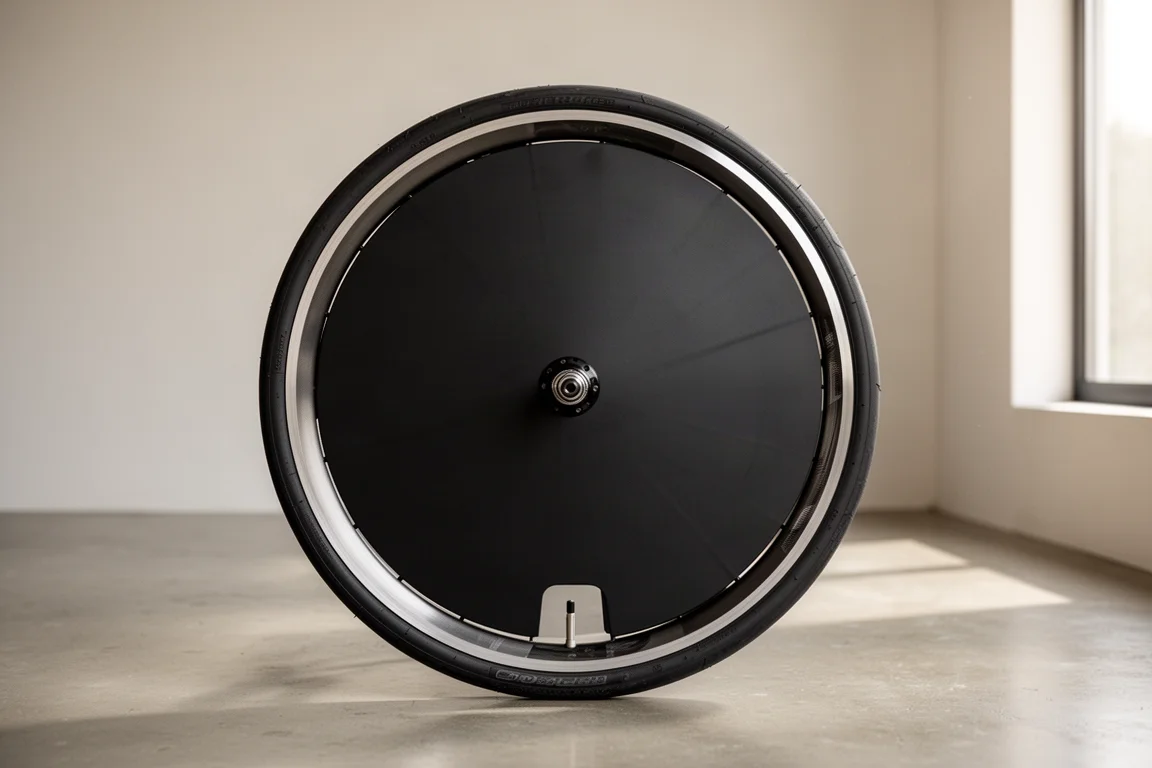
A disc wheel is filled in completely instead of being laced with spokes, which removes the turbulence that air normally has to negotiate as it passes through a wheel. That single change is the basic reason a disc is treated as the most aerodynamic option available on a bike.
The compromise is not aerodynamic but behavioural. A closed surface presents one large face to the wind, so crosswinds push against it rather than passing through it. That is why front discs stopped being used in races for safety reasons, and it is the reason this kind of setup belongs on flat, sheltered time trial courses rather than on open, exposed roads.
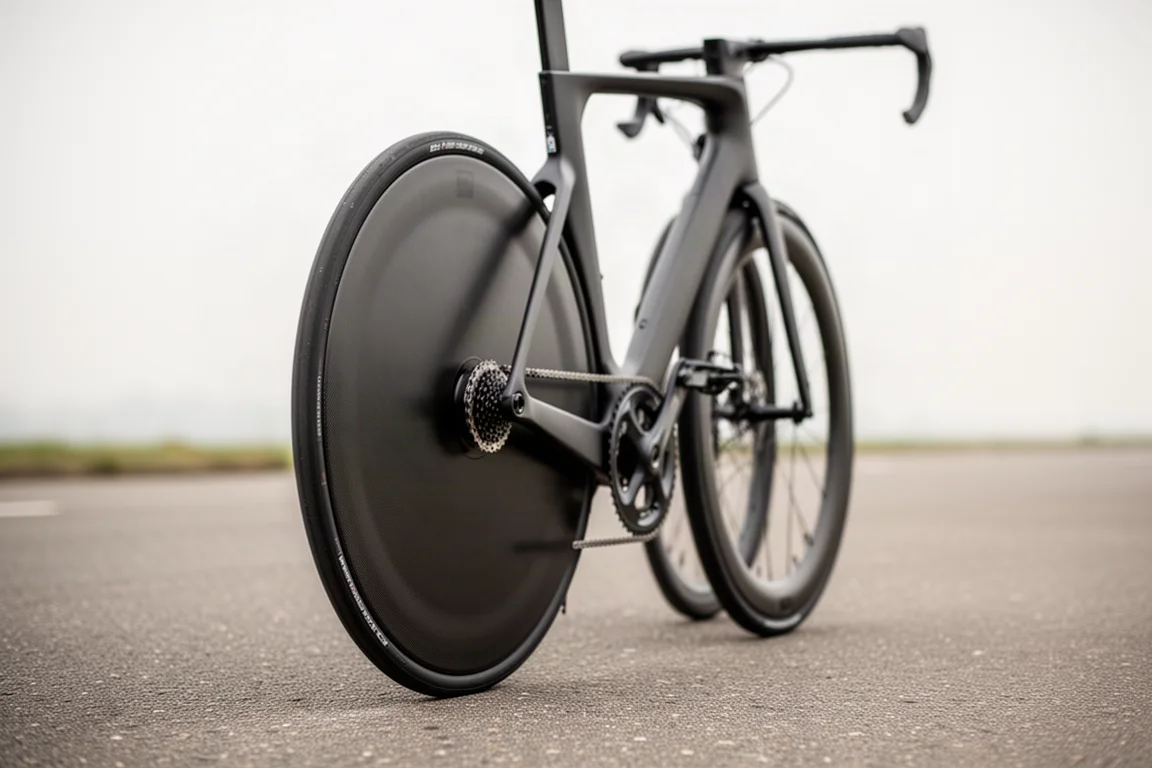
At the rear the calculation is friendlier, because the wheel sits behind the frame, the seat tube and the rider’s legs, so it sees far less clean air. That is why rear discs stayed legal and popular while front discs did not.
Parcour Disc Wheel: A Carbon Rear Disc Built for Flat Time Trials
The Parcour disc is a clincher rear disc wheel built in carbon, and it is the simple half of this pairing. It arrives as a complete wheel, and this one came with a tyre already fitted, so fitting it means removing the existing rear wheel and moving the cassette across.
Because it is a true disc, the entire surface is closed. That represents the maximum aerodynamic benefit available at the rear of a bike, and it is the reference point against which deep-section and tri-spoke wheels tend to be judged. Dedicated disc wheels of this type generally sit around the one thousand pound mark, which is a lot for a wheel that realistically makes sense on race day or on flat, fast training routes.
There is one firm caveat. A wheel of this construction sits outside UCI equipment rules, so it is not something you can use in sanctioned racing. For a rider building a fast flat-course setup outside those regulations, that is not a practical limitation. For anyone with a race calendar, it is.
EZ Gains Front Disc Wheel Cover: Budget Aero, With Caveats
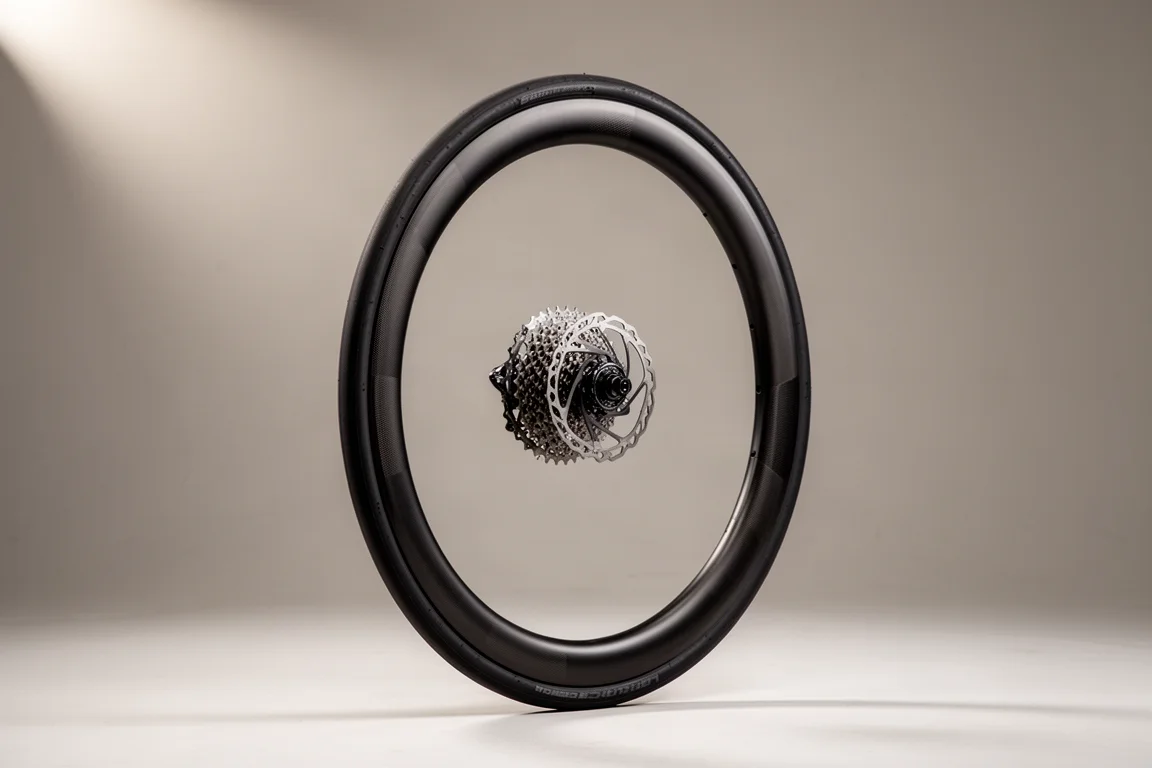
Getting a genuine front disc wheel onto a bike with rim brakes is close to impossible, because almost nobody makes a front disc with a braking surface. The practical alternative is a cover, and the EZ Gains cover is exactly that: a disc-shaped shell that fits over an existing rim brake clincher. It is made primarily for hand bike use, where this kind of front wheel is more commonly available.
The cover is ordered according to the depth of the wheel it will sit on, since that determines how large the cover needs to be. The kit includes a small valve hole, a sheet of circular stickers, electrical tape, mini zip ties and small screws. Fitting it is a genuinely fiddly job: one side is taped onto the wheel, the zip ties are threaded through the holes and attached to the spokes so that side becomes solid, the second side is mounted and secured, the top sections are screwed together as one unit, and the stickers are used to close the gaps around the outer edge. There are no printed instructions, and the QR code supplied with the kit leads to a product page rather than a fitting guide.
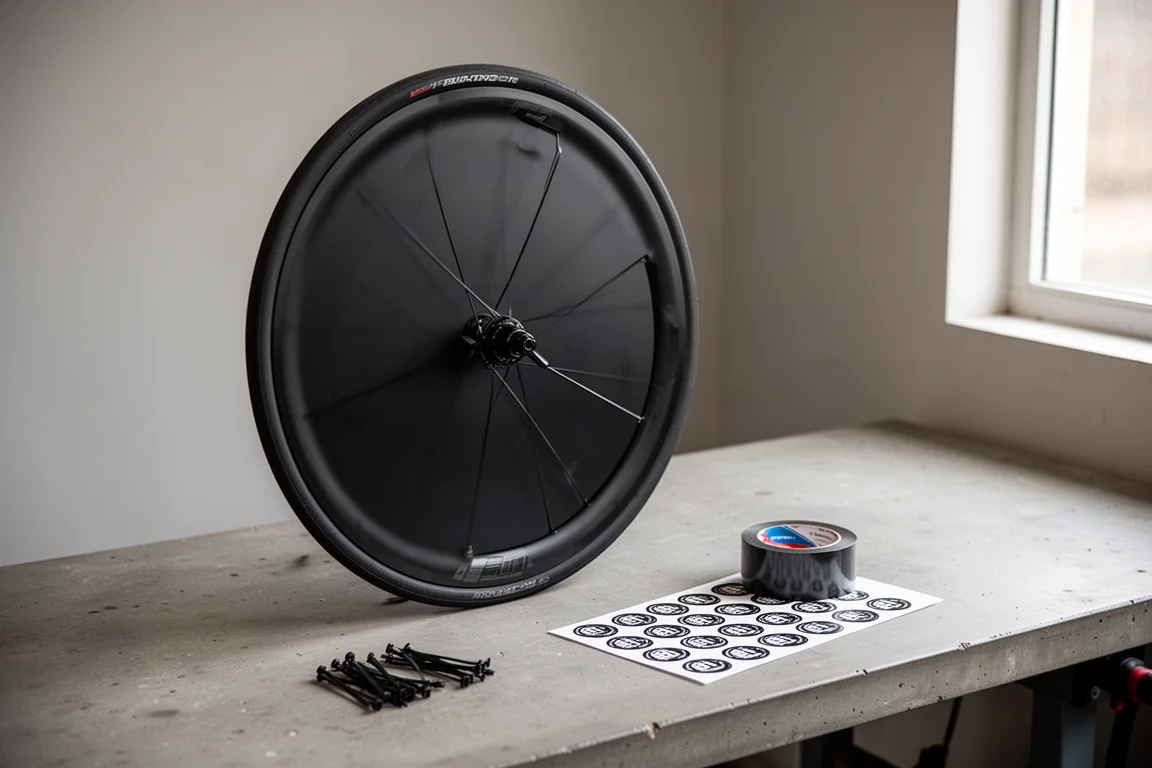
The critical detail during installation is the braking surface. Clearance between the rim brake track and the cover is very tight, so the tape has to be applied carefully. If it touches the braking surface, braking will tear it up and leave a mess. There is a certain irony in a rim brake product that can be undermined by the rim brake itself, and it is worth planning the taping step before anything else.
The cost argument is strong, though. A cover like this runs around 160 to 170 pounds against roughly one thousand pounds for a dedicated disc wheel, and it can even be fitted over a shallow alloy rim. In time trial circles, covers have been used instead of full discs for exactly that reason, and many of them are reported to test very fast.
Crosswind Behaviour and Real-World Ride Quality
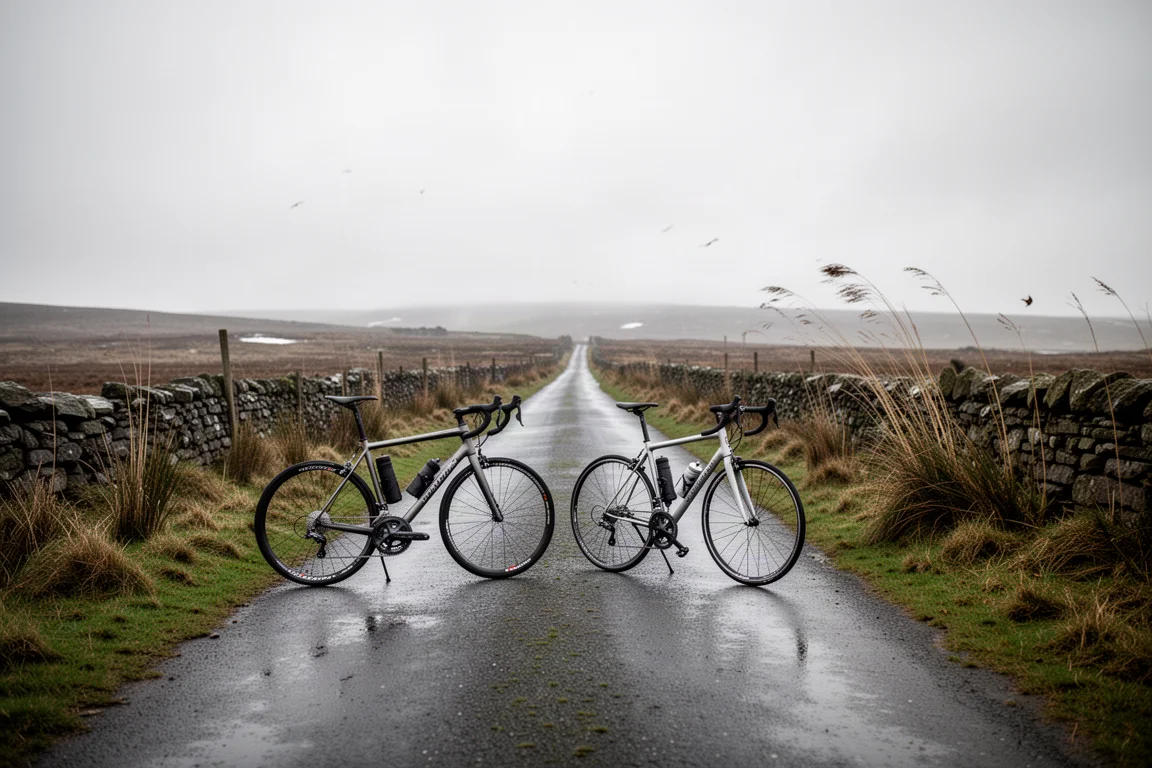
On a windy day on exposed moorland roads, the difference between a normal front wheel and a covered one was hard to miss. The front end became twitchy to the point that the rider was constantly compensating with small steering inputs, often without realising it was happening. A passing car produced a noticeable shove, and gusts cutting across the road at field gates caught the wheel by surprise, which is the sort of moment where the input required and the movement that follows do not quite line up.
The setup remains rideable. It climbs normally, and at low speed it is manageable. The problem is exposure. As soon as speed picks up, or the wind finds a clear line across the road, the covered front wheel starts steering the bike rather than the other way around. It becomes equally noticeable when wind direction shifts mid-ride, which is when the small corrections come thick and fast.
That behaviour is the core reason this combination is not recommended for general riding. It may well be faster, but the gain arrives with a handling penalty that only makes sense on a flat, sheltered course in settled conditions.
Weight, Cost, and Rule Considerations
Swapping to a disc rear and a covered front took the build from around 7 kg to 8.71 kg, so this is not a weight-saving exercise. Whatever speed advantage a disc offers comes from aerodynamics rather than from saved mass, and on a hilly route the extra rotating weight is a genuine consideration.
On rules, the picture is clear. Time trial regulations in the UK state that disc wheels, or spoke wheels fitted with covers, may only be used on the rear of a machine, and that a front wheel must have at least 45 percent of its surface area open. Deep-section rims, tri-spoke designs and similar wheels are permitted at the front. A front disc cover therefore sits outside those rules, which is worth knowing before spending money on a setup you cannot use in a regulated event.
On performance, the numbers that matter are difficult to verify outside a controlled test. Rear discs have been shown to save in the region of 30 seconds over a deep-section wheel across 40 kilometres, and covers are widely reported to test close to a full disc. Measuring that properly requires outdoor aero testing or wind tunnel time, so any specific claim for a front setup should be treated as unconfirmed rather than as a guaranteed gain.
Who Each Setup Suits
The Parcour disc is the straightforward option for a rider who wants maximum rear-wheel aerodynamics and is not competing under UCI rules. It is a single component, it bolts on, and it behaves predictably apart from the usual rear-disc crosswind sensitivity, which the frame partly shields.
The EZ Gains cover is for a different rider: someone who wants to experiment with front disc aerodynamics on an existing rim brake wheel for a fraction of the cost, and who is willing to spend an hour or two fitting it carefully. It also suits hand bike riders, for whom it was designed in the first place.
Buying Advice
If you want one upgrade with predictable behaviour, the rear disc wheel is the sensible buy. It delivers the biggest single aerodynamic gain available at the back of the bike, it is a finished product rather than a kit, and it does not change how the bike steers in a straight line.
If your interest is purely in finding out what a covered front wheel feels like, the cover is far cheaper and reversible, but go in with realistic expectations. Expect a fiddly installation with no instructions, budget time for careful taping around the brake track, and expect the front end to feel quite different in any kind of wind. It is best treated as an experiment for sheltered flat courses rather than a permanent fixture on a bike you ride everywhere.
Conclusion
Both options do the same job in different ways: close off the wheel surface and cut the turbulence that spokes create. The rear disc is the refined version, expensive but straightforward and reliable. The front cover is the experiment, cheap enough to try, and heavily compromised once the wind picks up.
For most riders the honest verdict is the one that applies to any extreme aero choice. It may be faster, but unless you ride flat, sheltered courses in calm conditions, the handling penalty is not worth the trouble.
Further reading
Related Reviews
Cycling Wheels
Aero vs Lightweight Carbon Wheels: Hunt 60 Limitless and Hunt 32 Aerodynamicist Compared
Deep-section aero wheels and featherweight climbing wheels promise different things. Controlled real-world testing on flat laps and a steep climb shows where each set actually gains time.
Cycling Wheels
Best Carbon Road Bike Wheels 2026: Six Standouts From Entry Level to Premium
A practical guide to carbon road bike wheels across six price brackets, covering rim width, rim depth, hub engagement and what each step up actually buys.
Cycling Wheels
Best Rim Brake Road Wheels: Six Options From Budget to Premium
Six rim brake road wheelsets covering nearly every price point, from a value alloy set to sub-kilogram tubulars, plus advice on custom builds and buying secondhand.