Cycling Wheels
Aero vs Lightweight Carbon Wheels: Hunt 60 Limitless and Hunt 32 Aerodynamicist Compared
Deep-section aero wheels and featherweight climbing wheels promise different things. Controlled real-world testing on flat laps and a steep climb shows where each set actually gains time.
Introduction
Deep-section aero wheels are supposed to be faster on the flat, and featherweight climbing wheels are supposed to be faster uphill. That much is repeated often enough to feel settled. What is far less clear is how large the difference actually is for a normal rider on normal roads, and whether the gap is big enough to shape a purchase decision.
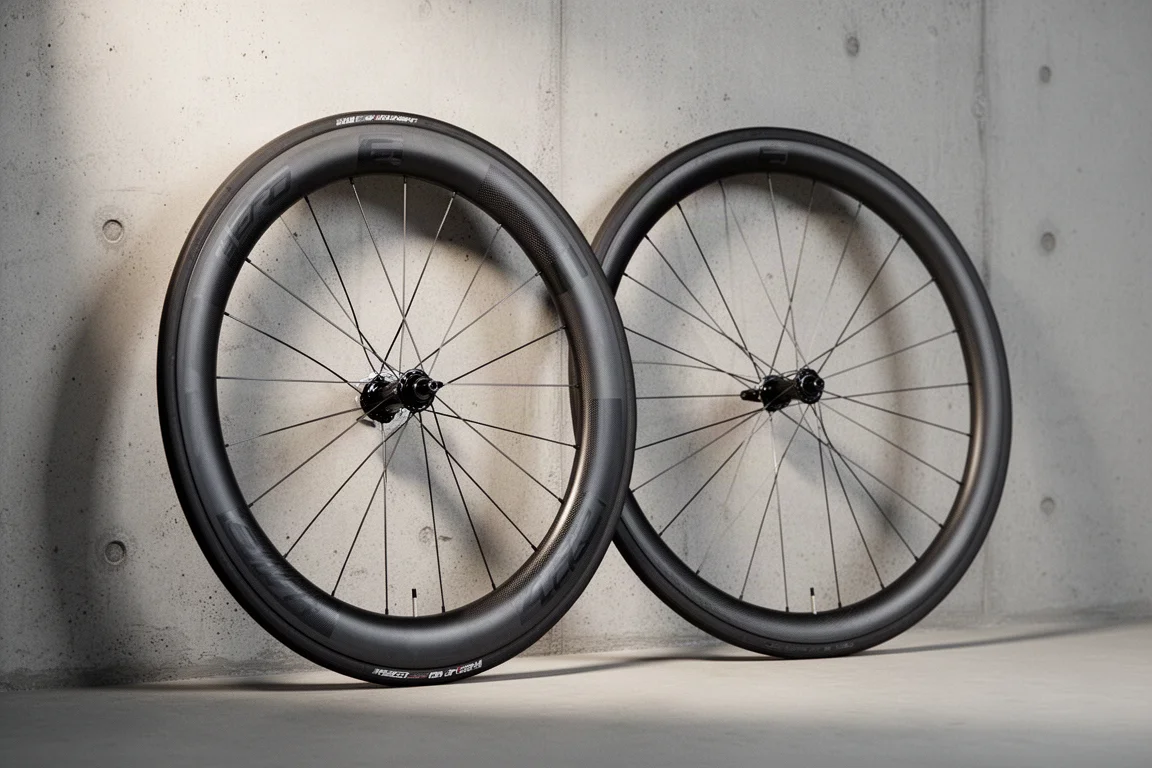
That question was put to a controlled real-world test using two very differently focused carbon wheelsets from Hunt: the 60 Limitless Aero Disc, built for aerodynamic efficiency, and the 32 Aerodynamicist UD Carbon Spoke Disc, built to be as light as possible. The testing took place on an outdoor velodrome for flat speed and on a steep climb in South Wales for uphill speed, with power output and equipment held as constant as possible.
The results are worth reading before choosing between these two philosophies, because the outcome is more nuanced than the usual shorthand suggests.
How These Two Wheelsets Differ
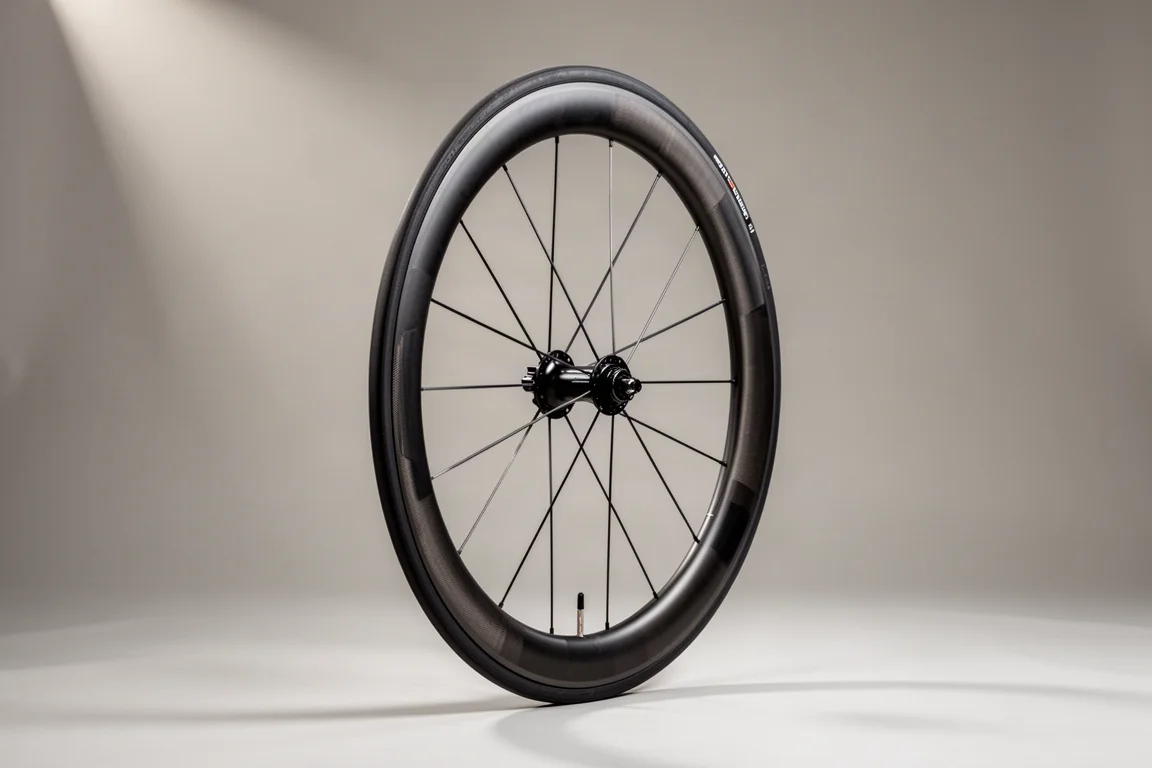
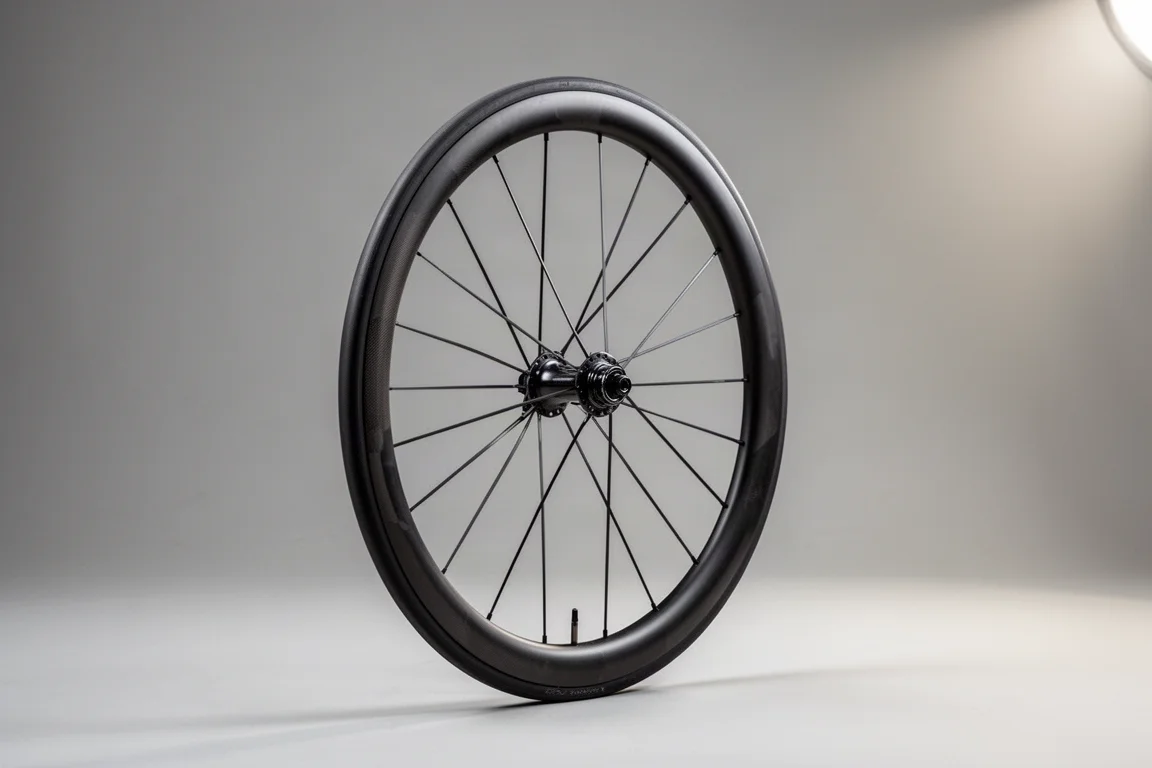
The two wheelsets sit at opposite ends of the same design brief. The 60 Limitless Aero Disc uses a highly progressive, ultra-wide aero profile: a 60 mm deep rim that measures 34 mm across. The 32 Aerodynamicist goes the other way entirely, with a shallow hookless carbon rim measuring 32 mm deep and 25 mm wide, paired with carbon fibre spokes that are claimed to be both lighter and stiffer than conventional steel spokes.
Claimed weights reflect that split. The lightweight set is quoted at 1,213 g, roughly 450 g lighter than the aero set. That is a meaningful gap in rotating mass, and it is the single number most riders focus on.
To keep the comparison honest, both wheelsets were run tubeless with the same 25c tyres, and fitted with identical disc brake rotors and cassettes.

In other words, the only real variable left in play was the wheel design itself: rim depth and mass against each other.
Hunt 60 Limitless Aero Disc: The Aero Option
On flat terrain the forces working against a rider are rolling resistance and aerodynamic drag. With tyres held equal, drag becomes the differentiator, which is exactly where a 60 mm rim is designed to earn its keep.
On the velodrome, back-to-back lap sets showed a consistent gap of around half a second per lap between the two wheelsets. A lap of roughly 460 m works out to about one second per kilometre in favour of the aero wheels. Extended across 40 km or 25 miles, that small per-lap margin compounds into roughly 40 seconds.
The headline here is not the size of the instantaneous gain but the way it accumulates. Four sets of laps were completed on each wheelset over several hours, and the trend held steady.
What stands out about the 60 Limitless beyond outright speed is how it behaves. For a wheelset with rims this deep, it handles exceptionally well, which matters on real roads where riders rarely get a perfectly flat, windless course.
Hunt 32 Aerodynamicist UD Carbon Spoke Disc: The Lightweight Option
The 32 Aerodynamicist takes the opposite route to speed. Instead of minimising drag, it minimises mass, using a shallow hookless carbon rim and carbon fibre spokes. At a claimed 1,213 g, it gives away around 450 g to the aero set, and on paper that should be decisive as soon as the road tilts upward.
It is worth being clear about what that weight saving does and does not buy. Rotating weight at the rim is often described as disproportionately valuable on climbs, but the measured outcome of this test puts the real-world benefit in perspective rather than confirming the biggest claims made for it.
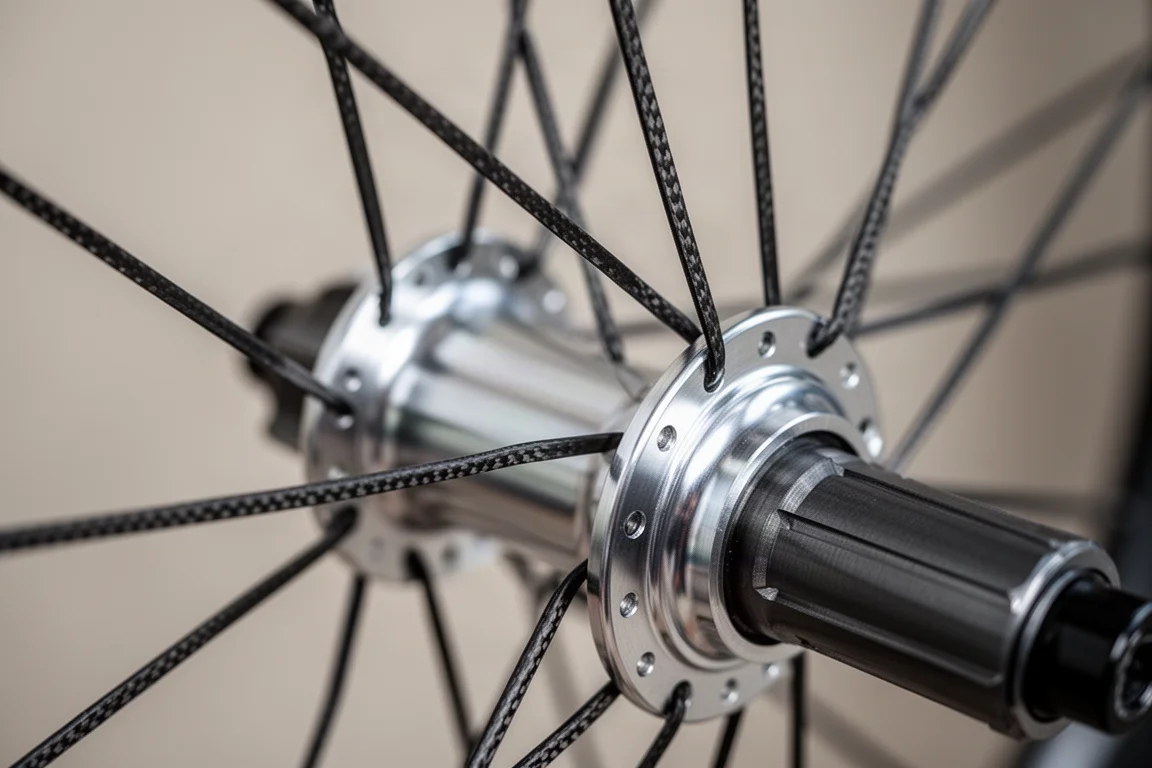
The carbon spokes are a genuine part of the package rather than a cosmetic detail: the design intent is that they are lighter and stiffer than steel equivalents, contributing to both the low weight and the sharpness of the ride.
For riders who chase personal bests on long ascents, that combination of low mass and a stiff, direct feel is the appeal, and it is the reason this wheelset exists alongside the deeper option.
What the Flat Testing Showed
The flat testing was carried out at an outdoor velodrome in South Wales, with repeated back-to-back laps on each wheelset at a target average power. Environmental variables cannot be eliminated outdoors, and no rider holds a perfectly fixed power output lap after lap, but the pattern across four sets of laps on each wheelset was consistent.
The result: the aero wheels were measurably faster, by roughly half a second per lap, or about one second per kilometre.
That figure is easy to dismiss in isolation. Half a second sounds negligible until it is scaled up. Over a 40 km ride, the same margin becomes around 40 seconds, which is the sort of difference riders notice in a group or against their own previous times.
So the accepted wisdom holds on the flat. Aero wheels are faster, and they are faster in a way that is measurable outside a wind tunnel, at speeds that are relevant to riders who are not racing professionally.
What the Climbing Testing Revealed
The climb used for the uphill comparison is 1.8 km long with an average gradient of around 11 percent, touching nearly 14 percent at its steepest. It is a hard, honest test rather than a gentle incline.
The result went the way most riders would predict: the lightweight wheels were faster, by 8 seconds over the climb, which is roughly 4 seconds per kilometre in their favour. As with the flat testing, the per-kilometre figure is the useful one, because it scales to longer climbs of a similar profile.
Two caveats are worth stating plainly. Only one run was completed on each wheelset, because the climb proved far harder than expected, and any real-world test carries variables that cannot be fully controlled. Repeating the test elsewhere may not produce identical numbers.
Even so, the direction and rough magnitude line up with what the design differences would suggest.

Taken together, the two tests produce a simple set of figures: about one second per kilometre in favour of aero wheels on the flat, and about four seconds per kilometre in favour of lightweight wheels on a steep climb.
Handling and Wind Stability
Speed is not the only variable that decides whether a wheelset suits a rider. Handling matters, and it matters most on windy days.
The 60 Limitless handles exceptionally well for a wheelset with rims this deep, which is a genuine achievement given the 60 mm profile. Even so, there is no denying that the lightweight wheels handle better again in gusty conditions and on long, technical descents, where a rider has to hold a line at speed.
That trade-off is easy to overlook when comparing numbers. If crosswind gusts force a rider to ride more cautiously, some of the theoretical aerodynamic advantage is given back in the real world. A wheelset that feels secure in the wind can be faster overall than one that is theoretically quicker on paper.
For riders who regularly descend long technical roads in exposed conditions, the lighter, shallower wheelset offers a confidence benefit that does not show up in a time comparison at all.
Which Wheelset Suits Your Riding
The honest answer is that the better choice depends almost entirely on where a rider spends their time.
In a region with relatively few long, steep climbs, the aero wheelset is likely to be the faster option overall. The time lost on the occasional climb is small, and the majority of riding on flat or rolling terrain returns more than enough to compensate.
If the local terrain is mountainous, or the goal is chasing fast climb times and getting up every hill ahead of friends, the lightweight wheelset becomes the more sensible pick. Four seconds per kilometre on a steep gradient is a real advantage on a long ascent.
Aero wheels are not a universal win everywhere except the climbs, either. Wind exposure, descent length and rider confidence all shift the balance, and those factors are personal rather than measurable.

For most riders on mixed, rolling terrain, the aero option is the more versatile of the two, while the lightweight set is a specialist tool that rewards the terrain it was built for.
Conclusion
The testing produced a clear, if unsurprising, outcome. Aero wheels are faster on the flat, by around one second per kilometre in this comparison. Lightweight wheels are faster on steep climbs, by around four seconds per kilometre.
What makes those numbers useful is scale. Individually they look small; over a 40 km ride or a long ascent they become significant. The Hunt 60 Limitless Aero Disc suits riders who spend most of their time on flat and rolling roads and want speed that accumulates quietly. The Hunt 32 Aerodynamicist UD Carbon Spoke Disc suits riders who face real gradients, and who value the low mass and confident handling that come with a shallow, lightweight build. Both are strong wheelsets, and the right one is simply the one that matches the roads a rider actually rides.
Further reading
Related Reviews
Cycling Wheels
Best Carbon Road Bike Wheels 2026: Six Standouts From Entry Level to Premium
A practical guide to carbon road bike wheels across six price brackets, covering rim width, rim depth, hub engagement and what each step up actually buys.
Cycling Wheels
Best Rim Brake Road Wheels: Six Options From Budget to Premium
Six rim brake road wheelsets covering nearly every price point, from a value alloy set to sub-kilogram tubulars, plus advice on custom builds and buying secondhand.
Cycling Wheels
Bicycle Wheels Ranked: Seven Sets Worth Considering
A practical ranking of seven road and gravel wheelsets, from the accessible Zipp 303 S through to premium options from Enve, Campagnolo and Zipp NSW.