Cycling Buying Guide
Real vs Fake Bike Parts: How to Spot Counterfeits and Which Genuine Products to Trust
Counterfeit bike parts can look convincing from a metre away. Here is how to spot the differences, and which genuine components are worth buying.
Introduction
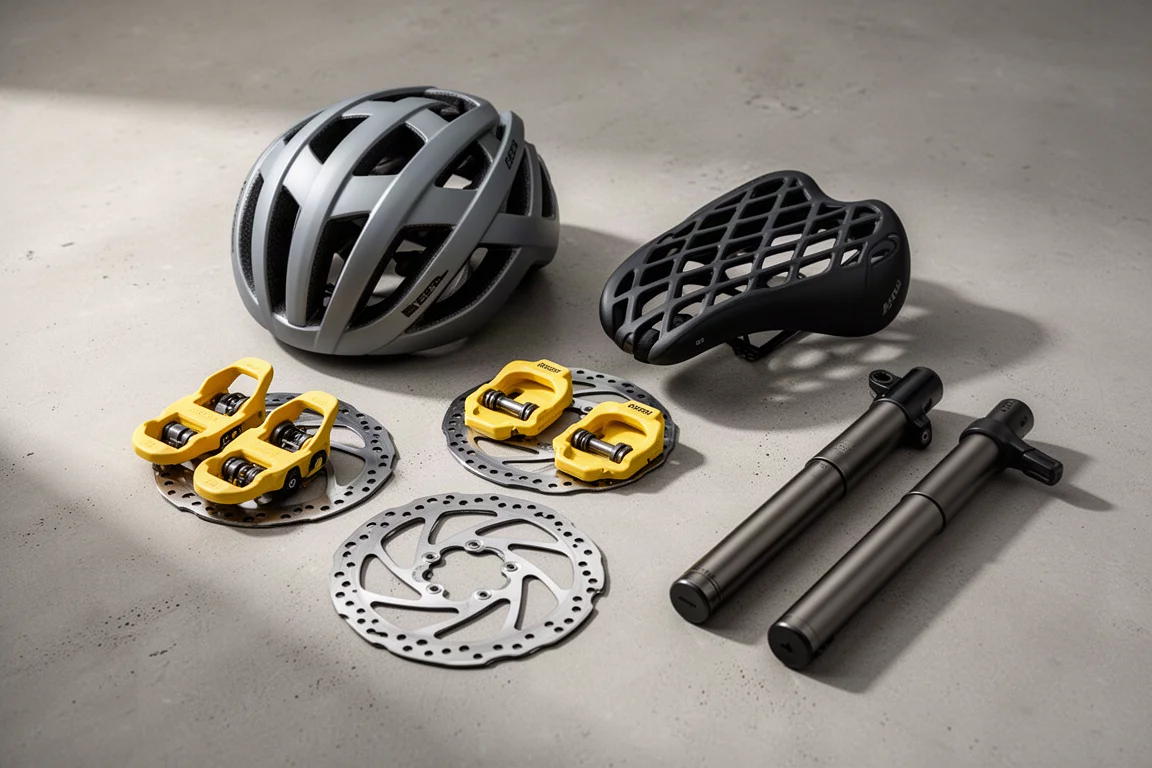
Counterfeit bicycle components have become remarkably convincing. Place a fake part next to the genuine article and, from a metre away, many riders would struggle to tell the difference. It is only when you hold them, weigh them and look closely at the finishing that the gaps appear.
The pattern is consistent across the category. Counterfeits tend to share a handful of weaknesses: inconsistent colour, rough or sharp edges, excess glue where components are bonded, cheaper hardware, and a finish that looks glossy rather than precise. In the worst cases the part does not work at all, or it fails under load.
That matters most for the parts that keep you upright. A saddle that cracks mid-ride, a rotor that does not stop you, or cleats with bolts that press into the sole are not small annoyances. This guide looks at six genuine products that are frequently copied, what the real version should look and feel like, and how to avoid paying for a convincing fake.
How to Spot Counterfeit Bike Parts
A few checks cover most of the counterfeits on the market.
Price is the first signal. If a component is offered at a small fraction of its normal retail price, that is a reason to slow down rather than a bargain to grab.
Packaging helps, but only slightly. Many brands have moved to plain paper packaging for smaller parts, so a simple box proves nothing on its own. Branding matters more: genuine parts usually carry clear, consistent brand markings, while copies often avoid them entirely.
Then comes the part itself. Look at the edges, because genuine components are typically uniform and clean with no fraying or sharp corners. Look at bonded joints, where excess glue or protruding material is a strong warning sign. Look at hardware such as bolts, which are often longer or softer on copies. Weigh the part if you can, since copies frequently run heavier than the specification. Finally, flex a component gently where that is safe to do, because a copy often feels noticeably more pliable than the real thing.
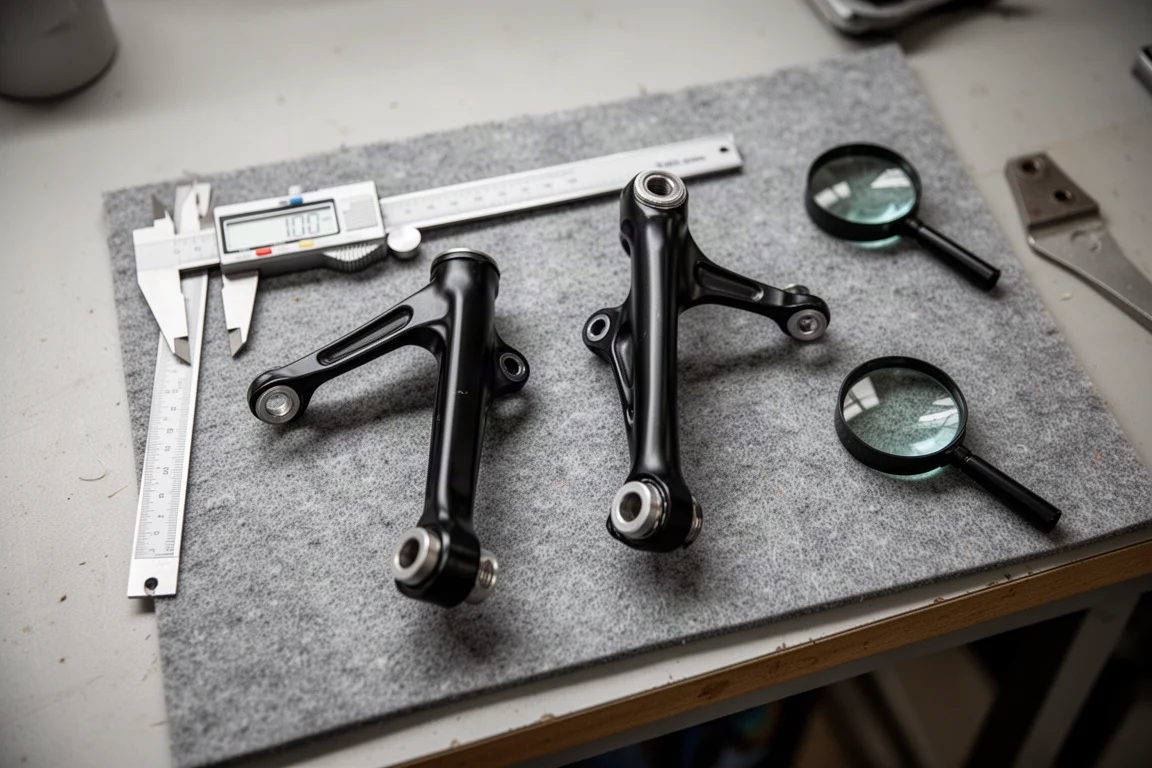
None of these checks requires specialist equipment, and together they catch most fakes. For anything safety-critical, buying from an authorised dealer remains the most reliable protection.
MET Trenta Helmet
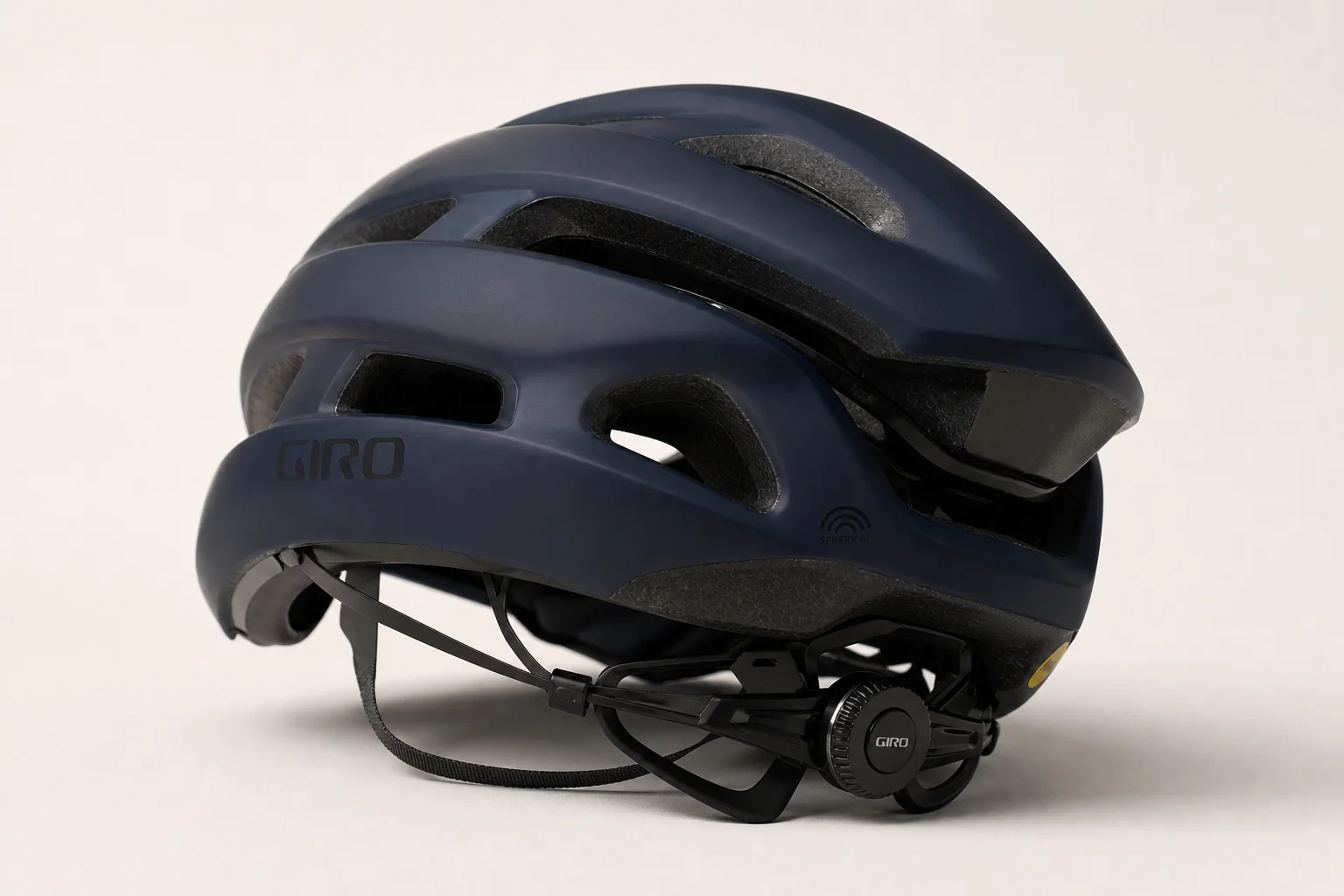
The MET Trenta is a lightweight road helmet, and the non-MIPS version sells for around £220. A counterfeit of the same helmet has been seen for around £174, a discount that looks tempting without being large enough to raise obvious suspicion.
Held side by side, the genuine helmet shows its quality in the details. The rear retention dial is branded, the shell finish is even, and the build feels consistent throughout. Copies tend to feel different in the hand, with cheaper materials and a less precise fit between the parts. From a distance the silhouette is almost identical, which is exactly what makes this category so difficult.
A helmet is the last place to accept a compromise. If a shell, liner or retention system fails, the consequences are immediate.
Fizik Antares Versus Evo 3D Saddle
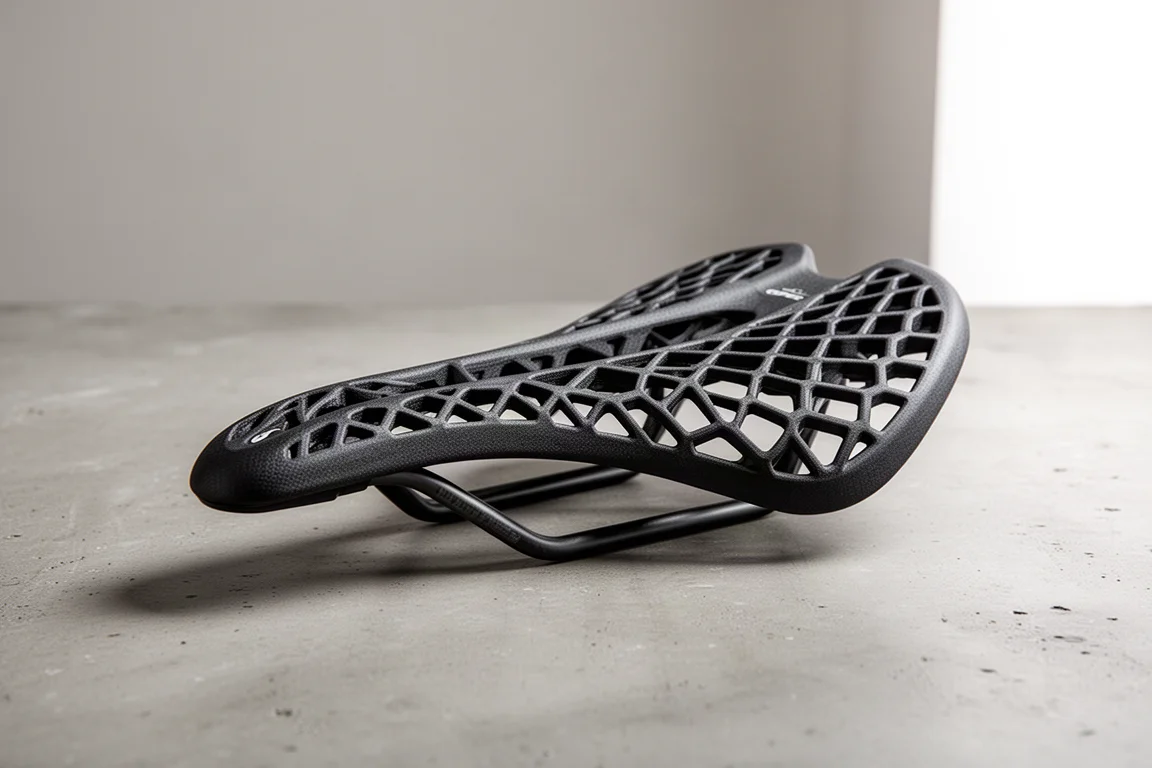
The 3D-printed Fizik Antares Versus Evo is one of the more distinctive saddles available, with a lattice upper and carbon rails. The genuine version has a retail price around £300, while counterfeit versions sell for around £77.
The weight difference is small but telling: the genuine saddle measured 172 g, the copy 197 g. Design-wise the copy is remarkably close, with the same bumps and grooves in the same places. The differences show up at the edges and at the rail junctions, where the genuine saddle is flush and neat and the copy carries visible glue and uneven material. The copy also flexes far more, to the point where it feels as though it could be snapped by hand.
Both saddles are firmer at the rear and softer towards the nose, so the shape is right. It is the construction that is not, and a saddle that deforms or cracks under a rider is a genuine risk, particularly in a group.
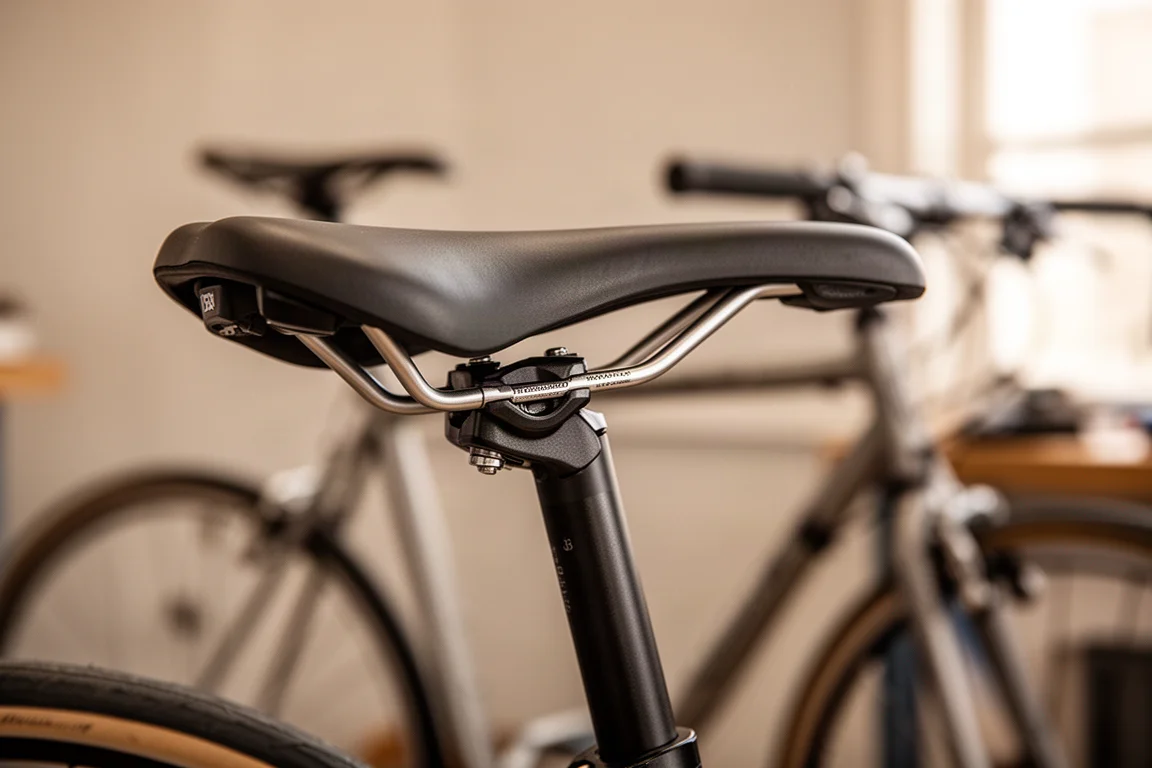
For riders chasing low weight, the 25 g gap is a reminder that a lighter counterfeit is not the same thing as a lighter component.
Shimano SPD-SL Cleats
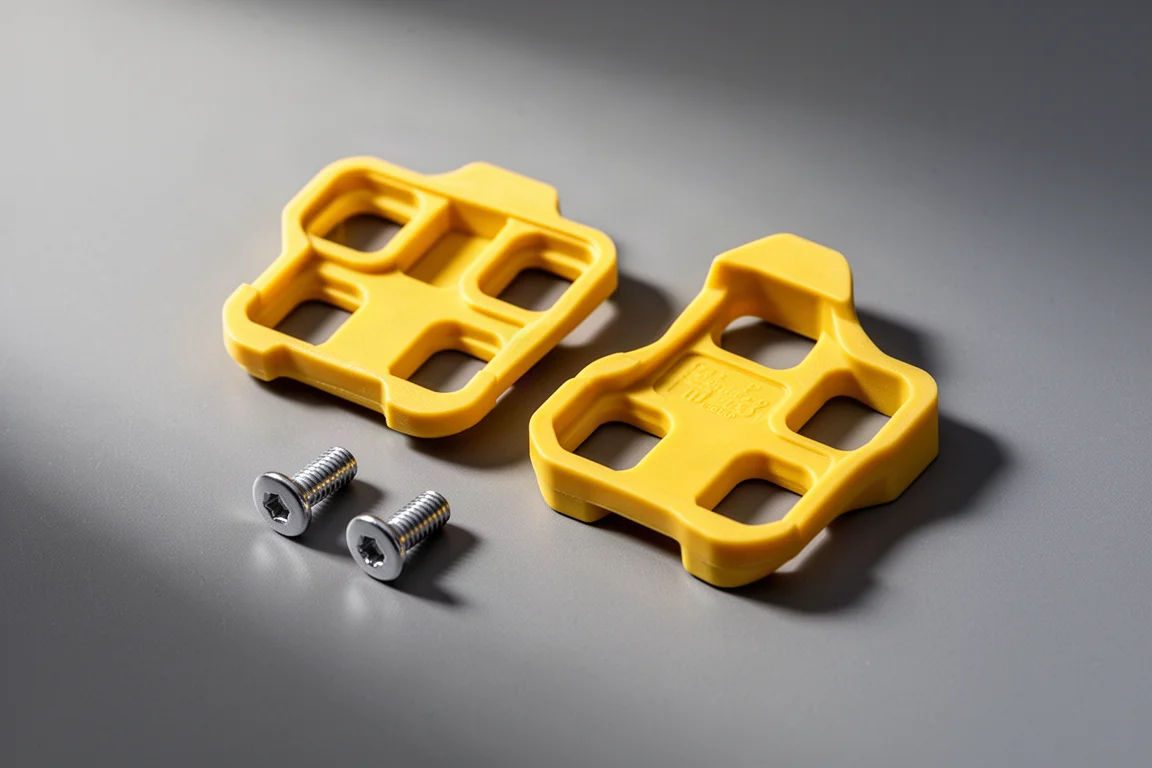
Road cleats are cheap enough that most riders never think about counterfeits, which is part of the problem. Genuine Shimano SPD-SL cleats retail for around £20.99.
The genuine cleat is easy to recognise once you know what to look for. The edges are perfectly neat with no fraying, the yellow is consistent, the brand name is present, and the packaging is the paper type the brand has moved to. Copies tend to have sharp edges that can cut a finger, an uneven and duller yellow, no branding, and noticeably longer bolts. Those longer bolts can protrude into the sole of the shoe, which is a known cause of foot discomfort.
The yellow section is functional rather than decorative. It is designed to be soft enough to walk on, so a harder, grippier-feeling copy is not an improvement.
SRAM CLX-R Disc Rotors
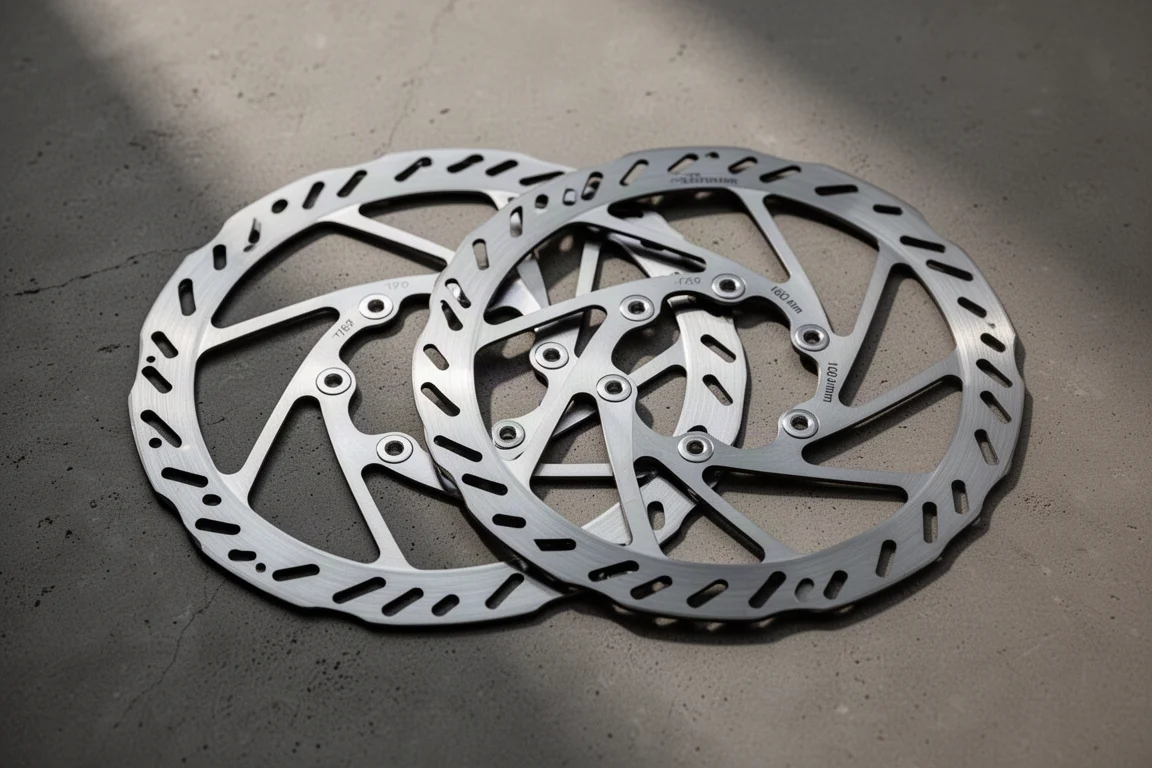
These are gravel rotors in a 160 mm size, and they are among the hardest counterfeits to identify. Genuine rotors cost around £216 for a pair, while a counterfeit pair sells for around £67.71.
Both rotors carry markings and serial numbers that are worryingly close to identical, and the two used examples measured here were only a gram apart at 129 g and 130 g. Colour is not a reliable guide either, since rotors darken with heat over time.
The giveaway is in the machining and the hardware. The genuine rotor is noticeably neater and cleaner, and the rivets differ between the two. Measuring thickness is complicated by the fact that a rotor is not uniform across its surface, so it is a poor test in practice. What is clear is that these are two different products, and that only one of them was made to the standard you want on a descent.
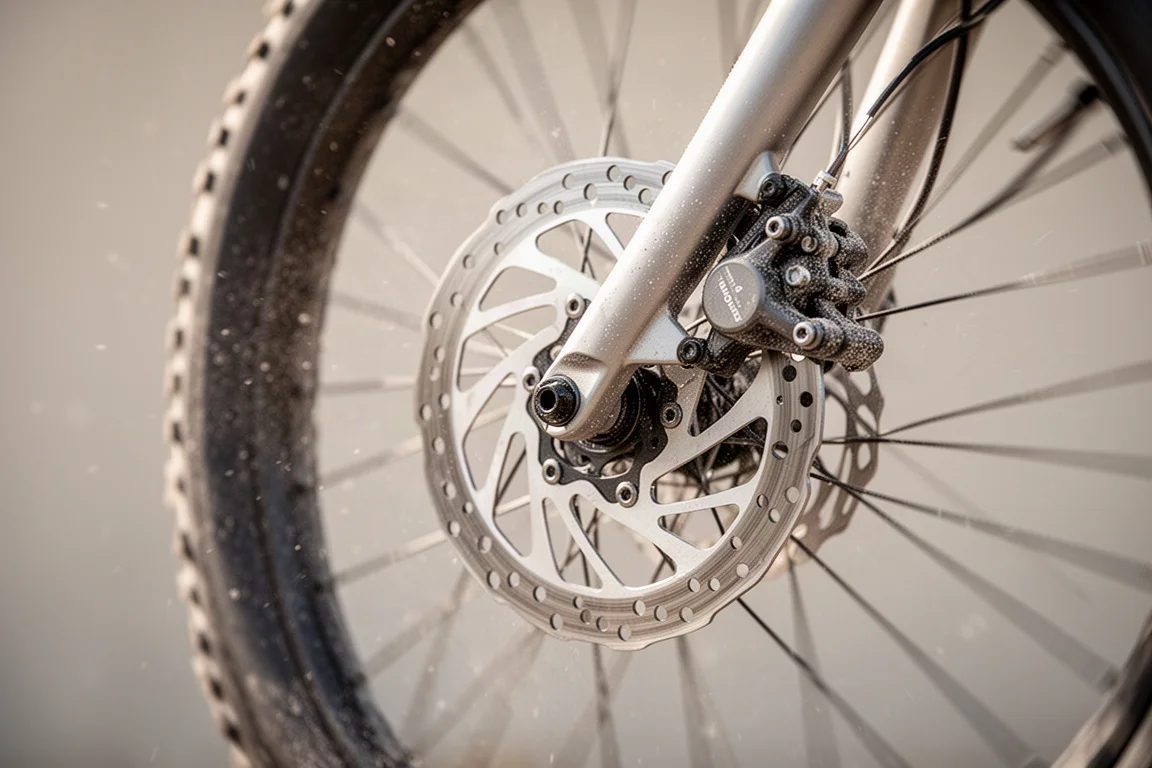
Brakes are the one area where there is no acceptable saving. A rotor that does not perform as expected is not a budget upgrade.
Silca Impero 2 Frame Pump
The Silca Impero 2 is a full-size frame pump, and the genuine version is built to move a serious volume of air quickly. A counterfeit copy of the same design failed to build meaningful pressure at all, which is the clearest possible signal that something is wrong.
Frame pumps are a good example of why counterfeits are dangerous in subtle ways. A pump that does not work is not just a wasted purchase. It leaves you at the roadside with a flat and no way to fix it, which is exactly the situation the pump was bought for.
The genuine pump is designed to be carried on the frame and to deliver high pressure efficiently, and its finish and branding details match the rest of the range.
Silca Impero Pocket
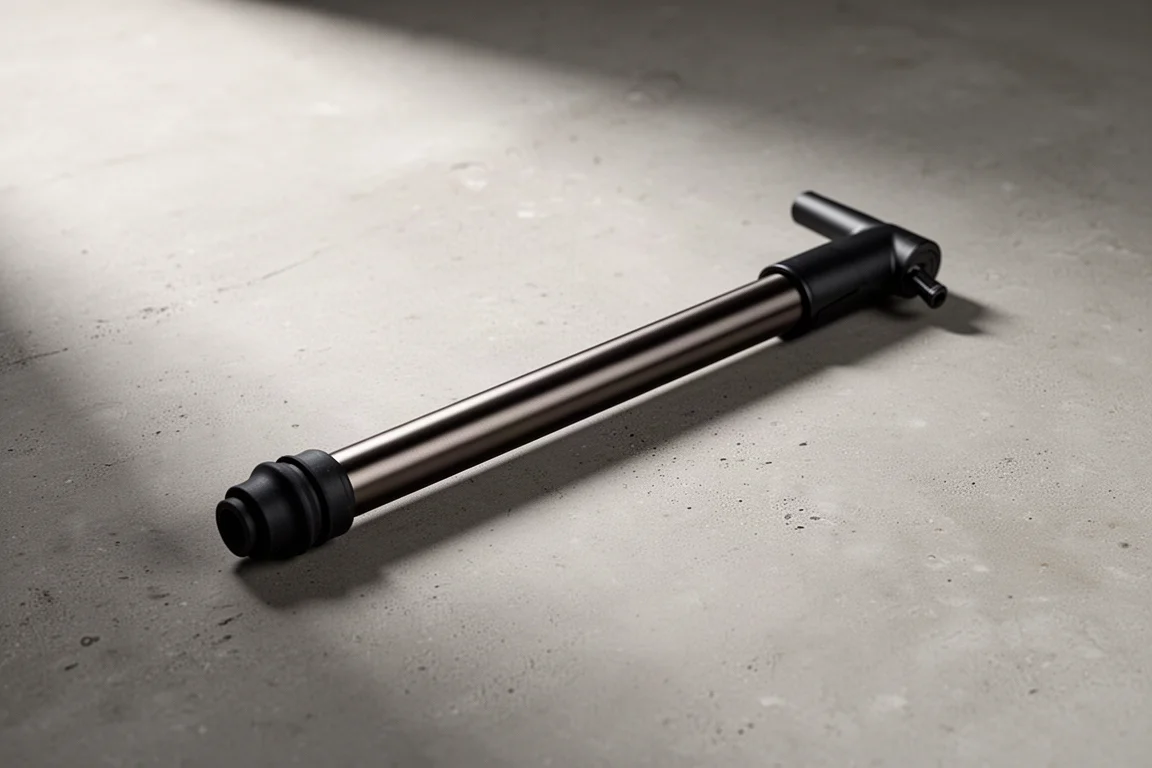
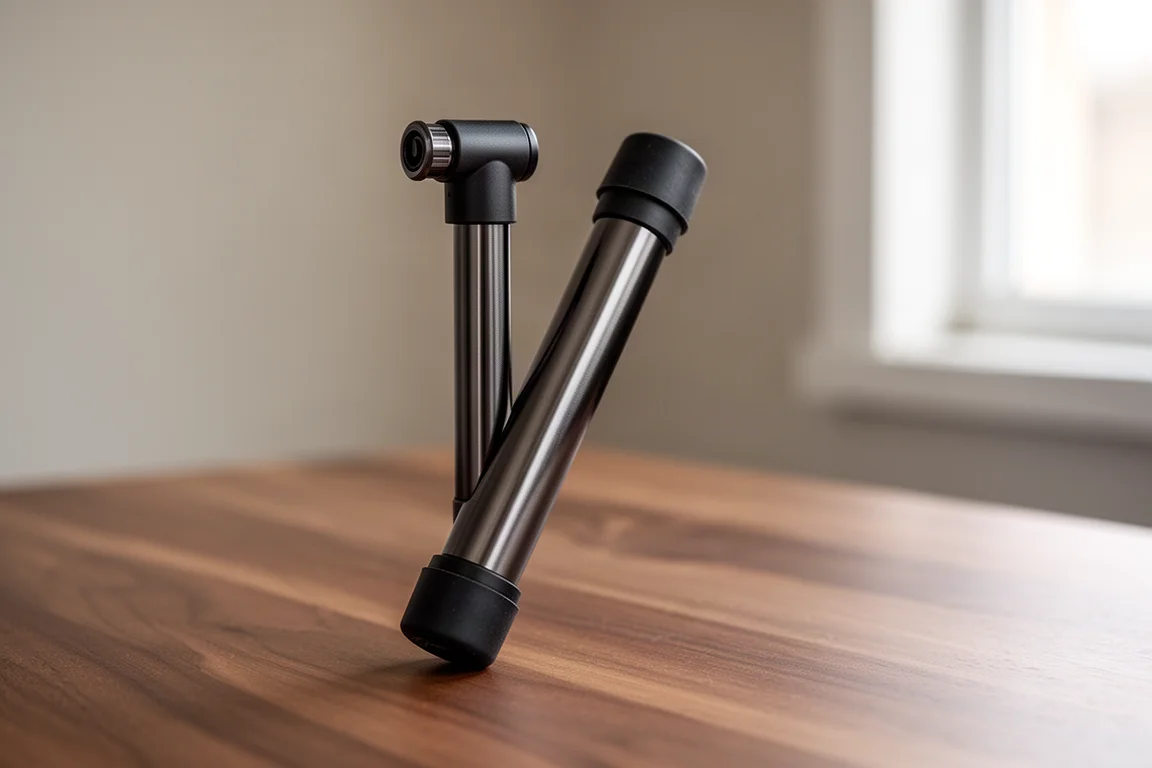
The Impero Pocket is a genuine, smaller member of the same family, made for riders who want a compact pump that still sits neatly on a frame. It carries the same branding details on the head and the mount as the full-size version, which is a useful reference point when comparing against a copy.
Its smaller size means it will not move as much air per stroke as the full-size pump, so it is not the choice for maximum volume. It is a legitimate product in the range rather than a scaled-down imitation.
Buying Advice
The consistent lesson is that counterfeits look convincing from a distance and fall apart up close. Nearly every fake in this group shared the same weaknesses: a finish that is not quite clean, edges that are not quite uniform, hardware that is not quite right, and a price that was always the first clue.
Buy from authorised dealers where possible, and treat unusually deep discounts as a warning rather than an opportunity. Check the parts when they arrive: edges, bonded joints, bolts, branding, and weight where you can measure it. If anything feels wrong, do not ride it.
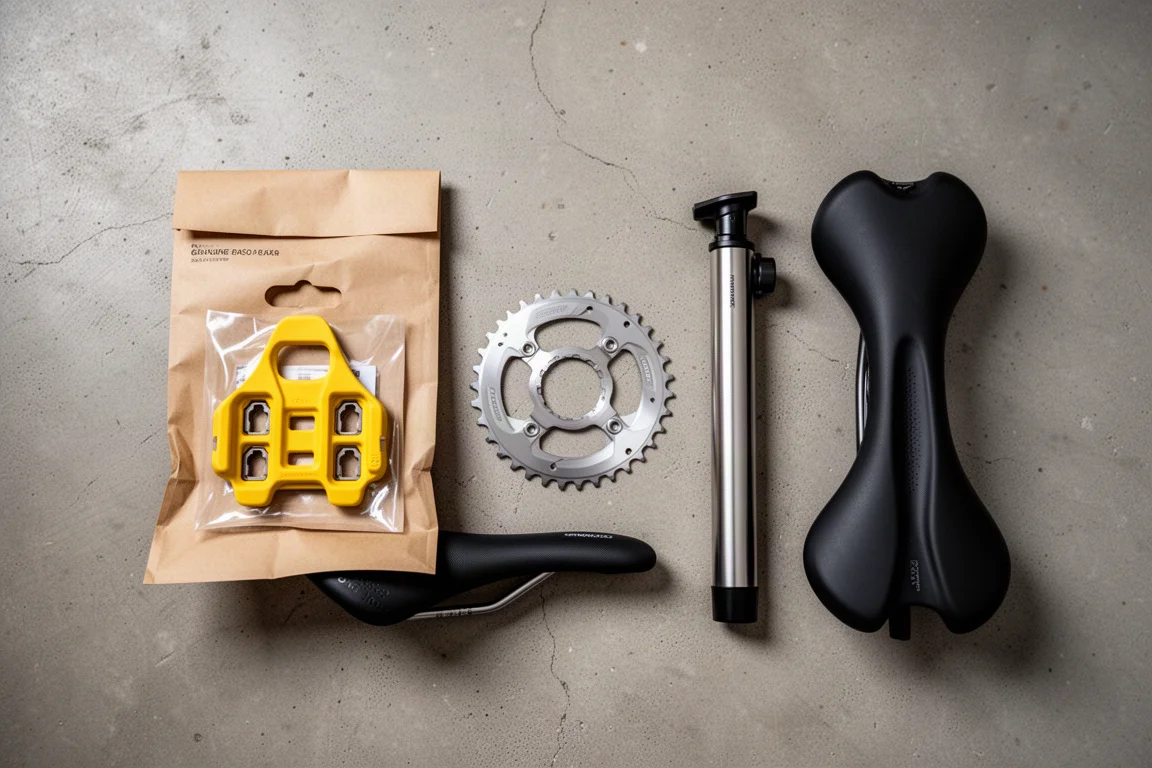
For safety-critical components, including helmets, saddles, rotors and cleats, the calculation is simple. The saving is small and the downside is not, so the genuine part is the only sensible option.
Conclusion
Counterfeit cycling parts have reached a point where appearance alone is no longer a reliable test. The copies in this group looked close to the real thing at a glance and revealed themselves only through weight, finish, hardware and, in one case, a pump that moved almost no air at all.
The practical approach is straightforward. Buy from trusted sellers, inspect what arrives, and accept that some components are simply not worth buying at a discount. Helmets, saddles, rotors and cleats all carry a safety cost that a lower price cannot offset, and a genuine part that lasts for years is better value than a convincing fake that fails when you need it most.
Further reading
Related Reviews
Cycling Buying Guide
Big Bike Brands Explained: Where to Look Before You Buy
A practical guide to the biggest bike brands, what each one is known for, and how to decide where to spend your money.
Cycling Buying Guide
Bike of the Year 2025: The Best Gravel, Race, and Endurance Bikes
Three category winners from a year of testing, plus what to check before you buy a gravel, race, or endurance road bike.
Cycling Buying Guide
Bike Types Explained: Five Models That Show What Each Category Does Best
A practical walk through the main bike categories, using five well-known models to show what each type is built for and who it suits.