Astrophotography Software
RC Astro Tools Standalone: Blur, Noise, and Star Exterminator Explained
RC Astro's Blur Exterminator, Noise Exterminator, and Star Exterminator are now available outside PixInsight, bringing advanced processing to free software like Siril.

Introduction
For anyone who processes astrophotography images, the RC Astro tools have long been considered the gold standard for three critical operations: deconvolution, noise reduction, and star removal. Until recently, these tools were only available inside PixInsight, a powerful but expensive processing platform. That has now changed. Blur Exterminator, Noise Exterminator, and Star Exterminator are available as standalone tools, and they integrate with free, open-source software like Siril and Astro Suite Pro.
This opens up a serious question for astrophotographers: do you still need PixInsight at all? For many people, the answer may now be no.
What Are the RC Astro Tools?
Astrophotography images need careful processing to reveal the faint details of galaxies, nebulae, and other deep-sky targets. The most advanced software for this has historically been PixInsight, which costs over 300 euros. Free alternatives like Siril and Astro Suite Pro have existed for years, but PixInsight kept its dominance partly because it had exclusive access to the best tools for deconvolution, noise reduction, and star separation.
Those tools are the RC Astro suite. Each one handles a specific, difficult step in the processing workflow:
- Blur Exterminator performs deconvolution, a mathematical operation that reverses blur caused by seeing conditions and the optical train.
- Noise Exterminator reduces background noise intelligently while preserving detail in the target.
- Star Exterminator separates stars from the nebulosity or galaxy portion of an image, allowing each to be processed independently.
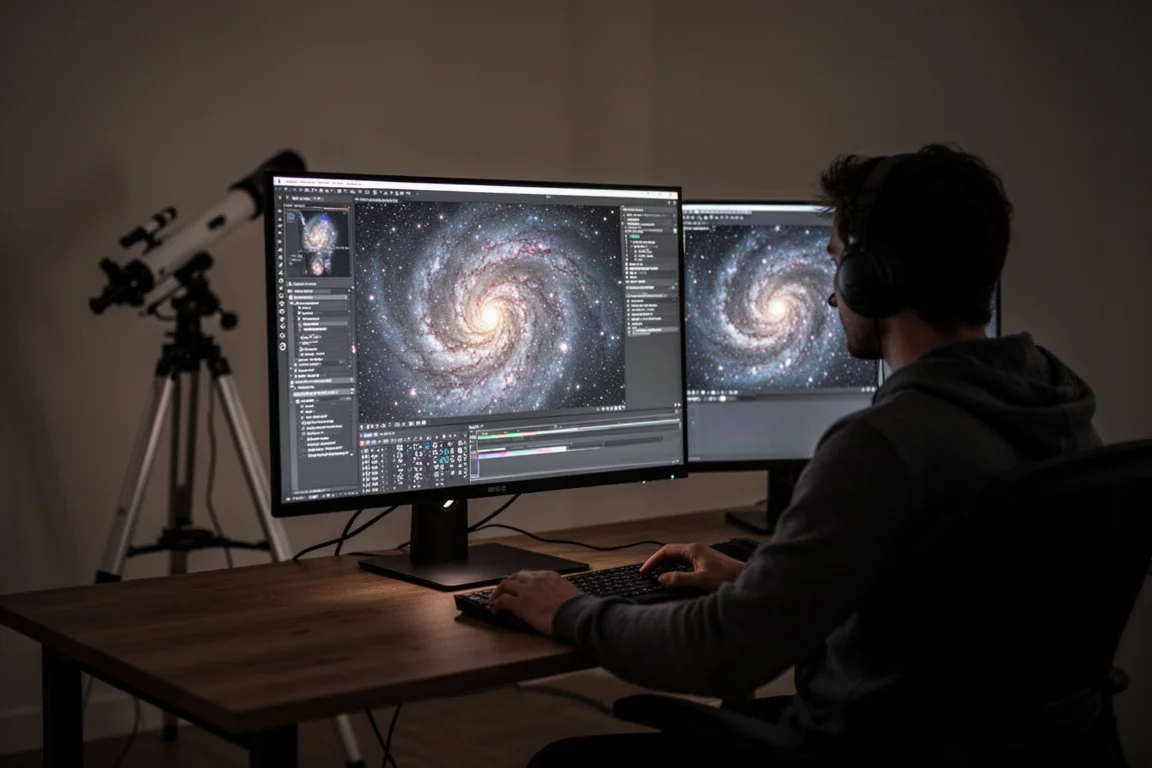
The standalone release changes the landscape. With these tools now available outside PixInsight, free software like Siril can handle nearly everything a hobbyist needs. Siril is not only free, it is also open source, and it has a large library of community scripts that cover preprocessing and processing tasks.
Blur Exterminator: Recovering Lost Detail
Blur Exterminator is the tool that performs deconvolution. This mathematical operation is difficult to do manually, but the tool approximates it with AI and applies it with a single click. The result is a scientifically grounded sharpening that recovers detail lost to atmospheric seeing or the limitations of the optical train itself.
The difference can be dramatic. On a typical image, the before and after comparison shows a noticeably sharper result with more defined structure in the target. The tool does not invent new details; it reverses the blur that is already present in the data.
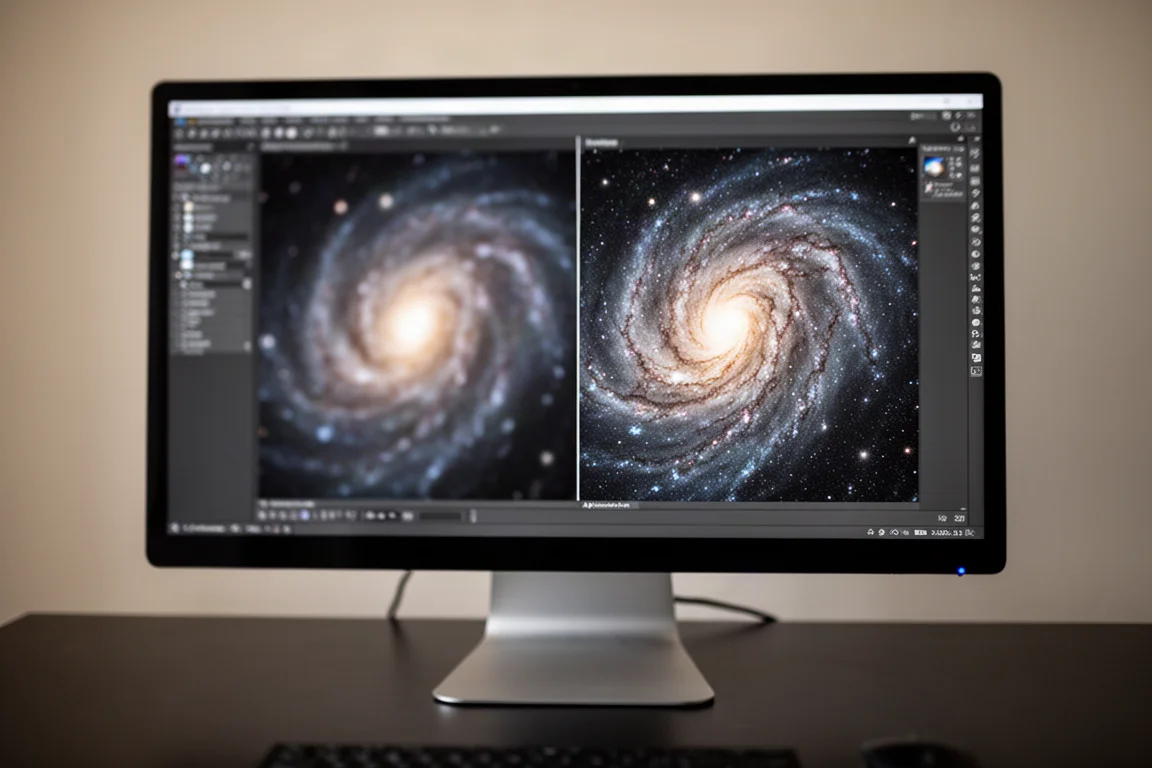
In practice, Blur Exterminator is the tool with the least competition. Nothing else that has been tested comes close to its results. It is priced at $100.

Noise Exterminator: Cleaning Up the Background
Noise Exterminator handles the noise reduction step. It smooths out background noise very effectively while leaving the details in the nebula or galaxy almost untouched. This is a significant advantage over traditional noise reduction methods, which often soften the target along with the background.
The tool is priced at $60. In testing, the closest free alternative is GraXpert, especially version two, which is fast and comes close to the results of Noise Exterminator. Other options like Cyclone Prism and Cosmic Clarity have shown weaker or inconsistent results.
For images that have been drizzled or resampled, running Noise Exterminator after resizing can produce a very clean background while preserving the fine structure of the target.

Star Exterminator: Processing Stars Separately
Star Exterminator addresses a common workflow challenge. Stars react aggressively to processing, so it is often better to remove them, process the nebulosity or galaxy portion, and then put the stars back in later. Star Exterminator makes this separation nearly effortless.
The tool is priced at $50. If you want to avoid the purchase, Starnet is a free alternative, though it does not perform quite as well. Star Exterminator remains the stronger option for clean star removal.
With all three tools combined, the total cost is just over $210. If you purchase them through the Siril website and use Siril 10, you get an additional 10% discount.

Installation and Integration with Siril
Getting started with the standalone RC Astro tools is straightforward. First, download and install Siril from the official website. It is available for Windows, Linux, and macOS, and it is free and open source.
Inside Siril, go to the scripts menu and select “Get Scripts.” Search for “RC Astro,” and you will find the three scripts: Star Exterminator, Noise Exterminator, and Blur Exterminator. Select all three and apply them. This makes the scripts available under the Python scripts menu.
The scripts themselves do not install the standalone tools. For that, you need to visit the RC Astro website and download the standalone CLI tool for your operating system. After purchasing or starting a free trial, you will find the download under your licenses page.
Once installed, you need to activate your license. The RC Astro website has an “Activate Products” button that copies an activation command to your clipboard. Open a command line, paste the command, and press enter. Alternatively, you can enter your email and license key directly from the Siril interface for each tool.
One notable advantage of the standalone tools is GPU support. On Windows, the tools use the DirectML API, which means they work with AMD and Intel graphics cards, not just Nvidia. On macOS, GPU acceleration is also supported. On Linux, acceleration is not yet available, which is a limitation to keep in mind if you use that platform.
Buying Advice
The RC Astro tools are now almost a must-buy for serious astrophotographers, especially since they no longer require a PixInsight license. If you have been on the fence about PixInsight, it is worth trying Siril or Astro Suite Pro first. With the RC Astro tools integrated, free software can now deliver results that were previously only possible with the paid platform.
All three tools are worth getting. They each handle a critical step in the processing workflow, and there is very little competition at their level. The combined price of just over $210 is reasonable for the capability they provide, and the 10% discount through Siril makes the bundle even more attractive.
Conclusion
The standalone release of the RC Astro tools is a genuine game changer for astrophotography processing. Blur Exterminator, Noise Exterminator, and Star Exterminator bring professional-grade deconvolution, noise reduction, and star separation to free software like Siril and Astro Suite Pro. For many hobbyists, this removes the main reason to invest in PixInsight.
If you process deep-sky images and want sharper, cleaner results with more control over the stars, these three tools are worth serious consideration.
Further reading
Related Reviews
Astrophotography Software
AstroWizard vs Siril vs PixInsight: A Practical Comparison for 2026
We compare three astrophotography processing tools across real images, looking at ease of use, control, and final results.
Astrophotography
ASKAR FRA400C Review: A Versatile 400mm Refractor for Astrophotography and More
The ASKAR FRA400C is a compact 72mm refractor that balances reach, versatility, and portability for astrophotographers and visual observers.
Astrophotography
Askar SQA106 Review: A Premium 106mm Astrograph With Exceptional Optics
The Askar SQA106 is a premium 106mm quintuplet astrograph with impressive sharpness across full-frame sensors, though its price and weight demand careful consideration.