Astrophotography Software
AstroWizard vs Siril vs PixInsight: A Practical Comparison for 2026
We compare three astrophotography processing tools across real images, looking at ease of use, control, and final results.
Introduction
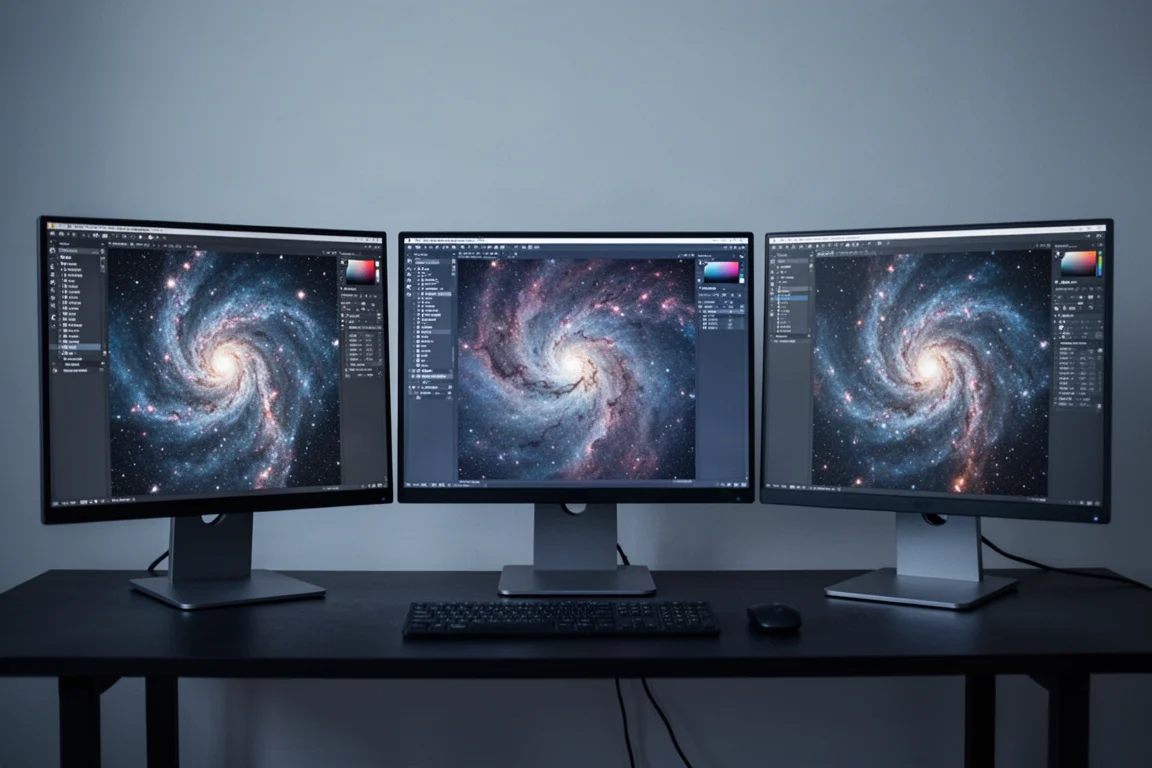
Astrophotography processing has long been dominated by a few key tools, each with its own learning curve and price tag. Recently, a new free option called AstroWizard has entered the scene, promising a guided, beginner-friendly approach to processing deep-sky images. To see how it stacks up, we processed the same set of images with AstroWizard, Siril, and PixInsight, keeping each workflow to about ten minutes or less.
The test images were captured from Tokyo, one of the most light-polluted cities on the planet, making them a challenging worst-case scenario. They include the Triangulum Galaxy M33, the Heart Nebula captured with a dual-band filter, and the Pleiades star cluster. All were shot with one-shot color cameras, which is the most common setup for smart telescope users.
How We Compared the Three Tools
The goal was simple: process the same images in each program, using the same external tools where possible, and see what results each could deliver within a short time frame. All three workflows made use of RC-Astro Tools, including BlurXterminator for deconvolution, NoiseXterminator for denoising, and StarXterminator for star removal. GraXpert was also used for background extraction.
AstroWizard is available as a free download or donationware from its official site. It runs as a standalone executable with no installation required. Siril is free and open source, available from its official website. PixInsight is a paid application with a price tag of around 300 euros, though it has been a mainstay in the hobby for years.
Each program was given the same images and the same time limit. The processing was kept as quick as possible, reflecting how most hobbyists actually work on a typical night of imaging.
AstroWizard: The Guided Workflow
AstroWizard takes a fundamentally different approach to processing. Instead of presenting a blank canvas with dozens of tools, it walks you through a series of steps called spells. Each spell handles a specific part of the workflow, from cropping and background removal to stretching and final polish.
The software supports the XISF file format used by PixInsight, which is a welcome addition for users who stack their images there. It also integrates external tools like GraXpert and RC-Astro, though you will need to point the software to their executable files in the settings before your first run.
One of the standout features is the Stretch Wizard. It offers several stretch options, including linked, unlinked, and a deep stretch that produces impressive results. You can even customize the amount of stretching applied, giving you more control than a simple one-click solution.
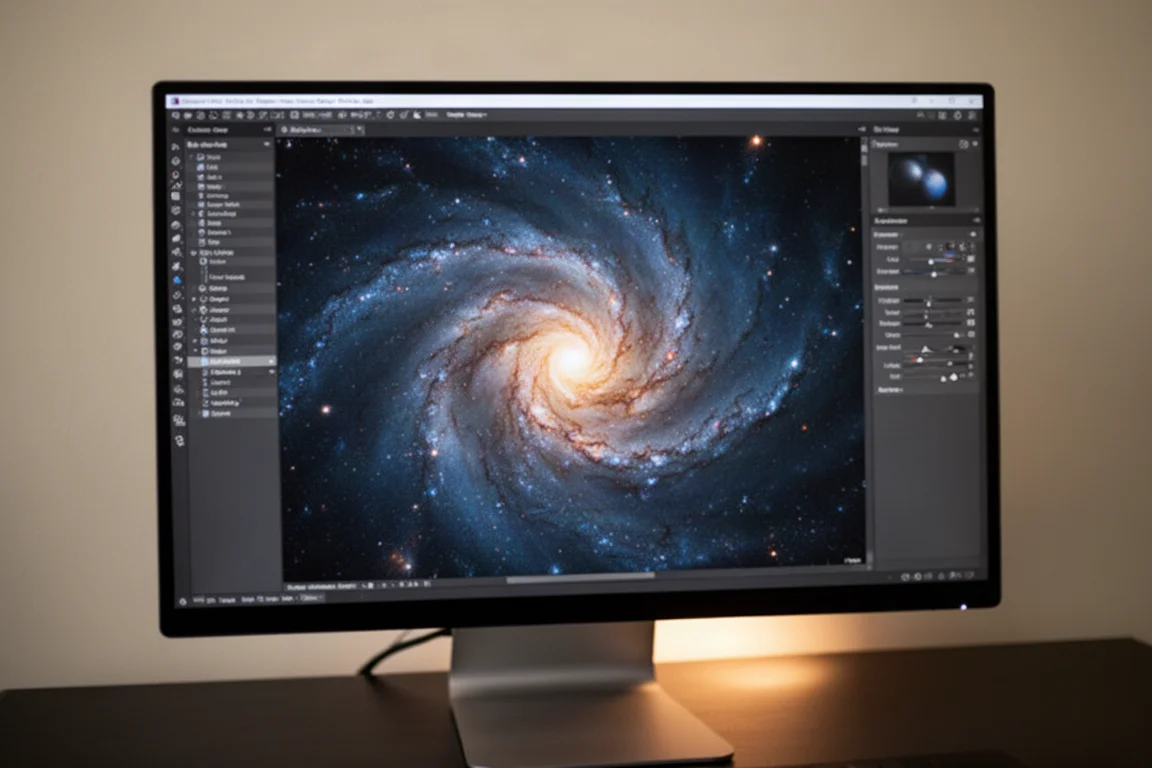
The final polish stage is where AstroWizard really shines. It includes tools for star removal, color mapping, and saturation adjustments. For dual-band images, you can convert to a Hubble palette with a single click, then fine-tune the colors with options like yellow to copper and gold. Each adjustment has a strength slider, and you can undo and redo individual changes easily.
The results are genuinely impressive. On the Heart Nebula image, AstroWizard produced a detailed, well-colored result in about five minutes with very little effort. The guided workflow removes the guesswork from processing, making it ideal for beginners who might otherwise feel overwhelmed by the complexity of traditional tools.
Siril: The Free Open-Source Option
Siril has long been a favorite among astrophotographers who want a capable tool without the price tag. It is free, open source, and regularly updated. The interface is more traditional than AstroWizard, with a full range of tools and processes available.
Processing in Siril requires more knowledge and manual work. You need to understand concepts like background extraction, color calibration, and stretching. However, the software includes a script called the Astro Color Mixer, which makes color manipulation significantly easier. This script allows you to create custom masks and apply curves or saturation adjustments to specific areas of the image.
On the test images, Siril produced excellent results. The colors were often more punchy and vibrant than those from AstroWizard, particularly the blues in narrowband images. However, achieving these results took more effort and required a solid understanding of the tools involved.
One limitation of the current version of Siril is the lack of native mask support, though this is expected in the next release. In the meantime, the Astro Color Mixer script can be used to create effective masks indirectly, as demonstrated during the processing of the galaxy image.
PixInsight: The Professional Standard
PixInsight has been the gold standard in astrophotography processing for years. It is a powerful, feature-rich application with a steep learning curve. The price is around 300 euros, but for many enthusiasts, it has proven to be a worthwhile investment.
The software excels at color calibration. Its spectrophotometric color calibration compares the stars in your image to measured star spectra, producing accurate, natural colors. This is particularly valuable for one-shot color images, where getting the white balance right is essential.

On the Pleiades image, PixInsight delivered the best result of the three tools. The multiscale adaptive stretch process worked wonders, producing a detailed image with beautiful blue tones. The galaxy image also came out well, with subtle, well-controlled colors.
However, this level of control comes at a cost. Processing in PixInsight requires creating masks, applying curves, and managing multiple processes. Even an experienced user needs to work quickly to stay within a ten-minute time limit, and the narrowband images in particular require significant effort to get right.
Overall Buying Advice
Choosing between these three tools depends largely on your experience level and budget. AstroWizard is an excellent starting point for beginners. It is free, easy to use, and produces impressive results with minimal effort. The guided workflow removes the intimidation factor from processing, and the final polish tools offer surprising depth for those who want to fine-tune their images.
Siril is the best choice for those who want a free tool with more control. It requires a willingness to learn, but the Astro Color Mixer script makes color work much more accessible. The results can rival those from paid software, especially if you are willing to invest time in mastering the workflow.
PixInsight remains the professional standard. It offers the most control and the best color calibration, but it comes with a significant price tag and a steep learning curve. For serious astrophotographers who plan to process images regularly, it is a powerful investment. For casual users or those just starting out, the free options are more than capable of producing stunning results.
Conclusion
All three tools produced excellent images from the same challenging data. AstroWizard stood out for its ease of use and speed, delivering impressive results in about five minutes with no real processing knowledge required. Siril offered more control and punchier colors, while PixInsight provided the most accurate color calibration and the best overall results for experienced users.
The choice ultimately comes down to your priorities. If you want a simple, guided experience, AstroWizard is hard to beat. If you prefer free software with more control, Siril is a strong contender. And if you are willing to invest in the best possible results, PixInsight remains the benchmark. Whichever you choose, the fact that such capable tools are available at these price points is a win for the astrophotography community.
Product link
View more details for AstroWizard
This product is mentioned in the review. Check the specifications, options, and compatibility before buying.
View more details for AstroWizardFurther reading
Related Reviews
Astrophotography Software
RC Astro Tools Standalone: Blur, Noise, and Star Exterminator Explained
RC Astro's Blur Exterminator, Noise Exterminator, and Star Exterminator are now available outside PixInsight, bringing advanced processing to free software like Siril.
Astrophotography
ASKAR FRA400C Review: A Versatile 400mm Refractor for Astrophotography and More
The ASKAR FRA400C is a compact 72mm refractor that balances reach, versatility, and portability for astrophotographers and visual observers.
Astrophotography
Askar SQA106 Review: A Premium 106mm Astrograph With Exceptional Optics
The Askar SQA106 is a premium 106mm quintuplet astrograph with impressive sharpness across full-frame sensors, though its price and weight demand careful consideration.