Home Theater Speakers
RBH SW-821 SLR and SI-815 RL: Two Home Theater Speaker Upgrades Worth Planning For
A practical look at two RBH speaker options for surround and height channels, covering driver matching, output figures, cabinet depth, and installation planning.
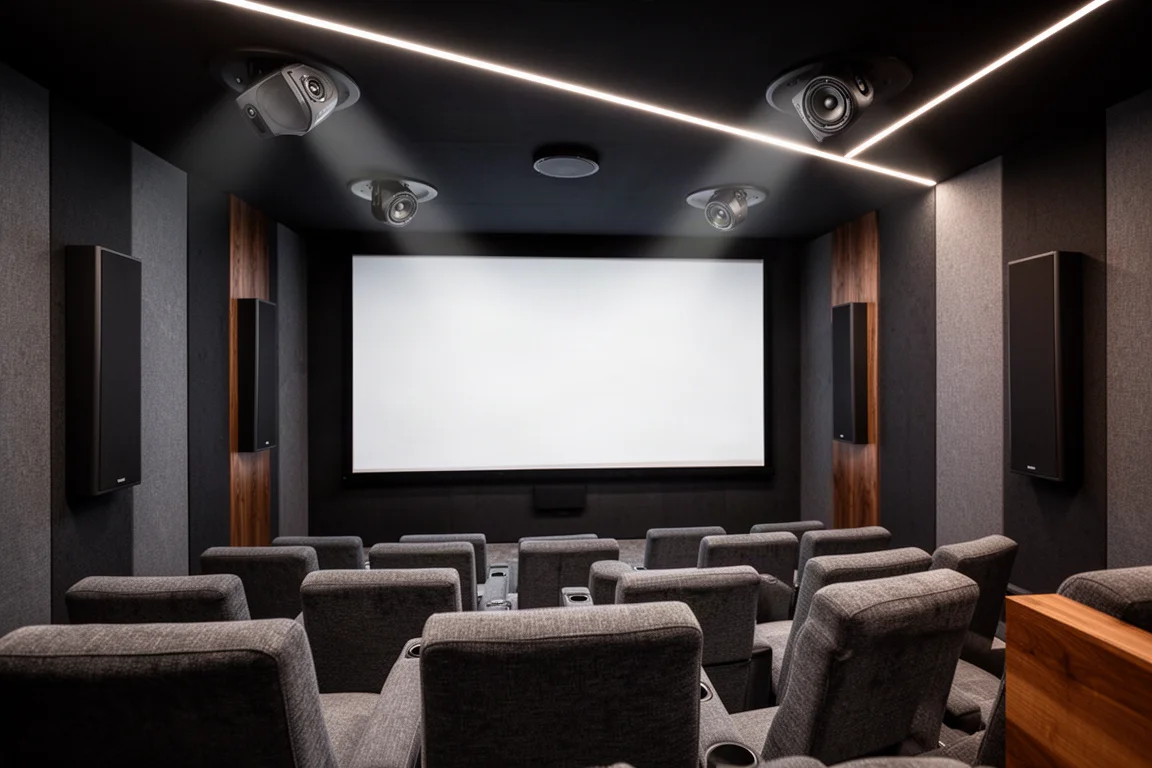
Introduction
A multichannel system lives or dies on consistency. When the front stage sails through loud passages but the side and overhead channels run out of composure, the illusion collapses. The RBH SW-821 SLR and the RBH SI-815 RL are two speakers built to close that gap: one for the walls beside the seats, one for the ceiling above them. Both draw on the same reference driver family, so they share a tonal character and similar sensitivity with the rest of an RBH-based system. What follows is a practical look at what each one offers and what to weigh before ordering.
What to Look For in a Home Theater Speaker Upgrade
Three things matter most when upgrading surround or height channels: driver matching, usable output, and how the cabinet fits the room.
Driver matching comes first because it decides whether sounds panning from the front stage to the sides keep the same tonal colour. A system that mixes tweeter types between channels tends to draw attention to the handoff. Matching the tweeter and woofer family across every channel keeps that transition quiet.
Usable output comes second. A speaker that measures well at moderate levels but compresses when the soundtrack asks for more will sound strained at exactly the wrong moment. Headroom is what makes a system sound effortless at ordinary listening levels, not just at peaks.
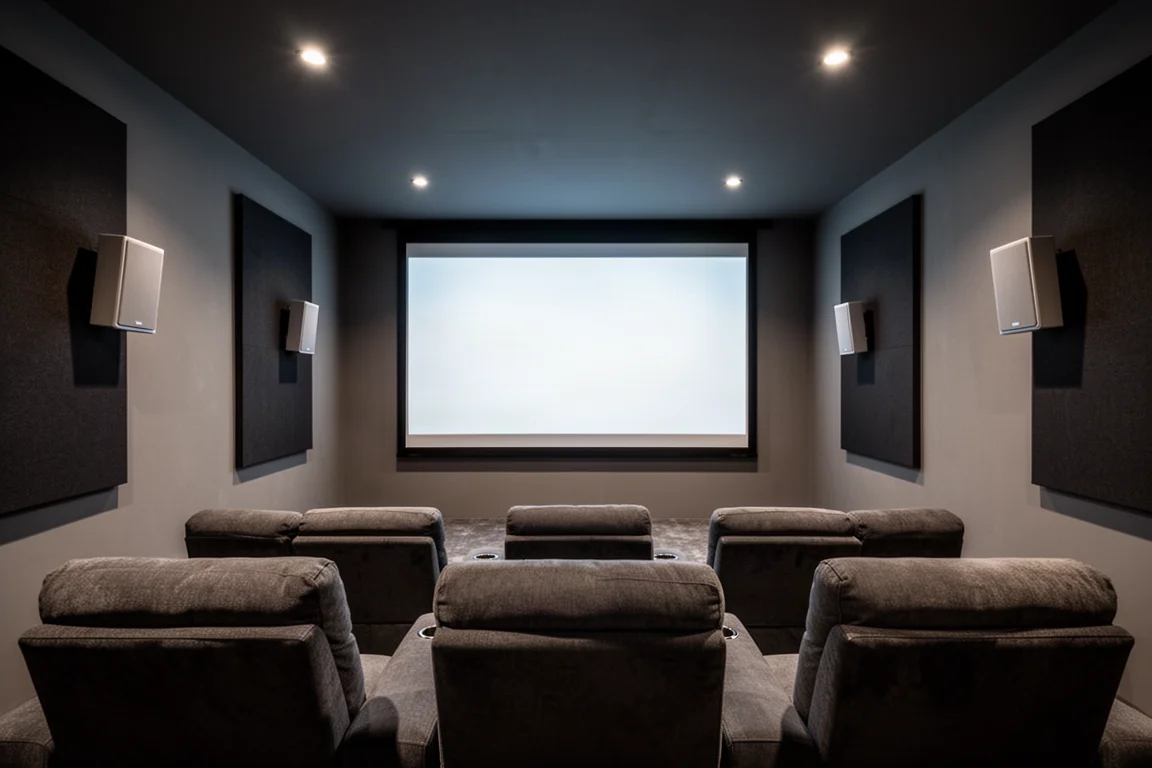
The third factor is the cabinet. Depth, sealing, and whether a back box is available all affect how much sound leaks into adjacent rooms and how predictable the low-frequency behaviour will be. In most multichannel rooms the deepest bass is handed to subwoofers, so a speaker that rolls off cleanly above the subwoofer crossover is often a better fit than one that tries to do too much on its own.
RBH SW-821 SLR: On-Wall Surround Speaker
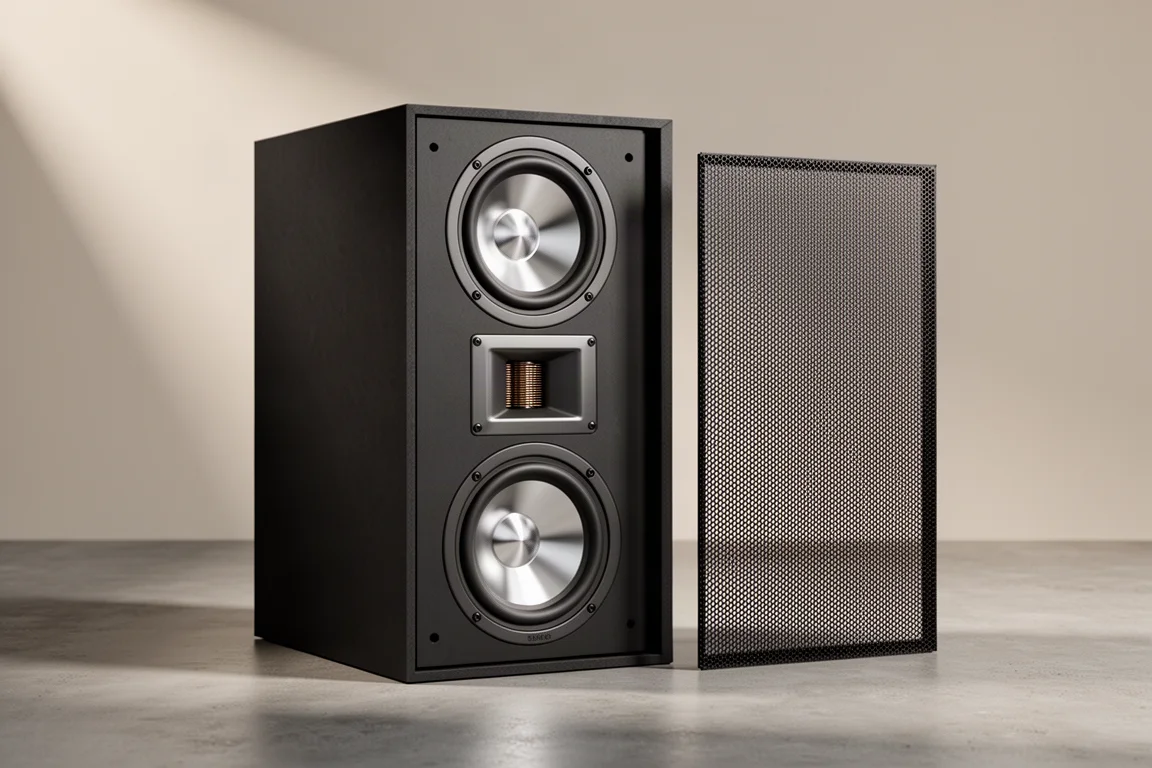
The SW-821 SLR is a large on-wall design, and it is large on purpose. It uses two 8-inch anodized aluminium cone woofers in a mid-tweeter-mid layout, with an AMT tweeter between them that offers roughly 5 square inches of diaphragm surface area. That is a generous amount of radiating area for a tweeter, and it is part of why the speaker stays composed when the material gets demanding.
The MTM arrangement does two jobs at once. It raises midrange dynamic capability, and it narrows vertical dispersion, which keeps energy aimed at the seats rather than bouncing off the floor and ceiling. Measured maximum output sits at about 122 dB, a figure that puts it in the same territory as considerably larger front-channel speakers.
The cabinet is a sealed enclosure about 5 inches deep with a 3 dB point near 55 Hz. That rolloff suits a bass-managed system, where subwoofers cover everything below it. A rigid magnetic grille, made from a stiff board material rather than a flimsy plastic frame, rounds out the physical package. Form factor flexibility is another strength: the model is available in on-wall, in-wall, and pre-construction versions, and larger cabinets can be specified where more low-frequency output is wanted.
RBH SI-815 RL: Angled In-Ceiling Speaker
The SI-815 RL is a newer in-ceiling model built around a 15 degree angled baffle. Rather than pivoting only the tweeter, the entire baffle is tilted, so the whole sound field, from woofer through tweeter, can be aimed toward the listening area. Pivoting tweeters alone tend to introduce response irregularities around the crossover point and leave most of the midrange firing straight down.
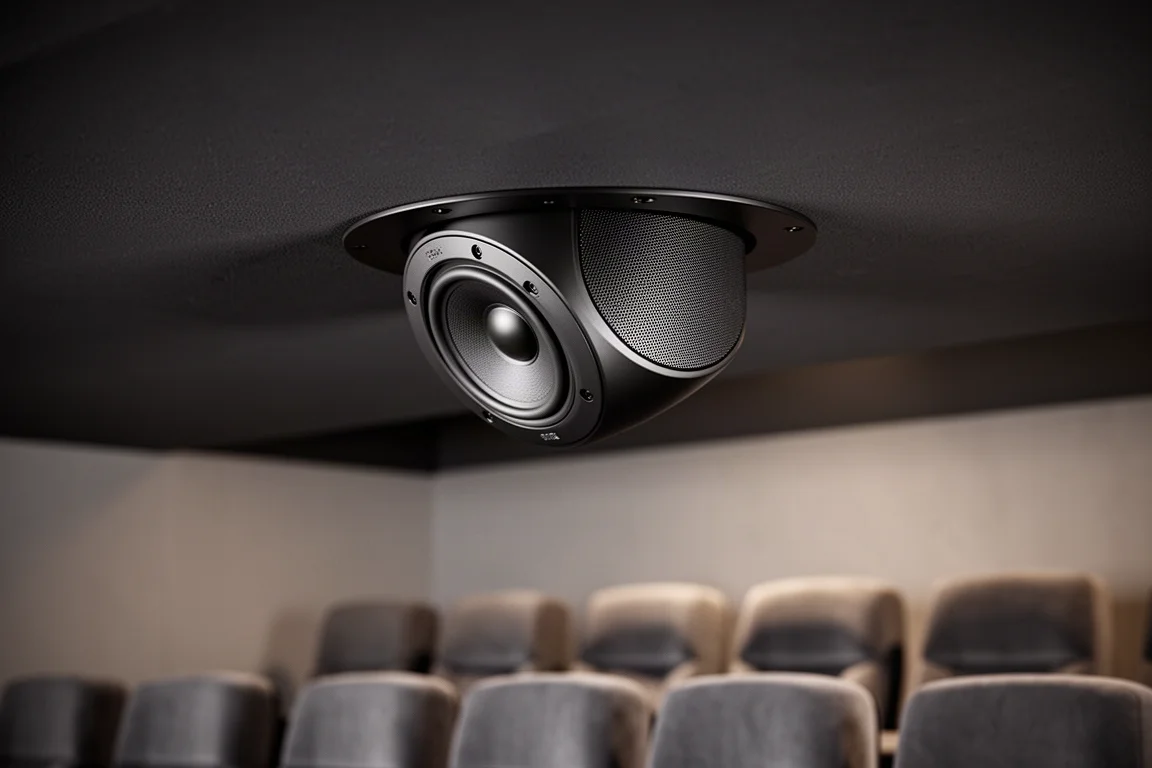
Inside, the speaker pairs an 8-inch aluminium cone woofer with the smaller AMT tweeter used across several RBH designs. Sensitivity is rated around 91 dB, and maximum output reaches roughly 116 dB, which is substantial for a ceiling-mounted speaker and useful in a room that has to cover several rows of seats.
Grilles are paintable, with white supplied as standard and black available for dark ceilings. Because this angled version does not yet offer a metal can back box, isolation comes from an expanding foam back box that fits into the ceiling cutout and surrounds the rear of the speaker. A straight-down-firing sibling is available with a metal back box for installations that can accommodate one.
Matching Drivers Across a Home Theater System
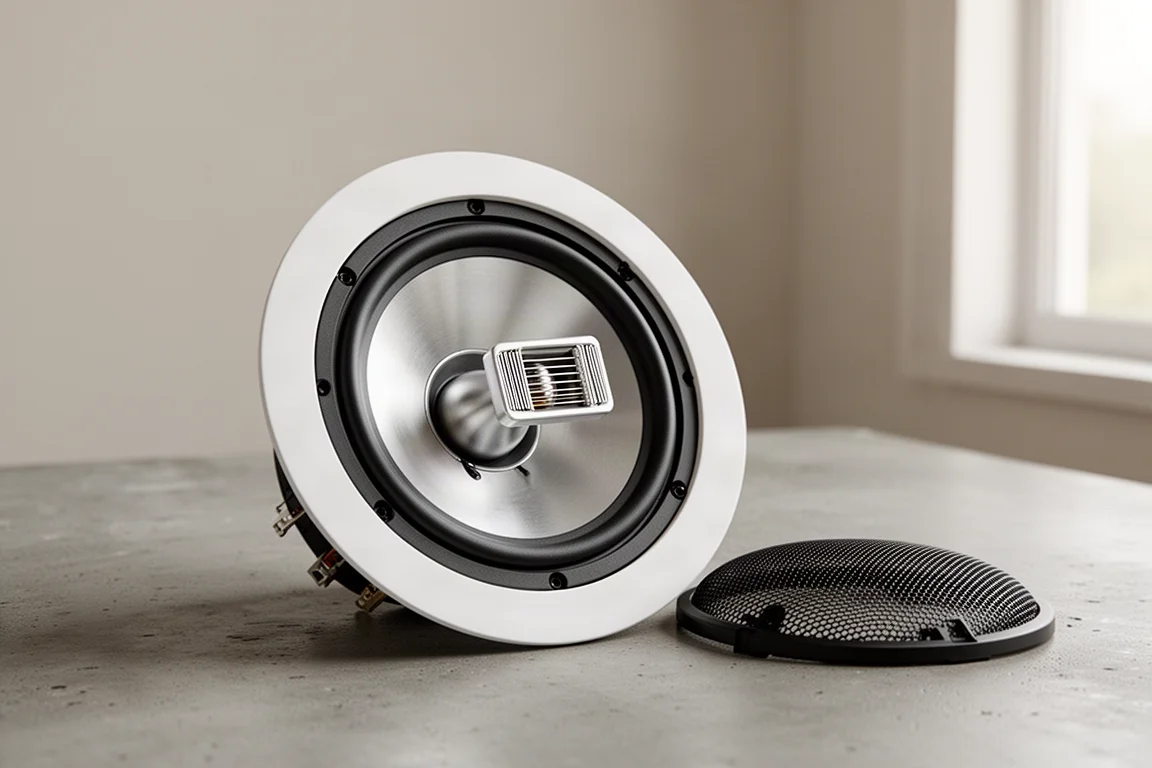
Using the same driver family in every channel is the simplest way to keep a system coherent. The SW-821 SLR and the SI-815 RL both use aluminium cone woofers and AMT tweeters, so panning effects and ambient cues retain the same character as they move from the front of the room to the sides and overhead.
Side channels deserve particular attention. Listeners are very sensitive to lateral information, and the speakers on the walls carry a large share of the detail that makes a soundtrack feel three-dimensional, whether the material is a native immersive mix, a 5.1 soundtrack, or a two-channel recording upmixed across the room. Placing those speakers slightly above seated ear level keeps heads from blocking the direct path to the seats.
Height channels have a different job. They should feel diffuse enough to suggest space above the room without losing the high-frequency energy that makes overhead effects convincing. An angled baffle helps here, because it delivers the full frequency range into the seating area instead of throwing it at the opposite wall.
Room Size, Coverage, and Installation Notes
In a large room, roughly 25 feet by 20 feet, coverage becomes a layout problem as much as a speaker problem. Six in-ceiling speakers suit a space like this because the overhead layer holds together across about seven seats rather than collapsing into a single sweet spot.
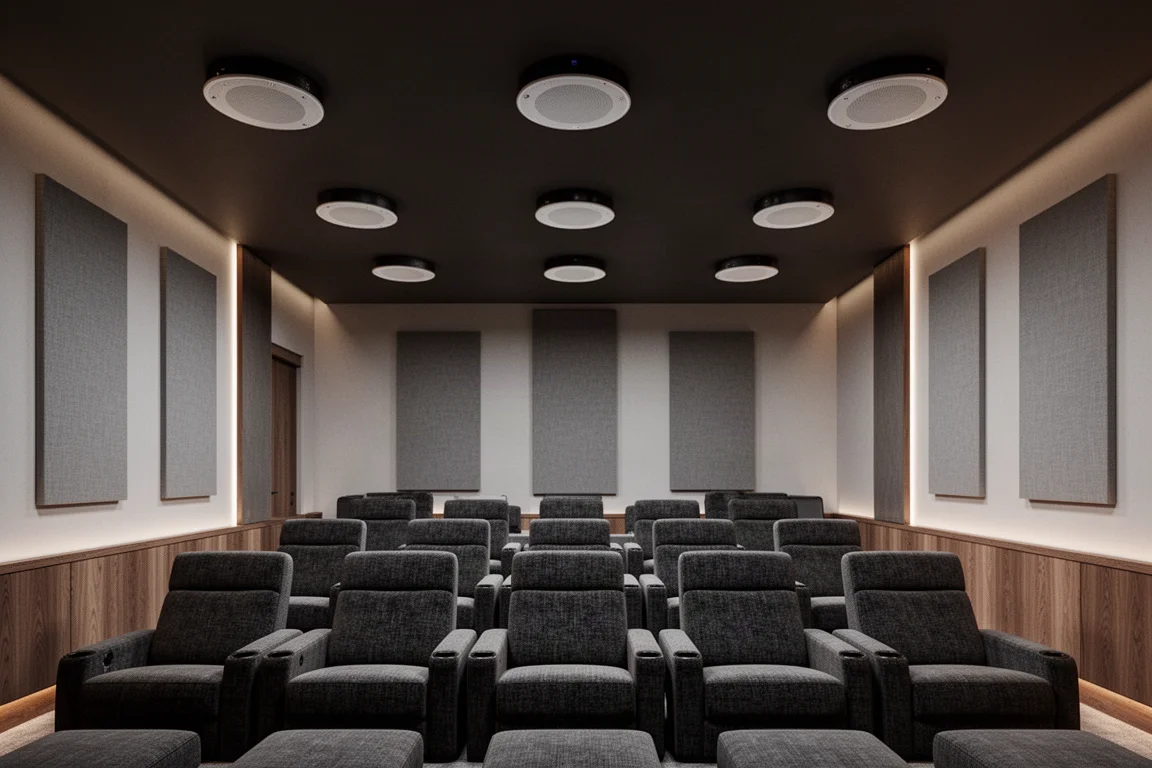
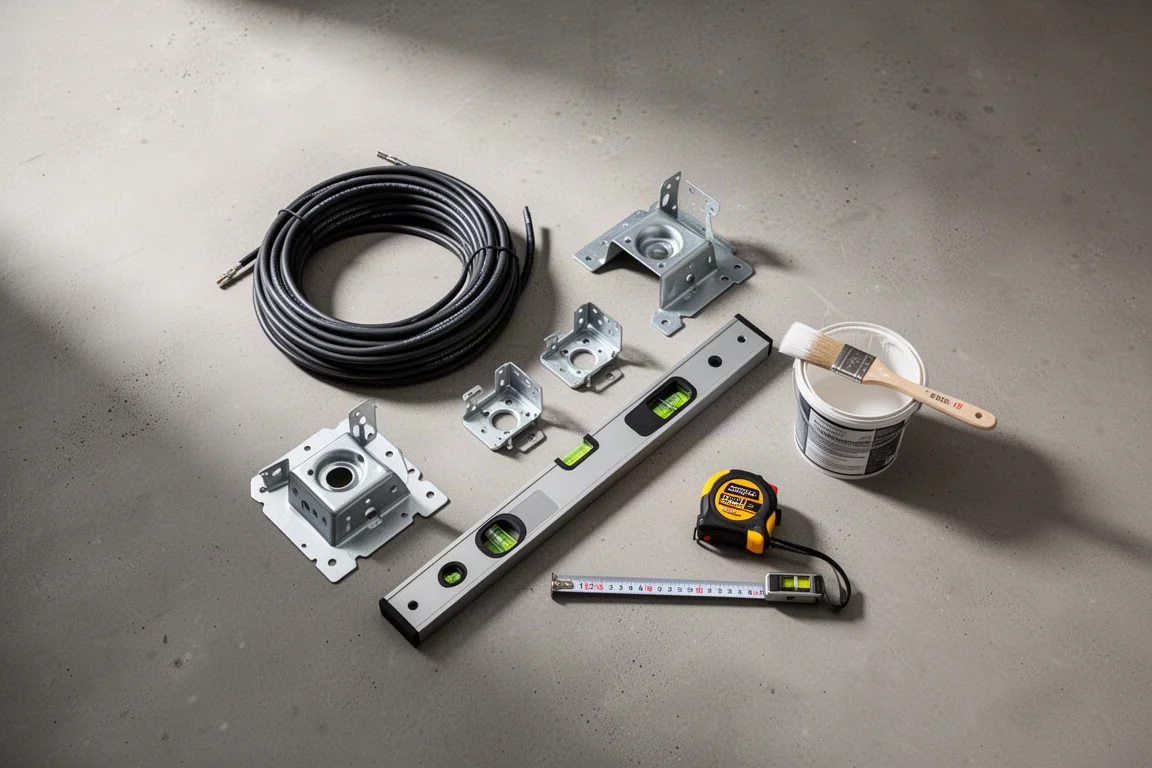
Installation planning matters as much as the hardware. Ceiling speakers need cutouts placed with the seating layout in mind, and an angled baffle only pays off when the tilt is aimed at where people actually sit. The expanding foam back box adds a degree of isolation between the room and the space above it, which helps wherever sound leakage into other rooms is a concern.
Flexibility is another part of the picture. Grilles can be painted to blend into the ceiling, and cabinet options across the range let a system be matched to the room rather than the other way around.
Power, Amplification, and Bass Management
Both speakers are designed to work inside a bass-managed system. The SW-821 SLR’s sealed cabinet rolls off near 55 Hz, and the SI-815 RL is a ceiling speaker with a defined rear volume once its back box is fitted. Handing low bass to subwoofers lets both concentrate on the range where they are strongest.
Sensitivity around 91 dB on the ceiling model means it reaches a given level with comparatively modest amplifier power, which leaves headroom in reserve for peaks. The larger on-wall model follows the same logic: plenty of output on tap means it never sounds strained at everyday listening levels, which is where most of the listening actually happens.
Buying Advice
Choose the SW-821 SLR if the side channels are the weak point in the system and you want them to keep pace with large front speakers. The combination of dual 8-inch woofers, a large AMT tweeter, and roughly 122 dB of measured output makes it a natural fit for the walls of a dedicated room, and the shallow sealed cabinet keeps the installation tidy.
Choose the SI-815 RL if the overhead layer needs more authority than a compact ceiling speaker can provide. The angled baffle is the headline feature: it aims the entire driver complement at the seats, which is what makes a height channel sound purposeful rather than merely present.
Because both models are available in several cabinet, form factor, and grille configurations, it is worth confirming the exact arrangement before ordering. Those choices affect both the finished look and the acoustic result.
Conclusion
The SW-821 SLR and the SI-815 RL address two different gaps in a multichannel system with the same underlying approach: use the same reference drivers everywhere, keep output high enough that nothing sounds strained, and let subwoofers handle the deepest octaves. For anyone building or upgrading a room where the front stage already outclasses the surrounds, these are two sensible places to look next.
Further reading
Related Reviews
Home Theater Speakers
Arendal 1723 THX S Monitor vs 1723 THX Monitor: Which Two-Way Monitor Fits Your Room?
A practical comparison of the Arendal 1723 THX S Monitor and the larger 1723 THX Monitor, covering driver size, sensitivity, bass extension, and room fit.
Home Theater Speakers
Emotiva A1 Review: A Small Speaker With Serious Surround Flexibility
A sealed two-way speaker built for Dolby Atmos, surround, and compact desktop duty at $179. Here is what it does well and what to check before buying.
Home Theater Speakers
Emotiva C2+ Review: High Output Center Channel With a Narrow Sweet Spot
The Emotiva C2+ delivers serious output, deep bass for its size and high sensitivity, but its widely spaced midrange drivers create a horizontal sweet spot that rewards centered seating.