Home Theater Subwoofers
RBH Sound 21-Inch Subwoofer Review: Infrasonic Output in a 330-Pound Cabinet
A sealed 21-inch home theater subwoofer with a 5 Hz in-room 3 dB point, a 330-pound cabinet, and roughly 4 kilowatts of amplification. Here is who it suits and what to weigh first.
Introduction
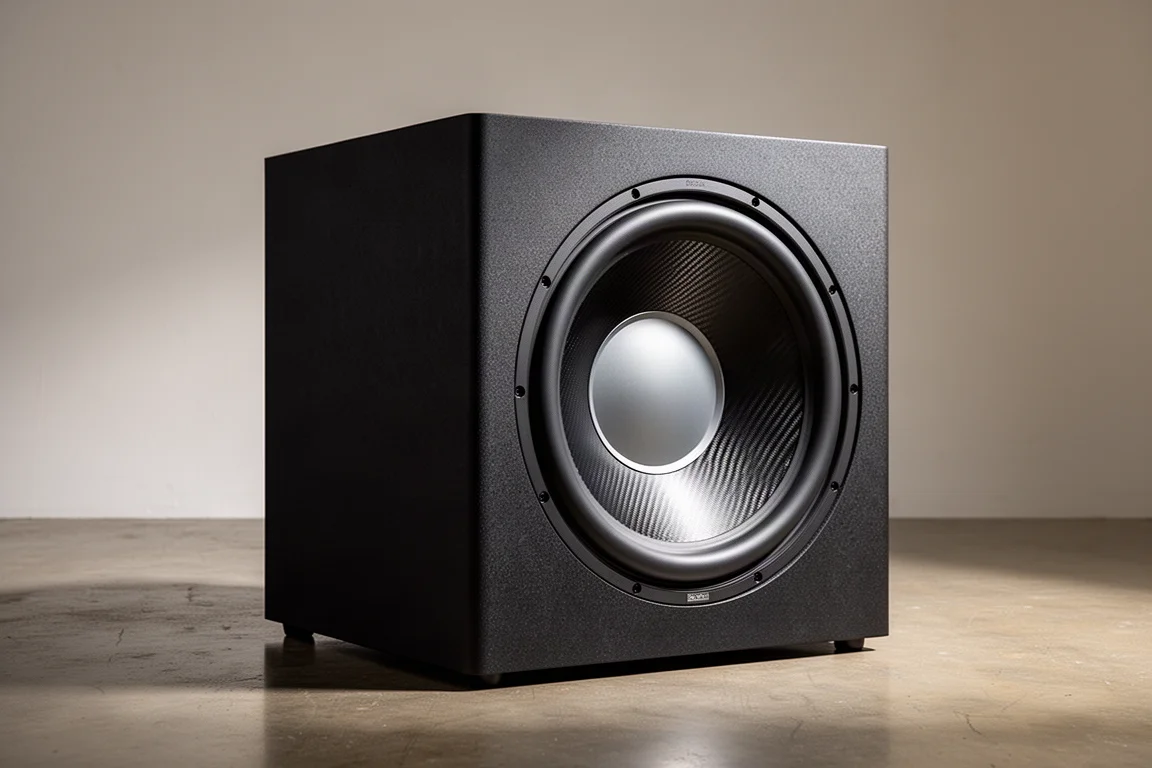
The RBH Sound 21-inch subwoofer is a sealed home theater subwoofer built around a 21-inch carbon fiber driver, a cabinet weighing roughly 330 pounds, and amplification rated at about 4 kilowatts. Pricing sits around the $10,000 mark depending on which amplifier configuration you choose.
What makes it notable is how deep and how loud it plays at the very bottom of the audible range. Its low-frequency capability is significant enough that RBH Sound introduced a new top tier for its room size rating, a category above the previous extreme rating the company had already assigned to its dual 12-inch model.
Who This Subwoofer Is For
This is a subwoofer for listeners who want genuine infrasonic output, meaning usable energy well below 20 Hz, in a dedicated room. It suits large home theaters where the main speakers are already capable on their own and the goal is to extend the system rather than rescue it. It also suits rooms with hard, non-resonant floors, which do not contribute their own low-frequency reinforcement the way a suspended wood floor can.
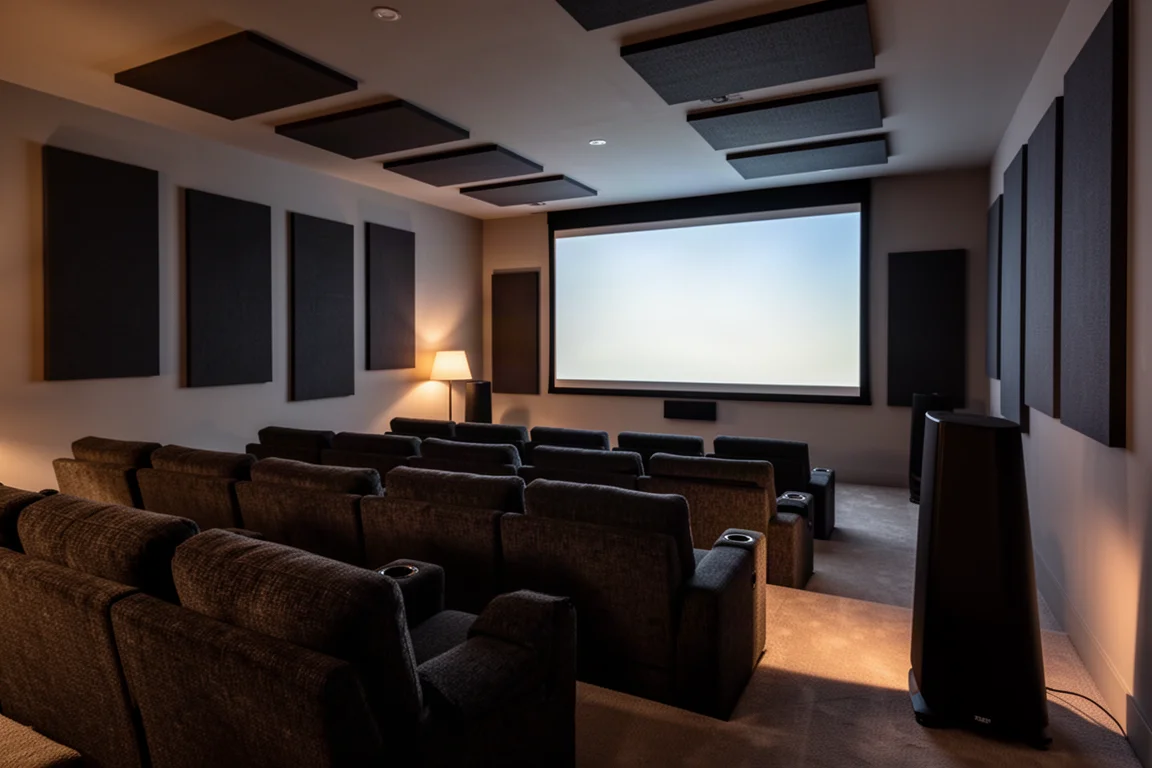
It is not a discreet addition to a shared living space. The output is strong enough to shake an entire house, and low frequencies of this wavelength are not contained by normal sound isolation. Buyers in apartments, townhouses, or rooms with neighbors on the other side of a wall should assume this level of output will be noticed.
Practically, the ideal buyer has a dedicated circuit available, space for a very large cabinet, and a room where deep bass can be played at volume without an immediate conversation with the neighbors.
Driver and Cabinet Engineering
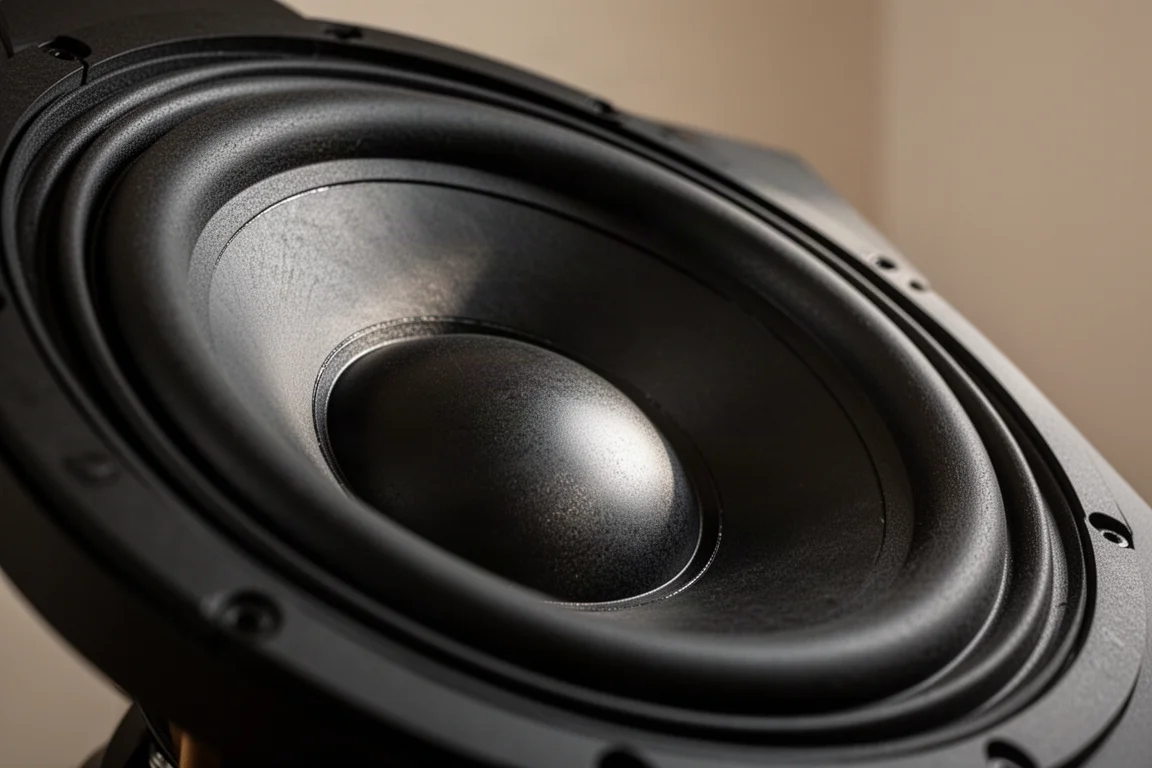
The 21-inch cone uses a carbon fiber sandwich construction with a gel foam layer in the middle. Carbon fiber supplies the rigidity needed to survive high pressure and long excursion without flexing, while the foam core damps the ringing that carbon fiber would otherwise introduce.
Excursion is rated at 38 mm, and the driver uses a large roll surround rather than the pleated accordion surround found on many large commercial drivers. A pleated surround can fold in on itself at high excursion, which raises distortion at low frequencies. The motor structure uses neodymium magnets, which are stronger and lighter than ferrite, and the driver alone weighs close to 70 pounds.
The cabinet is heavy on purpose. When a large driver is driven hard, its inertia has to be offset by cabinet mass, otherwise the enclosure rocks and shifts. RBH Sound developed a proprietary granular acoustic damping system for this model, adding around 120 pounds of material that both increases mass and functions as an acoustic absorber inside the enclosure. It occupies roughly a cubic foot and a half of internal volume without changing the system Q, so transient behavior stays tight, and knocking on the finished cabinet produces no hollow sound.
Output and Measured Performance
Measured output at a defined distortion threshold is high across the low bass range. The subwoofer produces over 120 dB above roughly 25 Hz, around 117 to 118 dB near 20 Hz, still over 100 dB at 12 Hz, and approximately 94 to 95 dB at 10 Hz. In-room, the system reaches a 3 dB point of 5 Hz.
The sealed enclosure has a natural tuning frequency near 25 Hz and is boosted below that point. Compared with the dual 12-inch SV-1212, output above 40 to 50 Hz is broadly similar, but the 21-inch model holds a clear advantage below the 25 Hz threshold. That difference is what prompted the new room size rating category.
The result is a design that does not roll off in the mid 30 Hz region the way many sealed subwoofers do. The advantage is concentrated exactly where the cabinet and driver engineering are working hardest, which is the bottom octave and below.
Build Quality and Local Manufacturing
The subwoofer is manufactured in Utah, with cabinetry made in the United States. A magnetic grille is included for buyers who prefer to cover the driver, and the driver itself is visually dominant when the grille is removed.
Warranty coverage runs five years on the subwoofer and three years on the amplifier. The driver is rated to handle more than 4 kilowatts, and the neodymium motor structure keeps the assembly open, which supports cooling under sustained output.
Amplification and Setup Considerations
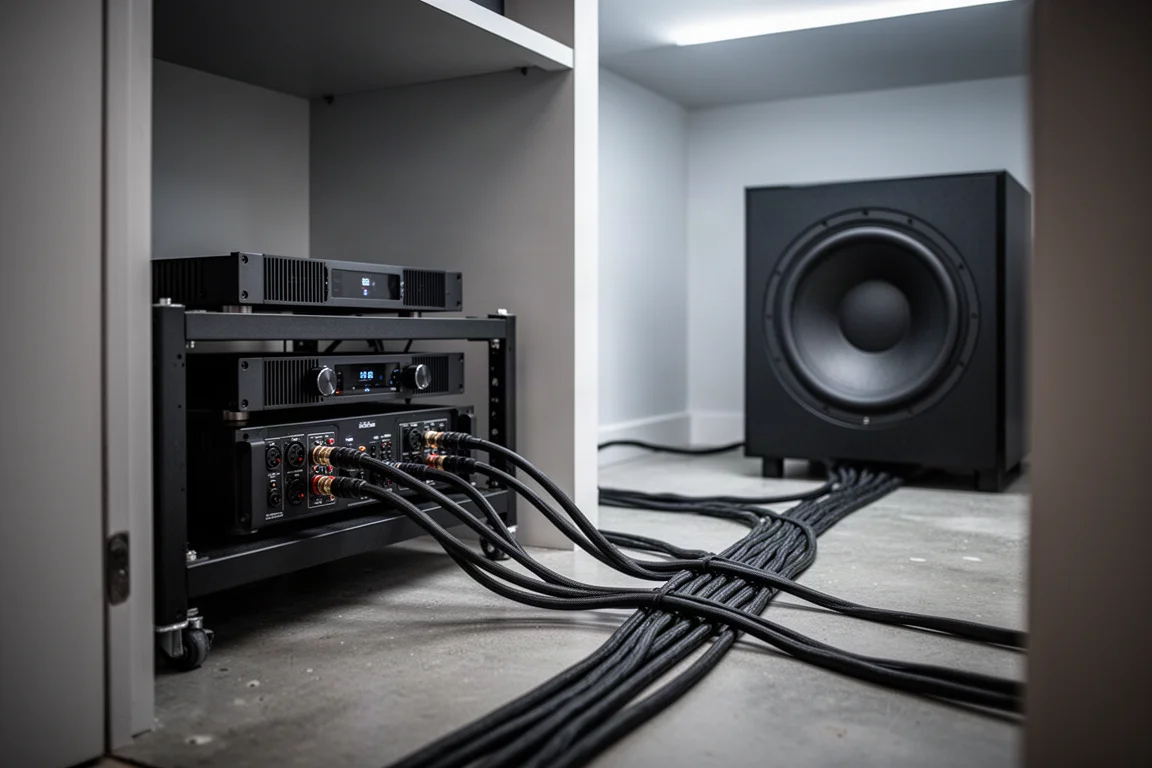
Two configurations are offered, one with the amplifier built into the cabinet and one using outboard amplification. Both are powered designs, and pricing between them is not dramatically different. The amplifier delivers roughly 4 kilowatts on a 110 to 120 volt supply and closer to 4.5 kilowatts when connected to 220 volts.
A dedicated outlet is a practical requirement rather than a nice-to-have. Sharing a circuit with other equipment is not advisable given the current draw involved.
The rated low pass crossover point is 80 Hz, though it can be pushed higher when a steeper filter is used. Larger drivers begin to beam as frequency rises, which is why a steep low pass filter is the sensible approach. Even crossed over at 90 to 100 Hz, the subwoofer is difficult to localize in the room, which points to a controlled driver and a cabinet that does not add resonance.
Integration with a capable tower system works well. Towers that reach a 3 dB down point of roughly 16 to 17 Hz in-room still gained more than 10 dB below the 20 Hz region once this subwoofer was added, and the overall presentation tightened up rather than simply getting louder.
Things to Consider Before Buying
Price is the first consideration, with an MSRP around $10,000 for either amplifier configuration.
Weight and installation come next. The enclosure is around 330 pounds, and the driver alone is close to 70 pounds, so placement decisions are best made before delivery rather than after.
Power is the third factor. Plan for a dedicated circuit, and treat the amplifier as a serious load rather than an accessory.
Finally, consider the room and the building. Infrasonic output at this level is not contained by acoustic treatment, and it travels. Full-output late-night listening is not realistic in a shared building, and buyers should weigh that against how often they can actually use the subwoofer the way it was designed to be used.
Buying Advice
This subwoofer makes sense when the goal is maximum infrasonic output in a dedicated room and the budget, weight, and installation constraints are all acceptable. It is most logical paired with main speakers that are already competent at low frequencies, so the subwoofer extends the system instead of compensating for a weak link.
Decide between the inboard and outboard amplifier versions based on rack space, cable routing, and where the cabinet will sit. If the subwoofer ends up close to the listening position, the low group delay and the difficulty of localizing it mean placement is more flexible than the cabinet size suggests.
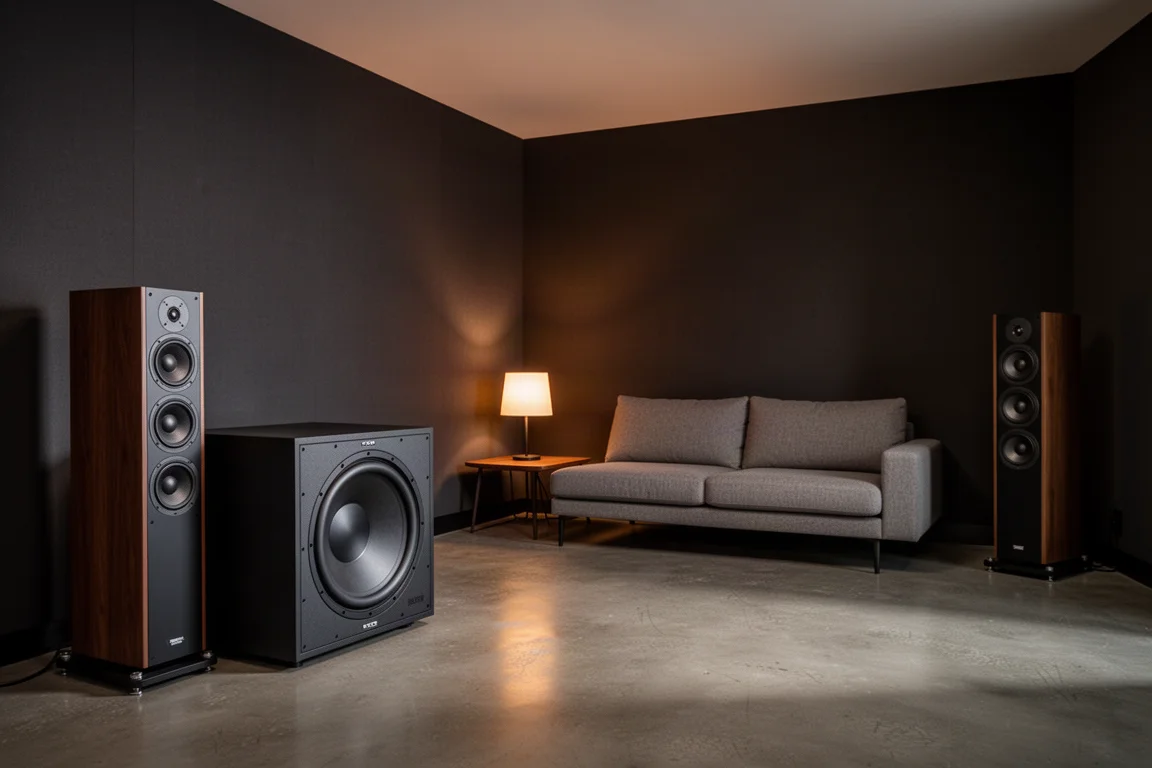
For buyers who want more headroom, running two units alongside capable towers is a viable path, though it represents a different level of investment in both money and floor space. Either way, the deciding factor should be the room and the listening habits, not the specification sheet.
Conclusion
The RBH Sound 21-inch subwoofer is a purpose-built, sealed, high-output design that reaches genuinely infrasonic territory: over 120 dB above about 25 Hz, still over 100 dB at 12 Hz, and a 3 dB point of 5 Hz in-room. The trade-offs are just as clear: around $10,000, roughly 330 pounds, a dedicated outlet, and output that will not stay inside the room. For the right space and the right listener, that combination is exactly the point.
Product link
View more details for RBH Sound 21-Inch Subwoofer
This product is mentioned in the review. Check the specifications, options, and compatibility before buying.
View more details for RBH Sound 21-Inch SubwooferFurther reading
Related Reviews
Home Theater Subwoofers
Best 15-Inch Ported Subwoofers: Seven High-Output Models Compared
A measured comparison of seven large ported subwoofers, covering deep bass output, distortion, group delay, features, and the room each one suits best.
Room Correction
Anthem ARC Genesis Beta Review: Smarter Speaker and Subwoofer Integration
A practical look at Anthem's ARC Genesis beta, including phase-aware speaker calibration, all-pass subwoofer blending, and the settings worth adjusting.
AV Processors
Anthem AVM 90 8K Review: A Reference-Grade AV Processor for Music and Movies
A close look at the Anthem AVM 90 8K AV processor: measured performance, two-channel and immersive listening notes, bass control, and what to weigh before buying.