Home Theater Subwoofers
Best 15-Inch Ported Subwoofers: Seven High-Output Models Compared
A measured comparison of seven large ported subwoofers, covering deep bass output, distortion, group delay, features, and the room each one suits best.
Introduction
The 15-inch ported subwoofer sits at the point where home theater bass stops being a compromise. These are large, heavy cabinets with serious amplifiers, built for rooms where a smaller sealed design would run out of headroom long before the movie does.
The seven models in this roundup all belong to that same class, even though one uses passive radiators instead of a port and another uses a 13-inch driver. They have all been measured and listened to under the same conditions, which makes the differences between them meaningful rather than marketing copy. Prices in the group run from roughly $1,500 to $2,900, and one model has already been discontinued in favor of a successor that has not yet arrived.
The goal here is not to crown a single winner. Every subwoofer below is a genuinely capable design, and each one has a niche where it makes more sense than the others.
How These Subwoofers Were Compared
All seven cabinets were evaluated in the same category: large, high-output designs intended for serious home theater and music systems. The comparison covers burst test output across the bass range, group delay as a measure of time domain behaviour, frequency response linearity, harmonic distortion at high drive levels, amplifier power, cabinet weight, warranty coverage, connection options, and whether the model offers DSP or app control.
Two things are worth understanding before reading the individual entries. First, ported subwoofers are not designed to produce strong output below their port tuning frequency, so a model tuned to 16 Hz should not be judged on what it does at 12 Hz. Second, output and fidelity are not the same thing. A subwoofer can sit several decibels above the group average in loudness and still measure worse in distortion.
Every model here earns a high-output rating for large or extreme rooms except one, and that exception is still a strong performer by any normal standard. Weight matters too: the lightest cabinet in this group is around 92 pounds, and the heaviest is close to 175 pounds.
Monolith M15 V2: THX-Certified Value
The Monolith M15 V2 comes from a THX-certified line, and the version two changes are mostly cosmetic, which means the measured performance of the original design still applies. It is one of the least expensive subwoofers here at $1,500 including shipping, yet it is also one of the biggest, heaviest, and best-built cabinets in the group at roughly 130 pounds.
Its standout measured result is deep bass output, where it leads every other subwoofer tested at 12 Hz. That figure deserves context, since ported designs should not be expected to behave well below their tuning frequency, and this model can be tuned somewhere in the 16 to 18 Hz region. What matters more is that port noise and chuffing are better managed here than on most ported subwoofers.
The rest of the measurements are equally strong. Group delay is excellent for a ported design, the frequency response is close to flat from about 25 Hz to 200 Hz, and distortion is low enough to satisfy THX Ultra requirements, which appear to keep total distortion below 5 percent above 25 Hz. Balanced inputs and outputs are included, and the five-year warranty covers all components.
The main practical annoyance is the size of the feet, which leave very little clearance for fingers when the cabinet is lifted.
SVS PB16-Ultra: The Deep Bass Benchmark
The SVS PB16-Ultra is the most expensive subwoofer in this group at $2,900 and, by a wide margin, the largest and heaviest at around 175 pounds. Its driver is nominally 16 inches, though it measures closer to 15.5 inches frame to frame, which is why it belongs in a 15-inch comparison. The 1600-watt amplifier and an 8-inch voice coil let the driver draw enormous current, enough that during hard use it dimmed the room lights.
Deep bass is where it separates from everything else. Burst testing puts it roughly 4 dB above the group average below 40 Hz, which is twice as loud in perceived terms at those frequencies. Distortion is textbook clean down to 16 Hz. Upper bass is a different story: above about 50 Hz its output is closer to ordinary, and it does not have the same authority from 50 to 80 Hz that it has lower down.
Group delay is good above 30 Hz and rises below that, which is acceptable because there is very little musical content in that region. The frequency response is linear with a slight boost around 20 Hz. Balanced inputs and outputs are present, the control app includes multiple-band PEQ filters that remove any need for external EQ hardware, and customer support has an outstanding reputation.
Paradigm Defiance X15: Mid-Bass Punch and Room Correction
The Paradigm Defiance X15 is the punchiest subwoofer in this comparison. It is the only model to reach 120 dB in burst testing between 50 and 80 Hz, which makes it the natural pick for listeners who care about kick drums, bass guitar, and action-movie transients. Above 40 Hz it sits far ahead of the group average.
It is also the easiest to move at about 92 pounds, and it wears its cube-shaped cabinet without apology. The tuning frequency sits around 20 Hz, and group delay stays under 20 milliseconds above 30 Hz, a good result for a ported design. In music mode the frequency response is essentially flat from 20 Hz to 200 Hz.
Two features set it apart. It has app control and a room correction routine, making it the only subwoofer here with built-in room correction. It also has speaker-level inputs alongside balanced connections, which helps anyone integrating a subwoofer into an older system. The trade-off is that the rear panel carries only the most basic controls, so the app is effectively mandatory. Driven hard, distortion climbs sharply around 25 Hz, approaching 40 percent, because the driver does not have the extreme linear excursion of the SVS design.
Deep bass is still solid, just not class-leading, and the three-year warranty is shorter than most of the group.
Klipsch RP-1600SW: Strong All-Round Performance
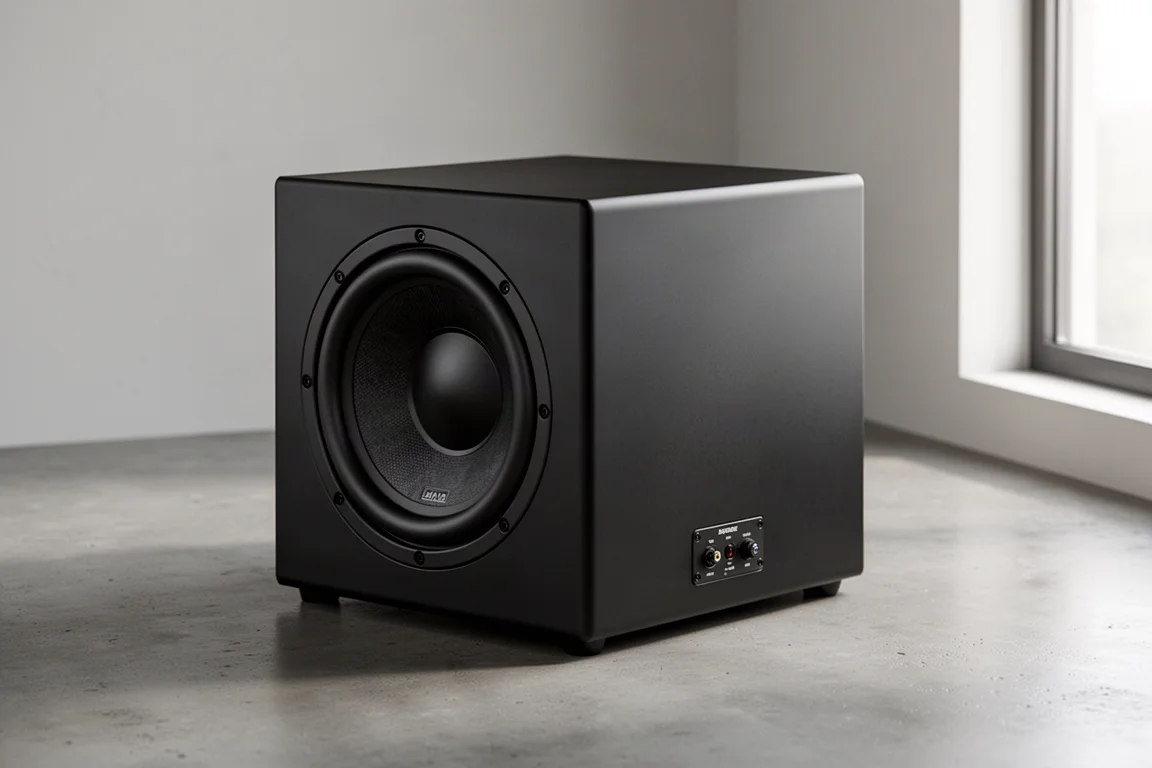
Klipsch has traditionally built budget subwoofers that were decent for the money without being overachievers. The RP-1600SW breaks that pattern. It delivers strong output across the entire bass range with no obvious weak spot, and its measurements are excellent almost everywhere you look.
Group delay is superb for a ported design, staying under 20 milliseconds until roughly 25 Hz. The frequency response is ruler flat, and harmonic distortion hovers around 10 percent, a very good result at high drive levels. Burst output lands at or above the group average across the range. The 800-watt amplifier, 110-pound cabinet, and five-year warranty round out a package that is hard to fault.
The one flaw is port behaviour. The tuning appears to sit slightly lower than ideal, and driving the subwoofer hard near 20 Hz produces audible chuffing that the distortion measurements do not fully capture. It is also worth noting that the nominal 16-inch driver is closer to 15 inches in practice, and that the retail price of $1,800 has dropped to around $1,200 during holiday sales, which changes the value calculation considerably.
Definitive Technology Descend DN15: Clean and Discreet
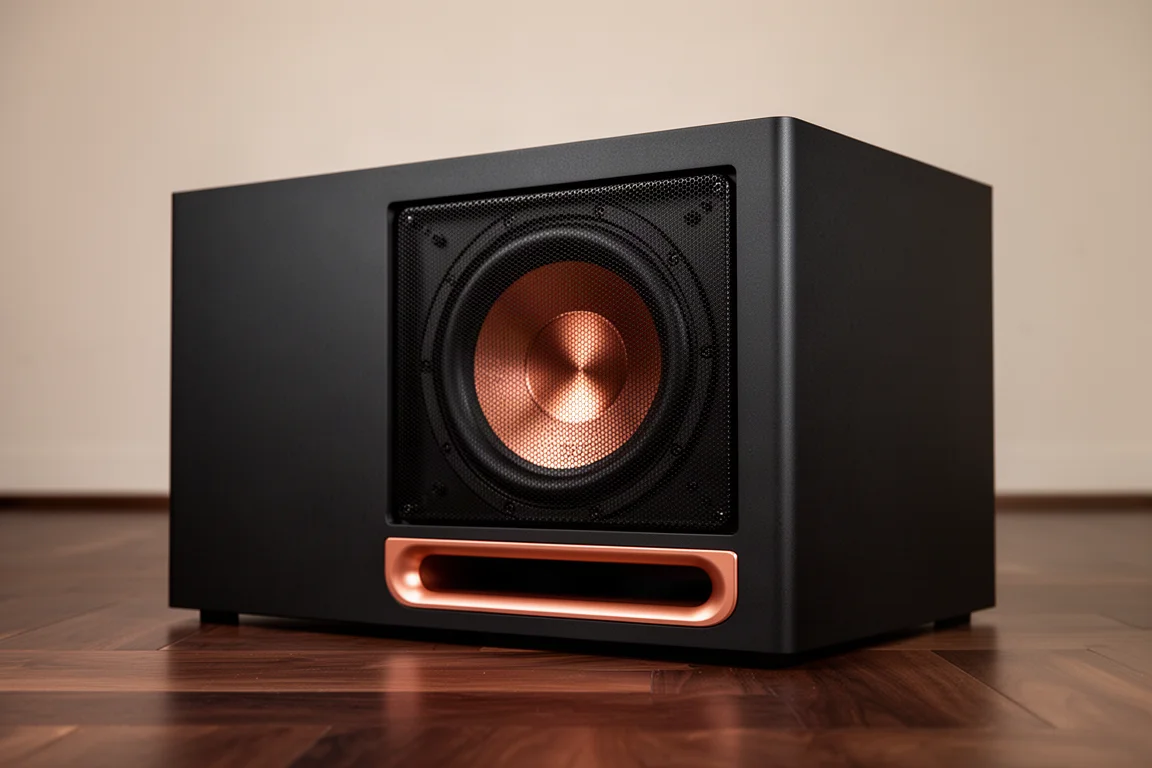
The Descend DN15 takes a different route to deep bass. Instead of a port it uses one front-firing active driver and two side-firing passive radiators, which achieves a similar result with different trade-offs. At $1,800 it is priced alongside the Klipsch, and its 500-watt amplifier is the lowest rating in this group.
It is also the smallest cabinet here, though that is a relative statement: at about 115 pounds it is still a substantial piece of furniture by normal standards. Output measures roughly 3 dB below the group average, so anyone chasing maximum sound pressure level should look elsewhere. What it offers instead is fidelity. The frequency response stays linear down to 20 Hz, distortion sits at or below 10 percent from about 23 Hz upward, and the subwoofer simply never misbehaves. Music in particular benefits from that composure.
Its finish, a fabric wrap, makes it the most visually forgiving subwoofer in the group and arguably the best looking. Warranty coverage is five years on the woofer and three years on the electronics, and it is the only model here that does not qualify for an extreme room output rating, settling instead for a large room rating.
Hsu Research VTF-15H Mk2: Analog Value
The VTF-15H Mk2 has been discontinued in favor of the VTF-TN1, which is not yet available, but it remains a useful reference point because of how much performance it delivered for the money. When it was on sale it cost $1,250 plus roughly $200 to $250 in shipping, which worked out to about the same as the Monolith M15 V2.
Its defining feature is tuning flexibility. The cabinet can be tuned as low as 16 Hz, deeper than most subwoofers in this group, and the Mk2 measured noticeably better than the original version. It uses an analog amplifier with no DSP, and that simplicity helps rather than hurts: group delay is excellent, staying under 20 milliseconds above 30 Hz, and the frequency response is remarkably flat from below 20 Hz to 200 Hz without any digital correction.
Distortion is well controlled above 25 Hz, sitting under 10 percent and closer to 2 percent in the upper bass above 50 Hz. Pushed hard below 20 Hz it will misbehave, as any subwoofer in this class will. Balanced inputs, speaker-level inputs, a satin finish, a seven-year woofer warranty, and two years on the electronics make it a well-rounded package, and post-purchase support is a genuine strength.
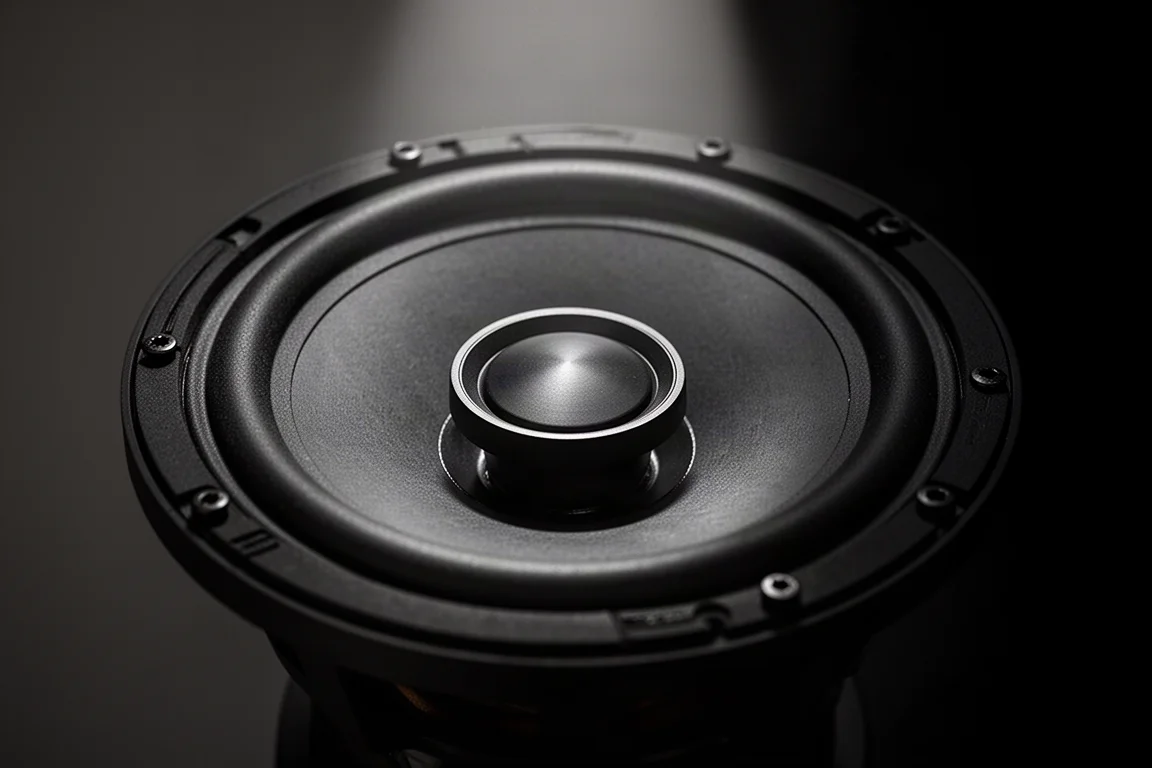
The successor promises a smaller footprint, a lower price, and a redesigned, larger-diameter port, so the comparison will be interesting once it arrives.
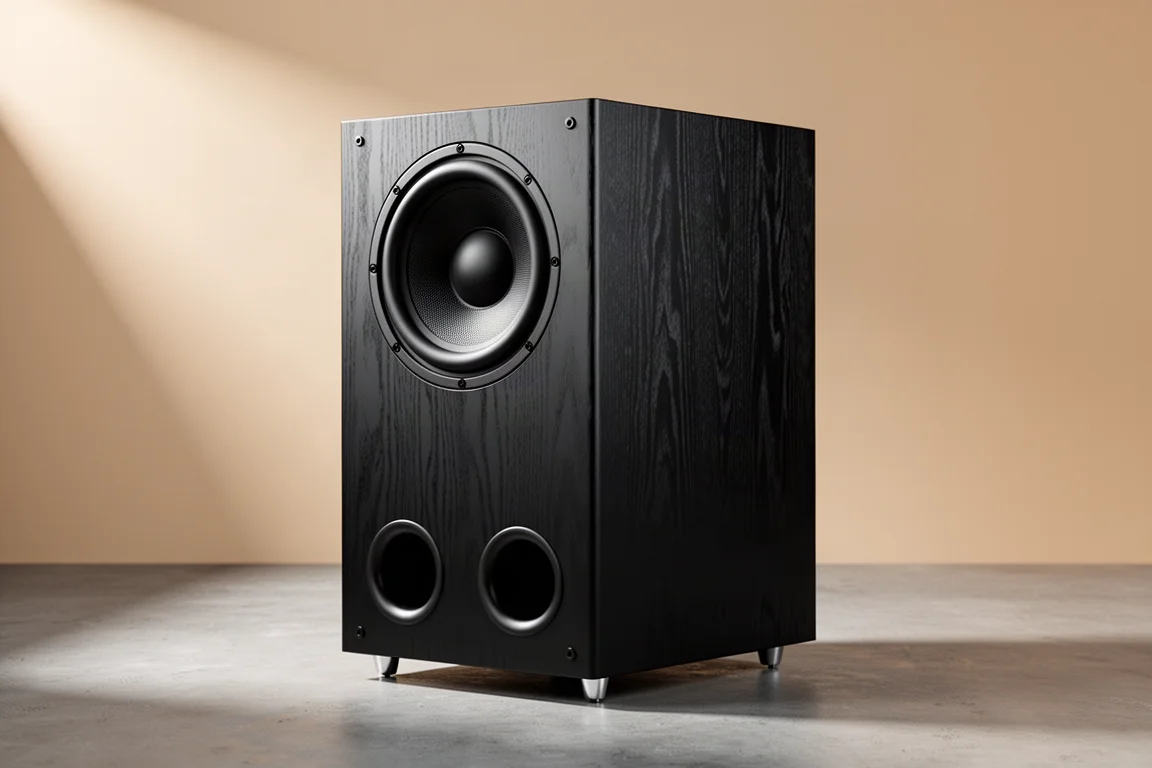
Monolith M13: A 13-Inch Driver in 15-Inch Territory
The Monolith M13 is included here despite using a 13-inch driver, because it competes in the same price and performance bracket. It is more expensive than the M15 V2 and uses a considerably more powerful amplifier. At about 150 pounds it is one of the heaviest cabinets in the group, and its build quality is on the same level.
Its deep bass output is second only to the SVS PB16-Ultra, which is a serious achievement. Group delay is excellent, with a sharp resonance spike near 200 Hz that sits well above the bass range and is not audible in practice. The frequency response is ruler flat, and DSP is on board to help it meet THX requirements.
One measurement needs context. At maximum drive in its lowest tuning mode, around 16 to 17 Hz, distortion exceeds 5 percent at 25 Hz, which is above the threshold THX Ultra designs normally target. Switching to THX mode brings distortion down at the cost of some low frequency extension, the usual trade-off for THX-certified subwoofers with variable tuning. Even at maximum output, distortion stays below 20 percent. Burst output is at or above the group average, with extra output at both ends of the bass range.
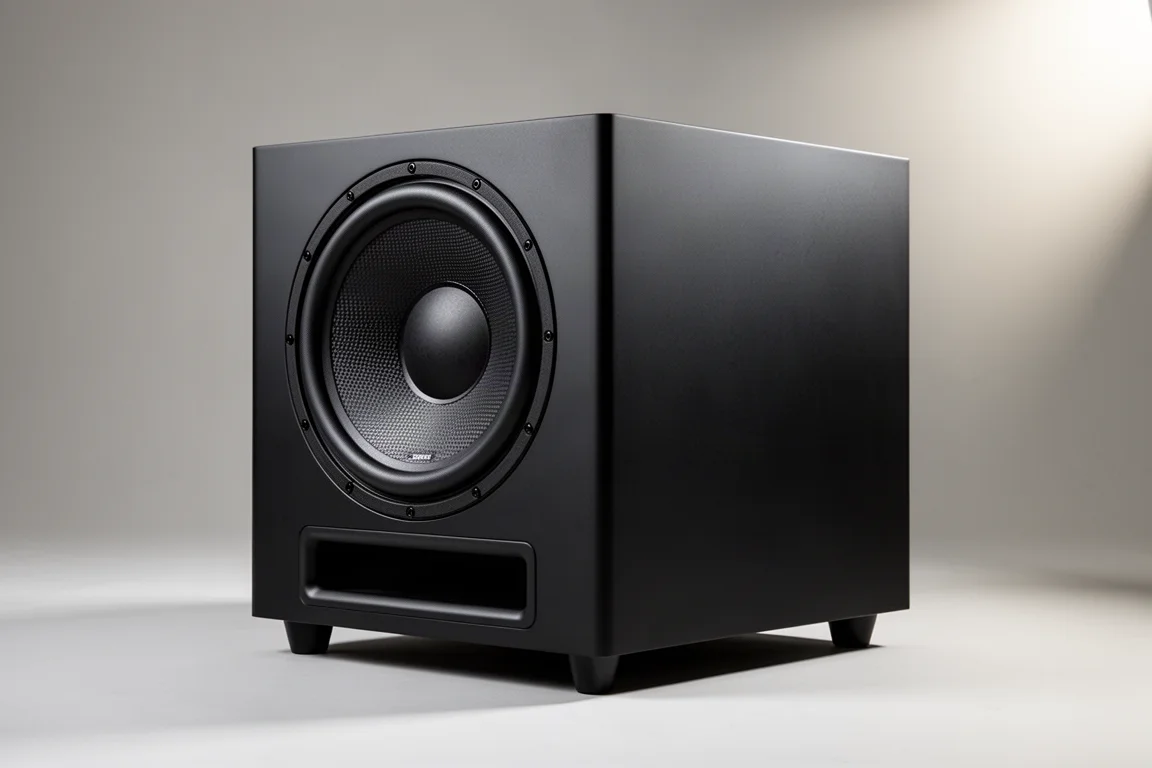
Other 15-Inch Options Worth Knowing About
A few other subwoofers compete in this space without the same depth of measurement data behind them. The Rythmik Audio F15HP is an older design with a strong reputation, but it was measured using a different methodology, so it is not included in the head-to-head comparison. The Hsu Research VTF Mk5 would be the least expensive option in this class at around $1,000 plus shipping, tuned a little higher than the VTF-15H Mk2 and therefore good down to about 25 Hz rather than below 20 Hz. The Emotiva XS15 offers a 15-inch driver, a rear slot port, and a 600-watt amplifier for $900, but there are no published measurements and its long-term reliability is unknown, and the same caution applies to Tonewinner. Within the SVS range, the PB-3000 and PB-4000 deserve a mention: they are far more manageable than the PB16-Ultra at roughly half the size and weight, and the PB-3000 in particular offers even more mid-bass punch.
Buying Advice: Matching a Subwoofer to Your Priorities
There is no single best answer in this group, because the right subwoofer depends on what you value most. If the deepest possible bass is the goal, the SVS PB16-Ultra is the clear leader, roughly 4 dB above average below 40 Hz, and the Monolith M13 is not far behind. If you want the strongest performance across the entire bass range, the Monolith M13 and the Klipsch RP-1600SW are the two to look at. If punch and music impact matter most, the Paradigm Defiance X15 has no equal here between 50 and 80 Hz.
For rooms where appearance and composure matter more than raw output, the Definitive Technology Descend DN15 is the easiest to live with and the model least likely to draw complaints from anyone sharing the space. For value, the Monolith M15 V2 and the Hsu Research VTF-15H Mk2 delivered average or better performance in almost every metric at the lowest prices in the group, which is a difficult combination to beat.
Support and ownership experience are worth weighing too. SVS and Hsu Research both have strong reputations for helping customers after the sale, and SVS backs its subwoofers with a trial period and a published bill of rights. Those extras are part of what the higher price buys.
Conclusion
Every subwoofer in this comparison is a capable, high-output design, and the differences between them come down to priorities rather than quality. Deep bass specialists, mid-bass punch, room correction, app control, cabinet size, and price all point in slightly different directions, and the right choice is the one that matches the room and the listening habits it will serve. Any of these seven can anchor a serious home theater system, provided the buyer is ready for the size and weight that come with the category.
Further reading
Related Reviews
Home Theater Subwoofers
RBH Sound 21-Inch Subwoofer Review: Infrasonic Output in a 330-Pound Cabinet
A sealed 21-inch home theater subwoofer with a 5 Hz in-room 3 dB point, a 330-pound cabinet, and roughly 4 kilowatts of amplification. Here is who it suits and what to weigh first.

Backpacking Gear
Building a 10 lb Base Weight: An Ultralight Backpacking Gear List
A practical walkthrough of the ultralight pieces behind a 10 lb base weight, from a 765 g pack and a roomy one-person tent to a full camp chair and a dependable water filter.

Road Bikes
10 New Road Bikes Worth Watching: Aero, Titanium, Steel and Endurance Standouts
A practical roundup of 10 new road bikes, from aero flagships chasing single-watt gains to titanium, steel and endurance platforms built for real roads.