Subwoofers
RBH 1212 SWS Review: A Low-Profile Reference Subwoofer Built for Real Rooms
A dual 12-inch on-wall subwoofer with a shallow cabinet, 20 Hz extension, and flexible mounting for rooms that cannot take a conventional box.
Introduction
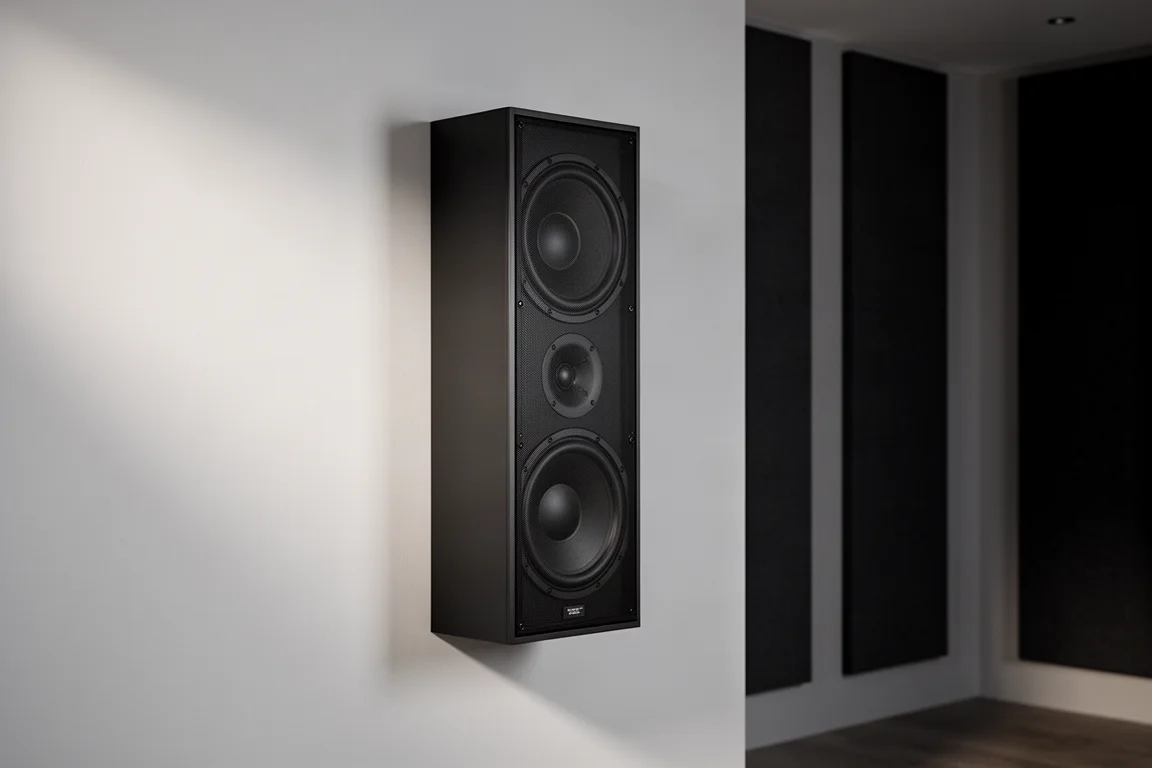
Most subwoofer decisions eventually run into the same obstacle: the room. A large box subwoofer can deliver the low frequency output a home theater needs, but it also needs floor space, a power outlet nearby, and a household that does not mind the footprint. The RBH 1212 SWS takes a different approach. It belongs to the Signature Series, it stands roughly 56 inches tall and only about 5 inches deep, and it carries two active 12 inch drivers in a cabinet designed to hang on a wall, sit at a baseboard, or slide under furniture.
The goal is straightforward: keep the output and extension of a serious subwoofer while removing the placement constraints that usually come with one.
What the RBH 1212 SWS Is
The 1212 SWS is a dual active design. Both of its 12 inch drivers use polycarbonate cones, a departure from the aluminum cones used on some earlier RBH models. RBH also builds a smaller version of this cabinet that pairs one active driver with a passive driver, but the 1212 SWS drives both.
The cabinet itself is shallow and tall, which is what makes the mounting options possible. A French cleat system runs along the top and bottom of the rear panel, so the unit can be hung vertically on a wall or turned and mounted horizontally. The rear of the cabinet is also lined with foam, which limits the vibration that could otherwise transfer into the wall structure.
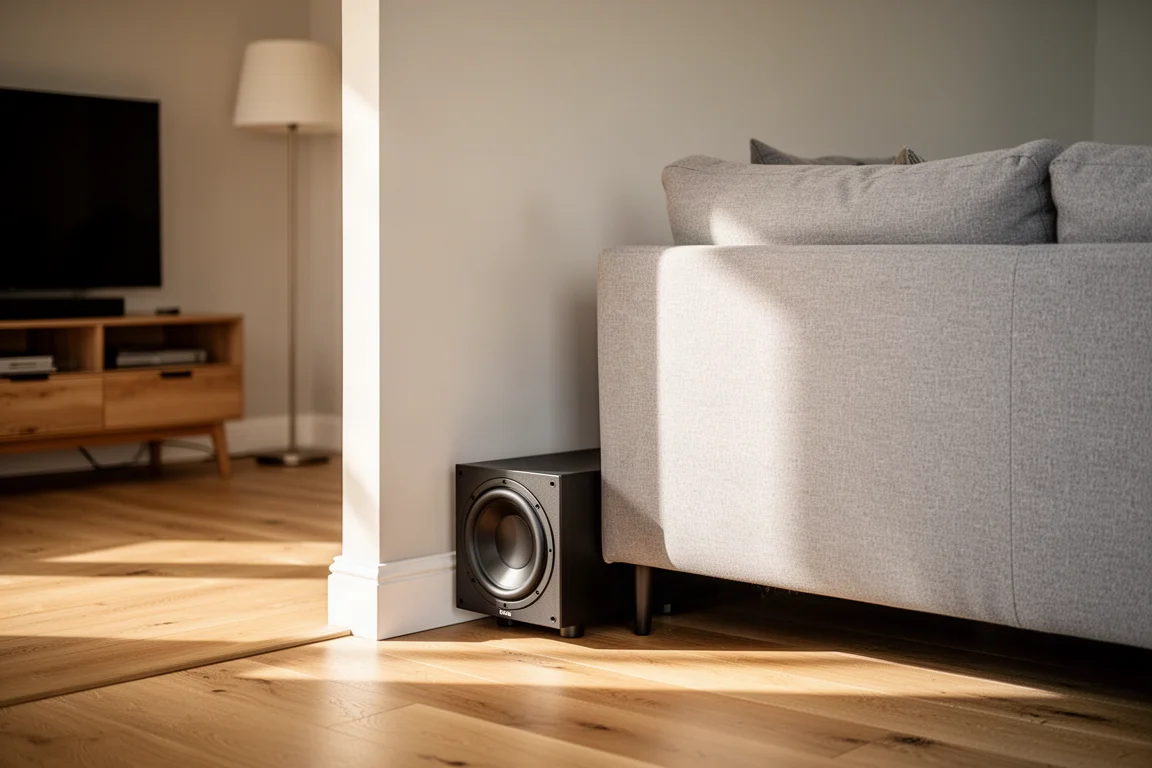
Finishes start with black or white, each supplied with a matching magnetic grille. Those grilles use strong magnets and hold firmly in place. Beyond the standard colors, RBH offers custom color matching: supply a paint code or a physical swatch and the cabinet can be finished to order for an additional charge.
Who This Subwoofer Is For
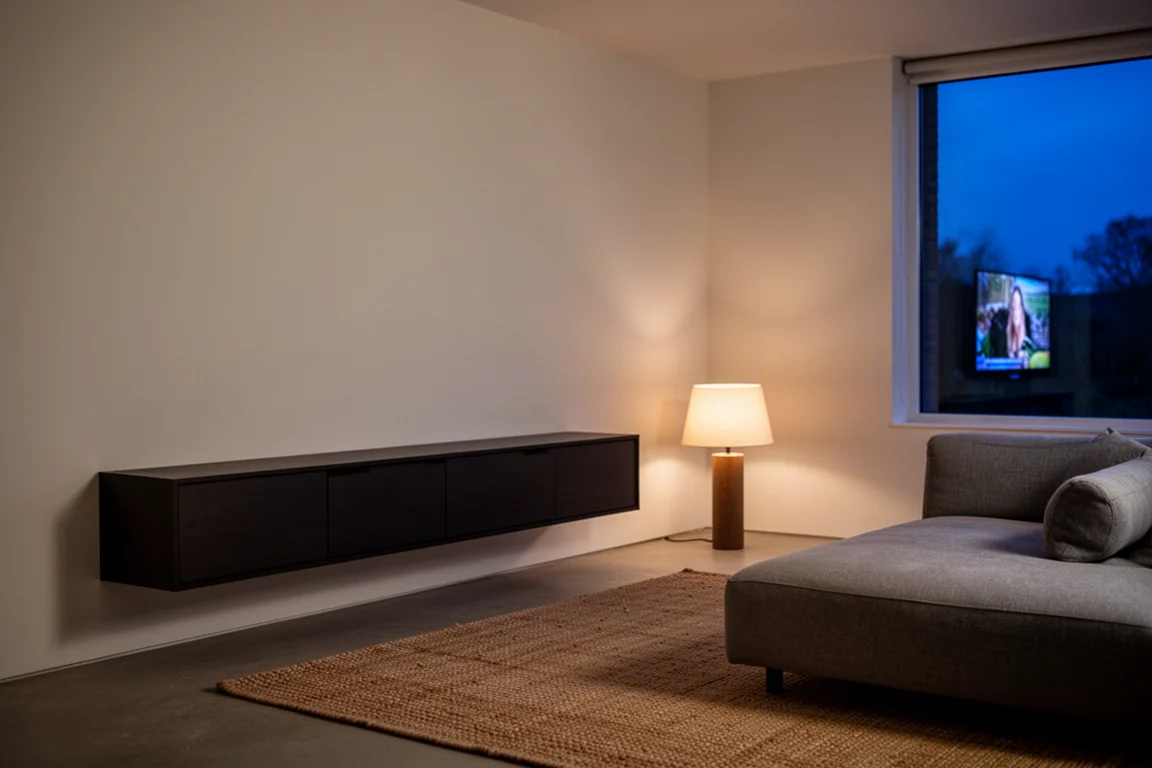
This subwoofer makes the most sense for two kinds of buyers. The first is the home theater owner who wants reference level low frequency performance but has aesthetic constraints, whether that means a living room, a media room, or a shared space where a large freestanding box is not realistic. The shallow cabinet and the wall mounting hardware exist specifically for that situation.
The second is the enthusiast building a larger multi subwoofer system. In a room anchored by a very large subwoofer, a pair of low profile units can even out bass distribution across seats without consuming more floor area.
Output and Low-Frequency Extension
RBH rates these subwoofers to play down to 20 Hz in room, which is the range where a theater system starts to feel physical rather than simply loud.
Amplification comes from an outboard unit rather than a plate amp. The RBH 2602 amplifier offers more than 2,000 watts per channel, and it can be bridged to deliver around 4,000 watts into a single subwoofer when a system calls for it. The amplifier includes several settings, among them a standard low frequency setting and a setting with a built in high pass filter. In most systems the low frequency setting is the practical choice, with bass management and the crossover to the rest of the speakers handled by the receiver or processor.
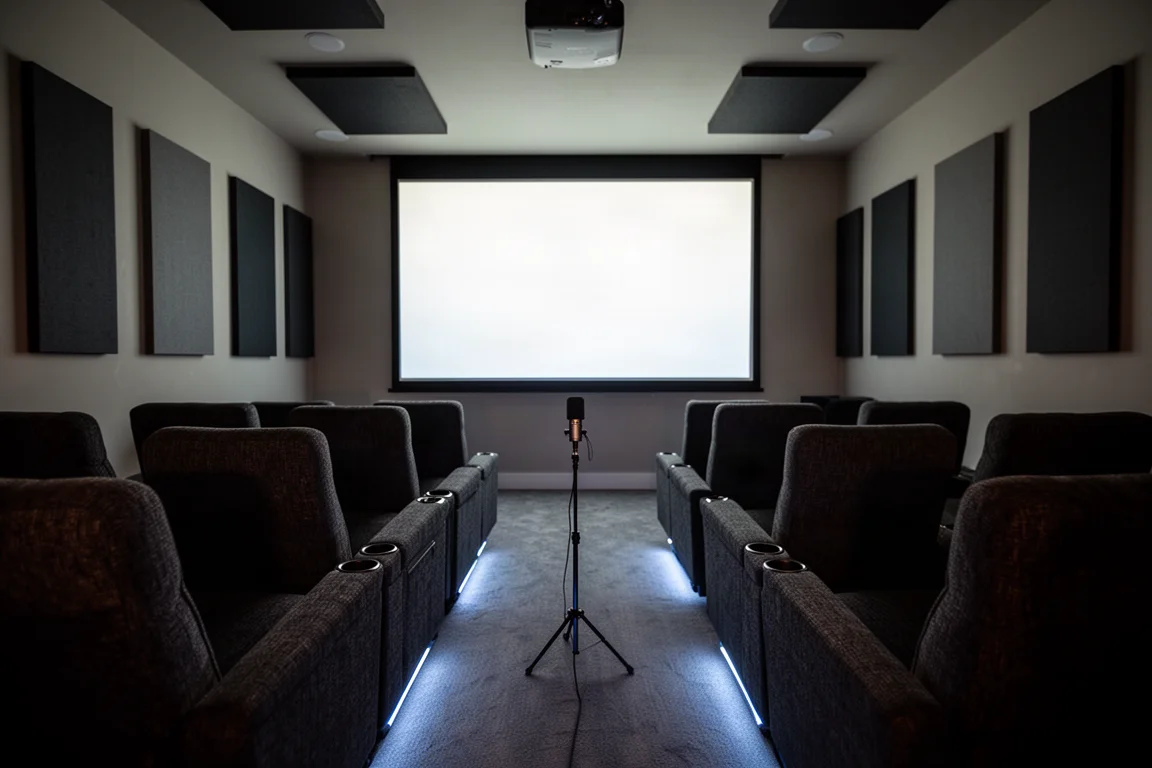
Because the drivers are active and the cabinet is compact, a pair of these units can be positioned in different parts of the room to smooth the response across multiple listening seats rather than relying on a single source.
Amplifier Matching and System Integration
The 1212 SWS uses standard binding posts and is driven by an outboard amplifier through high gauge speaker cable. That design choice has a practical benefit: the subwoofer does not need to sit near an electrical outlet, so placement is limited only by the room and the wiring run.
Integration is not tied to one brand. These subwoofers are designed to work alongside a wide range of processors and speaker systems. In a reference configuration they can be set up as an extension of the main speakers rather than as standalone subwoofer channels, which keeps the low frequency content of the mains intact while the subwoofers add the deepest octaves.
Installation Flexibility and Build Quality
The enclosure is built from HDF, and the result is a cabinet that feels considerably more inert than its slim profile suggests. That matters when the subwoofer is attached to a wall. Combined with the foam layer on the rear panel, the design is intended to keep vibration from travelling into the structure. Owners who want to go further can add an isolation strip between the cabinet and the wall.
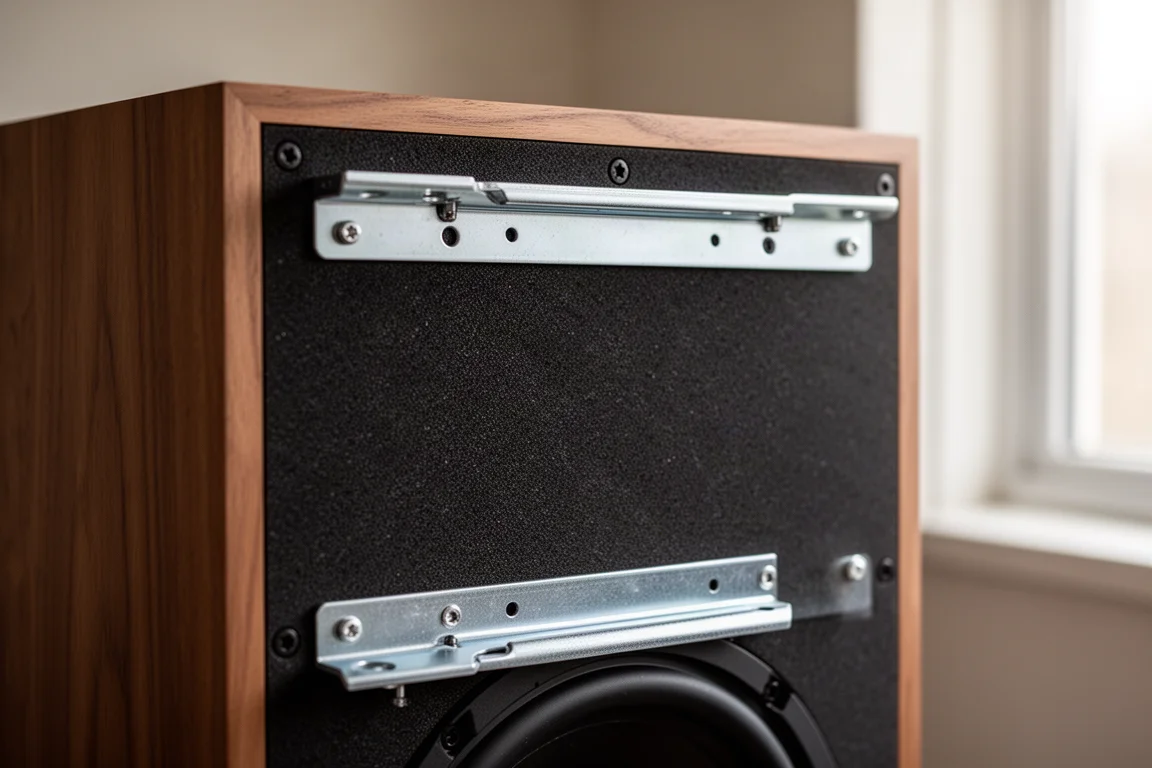
Placement options are unusually broad. Vertical wall mounting, horizontal wall mounting, baseboard placement, and even under furniture are all viable because of the shallow depth. RBH builds its cabinetry in house, which means custom sizes are possible when a standard cabinet will not fit a specific space. Dealers can pass those requirements along, and the same applies to custom finishes.
Things to Consider Before Buying
An outboard amplifier is required. The 1212 SWS has no built in plate amp, so the cost of a suitable amplifier belongs in the budget alongside the subwoofer itself.
The tall cabinet shape is a real consideration. At roughly 56 inches, vertical mounting needs wall space and a plan for the cleats. Horizontal mounting resolves that, but it changes how the unit sits relative to the rest of the room.
Custom colors and custom cabinet sizes are available, but both carry an upcharge and a longer lead time. Buyers with a specific paint code should expect to supply it.
Finally, deep bass performance always depends on the room. Placement, calibration, and the number of subwoofers in the system will shape the result more than any specification sheet on its own.
Buying Advice
Buyers who already run a processor with capable bass management will get the most from the 1212 SWS. Pair it with a suitable outboard amplifier, plan the mounting location before the cabinet arrives, and consider two units if even bass coverage across multiple seats matters more than raw output from a single position.
For rooms with unusual dimensions or finish requirements, it is worth speaking with a dealer before ordering. Because RBH handles its own cabinetry, a conversation about size and color can happen before the purchase rather than after it.
Conclusion
The RBH 1212 SWS solves a genuine problem for home theater owners who want serious low frequency output without a large freestanding box in the room. Dual active 12 inch drivers, a shallow HDF cabinet, wall mounting hardware, and 20 Hz extension cover the performance side, while black, white, and custom finishes cover the aesthetic side. The main requirements are an outboard amplifier and some planning around placement, and for the right room that trade is an easy one to make.
Product link
View more details for RBH 1212 SWS
This product is mentioned in the review. Check the specifications, options, and compatibility before buying.
View more details for RBH 1212 SWSFurther reading
Related Reviews
Subwoofers
Arendal 1961 Subwoofer 1S Review: Beautiful Build, Modest Punch at $1,000
A sealed $1,000 subwoofer with a gorgeous cabinet, plus three lower-priced alternatives that deliver more impact for movie nights.
Subwoofers
Arendal Sound 1723 2V Subwoofer Review: Dual 13.8-Inch Drivers Under $3,000
A flagship ported subwoofer with dual opposing 13.8-inch drivers, a 1,200W RMS amplifier, app-based DSP, and a 10-year warranty.
Subwoofers
Ascendo 16 Sub Active Sealed Review: Sealed Bass Built on Real Engineering
A close look at the Ascendo 16 Sub Active Sealed, a 16-inch sealed home theater subwoofer with independently verified measurements, a purpose-built driver, and genuinely controlled output.