Bookshelf Speakers
Radiant Acoustics Clarity 4.2 vs Clarity 6.2: Small Bookshelf Speakers Compared
A close look at the Radiant Acoustics Clarity 4.2 and Clarity 6.2, and how the two compact bookshelf speakers differ in balance, dispersion, headroom and room fit.
Introduction
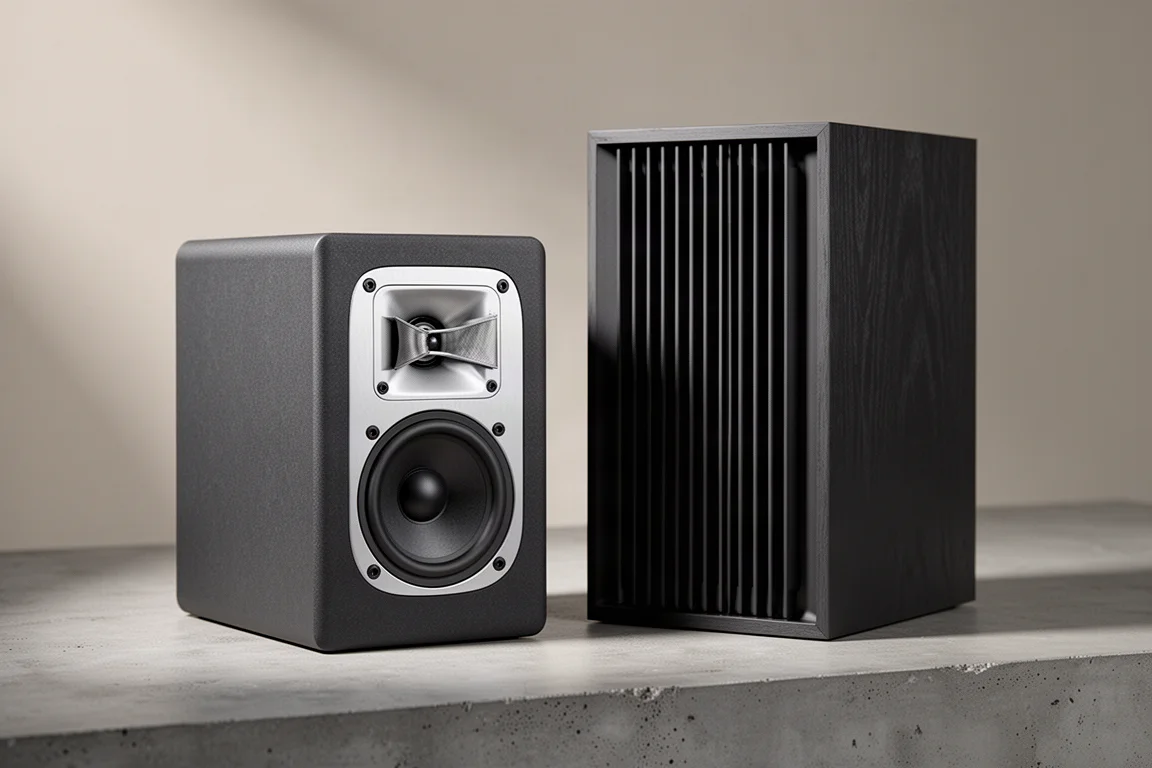
The Radiant Acoustics Clarity 4.2 is a genuinely small bookshelf speaker, and at around $3,000 per pair it sits in a bracket where most rivals are physically much larger. That size difference matters more than the price tag suggests. The 4.2 is built for smaller rooms, where it can deliver neutral tonality, wide dispersion and useful bass extension without demanding a large listening space.
Its bigger sibling, the Clarity 6.2, retails at around $4,500 per pair. The two share a clear family resemblance and both use an AMT tweeter, so the natural assumption is that they sound the same, just at different scales. They do not. The 4.2 is the more linear of the two on axis, and through the mid-range it comes across as the more enveloping speaker.
This article looks at what each one does well, where each one gives something up, and which room and listener each is really suited to.
How These Two Speakers Compare
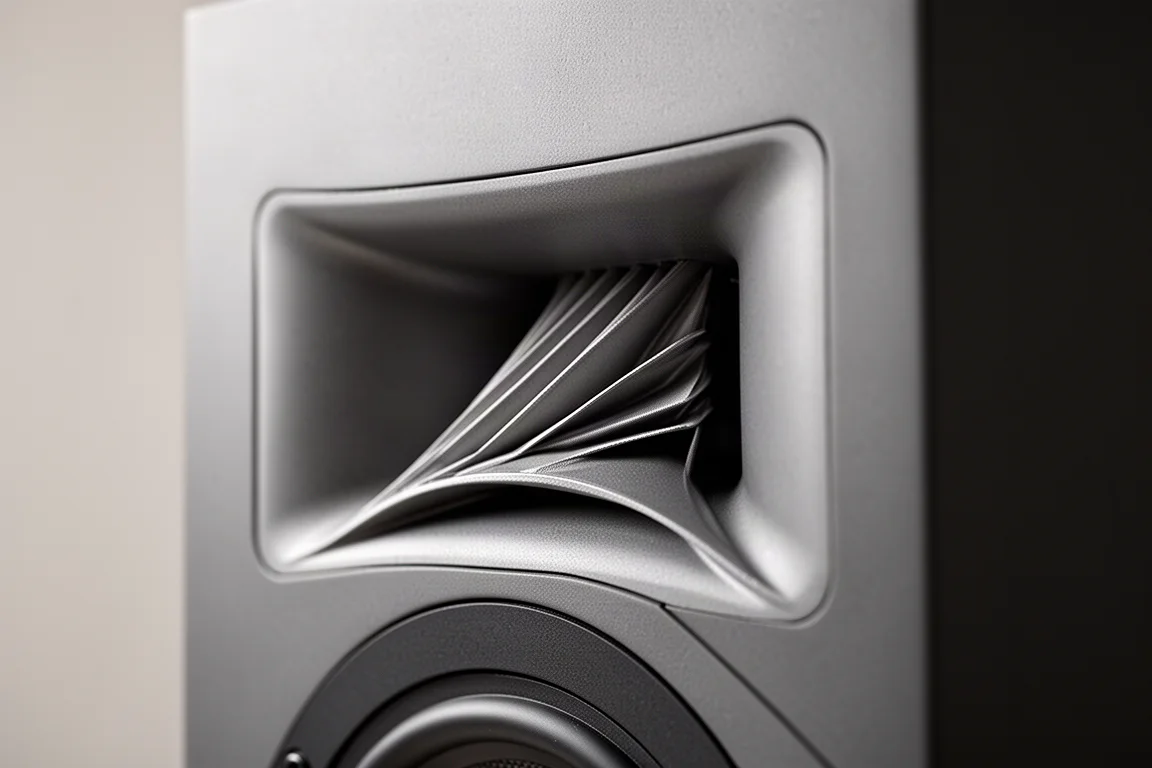
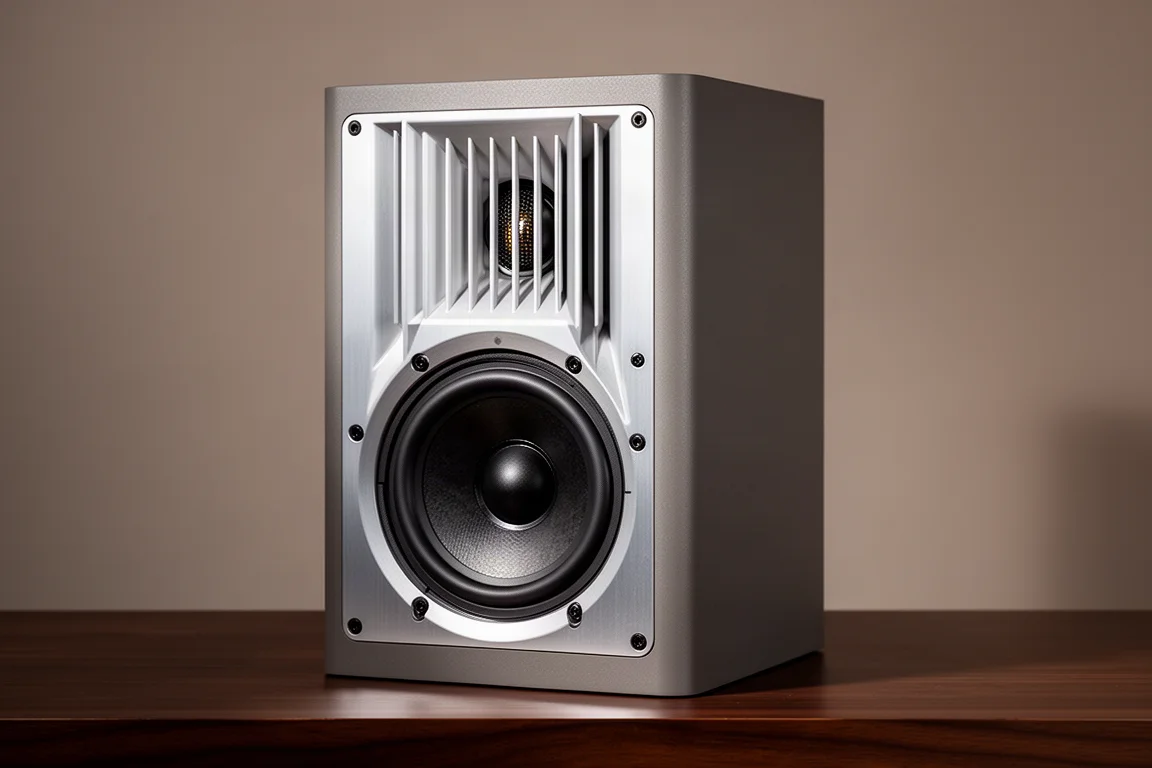
Both models use an air motion transformer tweeter, and the tweeters appear to be closely related, possibly differing only in size. The more consequential difference is the waveguide in front of the tweeter. The 6.2 uses a larger, differently shaped waveguide with fin-like elements that are there to shape the tweeter’s dispersion pattern. The 4.2’s waveguide is smaller and simpler.
That difference shows up in the measurements. The 6.2’s response rises from the mid-range toward the treble, roughly 3 dB up in the high frequencies relative to the mid-range, which is why it benefits from being toed in about 15 to 20 degrees. The 4.2 is more linear on axis, so it does not need that correction. It is designed to be aimed at the listener, or about 10 degrees away at each shoulder.
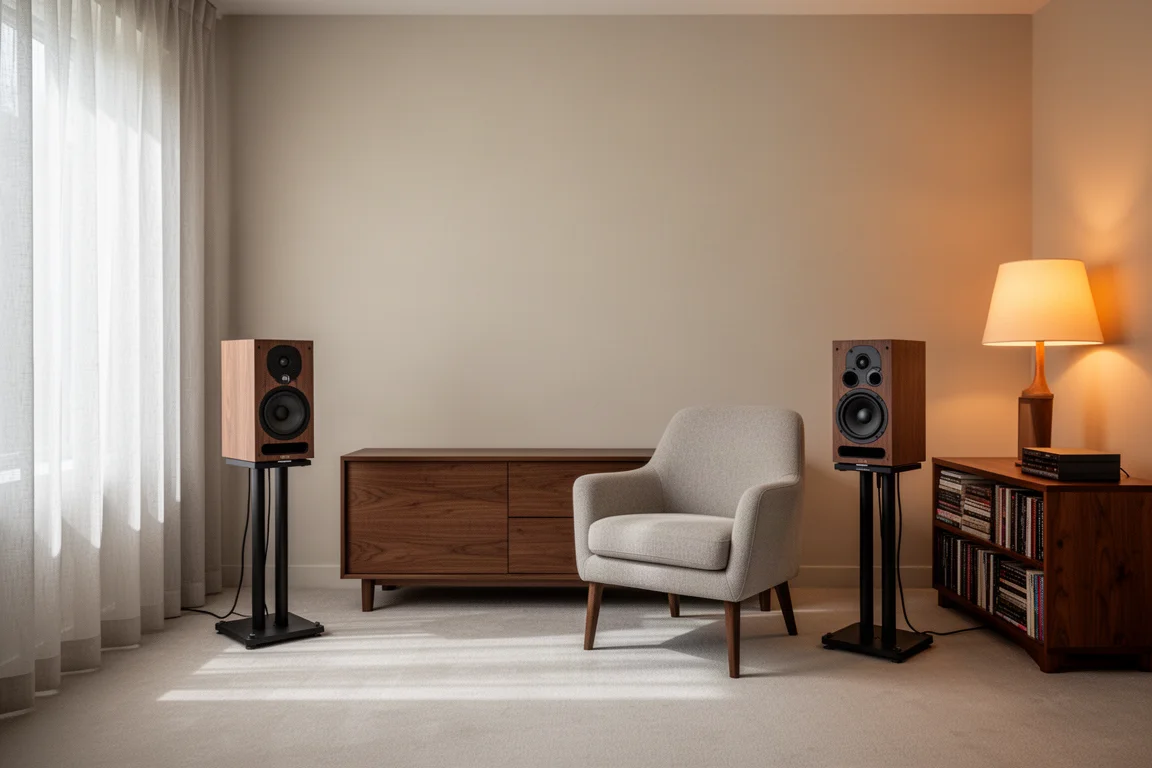
There is also a practical positioning point that follows from this. Put the 4.2 against a wall and fire it straight into the room and you lose a lot of high-frequency detail. Aimed properly, it keeps that detail and adds a wide, spacious presentation that is easy to live with in a small space.
Clarity 4.2: Design, Build, and Placement
Radiant Acoustics specifies an aluminium baffle, substantial internal damping and a lot of cabinet bracing for the 4.2, and the speaker feels accordingly solid in the hand. It pairs high-quality drivers and passive radiators with the AMT tweeter, and the construction quality is one of the clearest reasons the price sits where it does.
Bass extension is a headline figure. The 4.2 reaches an F3 of 44 Hz and an F10 of 35 Hz, with in-room extension around 40 Hz. For a cabinet this small, that is a real achievement, but it comes at a cost: sensitivity. The speaker is rated at about 78 dB and measures 78.4 dB at 2.83 volts at one metre, so it needs a capable amplifier. The manufacturer lists a recommended minimum of 60 W and a maximum of 200 W, and for a small to low-medium room around 100 W is a sensible target.
Placement rewards a little care. Aim the 4.2 directly at the listening position, or roughly 10 degrees off toward each shoulder, and avoid pushing it flat against a wall where it fires straight down the room.
Clarity 4.2: Sound Quality and Room Fit
Tonally, the 4.2 is neutral, and that is its strongest characteristic. Vocals, cymbals and saxophones all come through cleanly. Nothing jumps out and nothing sounds so recessed that it goes missing. On-axis response stays within about plus or minus 1.5 dB up to roughly 2 kHz before deviations appear further up the range.
Dispersion is generous. Horizontally the speaker holds a wide pattern, roughly plus or minus 70 degrees through the mid-range and on into the treble, which is what gives it that enveloping quality. Vertical tweeter dispersion of about plus 30 degrees and minus 20 degrees is also good for a two-way design, and it is achievable here because the small woofer keeps the distance between the woofer and tweeter centres short. A larger woofer would make that gap harder to manage.
The room matters. The 4.2 is designed for smaller spaces, with the aim of combining linearity, good off-axis behaviour and usable output in a room that does not demand high volumes. In a large open-plan living room at around 10 feet it ran into compression when pushed toward the mid to upper 80 dB range for a pair. Moved into a smaller room with more walls nearby, it sounded much more at home.
Clarity 4.2: Trade-Offs to Weigh
The nitpicks are worth knowing about. There is a subdued upper mid-range, and a dip in that region takes a little attack out of some material. A peak around 5 kHz can make the speaker sound edgy, and occasionally sibilance is more pronounced than it should be. Lower down, the bass is well extended and the impedance plot shows no resonant issues.
Dynamic range is the more significant limitation. At 86 dB the speaker is comfortable, and harmonic distortion at that level is very good. At 96 dB the woofer begins to give up some ground, distortion below about 200 Hz climbs, and multitone distortion rises above a 3 percent threshold. At 102 dB, output falls away sharply. Around 88 dB is a realistic average listening level. The low sensitivity and the deep bass extension for the cabinet size are directly linked: the speaker trades efficiency for low-frequency reach.
Clarity 6.2: Bigger Brother, Different Balance
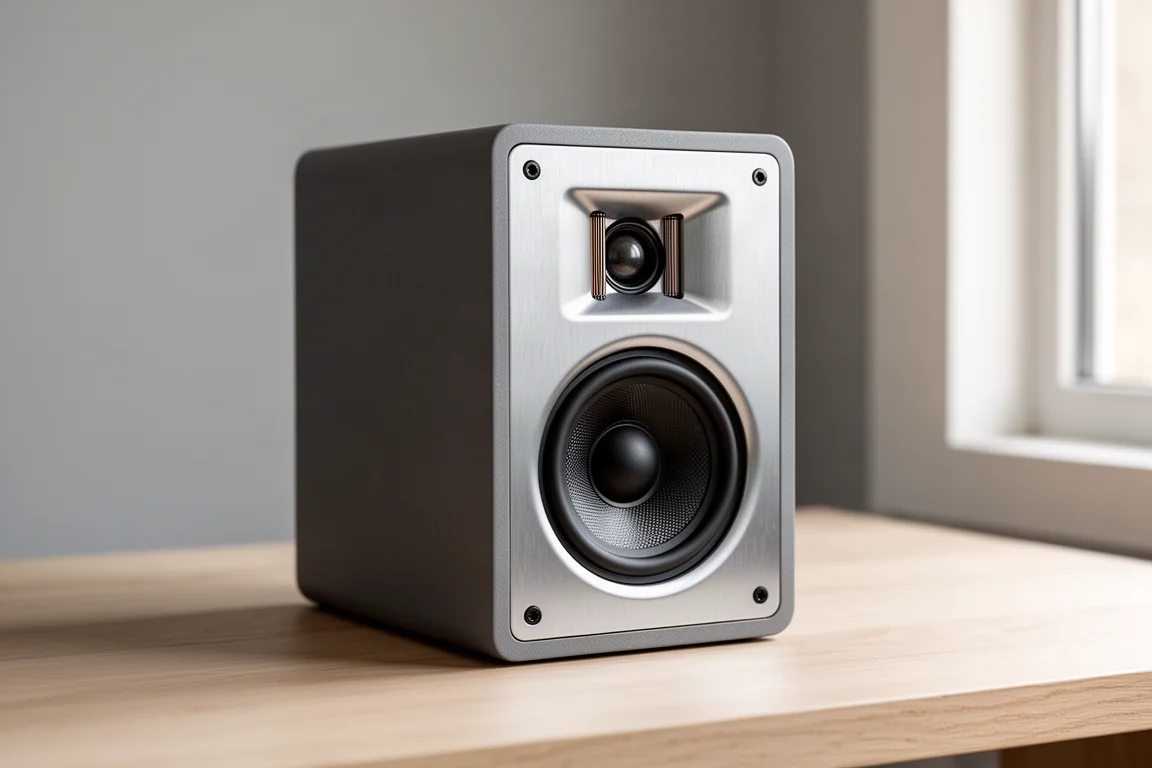
The 6.2 is the larger speaker, with the larger cabinet and the more elaborate waveguide. Its measured character is different in a way that changes how it should be set up. Rather than a flat on-axis response, the 6.2 rises from the mid-range into the high frequencies, by roughly 3 dB. Toe it in about 15 to 20 degrees and that rise is brought down at the listening position.
Its dispersion also behaves differently. The 6.2 narrows almost continuously across its range rather than holding a wide pattern, and the combination of that narrowing with the rising response is what produces a neutral result in a typical room. The 4.2 arrives at a neutral in-room result by a different route: a flat on-axis response plus a broader radiation pattern.
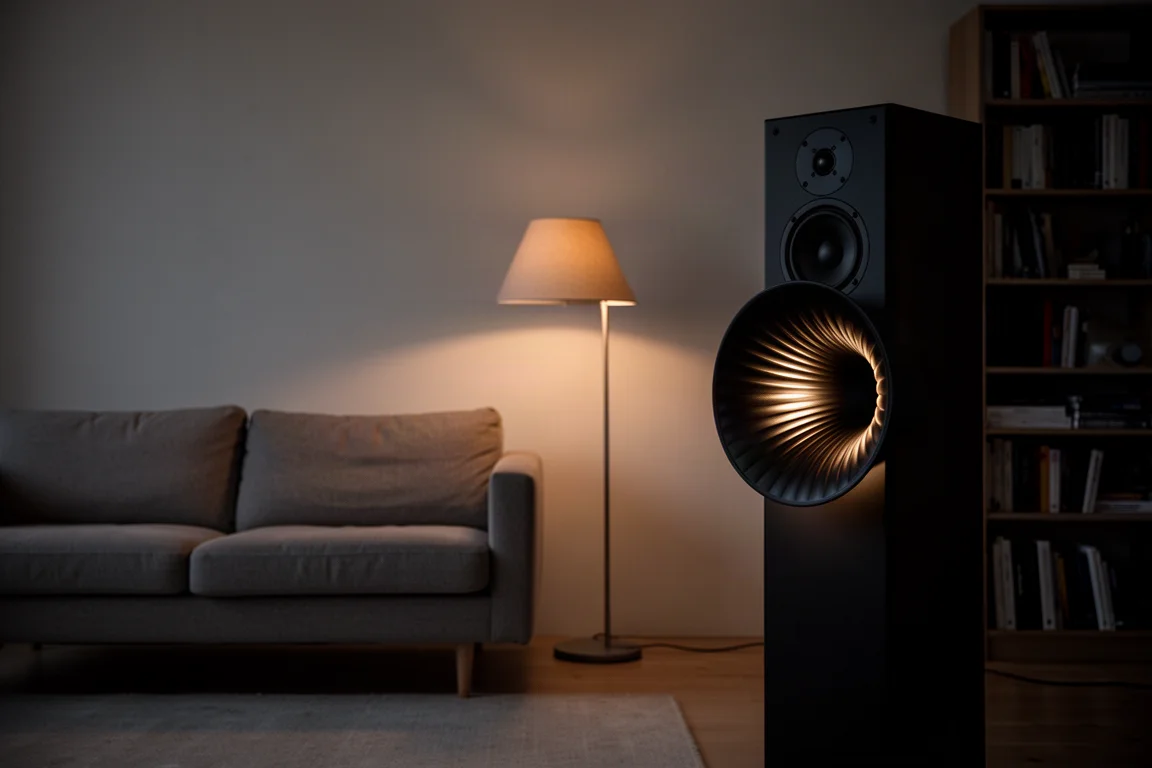
The practical consequence is tonal. Judged by the slope of their in-room trend lines, the 6.2 can reasonably be called the brighter of the two, and the 4.2 the darker one. Both descriptions are defensible, and which you prefer is a matter of taste rather than a defect in either speaker.
Clarity 6.2: Where It Pulls Ahead
Where the larger model clearly separates itself is headroom and distortion. The 6.2 offers more dynamic range and lower distortion than the 4.2, which matters if you listen at higher levels or in a bigger space. Its estimated in-room response also looks a little more linear in places, depending on which part of the range you look at.
The trade-offs run the other way in character. The 6.2 may come across as slightly more boxy, while the 4.2 can sound a touch less intelligible in dialogue and a little softer in upper mid-range attack. These are differences of voicing rather than quality, and they follow directly from the different dispersion and on-axis behaviour of the two designs.
Buying Advice: Matching the Speaker to Your Room
Choose the Clarity 4.2 if your listening room is small, if you sit reasonably close to the speakers, and if you want a neutral on-axis balance with a wide, enveloping presentation. Budget for an amplifier that can deliver around 100 W, and plan to aim the speakers at the listening position rather than flat against a wall. It is also the more affordable of the two at roughly $3,000 per pair.
Choose the Clarity 6.2 if you have more space, want more dynamic range and lower distortion, and are willing to spend time on positioning. Toe-in of about 15 to 20 degrees is not optional if you want the best balance from it. At around $4,500 per pair it costs meaningfully more, and the extra money buys headroom and output capability more than it buys a different overall character.
Either way, the decision hinges on room size and listening level more than on features. These are two speakers from the same family aimed at two different situations.
Conclusion
The Clarity 4.2 is a compact, very well-built bookshelf speaker with neutral tonality, wide dispersion and bass extension that belies its size, provided it is used in a small room with adequate amplification. The Clarity 6.2 costs more and delivers more headroom and lower distortion, with a voicing that needs toe-in to sound its best. Matching the speaker to the room is the single most useful thing a buyer can do here.
Further reading
Related Reviews
Bookshelf Speakers
Acoustic Energy A100 Mark II Review: A Compact Standmount With an Expansive Soundstage
The Acoustic Energy A100 Mark II brings clarity, natural tonality and a wide soundstage to an entry-level standmount, with a few setup details worth knowing first.
Bookshelf Speakers
Acoustic Energy AE-100 Mark II Review: Compact Bookshelf Speakers With Standout Imaging
A compact British two-way bookshelf speaker with deep, layered imaging, fast bass, and a slight treble lift to weigh against a crowded $500 field.
Bookshelf Speakers
Acoustic Energy AE100 MK2 Review: Measured Performance and Four Alternatives
A close look at the Acoustic Energy AE100 MK2 bookshelf speaker, what its measured performance reveals, and four alternatives with different trade-offs.