Bookshelf Speakers
Radiant Acoustics Clarity 4.2 Review: Deep Bass From a Mini Monitor
A compact two-way speaker with Purifi driver technology, a machined aluminium baffle, and genuinely deep bass for its size.
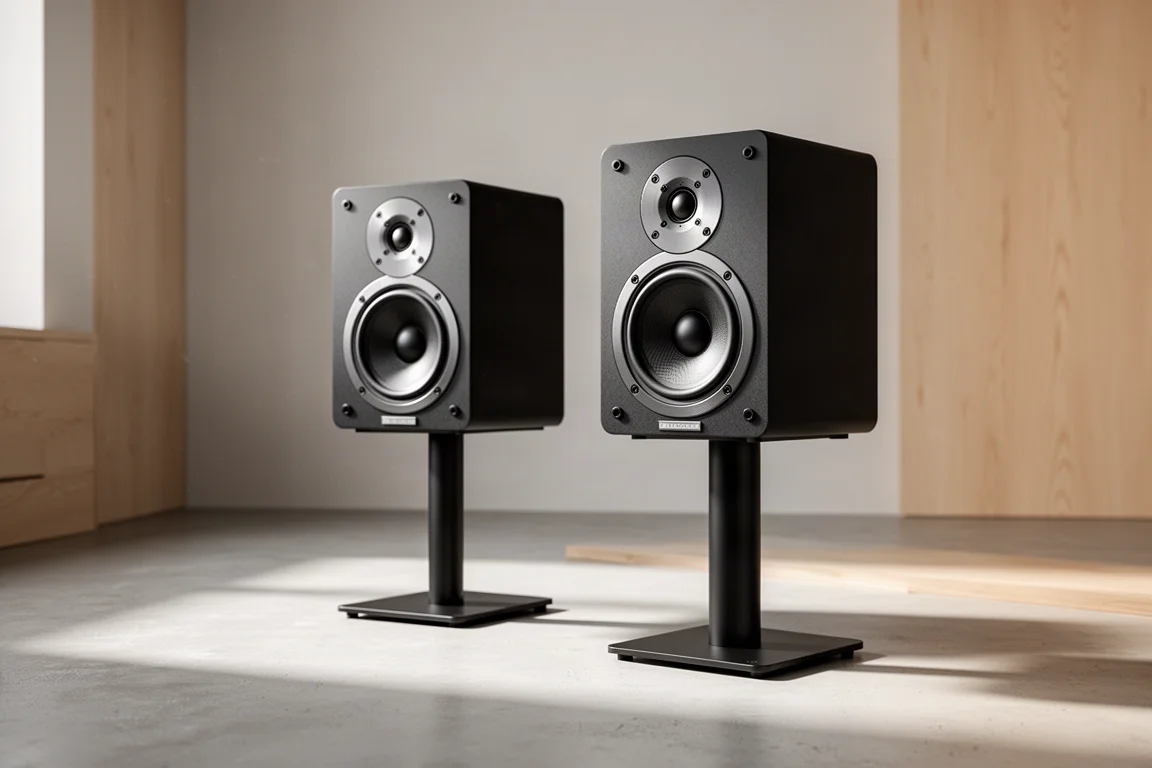
Introduction
Radiant Acoustics is a name that will be unfamiliar to many listeners, but the people behind it are not new to audio. Peter Lindorf sits at the heart of the project, and the wider group includes Purifi, the company whose Class D amplification modules appear in high-end products from brands such as NAD, and whose speaker drivers have earned several patents. Purifi’s transducer designs are said to carry around 30 significant changes over conventional drivers, and the practical result is that designers can build smaller speakers with clean, deep bass extension.
The Clarity 4.2 is a compact two-way mini monitor built around that driver technology. It comes from a collaboration between Purifi, Nordic Hi-Fi, which developed the project, and a logistics and retail partner. The aim was a pure interpretation of a Purifi-based speaker at a more competitive price than typical high-end designs using the same drivers.
At €2,598 per pair, the Clarity 4.2 sits below the larger Clarity 6.2, which retails for €3,998 per pair. Three finishes are available: matte black, matte white, and a real-wood walnut veneer.
Who This Product Is For
The Clarity 4.2 suits listeners in small to medium-sized rooms who want genuine low-frequency depth without a large cabinet. The combination of a Purifi midwoofer and side-mounted passive radiators lets the speaker reach down to 40 Hz at minus 3 dB while staying compact enough for a study, a modest living room, or the end of a desk.
It is also a strong candidate for anyone who values a wide, deep soundstage and precise placement of instruments. The background from which detail emerges is extremely quiet, and that low noise floor is a large part of what makes the imaging feel so open.
It is not intended for listeners who regularly play music above 85 dB. At high levels, dynamic compression becomes noticeable. At low and moderate volumes, however, it performs superbly, which makes it well suited to apartments and evening listening.
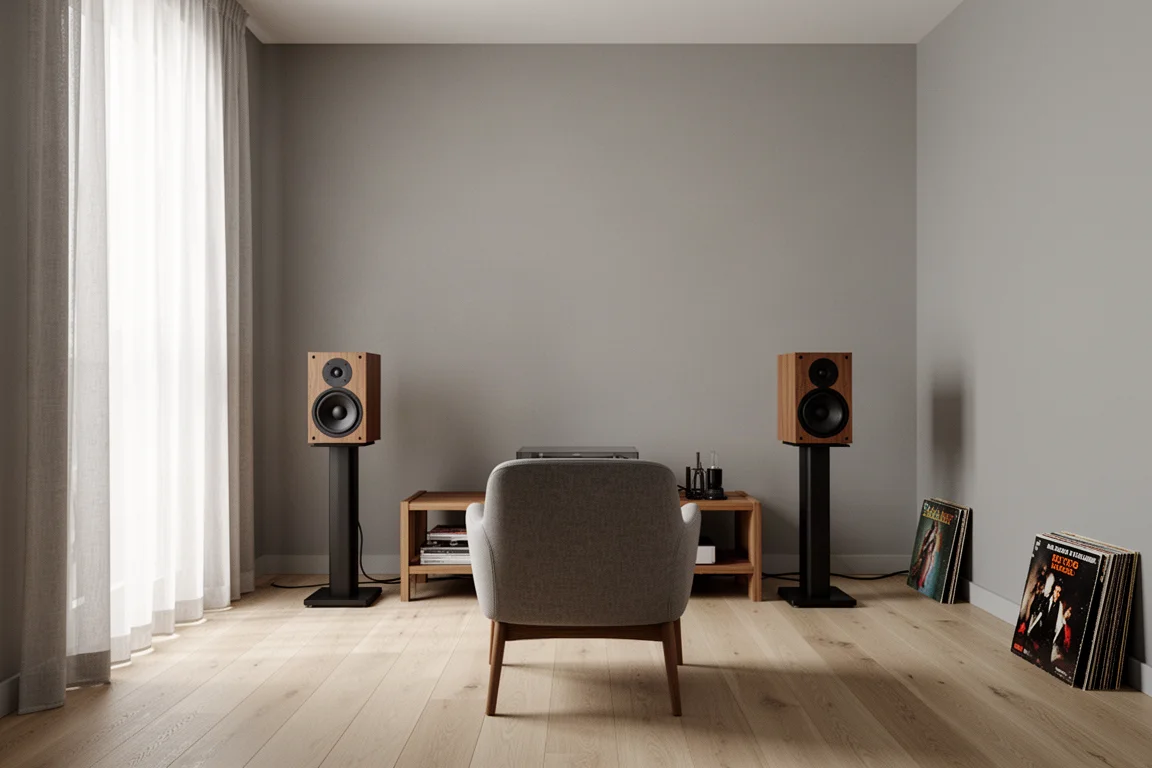
Those priorities point to a specific kind of buyer: someone who cares more about clarity, imaging, and honest bass extension than about raw output. If that describes your listening habits, the Clarity 4.2 is aimed squarely at you.
Design and Engineering Highlights
The cabinet measures 164 x 260 x 194 mm (6.5 x 10.2 x 7.6 in) and weighs 5.6 kg (12.3 lb), which is heavy for a speaker of this size. A 12 mm thick aluminium plate forms the front baffle, CNC machined from a single block to keep vibrations to a minimum. That is a more substantial and more expensive approach than the MDF fascias usually found at this price.
The tweeter is a custom air motion transformer with an unusually large diaphragm and a symmetrical dual-magnet configuration, rather than the single-magnet designs used in many AMT tweeters. Below it sits a Purifi 4-inch midwoofer, the driver responsible for the speaker’s surprising low-frequency reach.
Bass is supported by two identical Purifi passive radiators, one on each side. This arrangement allows a smaller cabinet than a conventional ported design and avoids port chuffing noises, although it is a more expensive solution to build. The crossover is set at 2,300 Hz and uses air-core inductors with thick-gauge wire to keep DC resistance low, along with polypropylene capacitors and low-inductance resistors. The cabinet is damped with Basotect open-cell foam, chosen specifically to reduce internal resonances.
At the rear there are two gold-plated binding posts. They accept banana plugs but not spade connectors, and they are flush mounted to help with placement close to a wall.
Bass Extension That Defies the Cabinet Size
A 10 cm (4 in) woofer reaching 40 Hz at minus 3 dB is unusual. Some compact speakers create the impression of bass by lifting the mid-bass region somewhere between 60 Hz and 100 Hz. The Clarity 4.2 does not take that route. Its bass is genuinely deep, clean, and linear, and it extends lower than several larger stand-mounted speakers with stated low-frequency points in the 50s.
Two design choices make this possible. The first is a long-excursion Purifi driver that maintains low harmonic and intermodulation distortion. The peaks and troughs on the surround, which look like a model of a mountain range, keep the radiating area stable as the cone moves. The strength of the magnetic field across the voice coil and its inductance also stay consistent regardless of driver position, which is difficult to achieve in a long-throw design but keeps behaviour predictable.
The second is the pair of side-mounted passive radiators. They add output at the bottom end without the turbulence and noise associated with a port, and they are the reason the cabinet can stay this small.
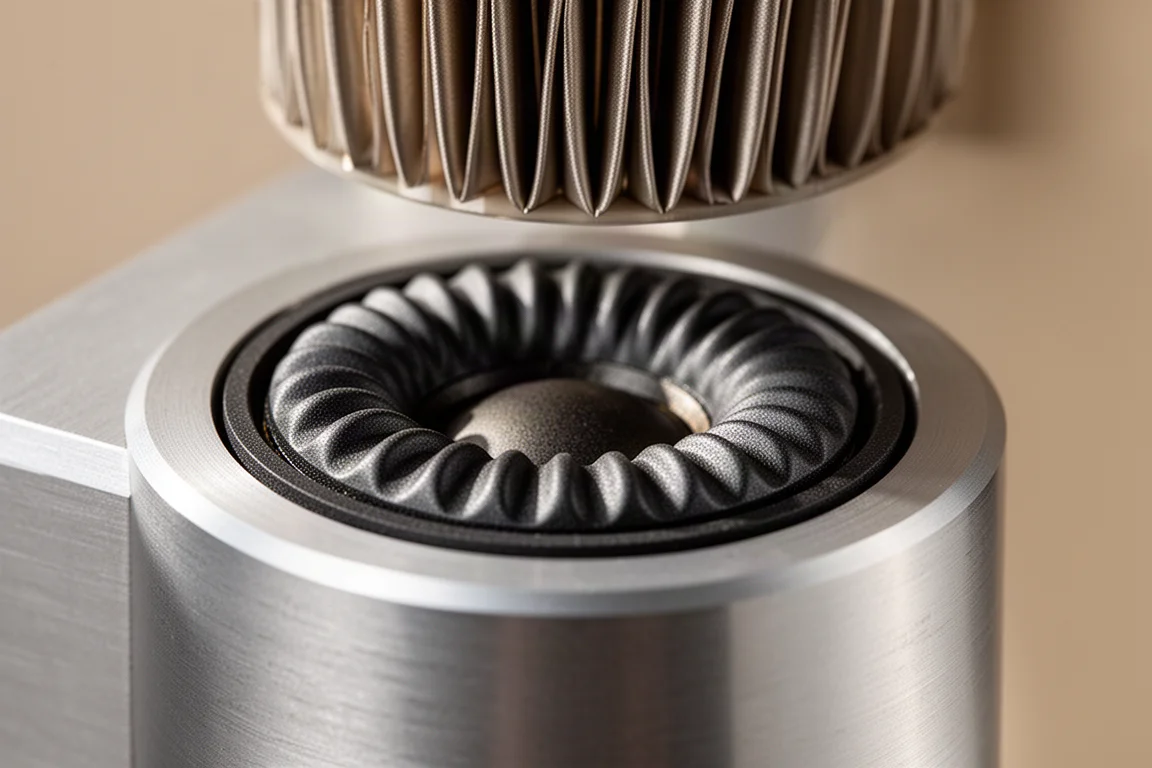
The result is bass that does not sound like a trick. Nothing in the presentation suggests a hidden subwoofer, and the low end stays composed rather than bloated. For a speaker of these dimensions, that is the headline achievement.
Soundstage, Imaging, and High Frequencies
The Clarity 4.2 has more to offer than low-frequency reach. Because the background is so quiet, the soundstage feels wonderfully wide and dramatically deep, with intricate imaging. In these respects it stands alongside the finest speakers at this level, including far more expensive designs with ribbon tweeters. The high frequencies are comparable in quality, with air and detail that belie the cabinet size.
The tonal character is warm and slightly laid back. There is a touch of thickness to the lower mid-range and a hint of reticence in the upper mid-range, which together give the speaker its fundamental personality. Performers are separated out unusually well for a small monitor, as though the speakers were physically larger than they are.
Comparisons are revealing. A compact stand-mounted design with a stated extension of 59 Hz offers more subtlety in the mid-range and a beautifully natural tone, but gives away a significant amount of bass extension. A larger stand mount with a stated 54 Hz low-frequency point still cannot match the Clarity 4.2 for depth, though its greater cabinet volume makes it dynamically superior and gives vocals more forward presence. Against a vintage two-way with excellent transient attack and natural timbre, the Clarity 4.2 wins on imaging, bass depth, and airiness up top.
The differences show up clearly with large-scale material. On a dense orchestral score, the separation between percussive, woodwind, and string elements is glorious. During loud crescendos, however, some dynamic compression becomes evident, which is the trade-off for the speaker’s compact dimensions and low sensitivity.
Things to Consider Before Buying
Sensitivity is rated at 81 dB, which is low, and the equivalent figure into an 8-ohm load is lower still. That number should not put anyone off on its own. Sensitivity only indicates how loud a speaker will play for a given wattage input. What places real demands on an amplifier’s power supply is the impedance curve, and here the Clarity 4.2 is unusually friendly. It is nominally rated at 4 ohms and dips only to a 3.6-ohm minimum, with no demanding swings.
As a practical guide, an amplifier rated at 50 W per channel into 8 ohms is a sensible minimum. A 75 W integrated drove the speakers admirably despite a modest power supply, and the low sensitivity simply meant turning the volume dial a little higher for the same listening level. A more powerful integrated improved instrument separation and bass control noticeably, and vintage monoblocks opened the soundstage further still, which shows the speakers scale well with better electronics.
This is a revealing speaker, so a very basic front end may hold it back. Positioning also matters. With an AMT tweeter, aligning the tweeters at ear height is more important than usual, and a conventional toe-in angle aimed at the listening position worked well. Nearfield use at a desk is plausible given the wide sweet spot and the closely spaced drivers, though proper isolation is advisable to keep the bass under control.
Anyone who wants to listen at very high levels should look elsewhere, because compression becomes a factor above 85 dB.
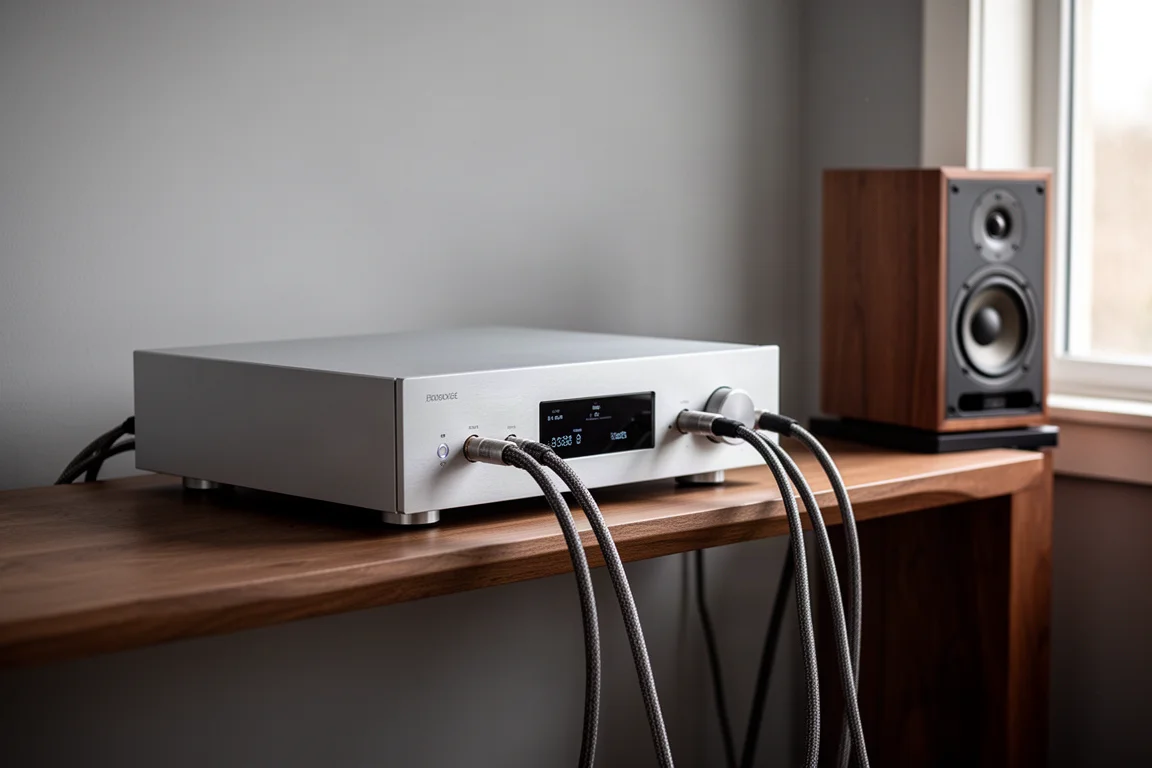
Budgeting is worth thinking through before committing. These speakers reward a reasonably capable amplifier and source, so the total system cost matters as much as the speaker price itself.
Positioning, Room Size, and System Matching
Room size is the first consideration. The Clarity 4.2 is ideal in small to medium-sized rooms, where its deep bass is a genuine advantage rather than something that overloads the space. In a larger room, expect the speakers to fill the space at moderate levels but not to deliver the scale of a floorstander.
Placement is conventional and forgiving. Aiming the tweeters at ear height and toeing the cabinets in towards the listening position produced the best results. Because the binding posts are flush mounted, the speakers can sit reasonably close to a wall without the rear connections getting in the way.
System matching is where the speaker’s honesty shows. It is transparent enough that improvements upstream are clearly audible, from the streaming transport and power supply through to the DAC. That is a compliment, but it also means a carefully chosen front end is part of the ownership experience rather than an afterthought.
Buying Advice
At €2,598 per pair, the Clarity 4.2 delivers technical merit rather than marketing gloss. The Purifi driver technology, the machined aluminium baffle, and the passive radiator design are real engineering decisions, and selling direct helps keep the cost down relative to comparable high-end designs.
Choose it if you want a high-performance speaker that is diminutive in size but not in sonic character, and if your listening happens at low to moderate volumes in a small or medium room. The warm, slightly laid-back balance suits long sessions, and the imaging and bass depth are the standout qualities.
Consider the larger Clarity 6.2 at €3,998 per pair if you want a bigger model in the range, or if your room and amplifier can support more output. Either way, this is a speaker that belongs on an audition list rather than a spec sheet comparison, because the numbers alone do not convey how it performs.
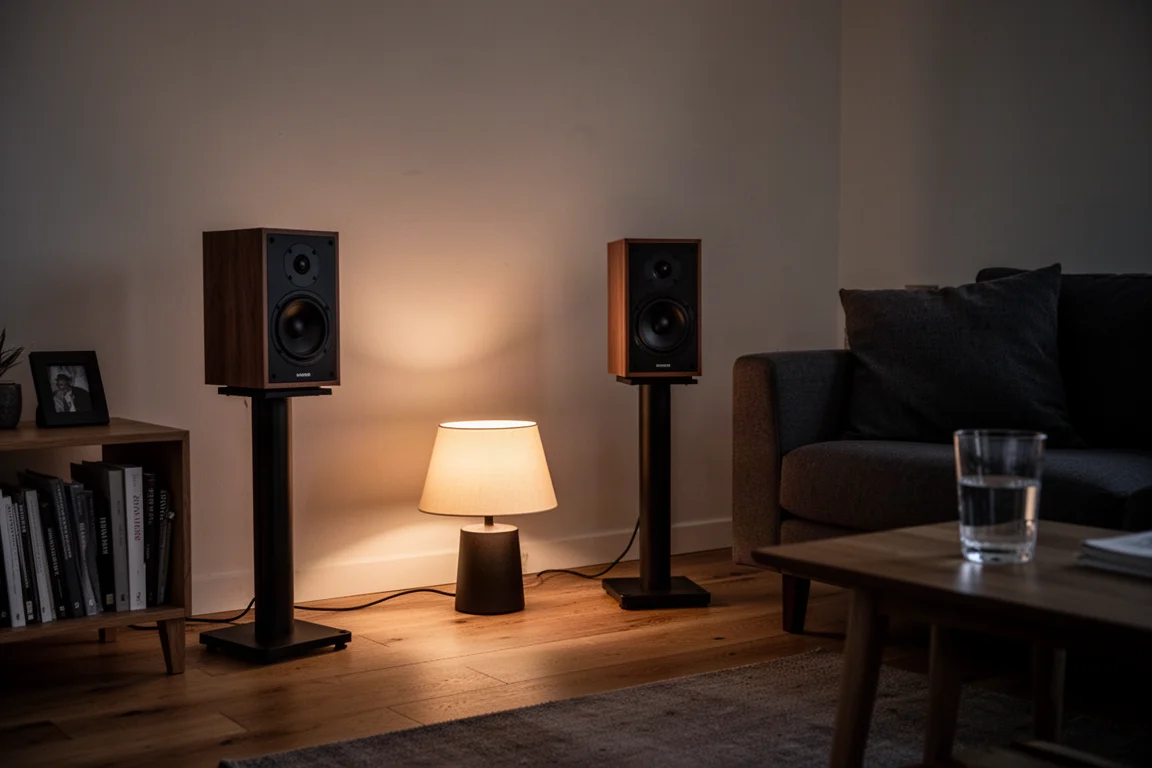
Pair it with an amplifier rated at 50 W per channel into 8 ohms or more, give it a little care over positioning, and it will reward the effort.
Conclusion
Radiant Acoustics set out to deliver the most authentic interpretation of a Purifi-based speaker to date, and the Clarity 4.2 supports that claim with genuine technical substance. Its bass extension is stupendous for the cabinet size, its high-frequency performance is exemplary, and it produces a large soundstage with some of the best stereo imagery available at this price.
The trade-offs are clear and worth accepting knowingly. Sensitivity is very low, though the flat impedance curve means wattage matters more than current. The speaker will not play ridiculously loud, and the lower mid-range could be a touch leaner while the upper mid-range could use slightly more presence. By any reasonable account, those are small criticisms.
For listeners who want a compact speaker for a small or medium room, with performance that belies its dimensions, the Clarity 4.2 deserves a place at the top of the audition list.
Product link
View more details for Radiant Acoustics Clarity 4.2
This product is mentioned in the review. Check the specifications, options, and compatibility before buying.
View more details for Radiant Acoustics Clarity 4.2Further reading
Related Reviews
Bookshelf Speakers
Acoustic Energy A100 Mark II Review: A Compact Standmount With an Expansive Soundstage
The Acoustic Energy A100 Mark II brings clarity, natural tonality and a wide soundstage to an entry-level standmount, with a few setup details worth knowing first.
Bookshelf Speakers
Acoustic Energy AE-100 Mark II Review: Compact Bookshelf Speakers With Standout Imaging
A compact British two-way bookshelf speaker with deep, layered imaging, fast bass, and a slight treble lift to weigh against a crowded $500 field.
Bookshelf Speakers
Acoustic Energy AE100 MK2 Review: Measured Performance and Four Alternatives
A close look at the Acoustic Energy AE100 MK2 bookshelf speaker, what its measured performance reveals, and four alternatives with different trade-offs.