Insulated Jackets
Rab Cirrus Ultra Review: Synthetic Warmth for Damp Conditions
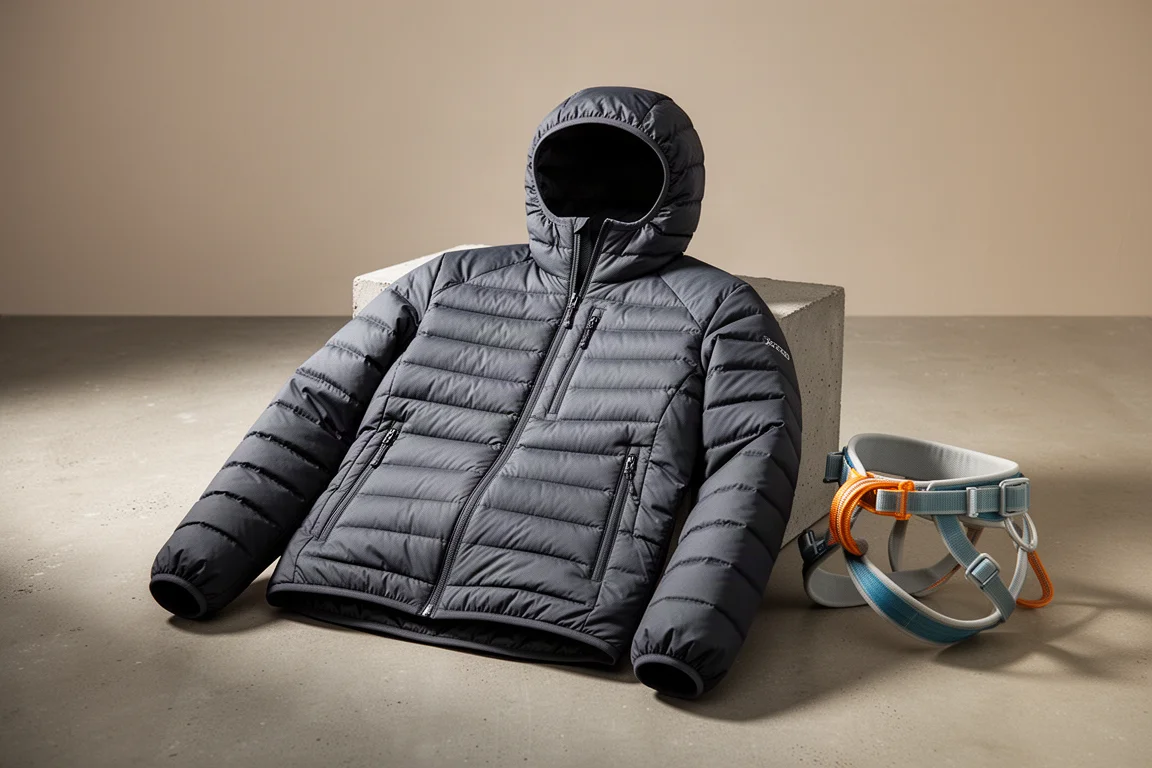
A practical look at the Rab Cirrus Ultra, a synthetic insulated jacket built around PrimaLoft ThermoPlume, a heat-reflective TILT lining and a Pertex Quantum Pro face fabric.
Introduction
Rab has spent decades building insulated layers, and the Cirrus name has become a familiar fixture in its synthetic range. The Cirrus Ultra is the newest step in that line, and it arrives with a very specific job: keeping you warm in the damp, changeable conditions where down insulation struggles to perform.
That distinction is worth understanding before anything else. Down offers remarkable warmth for its weight and compresses beautifully, but when the feathers get wet they clump, and clumped feathers stop lofting. Synthetic fibres handle moisture far better and hold their warmth even when damp. The Cirrus range has always used synthetic insulation, and the name itself refers to the cirrus cloud, a nod to the fluffy appearance of the fibres inside.

The Cirrus Ultra takes that idea considerably further. It uses a blown synthetic insulation designed to behave much more like down than the flat sheet fibres found in older synthetic jackets, and it adds a heat-reflective lining that changes how quickly the jacket feels warm. In the hand it reads like a down piece, but it carries none of down’s weather anxiety.
The result is a jacket that is easy to describe and harder to deliver well, so the sections below cover what it is actually built from, who it suits, and what is worth weighing up before you buy.
Who the Rab Cirrus Ultra Is For
This is an insulation piece first and foremost, aimed at people who spend time outdoors in cool, humid weather. Climbers and boulderers are an obvious fit, because it is a jacket you can drop on the ground, sit on, or stuff into a pack without the anxiety that comes with a down layer. Winter hillwalkers, lightweight walkers and bikepackers also make sense, since the jacket is built to pack down small and to keep working after it has been rained on or left in a damp tent.
Sizing is generous enough to be practical. At roughly 6 ft 4 in and around 95 kg, a large fits comfortably, and there is still room to squeeze a shell underneath if you want the jacket as a winter belay layer. It is worth trying one on if you can, because the fit is part of what makes the warmth work.
It is equally important to understand what the jacket is not. This is not a breathable active layer. It is designed to trap as much warm air as it can, which means that if you are marching uphill in it you may well overheat. It is better understood as the piece you put on when you stop, or when being warm matters more than moving fast.
Warmth, Insulation, and the TILT Lining
The most interesting part of the Cirrus Ultra is how the warmth is generated. Rab uses PrimaLoft ThermoPlume, a synthetic fibre that is blown rather than laid in a sheet. Stripped and broken up, it looks and behaves much like loose feathers floating inside the jacket. That is precisely why the jacket needs baffles: without the stitched chambers, the loose fill would migrate and settle.
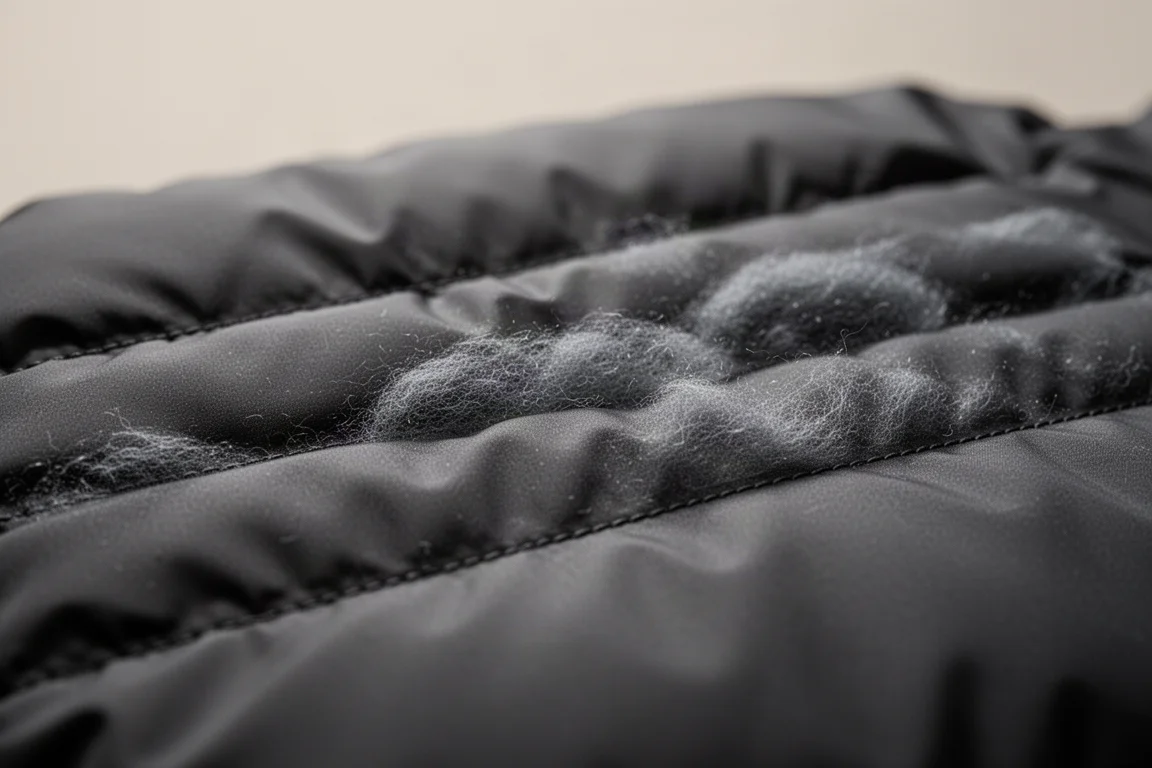
Rab did not stop at filling the whole jacket the same way. The core and body panels use the blown ThermoPlume fill, where maximum loft matters most. Under the arms and in the armpits, where the fabric is constantly squashed against itself, the jacket uses a sheet or strip fibre instead. That material copes better with repeated compression and with moisture moving around, which is a smart piece of mapping rather than a single-fill compromise.
The other headline element is Rab’s TILT lining, a thermo ionic lining technology that has appeared in several of the brand’s down jackets. It is a fabric with a reflective layer built in, and it works by radiating your own body heat back towards you. The practical effect is that the warmth arrives immediately. Rather than waiting for your body heat to fill the jacket before it feels cosy, the Cirrus Ultra feels warm the moment you put it on, and it keeps building from there. It adds almost nothing in weight, and a medium comes in at 548 g, which is impressive for the warmth on offer.
Face Fabric, Lining, and Weather Resistance
The face fabric is Pertex Quantum Pro, a very thin and very light material that is water resistant, wind resistant and highly packable. It is not fully waterproof, and that is a deliberate choice. A fully waterproof shell would be heavier, noisier and stiffer, and it would flatten the insulation rather than letting it loft.
That relationship between shell and fill is the key design decision here. The outer uses a 20 denier Quantum Pro, which is reasonably tough for its weight, while the inner lining drops to 10 denier. The lighter inner fabric is noticeably thinner, feels plush against the skin, and is less durable, though since it sits on the inside of the jacket that is a sensible trade. Together they balance durability, packability and weather resistance without compromising the loft that keeps you warm.
Features Worth Knowing About
The feature set is well thought through for people who carry packs and climb. There are two large hand warmer pockets and two chest pockets. The chest pockets are the more useful pair in practice, because they stay reachable when a rucksack or a bouldering pad is strapped across your waist and shoulders.
The left hand pocket is reversible, so the entire jacket can be stuffed into it and clipped to a harness. It works well when you have nothing else with you, though a separate stuff sack will compress the jacket smaller and is less likely to snag. The hood is helmet compatible, with tension pull cords at the front and a bungee adjuster at the back, so it pulls easily over a helmet and cinches snugly when you are not wearing one, turning with your head rather than blocking your view.
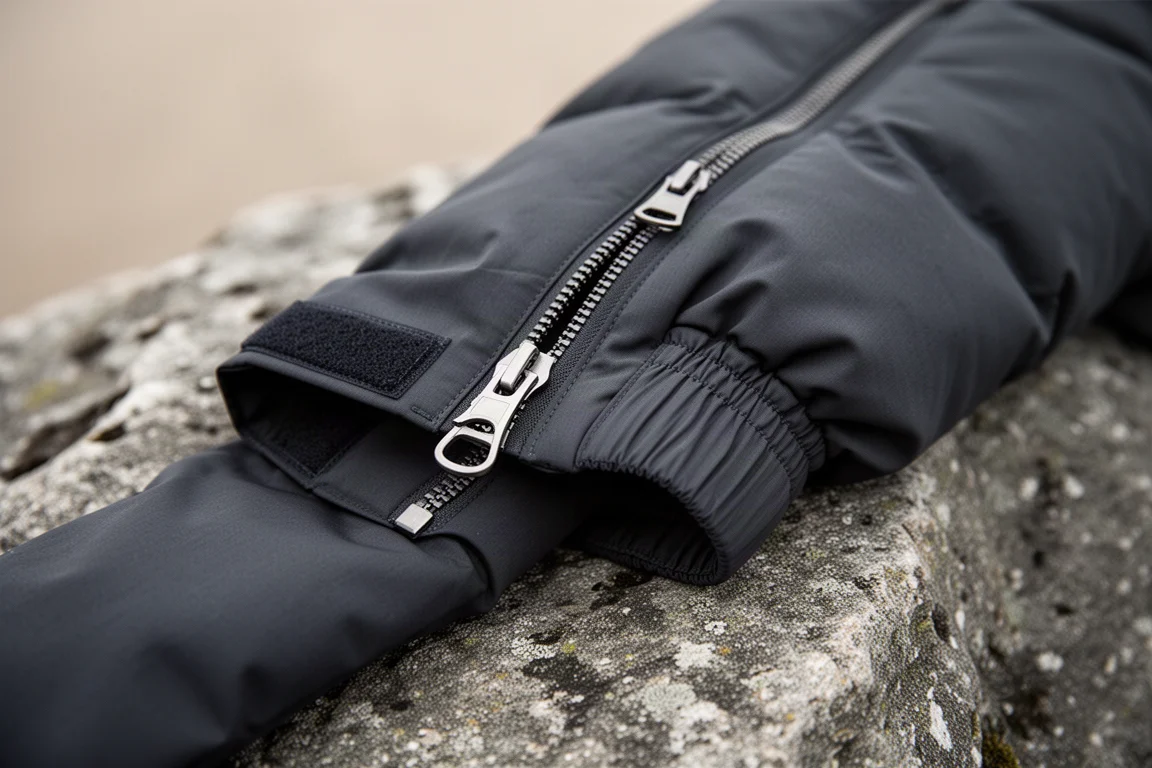
The main zip is a chunky two-way YKK unit, which is a welcome choice on a lightweight jacket where fiddly zips are often the first thing to fail. The teeth are built so that if one is damaged you can still bypass it and get the jacket closed when conditions are poor. The two-way design also lets you open the jacket from the bottom for access or to dump heat. Elasticated cuffs are folded back on themselves, which allows the insulation to run right to the end of the sleeve and keep your wrists warm.
Things to Consider Before Buying
The first thing to be honest about is breathability. The Cirrus Ultra is not trying to be a breathable jacket. It is trying to trap warm air, and it does that well, which means sustained hard effort in it will make you sweaty. Treat it as insulation for stops and cold conditions rather than a layer for moving fast.
The second is the weather protection. The Pertex Quantum Pro face fabric is water resistant and wind resistant, not waterproof. In steady rain you will still want a shell over the top. The payoff is a lighter, softer and more packable jacket that lets the insulation do its job.
The third is durability. The 10 denier inner lining is deliberately light, and the 20 denier outer is tough for its weight rather than genuinely burly. If you want a jacket to abuse against rock and pack straps for years, that is worth factoring in. Finally, on sustainability, the jacket is nearly completely recycled and PFC free, and Rab publishes a breakdown of recycled content and treatments so you can check the details yourself rather than taking a marketing line at face value.
Buying Advice
The Cirrus Ultra makes the most sense for people who ride, walk or climb in damp conditions and want a warm layer they do not have to baby. If you have ever hesitated to throw a down jacket on wet ground, or worried about a soggy pack on a long day out, this is exactly the gap it fills. It also packs down well enough for bikepacking and lightweight camping, where a warm layer at camp matters more than breathability on the move.
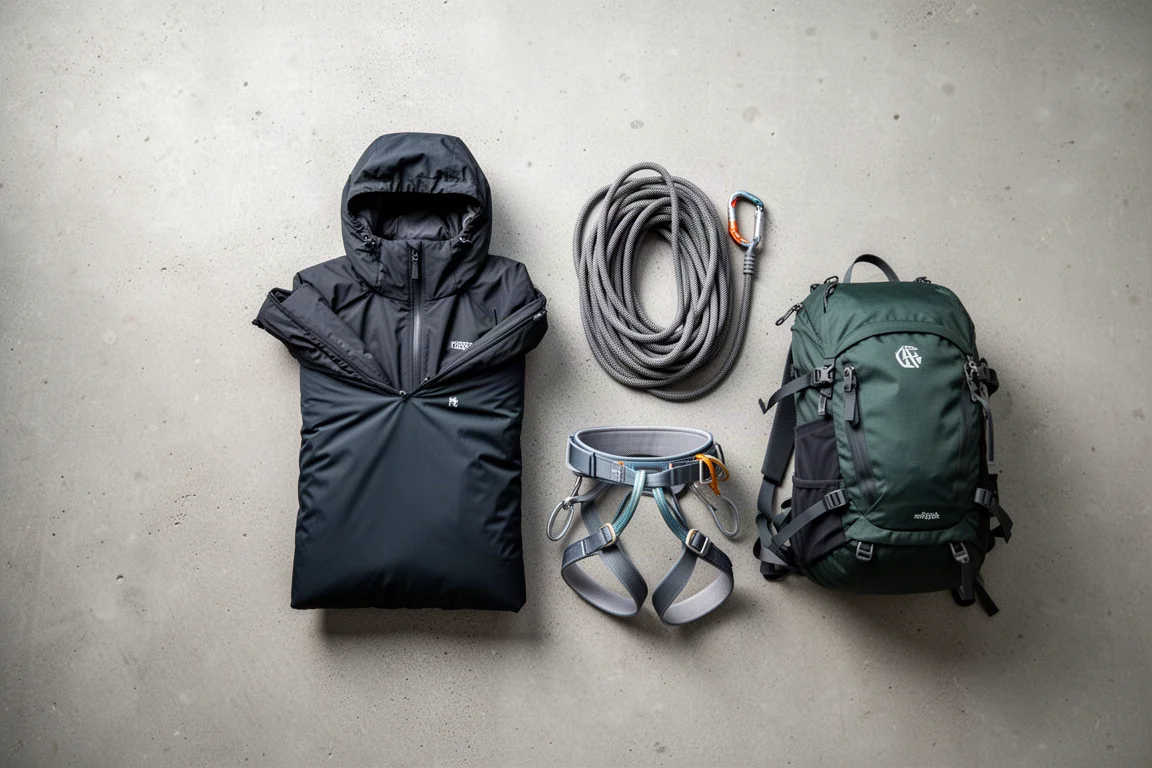
It is not pitched as a full-on winter climbing belay jacket, but it will handle winter use and packs smaller than many alternatives. If you already own a shell, a midlayer and a down jacket, the Cirrus Ultra is the piece that replaces the down jacket on wet days rather than duplicating it. If you mostly climb or walk in dry cold, a down layer may still give you more warmth for the weight. Try one on if you can, since fit and hood adjustment are central to how warm the jacket feels in practice.
Conclusion
The Rab Cirrus Ultra is a thoughtful answer to a very British problem. PrimaLoft ThermoPlume gives it the look and loft of down while keeping the moisture tolerance of synthetic fibre, and the TILT lining makes the warmth feel immediate rather than gradual. Add a helmet-compatible hood, a chunky two-way zip and a packable Pertex Quantum Pro shell, and you have a jacket that is easy to live with in real conditions.
It is not breathable, it is not fully waterproof, and it is not the lightest option on the market. For anyone who wants dependable warmth in damp weather without the careful handling a down jacket demands, those are reasonable trade-offs rather than flaws.
Product link
View more details for Rab Cirrus Ultra
This product is mentioned in the review. Check the specifications, options, and compatibility before buying.
View more details for Rab Cirrus UltraFurther reading
Related Reviews
Insulated Jackets
Aerogel vs Down Insulation: Two Aerogel Jackets Compared
Aerogel is the lightest solid on record, but two aerogel jackets measured against a comparable down jacket tell a more complicated story about warmth.
Insulated Jackets
Arc'teryx Atom LT vs Decathlon Trek 50: Does the Premium Synthetic Jacket Earn Its Price?
A side-by-side look at two synthetic insulated jackets at very different prices, covering fit, weight, insulation, features, and warranty.
Insulated Jackets
Big Agnes Shovelhead Jacket Review: Does Treated Down Stay Warm When Wet?
A close look at the Big Agnes Shovelhead jacket and its bluesign approved, PFAS-free DownTek insulation, including what happened when it was soaked twice in near-freezing conditions.