Insulated Jackets
Aerogel vs Down Insulation: Two Aerogel Jackets Compared
Aerogel is the lightest solid on record, but two aerogel jackets measured against a comparable down jacket tell a more complicated story about warmth.
Introduction
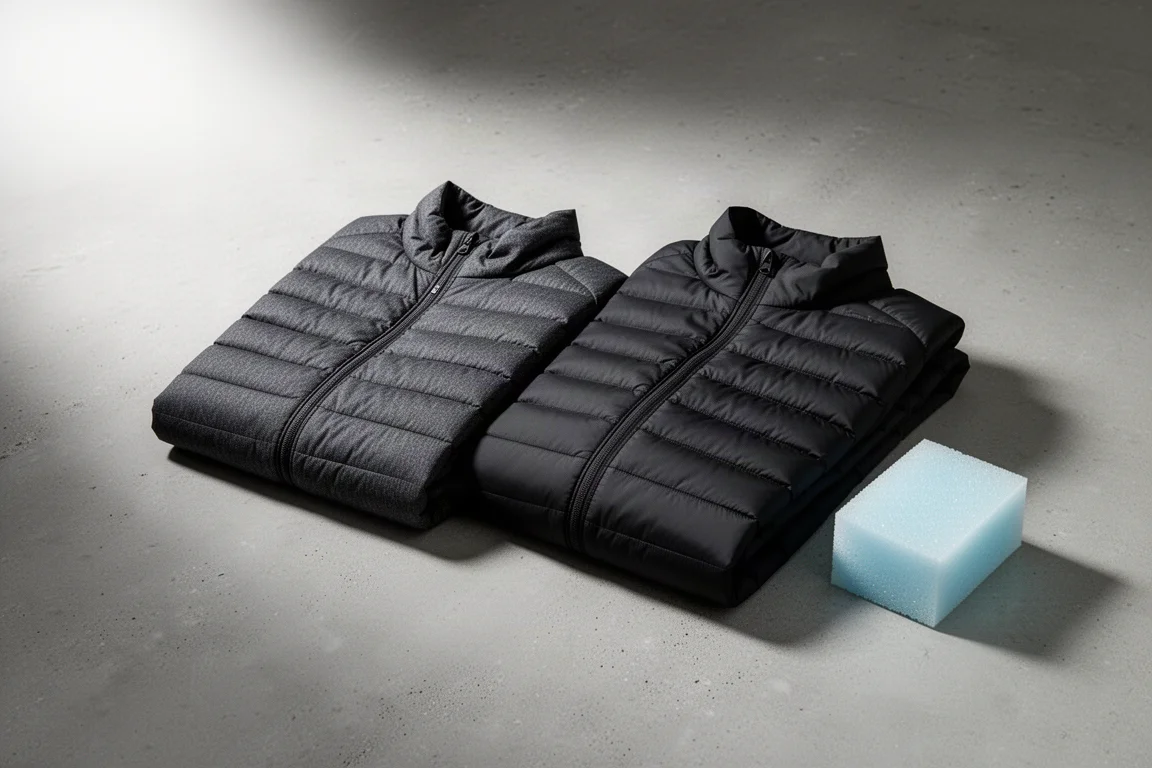
Aerogel holds the record as the lightest solid known, was developed to insulate equipment against the extreme cold of space, and can be made up of as much as 99% air. Down has long been the benchmark for warmth in a jacket: light, warm, and highly compressible. Two aerogel jackets now make a direct comparison possible, the PrimaLoft Crosscore and the Black Diamond Aerogel, and both can be measured against a down jacket of similar weight. The question worth answering is whether aerogel insulation actually delivers more warmth than down inside a real jacket.
How Aerogel Insulation Works
Down insulates by trapping small pockets of air. The more air it traps, the less heat escapes. Aerogel approaches the same problem from the opposite direction: rather than trapping air, it is largely made of air. The lowest density aerogels reach roughly 99% air, which is why the material is sometimes described as frozen smoke.
That structure makes aerogel an exceptional insulator in its pure form, but it is also extremely brittle, which rules it out as a jacket fill on its own. To make it wearable, PrimaLoft fuses aerogel fibers with an existing synthetic insulation to create Crosscore. PrimaLoft states that Crosscore is 11 to 52% warmer than existing insulations while remaining just as lightweight.
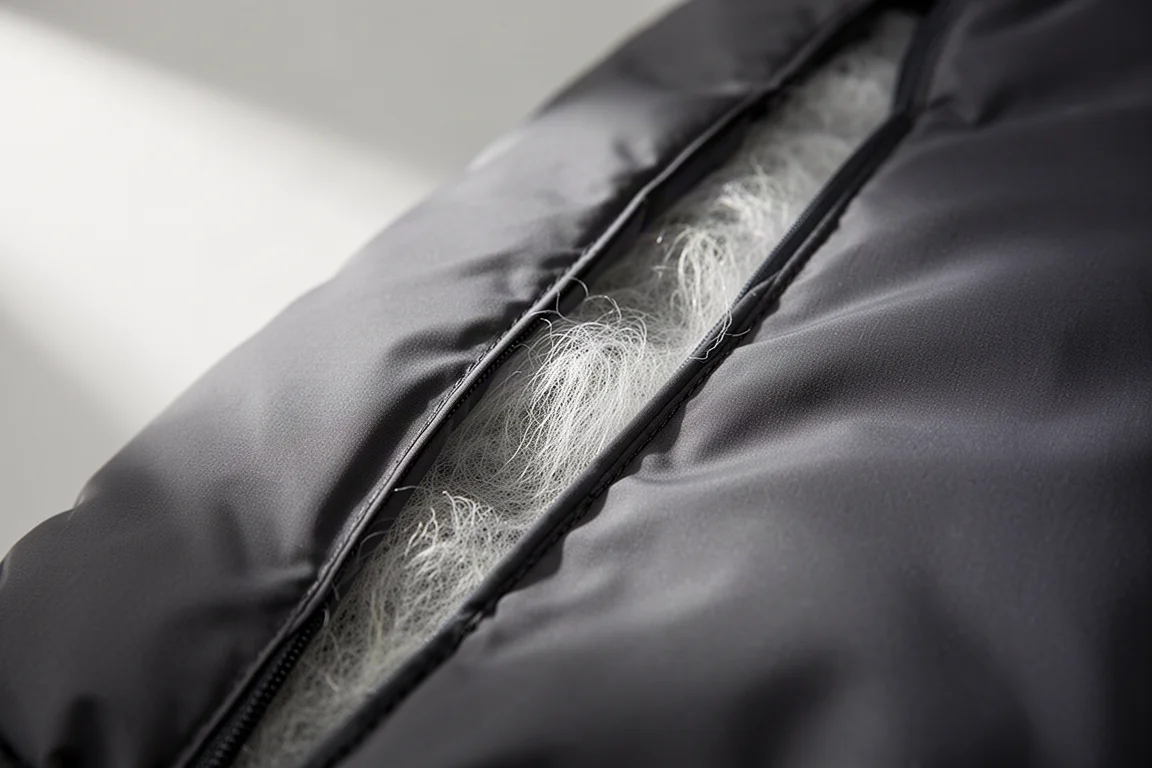
The claim is notable because it does not name the insulation it is measured against, which matters a great deal when the comparison is used to suggest an advantage over down.
How the Jackets Were Compared
The comparison started with weight. The lighter aerogel jacket came in at roughly 13.2 to 13.5 ounces, and a down jacket of nearly identical weight was chosen as the match. Both jackets contain shell fabric, stitching, and hardware as well as insulation, so the weights are not a perfect isolation of the fill, but they are close enough to make the insulation the dominant variable.
A stationary field test came first: 30 minutes in each jacket without moving, to see which felt warmer. That test proved inconclusive, so a more controlled setup followed. A mannequin was fitted with a heating pad strapped to the chest, connected to a thermostat holding a constant temperature and to a power meter recording the energy drawn. The mannequin then spent one hour in a freezer wearing each jacket in turn. The more energy the heating pad needed, the less effective the insulation.
PrimaLoft Crosscore: The Lighter Aerogel Option
The PrimaLoft Crosscore jacket is thin. Its profile sits closer to a light mid layer than to a bulky puffy, which makes the warmth claims worth scrutinising. In the freezer, the jacket drew 0.030 kWh and kept the heating pad running for 39 of the 60 minutes. The down jacket in the same setup drew 0.025 kWh and ran for 31 of 60 minutes. That works out to roughly an 18 to 22% difference in insulating power in favour of down.
In the stationary field test, the PrimaLoft jacket did feel warmer than a base layer alone, but the down jacket felt warmer overall. The result matters less as a verdict on aerogel than as a verdict on this construction: the aerogel is fused with a synthetic base, and that base shapes much of the performance.

For anyone who values a low-bulk layer for mild to cool conditions, the thin profile is a genuine advantage. It packs down small and layers easily under a shell, and the warmth it does provide arrives without adding bulk.
Black Diamond Aerogel Jacket: Heavier, Not Warmer
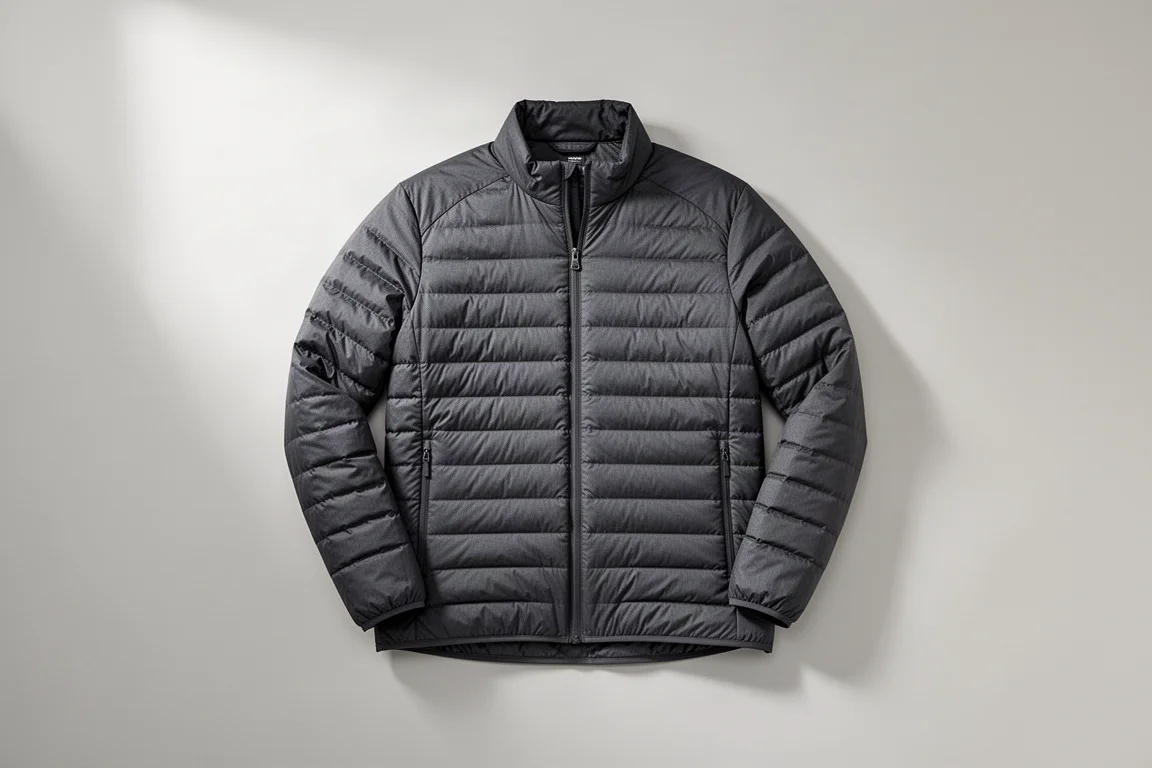
The Black Diamond Aerogel jacket weighs close to a pound, roughly 12% more than the down jacket used for comparison, which should give it an insulation advantage on paper. It did not. In the freezer it pulled 0.034 kWh and ran the heating pad for all but 10 of the 60 minutes, which makes it 30 to 43% worse at insulating than the down jacket despite the extra weight.
The pattern is consistent with the lighter aerogel jacket: adding aerogel to a synthetic base can raise performance against other synthetics, but it does not close the gap to down.
What the Numbers Say About Aerogel Versus Down
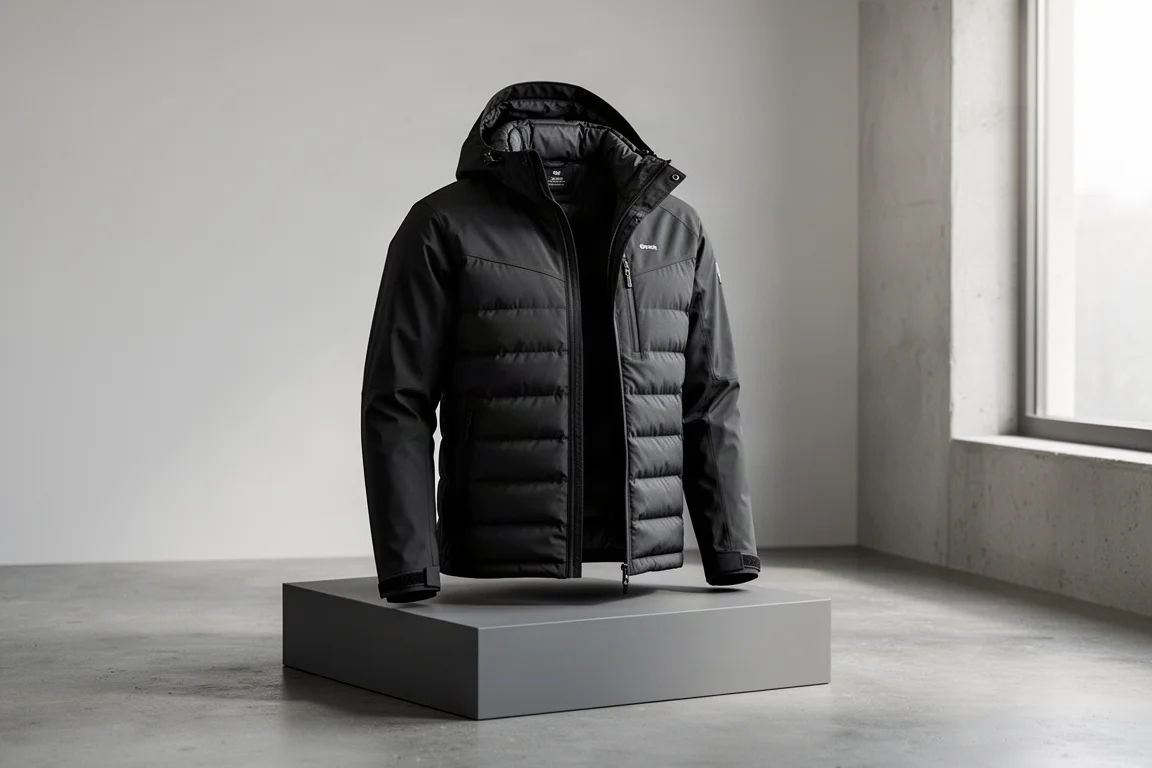
Pure aerogel may well be a better insulator than down. The problem is that it cannot be used on its own in a jacket, because the material is too brittle to flex and recover the way a garment needs to. Once it is fused with a synthetic insulation, the resulting fill inherits the limits of that synthetic base, and that base does not match down for warmth per unit of weight.
That also explains the PrimaLoft claim of 11 to 52% warmer. The comparison is most likely against other synthetic insulations rather than against down. Replacing part of a synthetic fill with an extremely light, highly insulating material would reasonably improve it over that baseline, and the claim holds up in that context.

The practical takeaway is that aerogel is not a shortcut past down for warmth. It is a way to get more warmth out of a synthetic fill.
Who Should Consider an Aerogel Jacket
Aerogel jackets make sense when low bulk and packability matter more than maximum warmth. The thin PrimaLoft Crosscore profile layers neatly under a shell, travels well, and suits cool conditions, commuting, and everyday use around town. The heavier Black Diamond option is a more substantial jacket, but it still trailed the down comparison on warmth, so its appeal rests on fit, features, and construction rather than on any insulation advantage.
For cold, static conditions where weight is not the deciding factor, a comparable down jacket remains the stronger choice on the evidence gathered here.
Buying Advice
Treat insulation claims as a starting point rather than a specification. A warmth percentage is only meaningful when the comparison baseline is stated, and for aerogel fills that baseline is usually another synthetic insulation rather than down.
Look at the whole jacket as well. Shell fabric, baffle design, hood, and fit all shape how warm a jacket feels in use, and the fill is only part of the picture. If the goal is a packable layer for cool weather and light travel, a thin aerogel jacket can be a sensible purchase. If the goal is maximum warmth for the weight, down is still the benchmark.
Price also deserves a mention. Aerogel jackets sit at a level where expectations run high, so it is worth being clear about which problem the jacket is solving before buying.
Conclusion
Aerogel is a remarkable material and genuinely the lightest solid on record, but the jackets built around it are constrained by the synthetic insulation it must be blended with. In this comparison, down delivered more warmth for the same weight, and the heavier aerogel jacket did not close the gap. PrimaLoft Crosscore and Black Diamond both offer thin, packable options that suit cool conditions well; neither displaces down as the warmest choice per ounce.
Further reading
Related Reviews
Insulated Jackets
Arc'teryx Atom LT vs Decathlon Trek 50: Does the Premium Synthetic Jacket Earn Its Price?
A side-by-side look at two synthetic insulated jackets at very different prices, covering fit, weight, insulation, features, and warranty.
Insulated Jackets
Big Agnes Shovelhead Jacket Review: Does Treated Down Stay Warm When Wet?
A close look at the Big Agnes Shovelhead jacket and its bluesign approved, PFAS-free DownTek insulation, including what happened when it was soaked twice in near-freezing conditions.
Insulated Jackets
Outdoor Research Super Strand LT Hoodie Review: Down-Like Warmth in a 10.9 Ounce Synthetic Jacket
A 10.9 ounce synthetic insulated hoodie that comes remarkably close to down for warmth, packability, and wet-weather performance, with a few minimal-feature trade-offs to know about first.