Insulated Jackets
Arc'teryx Atom LT vs Decathlon Trek 50: Does the Premium Synthetic Jacket Earn Its Price?
A side-by-side look at two synthetic insulated jackets at very different prices, covering fit, weight, insulation, features, and warranty.
Introduction
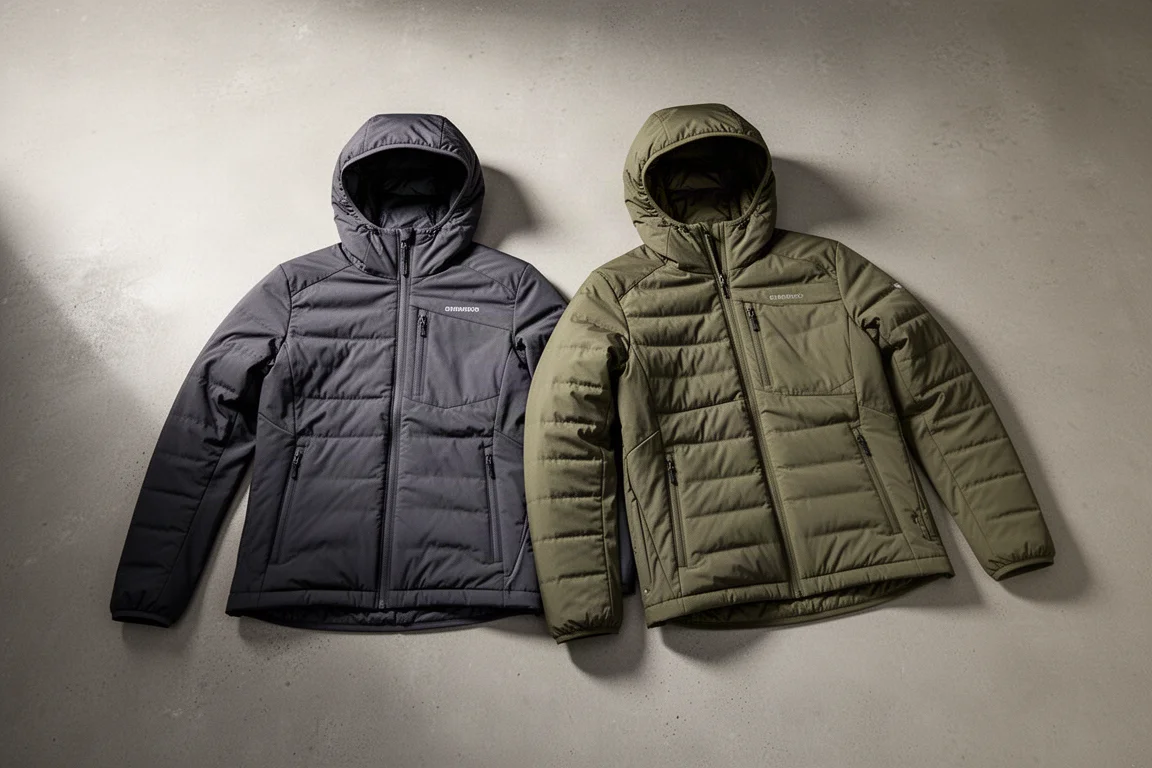
Synthetic insulated jackets have a practical advantage over down: they keep working in damp, humid conditions and they handle the sweat of active use without collapsing. Two jackets sit at opposite ends of that market. The Arc’teryx Atom LT is one of the most popular insulated jackets around, built as a piece of active insulation for hiking, skiing, and everyday wear. The Decathlon Trek 50 is a synthetic jacket that costs roughly a tenth as much.

On paper, the two are surprisingly similar. Both use synthetic fill, both have a DWR treatment on the shell, and both are designed to be worn while you are moving rather than only while you are standing around. The real question is whether the Atom LT’s lighter build, extra features, and longer warranty justify the price gap, or whether the Trek 50 simply delivers most of the function for far less.
Fit, Sizing, and Weight Compared
Both jackets were tested in size large, and both fit a 5’10”, 185 pound frame well. The difference is in the silhouette. The Trek 50 is a little boxier, while the Atom LT uses a more athletic cut that sits closer to the body. If you prefer a trimmer, more precise fit, the Atom LT has the edge.
Weight is the other obvious gap. The Atom LT weighs 12.2 ounces, while the Trek 50 weighs 17.6 ounces. That roughly five-ounce difference comes down to the materials each jacket uses, and it is the kind of gap you notice when a jacket is packed down small or worn under a shell.
Arc’teryx Atom LT: Design and Features
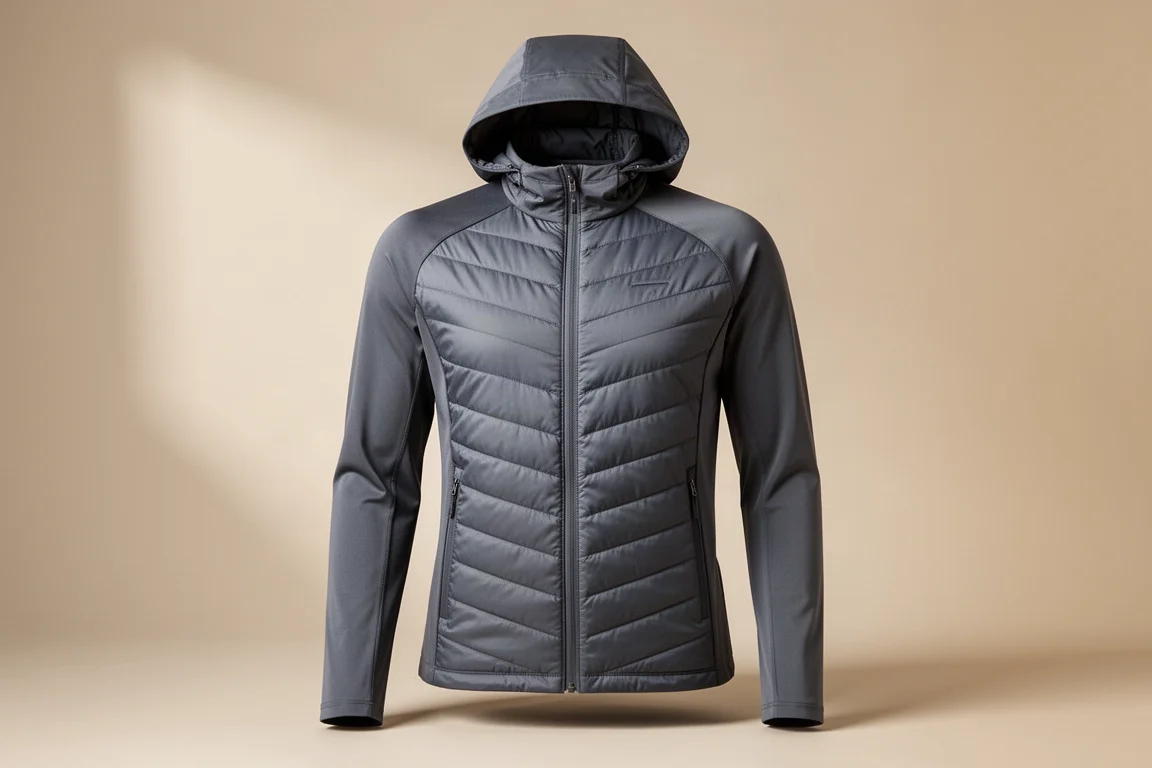
The Atom LT uses 60 grams per square meter of polyester Coreloft insulation paired with a 20 denier nylon shell. That combination keeps the jacket light and packable while still providing usable warmth for active pursuits.
Feature-wise, it is the more complete jacket. There are two zippered hand pockets and a chest pocket sized for a phone, which is genuinely convenient on the move. The shell carries a DWR treatment that sheds light rain and drizzle, and because the fill is synthetic, the jacket still performs reasonably if it does get wet. It is available in both hooded and non-hooded versions, and it is covered by a lifetime warranty. The nylon shell also resists odor buildup better than polyester, which matters on multi-day trips and high-output days.

In practice, the Atom LT works well across hiking, skiing, snowshoeing, and casual town use. Its lighter weight and closer cut make it the more versatile of the two when it is worn as a midlayer under a shell.
Decathlon Trek 50: Design and Features
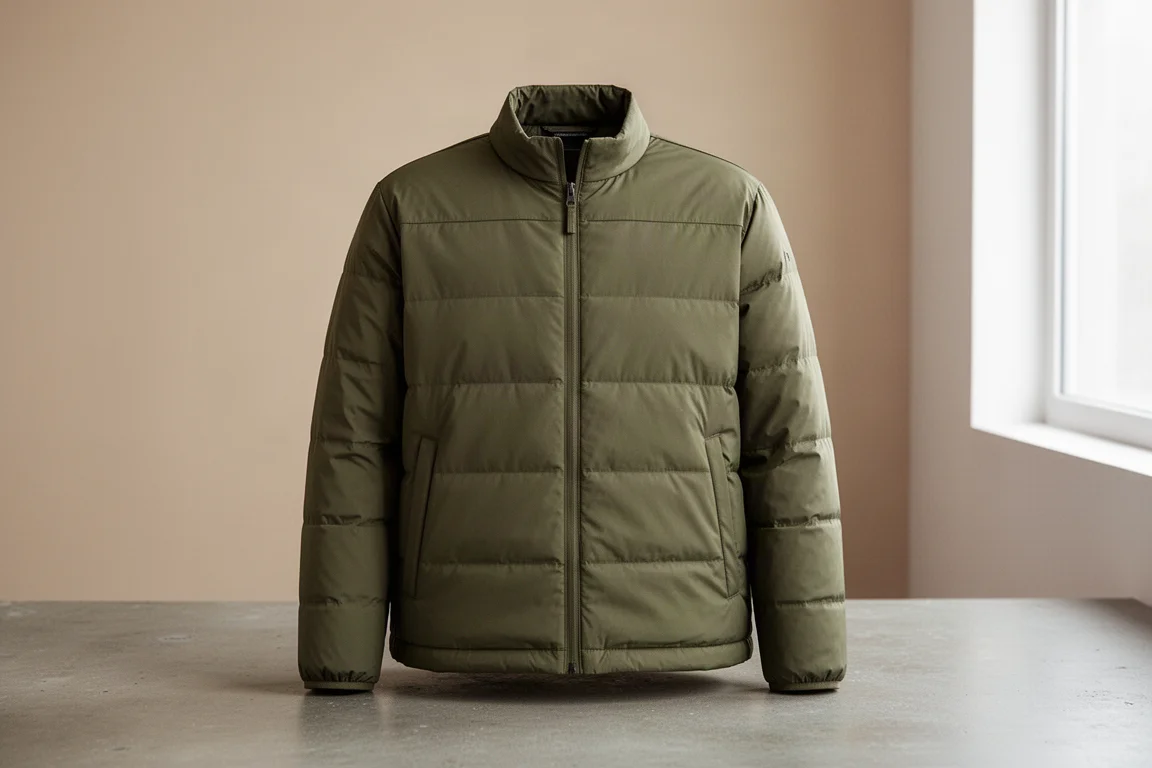
The Trek 50 is the simpler proposition, and it is priced accordingly. It comes in a non-hooded version only. Insulation is 60 grams per square meter in the sleeves but a warmer 100 grams per square meter through the body, and the fill uses 90 percent recycled polyester fibers.
The shell is polyester, likely in the 20 to 30 denier range, and it also carries a DWR treatment, so a light drizzle will bead off rather than soak straight through. There are two hand pockets, but no chest pocket. Warranty coverage is one year, which is a meaningful difference if you plan to keep the jacket for a long time.
The main trade-off beyond weight is odor. Because the shell is polyester, it holds onto smells more than the nylon shell of the Atom LT, which becomes noticeable after repeated high-sweat use on hikes, ski days, and snowshoe trips.
Insulation, Shell, and Warmth Compared
Look at the numbers and the Trek 50 is actually the warmer jacket. Its 100 gram body insulation is heavier than the Atom LT’s uniform 60 gram fill, and the extra fill is the main reason it weighs more. In cold, static conditions the Trek 50 has the advantage.
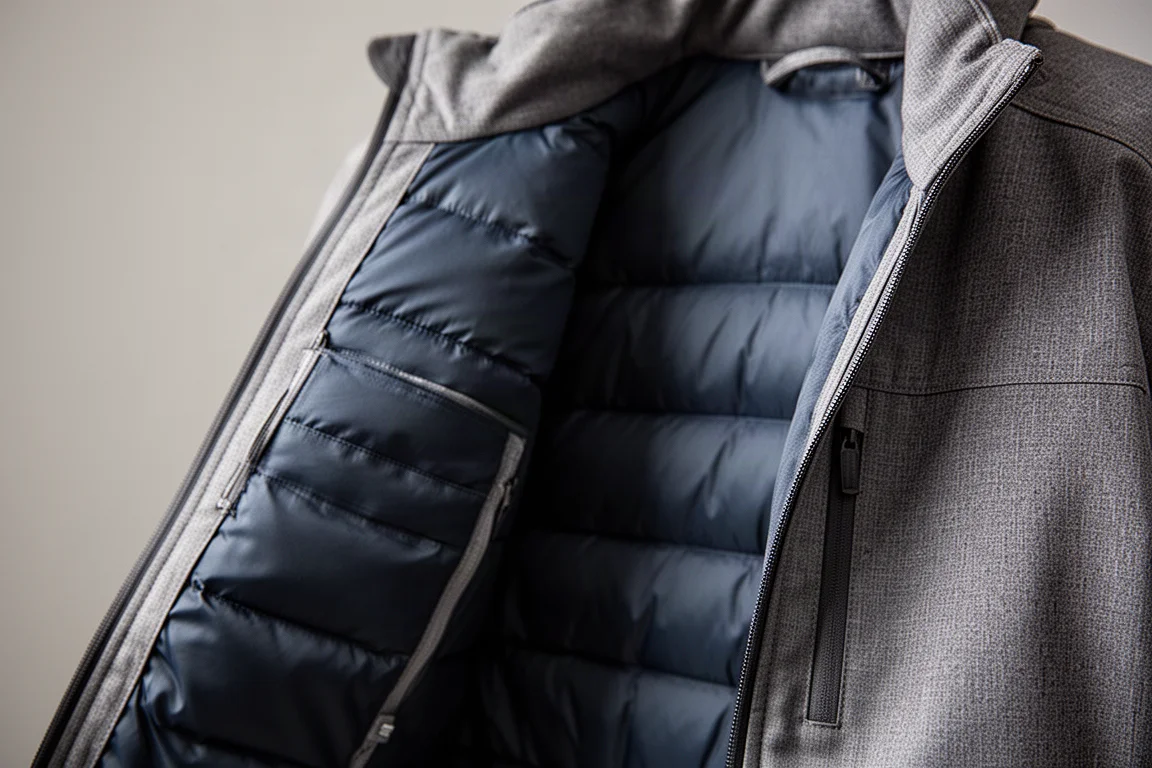
The shell materials pull in the other direction. Nylon, used on the Atom LT, tends to resist odor more effectively than the polyester shell of the Trek 50. The Atom LT’s lighter construction also makes it easier to layer and easier to carry, which is why it feels more at home during aerobic activity where you are generating your own heat.
Functionally, though, the two jackets perform similarly across hiking, skiing, snowshoeing, and everyday wear. The differences come down to weight, warmth, and a handful of features rather than any dramatic gap in how they work.
Pocket Layout and Everyday Features
Pockets are one of the clearest practical separations. The Atom LT gives you two zippered hand pockets plus a chest pocket that comfortably holds a phone, which is a genuinely useful feature for anyone who wants quick access without unzipping a pack. The Trek 50 keeps it simple with two hand pockets and nothing in the chest.
Both jackets include a DWR finish on the shell, so both will handle a brief shower better than a down jacket would. Neither is a rain shell, but neither will fail immediately if the weather turns.
Buying Advice: Which Jacket Makes Sense
If the decision comes down to pure value, the Trek 50 is hard to argue with. At $25 it is a genuinely affordable synthetic insulated jacket that is warmer in the body than the Atom LT, carries the same style of DWR finish, and handles the same range of activities. The features it omits are not ones most people notice missing in daily use.
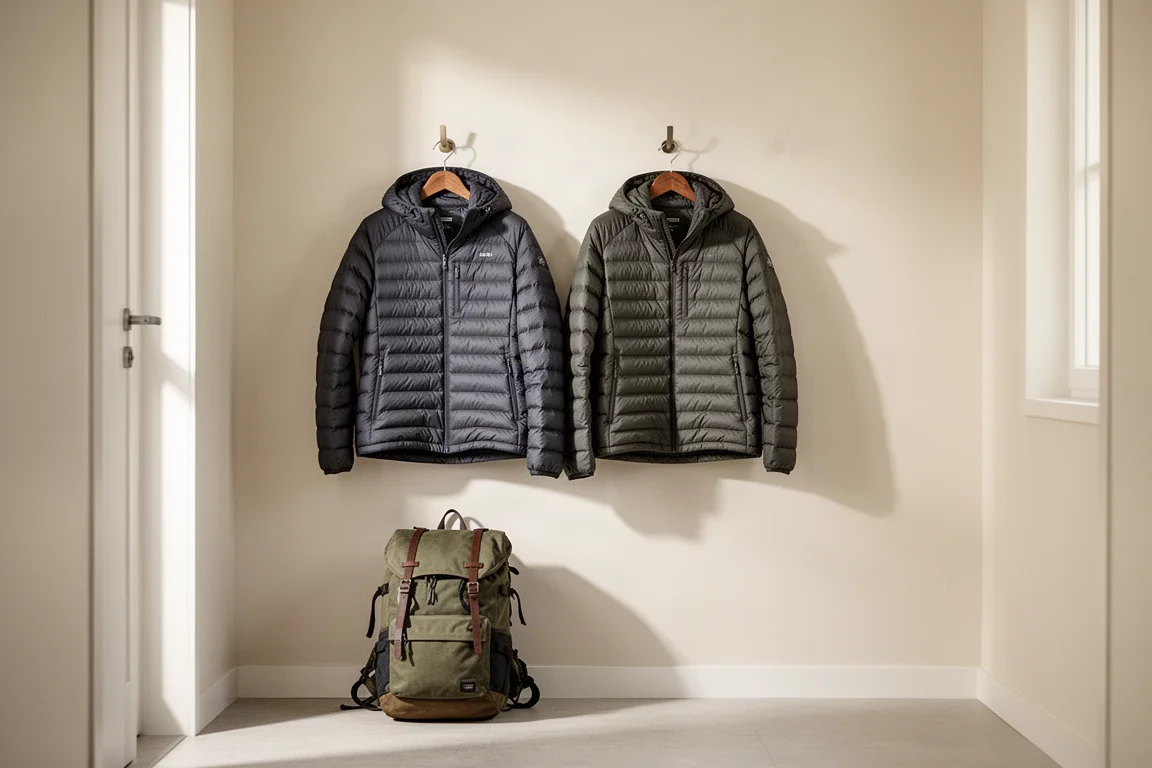
The case for the Atom LT rests on specific priorities. Choose it if you need a hood, since the Trek 50 does not offer one. Choose it if you want a more precise athletic fit, a lighter jacket for layering, a chest pocket, better odor resistance from the nylon shell, or a lifetime warranty instead of a one-year one. Those are real advantages, and for frequent users they can justify the $240 price of the non-hooded version.
Choose the Trek 50 if budget matters most, if you want a warmer body insulation for colder standing-around conditions, or if you simply want a capable synthetic jacket without spending much. It is not the more refined jacket, but it covers the essentials.
Conclusion
These two jackets are less far apart in function than their prices suggest. The Decathlon Trek 50 delivers warmth, a DWR-treated shell, and two hand pockets for $25. The Arc’teryx Atom LT costs $240 in its non-hooded form and returns a lighter build, an athletic cut, a chest pocket, a hood option, better odor resistance, and a lifetime warranty.
If those specific qualities matter to you, the Atom LT is the more polished jacket. If they do not, the Trek 50 is the straightforward value pick.
Further reading
Related Reviews
Insulated Jackets
Aerogel vs Down Insulation: Two Aerogel Jackets Compared
Aerogel is the lightest solid on record, but two aerogel jackets measured against a comparable down jacket tell a more complicated story about warmth.
Insulated Jackets
Big Agnes Shovelhead Jacket Review: Does Treated Down Stay Warm When Wet?
A close look at the Big Agnes Shovelhead jacket and its bluesign approved, PFAS-free DownTek insulation, including what happened when it was soaked twice in near-freezing conditions.
Insulated Jackets
Outdoor Research Super Strand LT Hoodie Review: Down-Like Warmth in a 10.9 Ounce Synthetic Jacket
A 10.9 ounce synthetic insulated hoodie that comes remarkably close to down for warmth, packability, and wet-weather performance, with a few minimal-feature trade-offs to know about first.