Hi-Fi Amplifiers
Quad Platina Review: A Flagship Integrated Amplifier Worth the Investment
The Quad Platina is a full-width flagship integrated amplifier with a dual mono power stage, a built-in DAC and phono stages, and a warm, controlled presentation. Here is what to know before buying.
Introduction
Quad occupies a particular place in British hi-fi history. Peter Walker founded the company and helped shape the industry, with his earliest amplifiers finding their way into respected studios in the 1940s and 1950s, including the BBC. The Quad II, launched in 1953, stayed in production for 18 years and sold close to 140,000 units, helped by vanishingly low harmonic distortion from its cathode coupled output transformer design. In 1956 the company presented the world’s first full-range electrostatic speakers, a benchmark for clarity as high-end audio was emerging. Then, in 1967, the 303 power amplifier arrived with a triples output stage designed to sidestep the thermal instability that troubled solid-state designs of the time.
In recent years Quad has revisited some of those names with the 33 preamplifier, the 303 power amplifier and the Model 3 integrated amplifier, vintage styling wrapped around modern internals. The new Quad Platina is a different proposition. It is the brand’s flagship integrated amplifier, retailing at £3,499, and it positions Quad above its Audiolab and Wharfedale stablemates under parent company IAG.
Who This Amplifier Is For
The Platina is aimed at listeners who want one substantial box at the centre of a serious system. It combines a dual mono power stage rated at 200 W into 8 ohms with a built-in DAC and both moving magnet and moving coil phono stages, so a turntable and digital sources can be connected without adding extra components.
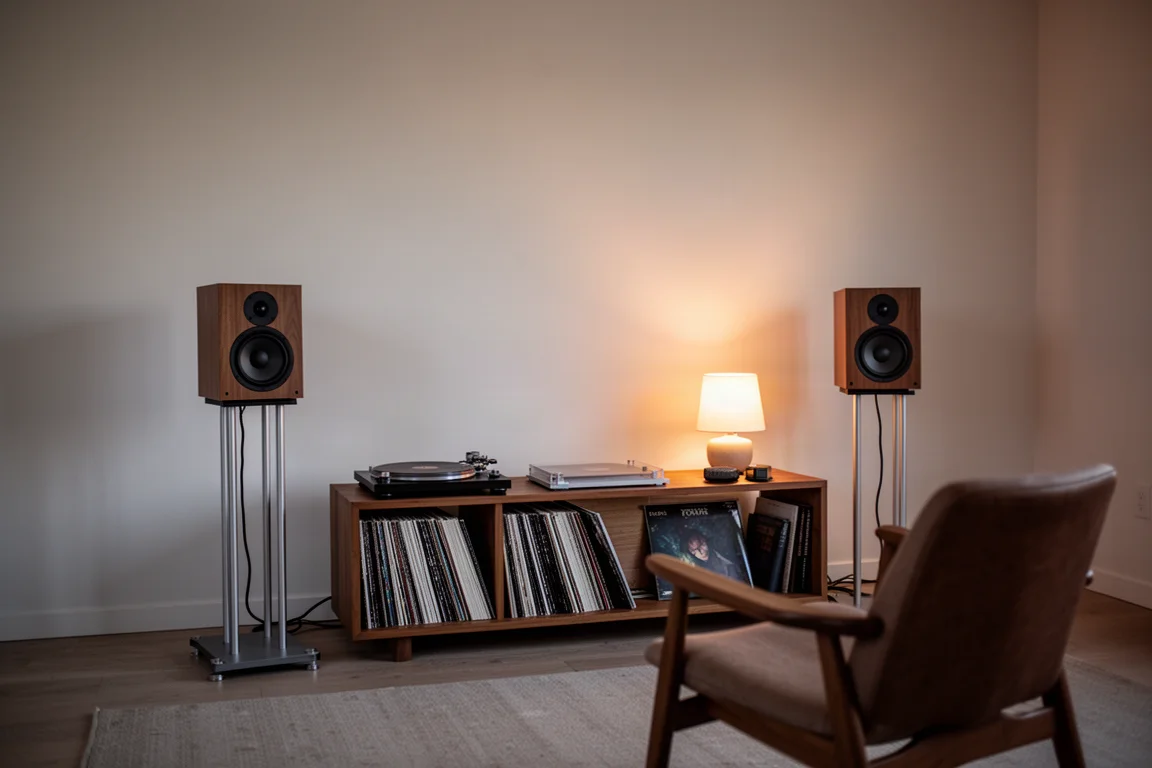
Its tone sits slightly on the warm side of neutral, which will appeal to listeners who find some class leaders a little dry or clinical. Anyone chasing the most forensic, most strictly neutral presentation at this price should know that the Platina makes a deliberate choice in the other direction. For many buyers that choice is exactly the point, because it makes long listening sessions easier rather than more analytical.
Design, Connections, and Control
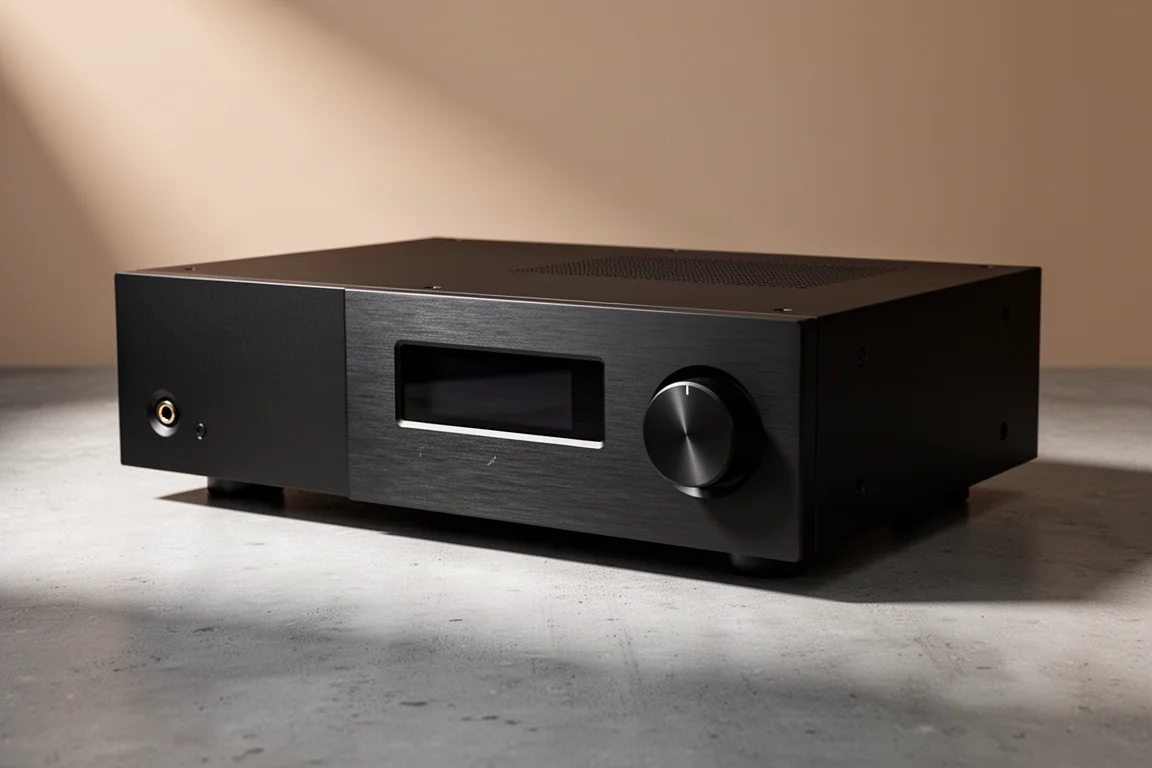
This is a chunky, full rack width unit standing 135 mm high and weighing 11.8 kg, or 5.3 in and 26 lb. A silver front aluminium panel is available alongside the black finish. The layout is clean and purposeful: a standby button sits to the left of the 110 mm display, two buttons on the right step up and down through the analogue and digital inputs, and a third button opens the menus. There is a 6.35 mm headphone input, and the large rotary dial adjusts volume in 1 dB steps. A substantial remote control is supplied and can also be used with the matching Platina streamer.
Connections cover both modern and traditional setups. Digital sockets run along the rear left, with one set of coaxial and optical outputs, two sets of inputs, HDMI ARC for straightforward TV integration, and a USB-C port. Analogue outputs are provided on balanced XLR and single-ended RCA, alongside a balanced XLR input and two RCA line level inputs. A third RCA connection is reserved for turntables, served by the built-in moving magnet and moving coil phono stages.
Inside the Chassis and Power Delivery
The power supply is the headline of the internal design. A very large toroidal transformer rated at 630 VA is shielded on three sides to limit noise radiating out towards sensitive electronics. Four large filter capacitors, each rated at 22,000 microfarads, provide 44,000 microfarads per side and 88,000 microfarads in total. The power amplifier modules follow a dual mono layout, so the left and right channels are identical, mixing tiny surface mount components with larger through-hole parts.
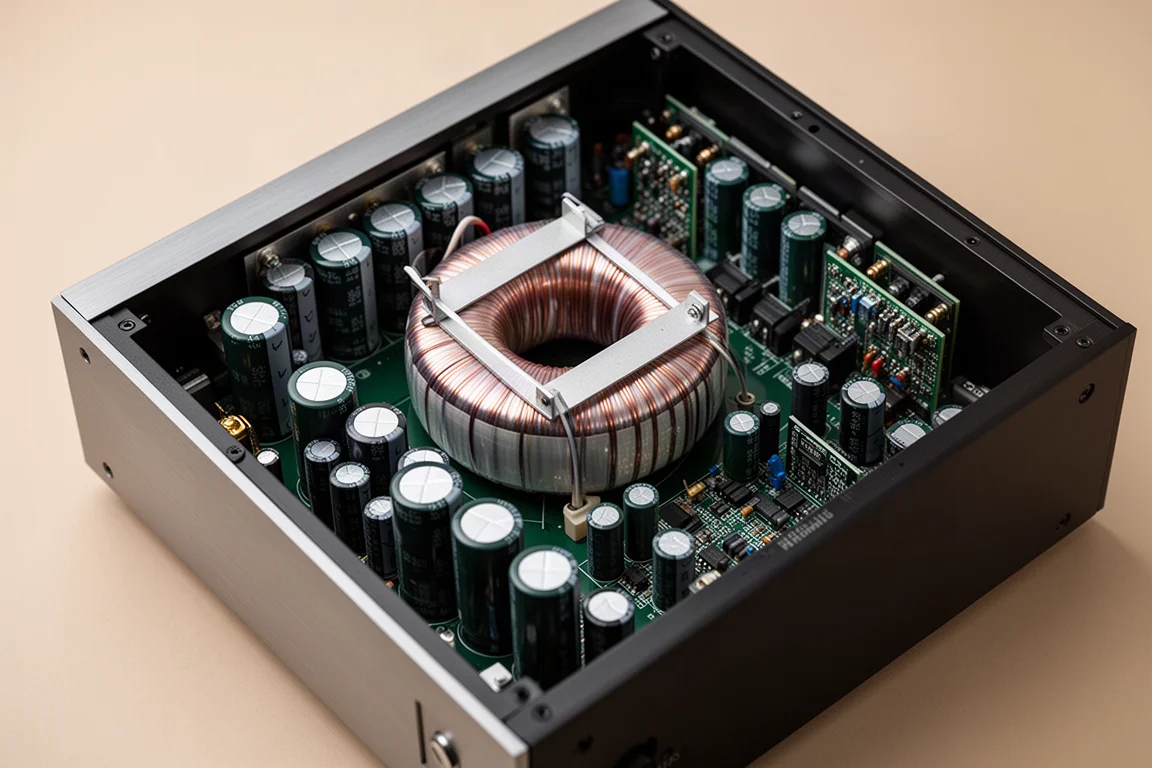
The digital section is built around an ESS 9038 Pro eight-channel DAC, a top-of-range chip, with analogue input and output switching handled on a separate board. The amplifier is rated at 200 W into 8 ohms, 310 W into 4 ohms, with a peak current capability of 20 amps. On paper that is a specification sheet full of headroom, and in use it is the foundation for the amplifier’s sense of ease.
Main Strengths: Sound Quality and System Building
The Platina sits a little on the warm side of neutral, but with less colouration than the 33 and 303 combination. The result is an inviting tone rather than a dry one. Its sound stage is large, and it separates performers within that stage with unusual clarity for a single-box amplifier. It also moves between quiet and loud passages with ease, which is where a muscular power supply earns its keep.
Bass control is a clear strength. With current-hungry speakers, the amplifier keeps low-frequency lines in check and prevents them from bleeding through into the midrange, and that grip translates into a wider stage and more precise placement of instruments. The overall impression is of an amplifier that applies force without ever sounding forceful.
There is plenty to explore in the menus, though most settings can be left at their defaults. Five digital filters for the DAC make subtle differences to the sound, with the default linear phase slow option a sensible starting point. USB, coaxial and optical signals can be automatically upsampled to 352 or 384 kHz. A balance control is included, and the display can show digital VU meters, traditional analogue style VU meters, or a choice of Quad or Quad Platina logos. Auto standby can be set to 20 minutes, 60 minutes, or switched off so the unit remains permanently on.
How It Compares With Rivals
Within the same group, the Quad 33 preamplifier and 303 power amplifier pair retails at just under £2,400, and a second 303 can be added in bridged mono mode for around £1,200 to raise output from 50 W to 140 W per channel into 8 ohms. That combination is tuned for a distinctly warm sound. A 33 with two 303s costs roughly £100 more than the Platina, but it does not match the clarity and control of the new flagship.
The Audiolab 9000A integrated has been the group’s flagship integrated at £2,000, a dual mono design with a 320 VA transformer, 100 W per channel into 8 ohms and a 15 amp peak current rating. It is fairly neutral in tone, with some dryness to the midrange. The Audiolab 9000Q and P pre-power combination costs about £500 more and delivers a cleaner, more open sound, thanks to a substantially improved preamplifier section in its own chassis. The Platina is a further step up in scale and dynamics, with a bigger sound stage and easier transitions between quiet and loud passages, and it replaces the dry character with something more inviting.
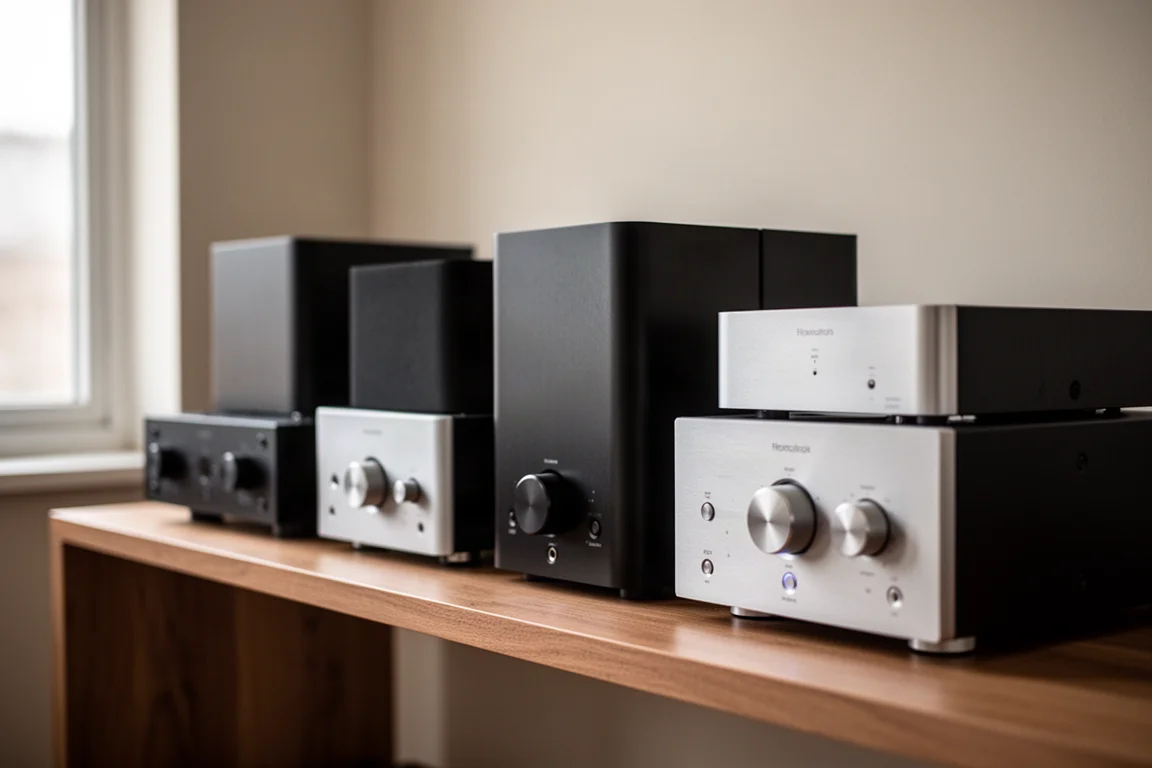
Elsewhere, the Cambridge Audio CXA81 at around £2,000 leans further towards a relaxed, coloured presentation, similar in character to the Quad 33 and 303 pairing but housed in one chassis. Against well-regarded amplifiers around the £3,000 mark, including the Hegel H190, Atoll IN300 and Exposure 3510, the Platina holds its own. Some rivals offer a touch more inner detail or a more solid image, while the Quad counters with a greater sense of scale and separation. The Atoll and the Exposure both come in under £3,000, but that is before phono stages and optional DAC modules are fitted, at which point the prices converge.
Things to Consider Before Buying
The built-in DAC is clean and neutral, and the internal phono stages are a genuine convenience. Even so, the external market is fiercely competitive. A comparable external DAC can be found for around £200, and good external phono stages are available for less than £300. Listeners who prefer to upgrade one part of the chain at a time may favour an amplifier with optional modules rather than everything fixed at the factory, and the Platina does not offer that flexibility.
The USB-C port is a modern touch, but USB-B remains the better choice for anyone who wants the widest selection of quality cables. It is also worth being realistic about the sonic trade-offs. Against the very best amplifiers at this price, the Platina sweetens the presentation slightly and glosses over some micro detail. That is a character choice rather than a fault, but it is one to hear before committing.
Buying Advice
There is more than enough power here to drive almost any speaker on the market, and the slightly warm balance should pair well with a wide range of designs. Speakers that place modest demands on the power supply, such as the £1,500 Dali Menuet SE or the £800 Monitor Audio Silver 100 7G, sound excellent, and the Platina’s extra bass control over a cheaper amplifier is evident even with electrically benign designs. It is with current-hungry standmounts at around £1,800 that the amplifier really shows what it can do, keeping low notes tight and letting the speakers disappear into the room.
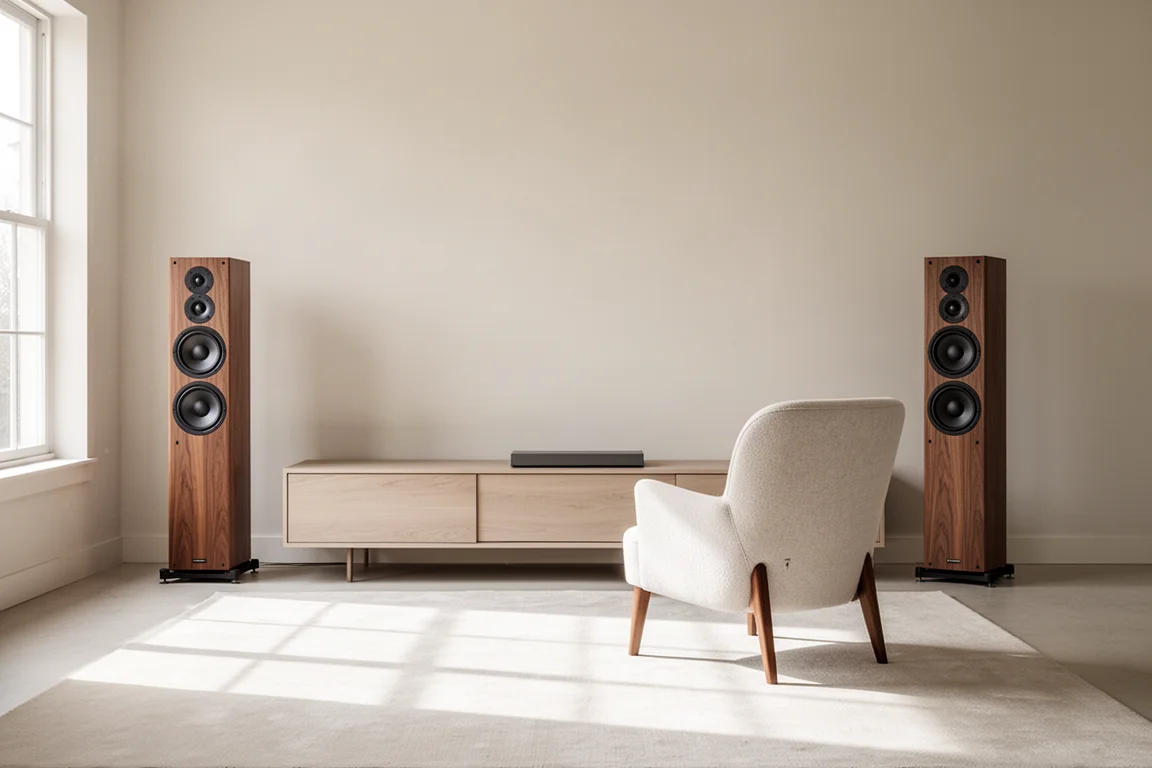
If your system already includes demanding speakers, or you plan to move to them, the Platina is the more sensible long-term purchase. Buyers running efficient bookshelf speakers at moderate listening levels may find that a less powerful amplifier at a lower price delivers most of what they need, although the Quad’s control and sense of scale remain the reasons to step up.
Conclusion
The Quad Platina is sturdily constructed, comprehensively featured and powerful enough to drive all but insanely demanding speakers. Its levels of control and its ability to shift dynamic gears are excellent, its sound stage is cavernous, and the way it separates performers within that stage is exemplary. It delivers sound like an iron fist in a velvet glove.
Class leaders may sound a little more detailed, more precise and more neutral in tone, and the Platina sugarcoats things a touch by comparison. For a great many listeners that is exactly the balance they are looking for, and it is good to see Quad back among the best amplifiers in this price bracket.
Product link
View more details for Quad Platina Integrated Amplifier
This product is mentioned in the review. Check the specifications, options, and compatibility before buying.
View more details for Quad Platina Integrated AmplifierFurther reading
Related Reviews
Hi-Fi Amplifiers
Accuphase E-280 Review: Entry-Level Accuphase With Flagship Attention to Detail
A close look at the Accuphase E-280 integrated amplifier, covering its champagne build, AAVA volume control, sound quality, and the speakers and sources that suit it best.
Hi-Fi Amplifiers
Advance Paris A10 Classic vs Yamaha A-S301: Two Integrated Amplifiers Compared
A practical comparison of a $350 integrated amplifier and a $2,500 reference model, covering the differences that matter and the ones that do not.
Hi-Fi Amplifiers
Affordable Chinese Amplifiers Worth Buying: Five Budget Hi-Fi Amps Compared
A practical look at five affordable amplifiers, what each one does well, and the trade-offs to weigh before you buy.